
Reviewed · SAPA TREKKING TOURS
Sapa trekking 2 days small group
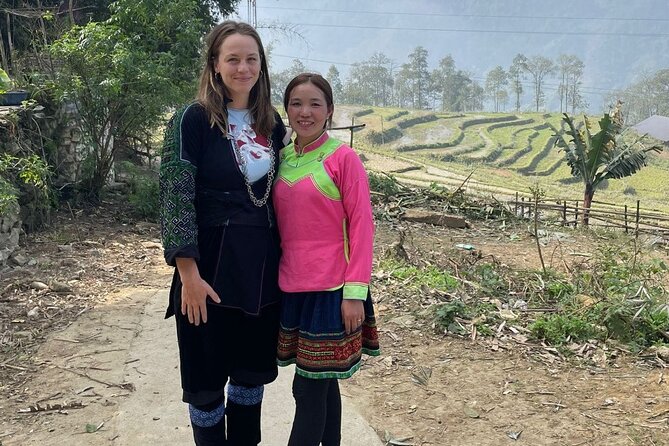
Two days in Sapa that feel truly hands-on. This homestay trek pairs a guided walk through the Muong Hoa valley with an overnight stay in a local family home, so you get beyond the tour-bus version of Sapa. I also liked the small group feel (max 15), and how guides like Lily or Lulu focus on keeping things organized while explaining daily village life. One possible drawback: the homestay setup can be simpler and more compact than a hotel room, so go in expecting cozy, basic, and real—not fancy.
The walking takes you through multiple village stops—Black H’mong in Y Linh Ho and Lao Chai, Giáy around Ta Van, and the Red Dao community at Giang Ta Chai—plus time with rice terraces that change with the light. I particularly enjoyed the practical rhythm: short village talks, then real trekking, then breaks with local food (including a lunch near the river and another at a local home).
Because it’s trekking for two full days, you’ll want to come prepared for uneven paths, steps, and some hill effort. If you’re good with moderate hiking and you don’t need luxury accommodations, this is a memorable way to see Sapa.
In This Review
- Key Highlights You’ll Care About
- What Makes This Sapa Trek Different From a “Drive-By” Tour
- Meet Your Guide: Why Lily and Lulu Keep Getting Mentioned
- Day 1 in Sapa: Y Linh Ho, Lao Chai, and Ta Van Rice Terraces
- Arriving at Ta Van: Homestay Night the Way You Actually Remember It
- Day 2: High Viewpoints, Red Dao Lunch, and the Su Pan Finish
- How Hard Is It Really? Pace, Shoes, and Common-Sense Prep
- What’s Included in the Price (And Why $80 Can Be Good Value)
- Best Fit: Who Should Book This Trek
- Price and Logistics: Pickup Timing and the Most Useful Expectations
- Should You Book This Sapa Trek With Homestay Overnight?
- FAQ
- How long is the Sapa trekking 2 days homestay tour?
- What is the price per person?
- Is pickup included?
- What meals and drinks are included?
- Where do I sleep during the tour?
- What is the cancellation policy?
Key Highlights You’ll Care About
- Small group trek (max 15): Easier pace, less crowding, more chances to ask questions.
- Homestay overnight included: Dinner, breakfast, and the chance to see village routines from inside.
- Village variety in two days: Black H’mong, Giáy, and Red Dao stops with cultural context.
- Muong Hoa valley views from the trail: A mix of valley walks and higher viewpoints.
- Meals and water are built in: Dinner, breakfast, two lunches, plus water 1.5L/day.
- Guides with strong local care: Many groups highlight guides like Lily and Lulu for being attentive and friendly.
What Makes This Sapa Trek Different From a “Drive-By” Tour
Sapa has a reputation for looking good in photos. This trek earns its reputation the old-fashioned way: you spend time walking village-to-village instead of jumping in and out of a vehicle.
The biggest difference is the homestay overnight. You’re not just eating lunch somewhere scenic—you’re sleeping in the area and spending an evening in the rhythm of the community. That changes how you notice details like daily routines, the way people move through their spaces, and how conversations happen when you’re not surrounded by a crowd.
The second big difference is the small-group structure. With a maximum of 15 people, the guide can slow down for questions and keep an eye on the group. It also tends to make the whole experience feel friendlier—less like a schedule you survive, more like a day you share.
More trails through the Sapa valleys


Meet Your Guide: Why Lily and Lulu Keep Getting Mentioned
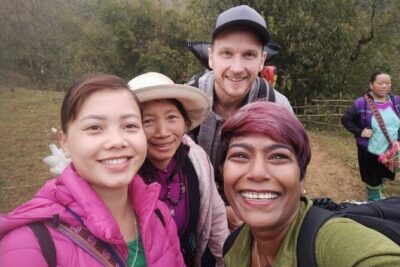
A trek lives or dies by the guide, and in this one, names like Lily and Lulu come up for a reason. People describe them as professional, careful, and genuinely upbeat, with a talent for answering questions about local life and ethnic communities.
What that means for you: you’ll have more than just “turn left” navigation. You’ll get context while you walk—why people live where they live, what daily life looks like, and how the different groups you meet relate to the mountains and farming.
You’ll also feel the practical side of a good guide. The route has multiple segments and time blocks, and a careful guide helps keep the group together, timing meals, and getting you where you need to be without chaos.
Day 1 in Sapa: Y Linh Ho, Lao Chai, and Ta Van Rice Terraces
Day 1 starts with pickup in Sapa town between 08:00 and 08:30. You meet your local guide at the meeting point, get a quick introduction, and then begin the trek south along the Muong Hoa valley.
The first village stop is Y Linh Ho, home to the Black H’mong community. This is one of your early chances to see the way the village connects to the valley—paths, homes, and farmland all working together. Expect a short walk time window before you reach the village area, then time to learn about daily life and culture.
Next comes Lao Chai, another Black H’mong village. The trek continues with the view-and-walk rhythm that Sapa does best: movement through the valley, pauses for village moments, and small bridges and turns that make the route feel like a real trail rather than a corridor.
Lunch on Day 1 is built around local food. You’ll eat in a restaurant in Lao Chai near the river, or the plan includes the option for a picnic-style lunch on the uphill to enjoy countryside atmosphere. Either way, you’ll be refueled for the afternoon—this is when you’ll start noticing how the terrain and scenery change across the valley.
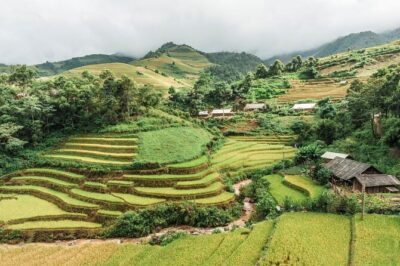
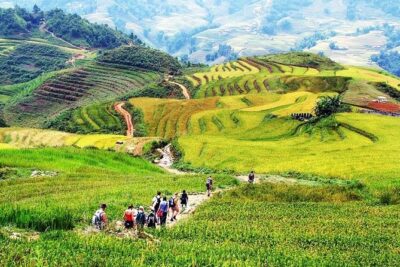
After lunch, you’ll head toward Ta Van, with a stop to see rice terraces and interact with the Giáy people. The terraces are a big part of why people come to the region, but the real value here is the context: you’re seeing farming land while people explain how it fits into their life.
Arriving at Ta Van: Homestay Night the Way You Actually Remember It
You’ll reach Ta Van around 15:30 and settle into your homestay for one night. Day 1 is the longer effort day, so this is where the tour shifts from walking mode to conversation mode.
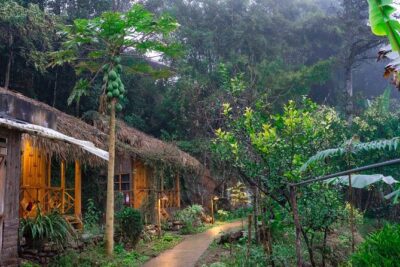
The homestay portion is included and includes time to relax after trekking. You should expect basic accommodations rather than hotel comfort. In one group experience, the homestay was described as adequate, with a wish for a bit more space—but the core point landed: you’re there to share time, eat well, and learn.
Dinner and breakfast are included, and water is part of the package (1.5L per day). That matters because in trekking settings, hydration and steady meals prevent the “we’re fine” problem that hits later in the evening.
One of the best parts of the homestay night is the chance to talk together after the walk. That’s where questions get easier and the experience turns from watching to understanding.
Day 2: High Viewpoints, Red Dao Lunch, and the Su Pan Finish
Day 2 begins with breakfast at your homestay, then you’ll follow a local trail starting around 08:30. The goal here is to see the Muong Hoa valley from a higher mountain position near Ta Van, which is one of the best ways to understand the region’s shape.
From there, the trek continues toward Giang Ta Chai village of the Red Dao people. You’ll be walking for about 3 hours to reach the lunch area, so Day 2 is not a “rest day.” It’s more like a second act: still active, but less about constant village-to-village hops and more about viewpoints and a different community.
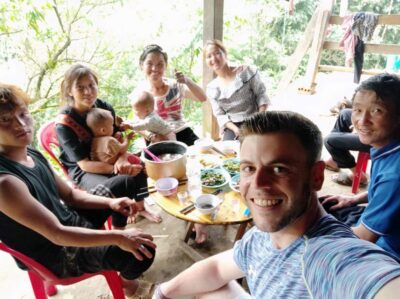
Lunch happens at a local home in Giang Ta Chai. The idea is to try local food by the Red Dao community and enjoy the surrounding mountains and terraced fields from the area. Again, you’re not just eating—you’re pausing in a place that makes sense to the people who live there.
After lunch, you’ll continue for about 2 more hours, including going up the hill as the route allows. The day is finished around 14:30 near Su Pan village, where a car picks you up and returns you to your accommodation in Sapa town.
Worth a glance beside this Sapa pick:
- Number one top rated ethical cultural trekking and homestay by ETHOS★ 5.0 · 456 reviews
- 1-day Authentik trek & Panorama valley views★ 5.0 · 189 reviews
- 1 day Fansipan Trekking★ 5.0 · 180 reviews
How Hard Is It Really? Pace, Shoes, and Common-Sense Prep
This experience is listed as suitable for “most travelers,” and one group described the trek as not too challenging. Still, it’s two days of walking on paths that can be uneven, with hill sections that naturally slow you down.
For you, the practical takeaway is simple:
- Bring comfortable walking shoes with grip.
- Plan to move at a steady pace rather than racing.
- Bring layers, because mountain weather can shift even when Sapa town looks mild.
The route includes multiple villages and meal breaks, so you’re not constantly trekking without pauses. But you will be on your feet for hours at a time, and the second day includes time to climb and gain views.
What’s Included in the Price (And Why $80 Can Be Good Value)
The price is $80 per person for about 2 days. What makes this feel like value is that a lot of what you’d otherwise pay for separately is already included.
Your package includes:
- Accommodation for one night (homestay)
- Dinner and breakfast
- Lunch (2 times), including one near the river in Lao Chai and another at a local home in Giang Ta Chai
- Water 1.5L per day
- Pickup is offered, and you get a mobile ticket
Not included:
- Tips
- Personal expenses
- Any other items not listed as included
In plain terms: you’re buying a guided cultural trek, the overnight stay, and multiple meals in the mountains. When you compare that to paying for a hotel, guides, and meals separately, this price can make sense—especially since the group size is capped at 15, which usually keeps the experience feeling personal rather than crowded.
Best Fit: Who Should Book This Trek
This trek suits you if you want:
- A small-group pace instead of a big crowd
- Real village encounters across Black H’mong, Giáy, and Red Dao communities
- An overnight stay that adds depth beyond daytime sightseeing
- A guide who explains what you’re seeing, with care and energy (Lily and Lulu-style reviews are common)
It may be less ideal if:
- You need hotel-level comfort and a lot of space at night
- You dislike walking for hours and prefer short, easy strolls
- You’re the type who wants every moment to be fully predictable with no variation in trail conditions
Price and Logistics: Pickup Timing and the Most Useful Expectations
Pickup from Sapa town happens early, around 08:00 to 08:30, so plan your morning accordingly. The trip ends with a return by car to your accommodation in Sapa town after finishing near Su Pan village around 14:30 on Day 2.
You’ll spend the two days moving between village areas, with meals timed into the walking. That’s great because it keeps energy steady—but it also means you should expect your schedule to follow the guide’s plan rather than your own spontaneity.
Also note: tips aren’t included. If your guide takes real care of the group, tipping is the normal way to reflect that.
Should You Book This Sapa Trek With Homestay Overnight?
If you want Sapa to feel like a place people live in—not just a view you pass through—this is a strong choice. The combo of homestay overnight, village interactions across multiple ethnic groups, and a small group max of 15 makes the experience more personal and more grounded than typical day trips.
I’d book it if you’re comfortable with moderate hiking and you can handle simpler accommodation for one night. Bring good shoes, keep your expectations human-scale, and you’ll get two days that actually stick.
FAQ
How long is the Sapa trekking 2 days homestay tour?
It runs for 2 days (about 2 days).
What is the price per person?
The price is $80.00 per person.
Is pickup included?
Yes. Pickup is offered from Sapa town (around 08:00–08:30).
What meals and drinks are included?
You get dinner, breakfast, and lunch twice, plus water 1.5L per day.
Where do I sleep during the tour?
You stay overnight for 1 night at a local homestay or local house in the village area.
What is the cancellation policy?
You can cancel for a full refund if you cancel at least 24 hours before the experience start time. Free cancellation is offered.
More Hiking & Trekking in Sapa
More Tour Reviews in Sapa
More Sapa Treks We Walked
Latest Sapa write-ups from our team



Sapa Trekking Tours, compared.
 ★ 5.0Sapa 2 Days 1 Night From Hanoi – Overnight in Ta Van VillageFrom $592,669 reviews
 ★ 5.0Hanoi – Sapa 2 Days 1 Night Overnight At HomestayFrom $89899 reviews
 ★ 5.0Sapa: Fansipan Cable, Cat Cat Village & Moana Instagram TourFrom $30777 reviews
 ★ 4.8From Hanoi: 2-Day Sapa Trekking Trip with Homestay & MealsFrom $71704 reviews
 ★ 5.0Sapa 3 Days 2 Nights Trekking Tour (1 Night In Ta Van Village, 1 Night In Hotel)From $139699 reviews
 ★ 5.03-Day Trekking Adventure of Sapa from Hanoi – Stay Ta Van VillageFrom $109611 reviews
 ★ 5.0Sapa 2 Days 1 Night From Hanoi – Overnight in HotelFrom $89440 reviews
 ★ 4.82-Day Sa Pa Ethnic Homestay Tour & Trek with Limousine Bus440 reviews
Browse the lists this tour appears in