
Reviewed · HIKING & TREKKING
Trekking Through Rice Terraced Fields – 1Day
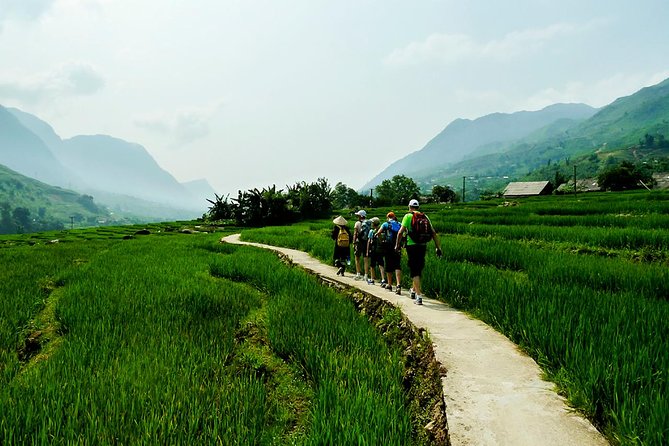
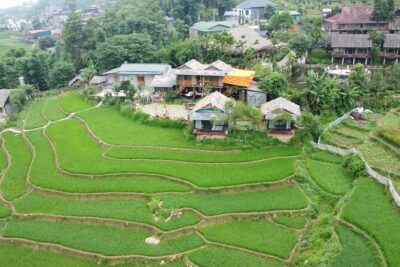
Rice terraces and village stories in one day. This Sapa trek takes you through rice terraces and three ethnic-minority villages, with big valley and river views plus real conversations about daily work in the hills.
I like the combination of a small group and a local guide who actually lives the life. Included lunch is hearty and local (vegetables, meat, and vegetarian options), and guides such as Chu, Sang, Vang, and Mai are often praised for clear explanations and patience with questions. The main drawback to plan for: the walking can feel tough, muddy, and sometimes steep, so it’s not the right pick if you have limited mobility.
In This Review
- Quick hits: what makes this Sapa trek worth your time
- Rice terraces and three villages: how the day actually feels
- Timing, pickup, and meeting point: when to plan around the trek
- The route’s big idea: terraced fields plus real village conversations
- Stop 1: Y Linh Ho village and the early mountain rhythm
- Stop 2: Lao Chai and Black Hmong life along the terraces
- Stop 3: Ta Van village and Giay culture before the ride back
- The cultural highlights: Hmong traditions, rice work, and house-building
- Lunch in the hills: included local food and what to order in your mind
- Comfort and safety: shoes, mud, and fitness expectations
- Value check: is $45 a good deal for a 5–6 hour Sapa trek?
- Group size and guide style: what to expect from a small-group trek
- The best way to enjoy this trek: simple, practical habits
- Should you book this Sapa rice terrace trek?
- FAQ
- How long is the Trek Through Rice Terraced Fields tour?
- What time does the tour start?
- Where do I meet the guide?
- Is pickup included?
- Is lunch included?
- What’s included in the price besides lunch?
- What is not included?
- How many people are in each group?
- Is the hike suitable for everyone physically?
- What is the cancellation policy?
Quick hits: what makes this Sapa trek worth your time
- Small group up to 15 people: you get real time with your guide instead of being rushed along.
- Three village stops: Y Linh Ho, Lao Chai, and Ta Van each add a different slice of life.
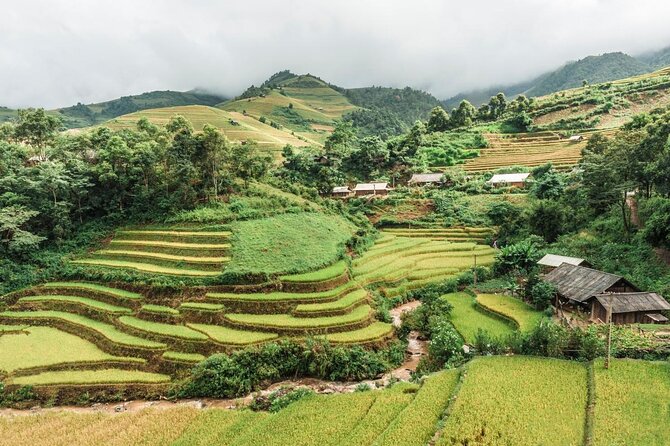
- Rice terrace climbing: expect uneven paths and real elevation, not a flat sightseeing stroll.
- Included lunch plus water: you don’t have to hunt for food halfway up a mountain.
- Village entry fees and transport back: the day is packaged so you can just show up and walk.
- Guide-led culture focus: you’ll hear about Hmong marriage traditions, rice-field work, and house-building techniques.
Rice terraces and three villages: how the day actually feels
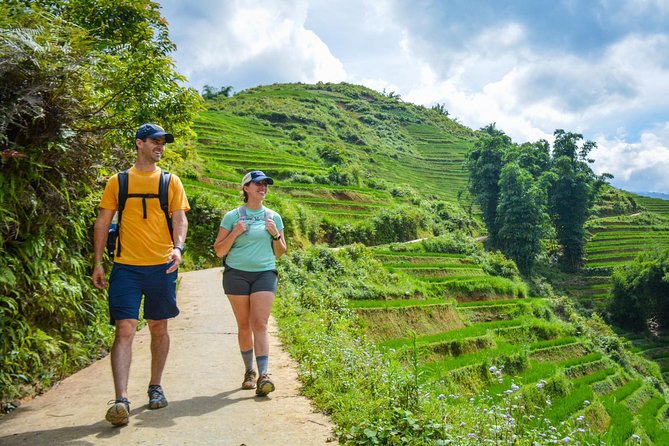
This is the kind of Sapa day that fixes the common problem of short tours: lots of movement, but not much meaning. Here, the walking connects the scenery to people. You’re not just looking at terraced fields; you’re hearing how they fit into livelihoods—how rice work shapes the seasons, how homes are built, and how families observe traditions.
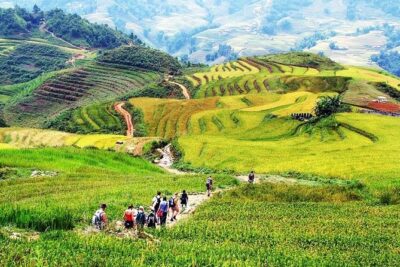
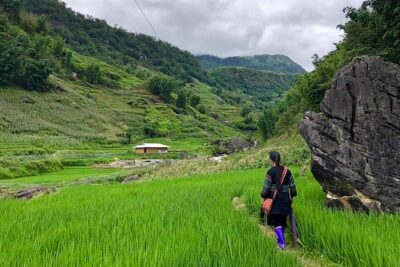
You’ll start in Sapa Town, then spend the day moving village to village with an experienced local guide. The route is built around the famous rice terraces plus three communities: the Hmong, Giay, and Red Dao ethnic minorities. Along the way, you get mountain views, river and valley panoramas, and the practical side of village life—daily jobs, house-building techniques, and cultural practices.
Worth a glance beside this Sapa pick:
Timing, pickup, and meeting point: when to plan around the trek
The tour starts in the morning, with a listed start time of 9:30 am. You’ll meet at the activity’s meeting point in Sapa Town (one option is in front of the main church area), or your guide can pick you up if you’re staying in Sapa Town. You’ll also get a mobile ticket, so you can keep things simple on your phone.
Expect about 5 to 6 hours total. That duration matters because Sapa days can get chopped into overpriced bits: cable car rides here, quick photo stops there. This walk is longer on foot, so you’ll actually spend time on the terraces and inside village areas instead of just passing through.
Your day ends back near the start point in Sapa, with transport back to town included. That’s a big deal here because once you finish, you’ll want your legs intact for dinner—not searching for a ride down the hill.
The route’s big idea: terraced fields plus real village conversations
The overall focus is two things at once:
1) Walk through the rice terraces and take in mountain and valley views.
2) Learn culture and customs with a guide who explains traditions as you go.
That culture portion isn’t just trivia. The tour is set up to introduce you to Hmong marriage traditions, rice-field work, and house-building techniques. You also get a look at differences among ethnic minority groups in Sapa.
This matters because in Sapa, people can feel like props for photos. The best part of this tour is the opposite: your guide turns the day into a conversation—about how work and family traditions connect to the landscape you’re walking through.
Stop 1: Y Linh Ho village and the early mountain rhythm
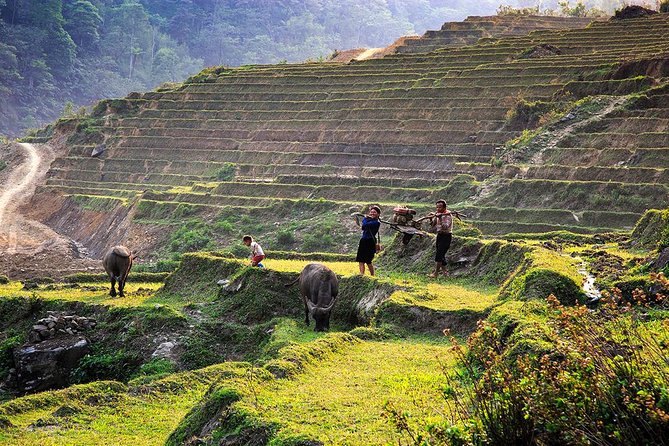
Y Linh Ho is the first village stop. You’ll start the trek with a short downhill segment early in the morning, described as a walk down roughly 2 km toward Cat Cat’s road area. That kind of early downhill often gives you a false sense of comfort. Then the day starts gently building back up.
Y Linh Ho is also where the guide’s role becomes clear. This is where you shift from city Sapa mode into hill-steps mode. The terraced scenery tends to open up as you move, and you get your first real moments of valley view.
Two practical tips for this part:
- Go slow for the first hour. If you sprint early, your legs pay for it later.
- Keep your eyes on the footing, not just the photos. Paths can be uneven and slick.
Stop 2: Lao Chai and Black Hmong life along the terraces
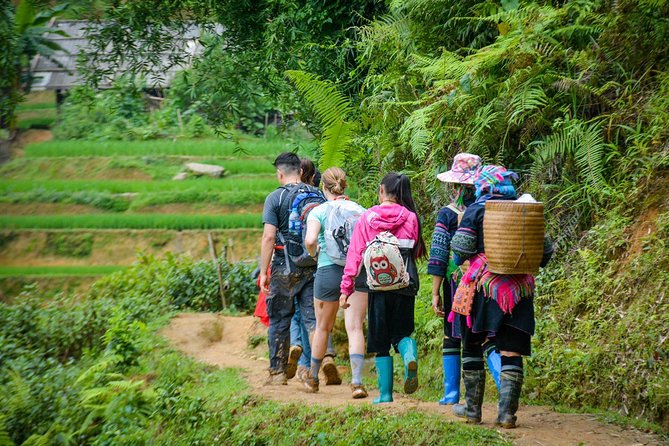
After a break, you head to Lao Chai, a village associated with the Black Hmong community. This is one of the best points in the day to slow down and look at how people live where the terrain demands effort.
Because rice terraces shape so much of the daily routine, the tour’s culture talk tends to make more sense here. You’ll hear about work in the rice fields and how the rhythms of planting and harvesting influence daily life. Even if you’re only a casual history fan, the practical details tend to stick.
The walking here also becomes more “trekking” than “strolling.” Some guides and routes can include longer climbs, and past guests have specifically mentioned days that turned into around a 12 km mountain climb depending on how the route connects. That doesn’t mean every departure is identical, but it does mean you should treat Lao Chai as the point where your stamina matters.
- Number one top rated ethical cultural trekking and homestay by ETHOS★ 5.0 · 456 reviews
- Motorbike 1 Day Off The Beaten Track, Hidden Villages, rice field★ 5.0 · 203 reviews
- 1-day Authentik trek & Panorama valley views★ 5.0 · 189 reviews
Stop 3: Ta Van village and Giay culture before the ride back
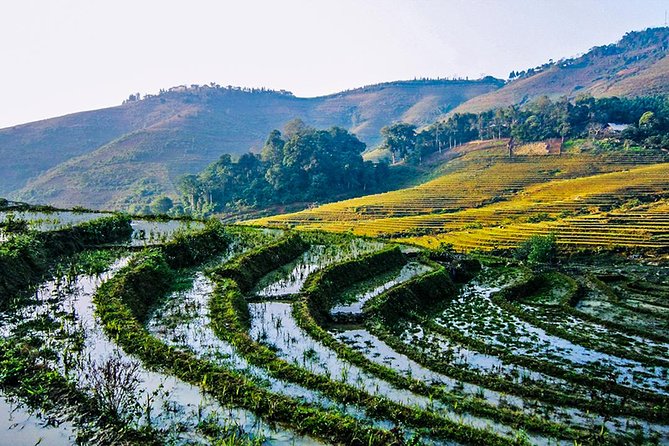
The third main stop is Ta Van Village, where you meet the Giay minority. By now, you’ll be tired in a good way. That’s when the village context becomes extra rewarding, because you’ve already seen the terraced fields from different angles.
Ta Van is also where you’ll learn more about the differences among ethnic minority groups in Sapa. That comparison is useful because people often lump “hill tribe” into one category. A good guide helps you notice the distinctions through daily practices and how communities organize life.
Once you finish the village time, you’ll head back toward the vehicle for the transport back to Sapa. The tour is designed so you don’t arrive back too late, which helps if you’re also planning a fanfare-free day after—like a relaxed dinner or a quick local market visit.
The cultural highlights: Hmong traditions, rice work, and house-building
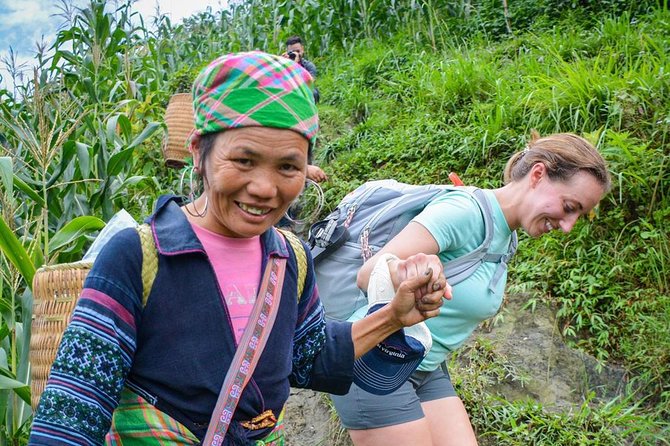
This is a culture-forward trek. The tour is set up to cover:
- Hmong marriage traditions
- Rice fields and work routines
- House building techniques
I like this approach because it’s not just “what their outfits look like.” You’re hearing about the practical knowledge behind village life. When a guide explains house-building techniques while you’re moving through the same hillside world their community inhabits, the story lands differently.
You can also expect some variation depending on the guide and pace. Past guests often praised guides like Chu, Sang, Dom, Mau, Du, Shu, and Me for being friendly and answering questions with good humor. That question-friendly style is key. If you want more detail, ask it. When I’m on a trek like this, I find the best moments happen right when someone asks one more question than usual.
Lunch in the hills: included local food and what to order in your mind
Lunch is included and described as local foods with vegetables, meat, and vegetarian options. There’s also one small bottle of water per person included.
This matters for value because Sapa treks can become expensive fast once you start adding restaurant stops. Here, lunch is part of the package, and the day is scheduled so you’re not stuck starving while waiting for transport.
What to watch:
- Extra drinks (like more bottled water or beer) are not included. Bring a bit of cash and plan to buy what you need.
- If you’re picky about food, eat before you’re starving. In mountain settings, the lunch setup is more simple than big-city restaurants.
Comfort and safety: shoes, mud, and fitness expectations
The tour calls for a moderate physical fitness level. That’s honest, and it matches what you should plan for in Sapa: uneven footing, steps up and down, and enough walking to feel in your calves.
Footwear is the biggest make-or-break item. Several guides and guests have advised grippy footwear because the paths can get muddy and slippery. If it rained recently, you’ll feel it quickly underfoot.
Who this works best for:
- You want real walking time and village context, not just a short loop.
- You’re comfortable hiking a few hours and adjusting pace.
- You like learning from a guide while you move.
Who should think twice:
- If you have mobility issues, this likely won’t feel good. One of the lower-score experiences specifically pointed out the route as difficult and not suitable for adults with the right expectations, and you’ll also see that the trek isn’t promoted as an easy walk.
Also, bring a little common sense. Trekking days in northern Vietnam weather can shift fast. I’d pack a small layer for your morning start, even if the afternoon looks warm.
Value check: is $45 a good deal for a 5–6 hour Sapa trek?
At $45 per person, this trek sits in a reasonable range for Sapa, especially because it includes:
- Lunch (local food with veg options)
- Village entry fees
- Bottled water (one small bottle)
- Transport back to Sapa
- A guide for a full morning to early afternoon experience
You’re basically paying for a guided day that combines: structured village visits + terrace walking + food + ground transport. If you tried to recreate this on your own, you’d spend money on transport and lose the cultural explanations that come with a local guide who can explain traditions, rice work, and house building.
One note: some guests felt the guide information could have been better unless they asked questions. That doesn’t automatically mean every departure is like that, but it’s a reminder to be proactive. Ask about rice cultivation, marriage traditions, and construction techniques. A good guide can turn your questions into a much richer walk.
Group size and guide style: what to expect from a small-group trek
This tour caps at 15 travelers. That size is part of why the day feels personal. You’re not stuck behind a line of people, and your guide can actually talk while you stop for short explanations.
You’ll also notice guide style matters. Many of the best experiences praised guides for English ability, friendliness, and humor. Some guides also have an “insider” feel because they come from the village communities you’re visiting. That’s the difference between learning facts and learning context.
If you care about getting more cultural detail, choose this tour with your attitude ready: ask questions. When you do, you tend to get much more out of the walk.
The best way to enjoy this trek: simple, practical habits
Here’s how I’d set yourself up for a great day:
- Start slow and save energy for the climbs.
- Bring good shoes. Grippy soles beat cute boots.
- Plan for mud if the weather’s wet. Treat it like it might happen.
- Bring cash for extra drinks since only one water bottle is included.
- Ask questions early. Don’t wait until the last village stop.
If you do those things, you’ll get the big payoff: rice terraces you can actually walk through, plus village conversations that explain why this part of Sapa looks the way it does.
Should you book this Sapa rice terrace trek?
Book it if you want a real half-day trek that mixes terraced scenery with village culture. It’s especially worth it if you’re short on time in Sapa and want a packed day that still feels human—not rushed, not just photo stops.
Skip it or consider another option if:
- You need a very easy walk or have mobility limits.
- You hate the idea of steep, uneven paths in potentially muddy conditions.
- You mainly want a view with minimal cultural discussion.
If you’re the curious type—someone who likes learning how people live—this tour has a strong track record. Between the small-group size, included lunch, and guides like Chu, Sang, Vang, and Mai, it’s the kind of Sapa experience that’s easy to remember after the photos fade.
FAQ
How long is the Trek Through Rice Terraced Fields tour?
It runs about 5 to 6 hours.
What time does the tour start?
The listed start time is 9:30 am.
Where do I meet the guide?
The tour starts back at Trekking Tour Sapa, 09 Thác Bạc, TT. Sa Pa, Sa Pa, Lào Cai 330000, Vietnam. You may also meet near the main church area, and pickup is offered in Sapa Town.
Is pickup included?
Pickup is offered, with meeting arrangements based on where you’re staying in Sapa Town.
Is lunch included?
Yes. Lunch is included and described as local foods with vegetables, meat, and vegetarian options.
What’s included in the price besides lunch?
Village entry fees, bottled water (one small bottle per person), and transport back to Sapa are included.
What is not included?
Personal travel insurance, extra drinks at the restaurant, and tips are not included.
How many people are in each group?
Maximum group size is 15 travelers.
Is the hike suitable for everyone physically?
It’s aimed at people with moderate physical fitness. If you have mobility issues, this likely won’t be a good match.
What is the cancellation policy?
You can cancel for a full refund if you cancel at least 24 hours before the experience’s start time. Within 24 hours, there’s no refund.
More Hiking & Trekking in Sapa
More Tour Reviews in Sapa
Latest Sapa write-ups from our team

Hiking & Trekking, compared.
 ★ 5.0Halong Bay Full Day with Kayaking, Hiking viewpoint, Cave – Deluxe To LuxuryFrom $38884 reviews
 ★ 4.8From Hanoi: 2-Day Sapa Trekking Trip with Homestay & MealsFrom $71704 reviews
 ★ 5.0Sapa 3 Days 2 Nights Trekking Tour (1 Night In Ta Van Village, 1 Night In Hotel)From $139699 reviews
 ★ 5.03-Day Trekking Adventure of Sapa from Hanoi – Stay Ta Van VillageFrom $109611 reviews
 ★ 5.0Number one top rated ethical cultural trekking and homestay by ETHOSFrom $93456 reviews
 ★ 4.82-Day Sa Pa Ethnic Homestay Tour & Trek with Limousine Bus440 reviews
 ★ 5.0Sa Pa Full Day Trekking TourFrom $25414 reviews
 ★ 5.0Hanoi – Sapa 3 Day 2 Night Trekking With Hotel & HomestayFrom $125389 reviews
Browse the lists this tour appears in