
Reviewed · SAPA TREKKING TOURS
Sapa 2 days 1 night trekking Lao Chai Ta Van – Fansipan mountain by cable car
Sapa, minus the hard climb, still feels wild. I love the Lao Chai–Ta Van village trek with ethnic-minority life, terraced valley views, and a guide who helps you connect the dots. I also love that you still get the big mountain moment with Fansipan by cable car, so the payoff is huge without needing a full-on mountaineering day.
One watch-out: this is a walking trip on uneven paths. Bring trekking shoes, and keep in mind it needs good weather for the plan to run smoothly.
Because the group is capped at 15, it’s easier to ask questions and keep the pace comfortable. And the guides for this kind of Sapa route are often praised by name in recent feedback, including Sao, Khu Ly, Phenh, Zu, and Cha.
In This Review
- Key highlights to know before you go
- The overnight bus setup that actually saves you time
- Y Linh Ho roadside stop: terraces and mountains before the trekking
- Lao Chai: old village vibes, Muong Hoa valley views, and ethnic-minority life
- Ta Van hike: Giay and Dao communities in Hoang Lien National Park
- Getting back to Sapa: free time, Viet Flower hotel, and a night to reset
- Fansipan by cable car: 6 hours at Sun World, then lunch and the return
- Price and value: what $125 buys (and what you’ll add)
- The role of your guide: why the names keep showing up
- Who should book this trek, and who might not love it
- Should you book Sapa Lao Chai–Ta Van with Fansipan cable car?
- FAQ
- How long is the tour?
- Where does the tour start in Hanoi?
- What times are pickup and transfers?
- What does the price include?
- Is there a tour guide at Sun World Fansipan Legend?
- Do I need trekking shoes?
- Are entrance fees included?
- What if weather is bad?
Key highlights to know before you go
- Overnight bus from Hanoi + 1 night in Sapa: you lose less daylight to transit and wake up closer to the villages.
- Y Linh Ho roadside views en route: Black Hmong terrace scenery shows up even before the trekking starts.
- Lao Chai village (about 1 hour, free entry): a close look at an old village name and the Muong Hoa valley setting.
- Ta Van hike (about 3 hours, free entry) + local lunch: the heart of the trip in Hoang Lien National Park.
- Fansipan cable car included + 6 hours at Sun World: you handle the last day at your own pace, no guide required.
The overnight bus setup that actually saves you time
This tour starts with an evening pickup in Hanoi, around 21:00–21:45, from the Old Quarter area (including the meeting point at 80 Tran Nhat Duat). Then you transfer by sleeping bus for the Hanoi–Sapa leg, with a bottle of water included for the one-way trip.
That matters because you’re not spending your first day stuck in a seat from morning to night. You arrive with energy to start village exploring the next day, which is a big deal when you’re here specifically for trekking views and culture.
Also, this is a small-group style experience (maximum 15 travelers). That’s not about luxury. It’s about smoother timing and less chaos when you’re boarding, checking in, or getting questions answered before you head out to the trail.
More trails through the Sapa valleys



Y Linh Ho roadside stop: terraces and mountains before the trekking

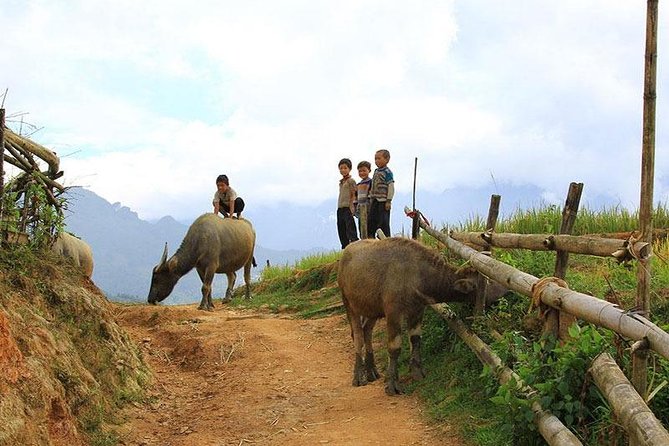
On the way to Lao Chai, you get a quick roadside look at Y Linh Ho village, home to Black Hmong communities. The key visual here is the terrace rice fields framed by steep mountain shapes.
You don’t have a long guided walk at this stop, and you don’t get a long cultural lesson in the schedule. But it’s still a useful preview. If you’ve never seen terraced farming up close, this gives you context for what you’ll later notice around Lao Chai and Ta Van.
If the weather is clear, this is one of those “oh wow” moments that makes the rest of the day feel worth it. If it’s misty, you still get the sense of the valley and why Sapa stays famous.
Lao Chai: old village vibes, Muong Hoa valley views, and ethnic-minority life
Lao Chai is your first full village stop, about 6 km from the town center. It’s a strong choice because it sets the tone: you’ll walk and look, with Black H’mong and Giay ethnic communities in the mix.
The schedule gives you around 1 hour here, and admission is free. The trip focus isn’t just scenery. It’s also about how traditional house architecture fits into everyday routines—how people live, work, and move through the valley using long-year customs.
The name Lao Chai is tied to the idea of an old village in the local dialect, and the location is described as the beginning of the Muong Hoa valley. Even if you only have a short time window, you’re in the right place to understand why this valley looks the way it does: terraces, slopes, and homes shaped around the land.
What to watch for: the way the valley stages everyday life. In a short stop like this, you’ll learn the most if you ask basic questions—what the community does day-to-day, and what areas are most important for farming and family life.
Ta Van hike: Giay and Dao communities in Hoang Lien National Park
After Lao Chai, you head toward Ta Van Village, where Giay and Dao ethnic communities live. Ta Van is described as about 15 km from Sapa town in the southeast direction, inside Hoang Lien National Park.
You’ll have about 3 hours here, and entry is free. This is the real trekking portion where the route connects village moments with valley views, not just one sightseeing stop after another.
Lunch is included during the Ta Van block, at a local restaurant. That’s practical: it keeps your day from stretching out too long, and it helps you stay fueled for the walk. It also means you’re not stuck hunting for food with limited time, especially if the group is moving through villages on a set schedule.
A small but important reality check: the trip notes call for moderate physical fitness, and one piece of feedback was blunt about footwear—trekking shoes are not optional if you want an easy walk.
If you’re the type who likes understanding how people adapt to the mountains—farms, paths, housing choices—this part is where you’ll feel the most connection.
Getting back to Sapa: free time, Viet Flower hotel, and a night to reset
After Ta Van, the schedule brings you back toward the main road and gives you about 1 hour of free time in Sapa. Then you check in at the Viet Flower hotel, have dinner, and get time to explore Sapa town at night.
This is a smart rhythm after a village hike. You get to clean up, recharge, and decide how adventurous you want to be for dinner or small shopping. It’s also the moment to grab any drinks you’ll need, since drinks aren’t included.
One more practical note: this is the day you want to keep your pack simple. You’ll likely carry day gear during the trek, then you’ll want to switch to a more normal “town” setup for the evening.
And if you’re lucky with the weather, Sapa nights can feel pleasantly cool after being outdoors during the day. If it’s foggy or damp, you’ll still appreciate the convenience of having an included dinner and a proper hotel base.
More ways up Fansipan, on foot or by cable car
- From Hanoi: 2-Day Sapa Limo Bus Tour & Fansipan Peak Visit★ 4.6 · 277 reviews
- From Hanoi: 2-Day Sapa, Fansipan, and Muong Hoa Valley Tour★ 4.2 · 90 reviews
- From Hanoi: 2-Day Sapa-Fansipan Peak & Trek & Ha Giang Bus★ 4.8 · 52 reviews
Fansipan by cable car: 6 hours at Sun World, then lunch and the return
Day 3 is built around the big summit name: Sun World Fansipan Legend. The tour notes say this portion does not include a tour guide, so you’ll explore on your own after breakfast.
You’ll have around 6 hours here, and admission is listed as free. The big element that’s included is the Fansipan cable car ticket, which is the main reason many people choose this route: you get access to the highest mountain of Indochina without committing to a full hiking summit day.
Keep expectations practical. Since you’re doing this independently, you’ll want to decide what you personally care about most once you’re there—views, temple spaces, walking areas, photo stops. The tour gives you time. Use it like a buffet: pick what fits your energy level.
After that, you return to the hotel around 12:39–13:30 for lunch. Then the bus leaves Hanoi around 15:00–15:30, with a drop back in the Old Quarter area around 21:30.
That late arrival is common for Hanoi–Sapa schedules, so plan your next day with travel fatigue in mind.
Price and value: what $125 buys (and what you’ll add)
The listed price is $125 per group (up to 1). Even if you’re traveling solo, the value is worth checking because a lot is already rolled in.
Included items cover:
- Round-trip transfers between Hanoi and Sapa (Hanoi–Sapa by sleeping bus)
- Hotel: a deluxe room in Viet Flower
- Meals: breakfast (2), lunch (2), and dinner (1)
- Entrance fees (listed as included)
- Fansipan cable car ticket
- A mobile ticket option
- Pickup offered from the Old Quarter area
What you’ll usually need to budget separately:
- Drinks
- Personal expenses
- Tips & gratuities
So the value story is simple: if you want a structured overnight route, a real village trekking day, and the cable car summit experience, this price is less about paying for walking and more about paying for logistics, meals, and key tickets.
If you already planned to do a cable car and self-guided village wandering, then a guided trek can feel less necessary. But if you’d rather not figure out timing, entry fees, and routing on your own, this package keeps you from spending your vacation days doing admin.
The role of your guide: why the names keep showing up
This tour is guided for the village portions (Lao Chai and Ta Van). That matters because those villages aren’t “just a photo stop.” The trip description emphasizes learning about daily life styles and how traditional house architecture connects to long-year customs.
Recent feedback tied to similar Sapa village trekking experiences frequently praises guides for friendliness and clear cultural explanations. Names that came up include Sao, Khu Ly, Phenh, Zu, and Cha. One standout theme is that guides don’t only talk facts—they answer questions and keep things moving at a pace that fits the group.
If you’re the kind of traveler who likes asking, this is your moment. If you prefer silence and scenery only, that can work too, but it’s the guide-led context that turns a walk into a real understanding of what you’re seeing.
Who should book this trek, and who might not love it
This experience fits you best if you:
- Want an ethnic-minority village route in Sapa that goes beyond one “look and leave” stop
- Like the idea of trekking but want a route that’s short enough to handle in a day
- Care about the view payoff of Fansipan, but you prefer cable car access over a hard summit climb
You may want to reconsider if you:
- Have very limited mobility or expect a flat, paved walk
- Hate being outdoors for hours with changing weather
- Want a fully guided summit day (because the Sun World Fansipan Legend time is guide-free)
Also, because the tour requires good weather, be ready for mist or rain to affect what you’ll see. The itinerary is designed to run as long as conditions are workable.
Should you book Sapa Lao Chai–Ta Van with Fansipan cable car?
If your priorities are village trekking, cultural context, and a straightforward path to Fansipan, this is a strong choice. The mix of Lao Chai, Ta Van, and included meals plus hotel makes it low-stress once you arrive in Sapa.
I’d book it especially if you want the mountain experience without spending your whole trip grinding uphill. And I’d pack smart: trekking shoes, light rain layers, and a flexible mindset for weather.
If you’re chasing a long, multi-day off-the-beaten-trail trek with zero crowds and no structure, this may feel too scheduled. But for most people, it’s a practical, high-reward version of Sapa.
FAQ
How long is the tour?
The itinerary is listed as about 3 days (with an overnight bus and 1 night in Sapa).
Where does the tour start in Hanoi?
Pickup is offered in the Old Quarter area, including the meeting point at 80 Tran Nhat Duat. The meeting point section also lists 26 P. Hàng Tre, Lý Thái Tổ, Hoàn Kiếm, Hà Nội.
What times are pickup and transfers?
The schedule shows pickup for the overnight minibus around 21:00–21:45. On the return day, the bus leaves Sapa/Hanoi departure around 15:00–15:30 and drops you off around 21:30.
What does the price include?
Included are hotel (deluxe room at Viet Flower), meals (breakfast 2, lunch 2, dinner 1), entrance fees, the Fansipan cable car ticket, and round-trip transfer between Hanoi and Sapa by sleeping bus (plus 1 bottle water/1 way).
Is there a tour guide at Sun World Fansipan Legend?
No. The Fansipan day (Sun World Fansipan Legend) is described as not including the tour guide, so you explore on your own after breakfast.
Do I need trekking shoes?
The trip notes call for moderate physical fitness, and feedback specifically highlights that you definitely need trekking shoes for the walk.
Are entrance fees included?
Yes. The tour lists all entrance fee as included, and village stops and Sun World are shown with admission listed as free.
What if weather is bad?
This experience requires good weather. If it’s canceled due to poor weather, you’ll be offered a different date or a full refund.
More Tour Reviews in Hanoi





To the Roof of Indochina: More Fansipan





More Sapa Treks We Walked

Latest Hanoi write-ups from our team






Sapa Trekking Tours, compared.
 ★ 5.0Sapa 2 Days 1 Night From Hanoi – Overnight in Ta Van VillageFrom $592,669 reviews
 ★ 5.0Hanoi – Sapa 2 Days 1 Night Overnight At HomestayFrom $89899 reviews
 ★ 5.0Sapa: Fansipan Cable, Cat Cat Village & Moana Instagram TourFrom $30777 reviews
 ★ 4.8From Hanoi: 2-Day Sapa Trekking Trip with Homestay & MealsFrom $71704 reviews
 ★ 5.0Sapa 3 Days 2 Nights Trekking Tour (1 Night In Ta Van Village, 1 Night In Hotel)From $139699 reviews
 ★ 5.03-Day Trekking Adventure of Sapa from Hanoi – Stay Ta Van VillageFrom $109611 reviews
 ★ 4.82-Day Sa Pa Ethnic Homestay Tour & Trek with Limousine Bus440 reviews
 ★ 5.0Sapa 2 Days 1 Night From Hanoi – Overnight in HotelFrom $89440 reviews
Browse the lists this tour appears in