
Trấn Quốc Pagoda has a calm power. Pair that temple time with a hands-on Vietnamese cooking class in a local villa, and you get more than just a good meal. What I like most is the two-part flow: spiritual Hanoi first, then learning to cook in a place that feels lived-in, not staged.
I also like the clear value for the price. You get pickup from the Old & French Quarter area, a full Vietnamese lunch or dinner, fruit wine tasting, and the kitchen tools you need to actually cook. Another win is the human touch: an English-speaking cultural storyteller guides you through the temple and sets the tone for the cooking.
One thing to keep in mind: this experience depends on weather and it’s run as a group activity (up to 100 people), so it’s not for anyone wanting a quiet, private pace.
In This Review
- Key things to know before you go
- Trấn Quốc Pagoda: start in Hanoi’s oldest temple world
- From pickup to the hidden villa kitchen setup
- What the cooking class teaches you (and how you’ll use it later)
- Market time, fruit wine tasting, and the meal you actually want
- CSR at Rose Kitchen: what your ticket supports in real life
- Price and value: is $49 worth a 4.5-hour day?
- Logistics that affect your day (and how to plan around them)
- Who this is perfect for (and who might want a different style of day)
- Should you book Rose Kitchen’s Trấn Quốc Pagoda + CSR cooking class?
- FAQ
- How long is the experience?
- How much does it cost?
- Do I get hotel pickup and drop-off?
- What’s included in the meal?
- Will I cook with equipment provided?
- Is there a luggage storage option?
- What happens if the weather is poor?
Key things to know before you go
- Trấn Quốc Pagoda first: Hanoi’s oldest and most iconic temple, with guided context on history and spiritual life
- A local villa kitchen: professional-grade cooking setup and utensils included
- Sofitel training pedigree: expert chefs trained by the former Head Chef & Training Director of Sofitel Metropole
- Fruit wine plus family-style dining: you’ll eat what you cook, with Vietnamese custom-style toasting
- Your ticket supports CSR: charity meals for cancer patients, schooling for disadvantaged children, and work for ethnic minority women as butlers
Trấn Quốc Pagoda: start in Hanoi’s oldest temple world
If you’re trying to understand Hanoi, start where people have kept practicing for a long time. Trấn Quốc Pagoda is described as Hanoi’s oldest and most iconic temple, and the visit is built around that idea: you’ll learn about its history, architecture, and how the local community lives its spiritual routines.
This stop also works as a mental reset. Before cooking, you get a calmer pace and a sense of place. I like that you’re not just looking at buildings for the photo—your guide frames what you’re seeing so the details land.
Do expect a walk-and-time kind of stop. A temple visit means moving around and taking in incense-and-faith atmosphere, so wear comfortable shoes. And if you prefer a strict, timed sprint, you might find temple visits naturally take a bit longer than you planned—because the whole point is context, not rushing.
More aprons on in Hanoi kitchens

From pickup to the hidden villa kitchen setup
After the pagoda, the experience shifts to a local villa cooking space. The best part is how smooth the handoff feels: you get hotel pickup and drop-off within Hanoi’s Old & French Quarter area, and the day is organized so you’re not scrambling for transport or trying to map your own route.
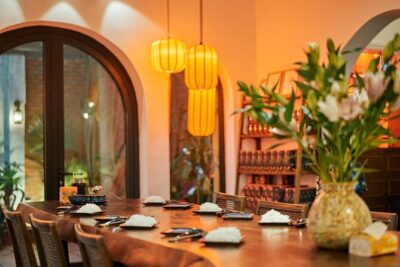
Once you arrive at the villa, the setup is geared for real cooking. You get a comfortable, air-conditioned cooking and dining space, plus all cooking equipment and utensils are provided. That matters more than you’d think. In a place where you’re cooking Vietnamese dishes you may not have made before, having the right tools on hand removes a lot of friction.
There’s also practical comfort built in. You can store luggage on request, including up to 3 days. If you’re in Hanoi for multiple days and want to keep things simple, this is one of those small features that makes your trip feel easier.
What the cooking class teaches you (and how you’ll use it later)
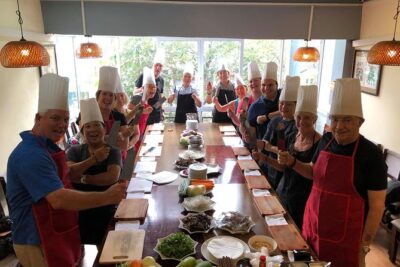
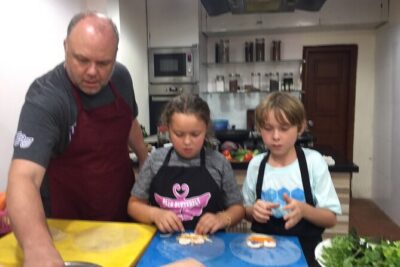
The cooking class is hands-on, and that’s the difference between a show and a skill. You’ll work with expert chefs and an on-site host, and the training background is spelled out: the chefs are trained by the former Head Chef & Training Director of Sofitel Metropole. That usually translates to better technique guidance, clearer process, and a more confident kitchen operation.
You’ll be cooking authentic Vietnamese dishes. The format is built for learning, not just eating: you prepare dishes in the villa’s kitchen under instruction, then you taste what you make. If you like bringing a destination home with you—recipes, methods, and flavor combinations—this structure supports that.
One more detail I appreciate: you’re not only learning cooking. You’re also learning Vietnamese food habits as you eat. The meal is served with Vietnamese traditions, including toasting and family-style dining. You’re getting the social side of the food, not just the ingredients.
If you’re a confident cook, you’ll likely enjoy the chance to compare what you already do with what Vietnamese cooking expects. If you’re brand new, you’ll still get value because the equipment is ready and the class is designed to guide you through each step.
Market time, fruit wine tasting, and the meal you actually want
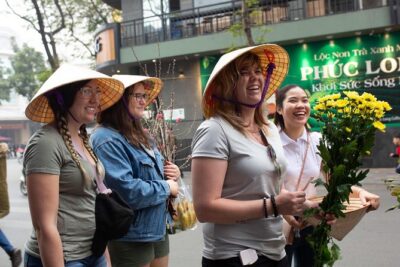
This experience doesn’t treat food like an accessory. It treats it like the main event. Part of the day involves market shopping for ingredients, so you get a small taste of how Vietnamese cooks select produce and flavors.
Then comes the moment I’d circle on the schedule: the complimentary tasting of the signature homemade fruit wine. It’s not just a random drink stop. It ties into the broader meal rhythm and helps the whole experience feel like it belongs to Vietnamese dining culture.
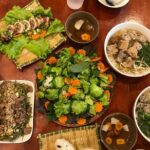
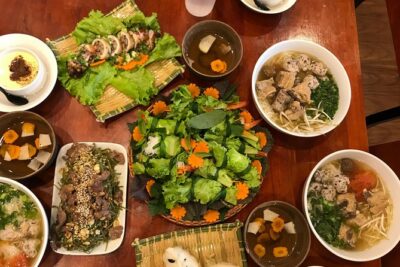
After cooking, you’ll enjoy a full Vietnamese lunch or dinner depending on your session, plus fresh seasonal fruits served after the meal. That follow-on fruit course is a nice way to end. It keeps the meal from feeling heavy and gives you a clean finish before you go back out into Hanoi.
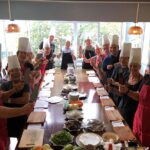
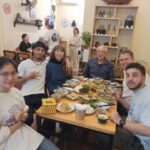
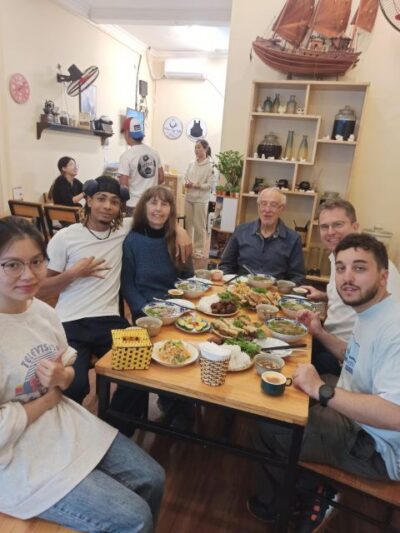
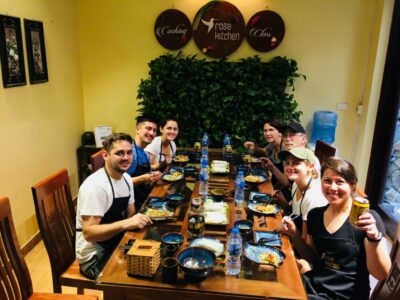
Dining is also family-style. That means the food is meant to be shared at the table, and the experience includes toasting with Vietnamese traditions. I like this approach because it nudges you into a more local pattern of eating—especially if your Vietnam trip so far has been mostly quick meals on the street.
CSR at Rose Kitchen: what your ticket supports in real life
This is the part that makes the experience more than a culinary activity. A portion of your booking supports three CSR initiatives:
- monthly charity meals for cancer patients
- educational programs for disadvantaged children in remote regions
- sustainable employment for ethnic minority women working as beloved butlers
For you, the practical takeaway is simple: when you book, you’re putting money behind specific, named programs rather than vague charity language. And the CSR is presented as an ongoing initiative, not a one-off event.
I also like that the “butlers” piece is described as sustainable employment. That framing matters because it aims at longer-term work, not just short-term help. If you care about impact while traveling, this is a built-in way to do it without adding extra time to your day.
More kitchens to roll your sleeves up in
- Hanoi Cooking Class and Market Tour in Ancient House★ 5.0 · 379 reviews
- Rose Kitchen Hanoi: Market, Cooking & Culture Tour + Free PickUp★ 5.0 · 342 reviews
- Hanoi: Cooking Class in a Local Villa with Market Tour★ 4.9 · 320 reviews
Price and value: is $49 worth a 4.5-hour day?
At $49 per person for about 4 hours 30 minutes, you’re paying for a packed experience: pagoda visit + cooking class + full meal + fruit wine tasting + guided interpretation + pickup/drop-off within the Old & French Quarter area.
Here’s the value math in plain terms. You’re not only buying a class. You’re also paying for organization (transport within the area), translation and cultural storytelling, and the meal experience. Because the kitchen tools are provided and the cooking space is air-conditioned, you also avoid the hidden costs and hassle that can come with DIY cooking or finding ingredients on your own.
It’s also booked about 11 days in advance on average, which can be a clue that this is a popular way to spend an evening or afternoon. If you’re flexible, you can pick a session that fits your plans. If your dates are fixed, book earlier so you’re not left choosing between sessions that don’t work.
Group discounts apply, and the max group size is listed as 100 travelers. That’s not a tiny group, so your experience will feel energetic and social. If you want a one-on-one class, you may prefer a smaller private option—but you’re still getting a guided experience, not a self-guided wandering day.
Logistics that affect your day (and how to plan around them)
The tour includes a digital certificate available on request, plus a digital guidebook with must-try local eats and favorite hangouts. That can be handy if you want a quick next-step list for after the cooking class, especially when you’re tired and decision-fatigued.
You’ll also get these little “trip saver” perks:
- mobile ticket
- luggage storage available on request (up to 3 days)
- 20% off other hands-on cultural experiences
There’s also a note about special occasion gifts with advance notice. If you’re celebrating a birthday or something similar, it’s worth asking ahead of time.
Weather matters. This experience requires good weather, and if it’s canceled due to poor weather, you’ll be offered a different date or a full refund. Plan for Hanoi weather swings by keeping your schedule flexible if you can.
Also, service animals are allowed, and the site is near public transportation. Even if you’re not using pickup, the area is not remote in practice.
Who this is perfect for (and who might want a different style of day)
This tour is ideal if you want to do two things in one smooth block of time: learn about Hanoi’s spiritual landmarks and then learn to cook Vietnamese food in a proper kitchen setting. The pairing works because the day has structure. You don’t just go from place to place—you shift from temple context to cooking skill and end with a shared meal.
You’ll also like it if you value social travel. Family-style dining, toasting traditions, and the role of the host/cultural storyteller all point to an experience that’s meant to feel warm and communal.
If you’re the type who wants a silent, private visit to religious sites, the group format may feel a bit busier than your ideal. And if you’re strongly hands-off (you’d rather watch than cook), you might find the hands-on nature of the class less appealing. The whole point is that you participate.
Should you book Rose Kitchen’s Trấn Quốc Pagoda + CSR cooking class?
I think it’s a good booking if you want one of the more “meaningful meals” in Hanoi—food plus context plus named CSR programs. The combination of Trấn Quốc Pagoda with a structured cooking class in a well-equipped villa makes it hard to beat for a first or mid-trip day when you want variety without chaos.
Book it if you:
- want a guided temple visit with real explanations
- like hands-on cooking where you take skills home
- care that your money supports specific CSR initiatives
Skip it (or consider something else) if you:
- need a quiet, private experience
- dislike group settings
- can’t be flexible with timing if weather becomes an issue
If you do book, I’d suggest you bring comfortable shoes and a curious attitude. The day is built around learning—then eating what you made.
FAQ
How long is the experience?
It’s approximately 4 hours 30 minutes.
How much does it cost?
The price is $49 per person.
Do I get hotel pickup and drop-off?
Yes. Pickup and drop-off are offered from Hanoi’s Old & French Quarter area.
What’s included in the meal?
You’ll enjoy a full Vietnamese lunch or dinner (depending on your session), plus complimentary tasting of homemade fruit wine and fresh seasonal fruits after the meal.
Will I cook with equipment provided?
Yes. All cooking equipment and utensils are provided for your use.
Is there a luggage storage option?
Yes. Free luggage storage is available upon request (up to 3 days).
What happens if the weather is poor?
The experience requires good weather. If it’s canceled due to poor weather, you’ll be offered a different date or a full refund.
Roll Your Sleeves Up in Hanoi
More Tour Reviews in Hanoi






Learn Another Dish in Hanoi
Latest Hanoi write-ups from our team


Hanoi Cooking Classes, compared.
 ★ 5.0Hanoi Cooking Class: Culture, Local Market & Meaning CSR ImpactFrom $395,147 reviews
 ★ 5.05 Traditional Dishes Hanoi Cooking Class with Market TripFrom $354,890 reviews
 ★ 5.0Vietnamese Food Cooking Class in Hanoi with Market ExperienceFrom $45778 reviews
 ★ 5.05 Local Dishes Cooking Class with Meal & Market VisitFrom $40420 reviews
 ★ 5.0Hanoi Cooking Class and Market Tour in Ancient HouseFrom $45379 reviews
 ★ 5.0Rose Kitchen Hanoi: Market, Cooking & Culture Tour + Free PickUpFrom $48342 reviews
 ★ 4.9Cooking Class in a Local Villa with Market TourFrom $37320 reviews
 ★ 5.0Hanoi Maya Kitchen: Traditional Cooking Class & Market TourFrom $30287 reviews
Browse the lists this tour appears in