
Reviewed · HANOI COOKING CLASSES
5 Traditional Dishes Hanoi Cooking Class with Market Trip
Hanoi can overwhelm your senses fast, so I like experiences that give structure. This cooking class pairs a trip to Hanoi’s largest market with a hands-on lesson that ends with you eating what you cooked. You’ll learn five classics (pho bo, bun cha, nem ran, papaya salad, and egg coffee or chocolate), and you’ll do it with an English-speaking chef in a small group capped at 10.
Two big wins for me are the market shopping, where you learn what to look for in produce and spices, and the fact that you leave with both a cookbook and a certificate. The main thing to consider: you’re on a tight schedule to cover multiple dishes, so not every step will feel equally hands-on for everyone.
You meet in the historic Old Quarter, then head out with a local guide to pick ingredients at the market and come back to cook. In past sessions, instructors such as Perla and Vy have been leading groups and guiding the process in clear English, including adjustments for dietary needs. If you want total control over every single step, this may feel a bit fast-paced—though that’s also what makes it fun and efficient.
In This Review
- Key highlights to know before you go
- From the Old Quarter to the biggest market in Hanoi
- The market trip: learning what to buy and why
- The studio phase: a kitchen that actually teaches
- Cooking five Hanoi classics: what you’ll make
- Pho bo (beef noodle soup)
- Bun cha (Hanoi BBQ pork noodle)
- Nem ran (fried spring roll)
- Papaya salad (with fresh herb style)
- Egg coffee or chocolate (dessert drink)
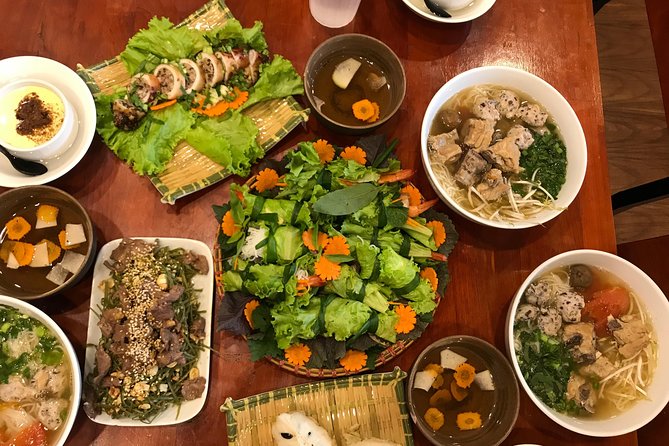
- What you eat and drink afterward
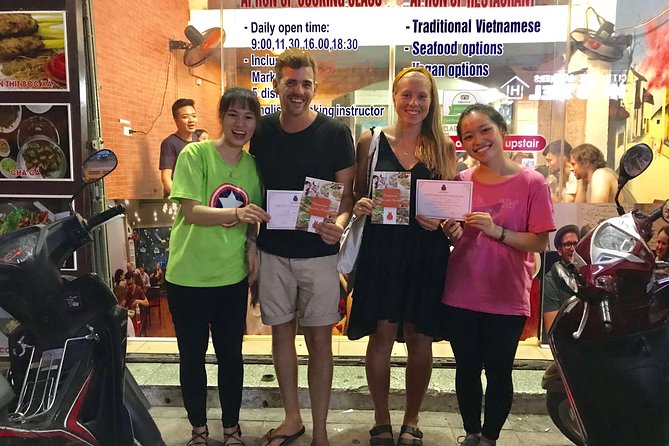
- Learn, then take it home: cookbook and certificate
- Pacing, group size, and how hands-on it really feels
- Price and value: is $35.07 worth it?
- Who should book this cooking class in Hanoi
- Should you book this Hanoi market-to-cooking class?
- FAQ
- What dishes are included in the class?
- How long does the Hanoi cooking class last?
- How much does it cost?
- Is there a vegetarian option?
- What’s included in the price?
- Where do we meet for the tour?
- Is hotel pickup and drop-off included?
- Can I cancel for a refund?
Key highlights to know before you go
- Hanoi’s largest market first: You shop for the ingredients that make these dishes taste right
- Five dishes in one sitting: You cook a full spread, then eat it together
- English-speaking instruction: The workflow is explained clearly while you’re actively cooking
- Rice vodka and coffee/tea included: You’re not just learning—you’re tasting as you go
- Vegetarian versions are available: If you avoid red meat, you’ll cook a fitting substitute
- Small group size (max 10): Easier participation and quicker help at the stations
From the Old Quarter to the biggest market in Hanoi
This starts right where you want to be if you’re exploring on foot: the historic Old Quarter. The meeting point is at 8 P. Gia Ngư, Hàng Bạc, Hoàn Kiếm, Hà Nội. There’s no hotel pickup, so you’ll want to arrive a little early and plan a comfortable walk to the start.
Once you’re together with your English-speaking chef, the flow makes sense: you don’t begin by cooking blindly. You start by seeing what ingredients look like in the real market setting—how they’re grouped, how fresh herbs and produce are handled, and what spices and basics go into Vietnamese cooking.
Why this matters: when you later make pho bo, bun cha, or nem ran at home, you’ll remember what the market taught you about balance—fresh herbs versus dried spices, the role of aromatics, and the practical reality of sourcing everything before cooking.
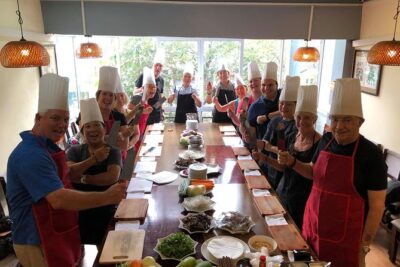
More aprons on in Hanoi kitchens

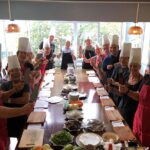
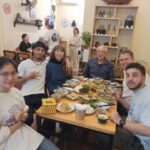
The market trip: learning what to buy and why
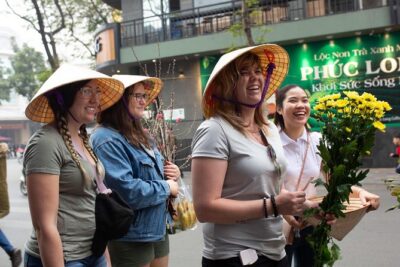
After meeting, you head to Hanoi’s largest market with your guide. This is where you’ll learn the basics of Vietnamese cooking in a grounded way: you’re not just tasting flavors, you’re learning ingredient choices.
A few practical things you’ll likely notice during the shopping portion:
- Herbs and vegetables are treated like core ingredients, not garnish.
- Spices and seasonings are selected with purpose, not guesswork.
- You’re buying for specific dishes, not a random pantry list.
A class like this also works well on a travel schedule. If you’re in Hanoi for only a few days, the market portion gives you something more useful than another restaurant meal. It’s a fast way to build a mental checklist for Vietnamese flavors—especially if you plan to eat pho, bun cha, and fried spring rolls during your trip anyway.
One consideration: markets mean walking and crowds. Wear shoes you can stand in, and expect sensory overload. If you’re sensitive to strong smells, that’s still part of the experience.
The studio phase: a kitchen that actually teaches
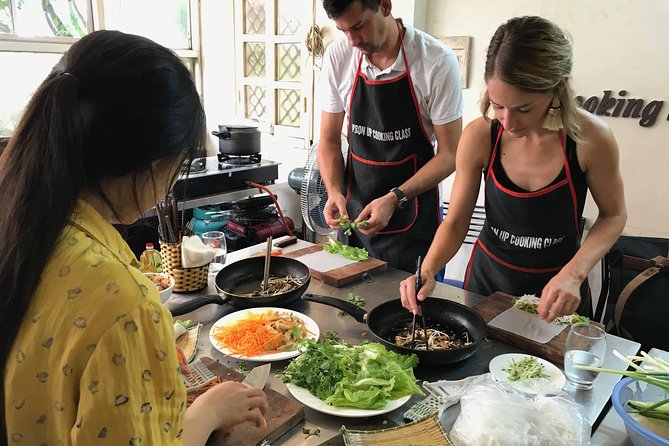
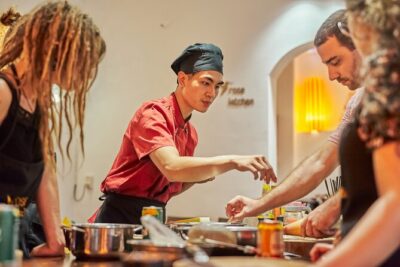
Once you return from shopping, the cooking portion is set up for participation. Groups are small enough that you’re not just watching while someone else does everything. You’ll work through the process for five dishes and you’ll be able to step in for different stages—cutting, mixing, assembling, or cooking depending on the station and timing.
In the classroom, the instructors (people like Emmy, Vy, and Coco have been mentioned) keep things interactive and friendly. The English is clear enough that you can follow what’s happening without needing Vietnamese cooking experience first.
That said, one practical reality from the class format: time is limited. Some steps (like prep or cooking certain components) may happen more efficiently than you could do at home. You might still do a lot, but not every single minute will feel like you’re doing every step from start to finish.
Cooking five Hanoi classics: what you’ll make
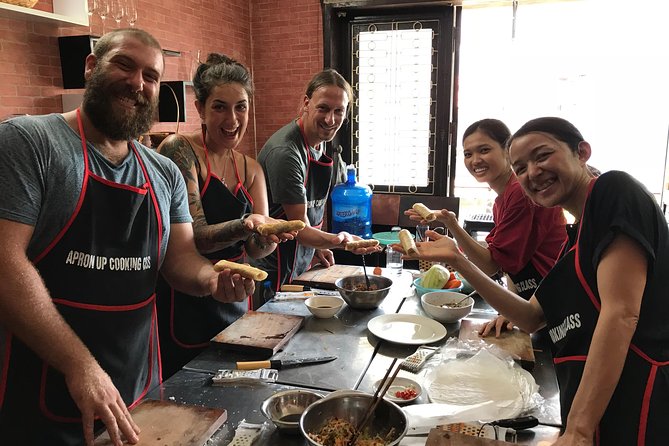
This menu is built for variety: soup, grilled pork noodles, fried spring rolls, a fresh papaya salad, and a sweet drink. You cook five Vietnamese dishes, then eat them after.
Pho bo (beef noodle soup)
Pho is the dish that teaches fundamentals because it revolves around scent, broth character, and timing. In this class, your focus is on seeing how the ingredients come together and then cooking in the flow of a real kitchen.
Even if pho feels intimidating, a structured class format makes it doable. You’re learning the logic, not just copying steps.
Worth a glance beside this Hanoi pick:
- Hanoi Cooking Class and Market Tour in Ancient House★ 5.0 · 379 reviews
- Rose Kitchen Hanoi: Market, Cooking & Culture Tour + Free PickUp★ 5.0 · 342 reviews
- Hanoi: Cooking Class in a Local Villa with Market Tour★ 4.9 · 320 reviews
Bun cha (Hanoi BBQ pork noodle)
Bun cha is where the lesson often becomes more hands-on, because it’s about balancing grilled flavor with fresh toppings and noodles. This dish is also a nice contrast to pho—thicker, more assembled, and very much about finishing details.
Nem ran (fried spring roll)
Fried items add technique. Nem ran is a great dish to practice because it forces you to think about filling distribution and sealing. It’s also the kind of food that rewards small adjustments.
If you’ve never fried something before, don’t worry. The class is paced for beginners, and your instructor can guide you through the critical steps.
Papaya salad (with fresh herb style)
Papaya salad is bright and punchy. It’s also a dish that teaches you to use freshness intentionally. You’ll learn how ingredients work together—sweet, sour, and salty components all in the same bowl.
This is one of the best dishes to connect to the market shopping you did earlier. When you recognize herbs and aromatics from the market, you understand why they matter.
Egg coffee or chocolate (dessert drink)
The class ends with a sweet drink choice: egg coffee/chocolate. In a cooking class, dessert can feel like an afterthought. Here, it’s part of the menu, so you get a full meal arc—from savory through sweet.
What you eat and drink afterward
You don’t cook and then disappear. You savor what you made as a group meal.
Included with the meal:
- Rice vodka (the class includes it, and you’ll sip as part of the experience)
- Coffee and/or tea
That matters for value. Many cooking classes are heavy on instruction but light on what you actually get to enjoy. Here, you get a full, satisfying set of dishes and a drink included in the price.
Learn, then take it home: cookbook and certificate
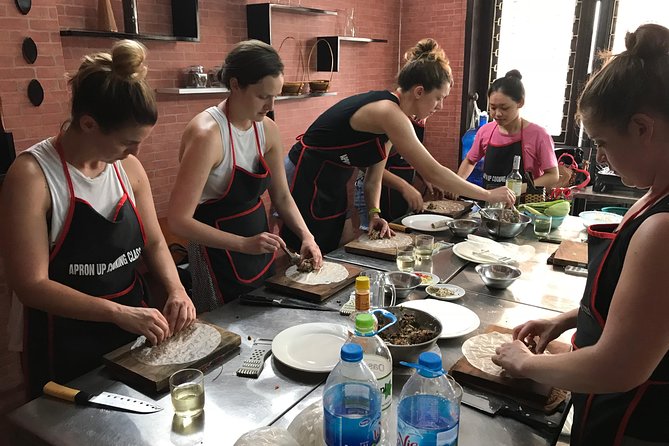
A standout part of this experience is the take-home support. You’re given a cookbook and a certificate, so you can recreate the dishes later instead of forgetting them two days after you leave.
Why that’s worth caring about: Hanoi cooking can feel like a jumble of flavors until you have the structure on paper. A cookbook and certificate help you remember which dish needs what—especially for dishes like pho bo and papaya salad where balance matters.
Pacing, group size, and how hands-on it really feels
This class runs for about 3 hours 15 minutes. And because it covers five dishes, the pacing is tight. In practice, that can feel efficient—like a well-run kitchen—so you spend less time waiting and more time working.
The group size matters here. With a maximum of 10 participants, you get more attention at your station than you would in a big class. It also makes it easier to ask questions while you’re cooking.
Hands-on level can vary by station and by how much prep is done ahead of time. A couple of people have noted that some components may be partially handled so the class can hit its timing targets. Still, the format is designed so you’re cooking and assembling, not just standing by.
Also worth noting: at least one person flagged a hygiene concern. That doesn’t automatically mean something is wrong for you, but it’s a good reminder to keep common-sense habits—like washing hands before eating and using sanitizer when you need it.
Price and value: is $35.07 worth it?
At $35.07 per person, you’re paying for more than a cooking show.
Here’s what you’re getting, based on the provided details:
- Market trip to Hanoi’s largest market
- Cooking five traditional dishes
- Rice vodka plus coffee and/or tea
- Instruction in English
- Cookbook and certificate
- Small group format (max 10)
If you compare it to the cost of just eating those dishes at multiple restaurants plus buying market-style ingredients on your own, the value stacks up fast. The biggest reason it feels worthwhile is that you get both the ingredient education and the end result in one package.
It’s also a good last-night option in Hanoi because you leave with skills, not just food memories.
Who should book this cooking class in Hanoi
This is a strong fit if you want:
- A structured way to learn Vietnamese cooking
- A market experience without needing to plan every ingredient yourself
- Hands-on fun with a small group
- A complete meal with drink included
It’s also a practical choice if you’re a food lover who wants a skill you can use later. The cookbook helps, and the dish list covers foods you’ll actually seek out in Hanoi.
You might skip it if:
- You hate fast pacing and want slow, deep practice on one dish
- You need hotel pickup or a fully guided local transportation plan (there’s no pickup here)
- You’re uncomfortable in crowded market environments (the market portion is part of the core experience)
Should you book this Hanoi market-to-cooking class?
Yes, if you’re looking for a high-value evening that combines a real ingredient shopping trip with a full meal you helped cook. For the price, you’re getting five dishes, rice vodka, coffee or tea, and take-home materials, all in a small group.
I’d book it especially if you’re excited by pho bo, bun cha, and nem ran, or if you want papaya salad plus egg coffee/chocolate without guessing how to get the balance right. Just plan to walk to the meeting point in the Old Quarter, bring comfortable shoes, and go in hungry.
If you have dietary needs beyond the vegetarian/non-red meat option, the class may be able to adjust based on what the chef can accommodate—so it’s smart to be clear about what you need.
FAQ
What dishes are included in the class?
You’ll cook five dishes: Pho bo (beef noodle soup), Bun cha (Hanoi BBQ pork noodle), Nem ran (fried spring roll), papaya salad, and egg coffee or chocolate.
How long does the Hanoi cooking class last?
The duration is about 3 hours 15 minutes (approx.).
How much does it cost?
The price is $35.07 per person.
Is there a vegetarian option?
Yes. The class includes vegetarian versions for vegetarians and non-red meat eaters.
What’s included in the price?
Included items are coffee and/or tea, rice vodka, and an English-speaking chef, plus you’ll receive a cookbook and a certificate.
Where do we meet for the tour?
The meeting point is 8 P. Gia Ngư, Hàng Bạc, Hoàn Kiếm, Hà Nội 08404, Vietnam.
Is hotel pickup and drop-off included?
No, hotel pickup and drop-off are not included.
Can I cancel for a refund?
Yes. You can cancel for a full refund if you cancel up to 24 hours in advance. If you cancel less than 24 hours before the start time, the amount paid is not refunded.
More Shopping Tours in Hanoi
More Tour Reviews in Hanoi






Learn Another Dish in Hanoi
Latest Hanoi write-ups from our team


Hanoi Cooking Classes, compared.
 ★ 5.0Hanoi Cooking Class: Culture, Local Market & Meaning CSR ImpactFrom $395,147 reviews
 ★ 5.0Vietnamese Food Cooking Class in Hanoi with Market ExperienceFrom $45778 reviews
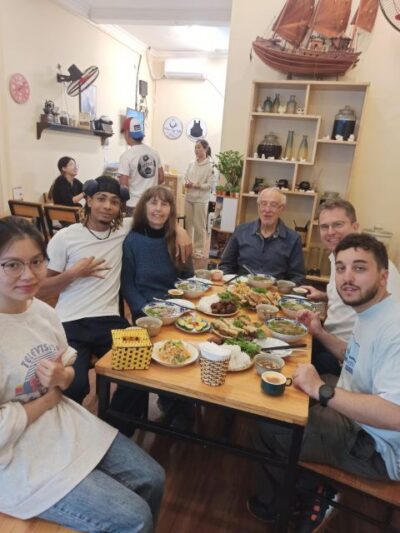 ★ 5.05 Local Dishes Cooking Class with Meal & Market VisitFrom $40420 reviews
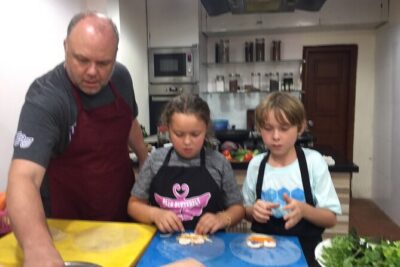 ★ 5.0Hanoi Cooking Class and Market Tour in Ancient HouseFrom $45379 reviews
 ★ 5.0Rose Kitchen Hanoi: Market, Cooking & Culture Tour + Free PickUpFrom $48342 reviews
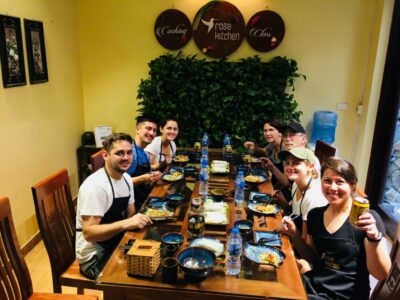 ★ 4.9Cooking Class in a Local Villa with Market TourFrom $37320 reviews
 ★ 5.0Hanoi Maya Kitchen: Traditional Cooking Class & Market TourFrom $30287 reviews
 ★ 5.0Hanoi Cooking Class: Pho/Bun Cha/Banh Xeo…+Free Egg/Salt CoffeeFrom $19267 reviews
Browse the lists this tour appears in