
Reviewed · HANOI COOKING CLASSES
Hanoi Maya Kitchen: Traditional Cooking Class & Market Tour
Food shopping in Hanoi is half the fun. This class pairs a local market tour with a hands-on kitchen session, and it ends with the real star: egg coffee. You’ll be guided through what to buy, what to swap if ingredients differ, and how classic Vietnamese flavors come together.
I especially like the step-by-step coaching during the cooking, including getting spring rolls to come out even and good-looking. The one drawback is simple: there’s no pickup, so you’ll need to meet at the Crossing Vietnam office near Hang Bong (listed meeting details include 38 P. Bát Sứ, Hàng Bồ).
In This Review
- Key highlights you’ll care about
- A Market Tour That Teaches You What to Buy (and Why)
- Spring Rolls: The Skill That Makes Nem Ran Feel Like a Vietnamese Holiday
- Papaya Salad Brings the Sour-Sweet Balance Into Focus
- Pho Rolls and Mixed Pho: Learning How Vietnam Sequences Flavors
- Egg Coffee and Local Wine Tasting: The End Credits You’ll Remember
- What You Eat at the End (and Why You’ll Want a Big Appetite)
- Timing, Group Size, and Value: Why $30 Works Here
- Practical Tips So You Enjoy the Whole 4 Hours
- Who Should Book Hanoi Maya Kitchen?
- Should You Book This Cooking Class?
- FAQ
- What’s included in Hanoi Maya Kitchen?
- How long does the cooking class last?
- What dishes will I cook and eat?
- Where do I meet for the tour?
- Is pickup and drop-off included?
- What’s the group size?
- Is the tour refundable if I change plans?
Key highlights you’ll care about
- Market first, then cooking: you choose ingredients before you touch the stove.
- Four dishes plus egg coffee: papaya salad, fried spring rolls, pho rolls, mixed pho, and Ca Phe Trung.
- Small group size: capped at 15 travelers, so you get real attention.
- Recipe included: you leave with guidance for trying it again at home.
- Local touches: a drink is included, plus local wine tasting and seasonal fruit for dessert.
A Market Tour That Teaches You What to Buy (and Why)
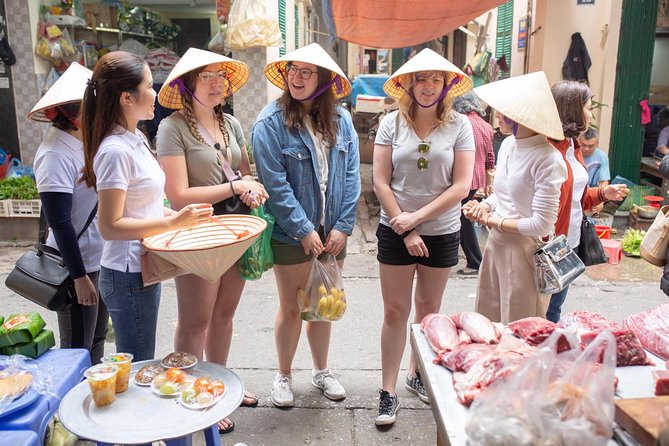
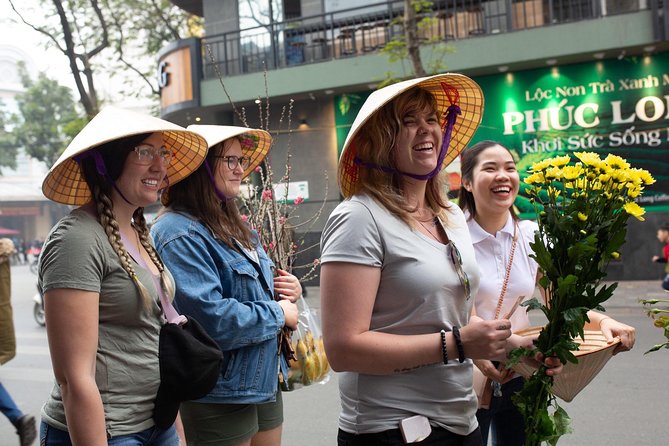
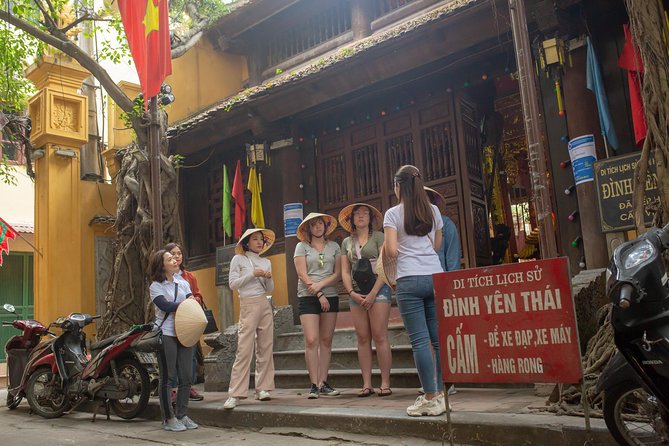
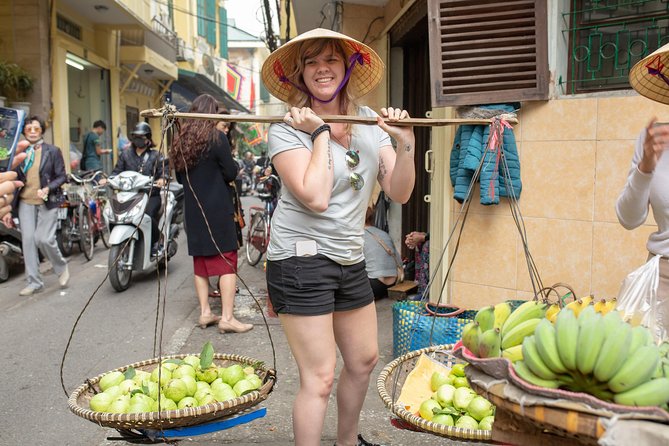
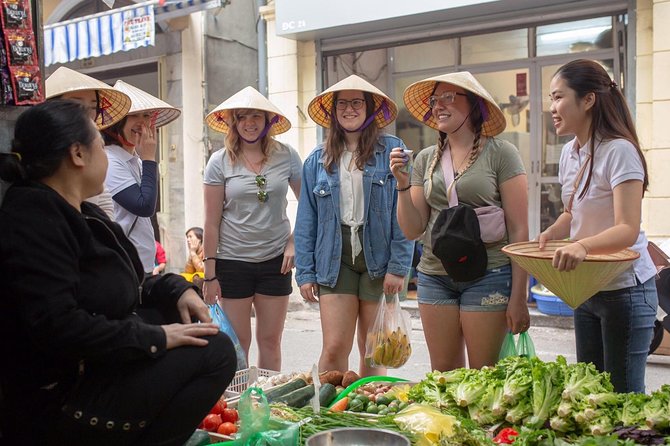
This experience starts with the best kind of intro: you learn ingredients before you cook them. You’ll head to a local market stop, described as Hang Da Market in one part of the schedule and Yen Thai market in the route description. Either way, the purpose is the same. You get to see what Vietnamese cooking actually depends on, from fresh produce to the flavor-makers that make substitutions less scary.
I like that your English-speaking instructor doesn’t just point. They help you understand how Vietnamese kitchens think. For example, when you’re shopping for something like the salad that tastes both sour and sweet, you’re not just grabbing items—you’re learning the balance behind the dish. That kind of context matters when you cook later, because you can adjust instead of following a stressed-out recipe that demands exact ingredients.
You’ll also get a quick look at everyday market life. It’s not a staged food set. It’s people buying dinner, discussing, bargaining, and moving quickly. Even if you’re not a super confident shopper, this part helps you get your bearings fast.
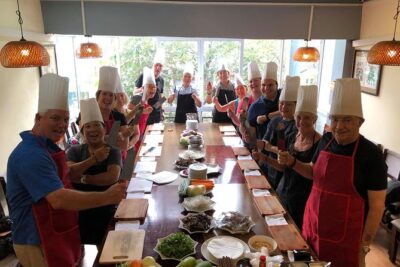
More aprons on in Hanoi kitchens
Spring Rolls: The Skill That Makes Nem Ran Feel Like a Vietnamese Holiday
After the market, you move into the kitchen where you’ll cook a full lineup, starting with fried spring rolls (Nem Ran). This is a dish with big social meaning in Vietnam. It shows up at gatherings and holiday meals, so it’s more than a snack. In class, you’ll treat it like a technique lesson because the shape matters.
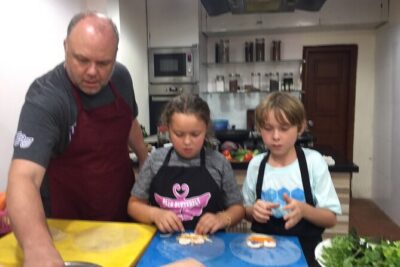
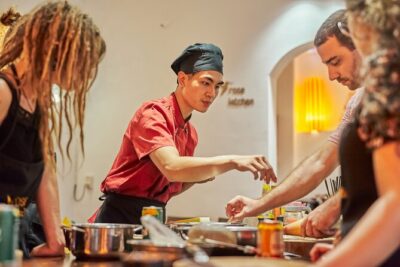
The instructor guides you step by step, and the goal is simple: rolls that are even, tidy, and ready to fry without falling apart. You’ll practice the hand movements that help the filling stay where it belongs and that help your wrapping look consistent. It sounds basic, but it’s the sort of skill you feel in your hands. By the time you finish, you understand the difference between making something and actually making it well.
One practical point: if you’re feeling rushed on this day, don’t. Rolling takes patience, and that patience pays off later when you see how your roll looks on the plate. The class pace is designed for you to keep up, not for speed.
Papaya Salad Brings the Sour-Sweet Balance Into Focus
Next up is Nom Du Du (Papaya Salad). This is one of those Vietnamese dishes where you can taste the logic immediately. The flavors lean into sour and sweet, and the best version feels balanced, not just sharp.
In class, you’ll learn how ingredients work together in a way you can actually repeat. You’re not only making a salad. You’re building a flavor profile: tang up front, sweetness to round it out, and a savory element that keeps everything from feeling flat.
Even if you’ve had papaya salad in Hanoi before, this is different because you’ll be actively producing the balance rather than ordering it and hoping it matches memory. You’ll start to recognize which ingredients shift the taste most and how quickly the salad changes as things mix.
Pho Rolls and Mixed Pho: Learning How Vietnam Sequences Flavors
Now it’s time for the pho section of the menu, and it’s a smart choice. Many people think pho is one thing. In class, you learn it’s also a method and a sequence.
You’ll make Pho Cuon (pho rolls), which are a fun twist because the dish is built around texture and assembly. Instead of the bowl-first mindset, you get a more hands-on approach to how the components come together. The class format keeps you from guessing. You learn the order of operations and what the instructor is watching for as you work.
Then you move to Pho Tron (mixed pho). This dish teaches another useful lesson: pho doesn’t have to be only one kind of topping or one kind of structure. Mixed pho helps you understand how Vietnamese cooks think about combining elements into one satisfying meal.
After this portion, you’ll likely have a better sense of why Vietnamese bowls feel layered even when they don’t look complicated. It’s not just about ingredients. It’s about how they’re put together.
Egg Coffee and Local Wine Tasting: The End Credits You’ll Remember
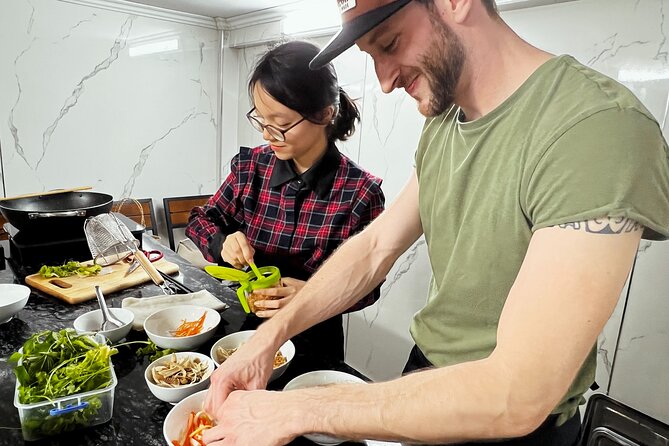
Every good cooking class needs a finish that feels special, and this one does it with Ca Phe Trung (egg coffee). This drink is creamy, rich, and distinctly Vietnamese. In the kitchen, you’re not just tasting it. You’re making it, which helps you understand what gives it that signature texture and sweetness.
Egg coffee also makes a great finale because it contrasts with the savory dishes you cooked earlier. You’ll taste the difference between heat and comfort, and between savory flavor-building and dessert-level richness.
The class also includes a local wine tasting, plus a drink like water, tea, or coffee during the experience. That combination makes the meal feel like a proper Vietnamese stop, not a quick demo where you walk out after one bite.
Worth a glance beside this Hanoi pick:
- Hanoi Cooking Class and Market Tour in Ancient House★ 5.0 · 379 reviews
- Rose Kitchen Hanoi: Market, Cooking & Culture Tour + Free PickUp★ 5.0 · 342 reviews
- Hanoi: Cooking Class in a Local Villa with Market Tour★ 4.9 · 320 reviews
What You Eat at the End (and Why You’ll Want a Big Appetite)
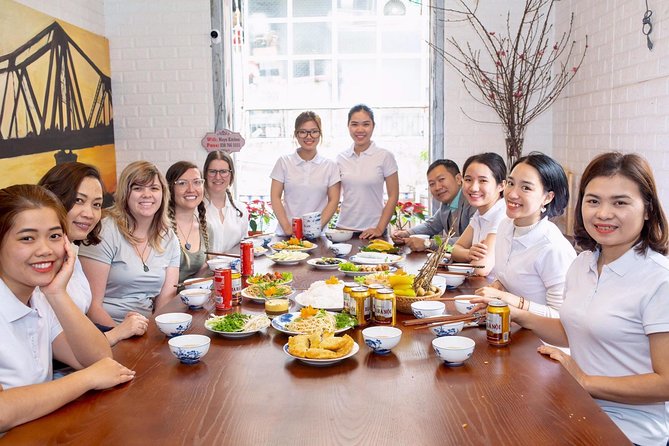
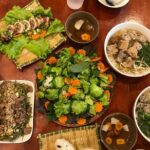
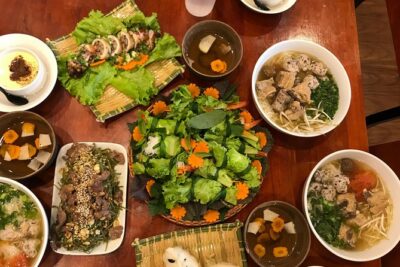
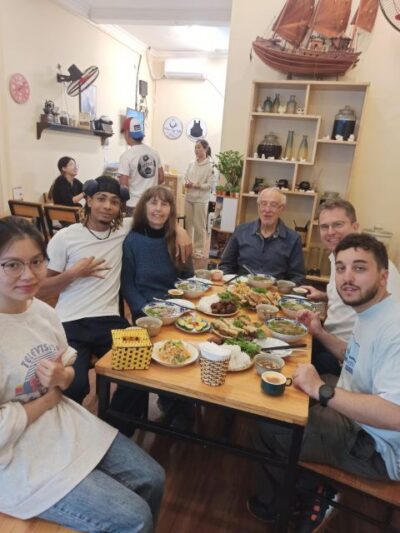
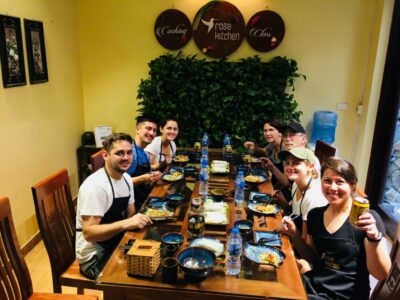
After cooking, you eat the dishes you made. The menu includes fried spring rolls, papaya salad, pho rolls, mixed pho, and egg coffee, with seasonal fruits for dessert. This isn’t a tiny tasting. You get a full meal, and it’s more than enough for most people to feel satisfied.
One tip that keeps coming up: skip breakfast if you can. The class takes you through shopping, prep, cooking, and then eating, and the food portions add up fast. You’ll be glad you saved your appetite.
Also, since you cook everything yourself, the meal feels like proof of your work. If you’re the kind of person who hates wasting food on vacation, you’ll appreciate having a reason to stay hungry until the table. Some classes also end with extras and leftovers people want to take away, so don’t be surprised if you leave with more food than you planned to eat right on the spot.
Timing, Group Size, and Value: Why $30 Works Here
This is about a 4-hour experience, and the pricing is $30 per person. On paper, that might sound like a lot for a cooking class. In practice, it’s strong value because it covers more than instruction.
You’re paying for:
- the market tour and food buying
- an English-speaking instructor
- the full set of ingredients for the dishes on the menu
- egg coffee prep
- a drink during the class
- local wine tasting
- seasonal fruit dessert
- cooking recipes to take home
- a small group setup, capped at 15 travelers
That’s the key difference versus cheaper “watch and taste” classes. You’re not just observing. You’re shopping, cooking, learning, and eating what you made. If you like practical travel experiences—ones that teach you how food works—this price feels fair.
The small group size also helps. When you’re rolling spring rolls or assembling pho rolls, you need feedback. In a big class, that feedback gets thin. Here, it has a better chance of landing.
Practical Tips So You Enjoy the Whole 4 Hours
Here are the things that will make your experience smoother.
First, wear comfortable shoes. You’ll be doing a mix of walking through the market and standing in the kitchen. Second, go hungry. The menu is full, and you’ll likely want room for egg coffee and dessert.
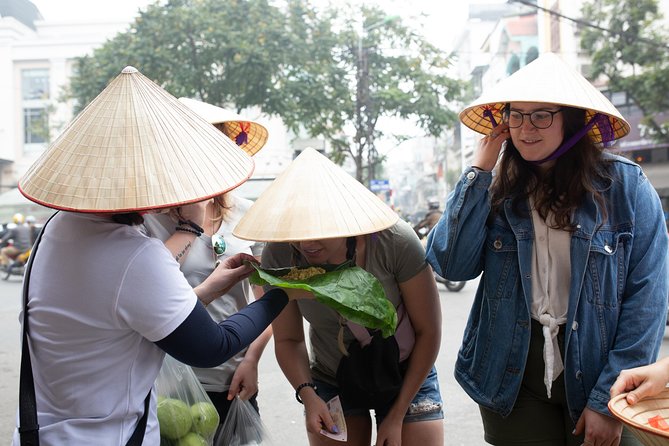
Third, pay attention during the market portion. You’re learning ingredient logic, not just collecting items. If you have questions about substitutes, this is the moment to ask, since you’ll see what’s available and what the instructor recommends.
Finally, match your expectations to the format. This isn’t a silent cooking show. It’s a guided session where your instructor gives step-by-step direction and keeps you moving through the full menu.
Who Should Book Hanoi Maya Kitchen?
This is a good fit if you want a hands-on day in Hanoi that includes both learning and eating. It’s ideal for couples, friends, and anyone traveling solo who likes structure—market first, then kitchen, then meal.
It’s also a nice choice if you’re a beginner cook. The class is designed to walk you through technique, especially for spring rolls. And because the recipes are included, you’re not left staring at your notes wondering how it all comes together.
If you’re someone who hates cooking with your hands or you’re very short on time, you might find the 4-hour commitment less appealing. But if you can spare half a day, you’ll likely come away feeling like you did something real with your visit.
Should You Book This Cooking Class?
I’d book it if you want Hanoi food culture in a way that you can actually repeat. The market tour gives you context. The cooking teaches technique. And the final meal is the payoff—you eat what you made, not just what someone else prepared.
Skip it only if you strongly prefer restaurant-style dining with no hands-on work, or if the lack of pickup logistics will be a hassle for your day. Otherwise, for $30 and a small-group format, this is one of the more “worth the time” experiences in Hanoi.
FAQ
What’s included in Hanoi Maya Kitchen?
The class includes a local market tour and food buying, an English-speaking instructor, all food for the menu dishes (fried spring rolls, papaya salad, pho rolls, mixed pho, egg coffee), seasonal fruits for dessert, one drink (water, tea, or coffee), local wine tasting, and cooking recipes.
How long does the cooking class last?
It runs about 4 hours.
What dishes will I cook and eat?
You’ll make Nom Du Du (papaya salad), Nem Ran (fried spring rolls), Pho Cuon (pho rolls), Pho Tron (mixed pho), and Ca Phe Trung (egg coffee). Dessert is seasonal fruits.
Where do I meet for the tour?
The meeting point is at the Crossing Vietnam Tour office near Hang Bong, listed as 47 Hang Bong str., and the start address is also given as 38 P. Bát Sứ, Hàng Bồ, Hoàn Kiếm, Hà Nội.
Is pickup and drop-off included?
No. Pick-up and drop-off service is not included, and the activity ends back at the meeting point.
What’s the group size?
There is a maximum of 15 travelers.
Is the tour refundable if I change plans?
Free cancellation is available. You can cancel up to 24 hours in advance for a full refund. Canceling less than 24 hours before the start time is not refundable.
More Tours in Hanoi
- Ninh Binh Full-Day Tour from Hanoi to Hoa Lu, Tam Coc & Mua Cave Via Boat & Bike
★ 5.0 · 4,384 reviews




More Tour Reviews in Hanoi


Learn Another Dish in Hanoi
Latest Hanoi write-ups from our team



Hanoi Cooking Classes, compared.
 ★ 5.0Hanoi Cooking Class: Culture, Local Market & Meaning CSR ImpactFrom $395,147 reviews
 ★ 5.05 Traditional Dishes Hanoi Cooking Class with Market TripFrom $354,890 reviews
 ★ 5.0Vietnamese Food Cooking Class in Hanoi with Market ExperienceFrom $45778 reviews
 ★ 5.05 Local Dishes Cooking Class with Meal & Market VisitFrom $40420 reviews
 ★ 5.0Hanoi Cooking Class and Market Tour in Ancient HouseFrom $45379 reviews
 ★ 5.0Rose Kitchen Hanoi: Market, Cooking & Culture Tour + Free PickUpFrom $48342 reviews
 ★ 4.9Cooking Class in a Local Villa with Market TourFrom $37320 reviews
 ★ 5.0Hanoi Cooking Class: Pho/Bun Cha/Banh Xeo…+Free Egg/Salt CoffeeFrom $19267 reviews
Browse the lists this tour appears in