
Reviewed · HANOI COOKING CLASSES
Hanoi Cooking Class in a Haven of Tranquility – Thom culinary
The road to dinner starts with a cyclo ride. This Thơm Culinary class mixes market learning with hands-on cooking in a quiet garden home, so you don’t just get recipes—you get the why behind Vietnamese flavors. You’ll also harvest herbs and see how local ingredients fit into everyday meals.
I really like the way the experience pairs street-market ingredients with the cooking basics, and how hosts like Trang focus on practical flavor balance, not fancy theory. I also love the generous food setup: you cook four dishes, then sit down to desserts, herbal drinks, fruit, and even rice wine. One possible drawback: if you’re not a fan of market walking and strong-smelling herbs, the early part of the day can feel a bit intense.
In This Review
- The small details that make it work
- From cyclo ride to Dong Xuan market: where the ingredients start
- Thơm Culinary: the garden-home calm you didn’t know you needed
- Old City Gate and the market circuit: Cau Đông and Thanh Hà
- Harvesting herbs and fruit: the lesson you can taste
- Hands-on cooking with a small group: more practice, less watching
- The feast: homemade desserts, herbal drinks, rice wine, and etiquette
- Price and value: why $64.31 can make sense in Hanoi
- Timing, group size, and who this fits best
- Should you book Thơm Culinary?
- FAQ
- What is the duration of the Hanoi Cooking Class with Thơm Culinary?
- How much does the tour cost?
- Does the class include pickup from my hotel?
- What will I cook during the class?
- Are drinks and food included?
- Is free cancellation available?
The small details that make it work
- Cyclo to Dong Xuan market sets the tone fast and keeps things fun
- Thơm Culinary’s garden house gives you a break from Hanoi noise
- Herb and fruit harvesting turns ingredients into a lesson you can taste
- Four cooked dishes means you go home with real, repeatable know-how
- Bottomless herbal drinks plus rice wine keeps the meal flowing
- Max 8 travelers keeps the class personal and not like a factory line
From cyclo ride to Dong Xuan market: where the ingredients start
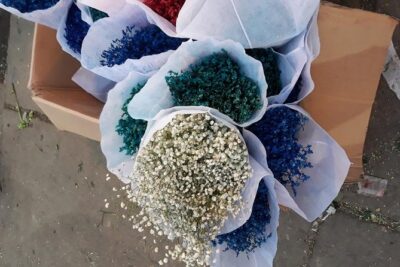
Your day kicks off with transport that feels designed for actual humans, not just timing spreadsheets. You get taken by cyclo and driven around to the market area, then you start learning with your feet. Dong Xuan is the kind of market where you understand why Vietnamese cooking starts with fresh ingredients and quick decisions.
Here’s the value: you’re not shown ingredients as isolated items. You see them as parts of meals—herbs next to produce, sweet components next to savory ones, and spices with their real-world jobs. It also helps you build confidence. When you later shop in Hanoi on your own, you’ll recognize what matters and what you can skip.
One thing to consider: markets mean movement and crowds. You don’t need to be an athlete, but comfortable shoes help. Also, expect lots of smells—herbs, fruit, and street food aromas. If you’re sensitive to strong scents, you’ll probably want a slow, steady pace.
More aprons on in Hanoi kitchens

Thơm Culinary: the garden-home calm you didn’t know you needed
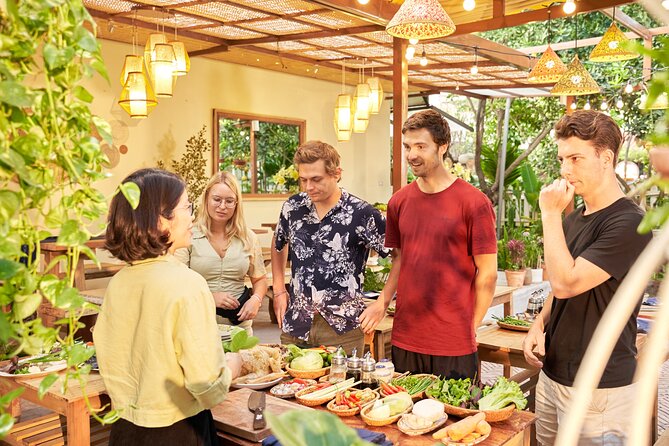
After the market start, you transition to a quieter place that feels like someone closed the door on Hanoi traffic. Thơm Culinary is described as a tranquil oasis with a garden house, and that matters more than it sounds. Cooking classes can become rushed and loud. This one gives you breathing room before you start chopping.
The garden angle is practical. You’re surrounded by the plants you’ll be talking about—herbs and tropical fruits. That setup makes the flavor lesson stick. You’re not memorizing names from a poster. You’re learning from what’s growing right where you stand.
You’ll also hear dish stories and get context around Vietnamese cooking culture. That turns the class from a one-off meal into something you can carry into your own cooking at home—especially if you like to understand why a dish tastes the way it does.
Old City Gate and the market circuit: Cau Đông and Thanh Hà
The route includes stops tied to Hanoi’s historic rhythm, including the Old City Gate area. The point isn’t sightseeing for its own sake. It’s about connecting food to place. Hanoi’s food culture is layered: older trade routes, market specialties, and local habits of buying ingredients in smaller, more frequent runs.
On top of Dong Xuan, you’ll visit other market areas like Cầu Đông and Thanh Hà. That variety helps you see how ingredients show up across different stalls and supply chains. You start to notice patterns—what people buy for daily cooking, what looks “standard” versus what’s more niche, and which herbs are common enough to use without second-guessing.
A helpful way to approach this part: don’t try to memorize every item. Instead, watch what your host highlights as important for Vietnamese flavor balance. That’s where the class becomes useful.
Harvesting herbs and fruit: the lesson you can taste
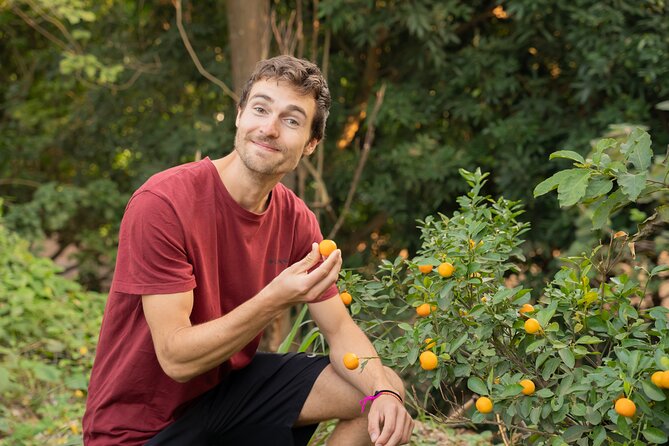
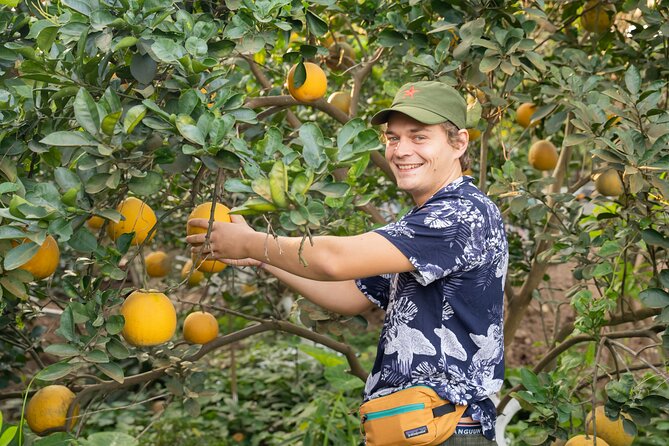
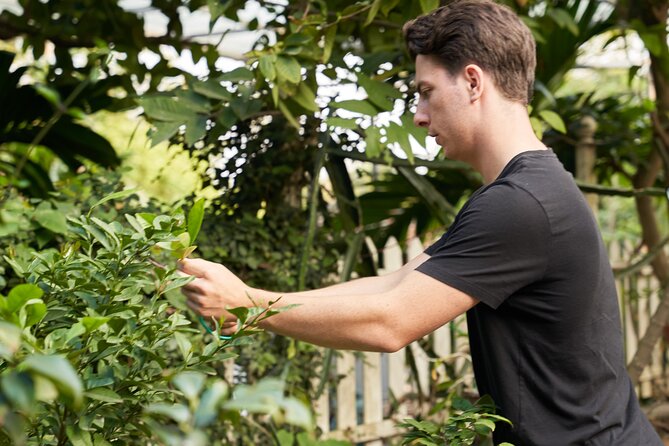
One of the standout parts is harvesting from the lush green garden at Thơm Culinary. If you’ve ever cooked with herbs and thought, I know I bought this, but why does it taste different here, this is the fix. You get to pick and handle the ingredients in the same environment where the meal is being planned.
This is also where you learn the philosophy behind Vietnamese cooking. You’ll talk about the role of herbs and spices, and why Vietnamese flavor often balances contrasts—fresh with savory, light with aromatic, and texture with scent. It’s not just about which herb goes into which dish. It’s about timing and proportion.
If you’re vegetarian-leaning or have dietary limits, this is also where you should pay attention early. The class is designed around authentic dishes and includes items like rice wine and herbal drinks, so you’ll want to mentally flag what you enjoy and what you’d rather go easy on.
Hands-on cooking with a small group: more practice, less watching
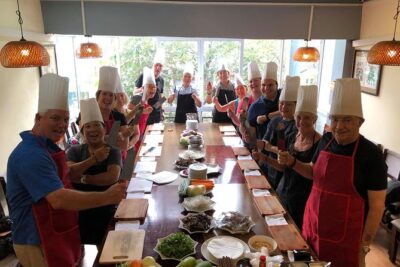
The class is built around cooking, not passive demo. You’ll chop, sauté, season, and plate with guidance from the host. The experience includes four hands-on cooked authentic dishes, which is a big deal for learning value.
Four dishes means you actually repeat skills. You don’t just learn one method and then move on. You’ll see how seasoning changes across savory courses, and how herb-driven flavors behave differently depending on heat and timing. You’ll also learn to plate with purpose, not just to make it look pretty.
Because the group size is capped at 8 travelers, the instructor can guide your hands, not just your questions. In a bigger class, you’d spend half your time waiting for attention. Here, you’re more likely to get quick corrections and clearer steps.
Practical tip: if you’re a confident cook, still stay present. Hosts often explain why they’re choosing a particular balance of flavors. That’s the part you want, even if you already know how to cook.
More kitchens to roll your sleeves up in
- Hanoi Cooking Class and Market Tour in Ancient House★ 5.0 · 379 reviews
- Rose Kitchen Hanoi: Market, Cooking & Culture Tour + Free PickUp★ 5.0 · 342 reviews
- Hanoi: Cooking Class in a Local Villa with Market Tour★ 4.9 · 320 reviews
The feast: homemade desserts, herbal drinks, rice wine, and etiquette
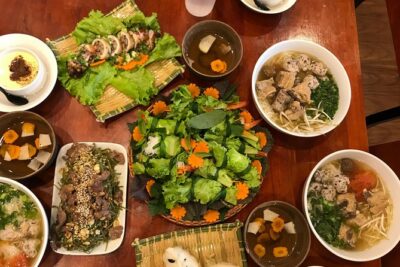
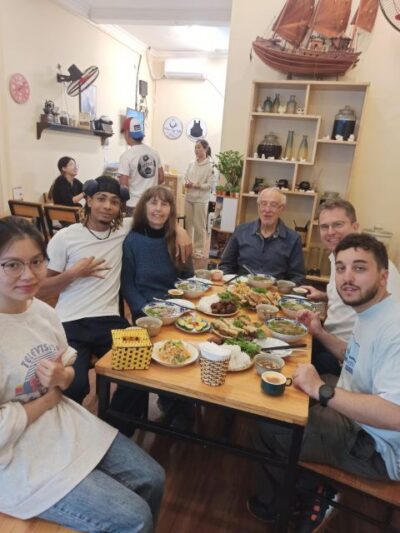
After cooking, you sit down to eat what you made—plus extras. The included meal features unique homemade dessert and a traditional sweet treat, and you’ll also get bottomless herbal drinks, homemade rice wine, and exotic fruit.
This is one reason the class feels like a full experience rather than a quick snack. Many cooking classes end the moment you’ve finished the last step. Here, you get time to taste everything together and learn how flavors work as a set. Herbs aren’t just ingredients; they’re part of how the meal feels after the first bite.
You’ll also learn eating etiquette and dish stories. Etiquette might sound formal, but it usually turns into small, useful habits—how Vietnamese people pace a meal, how you think about sharing, and how flavors are intended to be experienced across courses.
One note: rice wine and herbal drinks are included. If alcohol isn’t your thing, you can decide your own pace, but don’t ignore the fact that it’s part of the experience design.
Price and value: why $64.31 can make sense in Hanoi
At $64.31 per person for about 4.5 hours, this sits in a midrange category. The price is easier to justify because so much is included, not just the cooking part.
You’re getting:
- cyclo and round-trip transportation
- street food tastings at traditional markets
- four dishes you cook
- dessert and sweet treats
- bottomless herbal drinks, plus homemade rice wine and exotic fruit
- herb and fruit harvesting at the garden home
That’s a lot for a half-day. If you were to recreate the experience on your own—market walk with a guide, transport, ingredient sampling, a proper meal with instruction—you’d likely spend more, and you’d miss the structured lessons about flavor balance and cooking technique.
The biggest “value lever” here is the combination of markets + garden + cooking. If you only want a recipe and you don’t care about ingredients, you might feel it’s more than you need. But if you want to understand Vietnamese cooking in a way you can repeat, it’s a strong deal.
Timing, group size, and who this fits best
With a 4 hours 30 minutes duration, this works well as a planned activity day—especially if you want something more meaningful than another wandering meal.
This is likely a great fit if:
- you enjoy markets and want a guided way to understand what you’re seeing
- you like hands-on learning (chopping and seasoning, not only watching)
- you want a calmer break from Hanoi’s constant motion
- you’re cooking-minded and want to learn flavor logic, not just steps
If you’re traveling with limited time, you may prefer a shorter food tour. Also, if you hate crowded market environments or prefer fully quiet activities, the market start may test your patience.
Should you book Thơm Culinary?
I think you should book this if you want a Vietnamese cooking experience that actually teaches you something—and not just how to eat a good meal. The strongest pull is the pairing of market learning with herb harvesting and structured cooking in a garden calm. You leave with food in your stomach and flavor tools in your head.
Skip it only if you want a very light, low-walking activity, or if you’re not comfortable with included rice wine and strong herbal drinks. Otherwise, this is a solid, human-sized class that feels authentic and practical.
FAQ
What is the duration of the Hanoi Cooking Class with Thơm Culinary?
The experience lasts about 4 hours 30 minutes.
How much does the tour cost?
The price is $64.31 per person.
Does the class include pickup from my hotel?
Yes. Pickup and round-trip transportation are included.
What will I cook during the class?
You’ll cook four hands-on authentic Vietnamese dishes with guidance.
Are drinks and food included?
Yes. The experience includes street food tastings at traditional markets, homemade desserts, homemade rice wine, bottomless herbal drinks, and exotic fruit.
Is free cancellation available?
Yes. You can cancel for a full refund up to 24 hours in advance.
Roll Your Sleeves Up in Hanoi
More Tour Reviews in Hanoi






Learn Another Dish in Hanoi
Latest Hanoi write-ups from our team


Hanoi Cooking Classes, compared.
 ★ 5.0Hanoi Cooking Class: Culture, Local Market & Meaning CSR ImpactFrom $395,147 reviews
 ★ 5.05 Traditional Dishes Hanoi Cooking Class with Market TripFrom $354,890 reviews
 ★ 5.0Vietnamese Food Cooking Class in Hanoi with Market ExperienceFrom $45778 reviews
 ★ 5.05 Local Dishes Cooking Class with Meal & Market VisitFrom $40420 reviews
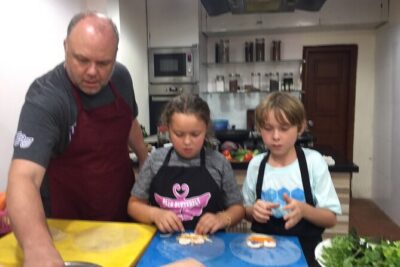 ★ 5.0Hanoi Cooking Class and Market Tour in Ancient HouseFrom $45379 reviews
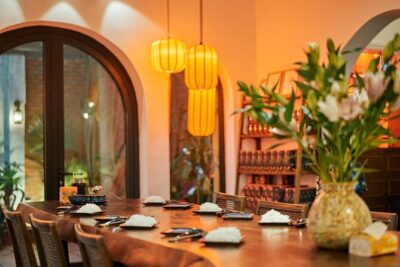 ★ 5.0Rose Kitchen Hanoi: Market, Cooking & Culture Tour + Free PickUpFrom $48342 reviews
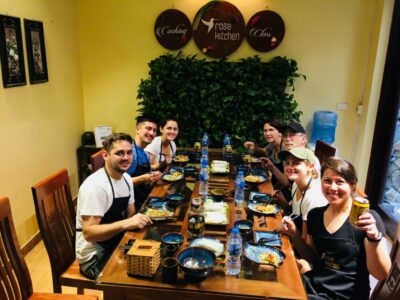 ★ 4.9Cooking Class in a Local Villa with Market TourFrom $37320 reviews
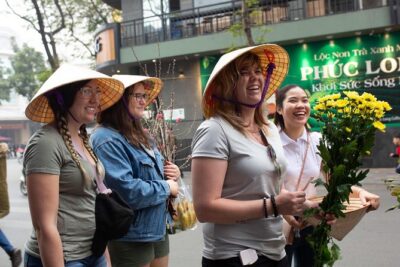 ★ 5.0Hanoi Maya Kitchen: Traditional Cooking Class & Market TourFrom $30287 reviews
Browse the lists this tour appears in