
Food in Hanoi isn’t hard to find, but it’s hard to learn fast—so this market-to-kitchen cooking class is a smart way to get results quickly. I love that you start with a guided market run where you learn what to buy and how to choose ingredients, then you cook iconic dishes like pho, bun cha, and fried spring rolls with step-by-step guidance. The other big win is the meal at the end: you sit down and eat the fruits of your own work, with free tea/coffee, unlimited bottled water, and local fruit wine included.
One thing to consider: the class is set up for group cooking, not separate solo stations. That can feel more social (and less stressful), but it may mean you do fewer repeated, hands-on steps compared with a private class.
In This Review
- Key highlights
- Finding Hanoi Solo Hostel and Getting Oriented Fast
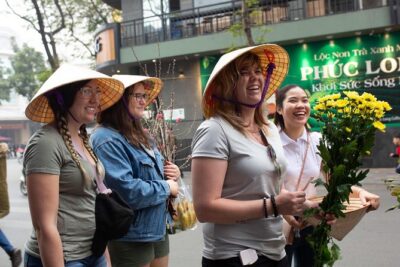
- The Market Tour: Buying Ingredients the Hanoi Way
- Cooking 5 Hanoi Dishes: What You’ll Be Making
- How the Group Cooking Style Works (And When It Feels Great)
- Pho, Bun Cha, and Spring Rolls: The Skills You Actually Take Home
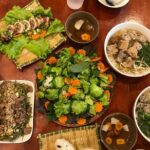
- What You Eat: Your Meal, Coffee/Tea, and Unlimited Water
- Free Local Fruit Wine: A Hanoi Taste With Your Dinner or Lunch
- Price and Value: Why $35 Works for Many People
- Who Should Book This Cooking Class
- Practical Tips Before You Go
- Should You Book This Hanoi Cooking Class?
- FAQ
- How long is the Hanoi cooking class?
- What dishes will I learn to cook?
- Is lunch or dinner included?
- What’s included in the class?
- Is local fruit wine included?
- What are the cancellation rules?
Key highlights
- Market tour + ingredient picking so you understand what goes into Vietnamese dishes before you cook
- 5 dishes you make yourself, including Hanoi favorites like pho, bun cha, and fried spring rolls
- Helpful hosts who guide you clearly (I saw hosts like Maxie and Alex described as patient and fun to learn with)
- Eat immediately in a cozy setup after cooking, with free tea/coffee and mineral water
- Free local fruit wine included with the class, plus recipes and a completion certificate
Finding Hanoi Solo Hostel and Getting Oriented Fast
The experience meets at Hanoi Solo Hostel, 37 P. Mã Mây, Hàng Buồm, Hoàn Kiếm, Hà Nội 100000. That’s useful because it’s a clear starting point you can aim for, and the tour ends back at the same meeting location.
The timing is also practical: plan for about 3 hours total. That’s long enough to shop, cook, and eat, but short enough to still have time for the rest of your Hanoi day. If your schedule is tight, this kind of class is a good slot-filler because it turns “I’ll figure out food later” into something with a plan.
I also like that this isn’t a far-flung tour. It’s in Hanoi, and it’s described as near public transportation, so you’re not stuck guessing how to get back if your timing slips.
More aprons on in Hanoi kitchens

The Market Tour: Buying Ingredients the Hanoi Way
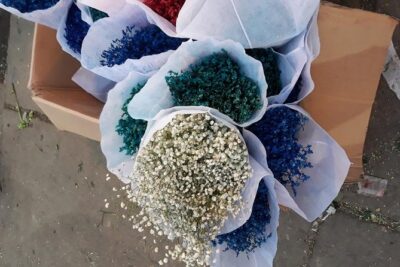
The first act is a guided trip through a local market where you pick ingredients with your host’s help. This part matters more than it sounds. Vietnamese cooking depends on balancing flavors, textures, and fresh herbs, and the market walk is where you start to understand the why.
What you’ll likely get out of the market portion:
- What ingredients look like when they’re fresh (and what to avoid)
- How to identify key components that later show up in your five dishes
- A more confident mindset in Vietnamese food stores, because you’ll have names and context
One review experience that really stood out is how hosts build comfort fast. Maxie, for example, didn’t just point at ingredients—she also helped people with basic Vietnamese phrases for buying food themselves before returning to cook. That’s a great trick if you want to practice real-world language instead of only learning recipes.
If you’re the type who usually avoids markets because they feel overwhelming, this market tour helps you slow down and learn what to look for.
Cooking 5 Hanoi Dishes: What You’ll Be Making
After shopping, you move into the cooking portion where you learn to make five dishes during the class. The exact lineup will depend on the class flow, but the experience specifically mentions signature Hanoi dishes including:
- Pho
- Bun cha
- Fried spring rolls
That mix is a strong strategy. Pho gives you the backbone of Vietnamese comfort cooking—broth balance and the role of herbs and aroma. Bun cha helps you understand grilled flavors and how dipping sauces tie everything together. Fried spring rolls teach you about texture and wrapping, which is where many home cooks get frustrated.
You’ll also get recipes afterward, which is a real value add. Cooking classes often leave you with great memories and no way to repeat them. Here, you’re set up to recreate at least the basics later.
How the Group Cooking Style Works (And When It Feels Great)
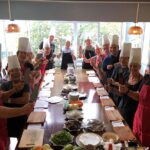
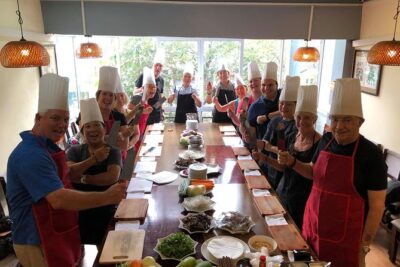
This class is designed around cooking as a group, not working at separate individual stations. That approach can actually be a good match for most people.
Why group cooking works well:
- You learn faster because everyone hears the same instructions
- You get a social rhythm (questions come up naturally)
- The host can correct mistakes in real time
But it does change the feel of the class. One reviewer described it as less of the classic hands-on station style and more of a shared process. That’s worth knowing upfront. If you’re hoping to do every step solo, you might feel like you’re waiting for your turn.
The good news is that you still learn the cooking logic. Clear instructions help you connect what you’re doing with the outcome. Reviews also highlight hosts who keep it calm and clear. Alex, for instance, was described as patient with easy instructions, and that matters because Vietnamese dishes reward attention to small details.
My practical advice: treat it like a class where you’re learning technique, not just assembling food. If you pay attention to timing—when to add ingredients, when to adjust seasoning—you’ll get more out of it even if you aren’t doing every single repeat step.
Pho, Bun Cha, and Spring Rolls: The Skills You Actually Take Home
The best cooking classes don’t just teach you what to cook. They teach you skills you can use again. With this lineup, you’re working on several core Vietnamese cooking capabilities:
Broth and balancing flavors (pho). Pho isn’t only about cooking ingredients; it’s about getting the flavor balance right and understanding how aromatics and seasoning work together.
Dipping sauce thinking (bun cha). Bun cha is a reminder that many Vietnamese dishes are built around sauces. If you can nail the sauce balance, you can improve a lot of other meals too.
Texture and wrapping (spring rolls). Spring rolls are where technique becomes obvious fast. A slight error in folding, sealing, or frying can change everything from crunch to oiliness.
Even though you’re making five dishes, the real “take-home” is learning how Vietnamese cooking steps connect. With recipes delivered after the class, you’ll be able to review what you did and adjust the next time.
More kitchens to roll your sleeves up in
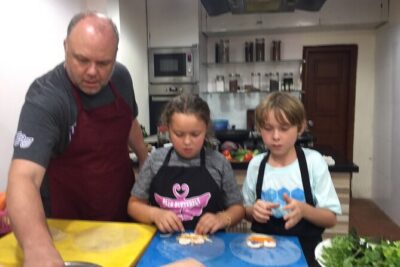
- Hanoi Cooking Class and Market Tour in Ancient House★ 5.0 · 379 reviews
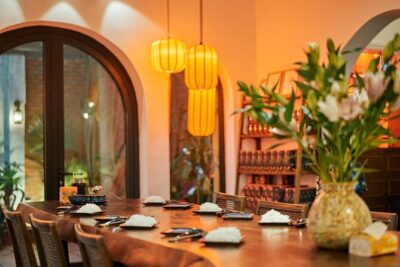
- Rose Kitchen Hanoi: Market, Cooking & Culture Tour + Free PickUp★ 5.0 · 342 reviews
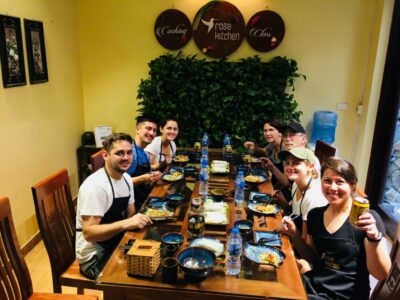
- Hanoi: Cooking Class in a Local Villa with Market Tour★ 4.9 · 320 reviews
What You Eat: Your Meal, Coffee/Tea, and Unlimited Water
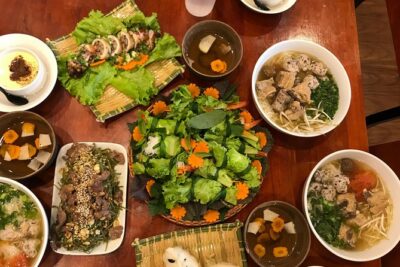
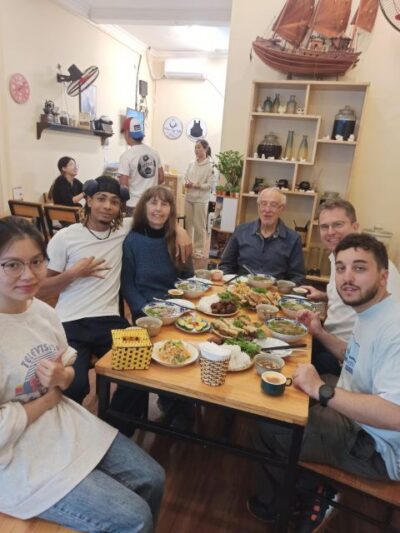
Once your dishes are cooked, you get to eat in a cozy space. And you’re not just tasting small samples—you’re eating the food you made.
Included in the meal:
- Lunch / brunch / dinner, depending on your session time
- Coffee and/or tea
- Mineral water (free & unlimited)
The session timing is practical for travel planning:
- Morning session pairs with lunch
- Midday session pairs with brunch
- Evening session pairs with dinner
This is one of those details that helps a lot. Instead of squeezing food into your day after a tiring walk, the class schedules your meal for you.
Free Local Fruit Wine: A Hanoi Taste With Your Dinner or Lunch
Alcohol is included: you receive a free 350ml bottle of local fruit wine per class, plus you’ll have your coffee/tea and water option as well.
This is a fun add-on because it turns your meal into something more memorable than a normal cooking lesson. It also gives you a safe way to try a local drink without needing to plan a separate stop.
If you don’t drink alcohol, you still aren’t left out. The class includes water and tea/coffee, and your main focus is the food you make.
Price and Value: Why $35 Works for Many People
At $35 per person for about 3 hours, this class lands in the “good value” category for Hanoi. Here’s why: you’re paying for more than a recipe book.
You’re getting:
- A guided market run (ingredient selection is hard to self-teach fast)
- Cooking instruction for multiple dishes (five is substantial)
- The full meal you make
- Recipes afterward
- A completion certificate
- Unlimited mineral water, coffee/tea
- And the fruit wine add-on
Also note that all fees and taxes aren’t included, so the final price you pay may be a touch higher than the base number. Still, the core value is solid: you leave with food skills plus take-home materials, not just a one-time experience.
Who Should Book This Cooking Class
This is a strong fit if you:
- Want a hands-on Hanoi experience without spending the whole day on it
- Like the idea of learning recipes from a local guide and not just following a generic cooking video
- Enjoy food that mixes warmth (pho), brightness and sauce (bun cha), and crunch (spring rolls)
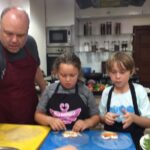
- Want a class that works for different group types (reviews include examples of mixed ages, including kids)
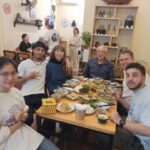
If you’re a solo traveler, it’s also a good way to get easy conversation. And because it’s near public transport and ends back at the meeting point, it’s simple to stitch into a day of walking and sightseeing.
If you’re expecting a private, station-by-station experience where you do every step with no waiting, you might find it less tailored than you want. But if you prefer the social flow and clear guidance, group cooking is actually an advantage.
Practical Tips Before You Go
A few things I’d do to make the class feel smooth:
- Wear closed-toe shoes, since cooking often means standing and moving around a bit
- Be ready to smell ingredients closely (Vietnamese aromatics are part of the learning)
- Ask questions early, especially in the market portion—those answers make the cooking steps easier later
- If you’re nervous about Vietnamese language, don’t worry; hosts have helped with basic phrases before
And if you like to document your learning, bring a phone you’re comfortable using while cooking. Recipes come after, but photos help you remember the order of steps.
Should You Book This Hanoi Cooking Class?
I’d book this cooking class if you want a practical way to learn Hanoi food fast. The combination of market shopping, five dishes, and a real meal at the end is exactly the kind of value that makes travel feel more like learning than just watching.
Book it especially if you appreciate patient, friendly guidance—reviews highlight hosts like Maxie and Alex for making the experience comfortable and instructional. Just go in knowing it’s group-cooked, so your role will be shared, not every step solo. If that fits your style, this is one of the easiest wins you can schedule in Hanoi.
FAQ
How long is the Hanoi cooking class?
It runs for about 3 hours.
What dishes will I learn to cook?
You’ll cook five dishes in total, including Hanoi favorites such as pho, bun cha, and fried spring rolls.
Is lunch or dinner included?
Yes. Morning sessions include lunch, midday sessions include brunch, and evening sessions include dinner.
What’s included in the class?
Coffee and/or tea, free unlimited mineral water, lunch/brunch/dinner, the five dishes you create, recipes after the class, and a certificate of completion. Alcoholic beverages are also included as free local fruit wine.
Is local fruit wine included?
Yes. A free 350ml bottle of local fruit wine is included per class.
What are the cancellation rules?
You can cancel for a full refund up to 24 hours before the experience starts. If you cancel less than 24 hours before start time, your payment isn’t refunded.
Roll Your Sleeves Up in Hanoi
More Tour Reviews in Hanoi





Learn Another Dish in Hanoi
Latest Hanoi write-ups from our team



Hanoi Cooking Classes, compared.
 ★ 5.0Hanoi Cooking Class: Culture, Local Market & Meaning CSR ImpactFrom $395,147 reviews
 ★ 5.05 Traditional Dishes Hanoi Cooking Class with Market TripFrom $354,890 reviews
 ★ 5.0Vietnamese Food Cooking Class in Hanoi with Market ExperienceFrom $45778 reviews
 ★ 5.05 Local Dishes Cooking Class with Meal & Market VisitFrom $40420 reviews
 ★ 5.0Hanoi Cooking Class and Market Tour in Ancient HouseFrom $45379 reviews
 ★ 5.0Rose Kitchen Hanoi: Market, Cooking & Culture Tour + Free PickUpFrom $48342 reviews
 ★ 4.9Cooking Class in a Local Villa with Market TourFrom $37320 reviews
 ★ 5.0Hanoi Maya Kitchen: Traditional Cooking Class & Market TourFrom $30287 reviews
Browse the lists this tour appears in