
Reviewed · SAPA TREKKING TOURS
Vietnam Motorbike Tour to Ha Giang, Sapa, Mu Cang Chai – 8 Days
Northern Vietnam on a motorbike hits different. You’ll spend eight days swapping highways for backroads and off-road sections, then end each day with real meals, real towns, and chances to meet local families. The route strings together Ba Be, Ha Giang, Sapa, and Mu Cang Chai, with passes like Pi Leng and Tram Ton doing most of the heavy lifting for big views and big-road stories.
I like how the tour is built around rhythm, not just mileage. You start early, get pushed away from busy roads in the morning, stop for lunch in small towns, and reach each evening destination in time to eat and recover. I also like that it’s a private setup, so you ride with your group and get an English-speaking guide who can pace things for your level.
One drawback to think about: this is a ride for people with strong physical fitness and a tolerance for long days in the saddle. And because the experience requires good weather, you’ll want to build some flexibility into your schedule in case conditions force a date change.
In This Review
- Key highlights you should know before you go
- The big idea: why this Northern loop feels different
- Ride setup, scooters vs. dirt bikes, and what that means for you
- Day 1: Ba Be National Park and Pac Ngoi’s Tay-family evening
- Day 2: Meo Vac via Nho Que River and the Dong Van Rock Plateau vibe
- Day 3: Ha Giang’s big moments—Pi Leng Pass, Quan Ba, and the Rock Plateau
- Day 4: Sapa with a Lao Cai border stop and smooth climbing to altitude
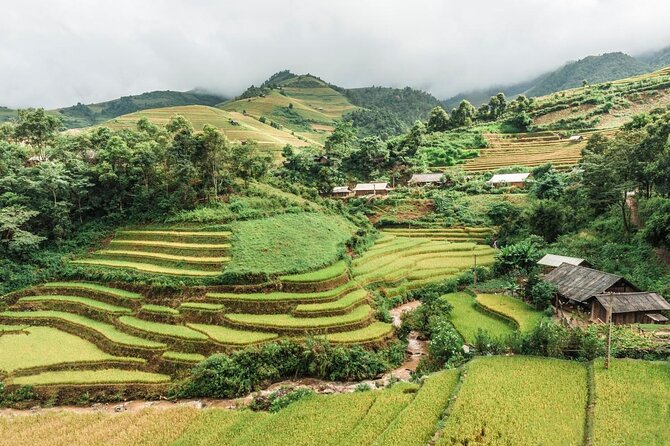
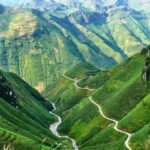
- Day 5: Tram Ton Pass to Mu Cang Chai and the terraced-field payoff
- Day 6: Phù Yên’s tea-growing valleys, Hmong villages, and a ride that alternates hard and calm
- Day 7: Da River ferry, Hua Tat’s old road, and Mai Châu’s calmer pace
- Day 8: Two passes and a clean finish back in Hanoi before rush hour
- Price and logistics: is $1,409 per person good value?
- Who this tour fits best (and who might struggle)
- Small riding tips that help you enjoy the days more
- Should you book this 8-day Hanoi motorbike tour?
- FAQ
- What time does the tour start, and where?
- Is pickup offered?
- What motorbikes are included?
- Are manual dirt bikes included?
- What’s included in the price?
- Is this a private tour?
- Is travel insurance included?
- What happens if weather cancels the experience?
Key highlights you should know before you go
- Backroads + off-road sections: expect dirt tracks, muddy backroads, and single-track style stretches rather than just smooth roads
- Famous passes: Pi Leng Pass, Tram Ton Pass, plus Thung Khe and Doc Cun on the way back toward Hanoi
- Ethnic-minority culture time: Tay villages around Ba Be and Ha Giang-area communities show up right in the ride plan
- Sapa without rushing it: you get a border stop in Lao Cai and enough time in Sapa to actually look around
- Home-stay and hotel mix: you can dine and sleep with Tay families at least on some nights, with hotel options also stated
- Tour guides get named often: names like Son, Tony, Linh, and Dúc show up in the rider notes tied to safety and fun
The big idea: why this Northern loop feels different
This 8-day motorbike tour is designed for one goal: getting you out of the fast, predictable travel loop and into the places most people only see from tour buses. Each day is built around a long ride that mixes road types—some smooth, some steep, some rough—and then a cultural or scenic payoff right when you’re done riding for the day.
What really makes this feel worth it is how the route sequences the regions. You’re not just bouncing between famous stops; you’re moving through a north-east to north-west arc of Vietnam, from Ba Be’s limestone scenery to the Dong Van Rock Plateau style country around Ha Giang, then into the terraced and mountain-bagged territory of Sapa and Mu Cang Chai.
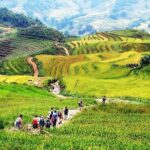
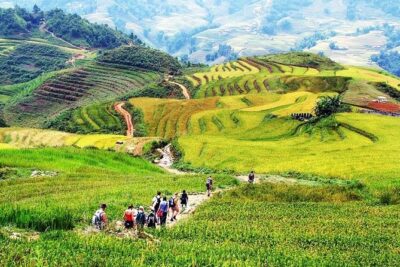
More trails through the Sapa valleys

Ride setup, scooters vs. dirt bikes, and what that means for you
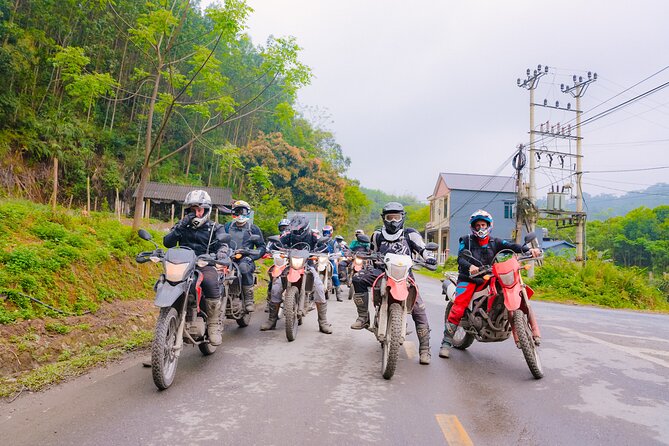
This tour includes geared scooters of 110cc or 125cc plus an English-speaking guide. That matters because the tour’s feel changes with the bike. Scooters are easier to manage for many riders, especially if you’re not used to clutch work on rough ground. The trade-off is that you may find higher-power upgrades more comfortable on steep, slow climbs, especially in wet or gritty conditions.
Manual dirt bikes in the 150cc, 250cc, 300cc range are listed as not included, which usually means you’d need an upgrade if you want that setup. A few riders specifically recommend going up to 300cc for an even more enjoyable trip, while others describe riding different bike types depending on their chosen option. My practical take: if you already ride a manual enduro-style bike often, it can make the experience feel more natural. If you’re still building confidence, the included scooter option can keep the focus on the route instead of on your bike-learning curve.
This is also a private tour/activity. Only your group participates, which often helps with pacing and reduces the awkwardness of waiting around for people who aren’t ready.
Day 1: Ba Be National Park and Pac Ngoi’s Tay-family evening

Day 1 starts at 7:30am from 841 Đ. Hồng Hà, Chương Dương Độ, Hoàn Kiếm, Hanoi. You’ll ride out through the scenic north and—important—avoid busy city roads in the morning. That small detail pays off because it lets you settle in before you hit the steeper, more rural parts of the journey.
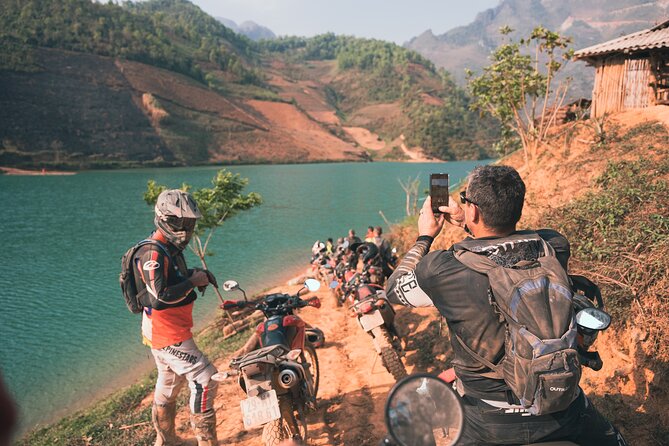
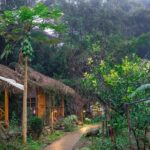
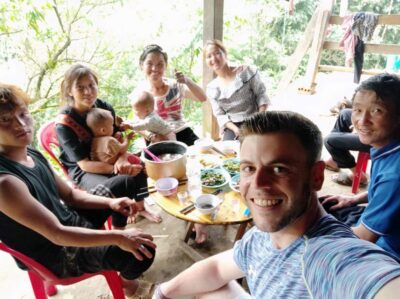
For lunch, you stop in Cho Chu town, then continue on to Ba Be with mountain views and less traffic. By mid-afternoon you reach Pac Ngoi, a peaceful Tay village by Ba Be Lake. You can dine and stay with a Tay family, which is one of the most meaningful ways to slow down and connect with local life instead of just photographing it.
A quick practical note: Ba Be Lake is Vietnam’s largest natural lake, fed by three rivers, with limestone cliffs and primary forest around it. If you’ve been chasing photos of Vietnam’s north on social media, this is the version that feels calmer and more grounded—less spectacle, more atmosphere.
Day 2: Meo Vac via Nho Que River and the Dong Van Rock Plateau vibe
Day 2 is where the trip shifts into “mountain riding mode.” You say goodbye to the family and head through rustic villages and jungle backroads, plus stream crossings. Then you reach Bao Lac town for lunch and continue toward Meo Vac by taking a scenic route that climbs over multiple passes, with mountain ranges and the Nho Que River in view.
Arriving around 5:00pm gives you time to eat and reset without turning the day into an endless scramble. You also get a sense of the Dong Van Rock Plateau area here—Meo Vac is located in the heart of that plateau, recognized as part of the Global Geo-Park Network in 2009.
If you’re prone to getting tired of long road days, Day 2 is still manageable because the plan has built-in breaks: lunch in Bao Lac, then a slower approach into Meo Vac rather than a late-night arrival.
Day 3: Ha Giang’s big moments—Pi Leng Pass, Quan Ba, and the Rock Plateau
Day 3 is described as the highlight day, and it’s easy to see why. You’ll ride through one of the more remote corners of northern Vietnam while passing through areas tied to major ethnic groups and iconic mountain scenery.
You’re set up to experience several named stops and ride segments: Pi Leng Pass (one of the longest and most beautiful passes in North Vietnam), the Rock Plateau region, the Vuong palace in Dong Van, and the Heaven Gate in Quan Ba. That’s a strong mix because it gives you both road achievement and cultural landmarks during the day, not just one or the other.
You’ll arrive in Ha Giang in the late afternoon, then dinner and an overnight stay are either with Tay families or at a hotel option. My suggestion: if you’re curious about daily life, lean toward the homestay option when it’s available—this is where the trip stops feeling like a checklist and starts feeling like a story you can actually tell.
More runs around the Ha Giang loop
- Ha Giang Loop 3 days Small group- From Ha Noi★ 5.0 · 1,114 reviews
- Ha Giang Loop Tour 4 Days 3 Nights with Ha Giang Vision Tour★ 5.0 · 675 reviews
- 3-Day Ha Giang Loop Tour from Ha Noi and Return★ 5.0 · 652 reviews
Day 4: Sapa with a Lao Cai border stop and smooth climbing to altitude
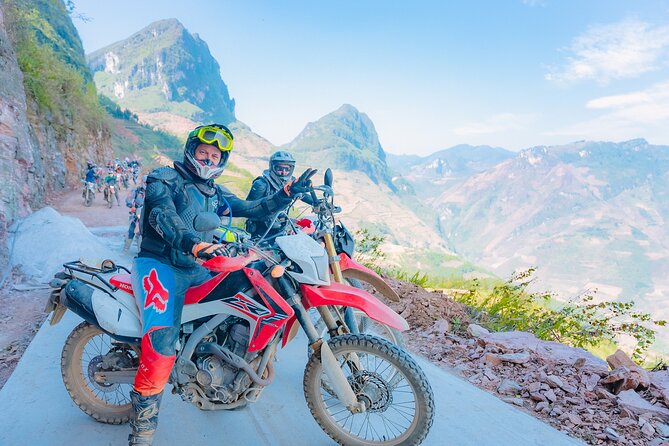
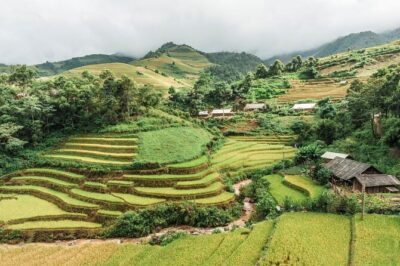
On Day 4, the route pushes toward the north-west mountain region where the Fanxipan mountain range dominates the road until you reach Sapa. The plan notes the road is smooth, with green mountain views and rice fields between hill-tribe villages.
You’ll also stop briefly in Lao Cai to see the Chinese border area, then continue up to Sapa for a ride that keeps climbing to around 1,600 meters above sea level. When you think of Sapa, you often picture misty terraces and steep views. This tour gives you that, but it does it through the approach, which is half the fun.
You arrive around 5:00pm and overnight in a hotel in Sapa. That timing matters because it gives you a window to walk around and get your bearings before you crash—no rushing out the next morning.
Day 5: Tram Ton Pass to Mu Cang Chai and the terraced-field payoff
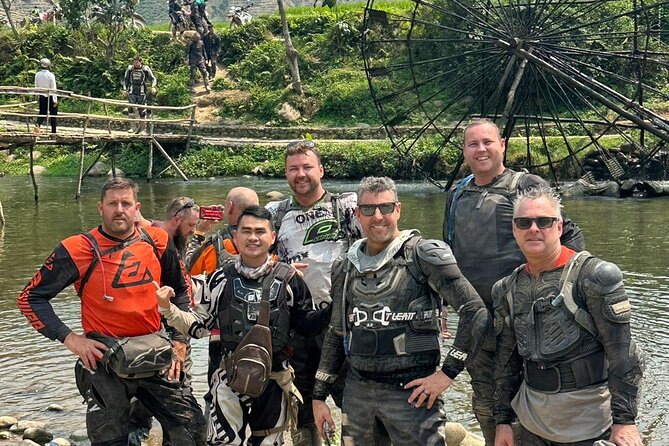
Day 5 starts with some Sapa time until 1:30pm, then you check out and head toward Than Uyen. The big moment is the climb from Sapa to Tram Ton Pass—the highest road pass in Vietnam—then crossing into Lai Chau province at over 2,000 meters above sea level.
This day is described as short but potentially one of the most enjoyable parts of the trip. The key reason is the view stretch: you get Hoang Lien mountain ranges for miles and miles, and you arrive into Mu Cang Chai by around 5:00pm.
Mu Cang Chai is famous for its terrace scenery, and even if you only have the evening and the next day’s rhythm available, getting there on a pass day is a smart way to make the terraces feel earned. Dinner and overnight are in a hotel.
Day 6: Phù Yên’s tea-growing valleys, Hmong villages, and a ride that alternates hard and calm
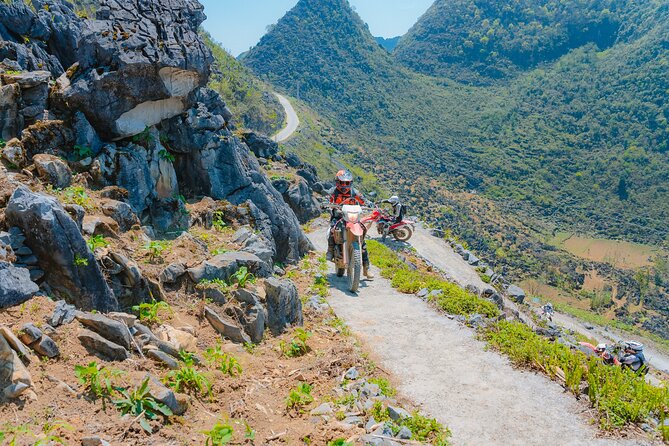
Day 6 keeps you moving through forested, higher mountain areas where H’mong communities are part of the scenery. The plan includes a hike up a very high mountain pass, then a descent into a tea-growing region.
After lunch, you ride through a valley described as a sea of rice, with H’mong and Thai villages along the way, continuing to Phu Yen town. This day’s value is in the variety: you get a physical element (the hike), then a slower, agricultural-feeling section after.
You arrive around 5:00pm for overnight at a hotel in Phu Yen town. If you’re trying to pace yourself through eight days of riding, this is a good day to take breathers seriously—fresh legs help on every subsequent day.
Day 7: Da River ferry, Hua Tat’s old road, and Mai Châu’s calmer pace
Day 7 is shorter on paper but still packed with scenery changes. The ride starts as you head toward Mai Chau valley, with a winding road along the Da River lake area between the river and mountains.
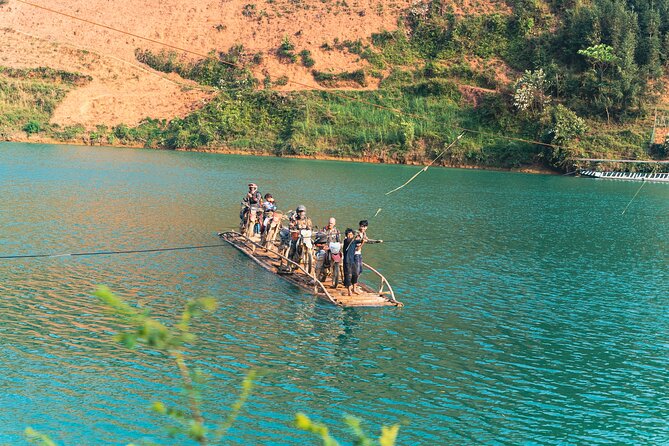
There’s a ferry crossing of the Da River, then you motorbike up and up to the Moc Chau plateau for lunch. After lunch you take a turn toward Hua Tat, a quiet mountain road built by the French during the war time—now it’s described as something like a forgotten road.
That last stretch to Mai Châu gives the tour a nice tonal shift. Instead of chasing constant altitude gains, you get a calmer valley arrival. Dinner and overnight aren’t specified by name here, but the plan is designed to bring you into Mai Chau rhythm for a restful final night.
Day 8: Two passes and a clean finish back in Hanoi before rush hour
Day 8 starts later than the earlier days—around 10:00am. The day opens with a chance to walk around the valley for a slower start, then you ride back toward Hanoi and hit two passes: Thung Khe and Doc Cun.
You’ll have lunch during the ride, then join the highway back to Hanoi. The plan says you’ll return to your hotel before rush hours, which is a big quality-of-life detail when you’ve been on the bike for a week and a half of your vacation feelings condensed into eight days.
Price and logistics: is $1,409 per person good value?
At $1,409 per person for about eight days, the question isn’t just whether it’s affordable—it’s what you’re buying. You’re getting a guided motorbike trip with 110cc or 125cc geared scooters, plus meals (breakfast 7 times, lunch 7 times, dinner 7 times), government taxes, and English-speaking guidance. Pickup is offered, and the tour includes admission ticket notes marked as free in the schedule.
You’re also buying something harder to price: a route that mixes known icons (Pi Leng, Tram Ton, Sapa) with quieter village time like Pac Ngoi and Tay-family evenings. That blend is usually what separates a tour that feels like transportation from one that feels like experience.
So where does the cost pressure show up? Mainly in the fact you’re riding remote regions for multiple days, which usually means more fuel, more logistics, and more guide time. If you want more manual bike variety, remember that higher-cc manual dirt bikes aren’t included, so you may pay extra if you choose that upgrade path.
My bottom line: if you want a guided, meal-covered, pass-and-trail-heavy north loop, the price can feel fair. If you’re mainly looking for gentle sightseeing with minimal riding, you might feel this is more bike-focused than you want.
Who this tour fits best (and who might struggle)
This is best for you if you want to ride hard scenery and you’re comfortable doing it for days in a row. The tour asks for strong physical fitness, and it’s built around curvy steep passes, dirt tracks, muddy backroads, and single-trail type sections.
It also suits you if you like the idea of meeting people beyond the photo stop. The plan repeatedly includes village time and explicitly mentions Tay family stays and meals at least on some nights.
You might want to rethink it if you get carsick easily, hate long days in transit, or aren’t ready for rough road days—even with a guide handling route planning and pacing.
Weather matters too. The experience requires good weather. If conditions cancel it, you’re offered another date or a full refund.
Small riding tips that help you enjoy the days more
This is still practical advice, not promises about what the tour provides. For a route with streams, dirt tracks, and pass riding, I’d plan your riding day around traction and fatigue. Go slower than your ego wants to go, especially on wet or muddy sections, and keep your body loose on descents.
Also, think about your comfort with altitude. Sapa is described as climbing to about 1,600 meters, and Tram Ton and nearby sections are over 2,000 meters. Even if you don’t get altitude symptoms, the combination of climbing and riding effort can make you tired faster than usual.
Finally, if you’re considering an upgrade from the included scooters, weigh it against your comfort level with manual bikes. Riders who push for 300cc often do it because they want more power and smoother handling on steep terrain, not because they dislike the scooter style overall.
Should you book this 8-day Hanoi motorbike tour?
I’d book it if you want a guided north-and-northwest Vietnam ride that actually uses the roads, not just the destinations. The pass selection is strong, the route pacing includes lunch and evening resets, and the Tay village moments give the trip a real-human texture.
I’d hesitate if your fitness isn’t strong, you’re not comfortable with dirt-track days, or you’re traveling during a period you can’t adjust if weather cancels the experience. Because when this works, it really works: you’re in motion through mountain Vietnam, with people and food waiting for you when you stop.
FAQ
What time does the tour start, and where?
The start time is 7:30am. The meeting point listed is 841 Đ. Hồng Hà, Chương Dương Độ, Hoàn Kiếm, Hanoi, Vietnam.
Is pickup offered?
Yes, pickup is offered. You’ll still see the meeting point listed for the start in Hanoi.
What motorbikes are included?
The included bikes are geared scooters of 110cc or 125cc.
Are manual dirt bikes included?
Manual dirt bikes in the 150cc, 250cc, and 300cc range are listed as not included, so you’d need to arrange an option separately if you want that.
What’s included in the price?
The tour includes an English-speaking guide, government taxes, geared scooters (110cc or 125cc), and meals: breakfast (7), lunch (7), and dinner (7). Admission tickets are marked as free in the tour schedule.
Is this a private tour?
Yes. It’s listed as private, and only your group will participate.
Is travel insurance included?
No. Travel insurance is not included.
What happens if weather cancels the experience?
The experience requires good weather. If it’s canceled due to poor weather, you’ll be offered a different date or a full refund.
If you want, tell me your riding comfort level (scooter-only vs manual bikes, and how often you ride), and I’ll suggest which bike setup fits you best and how to pace your expectations for each pass day.
More of Hanoi on Two Wheels


More of the Ha Giang Loop

More Sapa Treks We Walked

Latest Hanoi write-ups from our team




Sapa Trekking Tours, compared.
 ★ 5.0Sapa 2 Days 1 Night From Hanoi – Overnight in Ta Van VillageFrom $592,669 reviews
 ★ 5.0Hanoi – Sapa 2 Days 1 Night Overnight At HomestayFrom $89899 reviews
 ★ 5.0Sapa: Fansipan Cable, Cat Cat Village & Moana Instagram TourFrom $30777 reviews
 ★ 4.8From Hanoi: 2-Day Sapa Trekking Trip with Homestay & MealsFrom $71704 reviews
 ★ 5.0Sapa 3 Days 2 Nights Trekking Tour (1 Night In Ta Van Village, 1 Night In Hotel)From $139699 reviews
 ★ 5.03-Day Trekking Adventure of Sapa from Hanoi – Stay Ta Van VillageFrom $109611 reviews
 ★ 4.82-Day Sa Pa Ethnic Homestay Tour & Trek with Limousine Bus440 reviews
 ★ 5.0Sapa 2 Days 1 Night From Hanoi – Overnight in HotelFrom $89440 reviews
Browse the lists this tour appears in