
Hanoi’s traffic is the main event. This half-day tour blends a customized USSR vintage Minsk motorbike ride with food and culture stops in spots most visitors only glimpse from afar. In a few hours, you get a real sense of how Hanoi moves.
I like the setup: a quick orientation before you head out, then a backstreet ride that keeps you sharp—narrow alleys, market edges, and local passageways instead of only big roads. I also like the food plan. You get food and beverages (with lunch included) and there are vegan and vegetarian options, so the ride stays fun instead of turning into a hunger problem.
One possible drawback is value for your expectations. At $55 per person, it can feel pricey if you want deep, slow history lessons—some past guests wanted more context about Hanoi and Vietnam beyond the sites. If you come for momentum, local eating, and “watch how Hanoi works,” you’ll likely be happier.
In This Review
- Key points to know before you go
- USSR Minsk motorbike ride: fun, fast, and traffic-centric
- Backstreet Hanoi: your orientation before you scatter
- French Quarter to Old Quarter: pass-the-icons sightseeing
- Middle Island on the Red River: a no-electricity contrast
- Ngũ Xã food stop: eating your way through the city
- Price, inclusions, and who this half-day fits best
- Should you book this Hanoi Minsk motorbike food tour?
- FAQ
- How long is the Hanoi half-day motorbike and food tour?
- Is pickup and drop-off included?
- What food options are available?
- What’s included in the $55 price?
- Does the tour run in bad weather?
- How many people are in the group?
Key points to know before you go
- USSR vintage Minsk bikes: The ride is the signature experience, not just a means of getting around.
- Backstreets first: You start with lesser-known lanes and markets, which helps you read the city afterward.
- Icon passes, short stops: You see major landmarks in a tight timeframe, mostly by riding past them.
- Middle Island contrast: You visit a riverside area with no electricity or running water, plus nearby farms and gardens.
- Ngũ Xã food focus: This is where the tour earns its “Food” promise, with vegan/vegetarian options.
- Small-busy group limit: The maximum group size is listed at 50, so expect a guided group flow rather than total privacy.
USSR Minsk motorbike ride: fun, fast, and traffic-centric
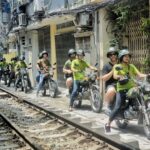
This is a Hanoi motorbike tour where the vehicle is part of the story. You’ll ride a customized USSR vintage Minsk motorbike, and the experience leans hard into how Hanoi feels on the move—constant motion, constant negotiation, and streets that don’t act like your home-town traffic.
If you’re the kind of traveler who likes getting “in the scene,” this works. You’re not stuck on a sidewalk trying to photograph everything while everyone else flows around you. Instead, you’re traveling through the city’s rhythms and getting that quick, sensory education: you hear the street, you watch how people weave around bikes and scooters, and you see where daily life spills into the road.
That said, be honest about your comfort level with traffic. This isn’t a quiet cultural walking tour where the pace stays gentle. The route is designed around riding, so your experience depends on your willingness to sit steady, pay attention, and follow the guide and driver’s lead.
More nights on the back of a Vespa

Backstreet Hanoi: your orientation before you scatter
The tour starts with pickup or meeting at a local point, then your guide gives a short orientation so you know what you’re about to see and how the ride will work. That matters in Hanoi because the “shape” of the city can feel confusing fast—streets branch and re-branch, and famous sights are often surrounded by smaller lanes.
Once you’re rolling, you’ll spend about 90 minutes on backstreet riding. The focus is on lesser-known areas: zigzagging through narrow alleyways, passing market zones, and moving through a maze of passageways locals know. The goal here isn’t just scenery. It’s learning the city’s logic—how neighborhoods connect, where activity concentrates, and how people shop, work, and live close to the street.
If you’re trying to get oriented for the rest of your trip, this is a smart start. Even after the tour ends, you’ll likely recognize the general direction of districts and how to move between them. If you came to Hanoi only for photos, you might find the backstreets less “postcard-ready.” But if you came for the way the city actually functions, this is the part that delivers.
French Quarter to Old Quarter: pass-the-icons sightseeing
After the backstreets, you shift into the areas most visitors use to orient themselves: the French Quarter and the Old Quarter zone. The idea is simple—get a quick look at big landmarks without turning the half day into a long, stop-and-go slog.
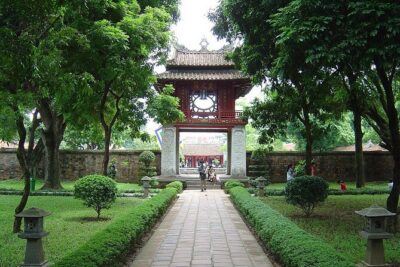
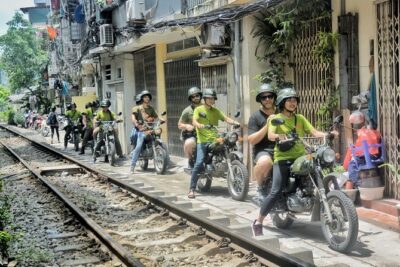
As you ride around, you’ll pass key sights tied to Hanoi’s layered identity. Expect the Ho Chi Minh Complex area, the Temple of Literature, Trấn Quoc Temple, and major lake areas like West Lake and Trúc Bạch Lake. You’ll also pass Hoàn Kiếm Lake and the Opera House, plus the train street—one of those places people talk about constantly because it’s unlike anything else in Vietnam.
You also get the theme behind the “Little Paris” nickname often used for Hanoi’s French-era sections: in the late 1800s, old Vietnamese buildings were replaced with French-style villas. On a motorbike tour, you don’t get time for deep museum-style interpretation. But you do get that overview feel—like drawing a map in your head while you move through the city.
Possible drawback here: since much of this segment is “ride past,” don’t expect extended time at each landmark. If you want slow looking and lots of photo time, you may want to pair this tour with separate visits later.
Middle Island on the Red River: a no-electricity contrast
This is the most emotionally different stop on the half-day plan. The tour heads to Middle Island, shaped by the Red River’s water patterns, where shelter for fishermen developed long ago. You’re also told this is a run-down neighborhood and that it has no electricity or running water.
This section is not about comfort. It’s about contrast—city life versus what daily living looks like on the other side of that river neighborhood boundary. You’ll take a stroll through flower, vegetable, and banana plantations, which gives you a sense of how people earn a living and how green space functions close to the water.
One of the most valuable parts of visiting here (especially by guided route) is that you see the “in-between” spaces that don’t usually land on standard visitor itineraries. Even without a lot of formal lectures, you come away with a clearer mental picture of why Hanoi feels so different block to block.
The practical takeaway: if you’re sensitive to living-condition differences, pace yourself. This stop can shift the mood quickly, from city movement into a quieter, more difficult reality.
Ngũ Xã food stop: eating your way through the city
The final segment is the “Food + Fun” anchor: a traditional Hanoian cuisine experience in Ngũ Xã, paired with the thrill of being out on the streets again. This is where you’ll be told to save your hungry belly—because you’ll actually eat, not just taste a token snack.
The tour includes food and beverages, and lunch is listed as included. Alcoholic beverages are not included, which keeps the focus on the meal itself rather than turning the stop into a drinking break. There are also vegan and vegetarian options, which is important because many street-food plans are heavy on meat by default.
What makes this stop feel like part of the tour (not an add-on) is that it’s tied to local life and local traffic patterns. You’re not eating in a museum-like setting away from the real city. You’re eating inside the flow of Hanoi, so the flavors connect to what you’ve seen on the ride—busy streets, dense neighborhoods, and everyday rhythm.
If you have dietary needs, this is the moment to be clear with your guide. The tour states vegan/vegetarian options exist, but you’ll get the best outcome if you confirm what that means for your specific preferences once you’re there.
Worth a glance beside this Hanoi pick:
- Hanoi Jeep Tour: Food, Culture and Fun by Vietnam Army Jeep★ 5.0 · 15,222 reviews
- Hanoi Motorbike Tour: Food, Culture and Fun by Vintage Motorbike★ 5.0 · 6,699 reviews
- [HOT] Hanoi Old Quarter Walking Street Food – Small Group Tour★ 5.0 · 2,163 reviews
Price, inclusions, and who this half-day fits best
At $55 per person for a 4 to 5 hour window, the price can make sense if you treat it as a bundled experience: guide time, motorbike time, pickup and drop-off, and actual meals. You’re not just paying for a ride; you’re paying for transportation plus food and beverages, with lunch included.
You’re also getting a structure that’s hard to replicate on your own in the same time window. Four to five hours is short, and Hanoi has layers. This tour forces a tight loop: backstreets for orientation, landmark-area passes, a Red River contrast stop, and then the food in Ngũ Xã.
Here’s who it fits best:
- You want a fun, fast Hanoi overview without spending days piecing it together.
- You enjoy street-level city experiences—especially motorbike travel.
- You eat well on tours and like guided restaurant-style stops.
Here’s who might be less satisfied:
- If you’re looking for long, detailed lectures about Hanoi’s history and Vietnam’s background, you could feel short-changed. One critical note in the feedback highlights that the historical depth may not meet every expectation.
- If you strongly prefer slow walking and time sitting in each site, this format is more “moving and experiencing” than “lingering and reading.”
Still, even with those caveats, this is a good option for first-timers who want to learn the city’s pulse quickly.
Should you book this Hanoi Minsk motorbike food tour?
I’d book it if your priority is motion, local flavor, and seeing more than the obvious highlights. The ride on a USSR vintage Minsk gives the day a clear identity, and the stop mix—French/Old Quarter passes, Middle Island contrast, and Ngũ Xã food—keeps the experience from turning into one-note sightseeing.
Don’t book it expecting a full history course. Think of it as a high-energy guided day that teaches you how Hanoi feels, then feeds you so you leave happy and not hungry. If that sounds like your travel style, you’ll probably enjoy it a lot.
FAQ
How long is the Hanoi half-day motorbike and food tour?
The tour is listed as about 4 to 5 hours.
Is pickup and drop-off included?
Yes. Transportation with pick-up and drop-off is included.
What food options are available?
Food and beverages are included, and vegan and vegetarian options are available. Lunch is also included.
What’s included in the $55 price?
Included items are the tour guide and the Minsk motorbike driver experience, food and beverages (including lunch), and transportation (pick-up and drop-off). Tips and personal expenses are excluded.
Does the tour run in bad weather?
The tour requires good weather. If it’s canceled due to poor weather, you’ll be offered a different date or a full refund.
How many people are in the group?
The tour lists a maximum of 50 travelers.
More Food & Drink in Hanoi



More Tour Reviews in Hanoi



More of Hanoi on Two Wheels


Latest Hanoi write-ups from our team


Hanoi Vespa & Motorbike Tours, compared.
 ★ 5.0Hanoi Motorbike Tour: Food, Culture and Fun by Vintage MotorbikeFrom $556,699 reviews
 ★ 5.0Hanoi Motorbike Tours Led By Women: Hanoi By Night Foodie Motorbike ToursFrom $691,734 reviews
 ★ 5.0Hanoi Motorbike Tours Led By Women: Hanoi City Insight Motorbike ToursFrom $59816 reviews
 ★ 5.0Hanoi Countryside Motorbike Tour: Red River Culture & Daily LifeFrom $55681 reviews
 ★ 4.9From Hanoi: 3-Day Motorbike Ha Giang Loop with Easy RiderFrom $227501 reviews
 ★ 5.0Hanoi Motorbike Tour: Hanoi HIGHTLIGHTS & HIDDEN GEMSFrom $57405 reviews
 ★ 5.0Hanoi old quarter sightseeing & street food eating by MotorcycleFrom $55333 reviews
 ★ 5.0Vespa City Tour &Train Street Female With Ao Dai Riders 4,5 HoursFrom $58314 reviews
Browse the lists this tour appears in