
Reviewed · WORKSHOPS
Traditional Silversmith Workshop in Hanoi
A thin-silver ring takes time, and that’s the point. In Hanoi, you’ll visit a village with a handcraft tradition that goes back over a thousand years, then you’ll actually shape and arrange silver into your own piece. I really like the thin-silver process you get to see up close, and I also like the small-group, English-speaking guidance that helps you finish something you can wear.
One thing to plan for: this workshop is more about making a finished product than becoming a full-on silversmith teacher, so if you want every technical step explained from scratch, you may need to ask for it. Also, the location is about 10 km from Hoan Kiem Lake, so you’ll want to build in extra travel time.
In This Review
- Key things to know before you go
- Why Dinh Cong’s thin silver feels special in Hanoi
- The 3-hour flow: from village history to your finished piece
- Choosing what to make: ring, pendant, earrings, and how samples work
- Hands-on thin-silver making: what you’ll do with your own hands
- How the guidance works (and what “English-speaking” means day-of)
- Price and value: what $54 covers for a thin-silver souvenir
- Getting there from Hoan Kiem and finding the right alley
- Who this workshop is best for (and who should think twice)
- Should you book Traditional Silversmith Workshop in Hanoi?
- FAQ
- How long is the Traditional Silversmith Workshop in Hanoi?
- Where does the workshop take place?
- How much does it cost?
- What can I make during the workshop?
- What’s included in the price?
- Are food and drinks included?
- What if I want a more complicated custom design?
- What time and group size should I expect?
- Where do I meet the guide?
- Is there a cancellation option or pay-later booking?
Key things to know before you go
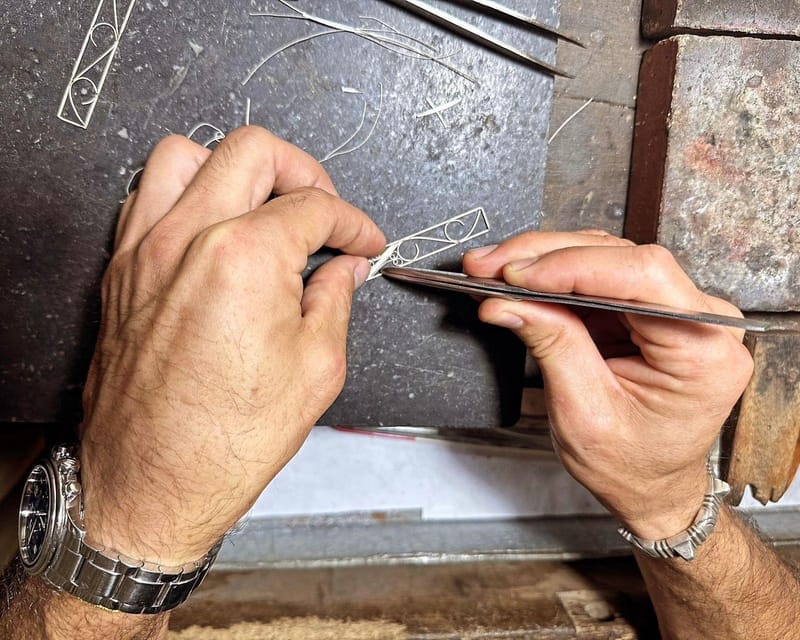
- You’ll work with Dinh Cong’s thin silver, a specialty village craft made entirely by hand.
- Your session centers on making one piece (ring or pendant/earrings options based on the samples).
- Expect a quick village context, then hands-on instruction under a local host’s guidance.
- Small group size (up to 6) keeps the attention on each person’s project.
- The price covers a set amount of silver, with extra fees if you choose a bigger/more complex design.
- Meeting is in a narrow alley near a temple, so double-check the pickup spot on arrival day.
Why Dinh Cong’s thin silver feels special in Hanoi
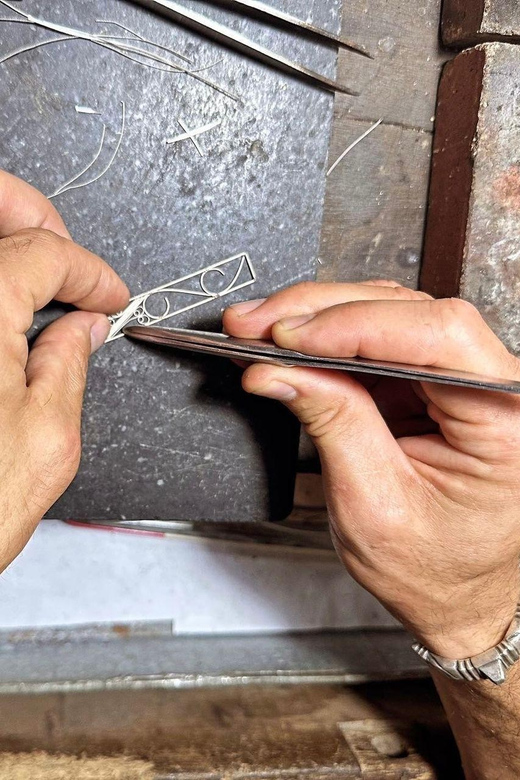
Hanoi has plenty of silver shops, but Dinh Cong village is different because of one specific technique: thin silver. In many places, you might see engraving or more traditional “solid” jewelry methods. Here, the craft is built from scratch using delicate handwork—starting from silver ingots, then pulling the metal into tiny threads, shaping those threads, and placing details onto a frame until the final piece comes together.
That approach changes how you think about the material. You’re not just decorating something pre-made. You’re building structure with metal that’s basically stretched into fine lines. It’s slower, more precise, and it shows off the patience behind Vietnamese craft culture.
Another big plus is that the workshop doesn’t feel like a showroom tour that stops at the photo stage. You’re in a place where silver handcrafting has been part of local life through big changes over centuries. Even if you don’t catch every detail, you’ll feel the difference between a mass-production store and a craft workspace.
Worth a glance beside this Hanoi pick:




The 3-hour flow: from village history to your finished piece
The workshop runs about 3 hours, and it’s set up in a very practical order. You’ll start by learning the village story and meeting your local host who guides the work. This isn’t just trivia. The quick background helps you understand why the technique matters and why Dinh Cong is known for this specific kind of silverwork.
Then you shift to the part you’ll remember: making your own piece. Under the host’s direction, you learn how to create thin silver thread and then arrange it into the design. The exact steps can vary by the project you choose and how the session is paced, but the goal is consistent—leave with one finished item that you made with your own hands.
By the end, you’re not waiting around while someone else does the work. You’re participating enough that your piece feels like yours, not like a souvenir that got assembled after you left.
Choosing what to make: ring, pendant, earrings, and how samples work
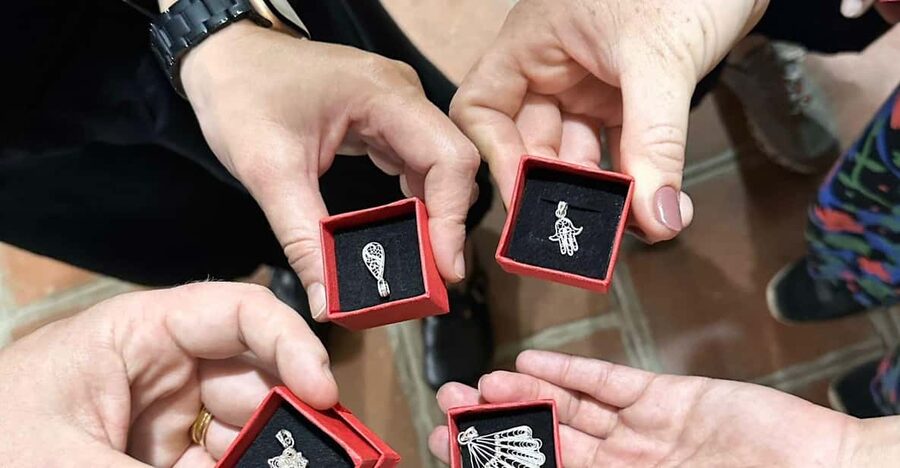
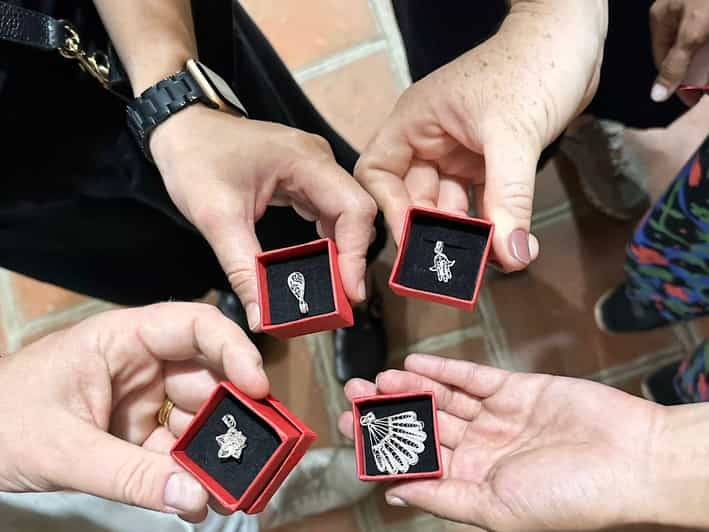
At the start, you’ll be shown samples and you can choose what to make—a ring or a pendant/earrings/bracelet type project depending on what’s available in the set of options. The workshop is designed around one finished product, so the selection matters.
Here’s the practical tip: pick something you genuinely like and that matches your confidence level for fine, careful work. Thin-silver techniques are detail-driven. If you go for something extremely elaborate, you may run into the extra-silver policy.
Also, remember the price is set for a specific amount of silver (enough for a simple ring). If you want a bigger design or you need more material to create your idea, you’ll likely discuss an extra fee at the workshop. The extra charge mentioned is $5–$10 for complicated customized designs.
Hands-on thin-silver making: what you’ll do with your own hands
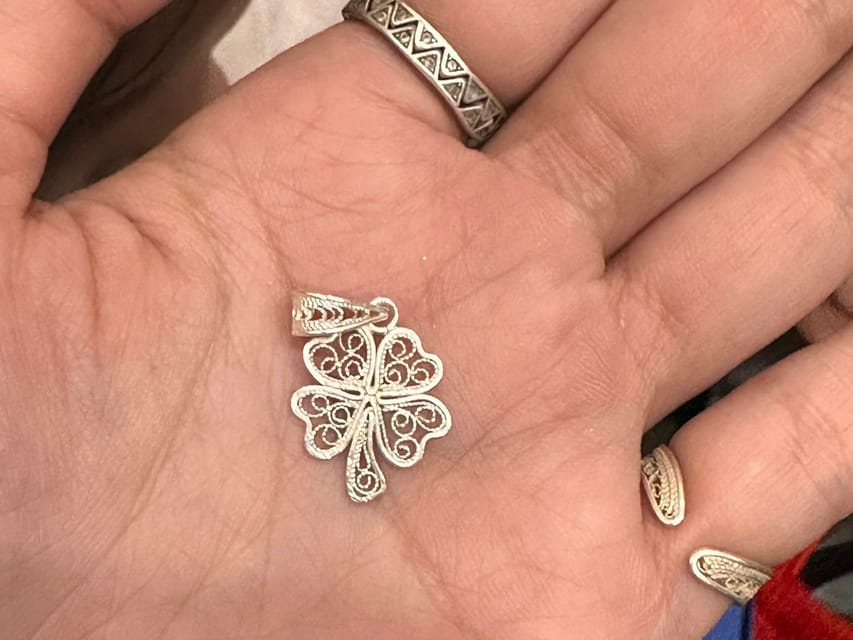
This is the heart of the experience. You’ll learn to take thin silver thread and arrange it into a piece—usually by following the host’s guidance and working toward the frame and shape for your chosen design.
The technique is built around careful, tiny movements. The metal is drawn out into very fine threads, then bent and positioned into the patterns needed for the final jewelry. This is exactly why thin silver is a Dinh Cong specialty: it’s not just “silver jewelry.” It’s a method where the metal itself is processed into workable thread first.
In a good session, you’ll get clarity on what you’re doing as you do it, with the host and guide stepping in when needed. I also like that you’re not forced into a rigid, classroom style lesson. You’re learning through the work—small corrections as you build the piece.
One consideration: if you’re hoping for a full teaching session on things like drawing, measurements, and how to plan your design from a blank page, you may not get that level of instruction in the time you have. The workshop is set up to guide you to a finished item, so you’ll want to ask questions early if you want more explanation.
How the guidance works (and what “English-speaking” means day-of)

You’ll have an English-speaking guide with you, plus local instruction from the host in the workspace. In a small group (limited to 6 participants), that usually means you’re not lost in a crowd.
From what’s described, instruction includes:
- learning the village background and process basics
- guided hands-on work building your piece
- help to make sure you reach a finished result
That’s a good balance for first-timers. You get support without the pressure of needing prior jewelry-making skill. Still, if you’re the type who wants the reasoning behind every step—why a measurement matters, how a design is planned—bring your curiosity and don’t be shy about asking.
- Hanoi Motorbike Tour: Food, Culture and Fun by Vintage Motorbike★ 5.0 · 6,699 reviews
- Hanoi: Guided Food Tour with Train Street Visit★ 4.9 · 6,239 reviews
- Hanoi Cooking Class: Culture, Local Market & Meaning CSR Impact★ 5.0 · 5,147 reviews
Price and value: what $54 covers for a thin-silver souvenir
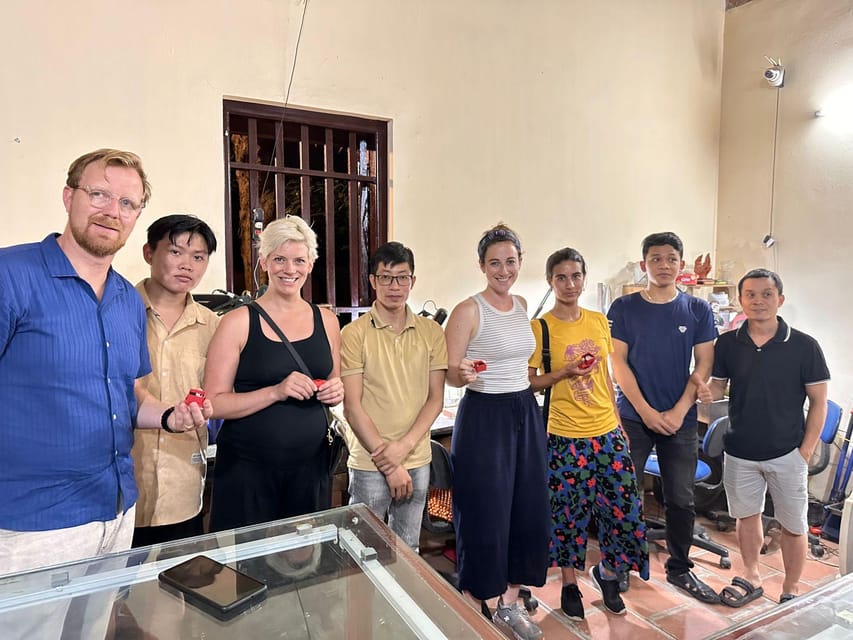
$54 per person is straightforward, and the value depends on what you want out of the session.
You’re paying for:
- materials for one silver ring/pendant/earrings type item
- an English-speaking guide
- guidance to make one finished product
The key value factor is that materials are included for a basic design (enough for a simple ring). So you’re not staring at a “from $54” price that turns into a higher total once you pick your jewelry.
Where costs can shift is if you want extra customization or a larger piece. The additional fee range given is $5–$10 for complicated customized designs. You’ll discuss that on site, which makes it easier to control your budget by choosing a simpler style up front.
So, ask yourself: do you want a quick, guided workshop that produces wearable jewelry today? Or do you want a deeper, technical training experience where you may take longer and learn more theory? This workshop leans toward the first option, and that’s why it can be good value.
Getting there from Hoan Kiem and finding the right alley
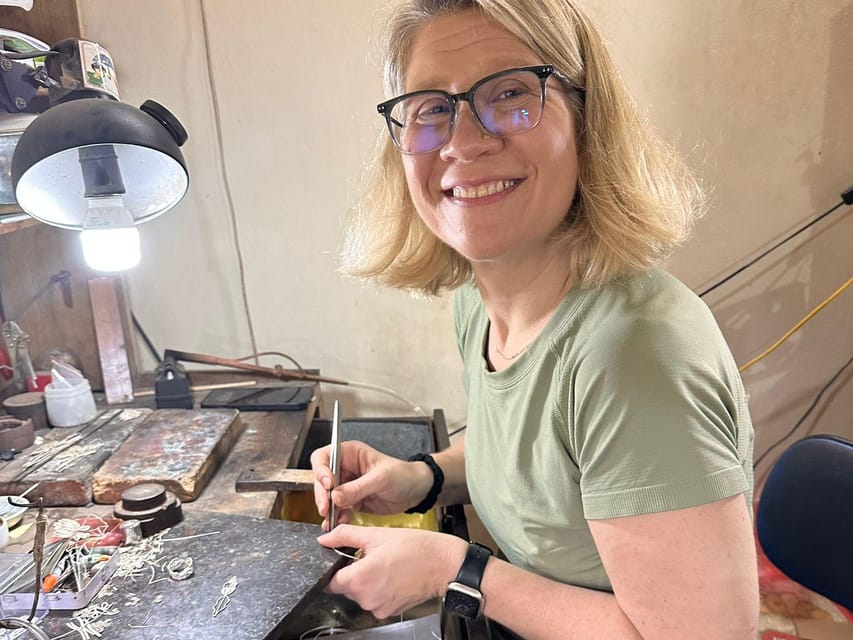
The workshop is in Dong Bac, in Hanoi’s Hoang Mai district, around 10 km from Hoan Kiem Lake. That’s not walkable for most people, so you’ll rely on a taxi or ride service.
The meeting point is also something to be ready for: the entrance of an alley next to a temple. Because it’s an alley, the street scene can look similar at first glance. If you arrive early, it’s worth double-checking that you’re at the correct temple-adjacent alley entrance before you wait.
One more practical thought: because food and drinks aren’t included, plan to eat beforehand—especially if you’re the type who gets hungry during hands-on activities.
Who this workshop is best for (and who should think twice)
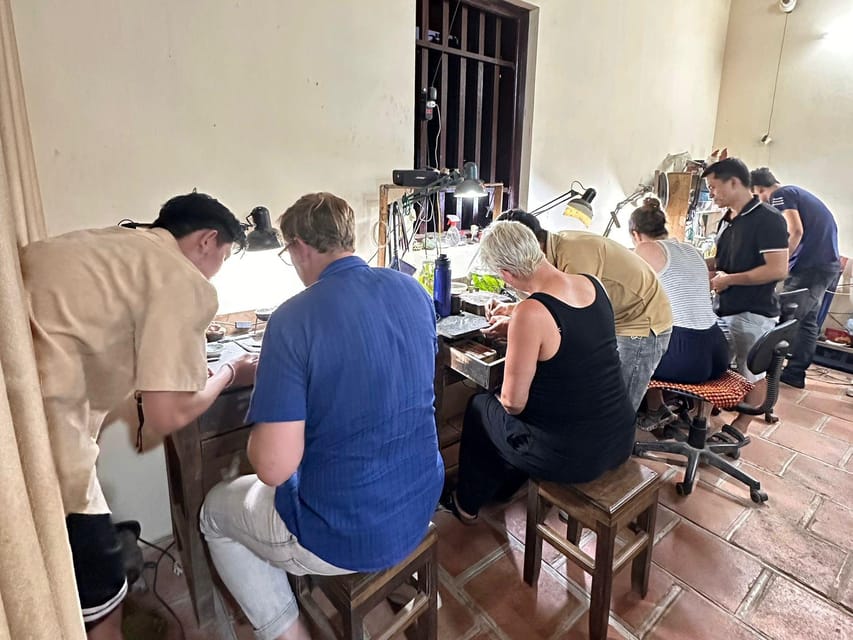
This experience is a great match if you:
- want a hands-on Hanoi activity that ends with something you made
- like craft skills and want to see thin silver as a working process, not just a finished product
- prefer small groups with English support
- are visiting Hanoi and want something more personal than another museum stop
It may be less ideal if you:
- want heavy technical instruction from sketch to measurement planning
- expect a long, lecture-heavy history session (this is time-limited and focused on production)
- don’t want to travel about 10 km from Hoan Kiem to reach the village area
Also, keep expectations realistic about how much you can learn in 3 hours. You’ll leave with a finished piece and a strong feel for the craft. You won’t leave ready to run a silversmith workshop tomorrow.
Should you book Traditional Silversmith Workshop in Hanoi?
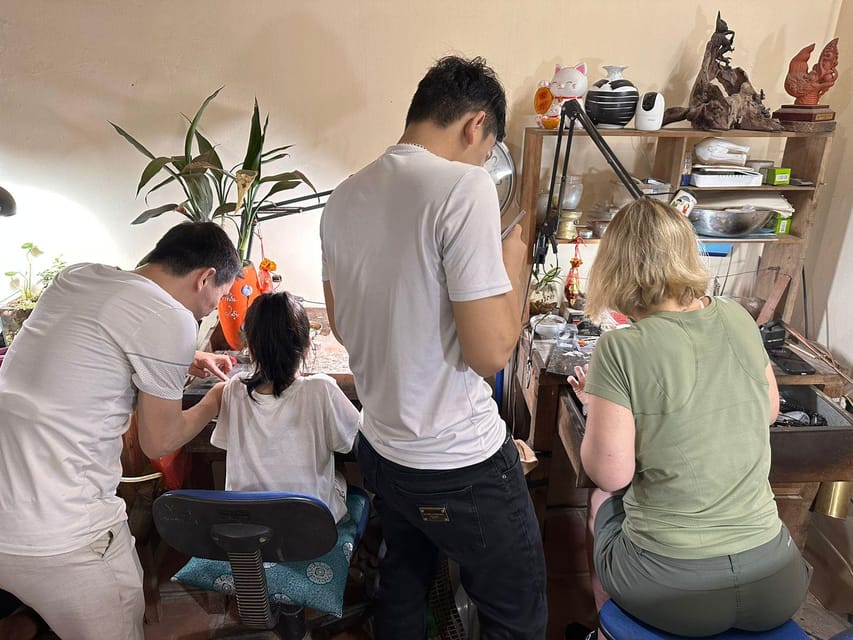
I think you should book if you want a genuine craft experience with a clear outcome: you choose a design from samples, you learn how thin silver thread is handled, and you walk away with one piece made during the session. The small group size, English-speaking guide, and the Dinh Cong specialty technique are what make this worth your time.
I’d hold off—or at least adjust expectations—if your main goal is deep step-by-step technical training on design planning and measurements. This workshop is set up for a guided finish, not a long-form silversmith apprenticeship.
If you do book, come with a design in mind that you truly want to wear, ask questions early about any part you don’t understand, and be ready for careful work. Thin silver rewards patience. And yes, that means the process takes concentration—but that’s also why the end result feels so satisfying.
FAQ
How long is the Traditional Silversmith Workshop in Hanoi?
It lasts about 3 hours.
Where does the workshop take place?
It’s located on the To Lich river bank in Hanoi’s Hoang Mai district, in Dinh Cong village. It’s approximately 10 km from Hoan Kiem Lake.
How much does it cost?
The price is $54 per person.
What can I make during the workshop?
You can make a piece like a silver ring or a pendant/earrings (you choose based on the samples available). The materials are included for one simple piece.
What’s included in the price?
Materials for one silver ring/pendant/earrings, an English-speaking guide, and guidance to one finished product.
Are food and drinks included?
No, food and drink are not included.
What if I want a more complicated custom design?
Extra fees apply for complicated customized designs, listed as $5–$10, and you can discuss details at the workshop.
What time and group size should I expect?
The session runs for 3 hours with starting times depending on availability, and the group is limited to 6 participants.
Where do I meet the guide?
You meet at the entrance of an alley next to a temple. The instructor/guide will meet you there, and the activity ends back at the meeting point.
Is there a cancellation option or pay-later booking?
Yes—free cancellation is available up to 24 hours in advance for a full refund, and you can reserve now and pay later.
More Workshops in Hanoi


More Tour Reviews in Hanoi






Latest Hanoi write-ups from our team





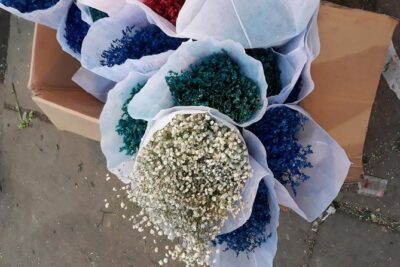
Workshops, compared.
 ★ 5.0Hanoi Cooking Class: Culture, Local Market & Meaning CSR ImpactFrom $395,147 reviews
 ★ 5.05 Traditional Dishes Hanoi Cooking Class with Market TripFrom $354,890 reviews
 ★ 5.0Hanoi Coffee Workshop: Taste Salt, Coconut and Egg CoffeeFrom $161,286 reviews
 ★ 5.0Salt Coffee Workshop Awake Your Senses With 6 BrewsFrom $23792 reviews
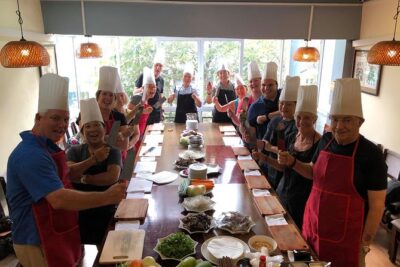 ★ 5.0Vietnamese Food Cooking Class in Hanoi with Market ExperienceFrom $45778 reviews
 ★ 5.0Handcrafted Wood Carving Workshop with Local ArtisanFrom $19733 reviews
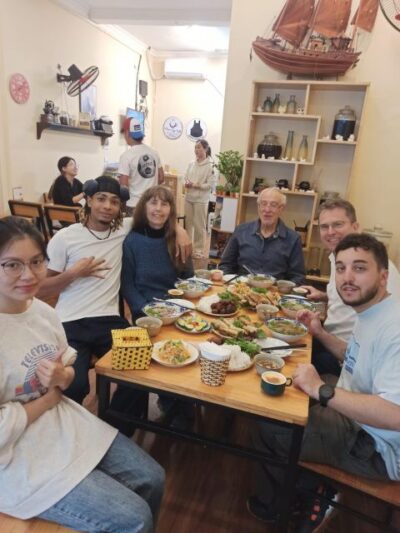 ★ 5.05 Local Dishes Cooking Class with Meal & Market VisitFrom $40420 reviews
 ★ 5.0Hanoi Cooking Class and Market Tour in Ancient HouseFrom $45379 reviews
Browse the lists this tour appears in