
Reviewed · WORKSHOPS
Private Tour Hanoi Highlights – Bat Trang Village – Pottery Class
Hanoi hits different when you start with pagodas. This private day mixes major Hanoi highlights with a hands-on stop at Bat Trang, including a pottery class where you actually shape clay. I also like that the plan is built around an English-speaking guide and real site context, not just photo stops. One thing to plan for: the Ho Chi Minh Mausoleum area has strict security and dress rules, so you need to follow them closely.
What makes this experience practical is the pacing across the city. You get hotel pickup, an air-conditioned ride, admissions covered for key sights, and lunch included, so you spend less time figuring things out and more time seeing. I especially like the way the day alternates between big-name monuments (Mausoleum, One-Pillar Pagoda) and calmer settings like Tran Quoc Pagoda by West Lake.
By the time you reach Bat Trang, the day slows down in the best way. You’ll get a studio-style ceramics lesson, plus time to watch how the craft works in a 14th-century village just outside Hanoi. If you’re trying to pack Hanoi into one day without losing quality, this is a strong match.
In This Review
- Quick hits worth knowing
- Getting around Hanoi with a private car (and why it matters)
- Tran Quoc Pagoda: Hanoi’s oldest pagoda by West Lake
- Ho Chi Minh Mausoleum: the security and dress code reality check
- Presidential Palace and Ho Chi Minh’s Stilt House: what you can see
- One-Pillar Pagoda: legend in stone and a lotus motif
- Temple of Literature and the Well of Heavenly Clarity
- Vietnam Museum of Ethnology: culture you can point at
- Old Quarter noodle lunch, then Bat Trang ceramics village
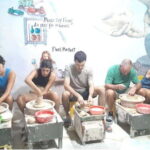
- Bat Trang pottery class: the hands-on part that makes the day worth it
- Shopping at Bat Trang without getting overwhelmed
- Long Bien Bridge: a working Eiffel-era landmark on the Red River
- Hanoi Opera House outside: French neoclassicism, political history, quick reset
- Price and value: what $89 buys you in a private day
- Who this tour suits (and who should think twice)
- Should you book this Hanoi + Bat Trang private tour?
- FAQ
- Where is the meeting point and where does the tour end?
- How long is the tour?
- What’s included in the price?
- Are entrance fees included for the sights?
- Is the Ho Chi Minh Mausoleum open all day?
- What dress code do I need for the Ho Chi Minh Mausoleum?
Quick hits worth knowing
- Tran Quoc Pagoda: an islet pagoda with roots in the 6th century and a West Lake setting
- Ho Chi Minh Mausoleum rules: mornings only and very specific clothing requirements
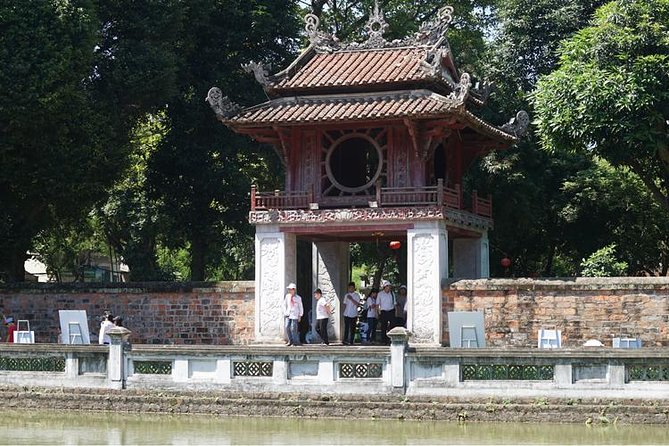
- Temple of Literature: a 1070-era university complex with courtyards, stelae, and pavilions
- Bat Trang pottery class: a hands-on session with local artisans in a Red River ceramics village
- Long Bien Bridge: Gustave Eiffel design details, still used by pedestrians, mopeds, and trains
- Opera House exterior: French-era neoclassicism, with a quick look rather than a full inside visit
Getting around Hanoi with a private car (and why it matters)
This tour is private, so you’re not merging into a big group shuffle. Your day starts at the Hanoi Opera House meeting point at 8:30 am, then you ride in an air-conditioned car with a guide and driver who keep things moving.
That private setup is a big deal in Hanoi. Distances can feel short on a map but long in traffic, especially when you’re trying to hit a schedule that depends on timing (like the mausoleum). Here, the transport is part of the value, not an afterthought—round-trip transfers are included.
Also, you get a bottled water. It sounds small, but on a long day that runs about 8 to 9 hours, it saves you from extra stops.
More hands-on hours out at Bat Trang

Tran Quoc Pagoda: Hanoi’s oldest pagoda by West Lake
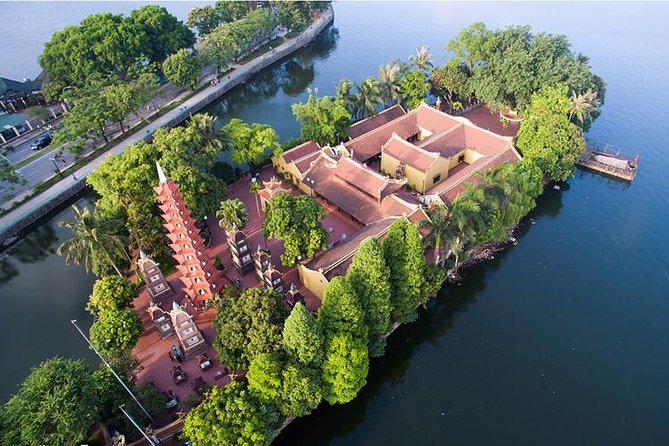
Your first major stop is Tran Quoc Pagoda, which traces back to the 6th century. It’s also one of those sites where the layers of Hanoi history show up quickly: the pagoda’s name changed over time, and it eventually ended up on an islet in West Lake.
What I like about starting here is the tone. You’re not thrown into the biggest political monument first. Instead, you get a calm introduction to Hanoi’s spiritual side, with greenery around you and a setting that feels timeless.
A couple of practical notes:
- You’ll have about 40 minutes, which is enough time to walk around and take in the setting without rushing.
- Admission is included, so you just focus on the visit.
If you like Buddhist heritage sites or you enjoy understanding why places moved and changed over centuries, this is a smart early stop.
Ho Chi Minh Mausoleum: the security and dress code reality check
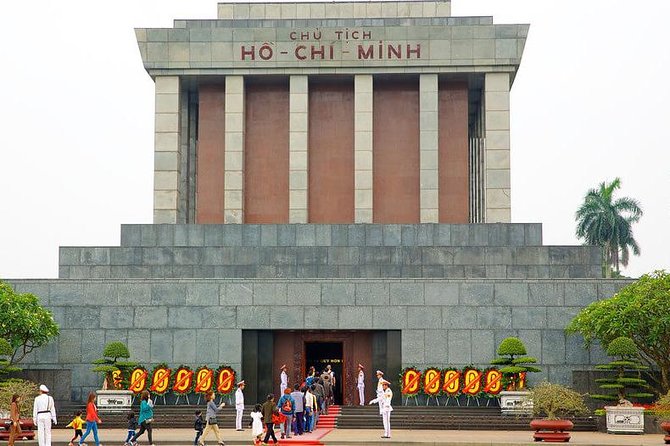
Next comes the Ho Chi Minh Mausoleum complex. This is not just an attraction. It’s a highly controlled place built in the 1970s, opened to the public in 1975, and modeled on Lenin’s mausoleum style. Ho Chi Minh’s body is preserved in a glass case here, even though it’s commonly known he had wishes about how he should be remembered.
The big consideration is how strict the visit conditions are. The mausoleum area requires modest dress and tight security:
- No shorts, sleeveless shirts, or miniskirts.
- Shorts must be knee length.
- Your shoulders must be covered with scarves when visiting.
You’ll also need to deposit bags and cameras before entering. That affects what you can carry, and it can slow you down if you’re not ready.
Timing matters too: it’s morning only and it’s listed as closed weekly on Monday and Friday. If you’re choosing between days, pick with that in mind.
Expect about 40 minutes here with the guide managing the flow.
Presidential Palace and Ho Chi Minh’s Stilt House: what you can see
After the mausoleum complex, you move to the Presidential Palace and the stilt house area.
The palace building was constructed in 1900 by French architect Auguste Henri Vildieu. It was intended as an official residence, but Ho Chi Minh preferred a traditional stilt-house. The palace is a three-storey mustard-yellow colonial-style structure, with features like gardens and ponds.
Here’s the key thing: you’re not going into every room. Visitors are only allowed to explore the gardens and the stilt home area. There’s also a combined entrance gate setup inside the complex.
For the stilt house, you’ll get the best kind of viewing experience for people who don’t want to sit inside a museum all day. The house is preserved as Ho left it, and the open doorways and windows give you clear sight lines. The stilt house itself is used for official receptions and isn’t open to the general public as a typical museum display, but you can wander around the grounds if you stick to the paths.
You’ll spend about 15 minutes on each related stop. It’s short, but the architecture and the garden setting make those minutes feel efficient rather than cramped.
One-Pillar Pagoda: legend in stone and a lotus motif
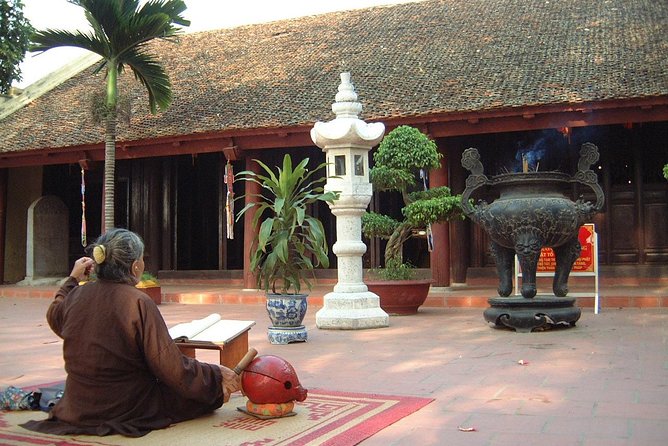
The One-Pillar Pagoda is famous for good reasons, but it can also be one of those places where the myth matters as much as the monument.
The story you’ll hear is that a fatherless emperor dreamed of an enlightened being, Avalokiteshvara, who granted him a son resting on a lotus flower. The pagoda was commissioned to resemble the lotus—another symbol tied to Quan Am, the Goddess of Mercy. Inside, there’s a richly gilded Quan Am statue at the main altar.
What I like about this stop is how quickly it gives you cultural context. The legend is simple, memorable, and it explains why the pagoda is shaped the way it is.
Plan for about 30 minutes, and admission is included.
More private, just-your-group bookings
- Doris Cruise 5 star cruise 2 days visiting Halong Bay Lan Ha Bay private balcony★ 5.0 · 2,338 reviews
- Private Walking Tour of Hanoi City★ 5.0 · 1,251 reviews
- Nội Bài International Airport Private Transfer★ 4.6 · 1,130 reviews
Temple of Literature and the Well of Heavenly Clarity
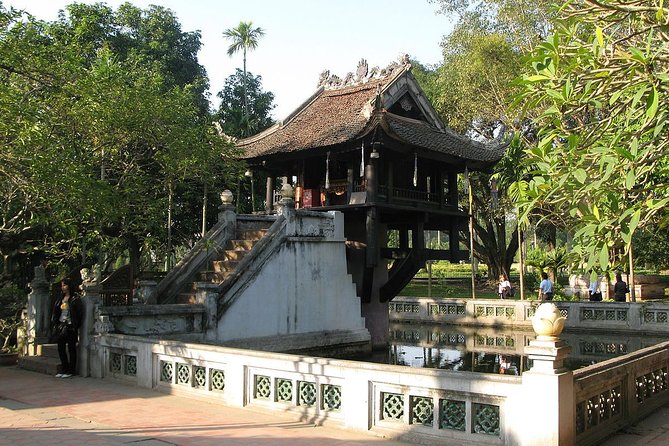
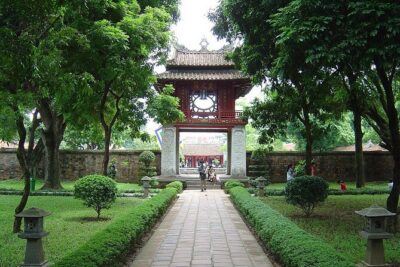
Next is Temple of Literature & National University, one of the most photogenic historical sites in Hanoi for a reason. It began as a university in 1070, dedicated to Confucius, and later became a place that honored scholars and education.
You’ll see classic Vietnamese architecture: courtyards, passageways, pavilions, and stelae. A standout feature here is the Well of Heavenly Clarity, along with the turtle steles tied to academic recognition.
This is also a good stop if you want a break from the political heaviness of the morning. The pace shifts toward learning and quiet detail. The complex has layers from the Ly and Tran dynasties, and it’s tied to centuries of exam culture and scholarly advancement.
You’ll have about 1 hour. Admission is included.
Vietnam Museum of Ethnology: culture you can point at
If you’ve only seen Vietnam through monuments, the Vietnam Museum of Ethnology can be a helpful correction. This museum focuses on Vietnam’s ethnic communities and their everyday life: clothing, tools, and models connected to rituals, weddings, funerals, and more.
The way the exhibits are described makes the visit feel grounded. It’s not just big cultural themes. It’s the everyday objects and lived traditions you can actually look at and understand.
You’ll spend about 1 hour, with admission included. If you want something that’s both informative and less crowded-feeling than the biggest city sites, this stop adds balance to the day.
Old Quarter noodle lunch, then Bat Trang ceramics village
Lunch comes next: you’ll have a bowl of noodle soup with beef or chicken. Drinks during lunch are not included, but you do get a bottled water earlier in the day.
The tour also frames lunch as part of your Hanoi experience, with the noodle soup stop described as tied to the Old Quarter. That’s a good fit after the morning monuments, because you’ll get a brief break without losing time.
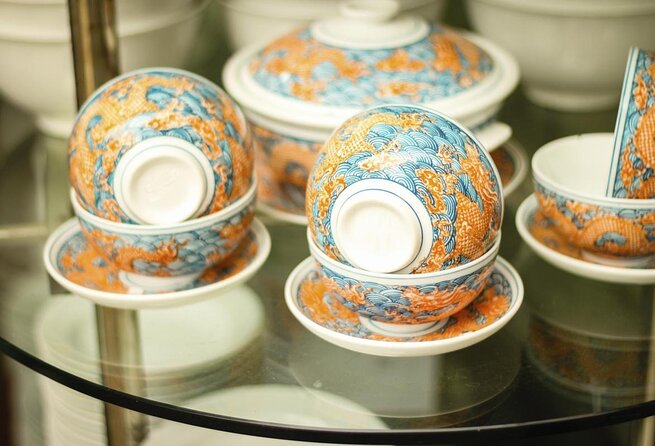
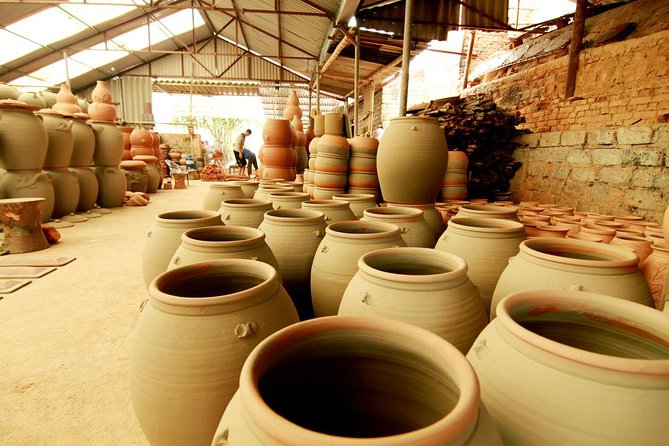
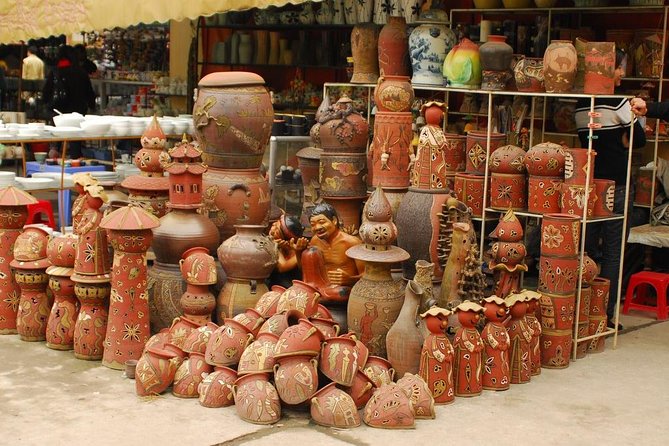
Then you head out toward Bat Trang Ceramics Village. This is a Red River ceramics center in the Gia Lam District, with roots reaching back to the 14th century. Bat Trang is known for mixing traditional techniques with more modern methods, and that blend shows up in what you see—both finished products and the practical craft process behind them.
You’ll have about 2 hours here, including the pottery class.
Bat Trang pottery class: the hands-on part that makes the day worth it
This is the main creative payoff. The pottery class is included, and the whole point is simple: you learn how to form and make hand products by working directly with clay.
That hands-on time changes how the rest of the day lands in your brain. Instead of just looking at culture, you’re doing something that connects you to craft traditions that have long outlasted any one monument.
You can also expect to see:
- A large range of ceramics and pottery products being traded and displayed
- Artisans working with both traditional and modern approaches
- The idea of batch production and finishing, not just one person making one bowl from scratch
If you like creative activities or you want a souvenir that feels earned, this class is the reason you book this tour over a simple city highlights day.
Also, admission is included, and you’ll have time both for learning and for browsing. The tour typically supports both.
Shopping at Bat Trang without getting overwhelmed
Bat Trang is known for being a place where you can buy some of the finest handmade ceramic products in Vietnam. That’s great news, but it can also mean decision fatigue if you walk in expecting one perfect item.
Here’s the practical way to handle it:
- Think of what you want before you arrive: plates, cups, small decorative items, or something more practical.
- Use the class time to learn what looks and feels high-quality. The techniques you use in the pottery class can become your quick filter while shopping.
- If you’re traveling with fragile items, plan to wrap and pack carefully right away. The tour doesn’t list packing materials, so you’ll want to be ready.
This is also where a private guide helps indirectly. Even when they can’t influence prices, they can help you understand what you’re looking at.
Long Bien Bridge: a working Eiffel-era landmark on the Red River
After Bat Trang, the schedule includes a walk to Long Bien Bridge, also known as Paul Doumer Bridge. It was constructed between 1899 and 1902, and it was designed by Gustave Eiffel.
This isn’t a dead postcard bridge. It’s still used, including for trains, mopeds, and pedestrians. That means you’ll see everyday local movement rather than a cordoned-off monument.
The historical context is also part of why it’s worth the stop. The bridge was severely bombed during the American war, largely because of its strategic connection between Hanoi and Hai Phong. Today, it remains a symbol of how important this corridor is for daily life.
You’ll have about 30 minutes, and admission is free here.
If you want one moment that feels less touristy and more real, this is it.
Hanoi Opera House outside: French neoclassicism, political history, quick reset
The day ends with a quick look at the Hanoi Opera House exterior. The French colonial administration built it between 1901 and 1911, and it was modeled on the older Paris opera house, the Palais Garnier. The style is neoclassical.
You’re only visiting the outside, not going deep inside. That matches the time you have left and keeps the tour from running late.
A bit of context is included: after the French departed, the building became part of political events and street fighting during the conflict period in Hanoi. Even if you don’t know the details, seeing the neoclassical façade in Hanoi gives you a sense of how the city has absorbed different eras.
The tour drops you back at the same meeting point.
Price and value: what $89 buys you in a private day
At $89 per person, the value comes from what’s bundled in. This isn’t just a guide walking you past a few sights.
Included items you’ll actually feel:
- Private transfer by air-conditioned round trip vehicle
- English-speaking guide
- Entrance fees for the listed sights
- Lunch (noodles with beef or chicken)
- Pottery class at Bat Trang
- Bottled water
That bundle matters in Hanoi, where entrance fees and transport can add up quickly once you start planning your own route. Because the core costs are included up front, you can budget without constantly calculating what you need to pay at each stop.
One reason the tour gets booked well in advance is that it includes high-demand elements like the mausoleum area and Bat Trang class in one single day plan. It saves you from stitching together multiple half-days.
Also, this is a format that works best when you already know you want both culture and craft, not just one.
Who this tour suits (and who should think twice)
This is a great fit if you:
- Want Hanoi highlights without the stress of self-planning
- Like a mix of major monuments and smaller cultural context stops like museums
- Prefer a scheduled day when you only have limited time
- Want a meaningful souvenir from Bat Trang pottery-making
It may be less ideal if you:
- Don’t handle strict dress/security situations well, since the mausoleum area has clear requirements
- Want lots of free time to wander outside the itinerary, because the schedule is built for a full day of specific stops
Comfort tips that make the day easier:
- Wear shoes you can walk in for multiple heritage sites.
- Keep a scarf handy for the mausoleum area, since shoulders must be covered there.
- Bring your patience for security procedures that are part of the visit.
Should you book this Hanoi + Bat Trang private tour?
If your goal is one full day that covers the major Hanoi must-sees and adds a real activity at the end, I’d call this booking a smart choice. The hands-on pottery class at Bat Trang is the kind of included experience that can turn a sightseeing day into a memory you’ll still talk about months later. Add in the included lunch and admissions, and the $89 price feels like less of a guessing game.
One last practical nudge: plan your day around the mausoleum timing rules (morning only, and closed on Monday and Friday). If your travel dates match, this tour gives you a strong mix of sacred sites, education history, museum context, and a working craft village—without requiring you to coordinate it all yourself.
If you want flexibility, free cancellation is offered up to 24 hours before the start time, so you’re not locked in too tightly.
FAQ
Where is the meeting point and where does the tour end?
The tour meets at the Hanoi Opera House, 1 Tràng Tiền, Phan Chu Trinh, Hoàn Kiếm, Hà Nội and ends back at the same meeting point.
How long is the tour?
It runs for about 8 to 9 hours.
What’s included in the price?
The tour includes private air-conditioned round-trip transfers, an English-speaking guide, entrance fees, lunch (a noodle soup with beef or chicken), the Bat Trang pottery class, and a bottled water.
Are entrance fees included for the sights?
Yes. Entrance fees/sightseeing fees for the stops on the route are included in the tour.
Is the Ho Chi Minh Mausoleum open all day?
No. It is open only in the morning and is listed as closed weekly on Monday and Friday.
What dress code do I need for the Ho Chi Minh Mausoleum?
You need modest dress: no shorts, sleeveless shirts, or miniskirts. Shoulders must be covered using scarfs when visiting, and shorts (if worn) must be knee length.
More Tours in Hanoi
- Ninh Binh Full-Day Tour from Hanoi to Hoa Lu, Tam Coc & Mua Cave Via Boat & Bike
★ 5.0 · 4,384 reviews






More Tour Reviews in Hanoi


More at Bat Trang Pottery Village


Latest Hanoi write-ups from our team



Workshops, compared.
 ★ 5.0Hanoi Cooking Class: Culture, Local Market & Meaning CSR ImpactFrom $395,147 reviews
 ★ 5.05 Traditional Dishes Hanoi Cooking Class with Market TripFrom $354,890 reviews
 ★ 5.0Hanoi Coffee Workshop: Taste Salt, Coconut and Egg CoffeeFrom $161,286 reviews
 ★ 5.0Salt Coffee Workshop Awake Your Senses With 6 BrewsFrom $23792 reviews
 ★ 5.0Vietnamese Food Cooking Class in Hanoi with Market ExperienceFrom $45778 reviews
 ★ 5.0Handcrafted Wood Carving Workshop with Local ArtisanFrom $19733 reviews
 ★ 5.05 Local Dishes Cooking Class with Meal & Market VisitFrom $40420 reviews
 ★ 5.0Hanoi Cooking Class and Market Tour in Ancient HouseFrom $45379 reviews
Browse the lists this tour appears in