
Reviewed · WORKSHOPS
Hanoi: Vietnam Scents Perfumery Class
Your nose does the directing.
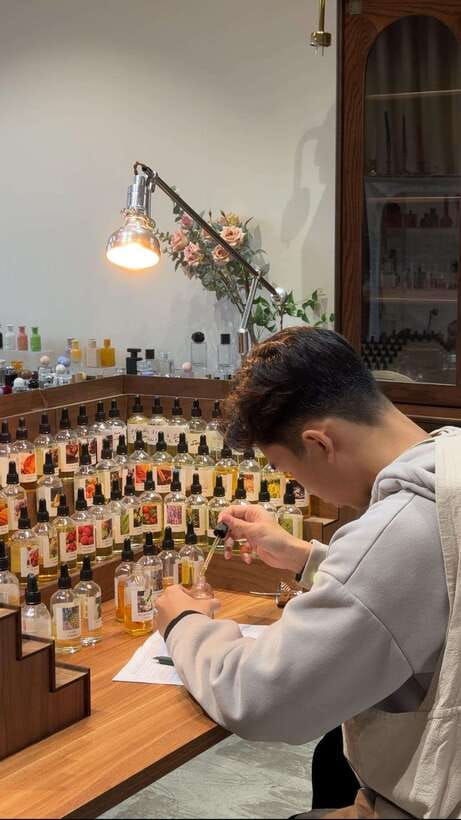
In Hanoi at Muối Studio, a Vietnam Scents perfumery class turns “I like this smell” into a step-by-step formula you can actually make again. You’ll start by testing a wide range of fragrance materials, then work with an instructor to build a professional mix from your own choices, and finish by blending your final perfume at the station.
What I like most is the focus on real craft, not just sampling. You’ll get to smell and compare 80+ different scent options, and the studio keeps things calm and workable with air-conditioning and a quiet, artistic setup. The class is also small, capped at 10 participants, which means you’re not stuck watching from the back row.
One thing to keep in mind: the location can be a little tricky to find. One review even flagged that it took some effort to locate the studio, so it’s smart to plan a buffer and look for the meeting point on the building’s 1/F.
In This Review
- Key highlights you’ll care about
- The olfaction test: where your perfume journey starts
- Building a professional formula (not just mixing vibes)
- Blending at the perfumer station: controlling the final scent
- Picking your bottle size and walking out with a custom souvenir
- Muối Studio’s vibe: calm, clean, and made for focus
- Price and value: why $39 can be more than a novelty
- Who this Hanoi perfume class fits best
- Practical tips so you get a better final bottle
- Should you book this Hanoi: Vietnam Scents Perfumery Class?
- FAQ
- How long is the Hanoi: Vietnam Scents Perfumery Class?
- What does the class cost?
- How many people are in the class?
- What language is the instructor?
- What happens during the perfume-making process?
- What bottle sizes do you choose from?
- What’s included in the price?
- Is the class suitable for children?
- Where do I meet for the class?
Key highlights you’ll care about
- 80+ scents to sniff so you can find your scent family favorites fast
- Olfaction test first, then instructor-guided formula building
- Test your formula at least twice to help you reach a balanced final blend
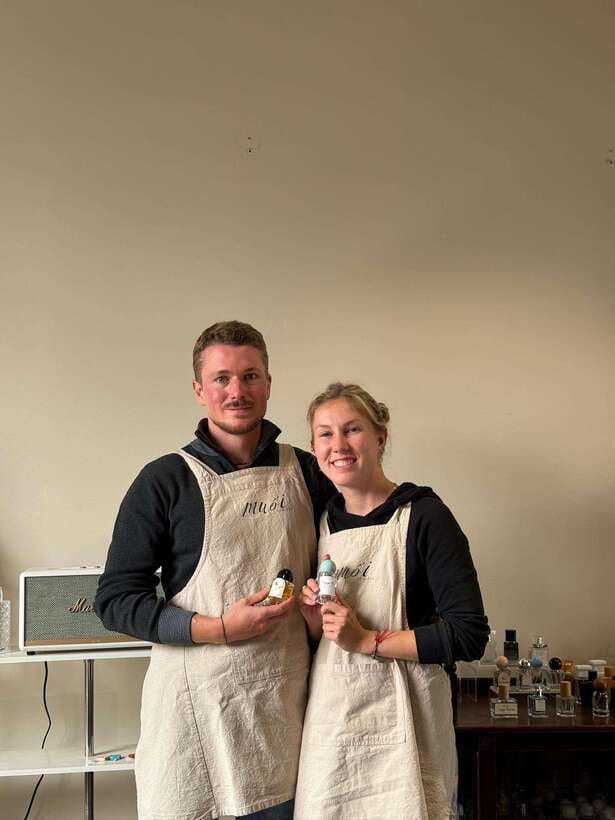
- Pick your bottle size (10ml, 30ml, 50ml, 100ml) and take it home right away
- English and Vietnamese instruction, with hands-on guidance (including helpful tweaks like those shared by Katie)
- Calm, air-conditioned studio that makes the whole process feel focused, not rushed
The olfaction test: where your perfume journey starts
The class begins with an olfaction test, and that matters more than it sounds. Instead of starting with a finished scent, you train your nose to notice differences between materials—think what feels light versus heavy, floral versus woody, and fresh versus sweet. It’s the first real “decision point,” because your preferences shape everything that follows.
You’ll sample from a collection with more than 80 scents, including different oil or base materials (the workshop format is built around off-lations and scent selection). That range is a big deal in Hanoi, because it’s easy to feel like you’re “picking from menus” during perfume tours. Here, you’re doing the opposite: narrowing down what you actually want your fragrance to say.
One practical tip: go in ready to make choices. If you tell yourself you’ll decide later, you’ll end up stuck with the defaults. During the olfaction step, you’re actively comparing, and your instructor can steer you once you’ve identified a few favorites.
The studio is also a big help for this stage. It’s described as clean, quiet, and air-conditioned, which makes scent work easier than in hot, crowded spaces. Strong weather can flatten your nose quickly, and that’s not what you want when you’re comparing subtle differences.
Worth a glance beside this Hanoi pick:


Building a professional formula (not just mixing vibes)
After you choose scents you like, the class moves to formula creation. This is the part that separates a fun activity from an actual perfumery lesson.
Your instructor guides you through creating a professional fragrance formula. In plain terms, you’re learning how a fragrance is structured, not just which smells you like individually. The workshop walks you from your selected scents toward a workable recipe, and you’ll test the blend multiple times to get it right.
Here’s a key detail: you get to test your formula at least twice. That repetition is what improves the final result. Perfume can smell one way right after mixing and another way after the blend settles. Even within a short class, having more than one check-in helps you correct balance—like toning down something that comes on too strong or adjusting the blend so it feels more even.
From the way the class is described, you’ll also get instructor feedback that’s specific, not generic. One review mentioned Katie giving tips after the first try to elevate and balance the mix. That kind of nudge is exactly what you want. A good formula doesn’t just smell good once; it’s designed to feel coherent when it all comes together.
If you’re the type who likes “making,” not just watching, this stage is satisfying. You’re not just purchasing a scent; you’re doing the reasoning behind it.
Blending at the perfumer station: controlling the final scent
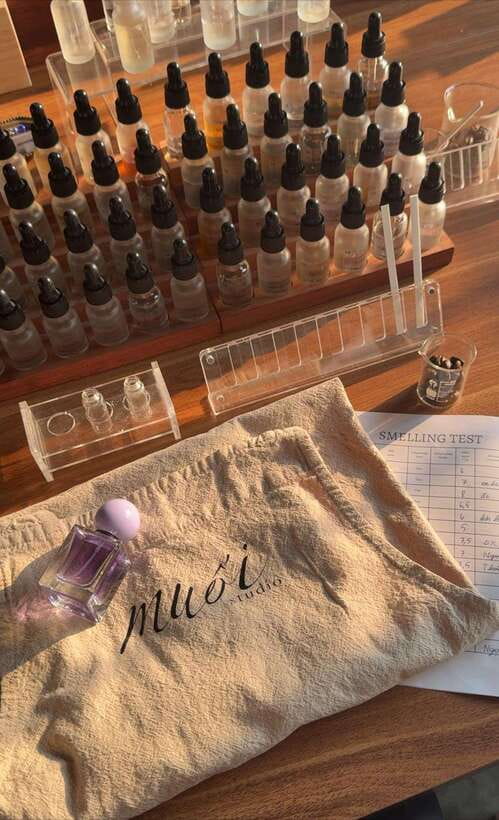
Once your formula is set, you move to the blending stage at the perfumers station. This is where your choices become a real bottle-worthy perfume.
You’ll blend your perfume ingredients following the recipe you worked on with the instructor. The workshop format is built as an end-to-end flow—from off-lations to formula to blending—so the final step doesn’t feel like a random craft station. It feels like the last chapter of the same story.
This is also where your patience pays off. One review praised the feeling of not being rushed, and another highlighted how the instructor was kind and patient. That matters because perfume blending is easy to overthink but also easy to get wrong if someone is hovering and pushing you too fast.
You should expect hands-on help and guidance throughout. Even if you’ve never made anything like this before, the format is designed so you can participate fully and still end up with a balanced result.
A small practical bonus: one review noted the instructor provided a tripod so they could film the process. If filming is your thing, you might ask if there’s a way to capture your blending step without making the room feel like a production set.
Picking your bottle size and walking out with a custom souvenir
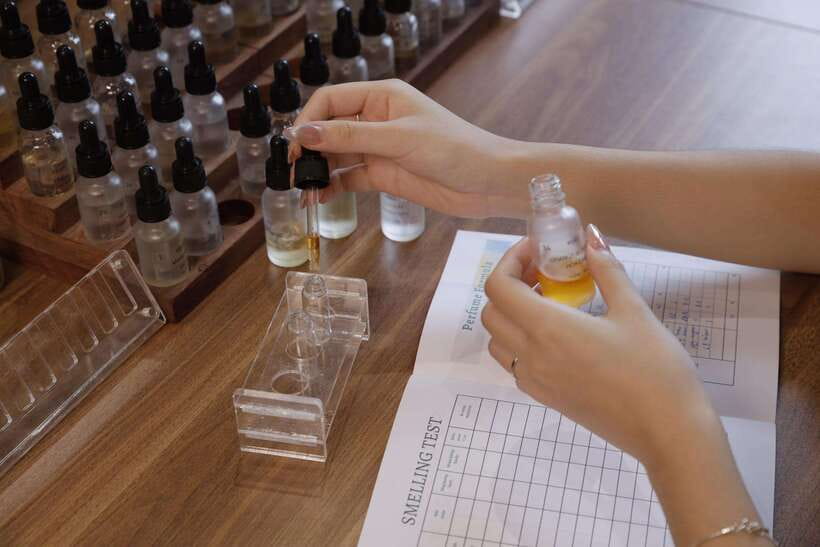
In the final step, you choose your bottle from a collection with multiple sizes: 10ml, 30ml, 50ml, and 100ml. This is more than a cosmetic choice. Bottle size changes the usefulness of your final perfume as a gift or a personal daily scent.
- 10ml is great if you’re scent-curious and want something travel-friendly
- 30–50ml fits daily use and gifting without feeling too precious
- 100ml makes sense if you know you want this as a signature scent
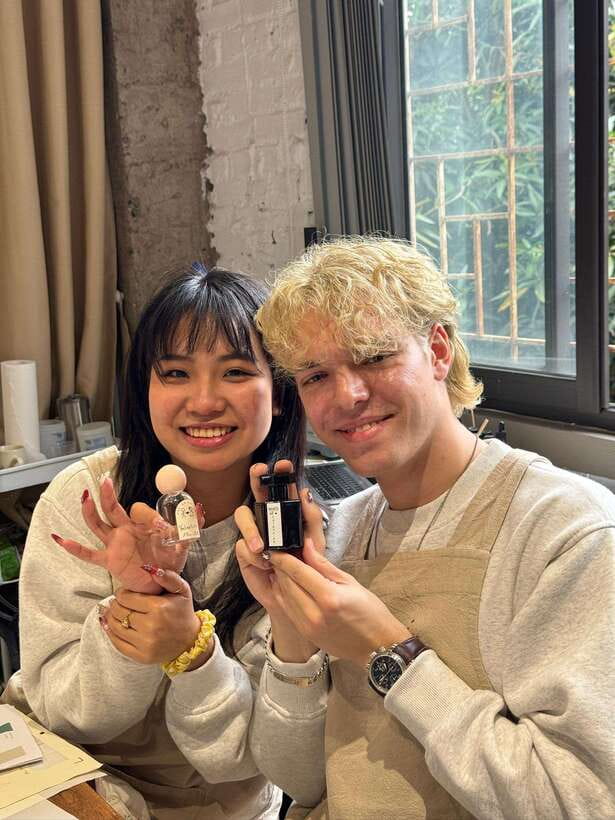
After blending, you take your perfume home right away. That’s a huge value piece. Many classes end with a mailed product or a “we’ll send it later” promise. Here, you leave with the finished work in hand.
The workshop also provides a complete package: personalized stickers, a perfume box, and a bag, plus a booklet. That packaging turns your bottle into a real souvenir, not just a vial in your tote bag. It also helps you remember the formula and what you set out to create.
If you’re in Hanoi for a week or less, this is a smart buy. It’s creative, personal, and not another “where do I store it” purchase.
Muối Studio’s vibe: calm, clean, and made for focus
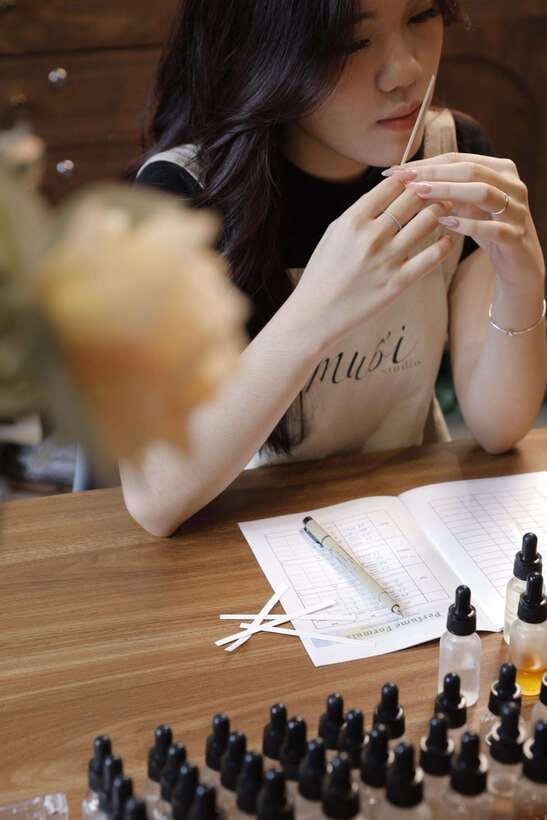
The atmosphere is consistently described as artistic, peaceful, and quiet. That sounds like marketing until you consider scent work itself. Perfume is sensitive to environment—noise, heat, and distractions make comparisons harder and can even throw off how quickly you get fatigued.
The class takes place in an air-conditioned room, which makes the whole experience feel easier than you’d expect. It’s also set up to support a small group (limited to 10), so you’re not squeezed in around strangers who are still deciding which scents they like.
Meeting point matters too. You start on the 1/F (first floor) of the building. If you’re arriving on foot, take a moment to confirm you’re at the correct entrance before you assume you’re late.
And yes, finding the studio can be a little awkward. One review specifically called out difficulty locating the location, so I’d treat this like an appointment, not a casual stop. Give yourself extra time, especially if you’re relying on general directions rather than a precise pin.
- Hanoi Motorbike Tour: Food, Culture and Fun by Vintage Motorbike★ 5.0 · 6,699 reviews
- Hanoi: Guided Food Tour with Train Street Visit★ 4.9 · 6,239 reviews
- Hanoi Cooking Class: Culture, Local Market & Meaning CSR Impact★ 5.0 · 5,147 reviews
Price and value: why $39 can be more than a novelty
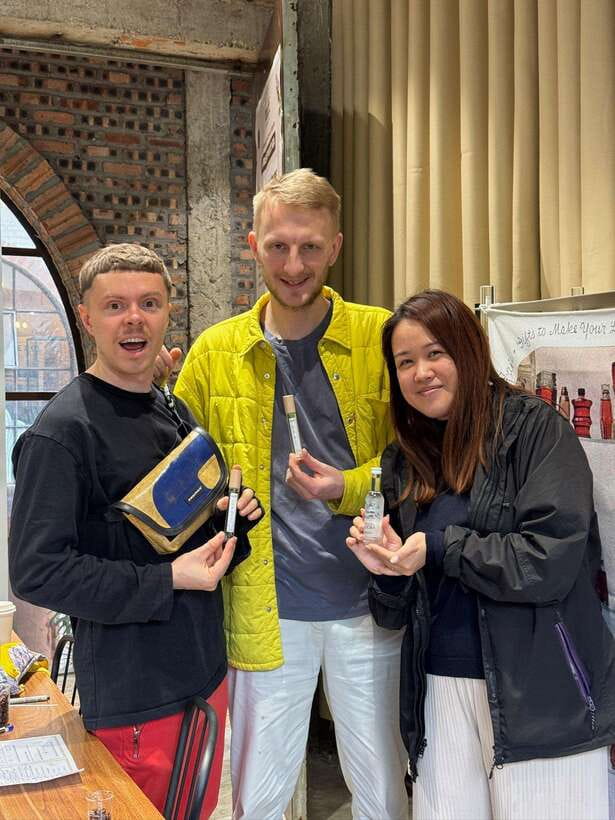
The price is $39 per person, and the class runs about 2 to 2.5 hours (with starting times depending on availability).
That might sound like a lot for a craft workshop until you break down what’s included:
- tuition for the perfume class
- your bottle
- all ingredients
- a booklet
- and the full package (stickers, box, bag)
So you’re not only paying for staff time. You’re paying for materials and for the instructor guidance that turns a pile of scents into a balanced recipe.
Also, consider replacement value. If you buy a bottle in a shop without understanding structure, you’re guessing whether the scent will fit your taste later. Here, you learn your own preferences. Even if you only wear the perfume occasionally, you’ll walk away with the knowledge of how scent families behave and how your choices affect the final result.
For the time length, 2–2.5 hours is also a sweet spot. It’s long enough to do the whole process properly—from scent selection to formula to blending—but short enough to fit into a Hanoi day that’s already packed with cafes, museums, and street snacks.
Who this Hanoi perfume class fits best
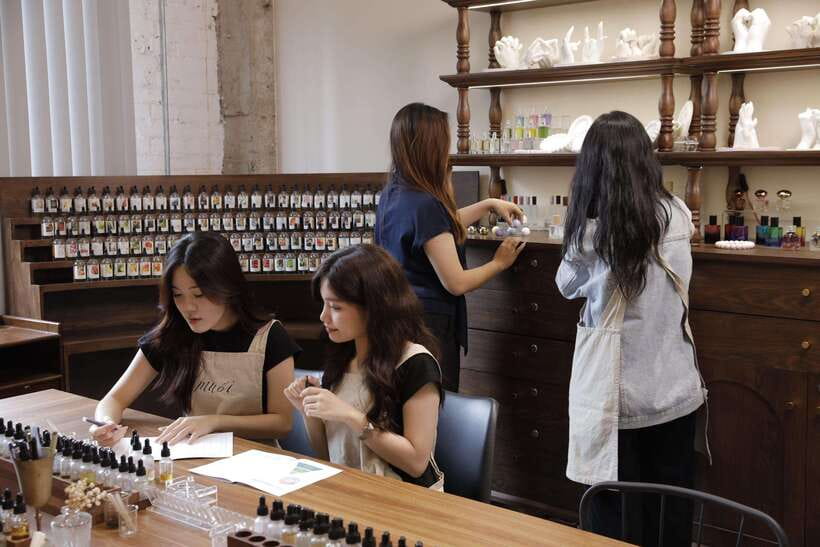
This is best for you if you want a hands-on, creative activity that results in something tangible. It’s also a good fit if you like scent profiling—trying different families, recognizing what you love, and learning how to build around those preferences.
You’ll especially enjoy it if:
- you like trying new skills, even if you have no chemistry background
- you want a personal gift that isn’t generic
- you enjoy craft with real guidance, not just “make and go” instructions
- you prefer a small-group setting (this one is limited to 10)
It’s not suitable for children under 10, and the class notes you should not bring alcohol or drugs into the workshop. Keep it simple: treat the session like a clean-smell lab, where your senses are the main tool.
Language-wise, your instructor speaks English and Vietnamese, which is helpful for explaining the formula work and scent decisions without relying on guesswork.
Practical tips so you get a better final bottle
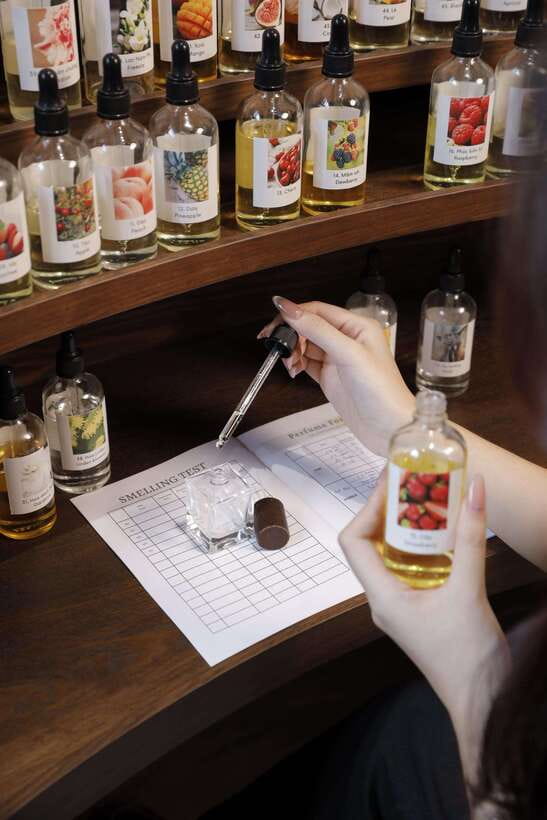
You don’t need to be a perfume expert. But you can set yourself up for success:
- Pay attention early: your olfaction test choices influence the rest of the process.
- Be ready to adjust: because you test your formula at least twice, expect tweaks. That’s normal.
- Take notes on what you love: if the instructor mentions how a balance is shifting, jot down the scent direction (fresh, woody, floral) so you can remember what you built.
- Ask for feedback during the first test rather than waiting until the end.
- Keep your hands and nose clear: avoid strong fragrances before you go so your sense is fresh for testing.
And if you’re someone who wants content, ask about filming support. One review noted a tripod was provided, so it’s worth checking.
Should you book this Hanoi: Vietnam Scents Perfumery Class?
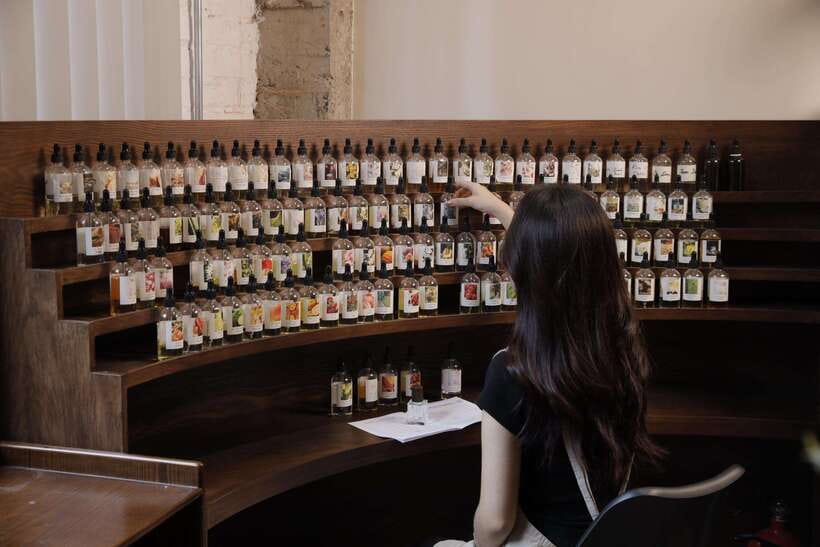
If you want an experience that’s creative, structured, and actually produces a take-home item you’ll use, I think it’s an excellent choice. The big winners here are the 80+ scent selection, the fact that you build a formula (not just mix randomly), and the time to test your blend at least twice so your bottle has a real chance of ending up wearable.
Book it if you’re in Hanoi and you like the idea of turning your taste into a personal signature scent. Skip it if you only want a quick, casual souvenir and you’d rather spend your time on something that requires zero focus.
If your schedule is tight, plan carefully for location-finding and timing because the studio has irregular open hours and limited seats. Still, with those considerations in mind, this class is the kind of activity that gives you a story you can hold in your hands.
FAQ
How long is the Hanoi: Vietnam Scents Perfumery Class?
It lasts about 2 to 2.5 hours. Starting times depend on availability.
What does the class cost?
The price is $39 per person.
How many people are in the class?
It’s a small group limited to 10 participants.
What language is the instructor?
The instructor speaks English and Vietnamese.
What happens during the perfume-making process?
You’ll do an olfaction test to choose scents, create a professional fragrance formula, test your formula at least twice, then blend your final perfume and choose a bottle to take home.
What bottle sizes do you choose from?
You can choose from 10ml, 30ml, 50ml, and 100ml.
What’s included in the price?
The price includes the class tuition, your perfume bottle, all ingredients, a booklet, and the complete package (including personalized stickers, a perfume box, and a bag).
Is the class suitable for children?
No. It’s not suitable for children under 10 years.
Where do I meet for the class?
You meet on the 1/F (first floor) of the building. The activity ends back at the same meeting point.
More Workshops in Hanoi
More Tour Reviews in Hanoi




Latest Hanoi write-ups from our team





Workshops, compared.
 ★ 5.0Hanoi Cooking Class: Culture, Local Market & Meaning CSR ImpactFrom $395,147 reviews
 ★ 5.05 Traditional Dishes Hanoi Cooking Class with Market TripFrom $354,890 reviews
 ★ 5.0Hanoi Coffee Workshop: Taste Salt, Coconut and Egg CoffeeFrom $161,286 reviews
 ★ 5.0Salt Coffee Workshop Awake Your Senses With 6 BrewsFrom $23792 reviews
 ★ 5.0Vietnamese Food Cooking Class in Hanoi with Market ExperienceFrom $45778 reviews
 ★ 5.0Handcrafted Wood Carving Workshop with Local ArtisanFrom $19733 reviews
 ★ 5.05 Local Dishes Cooking Class with Meal & Market VisitFrom $40420 reviews
 ★ 5.0Hanoi Cooking Class and Market Tour in Ancient HouseFrom $45379 reviews
Browse the lists this tour appears in