
Reviewed · WORKSHOPS
Hanoi: Tire Sandal Workshop with Crafting Experience
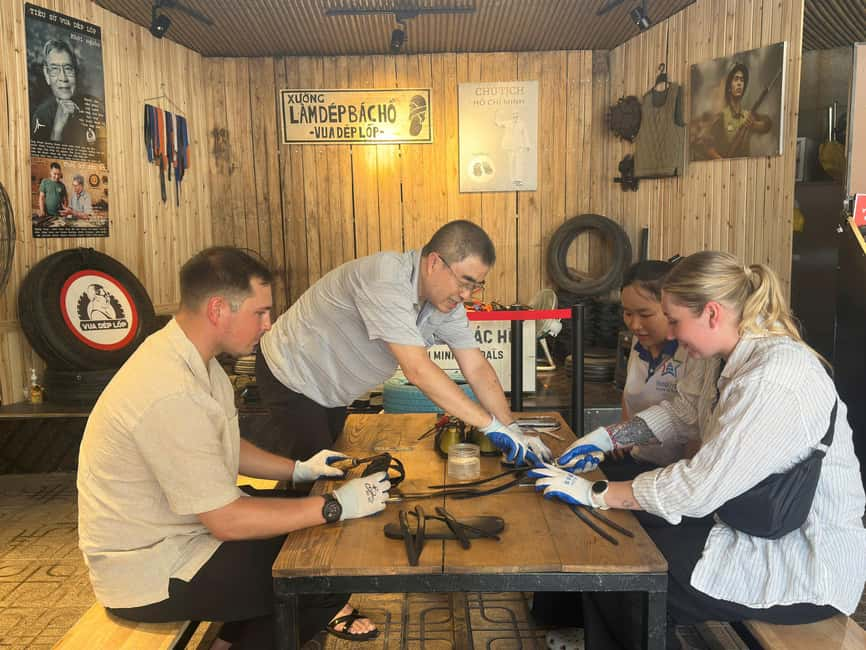
Tire sandals carry a serious story. This Hanoi workshop lets you craft your own pair using traditional methods, while an English-speaking guide shares why Ho Chi Minh’s tire sandals became a symbol of ingenuity and survival. It’s hands-on, practical, and surprisingly emotional as you work.
I especially like two things: the guided crafting itself (the soles arrive with holes already in them, so you’re not stuck at square one), and the way the session ties into Ho Chi Minh Museum-area history through the stories you hear as you make your sandals. One possible drawback is that the experience is only 4 hours, so if you want a slow, super-deep history lecture, you might find it moves a bit fast—especially if the weather or your group pace changes the flow.
In This Review
- Key things to know before you make tire sandals
- Why tire sandals are more than a quirky souvenir
- Finding the workshop at 19 Ngoc Ha Street
- Your 4-hour flow: how the workshop usually unfolds
- Ho Chi Minh Museum area stories you actually remember
- Hands-on crafting: tools, strength, and getting it right
- The real cost: $5 is the start, not the whole bill
- What’s included (and what helps the experience feel complete)
- Timing, weather, and how to dress for comfort
- Who this Hanoi tire sandal workshop suits best
- A practical way to plan around this tour
- Should you book this Hanoi tire sandal workshop?
- FAQ
- Where is the tire sandal workshop in Hanoi?
- How long is the Hanoi tire sandal workshop?
- How much does it cost?
- Do I get to keep the tire sandals I make?
- What extra costs should I expect?
- Is the tour in English?
- Is there a dress code?
- Is it wheelchair accessible?
Key things to know before you make tire sandals
- You start at 19 Ngoc Ha Street in Hanoi and the workshop runs in the Ho Chi Minh Museum area.
- Your price starts at $5, but the materials and take-home sandals can add to the total.
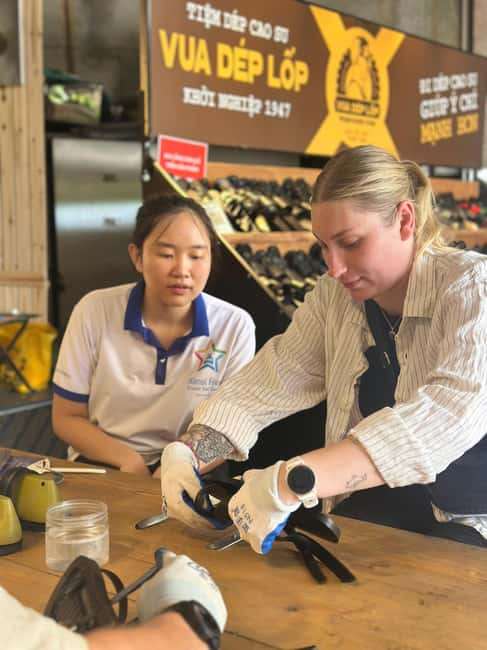
- Soles come pre-prepped with holes, and you’ll use a tool with help to get it right.
- You’ll learn the sandals’ wartime role and how people used them in daily life.
- Private group feel: you can end up with very small numbers, depending on bookings.
- Dress code matters: shorts and short skirts are not allowed.
Why tire sandals are more than a quirky souvenir
Let’s be honest: most souvenir shops sell you the idea of Vietnam. This one sells you the making of it.
Vietnam’s tire sandals are famous for one main reason: Ho Chi Minh wore them during the war. But the story doesn’t stop at the iconic photo. In this workshop, you learn how these sandals fit real life—how they were made, why they mattered, and how they turned limited materials into something people could rely on.
What makes the workshop feel valuable is that you’re not just listening. You’re working with your hands while the meaning is explained. That usually creates better memory. You’ll remember the lesson because it happens alongside the craft.
Worth a glance beside this Hanoi pick:




Finding the workshop at 19 Ngoc Ha Street
The workshop is at 19 Ngoc Ha Street in Hanoi. Plan to arrive a few minutes early so you can settle in before the session starts.
If you’re the type who likes knowing exactly where you’ll be, this location is a plus. It also makes the experience easy to fit into a day that already includes other Ho Chi Minh Museum-area stops. You’re not commuting across town just to craft something small.
One more practical note: the session has a dress code. Shorts and short skirts aren’t allowed, so wear long pants or something that covers your legs. This is the kind of rule that’s easy to ignore until you’re standing at the door.
Your 4-hour flow: how the workshop usually unfolds
The workshop runs for about 4 hours, and it’s designed to be flexible with starting times.
Here’s the typical rhythm you should expect:
- Meet your English-speaking guide at the workshop area.
- Get an intro to what tire sandals are and why they became iconic in Vietnam.
- Move into hands-on making, guided by local artisans.
- Learn as you work, with stories about daily life and wartime significance connected to what you’re building.
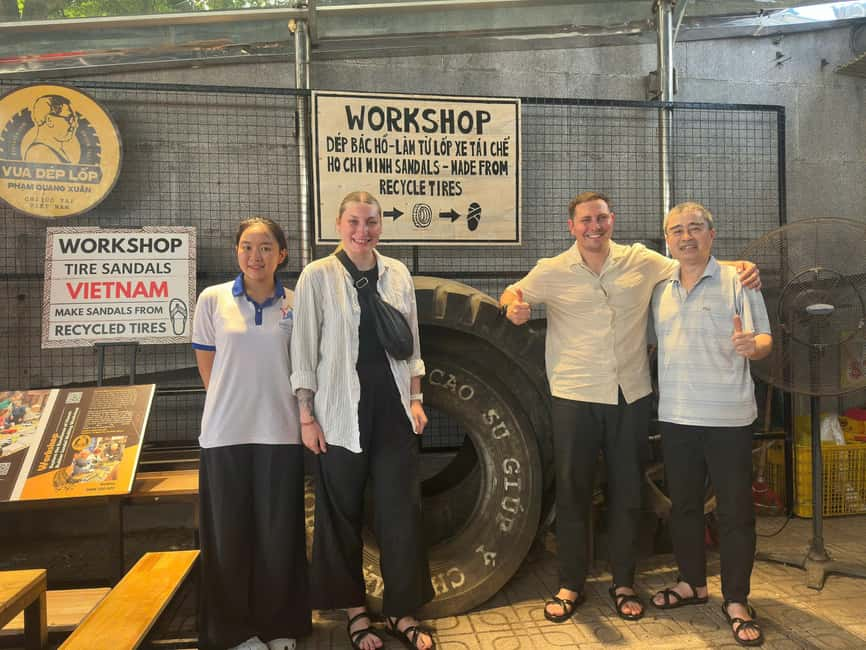
- Wrap up with photos (complimentary) and time to decide if you want to purchase materials and/or take a finished pair home.
You’ll be working under guidance the whole way. This isn’t a DIY class where you’re left to guess. You’ll get step-by-step direction, and you’ll have help if you’re unsure about using the tool or applying the right pressure.
Ho Chi Minh Museum area stories you actually remember
The workshop is tied to the Ho Chi Minh Museum area, and that context matters. Instead of hearing general “Vietnam war” talking points, you hear why these sandals became part of daily life during a time when resources were tight.
In particular, one guest’s experience highlighted that the sandal-making happened under cover in the Ho Chi Minh Museum complex, which helped when rain (and later a typhoon) rolled in. Even if your day is sunny, you’ll appreciate the setup if Hanoi decides to do what Hanoi does.
The other valuable detail: the guide experience can include personal, family-level perspective. One review mentioned help from a descendant of Ho Chi Minh to make sure the sandals were done correctly. Even if your workshop version doesn’t include the same personal connection, you can expect the focus to stay on meaning, not just making.
Hands-on crafting: tools, strength, and getting it right
This is the core of the tour. You’re not just stamping or painting a souvenir. You’re crafting a pair of tire sandals using traditional techniques passed down by artisans.
A key practical detail: in at least one experience, the sandals started with holes already in the soles. That makes the session more approachable. It’s still real crafting work, just not the kind that starts with you punching or preparing everything from scratch.
You’ll learn how to use a tool, and you’ll get support if your hands need a bit more strength to work the way the guide shows you. One review described it as not hard, but requiring some muscle.
You also have choices. One review noted you can choose colors. That small freedom matters more than you’d think. It helps the souvenir feel like yours, not just a standard product.
- Hanoi Jeep Tour: Food, Culture and Fun by Vietnam Army Jeep★ 5.0 · 15,222 reviews
- Full-Day Ninh Binh Highlights Tour from Hanoi★ 5.0 · 7,761 reviews
- Hanoi: Ha Long Bay Day Cruise – Swimming, Meal, Kayaking★ 4.7 · 7,415 reviews
The real cost: $5 is the start, not the whole bill

The headline price is $5 per person for the 4-hour workshop. That’s a bargain for the time, guide attention, and structured craft coaching.
But you should know what’s extra so you can decide without stress.
Costs you should plan around:
- Materials for making tire sandals: 300,000 VND (about $12) paid directly to the workshop.
- A pair of handmade sandals you create to take home: 200,000 VND (about $8) paid directly to the workshop, and it’s optional.
- Ho Chi Minh Museum entry fee: 40,000 VND per person (about $1.60) optional.
- Meals and drinks: not included.
One guest mentioned that they could buy the sandals for about 600,000 VND. That may reflect a combined total depending on how materials and take-home options are handled in the moment. Either way, your best move is simple: when you arrive, ask the host what you’re paying for if you want the sandals to go home with you.
Is it still good value? Yes—if you want a meaningful souvenir and a guided, hands-on history lesson. You’re paying for skill transfer, time, and the story being explained while you craft. If your only goal is an inexpensive trinket, you might feel the extra costs.
What’s included (and what helps the experience feel complete)
This workshop includes:
- Step-by-step guidance from local artisans and your English-speaking guide
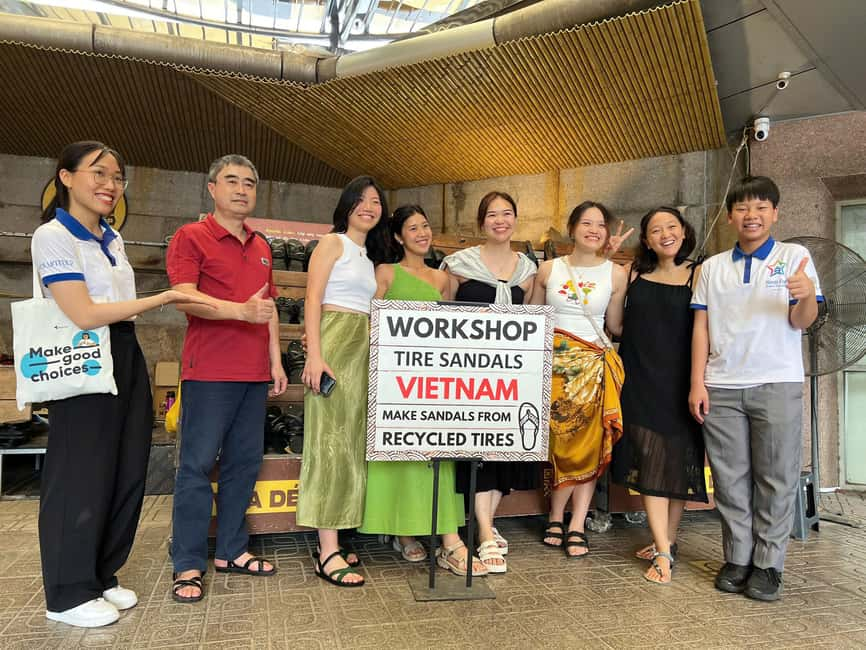
- Complimentary photos of your experience taken by the host
Those photos are a small detail, but they matter. Craft workshops are the kind of activity where you forget to document your work while you’re concentrating. Having someone else take photos lets you actually enjoy the process.
You also get the feeling of a guided class rather than a shopping stop. That changes the vibe. You’re not rushed through a photo and pushed to buy. You’re working.
Timing, weather, and how to dress for comfort
You can usually find flexible timing for the workshop, depending on availability.
Because Hanoi weather can shift quickly, you’ll be glad it’s not described as fully exposed. One review specifically mentioned the sandals session being under cover and helpful during heavy weather. Still, bring your own comfort mindset:
- Wear long pants to meet the no-shorts rule.
- Bring closed-toe shoes for better stability if you’re moving around the workshop area.
- Expect some hand work. Even if it’s guided, using the tool takes effort.
If you show up with unrealistic expectations—like thinking it’s purely a craft demo—you might feel disappointed. But if you’re happy to do hands-on work for a few hours, it feels rewarding.
Who this Hanoi tire sandal workshop suits best
This is a strong fit for:
- People who like hands-on cultural experiences, not just sightseeing photos
- Anyone interested in Ho Chi Minh’s wartime legacy
- Travelers who want a souvenir with a story tied to it
- Small groups who like the calm of a private session
It’s also a good option if you want something that’s both practical and memorable without being overly long. 4 hours is enough time to learn, make, and connect, without swallowing your whole day.
Who might skip it? If you only want a light, no-effort activity, you may find the tool work and optional add-on costs less appealing. And if you need a deep, lecture-style history experience, the workshop may feel too brief.
A practical way to plan around this tour
Because you’re crafting for hours, think about what you put before and after it.
Before: schedule it when you’re not exhausted from a long walking day. Your hands and focus will be working.
After: plan something simple. You’ll have a new skill memory, and if you decide to purchase and take the sandals home, you’ll want time to let the souvenir moment land.
Also, consider what you’re pairing this with. Since the workshop is connected to the Ho Chi Minh Museum area, you can build a meaningful cultural block around it—history, then crafting, then more museum time if you choose to add the entry ticket.
Should you book this Hanoi tire sandal workshop?
Book it if you want an experience that turns a Vietnam icon into something you physically understand. The hands-on crafting, the war-time stories, and the fact that you get guided support make it feel both educational and doable—even if you’re not “crafty.”
Consider skipping or adjusting your expectations if you hate paying add-ons or you’re strictly budget-focused beyond the base price. The $5 rate is the start, not the full experience cost once you factor in materials and the option to take your sandals home.
If you do book, I’d go in with one mindset: you’re not buying a product first. You’re learning a craft that explains a huge part of Vietnam’s past.
FAQ
Where is the tire sandal workshop in Hanoi?
It’s located at 19 Ngoc Ha Street in Hanoi.
How long is the Hanoi tire sandal workshop?
The duration is 4 hours.
How much does it cost?
The listed price starts at $5 per person, but there are add-on costs paid directly to the workshop for materials and optionally for taking the sandals home.
Do I get to keep the tire sandals I make?
You can take them home, but it’s optional and requires an extra payment (200,000 VND, about $8).
What extra costs should I expect?
Materials cost 300,000 VND (about $12) and are paid directly to the workshop. If you want to keep the sandals, there’s an additional 200,000 VND (about $8). Ho Chi Minh Museum entry is optional at 40,000 VND per person.
Is the tour in English?
Yes, the experience includes an English-speaking guide throughout.
Is there a dress code?
Yes. Shorts and short skirts are not allowed.
Is it wheelchair accessible?
Yes, the workshop is listed as wheelchair accessible.
More Workshops in Hanoi


More Tour Reviews in Hanoi






Latest Hanoi write-ups from our team





Workshops, compared.
 ★ 5.0Hanoi Cooking Class: Culture, Local Market & Meaning CSR ImpactFrom $395,147 reviews
 ★ 5.05 Traditional Dishes Hanoi Cooking Class with Market TripFrom $354,890 reviews
 ★ 5.0Hanoi Coffee Workshop: Taste Salt, Coconut and Egg CoffeeFrom $161,286 reviews
 ★ 5.0Salt Coffee Workshop Awake Your Senses With 6 BrewsFrom $23792 reviews
 ★ 5.0Vietnamese Food Cooking Class in Hanoi with Market ExperienceFrom $45778 reviews
 ★ 5.0Handcrafted Wood Carving Workshop with Local ArtisanFrom $19733 reviews
 ★ 5.05 Local Dishes Cooking Class with Meal & Market VisitFrom $40420 reviews
 ★ 5.0Hanoi Cooking Class and Market Tour in Ancient HouseFrom $45379 reviews
Browse the lists this tour appears in