
Reviewed · PHOTOGRAPHY SESSIONS
Hanoi Street Photography in a Vintage Community
Vintage Hanoi is a feast for your camera.
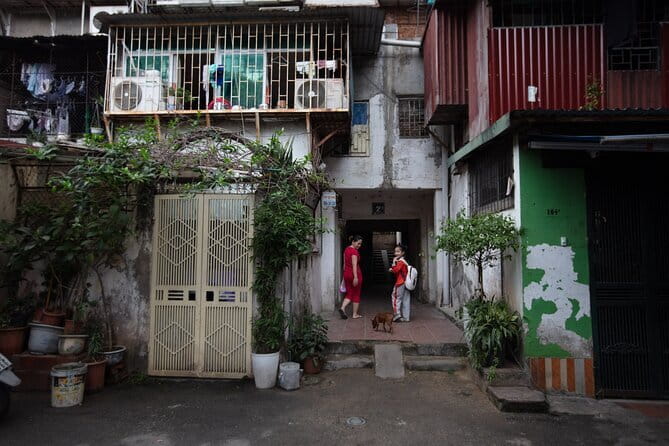
This 4-hour photo walk takes you through a maze of communist-era housing built after the French retreated, with architecture inspired by a Soviet model, where everyday life plays out in real space. I especially like the chance to photograph tea stalls, markets, and the old-stairway streets you will not see on the usual route, and I like that the instructor helps you get better frames by talking camera settings. One drawback: this is not a big, flashy sightseeing circuit, so if you want famous monuments, you might feel underfed.
You’ll go with an air-conditioned vehicle and pick-up is offered, which helps when you just want to start shooting instead of navigating first. The group is kept small (max 4), so you get more attention and more time to ask questions. The tour also includes coffee/tea, but lunch and dinner are not included, so plan around that.
In This Review
- Key highlights you should care about
- Vintage Hanoi lanes: why this neighborhood photographs so well
- The 4-hour structure: how the tour flow serves your camera
- First stops in the neighborhood: architecture, stairways, and textures
- Tea stalls, scooter repair, and barbers: the everyday scenes that sell the story
- Markets and playground life: balancing color, noise, and composition
- How guides like Mike, Son, and James shape the results
- Price and value: is $98 for about 4 hours fair?
- Who should book this photo walk, and who might skip it
- Quick booking checklist and on-the-ground tips
- Should you book Hanoi Street Photography in a Vintage Community?
- FAQ
- How long is the Hanoi Street Photography workshop?
- Where is the experience located?
- What does the $98 price include?
- Is lunch included?
- Is dinner included?
- Do you offer pickup?
- How many people are on the tour?
- Do I get a ticket on my phone?
- Is free cancellation available?
- When will I get confirmation after booking?
Key highlights you should care about
- Off-the-tourist-map neighborhoods: You’ll photograph daily life in older residential lanes rather than postcard streets.
- A real photography instructor: You get guidance that can improve how you frame and expose on the spot.
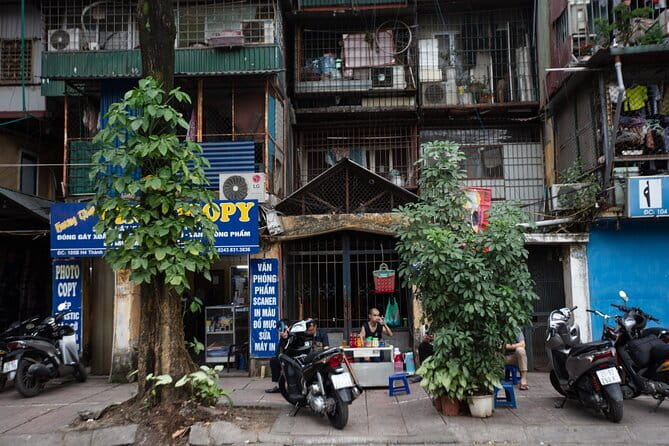
- Lots of street-level subjects: Tea stalls, scooter repair, barbers, kids and elders, and markets are part of the mix.
- Soviet-model housing as a backdrop: The architecture itself creates strong lines, textures, and stories.
- Small group size (max 4): Easier to pause, regroup, and get feedback.
- Coffee/tea included: A small comfort break built in, without turning it into a long stop.
Vintage Hanoi lanes: why this neighborhood photographs so well
What makes this area special is not just age, it’s the way the built environment shapes the photos you can make. The streets are tight and layered, with older houses and staircases that look used but not broken. That matters, because street photography gets easier when you can predict the visual rhythm: corners, doorways, wires crossing above, and walls that show years of weathering.
You’ll also be working with a very specific architectural influence. The residential buildings were constructed for working-class households by the State in the 1960s, inspired by a Soviet model. In plain terms, that means the buildings often have a certain solidity and repeating geometry, which gives you strong structure for portraits, street scenes, and wide-angle compositions.
And then there’s the life happening inside and around it. You’re not photographing a set, you’re photographing a place where people still do regular things: drink tea, repair scooters, cut hair, buy and sell items, and let kids play in shared spaces. When those actions happen next to aging walls and slightly chaotic electrical lines, you get that rare combo of character and immediacy.
One more practical note: since it’s described as off the tourist map, you should expect fewer crowds blocking your shot. That is a real value for photography. You can actually wait for the moment instead of fighting for space.
Worth a glance beside this Hanoi pick:



The 4-hour structure: how the tour flow serves your camera
This is about 4 hours, so it’s long enough to find angles and refine your approach, but short enough that it stays energetic. The tour company uses an instructor-led format, and the included photography instructor is there for more than a friendly walk-through.
In the reviews, you can feel the impact of hands-on coaching. One guest highlighted Mike as the guide who explained camera settings, and the result was better photos because they understood what their camera was doing. Another review praised Son for combining strong photo skill with cultural context, which is exactly what you want: settings help, but knowing what you’re looking at helps even more.
The tour also includes an air-conditioned vehicle, plus coffee and/or tea. That combination usually means you’re not stuck overheating early, and you’re not burning time traveling too far between photo moments. Pickup is offered, which is also a quiet win in Hanoi. If you’ve ever tried to line up a route in a city where streets can change by the block, you know why.
Because the tour caps at 4 travelers, you’re less likely to feel rushed. If you want to linger at a doorway, follow a street farther, or ask a quick question about exposure or composition, a small group format makes it easier.
First stops in the neighborhood: architecture, stairways, and textures
The tour’s starting point is designed to get you shooting right away in the older residential fabric. You’ll be photographing the architecture of the maze of buildings, including the kind of staircases and aged facades that look almost like they’re telling you where to stand.
When you photograph older housing, you gain more than looks. You gain layers. Think about how doors and balconies frame people, how the edges of walls create natural guide lines, and how cluttered street-level details add foreground texture. Those details matter because street photography often rewards the photos where the background has something going on, not just a clean backdrop.
One thing to watch for: in places like this, your best shots might be split-second decisions. Someone may step into a doorway, a scooter might roll by at the exact moment the light hits the wall, or a kid might pause in the frame. With a small group, you should be able to slow down and wait for those moments without the whole group drifting away.
If you’re the kind of photographer who likes deliberate planning, this neighborhood still works. You can frame repeating geometry and lingering textures. And if you’re more of the fast, reactive shooter, you’ll find plenty of movement with markets and street activity.
Tea stalls, scooter repair, and barbers: the everyday scenes that sell the story
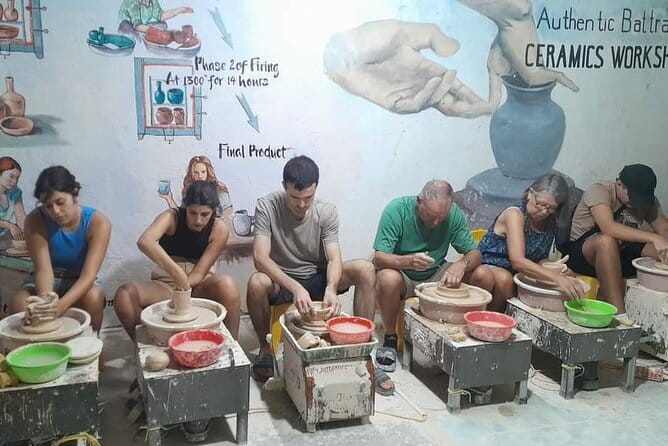
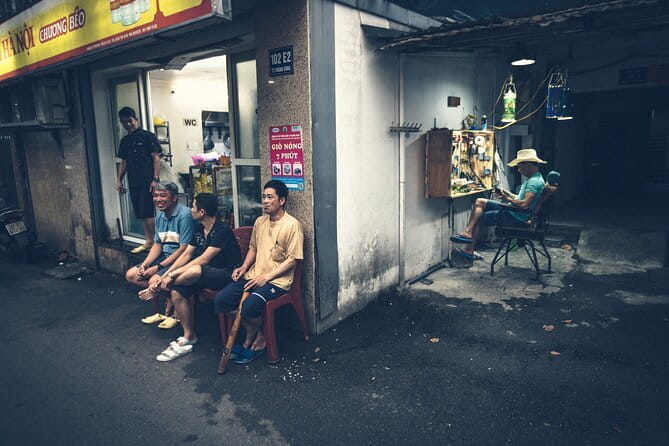
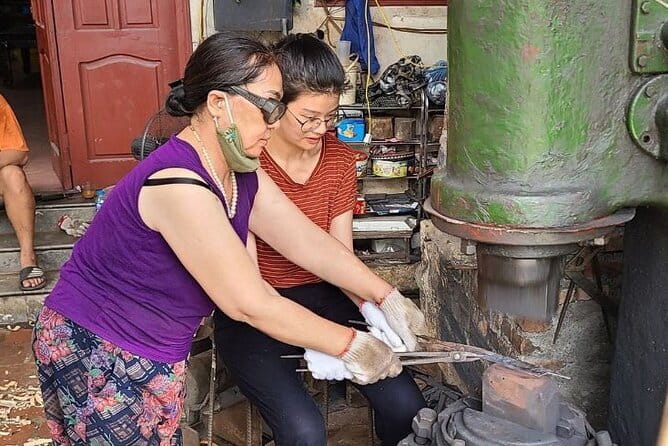
This tour leans hard into the street-level routines that define Hanoi for locals. A big part of the experience is photographing the road-side tea stalls, plus places like scooter repair shops and barber shops. Those are great subjects because they put people and objects together in a way that feels natural and lived-in.
Here’s what I’d tell you to focus on while you’re there:
- Tea stalls: Look for hands, cups, and facial expressions. Tea culture is quiet, so your shutter timing and framing choices matter.
- Scooter repair: You’ll get tools, motion, and problem-solving energy. Those visuals often make your photos feel honest rather than posed.
- Barber shops: Hair cutting tends to create strong portraits. The chairs, mirrors, and waiting areas can give you both close-ups and storytelling frames.
You’re also photographing the transition between public and semi-private spaces. Someone is selling near the doorway, someone else is working inside, and both scenes can share the same shot if you position yourself carefully.
Respect is key in these moments. Since this is a community where people live their lives, you’ll get the best results by being patient, staying aware, and letting scenes come to you. The instructor is there to help you do that.
Markets and playground life: balancing color, noise, and composition
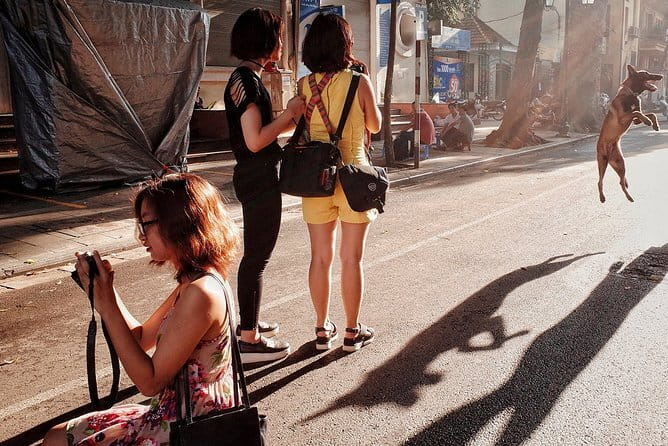
You’ll also spend time around a colorful and noisy market atmosphere and into areas where kids and elderly people play or relax in a playground-like setting. This is where your photos can go from interesting to unforgettable, because you’re dealing with energy.
Markets are a visual workout. You’ll have competing colors, movement, and lots of tiny details. This is where the camera-setting coaching from guides like Mike can really help, because settings let you keep up without panicking. If your exposure is stable, you can concentrate on timing and composition instead of guessing.
For the playground scenes, you get a different kind of payoff. Kids playing can create quick bursts of motion, but elderly people relaxing can create calm, grounded moments. That balance is what gives your photo set variety: not every frame has to be action.
A practical consideration: market areas can be busy. Your best strategy is to choose one or two themes for your photos, then shoot those themes with consistency. For example:
- portraits in a tight frame
- hands and tools
- storefront textures
- candid moments at the edge of the market
That approach keeps your images from turning into a random pile of snapshots.
- Hanoi Motorbike Tour: Food, Culture and Fun by Vintage Motorbike★ 5.0 · 6,699 reviews
- Hanoi: Guided Food Tour with Train Street Visit★ 4.9 · 6,239 reviews
- Hanoi Cooking Class: Culture, Local Market & Meaning CSR Impact★ 5.0 · 5,147 reviews
How guides like Mike, Son, and James shape the results
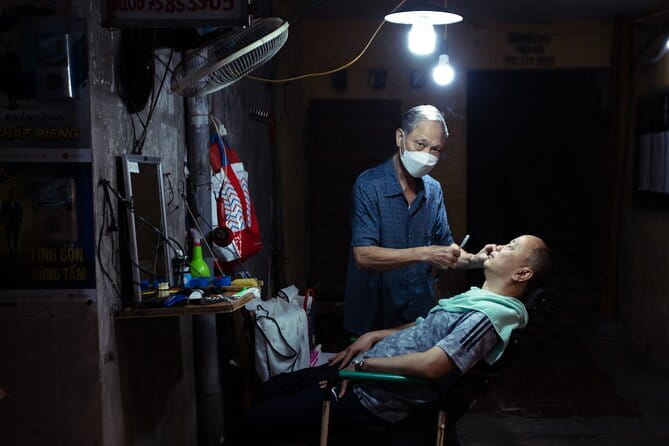
Even if you’re an experienced photographer, the neighborhood helps you. But the biggest difference-maker is the instructor’s ability to translate what’s happening into photos you can actually reproduce.
The reviews give you a clear pattern. Mike stood out for guiding camera settings and helping a guest get really nice pictures of frames of Hanoi after meeting many locals. Son was praised for being a fantastic photographer and sharing cultural knowledge during the trip. James was mentioned as an excellent, very knowledgeable guide in an older Hanoi housing + street market day.
You don’t need to copy anyone’s style. What you need is the logic behind strong street images: where to stand, when to wait, how to frame people against the architecture, and how to react when the scene changes. An instructor who can teach that makes the tour worth it even if you already know your camera.
Also, small group size tends to make these lessons more usable. If there are only a few people, the instructor can adjust feedback to the pace and needs of the group instead of talking into the air.
Price and value: is $98 for about 4 hours fair?
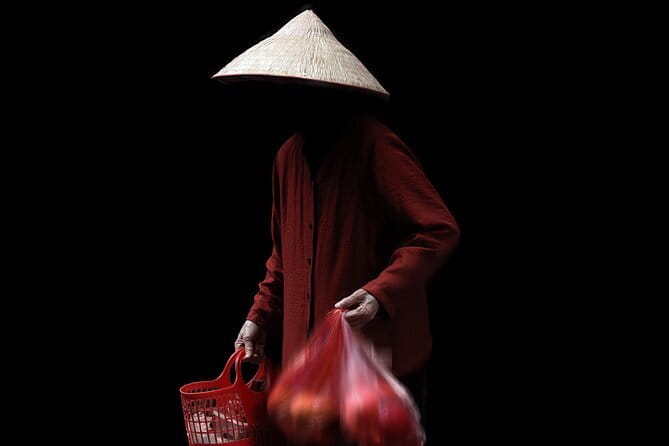
At $98 per person for about 4 hours, the question is not only the price. It’s what’s included and what you’re likely to save.
You’re paying for:
- a photography instructor
- an air-conditioned vehicle
- coffee and/or tea
- a small group format (max 4)
- a mobile ticket
- pickup offered (so you’re spending less time on logistics)
If you tried to DIY it, you’d still pay for transport, and you’d likely spend a lot of time figuring out where to go and what subjects to prioritize in the first place. In that sense, the instructor has value even beyond camera settings. They help you aim at the right parts of the neighborhood so you get better photos in the same time.
The “off the normal” part matters too. When your subject is authentic and not a choreographed tourist stop, your photos can feel more like a personal journal than a checklist.
The one caution: because lunch and dinner are not included, you’ll want to plan your meal timing so you’re not hungry halfway through. For many people, the coffee/tea is enough to keep you moving, but not enough to replace a full meal.
Who should book this photo walk, and who might skip it
This tour is a strong fit if you:
- want street photography with real neighborhood life, not staged viewpoints
- like photographing people and daily routines (tea stalls, repair shops, barbers, markets)
- appreciate architecture as a frame for stories
- enjoy learning from an instructor, especially about camera settings
- want a small group experience rather than a large tour herd
You might think twice if you:
- only want big landmarks and famous sights
- dislike walking through residential areas and prefer curated interiors or monuments
- expect a full-day itinerary with multiple meals built in
Also, this is described as suitable for most travelers. So if you’re generally comfortable walking and staying engaged for around four hours, it should be doable.
Quick booking checklist and on-the-ground tips
Before you go, make sure your expectations match the experience. This is a photography workshop, not a museum tour. Your goal should be to return with a set of images that feel like they belong to a living place.
Here are practical things to prepare:
- Bring a camera and the gear you actually use (and make sure you have battery and storage ready for a few hours of shooting).
- Wear comfortable shoes. The success of street photography often comes down to where you can stand and how long you can wait.
- Be ready to shoot in tight spaces and along busy edges of street life.
- Plan for a snack or meal on either side of the tour window since lunch and dinner are not included.
- If you’re hoping to improve technique, come with questions. If you’re not sure what to ask, you can still focus on one thing the instructor emphasizes, like exposure or composition choices.
Small, focused preparation usually leads to better results than trying to do everything at once.
Should you book Hanoi Street Photography in a Vintage Community?
I think you should book this if your idea of Hanoi is narrow lanes, real routines, and architecture that looks like it has lived through years. The combination of small group size, an actual instructor, and the emphasis on everyday subjects (tea stalls, repair shops, barbers, markets, kids and elders) makes it a good value for people who want photos with atmosphere.
Skip it if you’re chasing monuments or you want a tour that feels like a typical checklist day. This one is about seeing differently, then photographing that shift.
If you’re even slightly curious about making better street photos, this tour is one of the more practical ways to do it in Hanoi without spending half your day guessing where to go.
FAQ
How long is the Hanoi Street Photography workshop?
It lasts about 4 hours.
Where is the experience located?
It takes place in Hanoi, Vietnam.
What does the $98 price include?
The price includes a photography instructor, an air-conditioned vehicle, and coffee and/or tea.
Is lunch included?
No, lunch is not included.
Is dinner included?
No, dinner is not included.
Do you offer pickup?
Yes, pickup is offered.
How many people are on the tour?
The tour has a maximum of 4 travelers.
Do I get a ticket on my phone?
Yes, it includes a mobile ticket.
Is free cancellation available?
Yes. You can cancel up to 24 hours in advance for a full refund.
When will I get confirmation after booking?
Confirmation is received at the time of booking.
More Photography Sessions in Hanoi

More Tour Reviews in Hanoi

Latest Hanoi write-ups from our team


Photography Sessions, compared.
 ★ 5.0Hanoi Private Photoshoot – Iconic Spots & Hidden GemsFrom $20118 reviews
 ★ 5.0Hanoi Explorer Photo TourFrom $11940 reviews
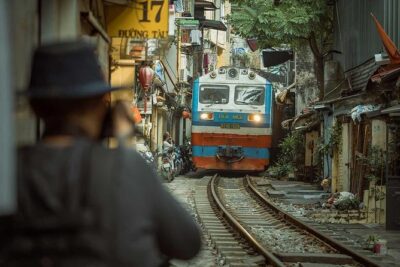 ★ 5.0Hanoi On the Tracks Photo TourFrom $14433 reviews
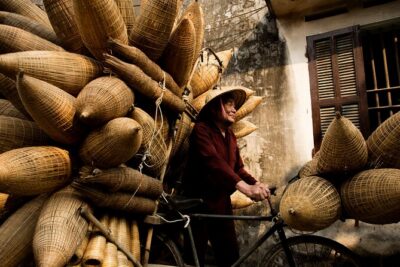 ★ 5.0Photo Tour to Capture The Vanishing Craft of Making Fish TrapsFrom $16831 reviews
 ★ 5.0Hanoi Street Photography with a Pro – Phone & CameraFrom $3527 reviews
 ★ 5.0Ultimate Hanoi Photography TourFrom $35919 reviews
 ★ 5.0Hanoi Long Bien Sunrise Photo TourFrom $14416 reviews
 ★ 5.0Private Hanoi Photoshoot – Iconic Spots & Hidden GemsFrom $4016 reviews
Browse the lists this tour appears in