
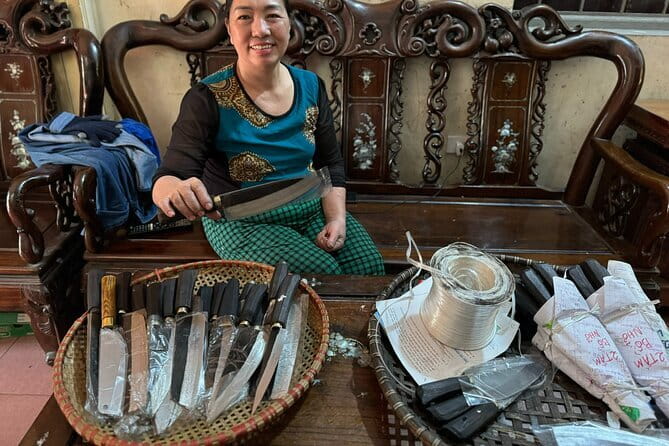
Reviewed · WORKSHOPS
Hanoi Knife-Making Class:Join the Legacy in Blacksmith’s Workshop
A blade starts as raw metal. In this Hanoi class, you’ll go all the way to a take-home knife, using real tools in Da Sỹ. I especially love the female-led forge and the fact that it’s truly hands-on from sketch to sharp edge.
What you’re really buying is time with skilled makers, plus a souvenir that’s useful, not just decorative.
I also like the tar-based sharpening technique you’ll follow at the end, since it’s a real process you don’t see in normal craft classes. And with a max group size of 10, you get help when you need it. The whole session runs about 2 hours 30 minutes, so it feels focused rather than slow.
One possible drawback: this is not a sit-and-watch experience. If you want a totally relaxed workshop, the hammering and grinding steps may feel intense, and you’ll need to think ahead about knife carry-on or shipping rules at home airports.
In This Review
- Key things to know before you go
- Knife-Making in Da Sỹ: Real Skill in a Working Village
- Meet the Forge Team: Female-Led Craft and Your Guide Support
- Your 2.5-Hour Workflow: Design, Forge, Shape, and Tar-Based Sharpening
- 1) Design: sketch first, then choose your metal
- 2) Forging: cut, heat, hammer, and shape
- 3) Shaping: turn rough into a clean form
- 4) Sharpening: grindstone steps plus a tar-based wash
- What You Take Home: A Handmade Blade and How to Plan for Travel
- Price and Value in Hanoi: Why $45.51 Can Be a Smart Buy
- Who This Class Fits Best (and Who Should Think Twice)
- Quick Practical Tips for Da Sỹ Day
- Should You Book This Hanoi Knife Class?
- FAQ
- How long is the Hanoi knife-making class?
- Where does the class start and end?
- How much does it cost?
- What is included in the class price?
- What is not included?
- How big is the group?
- What steps will I do during the workshop?
- Does the sharpening process include anything unusual?
- Is free cancellation available?
- Is a mobile ticket provided?
Key things to know before you go
- Da Sỹ knife roots: a centuries-old forging tradition tied to war-era supplies, still practiced today
- Female artisan leadership: you work with an officially recognized female craftsperson with 44 years in the trade
- Full making cycle: design, cut, forge, shape, and sharpen your own blade
- Sharpening with tar: a rarer multi-step grind process includes a tar wash (family-secret style)
- Small class size: up to 10 people, with step-by-step support from artisans
Knife-Making in Da Sỹ: Real Skill in a Working Village
This class takes place in Đa Sỹ, Hanoi’s blacksmithing village. Da Sỹ isn’t known for “tourist crafts.” It’s known for blades made over centuries, and it was historically linked to supplying weaponry during Vietnam’s past wars. That background matters, because it shapes the workshop culture: people treat the craft like work.
You’ll start with a blank idea and end with a working knife. That sounds basic, but the value is how physical the process is. You’re not just painting a handle or assembling parts. You’re shaping metal, working its heat, and finishing an edge that actually does the job.
The setting also feels more authentic than a showroom. The class is run at the artisan’s house/workshop, not a polished studio. The pace is practical: pick a design, work the tools, and learn by doing. If you like crafts where your hands learn the steps, this is a good fit.
One more detail I appreciate: the experience is built around guided instruction in a fully equipped workshop. You’re given tools and safety equipment, which means you can focus on the learning instead of scrambling for gear or worrying you missed a “how to” moment.
Worth a glance beside this Hanoi pick:




Meet the Forge Team: Female-Led Craft and Your Guide Support
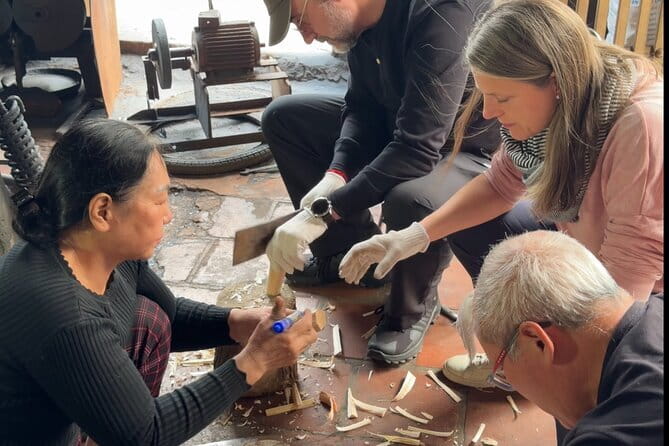
A standout feature here is the female-led forge. The workshop emphasizes working with the only officially recognized female artisan in this trade, someone who’s dedicated 44 years to keeping the craft alive. Even if you’ve never tried metalwork before, that matters. You’re learning from the kind of expertise that comes from doing the job for decades, not trying it once for a class demo.
Then there’s the guide/translator layer, which can make or break an experience like this. In this class setup, you may be supported by people such as artisans like Tuyen, plus interpreters like Mint, Nick, or Tulip (names you may see with different groups). What you want from your guide is clear pacing and patient explanations, especially when you’re learning how to handle heat, hammering, and sharpening steps safely.
The workshop also uses a team approach. You work side-by-side with artisans, and you take turns with hammering while the process moves. That keeps it social without becoming chaotic. And because the group is capped at 10, you’re not stuck waiting your turn for long stretches.
If you’re the kind of traveler who enjoys watching expert hands work, you’ll get that here. But you also get the other half: doing it yourself, with corrections and help along the way.
Your 2.5-Hour Workflow: Design, Forge, Shape, and Tar-Based Sharpening
The class is structured like a real knife workflow, not a loose craft circle. Plan on being active for the whole 2 hours 30 minutes.
1) Design: sketch first, then choose your metal
You begin by sketching the blade. This part is surprisingly useful, because it forces you to think in real proportions. You’ll also select metal for strength and quality, so your choice isn’t random. It’s tied to what makes a blade hold up.
2) Forging: cut, heat, hammer, and shape
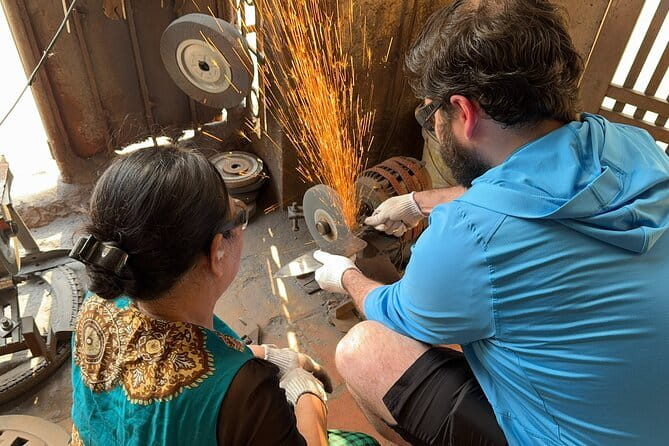
Next comes the forging steps. You cut out the blade and the tang (the part that fits into the handle). The workshop uses traditional tools like hammers, cutters, and an anvil, with heat from the forge so the metal can be shaped.
What I like about this stage is that you see cause and effect. When you change hammering technique, the metal’s shape changes right away. It’s the fastest way to understand why blacksmithing isn’t just “making it look cool.”
- Hanoi Motorbike Tour: Food, Culture and Fun by Vintage Motorbike★ 5.0 · 6,699 reviews
- Hanoi: Guided Food Tour with Train Street Visit★ 4.9 · 6,239 reviews
- Hanoi Cooking Class: Culture, Local Market & Meaning CSR Impact★ 5.0 · 5,147 reviews
3) Shaping: turn rough into a clean form
Hammering gets you the basic shape. Then you’ll refine edges and smooth out the blade profile. A hydraulic machine is used to help refine rough areas for a smoother finish. That’s a helpful modern touch inside a traditional process, and it keeps your knife from ending up blocky or uneven.
In a beginner class, that matters. It helps you get to a result you’ll actually be proud to take home.
4) Sharpening: grindstone steps plus a tar-based wash
The end goal is a sharp edge, and the sharpening portion is where this class gets memorable. You’ll sharpen on a grindstone and follow several steps, including one involving a tar-based wash. The workshop treats that step like an age-old family secret passed down across generations.
This isn’t just an extra ritual. Tar washing is part of how the edge gets finished and prepared. It also gives the whole experience a “this is what locals do” feel that standard crafts miss.
By the time you’re done, you’re not leaving with a prop. You’re leaving with a knife you helped make—something you can use for everyday cooking tasks.
What You Take Home: A Handmade Blade and How to Plan for Travel
At the end of the class, you take home your handmade knife. That’s the real payoff. A crafted souvenir is fun, but a functional one lasts longer and feels more personal.
One practical thing to consider: knives can complicate travel. Some people bring knives home by shipping and also warn about airport regulations at home. Since the workshop doesn’t give you a one-size answer on travel rules, you’ll want to check your airline and your country’s carry-on or checked-baggage rules before you go. The knife length and form can affect what’s allowed.
If you know you’ll need to fly soon after the class, consider timing. Try to schedule the class early enough that you can manage storage, packing, or shipping options with less stress. The good news: because this is a short, 2.5-hour experience, it’s easier to fit into a day than multi-day craft courses.
Also, think about what you want your knife to be. During design, focus less on making it fancy and more on choosing a shape that feels practical for cooking. You’ll get more satisfaction from something you actually reach for.
Price and Value in Hanoi: Why $45.51 Can Be a Smart Buy
The price is $45.51 per person for about 2 hours 30 minutes. That’s not the cheapest activity in Hanoi, but it’s also not “pay for a demo.” You’re paying for a guided, fully hands-on process where tools and safety equipment are provided at the artisan’s house.
Here’s what you’re getting for the money:
- A real making process (design through sharpening), not just one step
- Expert support while you work with cutting, heat, shaping, and grinding
- The key included cost: tools and safety gear
- A take-home knife that’s made by your hands
In other words, you’re not just buying a souvenir. You’re buying instruction, materials, and the labor time that goes into turning a concept into a usable tool.
Group size also boosts value. With a max of 10, your time with the team doesn’t feel diluted. You’ll have a better chance to get corrections when your technique needs adjustment.
Gratuities are optional, which keeps the base price straightforward.
Who This Class Fits Best (and Who Should Think Twice)
This Hanoi knife-making class is a great match if you like practical skills and don’t mind getting your hands involved. It works well for:
- beginners who want step-by-step guidance
- travelers who prefer doing over watching
- people who want a memorable, functional souvenir
It’s less ideal if you dislike physical, hands-on workshop work. The process includes hammering, grinding, and heat-related steps, so expect a serious craft pace rather than a casual hobby mood.
Also, if you hate the idea of transporting a sharp object afterward, think carefully. The class ends back at the meeting point, but the knife still needs a plan for your onward travel.
Quick Practical Tips for Da Sỹ Day
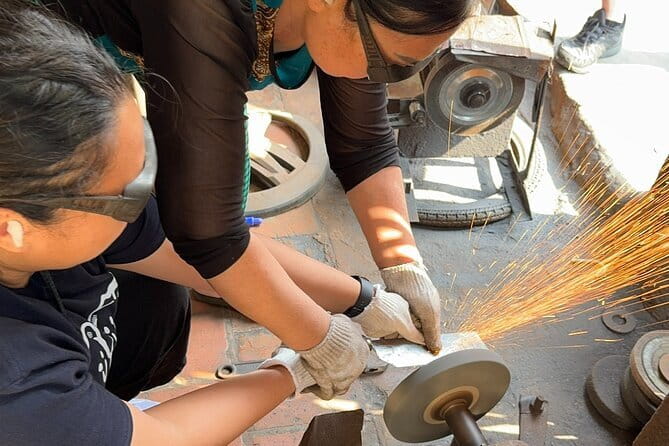
- Go with a mindset of participation. You’ll be actively making, not spectating.
- Bring your questions. The process moves step by step, and the artisans guide you through details so you don’t have to guess.
- Plan for the finished knife. If you’re flying, look up carry-on and checked rules before you assume it’s easy to bring.
- Expect a small group. Up to 10 people means you’ll likely spend more time with the team and fewer long waits.
- Use the mobile ticket. You’ll receive it electronically and the class meets at Đa Sỹ, Kiến Hưng, Hà Đông, Hà Nội.
Should You Book This Hanoi Knife Class?

Book it if you want a hands-on Hanoi experience that ends with something you can actually use. The female-led forge, the real workflow from sketch to sharpening, and the tar-based finishing step make it feel authentic rather than gimmicky.
Skip it if you want soft, relaxed “craft time,” or if transporting a knife is a deal-breaker for your itinerary. In that case, you might prefer a different type of workshop with a less complicated end product.
If you’re on the fence, consider one simple question: do you want to leave Hanoi with a story and a working tool, built by your own hands? If yes, this class is a strong choice.
FAQ
How long is the Hanoi knife-making class?
It runs for about 2 hours 30 minutes.
Where does the class start and end?
The meeting point is Đa Sỹ, Kiến Hưng, Hà Đông, Hà Nội, Vietnam, and the activity ends back at the meeting point.
How much does it cost?
The price is $45.51 per person.
What is included in the class price?
Tools and safety equipment are provided for knife making at the artisan’s house.
What is not included?
Gratuities are optional.
How big is the group?
The maximum group size is 10 travelers.
What steps will I do during the workshop?
You’ll design, forge, shape, and sharpen your own knife using traditional techniques and tools.
Does the sharpening process include anything unusual?
Yes. The sharpening includes several steps, including a tar-based wash.
Is free cancellation available?
Yes. You can cancel up to 24 hours in advance for a full refund.
Is a mobile ticket provided?
Yes, the class uses a mobile ticket.
More Workshops in Hanoi


More Tour Reviews in Hanoi






Latest Hanoi write-ups from our team






Workshops, compared.
 ★ 5.0Hanoi Cooking Class: Culture, Local Market & Meaning CSR ImpactFrom $395,147 reviews
 ★ 5.05 Traditional Dishes Hanoi Cooking Class with Market TripFrom $354,890 reviews
 ★ 5.0Hanoi Coffee Workshop: Taste Salt, Coconut and Egg CoffeeFrom $161,286 reviews
 ★ 5.0Salt Coffee Workshop Awake Your Senses With 6 BrewsFrom $23792 reviews
 ★ 5.0Vietnamese Food Cooking Class in Hanoi with Market ExperienceFrom $45778 reviews
 ★ 5.0Handcrafted Wood Carving Workshop with Local ArtisanFrom $19733 reviews
 ★ 5.05 Local Dishes Cooking Class with Meal & Market VisitFrom $40420 reviews
 ★ 5.0Hanoi Cooking Class and Market Tour in Ancient HouseFrom $45379 reviews
Browse the lists this tour appears in