
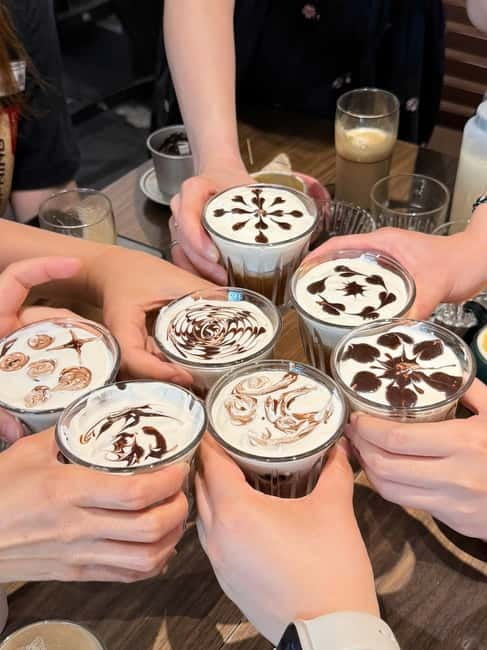
Reviewed · COFFEE EXPERIENCES
Hanoi Coffee Workshop: Crafting Your Perfect Brew
Coffee and Vietnam go together. This hands-on Hanoi class teaches you how to brew Vietnamese coffee the classic way, step by step. You’ll work with a phin filter, taste what you make, and learn what each ingredient does to flavor.
I like two things most: you get real practice (not just a demo), and you taste every cup as you go. The variety is also great because you can choose 4, 5, or all 6 styles, so you’re not stuck with only sweet milk drinks. Guides such as Gene, Jay, Moon, and Ashley have led sessions here, and that English instruction seems consistently strong.
One consideration: the coffee can be strong. Plan to eat beforehand, go slow, and don’t assume you’ll be able to drink everything comfortably.
In This Review
- Key highlights you’ll actually care about
- A Phin Filter Workshop in Hanoi’s Hostel Neighborhood
- What You Brew: Four, Five, or All Six Vietnamese Coffee Styles
- Black Coffee and Brown Coffee: Learning Strength Without Guessing
- Bạc xỉu and the Art of Milk-Mellowed Flavor
- Egg Coffee and Foam Practice: Creamy, Rich, and Surprisingly Learnable
- Coconut Coffee in a Chilled Format: Bright, Cool, and Different
- Salt Coffee: The Most Talked-About One, So Learn the Logic
- How the 1–2 Hour Class Flows (and What You’ll Do With Your Hands)
- Included Extras That Make $12 Feel Like Real Value
- When to Go and Who Should Skip This Workshop
- Should You Book Hanoi Coffee Workshop?
- FAQ
- Where is the Hanoi Coffee Workshop meeting point?
- How long is the workshop?
- How many people are in the group?
- What coffee styles can I make?
- Are vegan or dairy-free options available?
- Do I need to eat before the class?
Key highlights you’ll actually care about

- Phin filter practice: you’ll brew multiple styles using the iconic Vietnamese setup
- Choose your caffeine adventure: 4, 5, or all 6 coffees, from black to salt coffee
- Egg and coconut coffee included: two fan favorites that can surprise you in a good way
- Taste what you make: instruction is paired with tasting, not just learning steps
- Small group (10 max): easier questions and more one-on-one help
- Recipes to take home: so your next coffee at home isn’t just guesswork
A Phin Filter Workshop in Hanoi’s Hostel Neighborhood
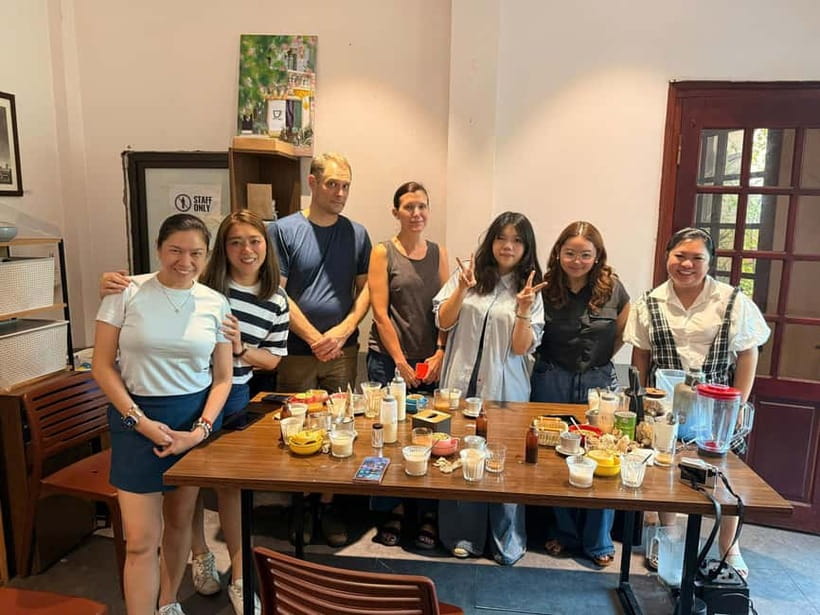
This workshop is easy to fit into a Hanoi day because it runs about 1–2 hours and keeps you in one place. You’ll meet on the 1st floor of the Lotus Hanoi Hostel building, then head into an air-conditioned room where the coffee making happens.
The setting matters more than you’d think. Being in a comfortable indoor space means you can focus on technique—grinding, measuring, pouring, waiting—and not on sweating through it. It also helps that the group is limited to 10 participants, so you’re not lost in a crowd while you’re trying to get the hang of the phin filter.
You’ll be guided in English, which is a big deal for a hands-on class. Coffee has lots of tiny steps, and being able to ask quick questions (or confirm your ratios) makes the difference between a drink that’s almost right and one that’s actually good.
Worth a glance beside this Hanoi pick:



What You Brew: Four, Five, or All Six Vietnamese Coffee Styles
You pick your menu up front, and that choice shapes the whole experience. The workshop gives you options from simpler classic profiles to more adventurous drinks—so coffee lovers can go deep without boring the curious.
Here are the three menu paths:
- Option 1: 4 coffees
- Black coffee (Cà phê đen)
- Brown coffee (Cà phê nâu)
- Egg coffee (Cà phê trứng)
- Bạc xỉu (a milkier, lighter coffee)
- Option 2: 5 coffees
- Everything above, plus coconut coffee (Cà phê cốt dừa)
- Option 3: all 6 coffees
- Everything above, plus salt coffee (Cà phê muối)
What I like about this structure is that it respects different tastes. If you’re sensitive to caffeine or just want a fun intro, 4 styles is plenty. If you love experimenting, the full menu gives you the full Vietnamese coffee personality: bitter, sweet, creamy, chilled, and surprising.
Black Coffee and Brown Coffee: Learning Strength Without Guessing
The phin filter is the star for a reason. Vietnamese black coffee is strong and aromatic, and the filter process teaches you patience. You grind, assemble, pour, and wait for the coffee to drip through—so you feel how the method creates intensity.
When you move to brown coffee (Cà phê nâu), the lesson shifts from brewing to balance. You’ll brew a coffee that’s typically sweetened with condensed milk, which softens the bite and makes the flavors more rounded. This is where you start learning how ingredient choices change the cup.
A practical takeaway: you’ll taste each coffee immediately after brewing, which makes it easier to connect your technique to what’s in your glass. If your coffee tastes harsher than expected, you can usually correct the next one rather than wondering for the rest of the trip.
Bạc xỉu and the Art of Milk-Mellowed Flavor
Bạc xỉu is often described as lighter and milkier, and in a workshop it becomes a useful contrast. You’re not just repeating the same drink with more dairy. You’re learning how to steer flavor toward gentle sweetness and smoothness.
This is also one of the easiest styles for beginners to enjoy. If you’ve ever found Vietnamese coffee too intense, Bạc xỉu is often the gateway because the milk profile reduces that sharp coffee punch while still keeping coffee character.
You’ll also be learning about the ingredients and the logic behind each drink. Even without a chemistry degree, the comparisons help you understand what changes when you add milk, how sweetness behaves, and why different coffee styles feel like different beverages rather than variations of one thing.
Egg Coffee and Foam Practice: Creamy, Rich, and Surprisingly Learnable
Egg coffee is one of the most famous Vietnamese creations, and the workshop format makes it less mysterious than it sounds. You’ll learn how to build the creamy texture that makes it feel like a dessert drink, while still grounding it in coffee.
The highlight mentions practice with foam, and that matters here. Egg coffee is all about texture: the creamy top (usually made from whipped egg yolk) changes the mouthfeel and makes the cup taste richer and smoother than plain black coffee. The class setting makes this easier because you can watch, try, and get corrected before you head into your next cup.
This is a good moment to pay attention to the guide’s pacing. If you go too fast, you can end up with a thick mixture that doesn’t blend well. If you take it slowly, you’ll get that glossy, spoonable cream effect that makes egg coffee taste indulgent rather than just sweet.
Worth a glance beside this Hanoi pick:
- Hanoi Cooking Class: Culture, Local Market & Meaning CSR Impact★ 5.0 · 5,147 reviews
- 5 Traditional Dishes Hanoi Cooking Class with Market Trip★ 5.0 · 4,890 reviews
- Vietnamese Food Cooking Class in Hanoi with Market Experience★ 5.0 · 778 reviews
Coconut Coffee in a Chilled Format: Bright, Cool, and Different
Once you add coconut coffee (Cà phê cốt dừa), the workshop expands beyond hot-drip style coffee into something that feels more like a chilled treat. This version often leans into refreshment, with coconut cream adding a mellow, aromatic layer.
I like that coconut coffee isn’t treated as a gimmick. It’s presented as its own coffee style with its own ingredients and flavor behavior. That gives you a clearer idea of how Vietnamese coffee culture isn’t just about strength—it’s about matching coffee to other tastes.
If you choose the 5-coffee option or the full 6, coconut coffee is a great bridge drink. It breaks up the sequence of black and milk-sweetened cups, and it helps you appreciate how the same coffee base can shift dramatically depending on what you add.
Salt Coffee: The Most Talked-About One, So Learn the Logic
Salt coffee (Cà phê muối) is the style most people remember. It sounds odd until you taste it. The idea isn’t that you’ll end up with a salty drink in the usual sense. Instead, salt can affect how sweetness and bitterness show up in the cup, and it can sharpen flavor perception.
In a workshop, salt coffee is valuable because it forces you to pay attention to balance. You’ll learn how the ingredients combine and what to expect as you taste. The timing matters too: you can adjust how you mix and taste so you don’t confuse shock flavor with actual imbalance.
This is the moment when the class stops being only about technique and becomes about flavor thinking. Once you understand the role salt plays, you’ll start spotting that same logic in other food experiences—sweet things that taste better when you add a tiny twist of contrast.
How the 1–2 Hour Class Flows (and What You’ll Do With Your Hands)
Even though the workshop has no long walking route, it still has a clear rhythm. You’ll spend time learning and repeating the core steps of Vietnamese brewing with the phin filter. Then, for each style, you’ll follow the specific recipe approach and taste the result.
Expect a pattern like:
- Setup and brewing basics with the phin filter
- Brew and taste the first coffee style
- Adjust your approach as the guide explains ingredients and technique
- Move through additional styles based on your chosen option (4, 5, or 6)
- End with recipes so you can recreate the drinks later
The hands-on part is the point. If all you did was watch, you’d miss the learning curve. But here you actually practice the steps—so by the time you hit egg coffee or salt coffee, you’re not starting from zero.
Also, you’ll want to be aware of timing and caffeine. The workshop is short, and the cups stack up. That’s fun if you love coffee. It can be a lot if you’re not used to strong drinks.
Included Extras That Make $12 Feel Like Real Value
The price—$12 per person—is easy to justify when you look at what’s included. You’re not just paying for a guide. You’re paying for tools, ingredients, brewing practice, tasting, instruction, and take-home recipes.
Included details:
- all coffee ingredients and tools
- tasting of each coffee you prepare
- guided instruction in English
- recipes to take home
- air-conditioned workshop space
- vegan/dairy-free options available on request
That last line matters. Vietnamese coffee often leans on condensed milk or dairy-based textures, so offering vegan/dairy-free versions means you aren’t automatically excluded from most of the menu.
Even the fact that you taste every coffee you make is a big value point. You’re building a personal flavor map. Later, when you order in a café, you’ll actually know what you like and why.
When to Go and Who Should Skip This Workshop
Please eat beforehand. The workshop is a caffeine-focused experience, and the guidance specifically suggests you avoid a caffeine hangover by not arriving on an empty stomach. Also, people note the coffee can be strong, so if you’re sensitive, plan accordingly.
You should also know the boundaries:
- Not suitable for wheelchair users
- Not suitable for people with diabetes
If you have medical reasons you’re careful with sugar or caffeine, it’s worth thinking through how much sweetness is involved in the menu. Brown coffee, Bạc xỉu, egg coffee, and often coconut coffee tend to be sweet or creamy, depending on recipe.
On a practical note, no food is included. You’ll be drinking coffee, so you’ll want a real meal before the class starts. The workshop is in an air-conditioned space, but it’s still best to arrive rested and ready to taste.
Should You Book Hanoi Coffee Workshop?
Book it if you want a fun Hanoi activity that teaches you something you can use immediately. This is especially worth it if you love Vietnamese coffee culture and you want to understand the differences between styles, not just order one cup and move on.
Skip it if you’re trying to avoid caffeine, you don’t want strong flavors, or you’re looking for a quiet sit-down café experience. Also, if mobility is an issue, this class isn’t suitable for wheelchair users based on the provided information.
If you want a memorable, hands-on souvenir without buying a fridge magnet, the take-home recipes and the skill you practice with the phin filter make this a smart value choice.
FAQ
Where is the Hanoi Coffee Workshop meeting point?
The meeting point is on the 1st floor of the Lotus Hanoi Hostel building.
How long is the workshop?
It runs about 1–2 hours, depending on the starting time available.
How many people are in the group?
The group is small, limited to 10 participants.
What coffee styles can I make?
You can choose 4, 5, or all 6 styles: black coffee, brown coffee, egg coffee, Bạc xỉu, plus coconut coffee and salt coffee if you opt for the larger menus.
Are vegan or dairy-free options available?
Yes. Vegan/dairy-free options are available upon request.
Do I need to eat before the class?
Yes. You’re advised to eat beforehand to avoid a caffeine hangover.
More Workshops in Hanoi



More Coffee Experiences in Hanoi
More Tour Reviews in Hanoi






Latest Hanoi write-ups from our team





Coffee Experiences, compared.
 ★ 5.0Hanoi Coffee Experience: 6 Brews, 9 Recipes & 3 Liquor TastingsFrom $172,945 reviews
 ★ 5.0Hanoi Coffee Workshop: Taste Salt, Coconut and Egg CoffeeFrom $161,286 reviews
 ★ 5.0Salt Coffee Workshop Awake Your Senses With 6 BrewsFrom $23792 reviews
 ★ 4.9Vietnamese Street Food Tour with Egg CoffeeFrom $24315 reviews
 ★ 5.0Hanoi Cooking Class: Pho/Bun Cha/Banh Xeo…+Free Egg/Salt CoffeeFrom $19267 reviews
 ★ 5.0Vietnamese Coffee Workshop with 6 Brews and 8 RecipesFrom $34237 reviews
 ★ 5.0Ha Noi Egg Coffee ClassFrom $12227 reviews
 ★ 5.0Hanoi Coffee Workshop: Master 6 Signature Vietnamese CoffeeFrom $18171 reviews
Browse the lists this tour appears in