
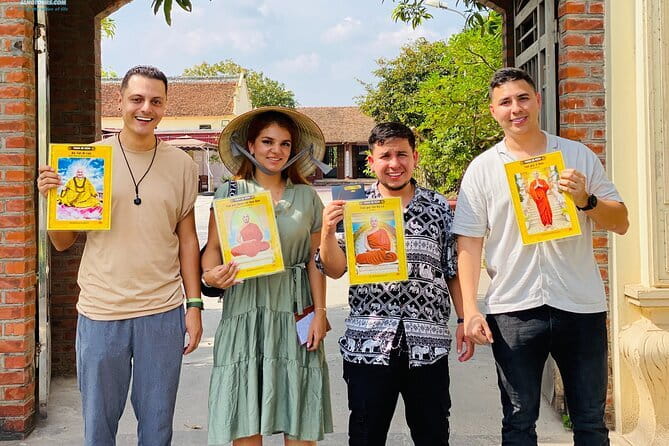
Reviewed · HALF-DAY
Half-Day Mindfulness Meditation Retreat in Hanoi
Chanting in a Hanoi pagoda changes your pace. In this half-day retreat, you practice the nuts and bolts of mindfulness alongside Buddhist rituals, ethics lessons, and quiet body work.
Mobile ticket setup keeps it simple, and the schedule is built to move from learning to doing.
I especially liked the step-by-step meditation method focus, not just vague calm vibes. I also loved the mix of stillness and action, like walking meditation plus a compassion-centered ritual that ends with a shared vegetarian meal.
One thing to consider: the retreat notes that an air-conditioned vehicle is not included, so the experience may feel warmer depending on your timing and how long you’re waiting.
In This Review
- Key highlights you’ll feel right away
- Step into the pagoda: rules, sutras, and real structure
- Meditation methods and Buddhist doctrines you can apply daily
- Qigong and mindful breathing for steadier focus
- Walking meditation: attention in motion, calm without going numb
- The art of touching peace: a focused mind, not forced calm
- Talk with monks: doctrine, renunciation, and lofty ideals made human
- Releasing animals and a grateful vegetarian meal
- Gifts, farewell, and what you can carry forward
- Price and value: $60 for a structured half-day in Hanoi
- Who this retreat fits best (and who might want to skip it)
- Should you book this half-day mindfulness retreat in Hanoi?
- FAQ
- How long is the Half-Day Mindfulness Meditation Retreat in Hanoi?
- Where does the retreat take place?
- What does the $60 price include?
- Is an air-conditioned vehicle included?
- Do I receive a ticket for the retreat?
- What meditation activities are part of the retreat?
- Do I interact with monks during the retreat?
Key highlights you’ll feel right away
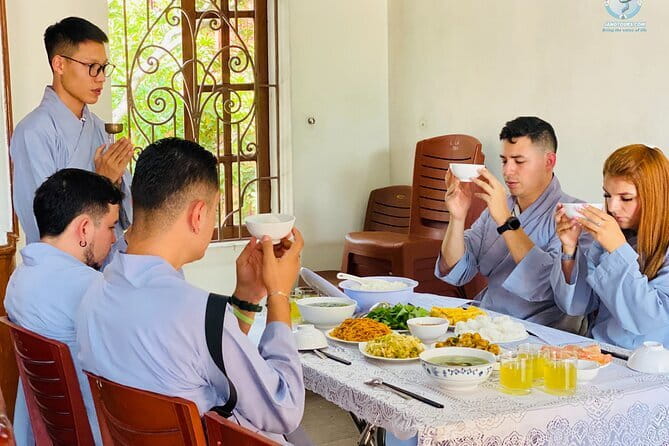
- Sutra chanting first, so the retreat starts with context, not silence
- Qigong and mindful breathing, aimed at steadying the body for practice
- Walking meditation, so attention works even while you’re moving
- Conversation with monks, focused on doctrine and the noble life of renunciation
- Releasing animals, designed as a compassion and gratitude practice
- Vegetarian lunch included, timed after the reflective activities
Step into the pagoda: rules, sutras, and real structure
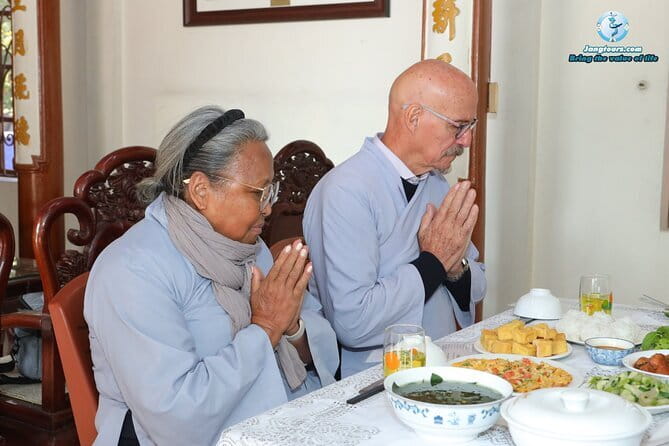
Your first stop is the pagoda itself, where the guide sets the tone with rules for how to participate. That matters more than you might think. When people jump straight into meditation without any framework, the mind tends to treat it like a performance. Here, you start with boundaries and guidance, so your attention has a place to land.
After the rules, the first big activity is chanting solemn sutras—Buddhist teachings linked to the Buddha’s message. Even if you don’t understand every word, the rhythm and intention help you grasp what the retreat is about: ethics, life lessons, and training the mind with respect. This is not just breathing exercises in a quiet room. It’s a guided entry into Buddhist ritual and spiritual practice.
A practical tip: treat this opening like the warm-up, not the main event. If you can keep up with the pace of the chanting and the guide’s instructions, you’ll find the later meditation sections much easier.
Worth a glance beside this Hanoi pick:


Meditation methods and Buddhist doctrines you can apply daily
Once the retreat shifts from ritual context into practice, you’ll learn the correct method of meditation. The wording in the retreat emphasizes doing it the right way, which is a big deal if you’ve tried meditating before and got stuck in frustration.
You also study profound Buddhist doctrines, with an explicit goal: learning ethics and life lessons you can carry beyond the retreat. That’s the difference between a one-time calm session and training that actually changes your daily reactions. The retreat frames gratitude, loving-kindness, and compassion as things you practice earnestly—not just ideas you agree with.
You’ll spend time moving from concept to technique. You’re taught how to focus the mind for true happiness through meditation, which the retreat describes as touching peace. In plain terms, you’ll be guided to notice what your mind does and gently work with it, rather than fighting it.
Qigong and mindful breathing for steadier focus
Before you sit for a full meditation session, you practice qigong and mindful breathing for good health. This is smart staging. Breath work and gentle movement help settle the body, which makes it easier to stay present during meditation.
Qigong here isn’t about athletic stretching. It’s about regulating attention through the body—how your posture feels, how your breathing lands, and how your mind responds. If your mind tends to race, this body-first approach can feel more manageable than starting with pure stillness.
Then you move into tranquility through walking meditation. The retreat doesn’t treat meditation as one posture only. It treats it as a skill: you can practice attention while you’re moving, not just while you’re sitting still.
Walking meditation: attention in motion, calm without going numb

Walking meditation is one of the best parts of this retreat because it breaks the common trap: people think mindfulness means stopping everything. In reality, your day is motion. Your mind is motion. So training attention while walking makes the practice transferable.
During this section, you’ll enjoy tranquil moments while engaging in the walking meditation. That phrasing matters. The retreat isn’t aiming for a robotic focus. It’s training calm with awareness, so you experience the quiet without turning your mind off.
This is also a good moment to notice how easily you drift. You might focus well for a minute, then realize you’ve been planning or replaying thoughts. That’s not failure. It’s the training material. The retreat’s structure gives you multiple chances to practice returning to the present.
The art of touching peace: a focused mind, not forced calm

Next comes the retreat’s meditation “center,” described as touching peace—learning meditation methods and focusing the mind for true happiness. The phrase true happiness is doing the heavy lifting here. The retreat’s emphasis is ethical and compassionate, not escapist.
You’re guided to work on the mind itself. That means noticing distractions, learning how to re-center, and practicing a kind of attention that feels steady rather than tense. If you’ve ever tried to meditate by forcing your thoughts to stop, this section can feel like relief. It’s about method.
The retreat’s overall theme is gratitude, loving-kindness, and compassion. Even the meditation is connected to that goal. You’re not just calming down; you’re learning how to relate to yourself and other beings differently.
- Hanoi Motorbike Tour: Food, Culture and Fun by Vintage Motorbike★ 5.0 · 6,699 reviews
- Hanoi: Guided Food Tour with Train Street Visit★ 4.9 · 6,239 reviews
- Hanoi Cooking Class: Culture, Local Market & Meaning CSR Impact★ 5.0 · 5,147 reviews
Talk with monks: doctrine, renunciation, and lofty ideals made human
The most anticipated moment is when you converse with monks. This is where the retreat turns from practice into perspective.
You learn more about Buddhist doctrine through conversation—plus the noble life of those who have renounced worldly pleasures, and the lofty ideals behind that choice. This kind of discussion can be surprisingly grounding. You get to hear the reasons behind a lifestyle that can sound abstract from the outside.
In a practical sense, monk conversations help you understand the “why” underneath meditation. Otherwise, mindfulness can feel like a technique without meaning. Here, doctrine and ethics sit under the practice, so your sessions feel connected to how to live.
If you ask questions, keep them simple. The retreat data highlights doctrine, renunciation, and lofty ideals—so your best questions will tie meditation to everyday life and behavior, not just how to sit.
Releasing animals and a grateful vegetarian meal

The retreat ends with compassion-focused activities. You’ll nurture compassion through the activity of releasing animals. The retreat frames it as part of a gratitude and kindness practice, followed by a grateful meal.
Then you enjoy a grateful meal—vegetarian food is included. This matters because it closes the loop. Meditation and compassion shouldn’t be separate from ordinary life. By eating together right after reflective practices, you’re less likely to treat the retreat like a disconnected “event.”
A note for your mindset: a ritual like releasing animals can feel emotionally intense, even if you understand it as compassion practice. Let yourself be present with it. The retreat’s goal is gratitude and compassion, so rushing it defeats the purpose.
Gifts, farewell, and what you can carry forward
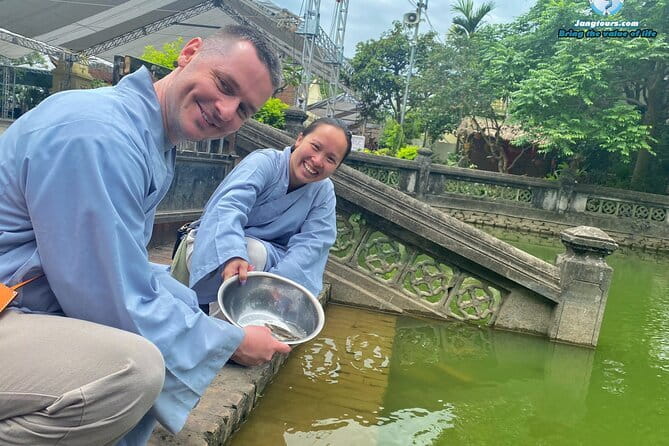
After the main practices and the compassion ritual, you exchange gifts and bid farewell. It’s a small ending, but it keeps the retreat human. You’re not leaving with a head full of theory only. You leave with shared participation, gratitude, and a clearer sense of what meditation methods aim to do.
When you reflect afterward, focus on the structure that worked for you:
- ritual context and sutras to set intention
- breath and qigong to settle the body
- walking meditation to train attention in real motion
- monk conversation to connect doctrine and ethics to practice
- compassion ritual and a shared vegetarian meal to seal the values
That sequence is the value. It’s a complete mini-training, not just a single sit.
Price and value: $60 for a structured half-day in Hanoi
The price is $60. For a half-day retreat in Hanoi lasting about 4 hours, you’re paying for guided instruction that spans multiple modes: chanting, meditation method teaching, qigong and breathing, walking meditation, monk conversation, and included vegetarian lunch.
You do not get an air-conditioned vehicle, based on what’s listed as not included. That affects comfort, especially if you arrive during warm parts of the day. Still, the core value here is the instruction and the access—to the pagoda setting and the monk conversation.
Booking tends to happen about 47 days in advance on average. That suggests steady demand. If you’re traveling with a tight schedule, you’ll want to lock it in earlier rather than waiting for last-minute plans.
Also, the retreat uses a mobile ticket, which is practical. It reduces the hassle of paper printouts and makes it easier to keep everything in one place.
Who this retreat fits best (and who might want to skip it)
This is a great fit if you want Buddhist meditation practice with structure—chanting, doctrine, and compassion rituals included—not just a modern mindfulness class. You’ll likely enjoy it most if you like guidance and step-by-step teaching, because the retreat clearly emphasizes the correct meditation method and lessons you can apply to daily life.
You might think twice if you strongly prefer silent, no-ritual meditation and you dislike chanting. The retreat starts with sutra chanting, so that is part of the experience you should expect. And if heat comfort matters a lot to you, remember the note about no air-conditioned vehicle.
Should you book this half-day mindfulness retreat in Hanoi?
Yes, if you want more than calm—you want method plus meaning. The combination of sutra chanting, qigong and mindful breathing, walking meditation, and a monk conversation gives you both practice and context. The included vegetarian lunch also makes the day feel complete.
Skip it only if you know you won’t handle chanting and ritual elements, or if the lack of air-conditioned transport is a deal-breaker for your comfort.
If you’re curious about Buddhist ethics and meditation training you can carry into real life, this is one of those half-day experiences that rewards you for paying attention.
FAQ
How long is the Half-Day Mindfulness Meditation Retreat in Hanoi?
It runs for about 4 hours.
Where does the retreat take place?
The retreat is in Hanoi, Vietnam, at a pagoda setting.
What does the $60 price include?
The retreat includes lunch with vegetarian food.
Is an air-conditioned vehicle included?
No. An air-conditioned vehicle is not included.
Do I receive a ticket for the retreat?
Yes, the tour uses a mobile ticket.
What meditation activities are part of the retreat?
You’ll practice mindful breathing and qigong, and you’ll also do walking meditation. The retreat also teaches meditation methods focused on touching peace.
Do I interact with monks during the retreat?
Yes. One of the main moments is when you converse with monks to learn about Buddhist doctrine and the noble life of those who have renounced worldly pleasures.
More Half-Day in Hanoi

More Tour Reviews in Hanoi






Latest Hanoi write-ups from our team





Half-Day, compared.
 ★ 5.0Hanoi Half-day with Food + Fun + Culture By Russian JeepFrom $701,243 reviews
 ★ 5.0Hanoi Highlights: Half-day City TourFrom $33298 reviews
 ★ 5.0Hanoi City Half-Day Private Tour: Train Street And All HighlightsFrom $44298 reviews
 ★ 4.8Guided Half-Day City Highlights Tour with TransfersFrom $38277 reviews
 ★ 5.0Private Hanoi City Half-Day Tour with Train Street VisitingFrom $51209 reviews
 ★ 5.0Half-day Explore Bat Trang Ceramic Village by Russian JeepFrom $55182 reviews
 ★ 4.7Full-day or Half-day Hanoi City TourFrom $30163 reviews
 ★ 5.0Small Group Half-day Hanoi City Tour with Train Street Visit (4h)From $41147 reviews