
Hanoi has a way of surprising you. In just 4 to 5 hours, you’ll see major landmarks, local street life, and the famous Train Street where a train passes inches from homes. It’s a private tour, so you can set the pace and still get a tight overview of what makes the city tick.
Two things I really like: the guide-led flow that keeps you from wasting time, and the way you get to mix big-photo sights with everyday stops. If you’re with guides like Peter or Sandy, you’ll likely get clear explanations, good photo help, and practical local pointers along the route.
One consideration: the stops are time-boxed, so Train Street can feel crowded and some moments are quick. If you want slow wandering at every site, you may wish you had more time.
In This Review
- Key Highlights You’ll Feel During the Tour
- How This Private Half-Day Works (and Why It Feels Efficient)
- The big value: entrance fees + a real guide
- One practical thing: it’s not a slow sightseeing day
- Tran Quoc Pagoda: Calm Time on West Lake
- What to pay attention to here
- The time limit: short but meaningful
- Ho Chi Minh Mausoleum: Photos First, Queue Optional
- Why skipping the interior can be smart
- Quick tip
- Train Street: The Moment Everyone Remembers
- What I like about this stop (beyond the photo)
- The drawback: it can be crowded
- How to enjoy it more
- Hanoi’s Market Side: Dong Xuan in 45 Minutes
- What to do with your time
- Who this works for
- French Colonial Landmarks: Opera House, Cathedral, Long Bien Bridge
- Hanoi Opera House
- St. Joseph’s Cathedral
- Long Bien Bridge
- Hoa Lo Prison and Hoan Kiem Lake: Memory and the City’s Heart
- How to make this stop feel worth your time
- Hoan Kiem Lake: the calmer finish
- Guides, Pace, and the Little Things That Matter
- What’s included that you’ll feel
- What’s not included
- Price and Logistics: Is $45 a Fair Deal?
- One more reality check
- Who Should Book This Tour (and Who Might Skip It)
- Should You Book It?
- FAQ
- FAQ
- What is the duration of the Hanoi City Tour?
- Is this tour private?
- Does the tour include pickup?
- Do you enter the Ho Chi Minh Mausoleum?
- Which stops are included?
- Are entrance fees included in the price?
- What is included besides the guide and tickets?
- Is tipping included?
- Do I need to cancel far in advance for a refund?
Key Highlights You’ll Feel During the Tour
- Train Street, up close: You’ll watch the train pass very near homes and small businesses.
- West Lake’s Tran Quoc Pagoda: Peaceful temple time on an island setting with history that goes back 1,500+ years.
- Ho Chi Minh Mausoleum photos without the long queue: Walk past the front for pictures while avoiding a queue that can take around 1.5 hours.
- Old Quarter shopping stop at Dong Xuan Market: A full 45-minute window to browse local goods, snacks, and souvenirs.
- French-era Hanoi in quick hits: Opera House, St. Joseph’s Cathedral, and Long Bien Bridge all in a single half day.
- Hoa Lo Prison with context: You’ll get a guided visit to the famous Hanoi Hilton site.
How This Private Half-Day Works (and Why It Feels Efficient)
This tour is built for people who want a lot of Hanoi in a short window, without getting lost or piecing together tickets and transport on your own. You’re in an air-conditioned vehicle with an English-speaking guide, and entrance fees are included, which matters more than it sounds when you’re trying to hit multiple major sights.
Because it’s private, the timing tends to feel human. You’re not herded into a giant group schedule. The itinerary still moves (this is a half day), but the guide can help steer what’s most important to you—especially on the day’s high-energy stop: Train Street.
More visits to the tracks at Train Street




The big value: entrance fees + a real guide
At $45 per person for a private half day, the deal is the package: professional guide + transport + all entrance fees. If you tried to DIY this route, you’d quickly lose time coordinating and paying separately, and you’d miss the context that turns sites into stories.
One practical thing: it’s not a slow sightseeing day
You’re getting short, focused blocks at each stop—perfect for first-timers, a bit intense if you’re craving unstructured time. If you’re traveling with older family members or kids, the private pacing can still work well, but you’ll want to keep expectations realistic about how much you can explore at each location.
Tran Quoc Pagoda: Calm Time on West Lake
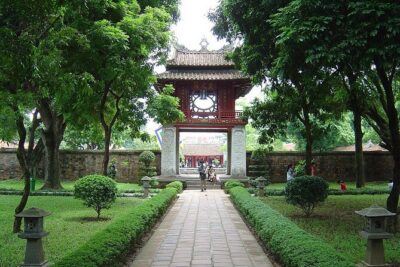
You start at Tran Quoc Pagoda, located on a small island in West Lake. This is the kind of stop that changes the temperature of the tour. Before the day turns into colonial streets and train-track chaos, you get about 30 minutes of quieter walking and temple atmosphere.
This pagoda is described as the oldest Buddhist temple in Hanoi, with roots more than 1,500 years back. Even if you’re not a deep Buddhism history person, the setting does something useful: it gives you a sense of Hanoi that’s not only about politics or wartime memory.
What to pay attention to here
Use Tran Quoc as a reset. Slow down your photo pace. Look around at the lake-side views, the temple grounds, and the way people move through the space. Because your next stops are more structured, this calm start helps the rest of the tour feel less frantic.
Bigger sweeps: more full days across the capital
- Private Walking Tour of Hanoi City★ 5.0 · 1,251 reviews
- Hanoi Motorbike Tours Led By Women: Hanoi City Insight Motorbike Tours★ 5.0 · 816 reviews
- Private Ha Long bay day trip(From Hanoi city or Halong harbour)★ 5.0 · 657 reviews
The time limit: short but meaningful
Thirty minutes is not enough to do everything at a relaxed museum pace, but it’s enough to feel the location and learn the essentials. If you’re the type who wants to sit and read quietly, you may wish you had more time.
Ho Chi Minh Mausoleum: Photos First, Queue Optional
Next comes Ho Chi Minh Mausoleum area. The key detail: you don’t enter the mausoleum. The tour includes time for you to walk across the front for photos and learn about his history, while skipping the long waiting line that can run around 1.5 hours.
For many visitors, that’s the right call. You still get the major visual moment and the guide’s explanation, but you don’t lose your half-day to a line you can’t control.
Why skipping the interior can be smart
Even if the mausoleum is important to you, this approach helps you keep the day balanced. You’ll still have time for the other must-sees—especially the one with strict physical constraints: Train Street, where earlier arrival often improves your viewing comfort.
Quick tip
Bring a little patience for the area itself. You’re there for photos and context, not for a long indoor visit. The guide’s role matters here: they’ll help you orient yourself quickly so you’re not just taking pictures, you’re understanding what you’re seeing.
Train Street: The Moment Everyone Remembers
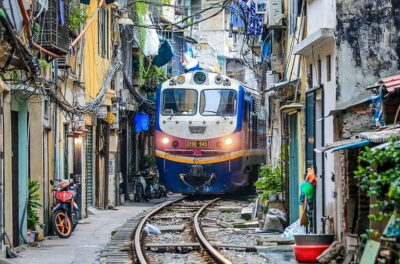
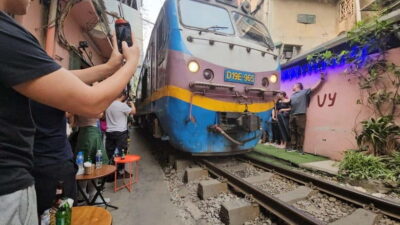
Then comes the headline stop: Train Street at Bếp Vua Chả Cá cơ sở 4. You’ll spend about 45 minutes here, and admission is included. This is where a train passes inches from homes and businesses, and you watch daily life continue right along the track.
This isn’t a museum-style experience. It’s a real-world scene. The guide helps you time it and position you so you can actually see the train without fighting your way into chaos.
What I like about this stop (beyond the photo)
The best part is the contrast. You’ll see a place that’s both functional and tense at once: people live and work here, and the train is simply part of the rhythm. Many guides also factor in comfort, like letting you get a coffee while you wait. Some tour experiences even include a small refreshment moment at the end of Train Street time, depending on how the guide manages the day.
The drawback: it can be crowded
Train Street is popular. So expect people, sound, and close quarters. That’s not a flaw in the tour—it’s the nature of the place. If you’re easily overwhelmed by crowds or want wide, quiet viewing areas, you might find the environment a bit intense.
How to enjoy it more
Aim to watch first, then take photos. If you spend the whole time framing shots, you’ll miss the scale of how close the train gets. And if you’re bringing kids, this is usually the stop that gets the biggest reaction, as long as you follow the guide’s advice on where to stand.
Hanoi’s Market Side: Dong Xuan in 45 Minutes
After the thrill, you switch gears to Dong Xuan Market, Hanoi’s largest indoor market. You get about 45 minutes, which is long enough to browse but short enough that the guide can keep you moving without burnout.
This is where Hanoi feels like a living place, not just a checklist. You’ll likely find fresh produce, local treats, and plenty of shopping. It’s also one of the easiest places to spot the everyday reality of the city because the market is built for constant traffic and constant buying.
What to do with your time
Treat this stop like a tasting-and-browsing sprint:
- Look for snacks or small items you can eat later
- Compare prices if you’re shopping for souvenirs
- Keep your energy for the sights ahead (you still have French-era landmarks after this)
Who this works for
If you like markets, this is a fun mid-tour break. If you dislike crowded indoor spaces or shopping pressure, you’ll still get value because the market is also a cultural snapshot.
French Colonial Landmarks: Opera House, Cathedral, Long Bien Bridge
The itinerary includes several quick, high-impact French-era landmarks. Think of this as a walking-and-glancing circuit—small windows that help you map Hanoi visually.
Hanoi Opera House
You’ll stop at the Hanoi Opera House, a French colonial building built between 1901 and 1911. Your time here is brief (about 5 minutes), but the exterior is iconic, and the guide can point out what to notice so you don’t just pass it like background scenery.
St. Joseph’s Cathedral
Next is St. Joseph’s Cathedral. You’ll have about 15 minutes here, with admission included. Even with a short stop, you can appreciate the structure and the way this area fits into Hanoi’s urban layout.
Long Bien Bridge
Finally, you’ll see Long Bien Bridge, built by the French from 1899 to 1902. This stop is about 10 minutes, and it’s a great palate cleanser after the tighter moments of Train Street and shopping.
There’s also wartime context tied to the bridge—bombed 14 times during the Vietnam War and later rebuilt—which is the kind of detail a guide makes real instead of abstract.
Hoa Lo Prison and Hoan Kiem Lake: Memory and the City’s Heart
Late in the tour, you shift into history that feels more serious. Hoa Lo Prison (often referred to as the Hanoi Hilton) is next, with about 30 minutes and admission included.
This stop gives you a guided visit to a former French colonial prison that later held American POWs during the Vietnam War. The value here isn’t only the walls and signs—it’s how a good guide helps you connect the site to the broader story of the city and the conflict.
How to make this stop feel worth your time
When time is limited, don’t just look at photos or exhibits. Ask your guide questions, especially if you like understanding causes and timelines. A lot of the tour’s praise centers on guides helping you grasp the human side of the history without turning it into a lecture you tune out.
Hoan Kiem Lake: the calmer finish
You then reach Hoàn Kiếm Lake, also known as Sword Lake or Luc Thuy Lake, with about 10 minutes. This is described as the heart of Hanoi and ties into legend—King Le Loi returning a magical element. Even in a short stop, the lake area helps you end on something more open and reflective.
If you’re heading out after the tour, this is a handy place to regroup, take a final set of photos, and plan your next meal.
Guides, Pace, and the Little Things That Matter
This kind of half-day tour lives and dies by its human details. The guide is the difference between seeing sites and actually understanding them.
From the experience style and guide feedback, a few names keep showing up in strong form: Peter stands out for history explanations and flexibility, Sandy is praised for being considerate and helpful with added recommendations, and Max is known for arriving early to improve your Train Street viewing and keeping the day fun without chaos.
Not every guide will be the same, of course, but the pattern is clear: you’ll get the most value if you treat the guide like your translator and city coach, not just a microphone.
What’s included that you’ll feel
- Professional English-speaking guide: better explanations, fewer confusion points
- All entrance fees: you avoid the add-on surprise
- Air-conditioned vehicle: helpful in Hanoi’s heat, especially between stops
What’s not included
Tips and personal expenses are on you. Also, while refreshment moments may happen depending on how the guide runs the day, you shouldn’t plan your entire budget around free drinks. Use them as a bonus, not a guarantee.
Price and Logistics: Is $45 a Fair Deal?
$45 per person for a private 4 to 5 hour tour can feel like a bargain—especially because entrance fees and a guide are wrapped in. The real question is whether the itinerary fits your goals.
If you want a first-timer overview with a highlight stop that you can’t easily replicate (Train Street), this pricing is strong value. You’re paying for:
- guided context (which turns random sights into a story),
- transport so you’re not stuck navigating between far-flung stops,
- and included entry so you can spend your attention on actually seeing things.
If you’re already comfortable planning on your own and you only want one or two sites, then you might compare costs differently. But for most visitors, this kind of packaged half day is a smart way to get orientation fast.
One more reality check
Because this is a short tour, you might feel a bit rushed at a couple of stops, especially if you’re hoping to linger for shopping or slow photos. It’s not a fault—it’s the trade-off for covering many highlights.
Who Should Book This Tour (and Who Might Skip It)
This tour is a great match if:
- you’re on a time crunch and want a high hit-rate itinerary,
- you’re traveling with family and want simple logistics,
- you want Train Street as a must-do but still want real context at other stops.
It may not be the best fit if:
- you prefer long, quiet visits with minimal walking,
- crowds make you uncomfortable,
- you want only off-the-beaten-path places and not major landmarks.
If you’re unsure, think about how you like sightseeing. This is structured, guide-led, and designed to help you get the city down on your map quickly.
Should You Book It?
Yes, I think you should book this tour if Train Street and the main sights are high on your list and you want a guide to connect the dots. The blend works: peaceful Tran Quoc Pagoda, historic Ho Chi Minh area photos without the long queue, the electric Train Street stop, then market time and French-era landmarks, finished with Hoa Lo Prison and Hoàn Kiếm Lake.
The one caution is simple: Train Street can be crowded and short. If you can handle close quarters for a signature experience, you’ll likely leave happy and oriented.
FAQ
FAQ
What is the duration of the Hanoi City Tour?
It runs about 4 to 5 hours.
Is this tour private?
Yes. It’s a private tour/activity, so only your group participates.
Does the tour include pickup?
Pickup is offered.
Do you enter the Ho Chi Minh Mausoleum?
No. You walk across the front for photos and learn about his history, but the tour does not include entering the mausoleum due to the long queue.
Which stops are included?
The itinerary includes Tran Quoc Pagoda, Ho Chi Minh Mausoleum area (outside photos), Train Street at Bếp Vua Chả Cá cơ sở 4, Dong Xuan Market, Hanoi Opera House, Long Bien Bridge, St. Joseph’s Cathedral, Hoa Lo Prison, and Hoàn Kiếm Lake.
Are entrance fees included in the price?
Yes. All entrance fees are included.
What is included besides the guide and tickets?
You get an air-conditioned vehicle and a professional English-speaking guide.
Is tipping included?
No. Tips and gratuities are not included.
Do I need to cancel far in advance for a refund?
You can cancel up to 24 hours in advance for a full refund. If you cancel less than 24 hours before the experience, it won’t be refunded.
More Tour Reviews in Hanoi





The Whole Capital in a Day





Back to Train Street


Latest Hanoi write-ups from our team





Hanoi Train Street Tours, compared.
 ★ 4.9Guided Food Tour with Train Street VisitFrom $196,239 reviews
 ★ 5.0Street Food Tour with Train Street & Hidden AlleywaysFrom $202,831 reviews
 ★ 4.9Guided Street Food Tour with Train Street ExperienceFrom $172,479 reviews
 ★ 5.0Hanoi City Tour Highlight, Train Street Combine visit CountrysideFrom $59925 reviews
 ★ 5.0Hanoi Jeep City Highlight, Backstreet, Train Street, CountrysideFrom $55666 reviews
 ★ 4.97 Tastings Street Food Tour with Train StreetFrom $24541 reviews
 ★ 5.0Walking Street Food Tour in Hanoi and Train StreetFrom $38503 reviews
 ★ 5.0Hanoi All-In-One Tour: Highlights & Train Street & Culture & FunFrom $5421 reviews
Browse the lists this tour appears in