
Reviewed · HALF-DAY
Ha Noi – Half-day Mindfulness meditation retreat
A pagoda calm in just four hours. This Hanoi mindfulness retreat (Dong Bac) is structured like a gentle crash course: etiquette, Buddhist teachings, meditation basics, and time to ask questions. I especially like the focus on walking mindfulness and the way the session translates spiritual ideas into daily habits you can actually use.
The main catch is the vibe: it’s not a casual hangout. You’ll follow a strict no-no list (including no smoking and no short attire), and that means you should dress and act appropriately from the start.
In This Review
- Key things to know before you go
- A four-hour Hanoi meditation retreat that starts with manners
- Dong Bac meeting point: calm grounds, but expect rules
- Morning flow (08:00–12:00): a guided practice arc, not random sitting
- 08:00–08:45: greetings and pagoda etiquette that set the tone
- 08:45–09:10: Buddhist rituals and sutra teaching in context
- 09:15–09:30: mindful walking—practice your attention in motion
- 09:10–10:10: mindful breathing and “touching peace” meditation
- 10:15–10:30: mindful talking and karma lessons with photos
- 10:35–10:45: asking for blessings through the Arhat ritual
- 10:50–11:00: compassionate practicing and the “releasing beings” moment
- 11:00–12:00: a grateful vegetarian meal that closes the loop
- The $65 value: what you’re paying for (and what you’ll need to cover)
- Who should book this Hanoi meditation retreat?
- Quick practical checklist (so you don’t overthink it)
- Should you book the half-day mindfulness retreat in Hanoi?
- FAQ
- How long is the Hanoi half-day mindfulness retreat?
- How much does it cost?
- Where does it take place?
- Is transportation included?
- What’s included in the retreat price?
- What language is the instruction in?
- What should I bring and wear?
- What are the rules during the retreat?
- Is it suitable for wheelchair users and babies?
- Can I cancel for a refund?
Key things to know before you go
- English guidance with a live instructor on site, so beginners aren’t left guessing
- Pagoda etiquette first—how to greet monks and nuns and what’s expected in the space
- A full mix of practices: sitting meditation, chanting/ritual practice, mindful breathing, and walking meditation
- Buddhist doctrine in plain language, plus karma lessons through photos and monk Q&A
- Compassion rituals, including a “releasing beings” practice (ask if you want details on how it’s done)
- A grateful vegetarian meal to close out the experience on purpose, not on autopilot
A four-hour Hanoi meditation retreat that starts with manners
If you’ve ever wanted to try meditation but felt like you needed a teacher, this format helps. It doesn’t just say sit quietly and hope for the best. It walks you into the practice step by step, starting with how to behave inside a pagoda—because the setting isn’t background decoration. It’s part of the training.
Also, this is short enough to feel doable. Four hours in the morning means you get the benefits without needing to reorganize your whole day. You’ll still get a complete arc: warm-up, instruction, practice, reflection, and a meal that’s tied to mindfulness rather than just filling your stomach.
Worth a glance beside this Hanoi pick:


Dong Bac meeting point: calm grounds, but expect rules
The retreat takes place at a pagoda in Dong Bac, in a green, peaceful area away from the outside rush. That matters. When you arrive somewhere quiet and taken seriously, you naturally slow down faster than you would on a noisy street.
One practical thing: pagodas sometimes have ceremonies for local residents. Your program location can change at the last minute to a similar pagoda without altering the planned content. If you’re trying to plan transport around a fixed address, leave a little flexibility.
Then there’s the etiquette and the clothing. You’ll want long sleeves and long pants, and short attire isn’t appropriate. You’ll also want to skip anything torn or distracting, keep noise to a minimum, and avoid banned items like smoking and alcohol/drugs. In Hanoi heat, long clothes can feel like a commitment—so bring breathable fabric, not thick fabric.
Morning flow (08:00–12:00): a guided practice arc, not random sitting
The schedule is built like a learning ladder. Each segment teaches a small piece, then you apply it right away. That’s especially helpful if you’re a beginner, because you’re not just collecting theory—you’re practicing how to pay attention.
It also keeps you moving through different “attention modes”: greeting and ritual focus, breath focus, walking focus, then a discussion/Q&A and compassion practice. The pacing is meant to prevent mental fog and boredom, while still keeping the tone respectful.
08:00–08:45: greetings and pagoda etiquette that set the tone
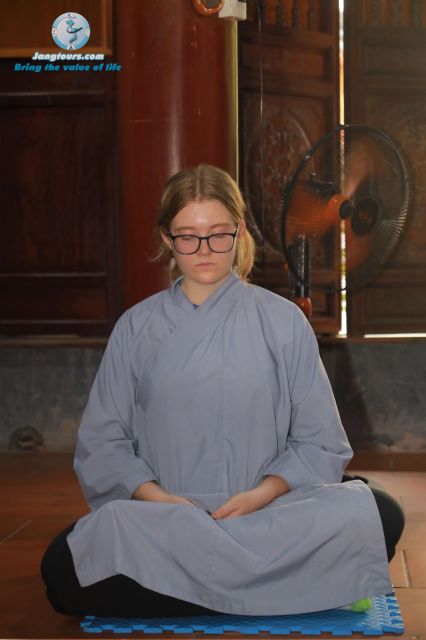
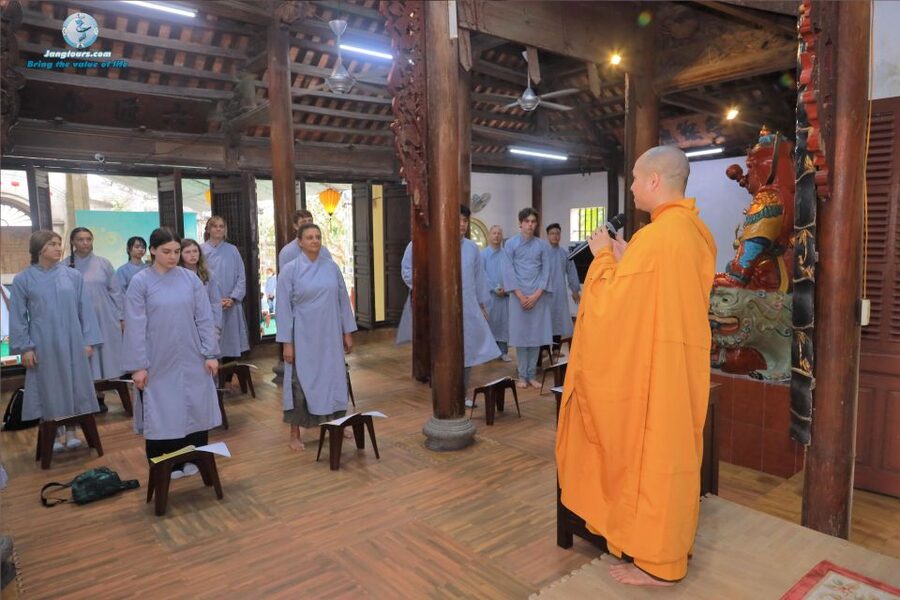
The session starts with a greetings lesson while staying in the pagoda space. You learn the rules for the environment and how to greet monks and nuns when you meet them. This sounds small, but it’s not.
Etiquette training helps you avoid accidental disrespect. It also helps you shift mentally from tourist mode into practice mode. Even if you’re not religious, following the basic customs tells your mind: this is a serious moment, so slow down.
08:45–09:10: Buddhist rituals and sutra teaching in context
Next comes Buddhist ritual practice, with sutras described as the Buddha’s teachings. The idea is that you don’t treat doctrine as something sealed in a book. Instead, you bring those teachings into daily life and use them to support your living and your cultivation.
For many people, rituals can feel intimidating. Here, the structure helps. You’re not asked to memorize chants without explanation. You’re guided into what the ritual represents and why it matters—so you understand what you’re doing, not just how.
- Hanoi Motorbike Tour: Food, Culture and Fun by Vintage Motorbike★ 5.0 · 6,699 reviews
- Hanoi: Guided Food Tour with Train Street Visit★ 4.9 · 6,239 reviews
- Hanoi Cooking Class: Culture, Local Market & Meaning CSR Impact★ 5.0 · 5,147 reviews
09:15–09:30: mindful walking—practice your attention in motion
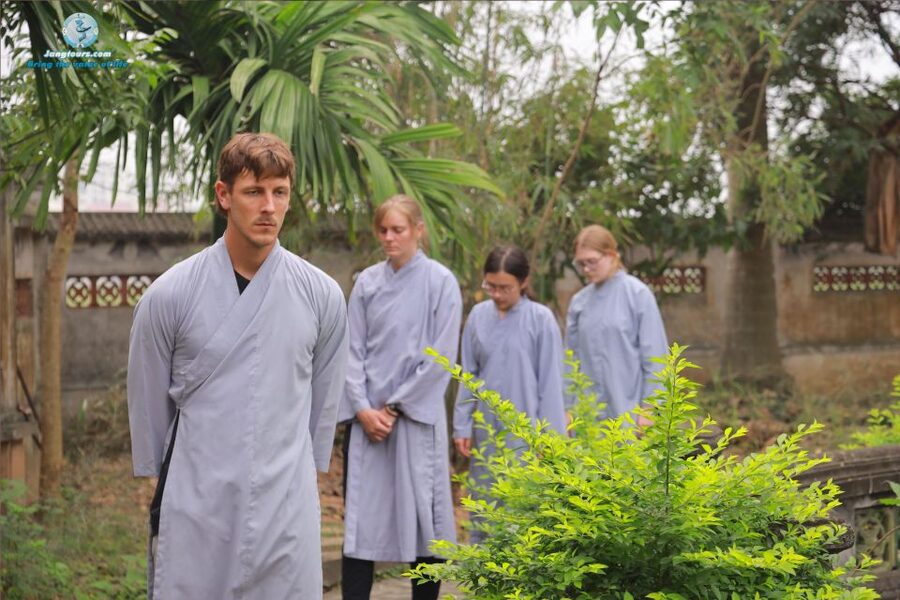
Walking meditation follows soon after. The instruction focuses on mindfulness: being fully present with each breath and step. That may sound basic, but it’s a powerful doorway for beginners because you don’t have to force stillness right away.
If you tend to get restless during meditation, walking practice often feels more natural. It also teaches a key skill: staying aware without controlling every thought. You’re practicing attention with your body as an anchor.
09:10–10:10: mindful breathing and “touching peace” meditation
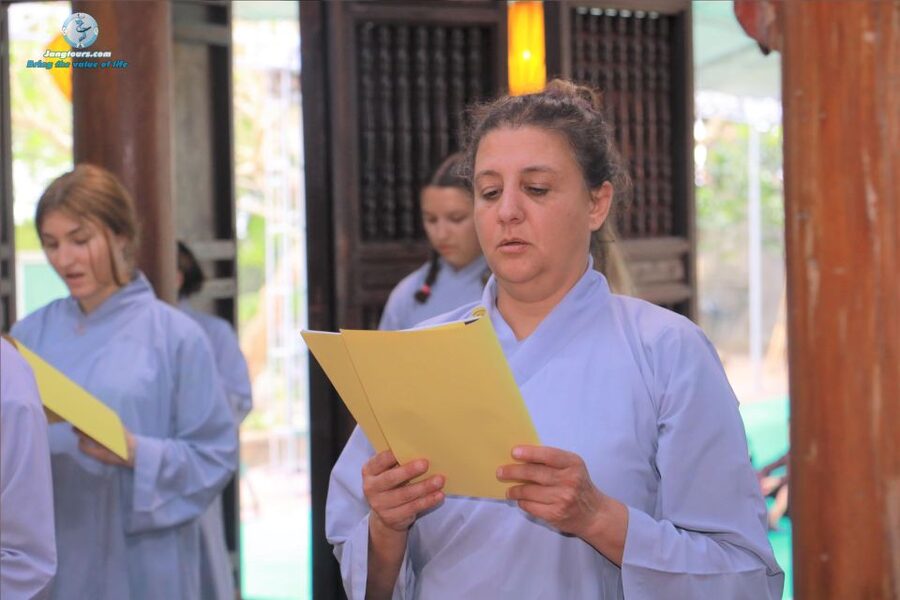
Between the walking segment and later sitting practices, you’re guided through mindful breathing. The teaching links mindful breathing with inner energy movements, with the goal of supporting a healthy body and mind and strengthening your ability to meditate.
Then the program moves into what’s framed as the art of touching peace—the idea that inner calm matters more than outside pleasures. For me, that’s the kind of simple philosophy that lands well in a fast trip. You can’t always control your city, your schedule, or your stress. You can control where your attention goes.
After that, meditation is presented as a kind of “soul purification,” focused on guiding the mind toward peace and insight and reducing attachment to thought and sentiment. The way it’s explained is meant to be practical: meditation helps clear self and ignorance, then support awakening.
10:15–10:30: mindful talking and karma lessons with photos
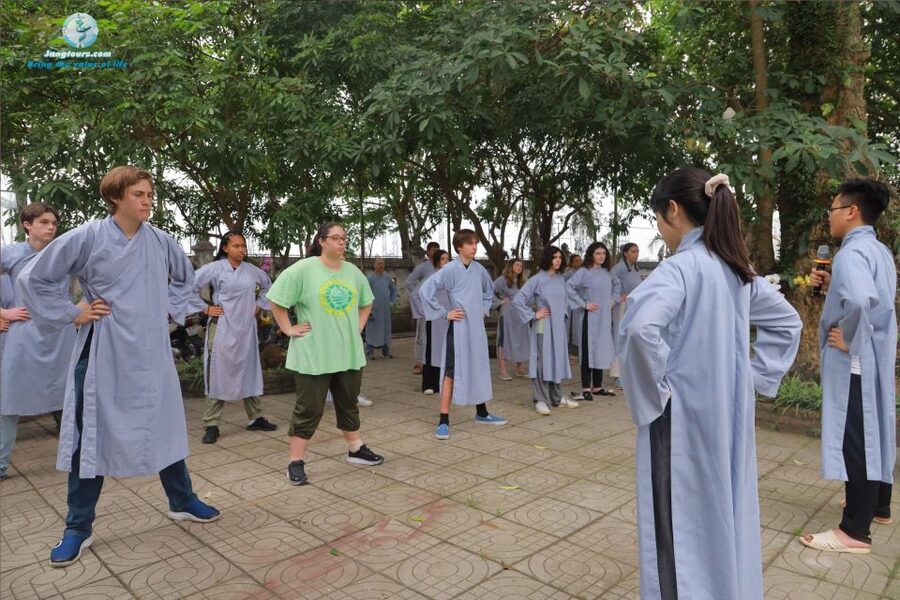
After practice time, you talk with the monk and learn about karma law through photos. You also have room to ask questions related to spiritual practice.
This part is worth your attention. Lots of meditation retreats skip the “what does this mean for me?” step. Here, the Q&A structure gives you a way to connect the practice to beliefs and concepts—without forcing you to pretend you understand everything already.
10:35–10:45: asking for blessings through the Arhat ritual
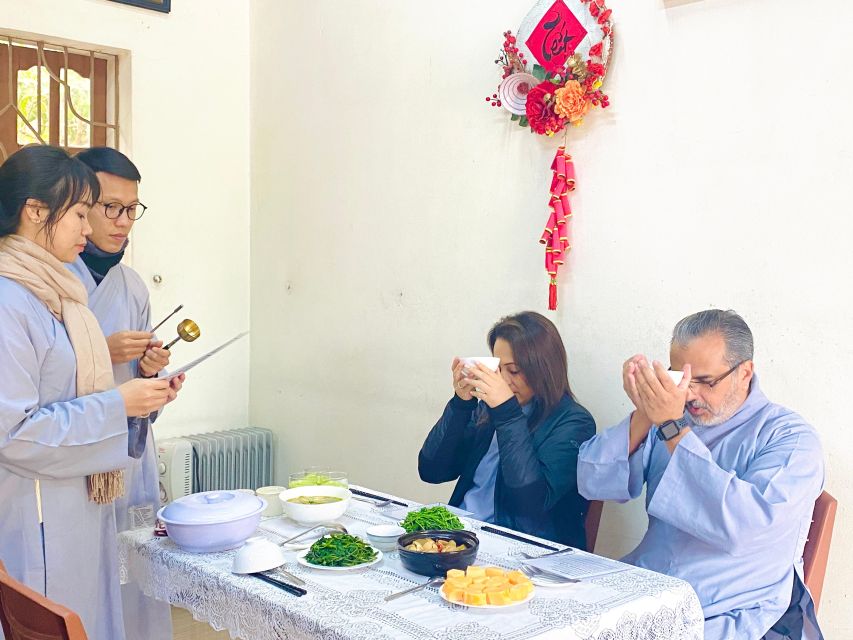
You’ll then take part in a ritual of asking for the Arhat, described as a proper way to get blessings and seed enlightenment in next lives. Whether you’re deeply religious or just curious, rituals like this can still be educational because they show how belief systems translate into action.
Just know: this segment is part devotional, part instructional. If you’re expecting purely secular mindfulness, this may feel more spiritual than you planned. You can still participate respectfully while keeping your own goals—like stress reduction and calm—front and center.
10:50–11:00: compassionate practicing and the “releasing beings” moment
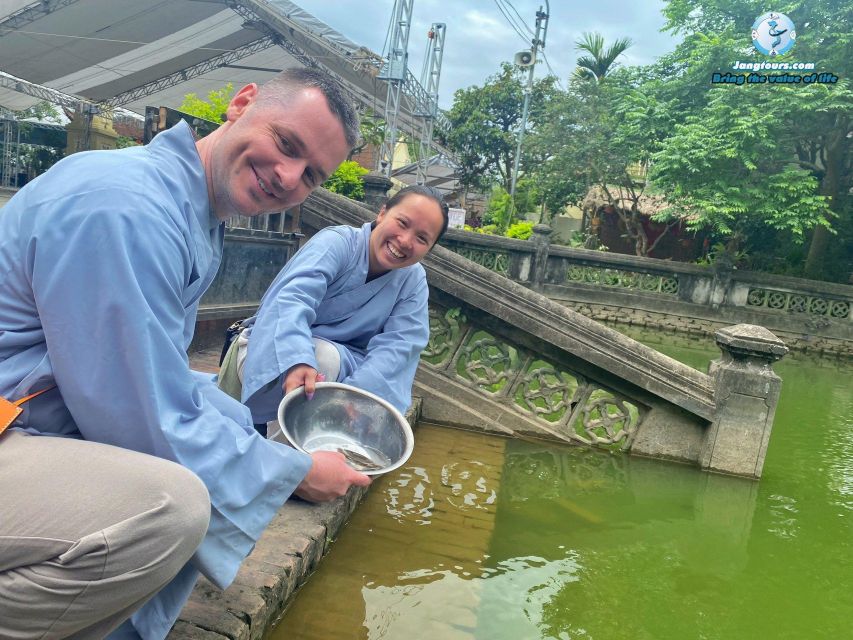
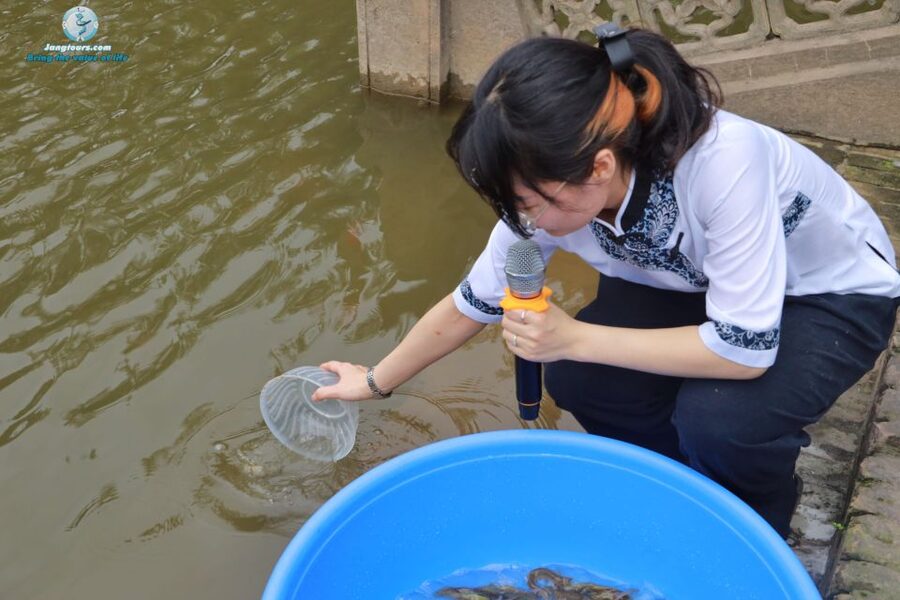
This is one of the highlights: compassionate practicing through releasing beings, described as an act of compassion and good deeds for a long life.
Because the program description doesn’t spell out the practical details, it’s smart to ask the guide on site what the ritual involves and what your role is. If you’re sensitive about animal release or animal welfare, having clarity beforehand will help you participate with confidence and respect.
Either way, the purpose given is compassion. That’s the lesson the retreat wants you to take away: kindness isn’t only a feeling. It’s a practice.
11:00–12:00: a grateful vegetarian meal that closes the loop
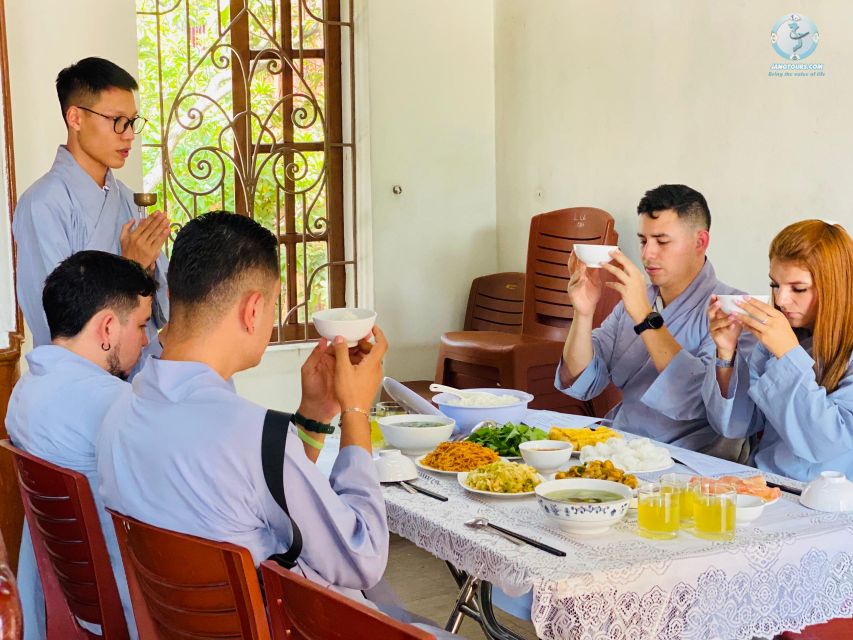
The retreat ends with a grateful meal. The concept is gratitude before and after eating, plus mindfulness about the food you consume and avoiding waste.
This is where the training sticks. Meditation can feel abstract until you connect it to an everyday routine like eating. A mindful meal teaches you to slow down, notice, and appreciate what’s in front of you—without rushing back to your phone or your next plan.
If you’re used to grabbing food on the go, this meal is a small reset. You’ll finish not only calmer, but also more aware of habits you can change immediately.
The $65 value: what you’re paying for (and what you’ll need to cover)
The price is $65 per person for a four-hour retreat. That cost makes more sense when you look at what’s included:
- local guide on the spot
- entrance fees
- spiritual rituals
- vegetarian lunch
- mineral water
What’s not included is transportation. So budget for getting to Dong Bac and back. Once you do, the $65 usually feels fair for a guided, structured morning that includes food and instruction—not just a quiet place to sit.
Also worth noting: the retreat is in English. Language support matters a lot for meditation instruction. When you can understand the method and the philosophy clearly, you stop wasting time guessing.
Who should book this Hanoi meditation retreat?
This retreat fits best if you want structure, not just silence. You’ll likely enjoy it if you’re:
- a beginner who wants the correct method of meditation and a basic Buddhist overview
- the type who benefits from walking and breath-focused practice
- curious about karma and Buddhist doctrine, with a chance to ask the monk questions
- looking for a calm morning that ends with a mindful meal
It may be less comfortable if you strongly prefer secular mindfulness only, or if you dislike spiritual rituals. It’s also not suitable for wheelchair users, and the program isn’t recommended for babies under 1 year.
And remember: you’ll be asked to follow rules and keep noise down. If you’re hoping for a chatty, social experience, this isn’t that.
Quick practical checklist (so you don’t overthink it)
- Wear long sleeves and long pants
- Avoid banned items: smoking, alcohol/drugs, and anything noisy or distracting
- Bring something breathable for Hanoi warmth
- Expect possible changes to the exact pagoda location due to local ceremonies
- Plan your transport, since it’s not included
If you’re the kind of person who likes clarity, message or ask in advance about what to do if the meeting point shifts. That keeps your morning smooth.
Should you book the half-day mindfulness retreat in Hanoi?
I’d book it if you want a guided, beginner-friendly path into meditation—one that also includes Buddhist etiquette, doctrine, and real teaching time with a monk and English guidance. The combination of mindful walking, breath practice, and a close that includes a grateful vegetarian meal is a strong value for a half-day.
I’d skip or reassess if the idea of spiritual rituals (including the compassionate “releasing beings” moment) feels too far from what you want, or if you can’t comfortably follow the dress code and quiet rules.
FAQ
How long is the Hanoi half-day mindfulness retreat?
It lasts about 4 hours, from the morning session start until it finishes back at the meeting point.
How much does it cost?
The price is $65 per person.
Where does it take place?
It takes place at a pagoda in Dong Bac, Vietnam.
Is transportation included?
No. Transportation is not included.
What’s included in the retreat price?
You get a local guide on the spot, entrance fees, spiritual rituals, a vegetarian lunch, and mineral water.
What language is the instruction in?
The instructor and guidance are in English.
What should I bring and wear?
Bring a long-sleeved shirt and long pants. Short attire is not appropriate.
What are the rules during the retreat?
Smoking is not allowed. You should not bring short skirts, red wine, alcohol, drugs, or ripped clothing, and you must avoid making noise.
Is it suitable for wheelchair users and babies?
It’s not suitable for wheelchair users, and it’s not suitable for babies under 1 year.
Can I cancel for a refund?
Yes. You can cancel up to 24 hours in advance for a full refund.
More Half-Day in Hanoi
More Tour Reviews in Hanoi






Latest Hanoi write-ups from our team





Half-Day, compared.
 ★ 5.0Hanoi Half-day with Food + Fun + Culture By Russian JeepFrom $701,243 reviews
 ★ 5.0Hanoi Highlights: Half-day City TourFrom $33298 reviews
 ★ 5.0Hanoi City Half-Day Private Tour: Train Street And All HighlightsFrom $44298 reviews
 ★ 4.8Guided Half-Day City Highlights Tour with TransfersFrom $38277 reviews
 ★ 5.0Private Hanoi City Half-Day Tour with Train Street VisitingFrom $51209 reviews
 ★ 5.0Half-day Explore Bat Trang Ceramic Village by Russian JeepFrom $55182 reviews
 ★ 4.7Full-day or Half-day Hanoi City TourFrom $30163 reviews
 ★ 5.0Small Group Half-day Hanoi City Tour with Train Street Visit (4h)From $41147 reviews