
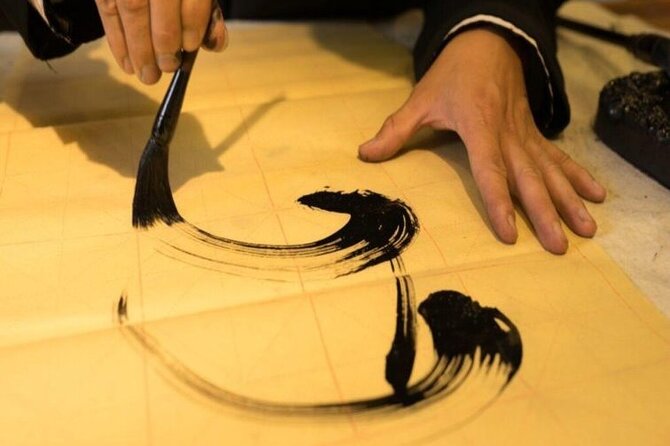
Reviewed · WORKSHOPS
Experience Traditional Vietnamese Calligraphy Class in Ha Noi
Brush strokes, big meaning in Hanoi. Vietnamese calligraphy turns writing into something you can feel: calm, focused, and practical, even if you’ve never held a brush before. In a small class in Ba Đình, you get hands-on instruction that leads to a finished piece you can take home.
I especially love two things: the small group size (max 6), which keeps the coaching personal, and the fact that you create a take-home calligraphy work from scratch. One possible drawback: the session is only about 2 hours, so you’ll move fast through history, tools, and technique—fun, but not enough time to turn you into a master.
You’ll start at 371 P. Kim Mã in Ba Đình, then settle into a scenic, serene venue in Hanoi. From there, the class connects the art of artistic writing to meditation and mental focus, and it doesn’t treat calligraphy as random decoration. You learn what different strokes and styles are trying to communicate, then you practice until your page looks like you meant it.
In This Review
- Key highlights you’ll care about
- Why Vietnamese calligraphy feels different in Hanoi
- Price and what $36 buys you for 2 hours
- Meeting at 371 P. Kim Mã and getting settled
- The lesson flow: history, styles, then brush technique
- Picking your design: simple patterns or your own sketch
- What I learned from the instructors: strokes have intent
- Tool talk and brush control: the part you’ll actually remember
- From practice to finished work: getting a take-home souvenir
- Who this class is best for (and who might not love it)
- Logistics that matter on the ground
- Should you book this Hanoi Vietnamese calligraphy class?
- FAQ
- FAQ
- How long is the traditional Vietnamese calligraphy class in Hanoi?
- Where do I meet for the class?
- Will I return to the same place after the class?
- How much does the class cost?
- How big is the group?
- Do I need prior calligraphy experience?
- What will I make during the class?
- Can I choose my own design?
- What should I expect to learn besides writing?
- What is the cancellation policy?
Key highlights you’ll care about
- Max 6 travelers: more time with the instructor, less waiting around
- Sân先生’s hands-on coaching: gentle, clear teaching that helps you correct line pressure and angle
- Modern Vietnamese styles explained: learn how styles communicate different ideas
- Tools plus brush technique: you’re shown how to use the brush, not just what to copy
- Simple designs or your own sketch: choose the comfort level that fits you
- Take-home calligraphy piece: you leave with a real souvenir, not just photos
Why Vietnamese calligraphy feels different in Hanoi
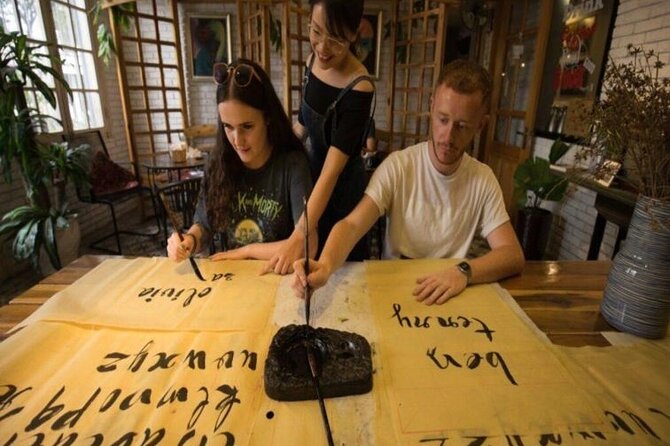
Vietnamese calligraphy has roots that are older than most modern visitors expect. It was introduced to Vietnam by Chinese calligraphers centuries ago, and over time it evolved into distinct Vietnamese ways of writing—multiple modern styles, each designed to communicate something different to the reader.
That matters because the class doesn’t only ask you to make pretty strokes. It trains your eyes and your hand to understand that calligraphy is “meaning” made visible. Even if you can’t read everything on the page, you start noticing patterns: thicker-to-thinner lines, speed changes, and the way curves and edges signal intention.
You’ll also pick up a theme the instructor emphasizes: calligraphy practice connects with meditation. The goal isn’t speed or performance. It’s control. Your brain quiets down as you repeat careful movements and watch the brush tip do what you tell it to do.
Worth a glance beside this Hanoi pick:




Price and what $36 buys you for 2 hours
At $36 per person for about 2 hours, this is priced for a hands-on cultural workshop, not a long museum tour. You’re paying for instructor time, small-group attention, and materials/tool instruction tied to producing an actual finished piece.
Is it worth it? In my view, yes if you like doing instead of just watching. A calligraphy workshop is one of those experiences where the value is the product in your hands when you walk out—especially because the class is built around making something from scratch. If you’re only after a photo-op, you might feel shortchanged. But if you enjoy tactile activities—writing, drawing, craft work—this is a strong use of your time in Hanoi.
Also, the activity uses a mobile ticket and tends to be booked about 10 days in advance on average. If your schedule is fixed, booking ahead keeps you from having to gamble on last-minute spots.
Meeting at 371 P. Kim Mã and getting settled
You meet at 371 P. Kim Mã, Ngọc Khánh, Ba Đình, Hanoi. The activity ends back at the same meeting point, so you don’t need to plan extra logistics after class.
From there, you’ll head to one of the scenic and serene venues in the city used for the workshop. That quiet setting isn’t just scenery. It’s part of why this class works. Vietnamese calligraphy benefits from a calm pace, and a calmer room helps you concentrate on one stroke at a time.
If you’re someone who gets overwhelmed by noisy, crowded activities, this venue style is a plus. If you’re looking for a lively street scene or constant movement, you might find the pace slower than you expected. This is deliberate. The room is part of the lesson.
The lesson flow: history, styles, then brush technique
The class starts with context. You’ll get an introduction to Vietnamese calligraphy’s history—how it arrived via Chinese calligraphers and how it later developed into Vietnamese modern styles. The instructor explains that these styles are meant to “say” different things to the reader, so the strokes are not interchangeable.
Then you move into the practical part: techniques used by modern Vietnamese calligraphers. The teaching approach is step-by-step. You’ll learn techniques for writing, how to choose a design, and what the instructor expects from your brushwork.
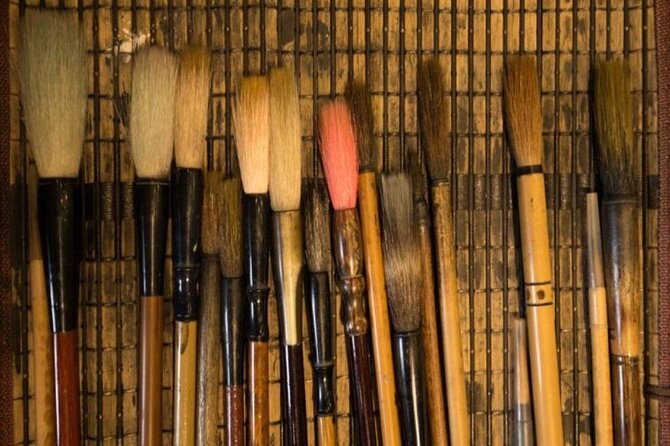
After the explanation, you get introduced to different tools and then specifically learn how to use the brush from your instructor. In other words, you’re not thrown into copying strokes without guidance. You learn the basics of holding and controlling the brush, so your strokes look intentional rather than accidental.
Picking your design: simple patterns or your own sketch
One reason this works for beginners is the choice. You can go with simple designs the instructor offers, or you can sketch your own if you want a more personal piece.
If you’ve never done calligraphy before, the simple design option is the easiest route to a successful final product within the time limit. If you’re feeling confident, sketching your own lets you create something that feels more uniquely yours—like a meaningful message you selected rather than a sample you copied.
Either way, the key is instruction stays tied to technique. You’ll learn how each stroke is formed, not just how to trace an example. That’s where the class becomes memorable: you start understanding that line choices can carry meaning.
- Hanoi Jeep Tour: Food, Culture and Fun by Vietnam Army Jeep★ 5.0 · 15,222 reviews
- Full-Day Ninh Binh Highlights Tour from Hanoi★ 5.0 · 7,761 reviews
- Hanoi: Ha Long Bay Day Cruise – Swimming, Meal, Kayaking★ 4.7 · 7,415 reviews
What I learned from the instructors: strokes have intent
The most impressive part for me is how the class frames writing as communication. In Vietnamese calligraphy, there’s more than one way to draw what might look like the same line. The differences aren’t just aesthetic—they can reflect intent and interpretation.
In practical terms, that changes how you practice. Instead of repeating one motion mindlessly, you start asking: why is this stroke thicker here? why does it taper there? why does the curve shift?
This is also where a good instructor makes the experience feel smooth. One review highlighted how Sân先生 taught with kindness and precision, and that he helped students understand the practical differences between how Vietnamese brush strokes behave compared with other calligraphy traditions (including the tighter feel some people know from Japanese brush writing). If you come in with preconceived ideas, don’t worry. The class adjusts you to the Vietnamese style from the ground up.
Tool talk and brush control: the part you’ll actually remember
The class spends time on tools and brush handling, because that’s the difference between a classroom doodle and an actual calligraphy piece.
You’ll be shown how to use the brush and how to manage the brush tip so the lines look controlled. Vietnamese calligraphy techniques often rely on subtle pressure and angle changes to create the character’s shape. Those micro-adjustments are why the instructor’s guidance matters, especially in a small group.
In a class like this, your biggest challenge won’t be reading cultural facts. It’ll be physical coordination—keeping your hand steady while your brain is still trying to understand the technique. That’s where the small group helps. With up to 6 travelers, you can get the kind of correction that makes your next stroke better instead of just moving on.
From practice to finished work: getting a take-home souvenir
At the end of the workshop, you produce a finished calligraphy artwork created using what you learned. The promise here is straightforward: you’ll leave with a beautiful piece you made from scratch.
This is a big deal for value. Calligraphy souvenirs are easy to fake if they’re mass-produced. This isn’t that. You watch how your strokes form, then you apply guidance to create your own final product.
And yes, the final piece becomes more than a decoration once you understand what you were doing. When you frame it later, you’ll remember the feel of the brush and the lesson about how different strokes carry meaning.
Who this class is best for (and who might not love it)
You’ll likely enjoy this Hanoi workshop if you:
- like hands-on art, not just sightseeing
- want a calm, focused cultural activity
- enjoy learning a craft and leaving with a real finished object
- can spare about 2 hours in your day
It’s also a good match for people who appreciate thoughtful explanations. Vietnamese calligraphy has a story—introduction, evolution, modern styles—and this class links the background to the writing you do yourself.
You might not love it if you prefer fast-paced entertainment, or if you mainly want something you can do in between major must-see sites without settling into a slower rhythm. This is a craft class built around practice and attention.
Logistics that matter on the ground
- Meeting point: 371 P. Kim Mã, Ngọc Khánh, Ba Đình, Hanoi, and you return there at the end.
- Group size: up to 6 travelers, so you should expect a quieter, more guided setup.
- Time: about 2 hours, so keep the rest of your day flexible if you can.
- Tickets: mobile ticket used for entry.
- Support: the class is led by a local calligrapher and structured to work for most travelers.
Cancellation is flexible in policy terms: you can cancel up to 24 hours in advance for a full refund, but shorter-notice cancellations won’t be refunded. If your Hanoi plans are still in flux, this buffer is helpful.
Should you book this Hanoi Vietnamese calligraphy class?
Book it if you want a meaningful, hands-on cultural memory with a finished result. The combination of small-group attention, technique-focused teaching, and a take-home artwork makes it feel like value, not just another “activity.”
Skip it only if you’re mainly after passive sightseeing, or you know you won’t enjoy practicing something with your hands. There’s a learning curve, but the instruction is designed to get you to a satisfying final piece within the time.
If you’re in Hanoi and you want one experience that feels calm, creative, and personally rewarding, this is an easy yes. Your paper souvenir will be better than a postcard, and you’ll have a craft story you can actually explain at dinner.
FAQ
FAQ
How long is the traditional Vietnamese calligraphy class in Hanoi?
It’s about 2 hours.
Where do I meet for the class?
The meeting point is 371 P. Kim Mã, Ngọc Khánh, Ba Đình, Hanoi 100000, Vietnam.
Will I return to the same place after the class?
Yes, the activity ends back at the meeting point.
How much does the class cost?
The price is $36.00 per person.
How big is the group?
The class has a maximum of 6 travelers.
Do I need prior calligraphy experience?
No. Most travelers can participate, and the instructor teaches techniques and brush use as part of the workshop.
What will I make during the class?
You’ll create your own unique Vietnamese calligraphy piece, and you can take it home.
Can I choose my own design?
Yes. You can choose simple designs or sketch your own.
What should I expect to learn besides writing?
You’ll get an introduction to Vietnamese calligraphy history, modern styles, techniques, and the tools used, plus brush handling.
What is the cancellation policy?
You can cancel up to 24 hours in advance for a full refund. Changes within 24 hours aren’t accepted for a refund.
More Workshops in Hanoi


More Tour Reviews in Hanoi






Latest Hanoi write-ups from our team





Workshops, compared.
 ★ 5.0Hanoi Cooking Class: Culture, Local Market & Meaning CSR ImpactFrom $395,147 reviews
 ★ 5.05 Traditional Dishes Hanoi Cooking Class with Market TripFrom $354,890 reviews
 ★ 5.0Hanoi Coffee Workshop: Taste Salt, Coconut and Egg CoffeeFrom $161,286 reviews
 ★ 5.0Salt Coffee Workshop Awake Your Senses With 6 BrewsFrom $23792 reviews
 ★ 5.0Vietnamese Food Cooking Class in Hanoi with Market ExperienceFrom $45778 reviews
 ★ 5.0Handcrafted Wood Carving Workshop with Local ArtisanFrom $19733 reviews
 ★ 5.05 Local Dishes Cooking Class with Meal & Market VisitFrom $40420 reviews
 ★ 5.0Hanoi Cooking Class and Market Tour in Ancient HouseFrom $45379 reviews
Browse the lists this tour appears in