
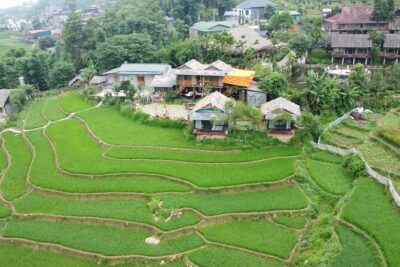
Rice terraces and village trails, close up.
This 2-day, 1-night Sapa trek is interesting because it mixes easy-to-moderate village walking with meeting real community members at night, not just quick photo stops. I like that you go with a private English-speaking native guide who can tailor the pace and explain what you’re seeing (and guides like Giang and Xa get high praise for their patience and knowledge). I also like that the overnight options include wifi and hot showers in a homestay, or a simpler local-family setup if you want the more basic vibe. One consideration: you should come with moderate fitness and good walking shoes, since this is a trekking experience, not a sit-and-watch tour.
You’ll start the day at 9:00 a.m. in Sapa and head through rice terraces and stream paths, then spend the night with a host family around their daily life. Day two keeps the momentum with bamboo forests, waterfalls, and a visit to the Zay tribe in the Ta Van area. If weather turns bad, the trek requires good conditions to run smoothly, so be ready to be flexible.
In This Review
- Quick take: the best parts of this Sapa 2-day tribal trek
- Where this trek fits: Sapa’s trails and why they matter
- Day 1: rice terraces, Muong Hoa Stream, and a Black Hmong village visit
- Overnight options: homestay with hot showers or a local-family home
- Day 2: Ta Van Village, bamboo forests, waterfalls, and Zay tribe time
- Guide quality is the real selling point (Giang and Xa stand out)
- Price and value: why $105 can make sense
- Practical expectations: timing, fitness, and what to pack
- Who will love this trek (and who might not)
- Should you book Sapa Tribal Trekking for 2 days and 1 night?
- FAQ
- Where does the trek start?
- Can the guide pick me up from another location?
- Is this a private tour?
- What kind of fitness level do I need?
- What do I do on the night stay?
- What time is breakfast on day 2?
- Does the tour include village visits from different tribes?
- Are there any weather rules?
- What is the cancellation window?
Quick take: the best parts of this Sapa 2-day tribal trek
- Private guide, real conversation pace: You get an expert who can answer questions and guide you through villages with context.
- Muong Hoa Stream and rice terraces: You’re not stuck on one road; you move along water and fields.
- Homestay with wifi and hot showers (optional): Comfort choices exist, so you can focus on the walking and people.
- Ta Van Village and bamboo forests: Day two adds variety after a first day of terraces and village trails.
- Tribal visits with Zay community time: You get more than a checkpoint stop.
- Small-group feel by design: Only your group participates, which keeps it calmer and more personal.
Where this trek fits: Sapa’s trails and why they matter
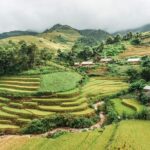
Sapa is famous for dramatic views, but this trek is designed for something better: getting close to how people actually live in the valleys. You’ll walk through rice terraces, along a named stream (Muong Hoa Stream), and through village paths that connect farmland, forests, and tribal communities.
The tour’s value is in the balance. You’re not being rushed from stop to stop, and you’re not doing a long, punishing challenge. The walk is described as short and “easy to explore” on one side of the choice spectrum, and you may also find options that stretch you a bit depending on energy level. That matters because trekking in this region can feel surprisingly physical once you’re on uneven paths—so having a guide who can adjust pace is a big deal.
Worth a glance beside this Hanoi pick:


Day 1: rice terraces, Muong Hoa Stream, and a Black Hmong village visit
Your day starts at 9:00 a.m. in Sapa. The guide meets you at a convenient spot—either at your homestay/hotel or from the Lao Cai train station (the closest station to Sapa). If you’re arriving in the area by train, this is a practical touch.
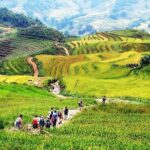
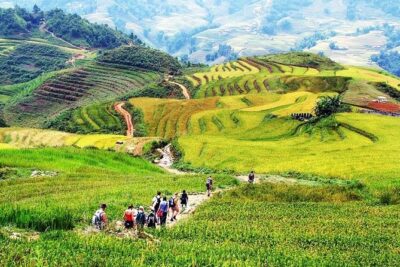
From there, you trek through rice terraces and along the Muong Hoa Stream. That combination is the sweet spot for first-day walking: terraces give you that open farmland perspective, while the stream route adds shade and movement. It’s also a natural way to transition from “views from the road” into paths that feel lived-in.
Then you head to a Black Hmong village. This is where the tone of the experience changes. Instead of just passing through, you’re there to experience the community context—how villages connect to the landscape and how people build everyday routines around farming and seasons. A good guide makes this stage more than sightseeing. Names like Giang and Xa show up in strong feedback for a reason: they’re praised for explaining culture and history clearly, and for keeping it understandable even when you’re walking and adjusting all at once.
By late day, you’ll arrive at your overnight host setting.
Overnight options: homestay with hot showers or a local-family home
This is one of the most important decisions on this trek, because it shapes your “evening memory,” not just your sleeping arrangements.
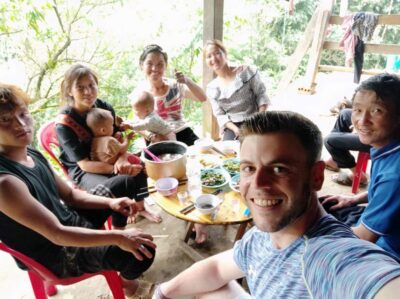
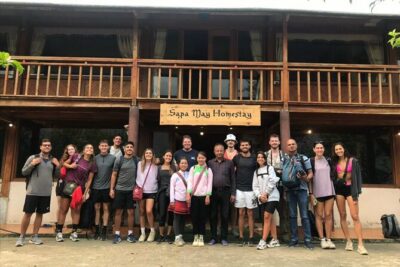
You can choose to stay in a homestay where you can enjoy wifi and hot showers. Or you can choose a local house with a local family for a more basic but deeply personal experience. Either way, the idea is to spend time with your host family—sharing stories, eating as they do, and huddling around a fire as you get to know your hosts.
Why this matters: in Sapa, the difference between a good and a great homestay isn’t just comfort. It’s how you’re welcomed and how much you understand what you’re seeing. The strong reviews consistently emphasize gentle hosts, clean rooms, and that sense of arriving as a guest rather than a customer.
Also, there’s a values angle here. The tour frames your booking as supporting local people with fair wages in a region where many live below the poverty line. You don’t need to make it heavy or emotional; you’ll see it in how the hosts run the evening and how your money helps keep the home community involved.
Day 2: Ta Van Village, bamboo forests, waterfalls, and Zay tribe time
Day two begins with breakfast at 8:00 a.m. Then you pack up, say goodbye, and head back out.
The next big stop is Ta Van Village. Ta Van is known for walks that feel different from rice terraces: more forest edge, more shaded trails, and a sense of wandering deeper into the valley’s quieter areas. The tour specifically includes time to explore bamboo forests, which is a great change of pace after day one. If you’re traveling with mixed energy levels in your group, bamboo forest sections often feel “easy” even when the path is still real—because the setting relaxes your body and attention.
You then trek through waterfalls and meet the Zay tribe. That’s a meaningful order: the sound of water tends to reset your senses. And because waterfalls can be seasonal, it also reminds you this is a living place, not a staged set.
Lunch comes in the early afternoon. From there, you’ll continue back toward the end point (the activity ends back at the meeting point). In other words: day two is built to end when you’ve had enough walking to earn a meal—and enough cultural time to remember names, not just scenery.
Guide quality is the real selling point (Giang and Xa stand out)
You’ll have a private guide who is described as English-speaking and local, with strong knowledge of Sapa, surrounding areas, history, culture, and the different tribes. That’s not marketing fluff; it’s what makes the hours on the trail feel worth it.
In the feedback, Giang gets singled out for excellent English and for explaining rice fields and village life with depth. Xa is praised for being patient and for teaching in a way that works while you’re hiking. One practical thing I’d pay attention to: guides are described as offering options for easy, medium, and hard during the trek. That means you can match effort level to your day, rather than forcing everyone into the same line.
When you book a private trekking guide in a place like Sapa, your “comfort” is often tied to their pacing and communication, not just the homestay bed. If you want to learn while walking, you’ll get a lot of that here.
Worth a glance beside this Hanoi pick:
- Halong Bay Full Day with Kayaking, Hiking viewpoint, Cave – Deluxe To Luxury★ 5.0 · 884 reviews
- From Hanoi: 2-Day Sapa Trekking Trip with Homestay & Meals★ 4.8 · 704 reviews
- Sapa 3 Days 2 Nights Trekking Tour (1 Night In Ta Van Village, 1 Night In Hotel)★ 5.0 · 699 reviews
Price and value: why $105 can make sense
At $105 per person for ~2 days, 1 night, the price only feels “cheap” if you look at what’s included. Here, you’re paying for a trained, English-speaking local guide, private group time, and the overnight homestay component. You’re also paying for a route that tries to avoid other tourist-heavy patterns unless you prefer otherwise.
You should compare this to the cost of doing Sapa trekking independently:
- You’d still need someone to guide the route and interpret what you see.
- You’d need to arrange homestay access and timing so you can actually sleep with a host family.
- And you’d lose the convenience of meeting at 9:00 a.m. with a set plan.
So the value is strongest for people who want both: walking time and cultural understanding, without having to coordinate everything yourself. If you only want a short walk with zero conversation, you might find cheaper alternatives. But if you want your time in Sapa to feel personal and educational, this pricing is in the workable range.
Practical expectations: timing, fitness, and what to pack
This trek is for people with moderate physical fitness. That doesn’t mean you need to be a marathoner. It does mean your legs will feel it after hours on uneven paths, slopes, and possibly wet sections near streams and waterfalls.
Here’s what I’d plan around:
- Start early: 9:00 a.m. is firm, so make sure you’re ready and not rushing.
- Weather affects everything: the experience requires good weather, and if it can’t run due to conditions, you’ll be offered a different date or a full refund.
- Shoes matter more than you think: rocky or muddy village paths turn a “nice walk” into a frustrating one fast.
- Keep layers handy: mornings can be cooler, and it can warm up as you climb and walk.
Also note: this is a private tour/activity, so only your group participates. That usually makes the pacing kinder and the communication smoother, especially if your group has different walking speeds.
Who will love this trek (and who might not)
You’ll likely love this if you:
- Want to visit Sapa beyond the viewpoints and actually see village life along the trails.
- Like the idea of sleeping with a host family, with the option of wifi and hot showers.
- Care about learning names, culture, and how communities live—especially if your guide is like Giang or Xa, who get praised for depth and clear English.
- Prefer calmer, less crowded routing where possible.
You might not love it if you:
- Want minimal walking. This is trekking, not an easy stroll.
- Hate weather uncertainty. Good conditions are needed, and timing can change if the trek is affected.
- Prefer to avoid homestay interactions. The experience is built around spending time with hosts, not just using them as a bed for one night.
Should you book Sapa Tribal Trekking for 2 days and 1 night?
If your goal is an authentic Sapa experience that blends walking, village visits, and a real evening with a host family, I think this is a strong pick. The biggest reasons to book are simple: a private guide who communicates well, a route that includes rice terraces plus Muong Hoa Stream, and a second day that doesn’t repeat the same scenery with Ta Van, bamboo, waterfalls, and the Zay tribe.
If you’re on the fence, decide based on one question: do you want the overnight host experience as part of the trip? If yes, you’ll probably find the value here very fair for what you get. If not, you may be better off with a shorter day hike that skips the homestay piece.
FAQ
Where does the trek start?
The guide meets you in Sapa at 690 Đường Điện Biên Phủ, TT. Sa Pa, Sa Pa, Lào Cai, Vietnam. Start time is 9:00 a.m.
Can the guide pick me up from another location?
Yes. Pickup is offered, and the guide can meet you at your homestay or hotel in Sapa, or at Lao Cai train station.
Is this a private tour?
Yes. It’s a private tour/activity, and only your group participates.
What kind of fitness level do I need?
The tour is for travelers with moderate physical fitness.
What do I do on the night stay?
You stay overnight in either a homestay (with wifi and hot showers) or in a local house with a local family. You’ll spend time chatting with your host family around the fire.
What time is breakfast on day 2?
Breakfast is at 8:00 a.m. on day 2, followed by packing up and trekking on.
Does the tour include village visits from different tribes?
Yes. The route includes a Black Hmong village on day 1 and includes meeting the Zay tribe on day 2.
Are there any weather rules?
Yes. The experience requires good weather. If it’s canceled due to poor weather, you’ll be offered a different date or a full refund.
What is the cancellation window?
You can cancel up to 24 hours in advance for a full refund. Changes inside 24 hours can’t be accepted.
More Hiking & Trekking in Hanoi


More Evening Experiences in Hanoi

More Tour Reviews in Hanoi




Latest Hanoi write-ups from our team






Hiking & Trekking, compared.
 ★ 5.0Halong Bay Full Day with Kayaking, Hiking viewpoint, Cave – Deluxe To LuxuryFrom $38884 reviews
 ★ 4.8From Hanoi: 2-Day Sapa Trekking Trip with Homestay & MealsFrom $71704 reviews
 ★ 5.0Sapa 3 Days 2 Nights Trekking Tour (1 Night In Ta Van Village, 1 Night In Hotel)From $139699 reviews
 ★ 5.03-Day Trekking Adventure of Sapa from Hanoi – Stay Ta Van VillageFrom $109611 reviews
 ★ 5.0Number one top rated ethical cultural trekking and homestay by ETHOSFrom $93456 reviews
 ★ 4.82-Day Sa Pa Ethnic Homestay Tour & Trek with Limousine Bus440 reviews
 ★ 5.0Sa Pa Full Day Trekking TourFrom $25414 reviews
 ★ 5.0Hanoi – Sapa 3 Day 2 Night Trekking With Hotel & HomestayFrom $125389 reviews
Browse the lists this tour appears in