

Reviewed · SAPA TREKKING TOURS
Sapa Trekking Tours – 2 Days 1 Night Stay At Homestay
Rice terraces and village steps beat the city hangover. This 2-day Sapa trek from Hanoi is built around a guide who handles the hard parts—homestay booking, meals, and route—so you can focus on the walking and the people. I especially like the Sapa homestay night, where dinner and breakfast are covered and you’re not hunting down logistics in a new place.
What makes this one feel worth it is the human factor. With a maximum of 15 people, you get more attention on the trail, and the guides I heard about—like Sung—tend to be friendly and fun, not stiff or scripted. Expect a mix of mountain paths and village visits that go beyond the big-name photo stops.
One thing to consider: the homestay isn’t always private. A few people noted it can be shared with other trekkers and that host-family contact can be limited, so if you’re hoping for a lot of family time, plan for a more practical, basic setup. Also, you’ll need moderate fitness and good footwear because some sections can be slippery.
In This Review
- Key things that make this trek work
- Why This 2-Day Sapa Trek Starts So Early (and Still Feels Practical)
- Price and Logistics: What $109 Buys You (and What It Doesn’t)
- Day 1: Hanoi to Cat Cat Village, Then Your Homestay Night
- Cat Cat Village: Why This Stop Is More Than a Name on a Map
- Day 2: Y Linh Ho, Lao Chai, Ta Van, Then Back to Hanoi
- Homestays in Sapa: What to Expect and How to Prepare
- Guides and Group Size: The Difference Between Okay and Great
- Trail Conditions and Pace: What You Should Bring
- Who Should Book This Sapa Trek (and Who Might Want a Different Option)
- Should You Book Sapa Trekking Tours: 2 Days 1 Night at Homestay?
- FAQ
- What time does the tour start?
- How long is the Sapa trek?
- Is a homestay included, and for which night?
- What meals are included?
- What villages are included in the route?
- How much walking is involved?
- Does the tour include drinks and travel insurance?
- Is pickup and drop-off included?
- How big is the group?
- Can I change or cancel after booking?
Key things that make this trek work

- Cat Cat Village walk: about 5 km and 2–3 hours of mountain-trail walking.
- A real village circuit: Y Linh Ho, Lao Chai, and Ta Van Village are part of the second day route.
- Small group pace: capped at 15 travelers, which helps the guide manage everyone.
- Meals covered, including coffee/tea: lunch and dinner on day one, breakfast and lunch on day two, plus bottled water.
- Homestay overnight included: you sleep in a local home on night one (and day two has no accommodation).
Why This 2-Day Sapa Trek Starts So Early (and Still Feels Practical)

Sapa is one of those places where timing really matters. You start at 6:30am, then head out of Hanoi by bus toward the mountains. That early departure isn’t just to squeeze in more sights; it helps you use the day for walking and village time instead of spending half your daylight on transport.
This tour also keeps the “where do we meet?” stress low. Pickup is offered, and the plan includes getting you back by bus after the trek. If you’ve ever tried to organize Sapa on your own, you already know the pain: one missed connection turns into a day of scrambling. Here, the schedule is set, the meals are included, and you’re traveling with a guide who knows the flow.
The pace is best described as active but not extreme. You’re looking at short-to-medium hikes along mountain paths rather than a multi-day hardcore trek. One review I found particularly helpful mentioned roughly 15 km total over the two days, which lines up with the “2–3 hour” walk time given for Cat Cat Village.
More trails through the Sapa valleys




Price and Logistics: What $109 Buys You (and What It Doesn’t)
At $109 per person, this is priced like a guided, packaged mountain experience, not a bare-bones bus-and-hike. The value comes from what’s included:
- Transport by bus between Hanoi and Sapa (and back)
- Homestay accommodation for one night
- Meals: lunch and dinner on day one, breakfast and lunch on day two
- Bottled water plus coffee and/or tea
- Fuel surcharge and landing/facility fees
- A guide to handle the village stops and logistics
What’s not included is also clear: drinks, personal travel insurance, and tips. That matters because once you’re on the mountain, you’re often tempted to buy snacks or add drinks. Build a little extra buffer into your budget so the included meals don’t turn into an unexpected out-of-pocket surprise.
One more practical detail: confirmation happens at booking time, and the tour uses a mobile ticket. That’s useful if you’re traveling light and don’t want to chase paperwork.
Day 1: Hanoi to Cat Cat Village, Then Your Homestay Night

Day one is about two things: getting you into the Sapa rhythm and giving you a satisfying first walk. After the morning pickup and bus ride to Sapa, you head toward Cat Cat Village, where you’ll hike about 5 km for roughly 2–3 hours.
This stretch is a good “entry point” hike. It’s long enough to feel like you did something real, but it’s also structured so you’re not exhausted before dinner. You’re walking mountain trails with village scenery in view, which is exactly what most people want from Sapa in the first place: local life and changing elevation, not just a quick photo stop.
What I like here is that your first day ends with a payoff. You’re back down the hill and settled for the night with lunch and dinner included, and you sleep in a homestay. That setup is ideal if you want to experience village life without having to figure out where to eat after hiking.
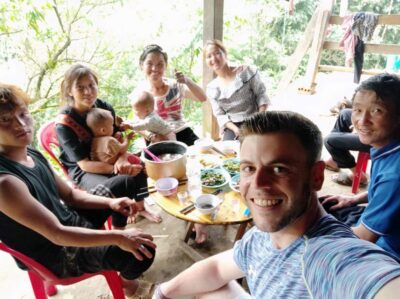
The one drawback to know upfront is the “homestay expectations” piece. A few people called out that the accommodation can be shared with other trekkers and that contact with the host family may be minimal beyond normal meal or basic interaction. In other words: you may get a cultural setting, but you shouldn’t expect a private, family-only experience like a movie version of homestay.
Cat Cat Village: Why This Stop Is More Than a Name on a Map

Cat Cat Village is often one of the first village stops because it’s close enough to feel doable and it gives you early context for how the area is organized. You’re walking through real terrain, not a flat walkway, so you get a feel for why people here rely on trails and footpaths.
Also, it’s a chance to get used to the trail conditions before day two. One review mentioned the hikes can be slippery, and that’s the kind of detail you’ll only appreciate once you’re stepping on uneven ground. Day one helps you adjust your footing, test your footwear, and set your pace for the next day’s village-to-village route.
If you care about deeper stories—how the villages developed, what daily life looks like, how different communities live side by side—go in ready to ask. At least one person noted the commentary can be pretty basic, which usually means you’ll get the essentials but might not get the detailed history you’re craving unless you prompt the guide.
Day 2: Y Linh Ho, Lao Chai, Ta Van, Then Back to Hanoi

Day two is the “village circuit” day. You start in Sapa and move through multiple village stops—Y Linh Ho Village, Lao Chai Village, and Ta Van Village—before heading back to Sapa and then taking the bus to Hanoi.
You also get breakfast and lunch included on day two, which is huge for a day like this. Mountain walking burns energy fast, and not having to negotiate meals mid-trek keeps the day flowing.
This day is likely to feel more varied than day one. Instead of focusing on one hike, you’re moving through different villages, so you’ll have more moments of observing daily life and seeing how people structure their spaces. Even if you don’t know the cultural background yet, the physical layout and the walking routes help you understand the region in a more grounded way.
And yes—this is where good shoes matter. The trail can be slippery, and the walking sections require careful steps. If you tend to get nervous on wet rocks or dirt paths, bring footwear you trust and don’t rush.
By the end of the day, you return to Hanoi by bus. That’s convenient, but it also means you should plan for an “off” evening afterward—sleep, eat something familiar, and don’t schedule anything ambitious the moment you get back.
Worth a glance beside this Hanoi pick:
- Hanoi Motorbike Tours Led By Women: Hanoi By Night Foodie Motorbike Tours★ 5.0 · 1,734 reviews
- From Hanoi: Ha Long – Bai Tu Long Bay 2-Day 1-Night Cruise★ 4.6 · 1,113 reviews
- Halong Bay Cruise 2 days 1 night from Hanoi included transfer★ 5.0 · 1,061 reviews
Homestays in Sapa: What to Expect and How to Prepare

A homestay is a trade-off. You’re gaining local access and a local night’s rhythm, but you’re giving up the privacy and comfort level you might expect from a standard hotel.
Based on what’s been shared, here’s the real picture:
- The homestay can be shared with other trekkers.
- Host-family contact may be limited, not constant.
- The experience is often more practical than performative: you’re there to sleep, eat, and be part of the day’s village setting.
So how do you make this work for you?
- Keep your expectations realistic. Think “simple and local” rather than “guided cultural immersion 24/7.”
- Bring what you need for basic comfort (especially if you’re sensitive to shared spaces).
- If you’re uncomfortable with shared lodging, ask in advance whether there’s flexibility. One person shared that the guide/operator was able to help book a hotel alternative instead of staying in the homestay. That’s not guaranteed for every traveler, but it suggests you can sometimes negotiate your preference through the team.
Also, remember that day two doesn’t include accommodation. That means you’ll be traveling back to Hanoi the same day, so pack accordingly and don’t plan on “settling in” somewhere new again.
Guides and Group Size: The Difference Between Okay and Great

Guides can make or break a trek, especially in a place like Sapa where the walk is only part of the experience. What stands out from the feedback is the guide friendliness and energy.
Names came up like Sung (described as friendly and funny) and Mung (called out as a beautiful person). That kind of personality matters. If you’re walking steep, uneven paths for hours, a guide who keeps the group comfortable and organized makes the difference between a stressful slog and a fun day.
Another practical benefit: small group size. With a maximum of 15 travelers, it’s easier for the guide to slow down for slower walkers, help with timing, and keep the group from stretching apart. It’s not a solo experience, but it’s not a crowd either.
One note on expectations: the tour can include only basic commentary along the way. If you want more depth—history, village development, language, or cultural context—be ready with questions. A friendly guide will usually respond better to curiosity than to silence.
Trail Conditions and Pace: What You Should Bring

This isn’t described as a beginner-level stroll, but it also isn’t presented as extreme mountaineering. You should have moderate physical fitness, and you’ll want to be comfortable with hiking on mountain trails.
What you can plan for:
- Hike time that adds up (Cat Cat is 2–3 hours; total walking can be around 15 km over two days).
- Uneven ground and possible slippery sections.
- A schedule that starts early and ends with a long bus ride back.
What to bring (practical and simple):
- Shoes with grip for wet or rocky sections.
- A light rain layer if the weather turns.
- A small daypack for water/snacks, even though bottled water is included.
- Any basic comfort items for the homestay night.
If you dislike feeling rushed, this tour won’t be perfect. The schedule is structured, and the bus timing matters. But if you’re the type who likes a set plan and doesn’t want to negotiate details alone, it’s a solid fit.
Who Should Book This Sapa Trek (and Who Might Want a Different Option)
This tour makes the most sense if you want:
- A guided way into Sapa without planning accommodation and routes
- A short trek with village visits—perfect for a 2-day window
- Included meals so you can focus on walking and not meal hunting
- A small group experience instead of a big bus-tour crowd
It may be less ideal if:
- You need private lodging. The homestay may be shared, and host interaction may be minimal.
- You expect lots of storytelling or deep history on the trail. Commentary can be basic unless you ask questions.
- You’re very sensitive to slippery terrain. Bring confidence footwear and take it slow.
If you’re traveling solo or with a friend, the max-15 group size is a nice balance: you’ll get company, but not chaos. If you’re traveling as a couple, it can also feel good because your day isn’t split across multiple groups.
Should You Book Sapa Trekking Tours: 2 Days 1 Night at Homestay?
I’d recommend this tour if your goal is a structured, low-stress introduction to Sapa villages—with real walking, a homestay night, and meals handled for you. The best value is for people who like guided days and don’t want to spend hours coordinating bus times, meals, and where to sleep.
Before you book, check your expectations about the homestay. If “shared accommodation” would annoy you, or if you were hoping for close family interaction, look for alternatives or ask whether a hotel option can be arranged. If you can accept a basic setup and you’re excited about village life, this is one of the more straightforward ways to get there.
Last practical note: the tour is non-refundable and cannot be changed for any reason, so only lock it in if your travel dates are firm.
If that sounds like your style, book it. Then plan for good shoes, an early start, and the kind of walking that makes you notice small details—steps in the dirt, village paths, and the rhythm of life in the hills.
FAQ
What time does the tour start?
The tour start time is 6:30am.
How long is the Sapa trek?
It’s a 2-day experience with an overnight homestay on day one.
Is a homestay included, and for which night?
Yes. Accommodation is included at a homestay on day one. There is no accommodation included on day two.
What meals are included?
Meals included are lunch and dinner on day one, plus breakfast and lunch on day two.
What villages are included in the route?
The route includes Cat Cat Village, Y Linh Ho Village, Lao Chai Village, and Ta Van Village.
How much walking is involved?
Cat Cat Village includes about 5 km of walking for roughly 2–3 hours. Total walking over the two days is described as around 15 km.
Does the tour include drinks and travel insurance?
No. Drinks, personal travel insurance, and tips are not included.
Is pickup and drop-off included?
Pickup is offered, and the tour includes return transport by bus to Hanoi after the trekking day.
How big is the group?
This tour has a maximum group size of 15 travelers.
Can I change or cancel after booking?
No. The experience is non-refundable and cannot be changed for any reason.
More Tours in Hanoi
- Ninh Binh Full-Day Tour from Hanoi to Hoa Lu, Tam Coc & Mua Cave Via Boat & Bike
★ 5.0 · 4,384 reviews






More Tour Reviews in Hanoi


More Sapa Treks We Walked


Latest Hanoi write-ups from our team






Sapa Trekking Tours, compared.
 ★ 5.0Sapa 2 Days 1 Night From Hanoi – Overnight in Ta Van VillageFrom $592,669 reviews
 ★ 5.0Hanoi – Sapa 2 Days 1 Night Overnight At HomestayFrom $89899 reviews
 ★ 5.0Sapa: Fansipan Cable, Cat Cat Village & Moana Instagram TourFrom $30777 reviews
 ★ 4.8From Hanoi: 2-Day Sapa Trekking Trip with Homestay & MealsFrom $71704 reviews
 ★ 5.0Sapa 3 Days 2 Nights Trekking Tour (1 Night In Ta Van Village, 1 Night In Hotel)From $139699 reviews
 ★ 5.03-Day Trekking Adventure of Sapa from Hanoi – Stay Ta Van VillageFrom $109611 reviews
 ★ 4.82-Day Sa Pa Ethnic Homestay Tour & Trek with Limousine Bus440 reviews
 ★ 5.0Sapa 2 Days 1 Night From Hanoi – Overnight in HotelFrom $89440 reviews
Browse the lists this tour appears in