
Reviewed · HISTORICAL TOURS
Hanoi: Vietnam Military History Museum and Hanoi Museum Tour
War tech and wartime artifacts in one morning.
This private Hanoi tour strings together two big story engines: the Vietnam Military History Museum with its tank and battlefield relics, plus the Hanoi Museum with an inverted-pyramid design that turns city history into a visual route.
I like two things a lot. First, the Vietnam Military History Museum is packed with specific, hands-on war details—like the T54B tank number 843 tied to April 30, 1975, and the range of weapons from bombs to artillery. Second, the Hanoi Museum organizes history by floor and theme, from dynastic pillars and coins to everyday life images and photos of old and modern Hanoi.
One consideration: this is a war-and-conflict day, including large outdoor displays and heavy subject matter. If you prefer softer, lighter sightseeing, you’ll want to plan your emotional pace, and bring rain gear since parts of the visit are outdoors.
In This Review
- Key points before you go
- Vietnam Military History Museum: Three Buildings, One War Story
- Inside the exhibits: bamboo, bombs, phones, and a 1975 tank
- Outdoor display by Hanoi Flag Tower: the airplane tail you won’t forget
- Hanoi Museum: an inverted pyramid that makes the city feel touchable
- What you see on each floor of the Hanoi Museum
- First floor: dynasties, dragons, and written records
- Second floor: nature specimens and daily-life snapshots
- Third floor: bronze drums, coins, vases, and statues
- Fourth floor: paintings, photos, and modern Hanoi
- How the 5-hour format shapes your day
- Skip the ticket line: why this matters in Hanoi
- Price at $62: what you’re really paying for
- Languages, accessibility, and who this tour fits
- Should you book this Hanoi museums tour?
- FAQ
- How long is the Hanoi Military History Museum and Hanoi Museum tour?
- What is the price per person?
- Where does the tour start and end?
- Which museums are included?
- What are the main highlights I should look out for?
- Is there a way to avoid waiting in line for tickets?
- What languages are available for the live guide?
- Is the tour wheelchair accessible and private?
- What is the cancellation policy?
Key points before you go
- T54B tank number 843: a direct link to the fall of Saigon, shown in the museum’s indoor and outdoor storytelling
- War tech you can actually see: phones, infrared optics, shell mines, and butterfly bombs tied to Indochina War history
- Outdoor exhibit near Hanoi Flag Tower: planes, tanks, artillery, landmines, and the tail of an American F-111A
- Hanoi Museum architecture is part of the lesson: an inverted pyramid with a circular atrium and four floors shaped for light control
- 70,000-plus artifacts across floors: from Ly dynasty dragon pillars to bronze drums, coins, turtle specimens, and historic photos
- A private guide in your language: English and many others, with guides noted for strong French explanations
Vietnam Military History Museum: Three Buildings, One War Story
If you want your Hanoi museum time to feel organized, this stop delivers. The Vietnam Military History Museum spreads its indoor exhibits across three buildings, so it doesn’t feel like one crowded hall where everything blurs together. Instead, you move between rooms and viewpoints with a guide translating what the objects are and why they mattered.
The museum also earns its reputation as one of Hanoi’s largest—part of Vietnam’s national museum network. That scale matters because the collection is not just “war stuff,” it’s war logistics made visible: weapons, documents, and devices that show how conflicts were fought, tracked, and reported.
One of the most useful parts of a guided format here is interpretation. You’ll see artifacts like shell mines, infrared optics, and phones, but a good guide helps you understand what those technologies were meant to do in real situations—spot, signal, disrupt, or survive.
More ways into the Hanoi of old


Inside the exhibits: bamboo, bombs, phones, and a 1975 tank
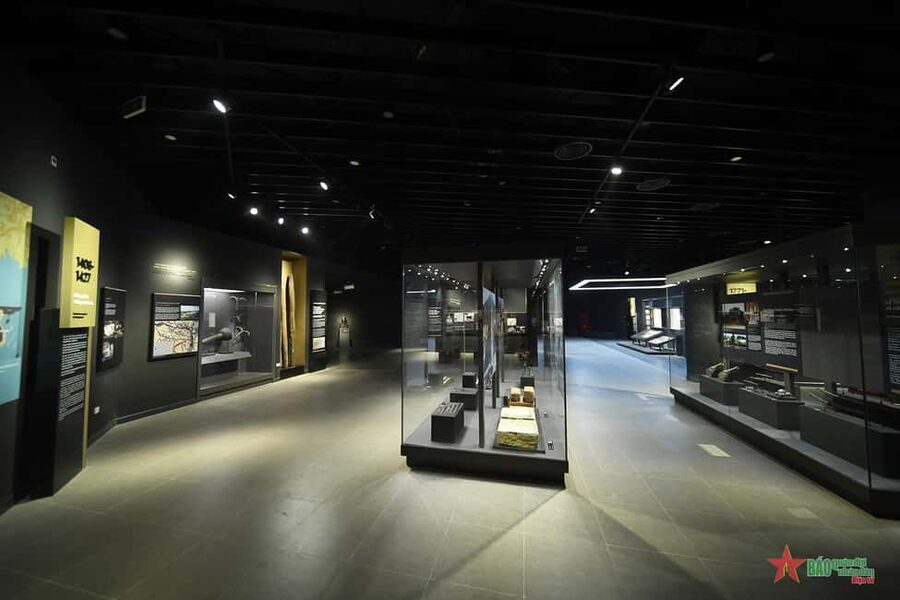
The museum’s indoor collection moves across multiple eras and players, and you’ll notice it doesn’t stay focused only on American involvement. You’ll encounter items tied to resistance wars as well as broader Indochina-era conflict patterns.
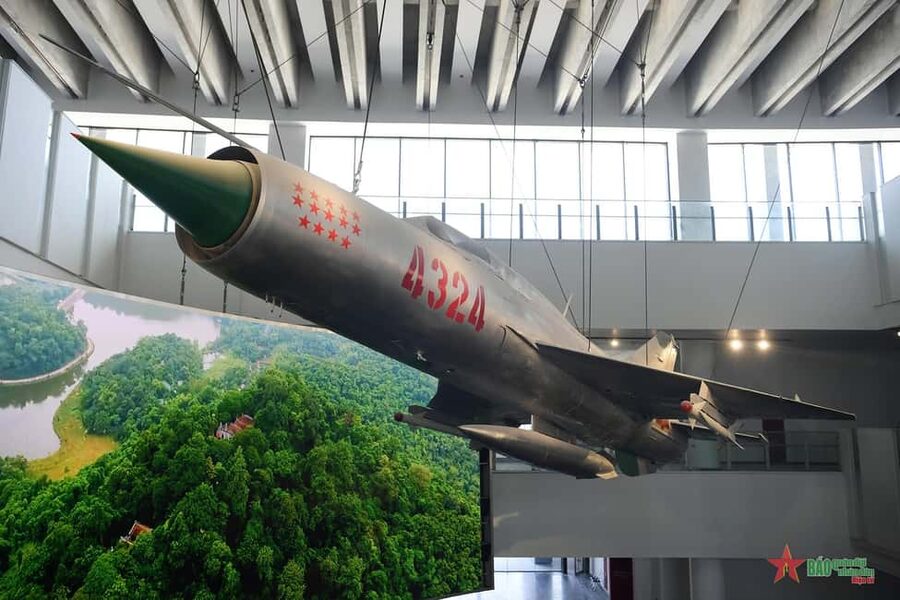
A standout for me is the museum’s mix of famous and obscure objects. You might see wooden wattles used in the Bach Dang naval battle (1288)—not war from the modern era, but a reminder that the museum treats military strategy as a long thread. Then the exhibits jump forward to twentieth-century warfare with military hardware you can point at: devices, ordnance, and equipment tied to specific campaigns.
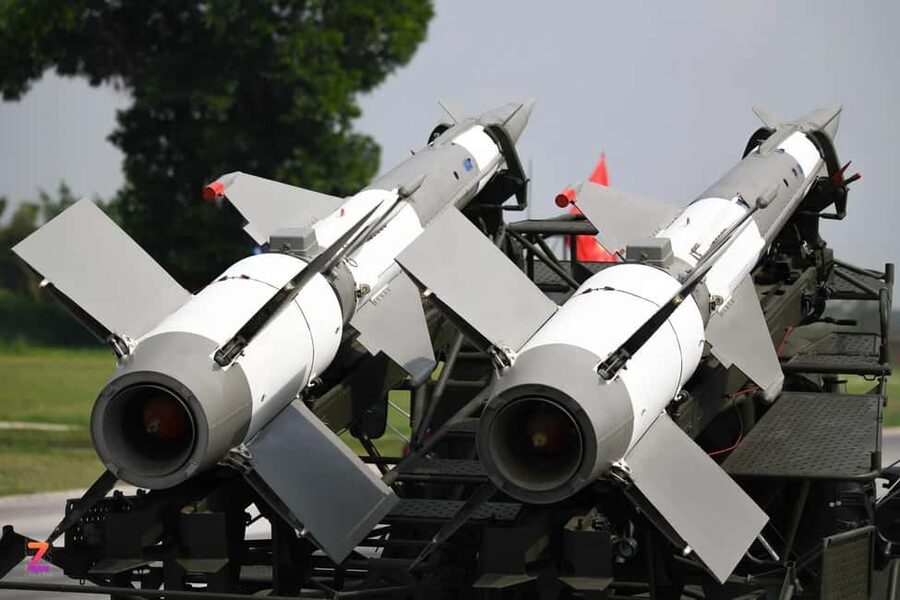
You’ll also get examples of what the museum describes as different types of bombs used by US forces, alongside Vietnamese artillery guns. That pairing is important. Too many history stops show one side’s equipment; here you’re encouraged to understand how opposing forces responded with different tools and tactics.
And then there’s the tank. You’ll have a chance to see the T54B tank number 843, described as having attacked the Saigon Presidential Palace (now the Independence Palace) on April 30, 1975. Seeing a tank in a museum is one thing; seeing the specific numbered vehicle tied to a specific date is another. It turns abstract history into something you can anchor in your head.
The museum also includes a notable artistic presence: a bronze statue of a soldier created by sculptor Tran Dinh Hoe in 1960. That detail helps balance the hard-edged objects with the human side of war memory—how people were depicted, honored, and remembered.
Outdoor display by Hanoi Flag Tower: the airplane tail you won’t forget

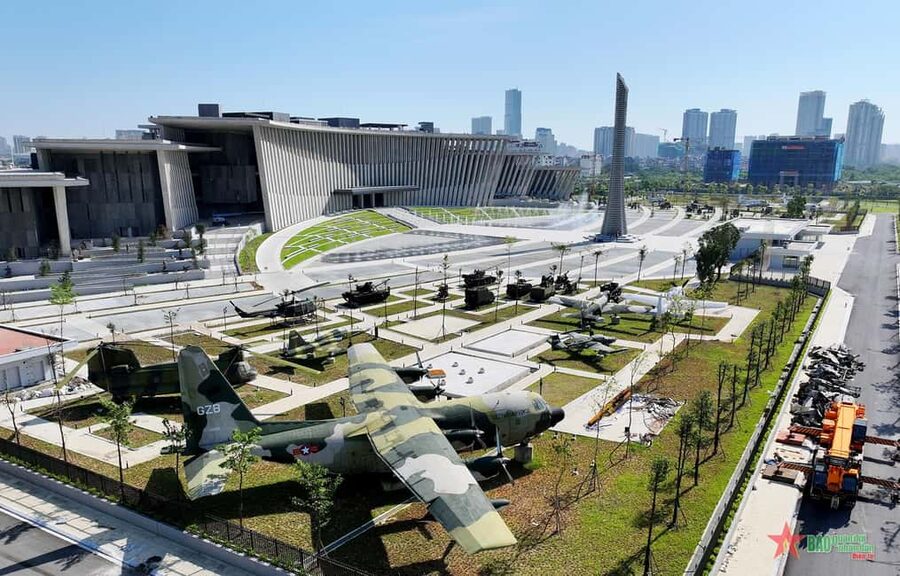
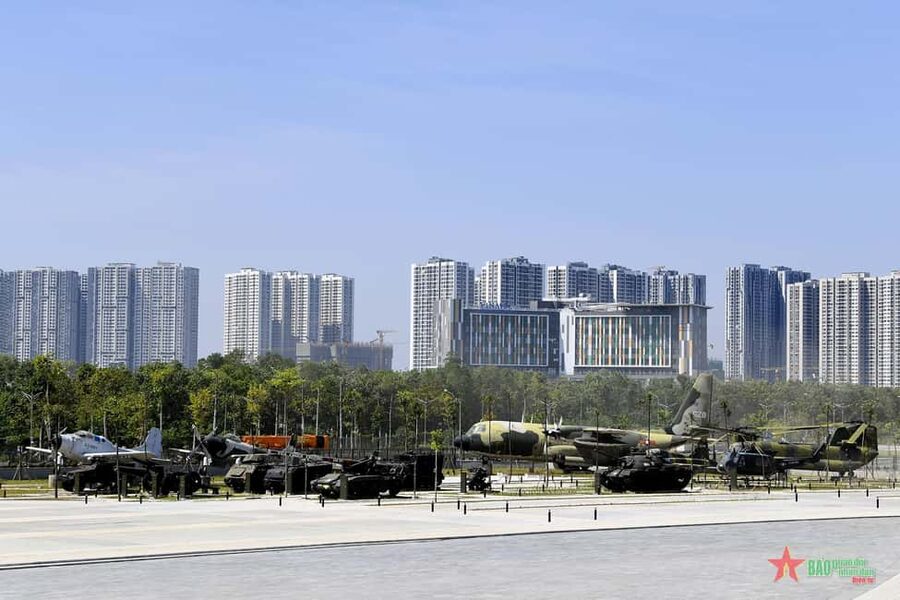
After the indoor buildings, you shift to the outdoor display area at the foot of Hanoi Flag Tower. This is where the museum can feel most “real,” because big objects take over your attention. You’ll see airplanes, tanks, artillery, and landmines—plus remnants from aircraft reportedly shot down by Vietnamese forces.
One detail is especially unforgettable: the tail of an American F-111A, described as having crashed directly into the ground. Even if you don’t know aircraft models, you’ll recognize the emotional weight of seeing a piece of a downed plane preserved outdoors. It’s the kind of object that makes the war feel less like a textbook topic and more like a lived event.
There’s also a theme of industrial capability. You’ll learn about bombs connected to US operations, and you’ll see Vietnamese artillery guns described as having shot down American B-52 heavy bombers. Pairing that with the outdoor visuals makes the “how” and “why” of air warfare easier to grasp, even if your interest is casual.
A final outdoor highlight for history buffs: cannons of the Nguyen Dynasty made in the nineteenth century, discovered around the Thang Long Citadel area in 2003. That discovery detail matters because it shows the museum isn’t only preserving weapons from archives—it’s also incorporating recently uncovered artifacts.
Hanoi Museum: an inverted pyramid that makes the city feel touchable
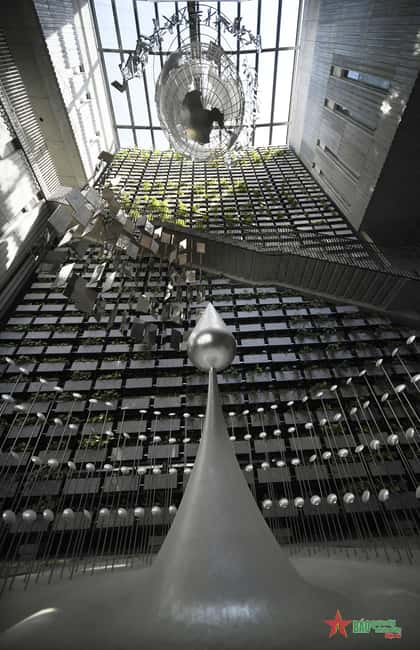
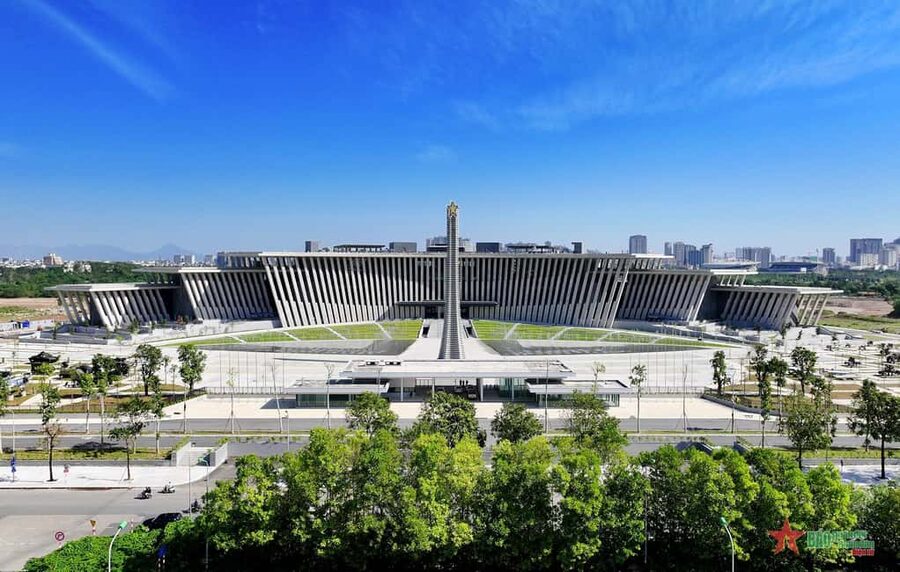
After the military museum’s heavy gravity, the Hanoi Museum offers a different kind of power: architecture that shapes attention. The main building covers over 54,000 square meters, and its design is described as resembling an inverted pyramid with terraces.
Why does that matter for your experience? The higher levels cast shadows on lower ones, helping shield exhibits from direct sunlight. In plain terms: it’s easier to view objects without harsh glare, and the museum feels designed for comfort, not just spectacle.
You’ll also see the museum is tied to a specific civic moment. It’s part of construction work connected to celebrating the 1000th anniversary of Thang Long–Hanoi. So while you’re sightseeing, you’re also inside a monument to how Hanoi chooses to tell its own long story.
The museum layout also supports a “walk through time” feeling. It’s a square building with a circular atrium in the middle, which gives you a central visual reference point as you move between floors. Before you even reach the main exhibits, you’ll find information displays about Hanoi’s history plus replicas of traditional Vietnamese village settings, which helps you get oriented fast.
What you see on each floor of the Hanoi Museum
The Hanoi Museum is organized in a way that helps your brain sort what you’re seeing. The artifacts are grouped by theme and era, and each floor has a distinct feel.
Worth a glance beside this Hanoi pick:
- (Private) MUSEUM TOUR in HANOI★ 5.0 · 262 reviews
- Hanoi: War Site Museums Tour★ 4.8 · 43 reviews
- Hanoi Hoa Lo Prison and War museums Tour★ 5.0 · 24 reviews
First floor: dynasties, dragons, and written records
On the first floor, you’ll see pillars carved with dragon figures from the Ly dynasty, along with documents and artifacts from the Ly, Tran, and Le dynasties. This floor is a strong match for anyone who enjoys the details of governance and culture—when power and identity show up in architecture and texts.
It’s also a smart transition after the military museum because it shifts from hardware to systems: symbols, rule, and how people organized society.
Second floor: nature specimens and daily-life snapshots
The second floor is more surprising, and that’s a good thing. You’ll find natural artifacts such as the skeleton of the Hoan Kiem Lake turtle, shrimp specimens in West Lake, and pictures of Hanoi’s scenery and people.
If you’ve only thought of Hanoi as buildings and streets, this is where it broadens. It reminds you the city isn’t just an administrative center—it’s a place with water, wildlife, and everyday routines that shaped life for centuries.
Third floor: bronze drums, coins, vases, and statues
The third floor leans into ancient material culture: bronze drums, copper coins, ceramic vases, ivory, dragon statues, and stone turtle statues. This is the floor for object fans—people who enjoy standing close enough to notice shapes, surfaces, and craftsmanship.
Even if you can’t identify every item, the mix helps you understand what “Hanoi history” included: trade, ritual, wealth, and the visual language of the region’s traditions.
Fourth floor: paintings, photos, and modern Hanoi
On the fourth floor, you’ll see paintings and photos of old and modern Hanoi. This is where the museum starts to feel like a time machine in two directions—looking backward at tradition while also documenting change.
The floor also includes spaces for conference rooms, art studios, a library, and areas for temporary exhibitions. That’s useful context because it tells you Hanoi history isn’t treated as locked behind glass; it’s also an ongoing conversation.
How the 5-hour format shapes your day

A 5-hour museum day is a practical sweet spot. You get time for two major sites without turning your legs into an obstacle course. Still, you should expect a real pace: you’ll move through indoor exhibits and then shift outdoors for the outdoor yard.
This is the kind of day where your guide makes the difference. In the past, guides like Johanne have been noted for strong French and for answering questions beyond the basic script. And if the weather turns, guides such as Lewis have shown flexibility—adjusting venues when rain and flooding mess with road conditions.
Your best move is to pack for change. Expect indoor time for sure, but don’t ignore outdoor elements. A light rain layer and shoes you can handle outdoors will save you from the kind of minor discomfort that makes museums feel slower than they should.
Skip the ticket line: why this matters in Hanoi
A small feature like skip the ticket line can actually change how enjoyable a museum day feels. In a city where queues can eat up time, saving that waiting lets you spend more time looking and less time standing.
It also helps with mental flow. You’ll get into the Vietnam Military History Museum and Hanoi Museum more smoothly, so the day feels like a guided route rather than a sequence of delays. With only a half-day window, that efficiency is real value.
Price at $62: what you’re really paying for
At $62 per person for about 5 hours, you’re paying for three things that add up: two major museums, guided interpretation, and private transport/pickup around Hanoi.
If you tried to do these on your own, you’d still face real-world time costs—finding your way, paying admission, and figuring out what objects mean without context. This tour’s value is the guide helping you translate a huge amount of material into a coherent storyline: war technology plus capital-city history, side by side.
You’re also getting a private group format. That matters because museum questions don’t work well when everyone is forced to keep moving. Private groups let your guide tailor explanations to your pace, and you can ask about details like tank identification, bomb types, or the museum’s architectural logic.
Languages, accessibility, and who this tour fits
This tour is designed for a wide range of language needs. You can be guided in English and many other languages, including Chinese, French, German, Italian, Japanese, Korean, Portuguese, Russian, Spanish, Indonesian, Thai, and Vietnamese. That makes a big difference in museums, where you want more than labels—you want meaning.
It’s also wheelchair accessible, and it’s offered as a private group, which is especially helpful if you prefer a calmer setting or you’re traveling with mobility needs.
Who will enjoy it most?
- People who like museum “object stories,” not just general overviews
- Anyone interested in Vietnam’s wartime history and its connections to later national memory
- Travelers who want Hanoi culture beyond streets and cafés—architecture, artifacts, and dynasties included
If your interests lean heavily toward food, nightlife, or street scenes only, you might find this day heavy. But if you’re okay with seriousness and you want depth, it’s an excellent use of a single morning or afternoon.
Should you book this Hanoi museums tour?
I’d book it if you want two anchor stops in one compact day, with context that helps you understand what you’re looking at. The standout reasons are the T54B tank number 843 with its date-specific link, the range of war artifacts and technologies, and the Hanoi Museum’s architectural approach to telling the city’s story across floors.
I’d skip or modify if war topics drain you fast, or if you’re traveling during messy weather and you dislike outdoor exhibits. Since there’s outdoor time at the Hanoi Flag Tower area, bring the right gear and plan to slow down rather than rush.
If you match that mood, this is the kind of tour that leaves you with specific images in your head: a tank with a number, a plane tail outdoors, and a city museum that uses light and structure to teach history.
FAQ
How long is the Hanoi Military History Museum and Hanoi Museum tour?
The tour lasts about 5 hours.
What is the price per person?
The price is listed as $62 per person.
Where does the tour start and end?
Pickup is in Hanoi, and the tour returns you back to Hanoi.
Which museums are included?
You visit the Vietnam Military History Museum and the Hanoi Museum.
What are the main highlights I should look out for?
Expect to see the T54B tank number 843 tied to April 30, 1975, the indoor and outdoor war displays (including the tail of an American F-111A), and the Hanoi Museum’s multi-floor collection of artifacts.
Is there a way to avoid waiting in line for tickets?
Yes. The tour includes skip the ticket line.
What languages are available for the live guide?
The live guide can be Chinese, English, French, German, Italian, Japanese, Korean, Portuguese, Russian, Spanish, Indonesian, Thai, or Vietnamese.
Is the tour wheelchair accessible and private?
Yes. It’s a private group and wheelchair accessible.
What is the cancellation policy?
You can cancel up to 24 hours in advance for a full refund.
The Older Side of Hanoi


More Tours in Hanoi
- Ninh Binh Full-Day Tour from Hanoi to Hoa Lu, Tam Coc & Mua Cave Via Boat & Bike
★ 5.0 · 4,384 reviews





More Tour Reviews in Hanoi


Latest Hanoi write-ups from our team




Historical Tours, compared.
 ★ 5.0Hanoi Heritage Premium Daily TourFrom $49914 reviews
 ★ 5.0Heritage Binh Chuan 2 Days 1 Night discovery in Lan Ha BayFrom $469470 reviews
 ★ 5.0Old Quarter Hanoi Street Foods and Heritage Road Tour by WalkingFrom $39117 reviews
 ★ 5.0Discover Trang An Natural World Heritage, Bich Dong Pagoda, Cycling Day TourFrom $7982 reviews
 ★ 4.5Explore Hanoi Old Quarter ’s Rich History and Culture By WalkingFrom $1972 reviews
 ★ 4.9Coffee, History, and Architecture of the French QuarterFrom $3171 reviews
 ★ 5.0Hanoi Full Day A Private Tour With Mix of History and ActivitiesFrom $16051 reviews
 ★ 5.0A Glimpse Of Hanoi ,Cultures, History, Backstreet, Train StreetFrom $4548 reviews
Browse the lists this tour appears in