
Reviewed · HANOI TRAIN STREET TOURS
A Glimpse Of Hanoi ,Cultures, History, Backstreet, Train Street
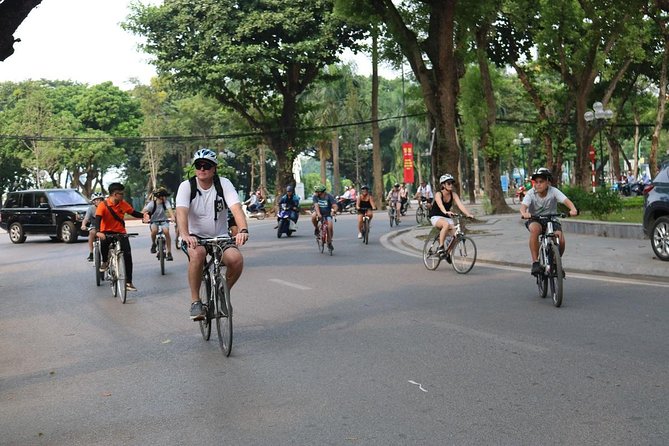
Hanoi can feel chaotic at first, then it clicks on a bike. What I like most is the mix of big-city landmarks and small backstreet riding, plus the fact you get helmet + bicycle + hotel pickup so you can focus on the streets, not logistics. The main drawback: this is real traffic on a bicycle, so if riding in busy roads makes you uneasy, you’ll want to think twice and be honest about your comfort level.
You’ll ride past major sights while also getting to neighborhoods and routes that cars can’t easily serve. The tour runs about 4 hours 5 minutes, caps at 15 people, and uses a mobile ticket—small details, but they add up to a smooth day.
In This Review
- Key Things That Make This Hanoi Bike Ride Worth Your Time
- Hanoi by Bicycle: Why This Route Makes Sense
- Getting Started in the Old Quarter: Bike Setup and First Alley Rides
- Long Bien Bridge: Old Engineering and a Strong Sense of Place
- West Lake Ride on Thanh Nien Road: The Old Meets the New Contrast
- Imperial Citadel of Thang Long: Major Landmarks Passed on the Route
- Duong Tau and Train Street: Riding Through a Living Neighborhood
- Price and Value: What $45 Buys in Hanoi
- Guides and Safety: The Difference Between Scary and Fun
- Best Time to Go and What to Wear
- Who This Tour Fits (and Who Might Prefer Something Else)
- Should You Book A Glimpse Of Hanoi?
- FAQ
- How long is the Hanoi bike tour?
- What’s included in the tour price?
- Do you offer hotel pickup in Hanoi?
- How much does the tour cost?
- How many people are in the group?
- What stops will I see during the ride?
- Do I need a mobile ticket or any special thing to bring?
- Is there more than one departure time?
Key Things That Make This Hanoi Bike Ride Worth Your Time

- Hotel pickup and drop-off: you spend less time figuring out transport and more time riding
- Bicycles included: you don’t need to rent anything
- Helmets and bottled water: simple, practical extras that matter on a few-hour street session
- Stops that contrast Hanoi styles: Old Quarter lanes, Long Bien, West Lake views, Thang Long, and Train Street
- Guides who manage the flow of traffic: names like Charlie, Pink, Kien, and Le show up in the operator’s standout moments
- Route design that favors access: you’ll reach areas harder to get to by car than you would on foot
Hanoi by Bicycle: Why This Route Makes Sense

Hanoi is a city you feel before you fully understand. On foot, you can cover a limited radius. By car, you can miss how neighborhoods actually work—where people step out, trade happens, and everyday movement never stops.
That’s why a bicycle format fits so well. You cover more ground than a walking tour, yet you still travel at a human pace where you can notice details: the spacing of streets, the rhythm of crossings, and how daily life sits right next to historical landmarks. And when the route includes Long Bien Bridge and West Lake views, you get contrast instead of only one kind of Hanoi.
Also, the group size matters. With a maximum of 15 travelers, you’re less likely to feel like you’re trapped behind a long line. It’s easier to keep together, easier to hear your guide, and the route usually feels more flexible.
More visits to the tracks at Train Street




Getting Started in the Old Quarter: Bike Setup and First Alley Rides
The day begins in the Old Quarter, with hotel pickup. From there, you transfer to the bicycle store. The tour includes time to choose a suitable bike and get outfitted with a helmet before rolling out.
This part is more important than it sounds. Your first few minutes on Hanoi streets set the tone for the whole ride. A good setup helps: you can ride in control, your guide can manage the group, and you’ll spend energy on scenery and street-level details rather than struggling with a seat that doesn’t fit.
After the briefing, you start cycling through alleyways and narrow lanes. That’s where Hanoi stops being an abstract map and becomes real. You’ll get a front-row seat to the city’s smaller-scale layout—streets that feel too tight for cars, where scooters and bikes share the space, and where you’ll see everyday life closer than you would from a larger road.
Practical tip: if you’re a nervous rider, this is the moment to speak up. Your guide needs to know if you want extra pacing or a slightly calmer start.
Long Bien Bridge: Old Engineering and a Strong Sense of Place

Next comes the Long Bien Bridge, described as a symbol of Hanoian tenacity and resilience. The bridge also has a specific history: it’s noted as the oldest bridge in Hanoi, constructed by the Eiffel Construction company in 1902.
On a bike tour, bridge stops work differently than museum stops. You don’t just look—you move along approaches and vantage points at the speed of real life. That makes the setting feel grounded. You can sense how the bridge connects neighborhoods and how it functions as infrastructure, not just a photo backdrop.
The tour allows about 1 hour 30 minutes here, which is a meaningful amount of time. It gives you space to slow down, take in the scale, and settle your bearings after the tighter streets of the Old Quarter. You’ll also likely appreciate how the bridge sits in the larger city story—Hanoi has layers, and Long Bien is one of the physical ones.
Potential drawback: bridge time can be windy or hot depending on the day. Bring your focus and hydration mindset, and use the bottled water included as your “don’t wait until you’re thirsty” reminder.
West Lake Ride on Thanh Nien Road: The Old Meets the New Contrast
Cycling along the banks of West Lake is a classic way to shift gears. The route includes a stop on Thanh Nien road for a view, and the tour is intentionally designed to give you contrast: one side represents older character, while the other shows newer Hanoi.
This is valuable because it keeps the tour from feeling like only history or only traffic. West Lake brings in open space, longer sight lines, and a calmer feel without removing you from the city’s motion. You’ll notice how people use the lake area—how public space can feel both lived-in and scenic.
The timing here is about 40 minutes. That’s enough to enjoy the view without turning it into a long sit-down break. On a bike, you’re still moving, still part of the street rhythm, but you get a visual reset.
If you tend to get motion-squinty, West Lake is where you’ll thank yourself later. You can look farther ahead, catch the city’s layout, and then return to tighter neighborhood riding with a clearer mental map.
Imperial Citadel of Thang Long: Major Landmarks Passed on the Route
Then the tour turns toward the Imperial Citadel of Thang Long, around 30 minutes in that area. Even if you aren’t spending a full day deep inside ruins or galleries, the route is planned to put key highlights into your line of sight while you ride.
You pass by prominent sites including the Hanoi Flag Tower (described as nearly 200 years old), the Hanoi Opera House, and the broader mention of the royal Thang Long era as roughly 1,000 years old.
Why this works well on a bike tour: you’re not isolated in one spot. You get a “moving overview.” As you ride, you can connect the landmarks to the streets around them—how the city’s government and culture spaces sit within real urban life.
Trade-off: a short stop means you’ll want to approach it like a quick orientation, not a full study session. If you’re the type who needs time to read every sign, you might later add a separate visit to the citadel grounds at your own pace.
More ways into the Hanoi of old
- Ninh Binh Heritage Full Day Tour with Buffet Lunch and Limousine★ 5.0 · 2,692 reviews
- Hanoi Heritage Premium Daily Tour★ 5.0 · 914 reviews
- Halong Heritage Luxury Day Cruise-Buffet lunch&Limousine transfer★ 5.0 · 846 reviews
Duong Tau and Train Street: Riding Through a Living Neighborhood
The most talked-about section of the ride is Duong Tau, connected to the Reunification Train Street. This stretch is described as about 100 years old, running through the heart of Hanoi where locals live only centimeters from the train line.
On a bicycle, this has a specific kind of impact. You’re not just observing a sight—you pass through a neighborhood where everyday life and rail infrastructure coexist at a close distance. That changes the feel of the place. The street doesn’t act like a stage set; it feels like someone’s home and business area that happens to include tracks.
The tour schedules about 45 minutes here. That’s long enough to understand what you’re looking at—how the buildings line up, how people and movement work near the rails, and why this street became such a powerful symbol of Hanoi’s tight urban fabric.
Reality check: this part of the city can feel intense because of how close everything is. If you’re the kind of person who gets overwhelmed by crowds or noise, you’ll want to keep a steady pace and let your guide handle where you stop and how long.
Price and Value: What $45 Buys in Hanoi
At $45 per person, this tour sits in a “good value for your day” category—mainly because you’re paying for access, not just sightseeing time.
Here’s what you get for that cost:
- Bike use included (so no rental stress)
- Helmet included (a small safety item that you’d otherwise source yourself)
- Bottled water included
- Hotel pickup and drop-off included (big value in a city where you don’t want to spend your limited daylight negotiating transport)
- Access to a planned route that mixes multiple kinds of Hanoi in about 4 hours 5 minutes
- A small group limit of 15 travelers, which matters for how easy it is to manage and how comfortable the ride feels
What you don’t get: private transportation. But honestly, that’s the point. This tour uses the bicycle format to reach areas that cars don’t serve well anyway.
If you’re short on time—like one or two days in Hanoi—and you want the quickest honest read of how the city moves, this is a sensible spend.
Guides and Safety: The Difference Between Scary and Fun

What makes this tour work for most people is the guide. In the standout experiences shared, names like Charlie, Pink, Kien, and Le come up with the same core theme: they keep you safe and keep the ride fun.
You’ll likely hear excellent English explanations, plus guidance that helps you deal with Hanoi traffic. One person’s story highlights encouragement when they felt nervous at the start. Another highlights a guide adapting when the weather changed quickly, with a sudden thunderstorm.
Important takeaway for you: biking in Hanoi isn’t a “just pedal and relax” scenario. It’s traffic skills, awareness, and timing. If you can ride a bike steadily and you’re comfortable following instructions, the experience tends to feel like a rewarding adventure rather than a stressful one.
If you’re unsure, don’t pretend. Tell your guide at the start. Hanoi traffic can be managed—but only if your comfort level is part of the plan.
Best Time to Go and What to Wear
The tour offers multiple time options, so you can pick what fits your schedule. The route includes outdoor riding and stops, so you’ll want to choose a time when you feel your energy level is highest.
What I suggest based on how the day is structured:
- Wear clothes you can bike in comfortably (no tricky hems)
- Bring a light rain layer if skies look moody
- Keep your hands ready for frequent steering adjustments—Hanoi roads move fast
If it rains, you’ll want to stay calm. The operator’s guides are described as adapting quickly, so expect the plan to adjust in real time rather than forcing a rigid schedule.
Who This Tour Fits (and Who Might Prefer Something Else)
This tour is a strong match if you want:
- A fast orientation to Hanoi with real street exposure
- Cycling between Old Quarter, major landmarks, West Lake, and Train Street
- A guided day that handles the hard parts (bike choice, helmets, pickup)
It may not be the best fit if:
- You’re not comfortable cycling through busy roads
- You want a slow, quiet, strictly sightseeing day with minimal traffic interaction
- You dislike weather uncertainty, since street tours are more exposed than indoor ones
In most cases, the bicycle format is exactly what makes the experience memorable. You trade a bit of comfort for a lot of access.
Should You Book A Glimpse Of Hanoi?
If you’re thinking, Yes, I want the highlights—but I also want the city’s real texture—then I’d book it. The value is strong because pickup, bicycle, helmet, and water are included, and the route hits several “Hanoi moods” in one half-day: narrow Old Quarter lanes, the historic Long Bien Bridge, West Lake contrast, Thang Long area landmarks, and the striking Train Street neighborhood.
Book it especially if:
- You can ride a bike confidently enough to follow a guide through traffic
- You like guided structure but want streets, not just monuments
- You want a small-group feel with up to 15 travelers
Skip it if biking in heavy traffic feels like a deal-breaker. There’s plenty to see in Hanoi without needing to ride through it—but for the right rider, this tour is one of the most efficient ways to understand the city quickly and clearly.
FAQ
How long is the Hanoi bike tour?
The experience runs about 4 hours 5 minutes.
What’s included in the tour price?
You get a bicycle, a helmet, bottled water, and the guided route. Hotel pickup and drop-off are also included.
Do you offer hotel pickup in Hanoi?
Yes. Pickup from your hotel in Hanoi is offered, and you’ll also be dropped off after the tour.
How much does the tour cost?
The price is $45.00 per person.
How many people are in the group?
The tour has a maximum of 15 travelers.
What stops will I see during the ride?
The route includes the Old Quarter, Long Bien Bridge, West Lake, the Imperial Citadel of Thang Long area, and Duong Tau (Reunification Train Street / Train Street).
Do I need a mobile ticket or any special thing to bring?
You’ll use a mobile ticket.
Is there more than one departure time?
Yes. You can choose the time that works best from multiple tour options.
The Older Side of Hanoi




More Tour Reviews in Hanoi





Back to Train Street


Latest Hanoi write-ups from our team





Hanoi Train Street Tours, compared.
 ★ 4.9Guided Food Tour with Train Street VisitFrom $196,239 reviews
 ★ 5.0Street Food Tour with Train Street & Hidden AlleywaysFrom $202,831 reviews
 ★ 4.9Guided Street Food Tour with Train Street ExperienceFrom $172,479 reviews
 ★ 5.0Hanoi City Tour Highlight, Train Street Combine visit CountrysideFrom $59925 reviews
 ★ 5.0Hanoi Jeep City Highlight, Backstreet, Train Street, CountrysideFrom $55666 reviews
 ★ 4.97 Tastings Street Food Tour with Train StreetFrom $24541 reviews
 ★ 5.0Walking Street Food Tour in Hanoi and Train StreetFrom $38503 reviews
 ★ 5.0Hanoi All-In-One Tour: Highlights & Train Street & Culture & FunFrom $5421 reviews
Browse the lists this tour appears in