
Reviewed · HANOI STREET FOOD TOURS
Hanoi: Street Food Tour with Train Street & Hidden Alleyways
Train Street sounds unreal, until you smell pho.
I love how this tour strings together Old Quarter alleyways and classic Hanoi bites, then ends with the train passing close enough to make you look up fast. You also get a human guide who shares the why behind the food, not just the what. And yes, the streets feel alive—like the city is still working, not posing for photos.
My favorite part, though, is the food flow. You’ll try a focused set of local dishes in small family spots—think dry mixed pho style (instead of the soupy version you might know), banh my with fillings, and the sweet sticky-rice dessert kem xôi.
One catch to plan for: the train schedule can be unpredictable. You might wait, and in some cases the guide may take you to a different Train Street area to improve your chances. Also, expect about 2.5 km of walking, so comfortable shoes matter.
In This Review
- Key things I’d bet on
- Hanoi Street Food + Train Street: The real reason it’s worth it
- Meeting point inside the Old Quarter and how the day moves
- Old Quarter alleyways: more than pretty streets
- Tastings that actually make sense together
- Dry mixed pho: chicken, sauce, and a different kind of comfort
- Banh my: the baguette that hits fast
- Kem xôi and other sweets: the sticky rice dessert moment
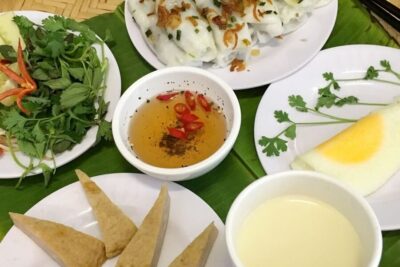
- More Hanoi classics: nem, banh duc, and banh cuon
- Nem: Vietnamese fried spring rolls
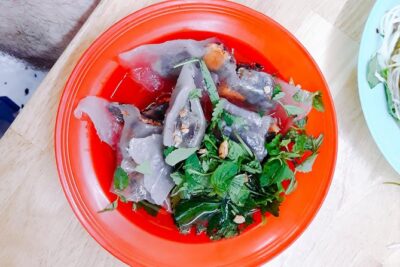
- Banh duc: hot rice powder soup
- Banh cuon: the steamed rice rolled pan cake
- Ta Hien beer street: a quick look, not a long detour
- Train Street: how to get your moment when schedules wobble
- Price and value: why $20 feels fair here
- Vegetarian needs: how to make it work
- Who should book, and who should reconsider
- Should you book this Hanoi Street Food + Train Street tour?
- FAQ
- How long is the Hanoi street food and Train Street tour?
- How many food tastings do I get?
- What dishes are included?
- Is there a drink included at Train Street?
- Is Train Street guaranteed to have a train?
- Where do I meet for the tour?
- Do I need cash?
- Can the tour do vegetarian food?
- Is hotel pickup available?
- Is the tour suitable for wheelchair users?
Key things I’d bet on
- A small-group walk (max 15) so your guide can actually keep an eye on everyone
- Six tastings plus one drink at Train Street, with water included
- Old Quarter culture on foot, including stories that make the street scenes make sense
- Train Street timing games, with patience built into the plan (guides like Hoang and Sunny get high marks for this)
- Vegetarian option available if you tell them in advance
Hanoi Street Food + Train Street: The real reason it’s worth it
Hanoi’s Old Quarter can feel like sensory overload. Motorbikes, narrow lanes, steam from kitchens, and menus that don’t look like your usual “food tour checklist.” That’s exactly why I like a guided street food crawl here: someone else figures out where to stand, what to order, and how to eat without slowing the whole group down.
This tour is built around two things that don’t usually go together. First, you get street food that’s serious local comfort—served in normal places, not staged for tourists. Second, you end at Train Street, where the city does something almost impossible: it lets a functioning railway cut through a tight neighborhood.
The best part is that you don’t just hop from dish to dish. You walk through the Old Quarter’s heart and learn how it evolved into a food-and-commerce maze. Guides named Hoang, Sang, Viet, Tony, and Sunny show up again and again in feedback, mostly for the same reason: they connect the history and daily life to the food you’re eating.
More visits to the tracks at Train Street


Meeting point inside the Old Quarter and how the day moves
You meet at a travel agency shop inside the Old Quarter area. If you’re not being picked up, the tour asks you to come to 52 Ha Ga street. If you are staying near the Old Quarter, pickup may be offered, but if you’re outside that area, plan on walking in to the meeting point.
Then it’s straight into the Old Quarter walking portion. The route is designed for a comfortable pace, but it’s still real walking—about 2.5 km over roughly 3 hours. Expect small alley turns, close-up neighborhood views, and that feeling of getting your bearings fast (without doing the wrong kind of wandering).
Practical tip: bring some cash. Many smaller stalls and family restaurants are cash-forward, and you’ll want to avoid any “do we have enough?” awkward moments. Also wear shoes you’re happy to get a little dusty. Old Quarter sidewalks can be uneven.
Old Quarter alleyways: more than pretty streets
The walking part isn’t filler. It’s the setup for why Hanoi eats the way it does.
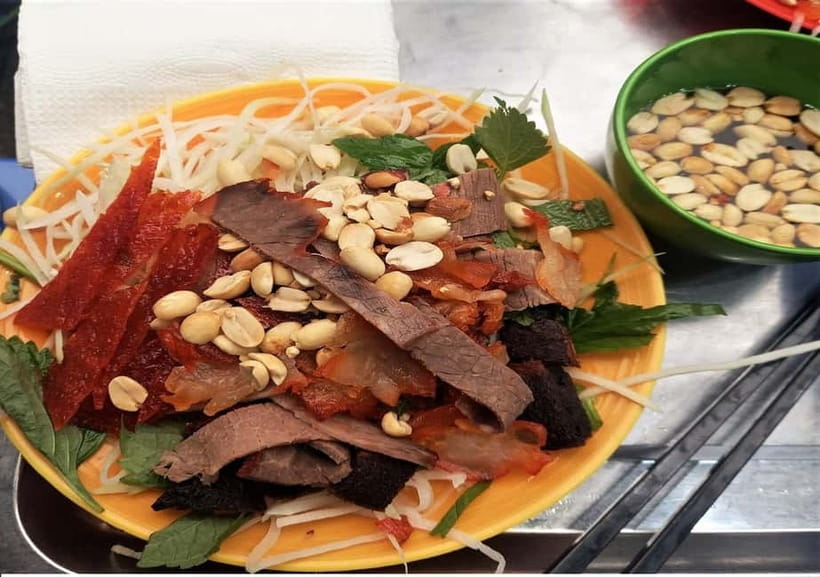
As you head into the narrow lanes, your guide points out how the neighborhood works—where people shop, where food gets made fast, and why certain street foods became staples. This is also where the cultural context matters for first-timers. When you understand that Hanoi is a thousand-year-old city shaped by waves of trade and daily life, the Old Quarter stops looking random.
You’ll also get a look at real neighborhood rhythms: small shops, homes tucked behind shopfronts, and people going about their night. One reason guides like Viet and Tony get so much praise is how they read the group. They’ll answer questions, slow down when someone stops to look, and keep things fun without turning it into a lecture.
Tastings that actually make sense together
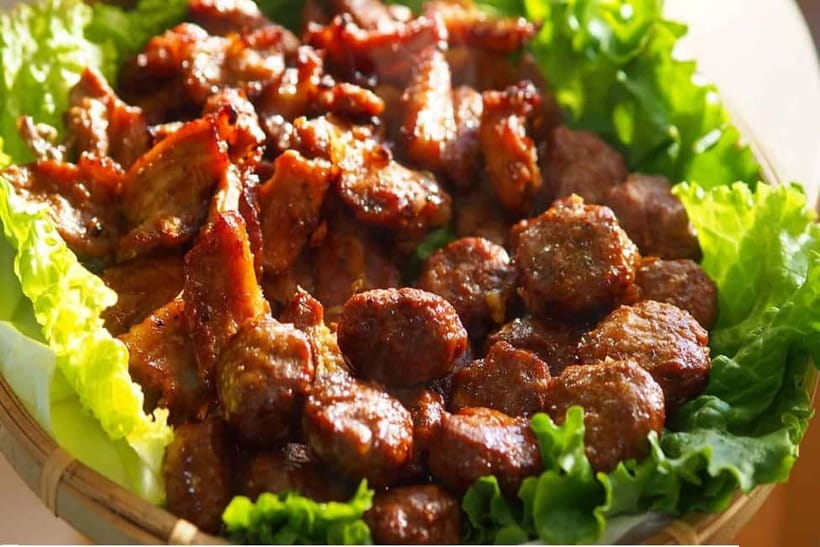
The tour is built around a total of five or six tastings, plus one drink at Train Street and 1 bottle of water. Some dishes may shift depending on timing and local availability, but you’ll still end up with a strong mix of savory and sweet.
Here’s how the food sequence typically feels.
Dry mixed pho: chicken, sauce, and a different kind of comfort
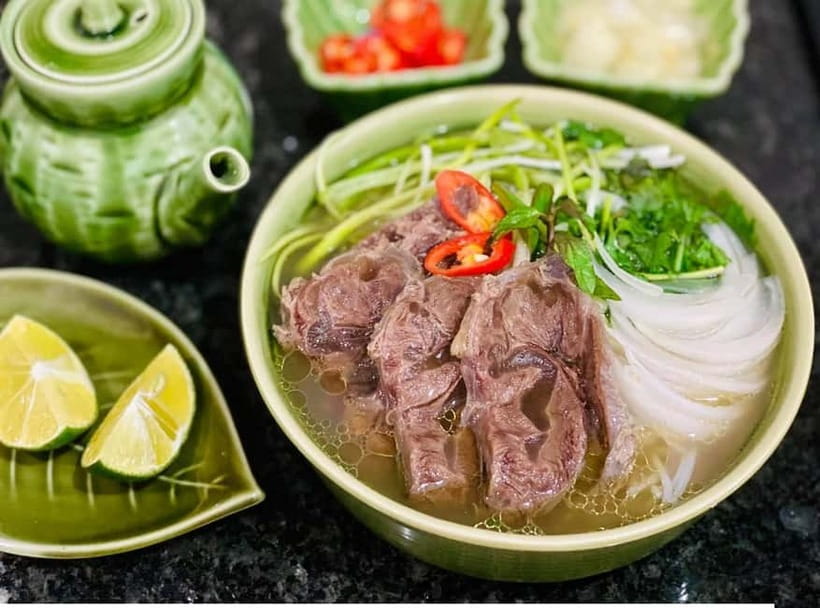
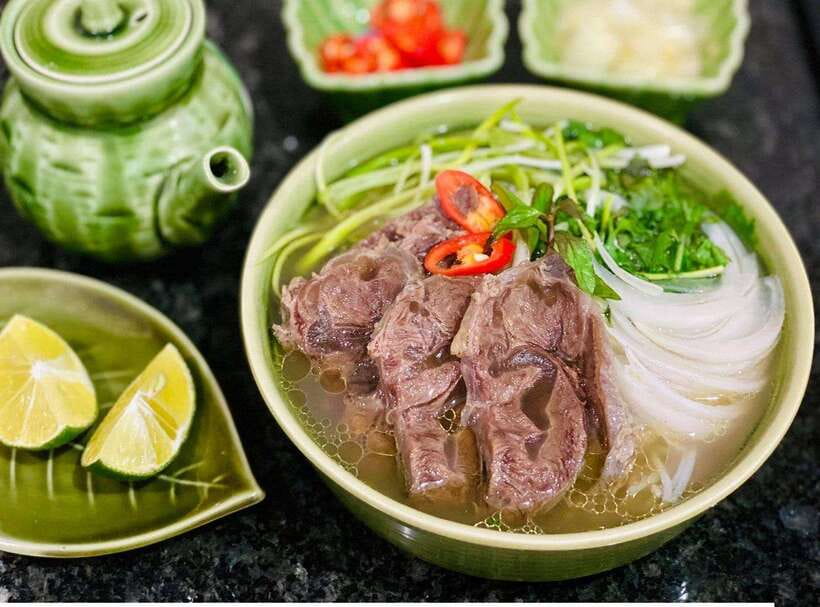
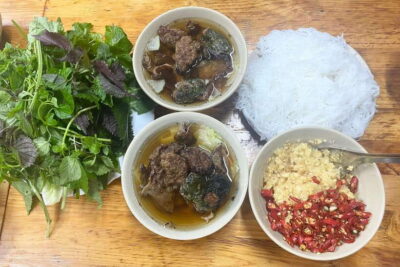
Pho is the signature dish in Vietnam. But this version is a twist: you’ll try a dry mixed pho style with a special sauce rather than the soupy bowl many people expect.
Why I like this as a first stop: it teaches you something immediately. Hanoi versions of familiar foods can be different in texture and assembly, not just in flavor. The chicken version is often refreshing, and the sauce does the heavy lifting. You get the pho identity without the “where do I put the bowl?” logistics.
Still hungry? More Hanoi street-food crawls
- Small Group Hanoi Street Food Tour with a Real Foodie★ 5.0 · 4,682 reviews
- [HOT] Hanoi Old Quarter Walking Street Food – Small Group Tour★ 5.0 · 2,163 reviews
- Hanoi Motorbike Tours Led By Women: Hanoi By Night Foodie Motorbike Tours★ 5.0 · 1,734 reviews
Banh my: the baguette that hits fast
Next comes banh my, a baguette style with fillings and a quick flavor punch. This is one of those dishes where the contrast matters: crusty bread, warm interiors, and toppings that balance salt, crunch, and freshness.
The best way to eat it: take a bite early, then listen to your guide’s explanation about why these fillings belong in Hanoi street food culture. You’ll start noticing patterns in how Vietnamese sandwiches get built.
Kem xôi and other sweets: the sticky rice dessert moment
Then you hit sweet. Kem xôi is sticky rice served with ice cream, often finished with dry coconut for crunch. The mix is part creamy, part chewy, part cool—so it resets your palate before the savory round continues.
Depending on availability, desserts can include other sweet options such as a banana cake or a dessert soup. Either way, this tour makes sure dessert shows up before you’re too full to enjoy it.
More Hanoi classics: nem, banh duc, and banh cuon
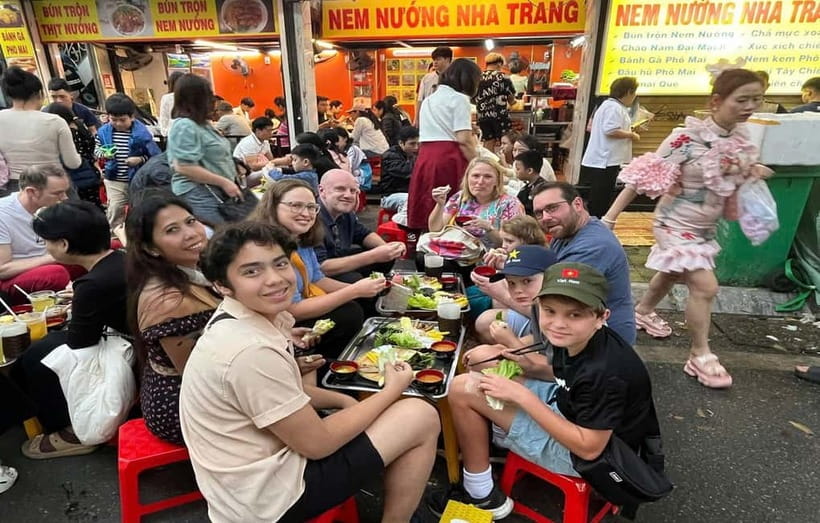
The second half of tastings leans deeper into classic street textures—crispy, steamed, and savory.
Nem: Vietnamese fried spring rolls
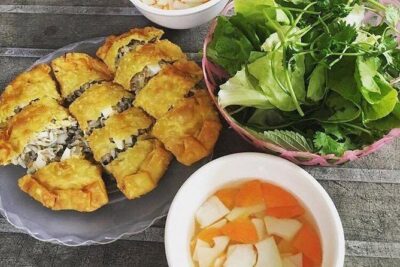
You’ll try nem, Vietnam’s fried spring roll style. What you’re really learning here is the flavor architecture: crunchy exterior, savory filling, and the way dipping sauces tie everything together. Nem is also a good “bridge” dish. If you already know Vietnamese flavors, nem confirms you’re eating in the right direction.
Banh duc: hot rice powder soup
Banh duc is a hot rice powder soup. It sounds simple, but the texture is the story—soft, warm, and comforting, with a gentle feel compared to the fried crunch of nem.
This is where the tour earns points for pacing. You’re not stuck eating only heavy fried food. You get steamed comfort that keeps you from feeling overloaded.
Banh cuon: the steamed rice rolled pan cake
Next is banh cuon, steamed rice rolled cakes. These can look delicate, but they carry big flavor through dipping sauces and fillings.
Why it works on a tour: banh cuon gives you a Hanoi signature texture you probably won’t cook at home. It’s the kind of dish you remember later, because it’s visually distinctive and feels light even when you’re eating multiple stops.
Ta Hien beer street: a quick look, not a long detour
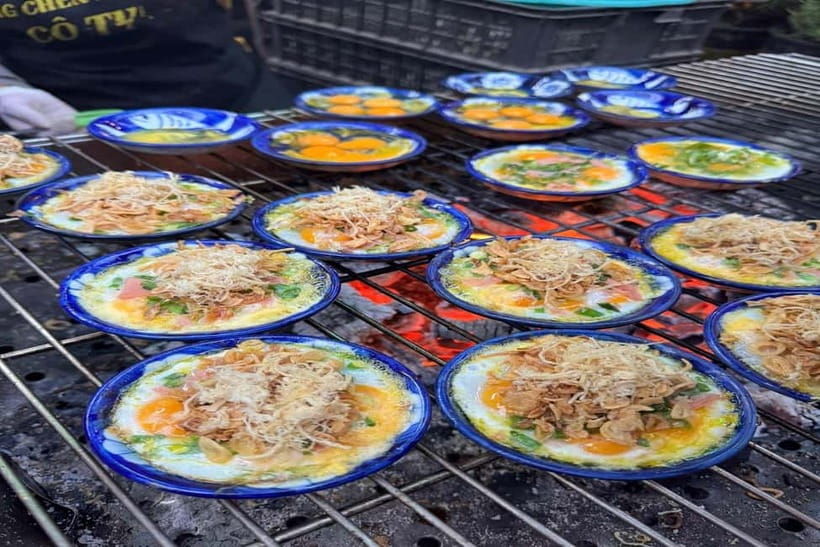
You’ll pass Ta Hien beer street (not a stop, just an overview). Think of it as a quick snapshot of the Old Quarter’s nightlife energy. It’s a food-and-drink hub where locals and visitors mingle.
The tour’s choice here is smart. You don’t get trapped in noise for too long, but you still learn where to go if you want that scene later. If beer street is your thing, you can note it on your map and come back after you’ve eaten and you’re ready to choose your own pace.
Train Street: how to get your moment when schedules wobble
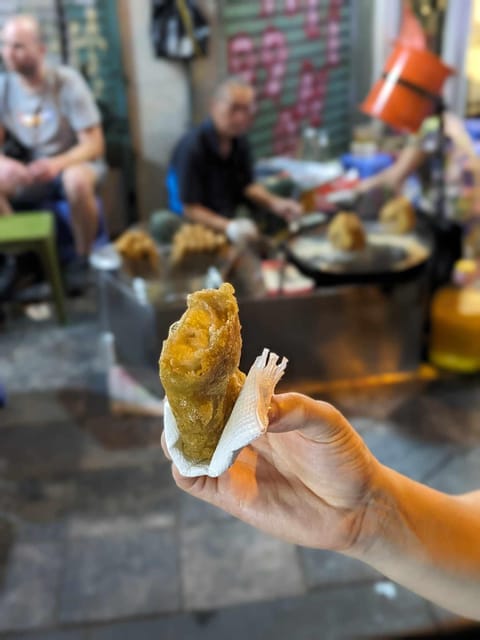
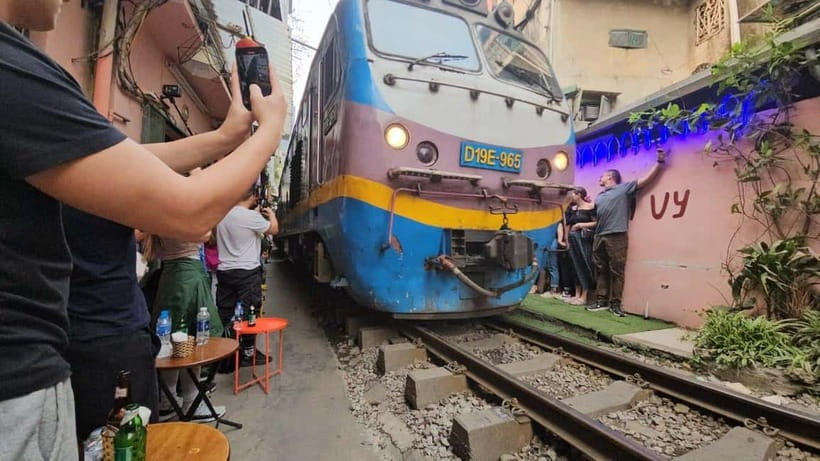
The finale is Train Street, where a railway passes right through a narrow alley lined with houses. This is the part that sounds like a TikTok trick until you’re standing there and realizing how close everything is.
Important reality check: train schedules don’t always cooperate. The tour is honest about that. You might experience the train passing right in front of you, but you’re also likely to wait. That waiting time is part of the experience, and it’s why the guides’ patience matters so much in reviews. People mention guides working hard to make sure they get you that big moment—sometimes by adjusting the plan.
During your time near the tracks, you’ll enjoy a drink—options listed include egg coffee, local beer, soft drinks, tea, or juice—at a shop trackside. This is practical: you’ll be standing around, so having something warm or refreshing makes the wait feel shorter.
If you want the best shot at timing, the tour asks you to add contact details like an email or WhatsApp number so they can reach you before the tour time. That kind of planning help is also why guides can sometimes move you to a different Train Street location depending on circumstances.
Price and value: why $20 feels fair here
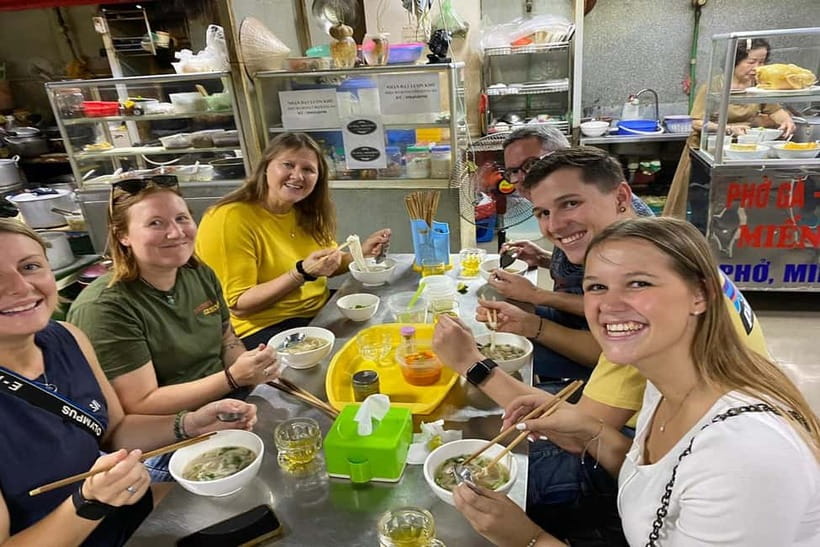
At about $20 per person, this tour offers a lot more than “six bites and a photo.” You’re paying for four things that add real value in Hanoi:
- Local restaurant access: you’re eating at family-style spots, not just curb sampling.
- A guided cultural route: the Old Quarter walk includes context that helps you understand what you’re seeing.
- Train Street time with a guide: waiting for the train without knowing the schedule is stressful. A guide reduces that friction.
- Inclusion of tastings and a drink: six tastings plus water plus one drink means you’re less likely to overspend later chasing snacks.
The tour also keeps you in a small group (maximum 15), which helps with attention and pacing. If you’ve ever tried to do this kind of night on your own, you know it’s easy to get lost, eat the wrong things, or end up spending extra money just to catch up with your own schedule.
Vegetarian needs: how to make it work
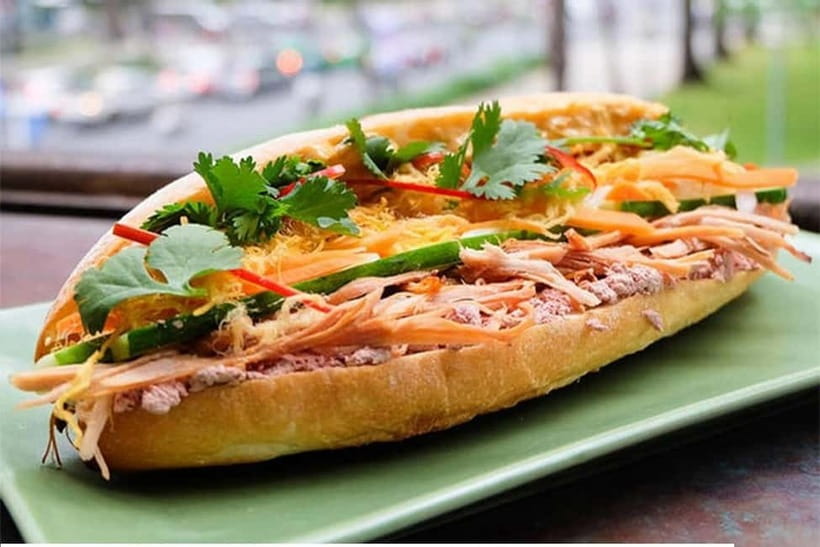
If you’re vegetarian, you should flag it in advance. The tour notes that they can order food that fits vegetarian needs.
This matters because street food kitchens can vary in what’s available on short notice. The best move is to tell them early so the guide can set your tastings properly rather than trying to patch meals on the fly.
Who should book, and who should reconsider
This tour is ideal if you:
- Want a first-night introduction to the Old Quarter and its food culture
- Like variety and texture—soups, fried rolls, steamed rice dishes, and sweets
- Want to end the night with a memorable experience that’s uniquely Hanoi
- Enjoy small-group pacing with a guide who explains as you go
It’s less ideal if you:
- Have mobility limitations. The tour is not suitable for people with mobility impairments or wheelchair users
- Expect a long sit-down dinner. This is walking plus street tastings, so you’ll be on your feet a lot
Should you book this Hanoi Street Food + Train Street tour?
If you’re visiting Hanoi and you want an evening that feels both authentic and efficient, I think you should book it—especially if you like street food but don’t want to guess your way through alleyways.
Here’s the decision rule I’d use:
- Book if you want Old Quarter context + serious street tastings + Train Street as the finale.
- Skip or choose another option if you can’t handle waiting for the train or if walking 2.5 km is a dealbreaker.
With guides like Hoang, Sang, Viet, Tony, and Sunny getting repeated praise for friendliness, pacing, food quality, and taking care of the group, this is one of those tours that earns its hype the old-fashioned way: good guides, good stops, and a plan that still works even when schedules get weird.
FAQ
How long is the Hanoi street food and Train Street tour?
It runs about 150 minutes to 4 hours, depending on timing and how the evening unfolds.
How many food tastings do I get?
You should get a total of five or six tastings, plus one drink at Train Street, and water.
What dishes are included?
Common dishes include pho (dry mixed style), banh my, kem xôi, nem, banh duc, and banh cuon. The exact list can vary based on availability.
Is there a drink included at Train Street?
Yes. You’ll get 1 drink at Train Street, which can be coffee (including egg coffee), beer, soft drinks, tea, or juice.
Is Train Street guaranteed to have a train?
The tour is designed to get you a train sighting, but train schedules can be unpredictable. The guide may adjust location if needed.
Where do I meet for the tour?
You meet inside a tourist travel agency shop in the Old Quarter. If you are not picked up, the address provided is 52 Ha Ga street, Old Quarter, Hanoi.
Do I need cash?
Yes, you should bring cash for easier payment at food stops.
Can the tour do vegetarian food?
Yes, a vegetarian option is available if you tell the provider in advance.
Is hotel pickup available?
Pickup is optional if you stay in the Hanoi Old Quarter area. If you stay outside that area, you should come to the meeting point.
Is the tour suitable for wheelchair users?
No. It is not suitable for people with mobility impairments or wheelchair users.
More Tour Reviews in Hanoi





More Bowls and Backstreets in Hanoi



Back to Train Street

Latest Hanoi write-ups from our team




Hanoi Street Food Tours, compared.
 ★ 4.9Guided Food Tour with Train Street VisitFrom $196,239 reviews
 ★ 5.0Small Group Hanoi Street Food Tour with a Real FoodieFrom $284,682 reviews
 ★ 4.9Guided Street Food Tour with Train Street ExperienceFrom $172,479 reviews
 ★ 5.0[HOT] Hanoi Old Quarter Walking Street Food – Small Group TourFrom $142,163 reviews
 ★ 5.0Hanoi Motorbike Tours Led By Women: Hanoi By Night Foodie Motorbike ToursFrom $691,734 reviews
 ★ 5.0Hanoi Street Food Tour with local delicaciesFrom $281,506 reviews
 ★ 5.0Hanoi Coffee Workshop: Taste Salt, Coconut and Egg CoffeeFrom $161,286 reviews
 ★ 4.8Small-Group Street Food Walking TourFrom $151,165 reviews
Browse the lists this tour appears in