
Reviewed · COFFEE EXPERIENCES
Hanoi French Quarter: Coffee and Stories
Coffee, then colonial stories in Hanoi. This small-group walk puts you right into the Hanoi French Quarter with real cafe breaks, and I love that you get included coffee and ice cream while your guide turns buildings into stories you can actually remember. The only trade-off is that it’s still a walking tour, so bring comfy shoes for uneven sidewalks and street crossings.
You finish in about 2.5 hours, then the rest of the day is yours. That makes it a smart way to start a Hanoi trip, because you’ll also walk away with practical ideas for where to go next around Hoàn Kiếm.
In This Review
- Key Points to Know Before You Go
- Coffee and Stories in Hanoi’s French Quarter
- Why this tour feels like value at $29
- Meet at 6 P. Ấu Triệu: The “Start Smooth, Walk Smart” Part
- St. Joseph’s Cathedral: Neo-Gothic Meets Real Street Life
- Loading T Café: Ca phe sua da and the French Villa Feeling
- Chua Ba Da: A Small Pagoda Hidden in Plain Sight
- Metropole Hotel Area: The French-Era Landmark You Can See From a Distance
- Hanoi Opera House and Trang Tien Plaza: French Power, Vietnamese Daily Life
- Hoàn Kiếm Lake and Turtle Tower: Why Symbols Matter
- What to do after the tour while you’re nearby
- Hanoi University of Pharmacy: French-Era Education, Left in the Streetscape
- Who This Tour Is Best For (and How to Plan Your Day)
- When to go
- What to bring
- Should You Book This Hanoi French Quarter Coffee and Stories Tour?
- FAQ
- How long is the Hanoi French Quarter Coffee and Stories tour?
- Where do I meet the guide?
- Where does the tour end?
- What’s included in the price?
- Do I need to pay admission fees at the stops?
- How big is the group?
- Is there a mobile ticket?
- Is this tour suitable for most people?
- What if the weather is bad?
- Can I cancel for a full refund?
- What coffee do we try?
Key Points to Know Before You Go
- Small group size (max 10) keeps the pace relaxed and questions easy
- Coffee-and-snack stops are built in, not an afterthought
- A French Quarter focus with real local context, not just architecture photos
- Short visit to major sights (cathedral, opera house, Metropole area, Hoàn Kiếm Lake)
- Ends near Hanoi University of Pharmacy, convenient if you’re exploring nearby
Coffee and Stories in Hanoi’s French Quarter
Hanoi’s French Quarter is one of those places where you can feel time layers without needing a museum ticket. You’ll see church spires, grand hotel facades, old-school shopfronts, and everyday street life all mixed together. What makes this tour work is the structure: it’s not just a “look at this, take a photo” loop. The guide connects each stop to how Hanoi changed under French influence, how locals adapted, and what that legacy looks like on the street today.
And yes, the coffee matters. Not because it’s a trendy prop, but because it’s a doorway into Vietnamese daily life. You’ll get included hot drinks and snacks along the way, including ice cream and classic Vietnamese coffee styles. In a place like Hanoi, that’s a nice reminder that history lives in normal routines too—like how people meet friends, talk politics, or just take a break.
Worth a glance beside this Hanoi pick:



Why this tour feels like value at $29
At $29 per person, you’re really paying for three things:
- a local guide’s storytelling (so you understand what you’re looking at)
- a tight route that hits key sights in a short window
- included food and drink, which adds up fast if you’re otherwise buying everything yourself
If you only have a day in Hanoi, spending 2.5 hours wisely is a win. If you have more time, this tour helps you spot what’s worth returning to later. Either way, you’re not paying extra for site admissions at the stops.
Meet at 6 P. Ấu Triệu: The “Start Smooth, Walk Smart” Part
The meeting point is simple: 6 P. Ấu Triệu, Hàng Trống, Hoàn Kiếm, Hà Nội. The tour uses a mobile ticket, so you don’t need to hunt for paper confirmations.
I like that the schedule gives you time to find your bearings early. Starting in the Hoàn Kiếm area means you’re already positioned for the rest of the day, whether you keep wandering on your own or plan a second activity afterward.
Also, the guides here are praised for handling street crossings and keeping the group together. That matters in Hanoi, where intersections are busy and “just step out” is not a good plan. If you’re the type who likes to ask questions, a smaller group (up to 10) makes it easier to actually talk instead of waiting your turn.
St. Joseph’s Cathedral: Neo-Gothic Meets Real Street Life
Your first big landmark is St. Joseph’s Cathedral at 40 Nha Chung, in the Hoàn Kiếm district.
This cathedral is a late 19th-century Gothic Revival style church. When you stand outside it, you get that unmistakable European silhouette—yet it’s planted right in the middle of Hanoi’s everyday streetscape. That contrast is the point. A guide can help you notice what’s being borrowed, what’s being adapted, and what it meant for people living nearby at the time.
Practical tip: if you arrive around morning or late afternoon, the light can make the architecture look extra crisp. Even if you don’t go inside, the exterior viewpoint gives you plenty to work with for photos and orientation.
Loading T Café: Ca phe sua da and the French Villa Feeling
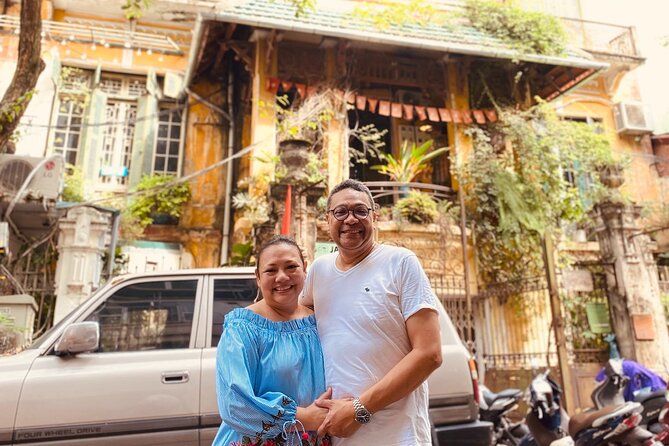
Next comes one of the most memorable parts: Loading T café.
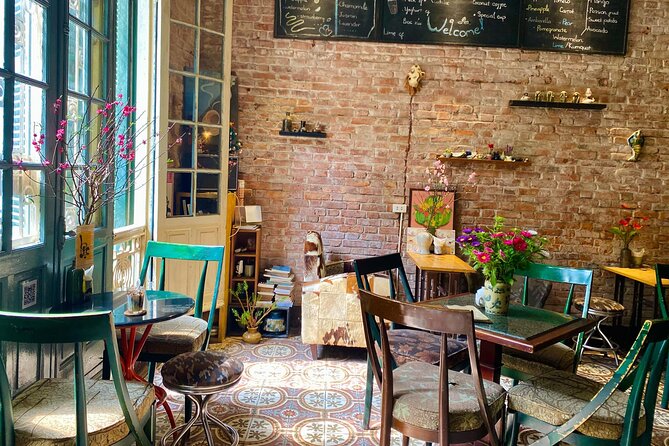
This stop is built around trying Ca phe sua da, Vietnamese iced coffee made with condensed milk. It’s iconic for a reason: it’s sweet, smooth, and powerful enough to keep you going while you walk. Your guide also explains the story behind the coffee culture tied to French colonial influence, and the cafe setting is part of the experience—described as an “hidden French villa,” which matches the vibe you get when you step away from the street and into something with old-world character.
From the coffee side, the included order can vary, but you may see popular favorites in the group conversation:
- egg coffee (a classic Hanoi treat)
- drinks with flavors like lemon or coconut, depending on what’s offered that day
- ice cream as a follow-up snack to keep energy up
If you’re sensitive to sweetness, you can ask about the drink style. Condensed milk is a standard ingredient for ca phe sua da, but the strength and flavor can still feel different depending on how it’s served.
- Hanoi Motorbike Tour: Food, Culture and Fun by Vintage Motorbike★ 5.0 · 6,699 reviews
- Hanoi: Guided Food Tour with Train Street Visit★ 4.9 · 6,239 reviews
- Hanoi Cooking Class: Culture, Local Market & Meaning CSR Impact★ 5.0 · 5,147 reviews
Chua Ba Da: A Small Pagoda Hidden in Plain Sight
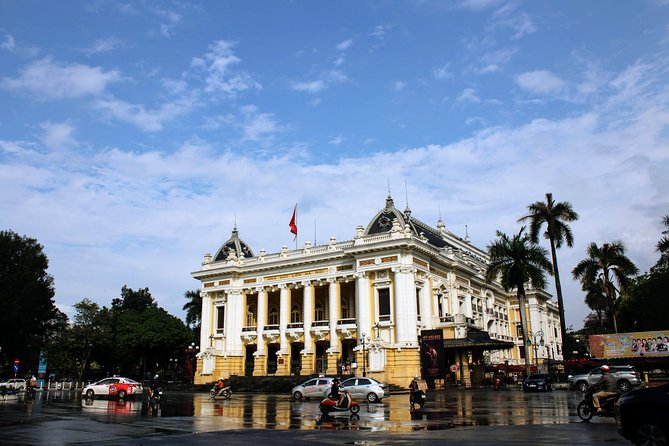
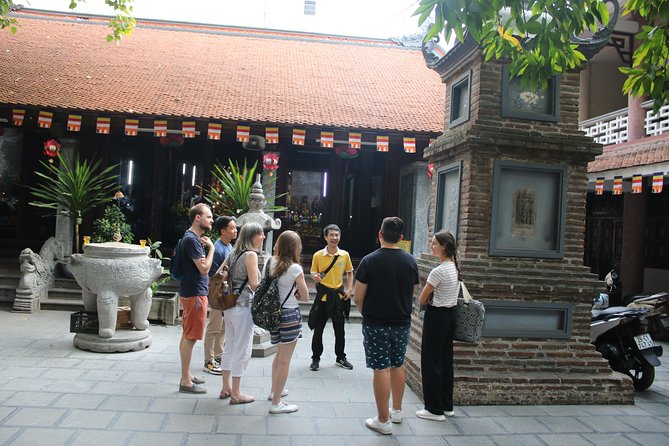
After coffee, you move to Chùa Ba Đa—described as a very hidden pagoda located on one of Hanoi’s busiest streets.
This is the kind of stop I love on walking tours: it reminds you that French influence is only one layer. While the French Quarter stories get attention, the city’s religious and cultural life continues right alongside. You might not spot this pagoda on your own because it’s tucked into the street fabric. A guide’s job here is simple: help you notice what your eyes would otherwise slide past.
Time-wise, expect a short stop. It’s enough for the “aha” moment and context, not enough to turn the tour into a long detour.
Metropole Hotel Area: The French-Era Landmark You Can See From a Distance
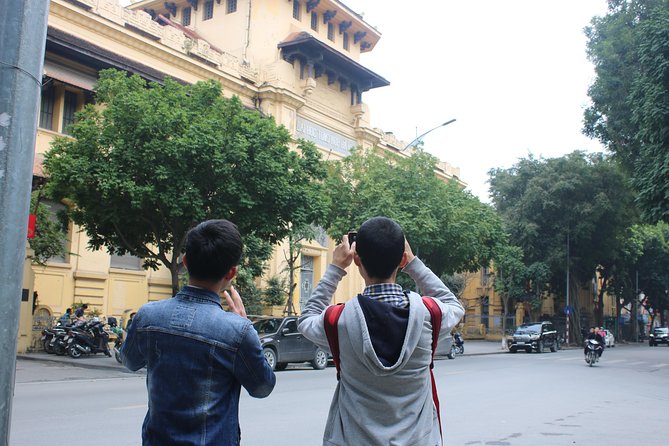
Then you head to Hanoia Metropole, associated with Hotel Sofitel Legend Metropole at 15 Ngô Quyền.
The Metropole is one of those places you recognize even before you walk up to it. It’s tied to the colonial hotel era, and in Hanoi it functions like a visual anchor: you can look at it and immediately understand why people say this city has preserved French-era architecture.
The guide’s value here is interpretation. You’ll learn what this kind of landmark represented and how it fits into Hanoi’s broader story—especially the complicated “what was good, what was bad” side of colonial history. You’ll also hear how locals viewed these spaces and how the city repurposed them over time.
Practical note: depending on what’s happening around the hotel, focus on the streetscape details and the building’s location. Even without going inside, you’ll leave with a clearer sense of where the French Quarter energy comes from.
Hanoi Opera House and Trang Tien Plaza: French Power, Vietnamese Daily Life
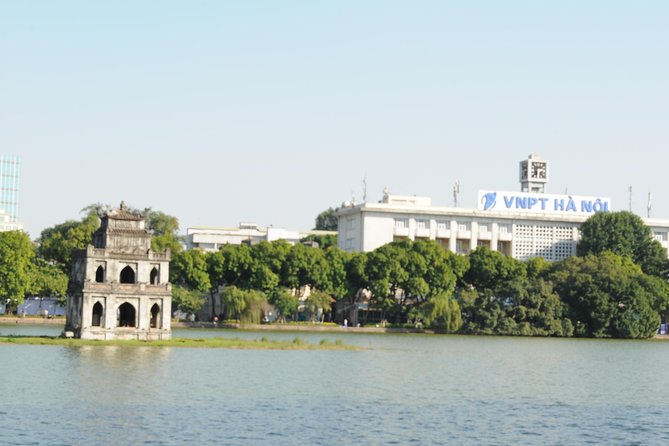
Two more big sights follow close together:
- Hanoi Opera House at 1 Tràng Tiền
- Trang Tiền Plaza along Tràng Tiền street
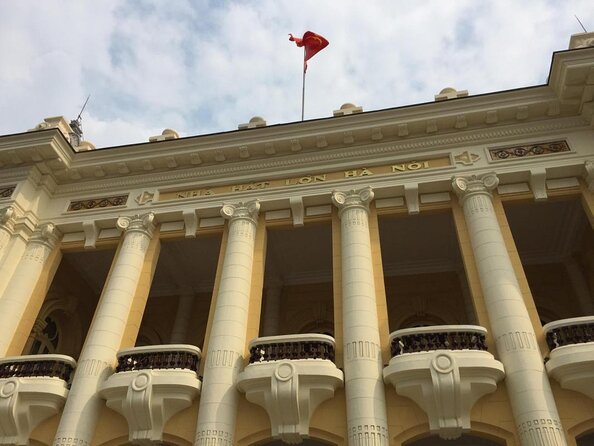
The Opera House is a major symbol of French-era cultural influence in Vietnam. It’s one of those buildings that makes the city feel “planned,” even when you’re walking through crowded sidewalks nearby. Again, this is where the tour does better than just sight-seeing. The guide helps you connect the building to how society changed under French rule and how cultural institutions were used.
Then you roll into Tràng Tiền, a street that’s central to Hanoi’s identity. The tour treats it as a timeline you can walk through: the street has developed from early days of Hanoi through the French period to today. That’s a neat mental trick. Suddenly, you’re not just watching storefronts—you’re tracking change.
If you enjoy people-watching, this segment is great because it’s in the heart of normal city life. Keep your eyes up for architectural clues, then look down for what people are actually doing right in front of the buildings.
Hoàn Kiếm Lake and Turtle Tower: Why Symbols Matter
The tour ends near one of Hanoi’s most recognizable places: Hoàn Kiếm Lake (Lake of the Restored Sword), with time near the Turtle Tower.
You’ll hear the meaning behind the symbol—Turtle Tower is tied to local patriotic pride, and its look mixes European and Asian architectural influences. It’s not just a pretty view; it’s a story marker.
This stop is especially good if you’re still trying to piece together Hanoi’s identity. After churches, hotels, and opera architecture, the lake brings you back to the city’s own mythology and public heart. It’s a slower moment that helps the tour stick in your head.
What to do after the tour while you’re nearby
Because this tour ends after about 2.5 hours, you have time to keep exploring the Hoàn Kiếm area on your own. If you’re hungry, you’ll find plenty of food options nearby, and you’ll be more confident about where to go now that you’ve been oriented by a guide.
Hanoi University of Pharmacy: French-Era Education, Left in the Streetscape
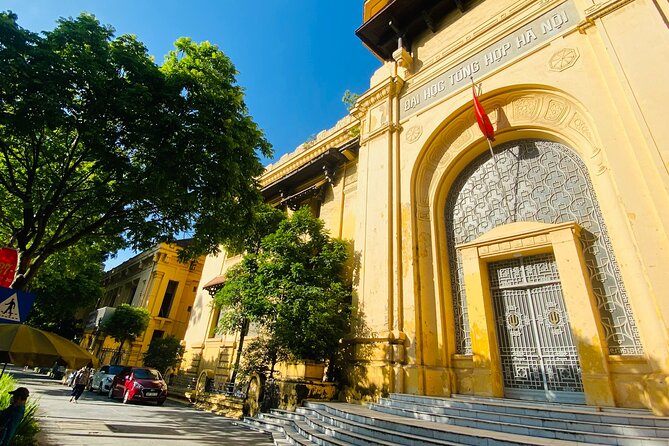
Your final segment takes you to Hanoi University of Pharmacy at 13–15 P. Lê Thánh Tông.
This stop is tied to a specific kind of legacy: the French built Hanoi’s first modern university. Even if you don’t go inside, the location matters. Education institutions like this are different from cathedrals or hotels. They’re about systems—how a society trains people and builds skills.
Ending here can be convenient because it leaves you in a useful part of the city rather than backtracking to the exact start point. It’s also a reminder that colonial influence wasn’t only about architecture. It shaped infrastructure too.
Who This Tour Is Best For (and How to Plan Your Day)
This tour fits best if you want:
- a 2.5-hour overview of Hanoi’s French Quarter
- a guided explanation of the buildings and their “why”
- built-in coffee and hot drink breaks plus ice cream
- a small group pace (max 10) where questions are welcome
It’s also a good option for first-time visitors because it helps you build a mental map fast. If you only have one day, you’ll still get meaningful context without spending the whole day in transit.
When to go
Your experience requires good weather. If it’s raining heavily, the walking parts may be less comfortable. On clearer days, you’ll enjoy the architecture viewpoints more, and the coffee stops feel extra rewarding.
What to bring
No mystery here: comfortable shoes. Hanoi sidewalks can be uneven, and you’ll be out long enough that you’ll feel it if your feet aren’t happy.
Should You Book This Hanoi French Quarter Coffee and Stories Tour?
I think this is a strong book if you like your sightseeing to come with context and snacks. For $29, you’re getting a compact route through major French Quarter landmarks, plus coffee culture that’s actually relevant to everyday Hanoi life.
Book it if:
- you want a guided walk that helps you understand what you’re seeing
- you appreciate a coffee-first schedule instead of rushing through stops
- you want to finish early and keep exploring on your own
Skip it if:
- you’re expecting a long, slow sit-down tour with lots of time at each site
- you don’t like walking or street crossings, even if the guide helps the group stay together
If you’re in Hanoi for more than a day, this tour also works as a great “starter move.” You’ll recognize places later and know which details to look for.
FAQ
How long is the Hanoi French Quarter Coffee and Stories tour?
It runs for about 2 hours 30 minutes.
Where do I meet the guide?
Meet at 6 P. Ấu Triệu, Hàng Trống, Hoàn Kiếm, Hà Nội 10000, Vietnam.
Where does the tour end?
The tour ends at Hanoi University of Pharmacy, 13–15 P. Lê Thánh Tông, Phan Chu Trinh, Hoàn Kiếm, Hà Nội, Vietnam.
What’s included in the price?
Coffee and/or tea are included, along with snacks (including ice cream) and hot drinks.
Do I need to pay admission fees at the stops?
Admission tickets are listed as free for the sights included on the route.
How big is the group?
The tour has a maximum of 10 travelers.
Is there a mobile ticket?
Yes, the tour includes a mobile ticket.
Is this tour suitable for most people?
The information says most travelers can participate.
What if the weather is bad?
The experience requires good weather. If it’s canceled due to poor weather, you’ll be offered a different date or a full refund.
Can I cancel for a full refund?
Free cancellation is available if you cancel at least 24 hours in advance.
What coffee do we try?
The tour includes a stop focused on the Vietnamese coffee drink Ca phe sua da with condensed milk.
More Coffee Experiences in Hanoi

More Tour Reviews in Hanoi


Latest Hanoi write-ups from our team

Coffee Experiences, compared.
 ★ 5.0Hanoi Coffee Experience: 6 Brews, 9 Recipes & 3 Liquor TastingsFrom $172,945 reviews
 ★ 5.0Hanoi Coffee Workshop: Taste Salt, Coconut and Egg CoffeeFrom $161,286 reviews
 ★ 5.0Salt Coffee Workshop Awake Your Senses With 6 BrewsFrom $23792 reviews
 ★ 4.9Vietnamese Street Food Tour with Egg CoffeeFrom $24315 reviews
 ★ 5.0Hanoi Cooking Class: Pho/Bun Cha/Banh Xeo…+Free Egg/Salt CoffeeFrom $19267 reviews
 ★ 5.0Vietnamese Coffee Workshop with 6 Brews and 8 RecipesFrom $34237 reviews
 ★ 5.0Ha Noi Egg Coffee ClassFrom $12227 reviews
 ★ 5.0Hanoi Coffee Workshop: Master 6 Signature Vietnamese CoffeeFrom $18171 reviews
Browse the lists this tour appears in