
Reviewed · EVENING EXPERIENCES
Hanoi by Night Photo Tour
Hanoi at night turns cameras into translators. This walking photo tour is led by a professional photographer and paced for a small group, so you spend less time guessing and more time shooting the right scene the right way. The focus is practical: long exposures, panning, and portrait-style moments in real street life. One thing to plan for: it depends on good weather, and you’ll be out after dark in crowded areas for several hours.
What I really like is the way the teaching is built around what you can actually photograph in Hanoi after sunset. You start near the Old City Gate for settings and light tricks, then you head toward Long Bien Market for hands-on practice with action shots, detail shots, and candid portraits. The second part of the tour ends with a calm tea stop where you review and select photos with feedback.
A possible drawback is simple: if you just want a casual stroll with a few photos, the coaching can feel intense. This is a night photography class disguised as a city walk, so come ready to pay attention and adjust your camera settings as you go.
In This Review
- Key points before you go
- Why Hanoi’s night streets work so well for photography
- Entering the Old City Gate: settings first, then light trails and panning
- Long Bien Market after dark: intimate worker shots, fish action, and courier portraits
- The tea shop photo review: why the end matters as much as the shooting
- Price and value: what $119 buys you at night in Hanoi
- How the timing and walking shape your experience
- Who should book this night photo tour
- Should you book Hanoi by Night Photo Tour?
- FAQ
- What is the duration of the Hanoi by Night Photo Tour?
- What time does the tour start?
- Who leads the tour?
- How large is the group?
- What places do you photograph during the tour?
- Is pickup offered, and are admission tickets included?
- What if the weather is bad or I need to cancel?
Key points before you go
- Professional-led night coaching: You get guidance on settings and composition while you’re standing in the scene.
- Old City Gate photo practice: Long exposure traffic light trails and panning through a historic gateway.
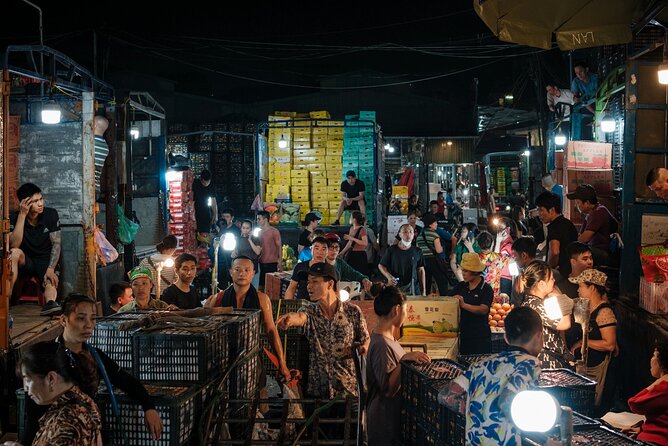
- Long Bien Market access at night: Workers sorting seafood, couriers on trucks, and close-up relationship shots.
- Detail + portrait mix: You’re encouraged to shoot both hands-and-tools moments and human expressions.
- End-of-tour photo review at a tea shop: You get feedback while picking your best images.
- Small group size (max 5): More personal help when you need it.
Why Hanoi’s night streets work so well for photography
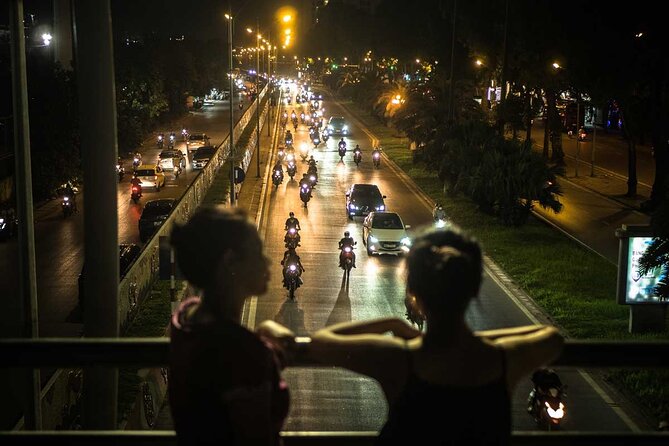
Hanoi after dark gives you built-in ingredients for strong photos: mixed light sources, motion everywhere, and people doing normal work. That’s exactly what a night photography tour should use, instead of forcing you into fake photo backdrops.
On this tour, the street scenes are not random. You’re guided to places where light does interesting things. Near the Old City Gate, the goal is to use the gateway and traffic movement to create those long, smooth light-stream effects. Later, at Long Bien Market, you switch from city-light drama to human-scale moments: workers, sorting, carrying, unloading, and bargaining under bright market lamps.
It also helps that the teaching isn’t stuck in theory. The guides keep the practice tied to what’s in front of you. If you’ve ever left a photo trip with a bunch of decent images but no clear reason they worked, you’ll appreciate this setup.
And yes, the guide team is real and experienced. Names you may see associated with this operator include Tung Phan, Bryan Ng, and Tung Vu—and one guide named Tung is noted for combining photography instruction with a broader understanding of Hanoi and culture in a way that can land especially well if you’re German.
Worth a glance beside this Hanoi pick:

Entering the Old City Gate: settings first, then light trails and panning
The night starts around the Old City Gate area, and it immediately turns into a practical lesson. You begin with a review of night photography settings, focusing on what to adjust when the light changes and the streets get busy.
This is one of the most valuable parts of the tour because night photography usually fails for boring reasons: shutter speed too fast (no motion effect), shutter speed too slow (everything looks blurry), or exposure that burns highlights. Here, the point is to make those adjustments make sense for street scenes, not just for static landscapes.
Once the basics are in place, the tour shifts to specific photo goals:
- Light adjustments for Old Quarter street scenes. You’re meant to adapt your exposure so the gate area and surrounding streets still look detailed, not washed out.
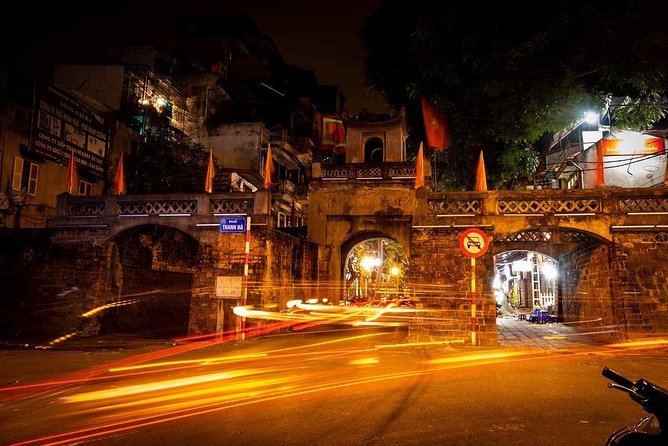
- Long exposure shots through the ancient city gate. This is where you can capture traffic light streams as smooth streaks. The ancient gateway frames the effect, so you’re not just recording light—you’re composing with a historic structure.
- Panning shots at the main entrance. You get opportunities to practice panning techniques with loaded bikes and couriers passing through the area. Panning is one of the hardest night moves to learn because you’re balancing shutter speed with your own movement, so having someone correct you on the spot matters.
As you move away from the gate toward the Long Bien direction, the tour keeps you walking through real local rhythms: traders and locals carrying produce, plus perspectives under the bridge where stalls create different angles. It’s a clever transition. You go from structured composition (the gate) to chaotic street layers (markets and movement), which makes your skills carry over instead of resetting every time you change location.
If you’re the kind of photographer who likes a clear sequence—setup, practice, next technique—this flow is a strong fit.
Long Bien Market after dark: intimate worker shots, fish action, and courier portraits
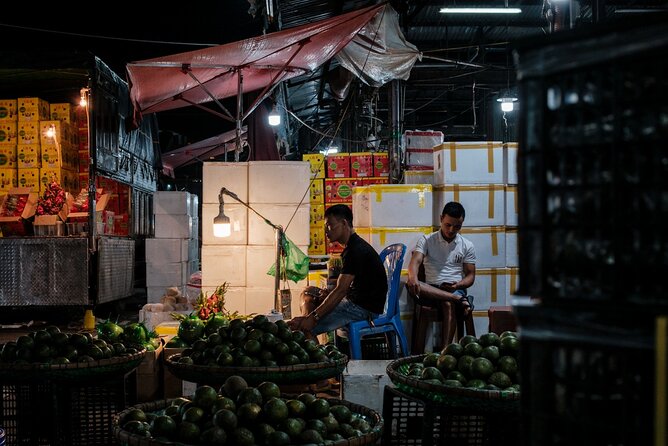
Long Bien Market is where the tour becomes more than night settings. It’s a nighttime photography goldmine because there’s genuine activity and plenty of bright light.
Inside the market, the teaching shifts toward people and storytelling. You’re guided to work on intimate relationship shots—images that feel close to the subject without turning it into an awkward posed moment. The tour focuses on techniques for capturing that action naturally, especially with local workers.
Then you hit the fish market portion of the experience, where motion is constant. Here, you practice with different shutter speeds to change how the scene looks:
- Workers sorting seafood can look like crisp action or smoother, more abstract movement depending on your shutter choice.
- You can aim for dynamic scenes while still keeping faces and key gestures recognizable.
- The market also offers detail shots of goods and traders’ tools. That matters because not every successful photo needs to be a person’s face. Tools, hands, and textures often read beautifully in night light.
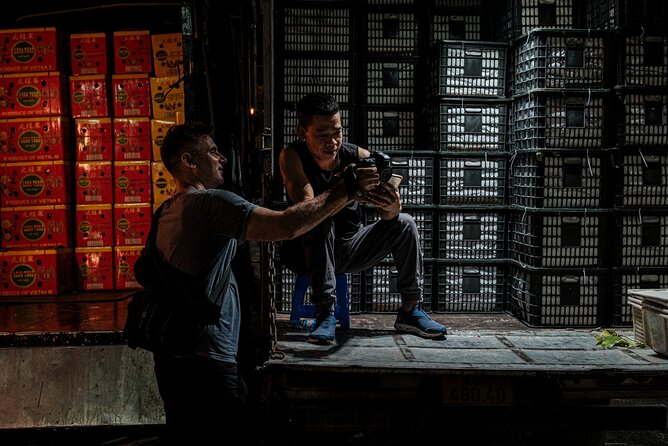
After that, you shift again to candid portrait style—couriers on their trucks. Couriers are perfect subjects for this kind of assignment because they move through the frame with purpose, and you get a chance to balance motion with human expression.
One thing I like about this market segment is that you’re not stuck shooting only wide chaos or only close portraits. It’s structured into multiple photo types in sequence: intimate worker scenes, fish sorting action, detail work, then courier portraits. That keeps you from getting stuck chasing one look all night.
And since the tour is small (max 5 travelers), the guide can help you adjust quickly when you’re missing focus, exposing too bright under market lamps, or getting motion blur you didn’t mean to create.
The tea shop photo review: why the end matters as much as the shooting
Many tours shoot first and teach later. This one does something better: it ends by slowing down and helping you choose.
Near the market, you stop at a tea shop and review your photos. The guide helps you select images and gives feedback aimed at improving your photography skills.
That feedback loop is what turns a fun night out into measurable learning. Without it, a photo tour can become a memory dump: you take photos, you keep a few, and you never fully understand why others didn’t work. Here, the structure encourages you to compare shots and connect the result to the technique you used.
It also keeps the group moving smoothly. After hours of walking and shooting, sitting for a short review prevents the typical burnout spiral where everyone gets cranky and your photos turn into a blur of hurry.
If you enjoy practical coaching—knowing what to change for the next frame—this tea stop is a key part of the value.
Price and value: what $119 buys you at night in Hanoi
At $119 per person for about 4 hours, you’re paying for more than access to a market. You’re buying instruction that’s tied to real shooting conditions.
Here’s what makes the price feel reasonable:
- Professional photographer guide. Night photography teaching is hard to DIY because you need quick corrections. Having a pro who can see your settings and framing in real time changes outcomes.
- Small group size (max 5). This isn’t a large bus-tour photo stop where you disappear into the crowd. Smaller groups usually mean more time on your questions.
- Multiple photo assignments. You don’t just get one viewpoint. You practice long exposure light trails, panning, intimate relationship shots, fish-action shutter experiments, and detail work.
- Photo review and feedback at the tea shop. That adds a learning component that many tours skip.
You’ll also get practical extras: pickup offered, group discounts (when applicable), and a mobile ticket. On top of that, the tour notes admission tickets are free for the market portions you attend.
The only reason the price might feel steep is if you already know night photography well and you’re only looking for locations. If that’s you, you may get less from the teaching. But if you’re trying to improve results quickly, this is the kind of guided structure that can actually save you time and wasted shots.
Worth a glance beside this Hanoi pick:
- Hanoi Private Photoshoot – Iconic Spots & Hidden Gems★ 5.0 · 118 reviews
- Hanoi Explorer Photo Tour★ 5.0 · 40 reviews
- Hanoi On the Tracks Photo Tour★ 5.0 · 33 reviews
How the timing and walking shape your experience
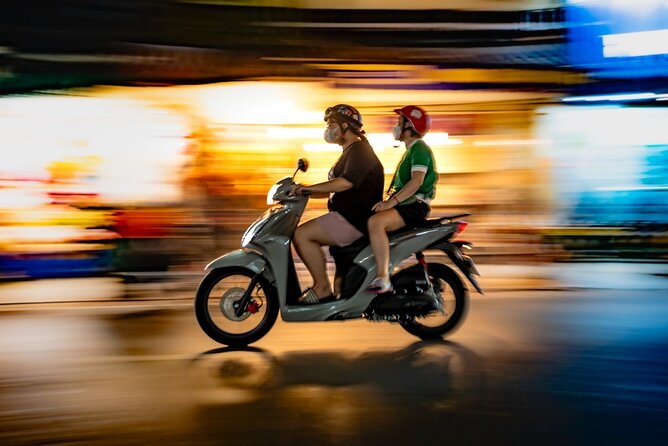
The tour starts at 7:30 pm, which is smart for night photography because it gives you enough darkness to work with while still capturing street activity. You’ll spend about an hour in the Old City Gate area, then the market-focused portion runs longer, with time for multiple practice styles.
Because it’s a walking tour, expect to be on your feet. Markets and streets are crowded, and you’re moving through areas where people are working—traders, couriers, workers unloading supplies, and customers. That means your best results come when you stay alert and ready to shoot as the moment changes.
Also, because the tour depends on good weather, you’ll want to watch conditions before committing your night. If it’s canceled due to poor weather, you should expect options like another date or a full refund.
Who should book this night photo tour
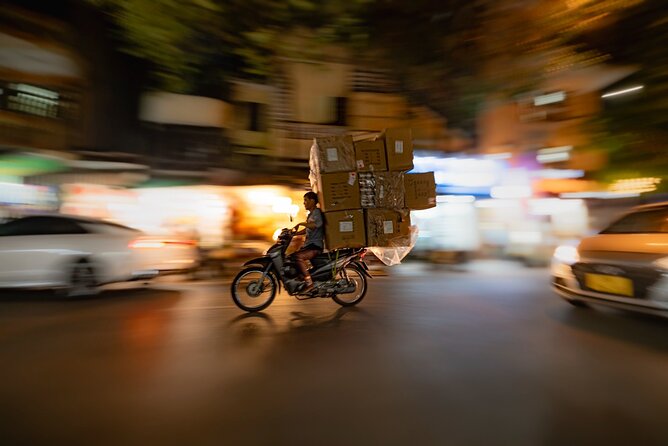
This tour fits best if you want hands-on improvement, not just sightseeing. I’d especially recommend it if:
- You’re new to night photography and want a guide to explain settings in practical terms.
- You shoot street and want a structured way to capture motion, light, and people together.
- You like photographing real work scenes: workers at markets, couriers in motion, and detail shots of tools and goods.
- You enjoy learning from guides who bring both technical photography instruction and local context. The names Tung Phan, Bryan Ng, and Tung Vu show up as part of this operator’s guiding teams, and one guide named Tung is specifically described as teaching photography alongside Hanoi insight.
You might think twice if:
- You hate standing, walking, and shooting through crowds.
- You’re looking for a relaxed, slow pace with no guidance.
- Your goal is only landmark photos from a distance.
Should you book Hanoi by Night Photo Tour?
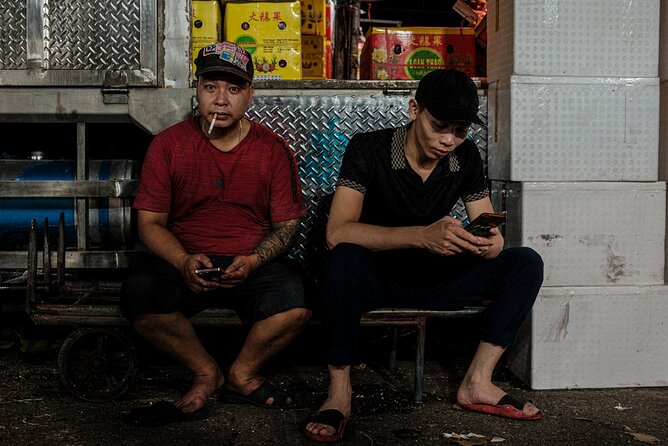
Book it if you want night photos that look intentional, not accidental. The best reason to reserve is the combination of targeted practice (gate light trails, panning, market shutter-speed experiments) plus an end-of-tour photo review with feedback. For $119, you’re paying for a guided coaching workflow, not just access to two popular areas.
Skip it if you already feel confident with night settings and shutter speed control, and you’re primarily seeking a casual, no-pressure night out. In that case, you may prefer independent exploring with your favorite camera apps and settings.
If you’re somewhere in the middle—curious, improving, and ready to learn fast—this tour is a solid use of one evening in Hanoi, and it’s built around the kind of real night scenes that make street photography sing.
FAQ
What is the duration of the Hanoi by Night Photo Tour?
The tour runs for about 4 hours.
What time does the tour start?
It starts at 7:30 pm.
Who leads the tour?
A professional photographer guide leads the experience.
How large is the group?
The tour has a maximum of 5 travelers.
What places do you photograph during the tour?
You photograph scenes around the Old City Gate and spend time at Long Bien Market. The tour also includes a tea shop near the market where you review and select photos.
Is pickup offered, and are admission tickets included?
Pickup is offered. Admission tickets are listed as free for the tour stops.
What if the weather is bad or I need to cancel?
The experience requires good weather. If it’s canceled due to poor weather, you’ll be offered a different date or a full refund. Free cancellation is available up to 24 hours in advance for a full refund.
More Evening Experiences in Hanoi

More Tours in Hanoi
- Ninh Binh Full-Day Tour from Hanoi to Hoa Lu, Tam Coc & Mua Cave Via Boat & Bike
★ 5.0 · 4,384 reviews

More Tour Reviews in Hanoi
Latest Hanoi write-ups from our team


Evening Experiences, compared.
 ★ 5.0Sapa 2 Days 1 Night From Hanoi – Overnight in Ta Van VillageFrom $592,669 reviews
 ★ 5.0Hanoi Motorbike Tours Led By Women: Hanoi By Night Foodie Motorbike ToursFrom $691,734 reviews
 ★ 4.6From Hanoi: Ha Long – Bai Tu Long Bay 2-Day 1-Night Cruise1,113 reviews
 ★ 5.0Halong Bay Cruise 2 days 1 night from Hanoi included transferFrom $1681,061 reviews
 ★ 5.0Best Lan Ha Bay Cat Ba Cruise 2 Days 1 Night Less touristyFrom $871,055 reviews
 ★ 5.0Hanoi – Sapa 2 Days 1 Night Overnight At HomestayFrom $89899 reviews
 ★ 5.0Orchid Trendy Cruises 2Days/1 Night 5 Star CruisesFrom $360853 reviews
 ★ 5.0Tasting 8 Different Street Foods + Local Drink at Evening Time by WalkingFrom $28830 reviews
Browse the lists this tour appears in