Reviewed · HANOI
Explore Nature View And Homestay Experience
Sapa’s villages are best reached on foot. This tour packs major Sapa sightlines into a short trek day: the Fansipan viewpoint and those Muong Hoa valley rice terraces you came for. I like that you get sweeping views early, then trade big-city sights for real village pathways.
I also like the focus on people, not just photos. The overnight homestay in the Hau Thao area brings you into daily routines, and the Black Hmong culture comes through in how you walk, eat, and talk with your hosts.
One consideration: conditions can get slippery. When the weather turns wet, parts of the trekking can be muddy or tough on your knees, so good shoes matter and a moderate fitness level helps.
In This Review
- Quick hits to know before you go
- Price and value for a real homestay trek
- Meeting point, timing, and how the day flows
- Fansipan viewpoint and Muong Hoa rice terraces: the best reason to wake up early
- Day 1 on the trail: Hang Da walks, animals, and lunch with locals
- Hau Thao homestay: daily work, a warm welcome, and how village life shows up
- Day 2: Su Pan trek for rice-field panoramas and traditional houses
- What you’ll eat and why it’s part of the experience
- Guides and group size: why small matters here
- Packing checklist that matches the actual terrain
- Who should book this trek (and who should choose another option)
- Should you book this Sapa nature and homestay tour?
- FAQ
- Where is the meeting point and what time does the tour start?
- What meals and accommodation are included?
- How hard is the trekking and how much walking is there?
- What are the main sights you’ll see?
- Do I get a local guide and a small group size?
- Can I cancel for a full refund, especially if the weather is poor?
Quick hits to know before you go
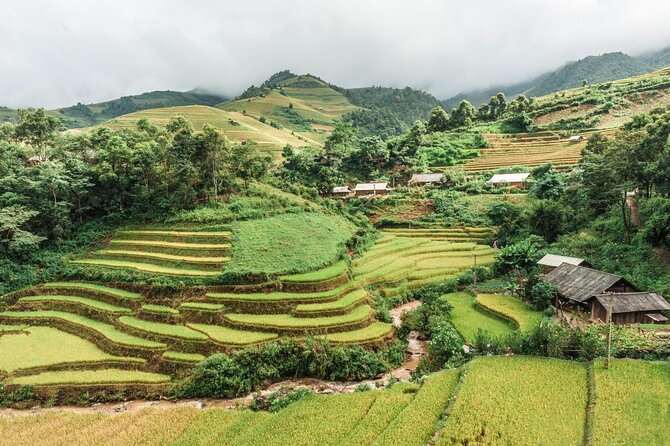
- Fansipan viewpoint from a short uphill stretch with big panoramas over Sapa
- Muong Hoa valley sights including rice terraces and the main river/valley views
- Hang Da + Hau Thao villages built around daily life, not staged stops
- Overnight homestay in Hau Thao with dinner and breakfast included
- A second-day trek toward Su Pan for more rice-field views and traditional houses
- Small group size (max 15) with a local guide and included village entry fees
Price and value for a real homestay trek
This tour costs $71.80 per person for about 2 days, and the value is strongest if you want both trekking and an overnight village experience. You’re not just paying for a guide and a view; you also get homestay accommodation for one night, dinner + breakfast + two lunches, and village entry fees.
The big-picture math is that those inclusions usually make a difference in Sapa, where day tours can become expensive once you add transport, meals, and fees. Here, you’ll also have local transport back to Sapa after the village portion ends, plus one big bottle of water per person.
The tour does not include personal travel insurance and does not cover extra drinks at the homestay. Tips aren’t included either, so plan a little buffer if you feel your guide earns it. If you’re expecting luxury comforts, adjust expectations early: homestay is clean and comfortable, but it’s still rural.
Not sure yet? See how this one sits next to a few Sapa favourites.
Meeting point, timing, and how the day flows
You start at 9:00 am at Sapa Church in the Hàm Rồng area, and the tour ends back at the same meeting point. Pickup is offered, and the guide meets you either at your hotel in Sapa or near the main church area.
Day 1 is built for views first, movement second. You’ll head uphill toward Hang Da and then continue down into village life, finishing with an overnight stay at the Hau Thao homestay area. Day 2 starts with breakfast, then you trek onward toward Su Pan for more rice-field panoramas before returning to Sapa.
That structure matters. You’ll see the best mountain views earlier in the day, when visibility is often better and your legs feel fresher. Then the second day shifts back toward shorter walking and scenery, rather than another big push.
Fansipan viewpoint and Muong Hoa rice terraces: the best reason to wake up early
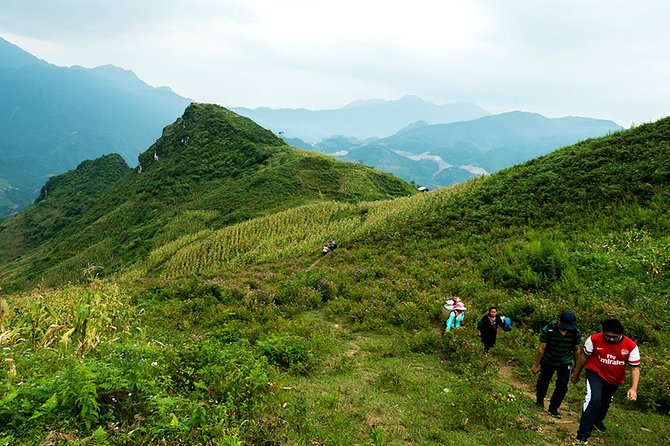
The first stop is Hang Da Village, and it starts with a meet-up and a short introduction near the church area. From there, you’ll walk about 1 km uphill on a small trail to reach mountain views.
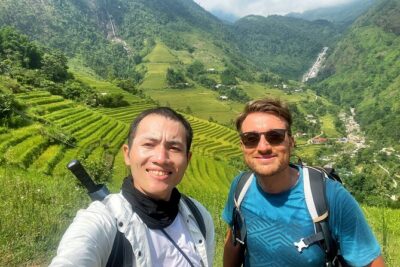
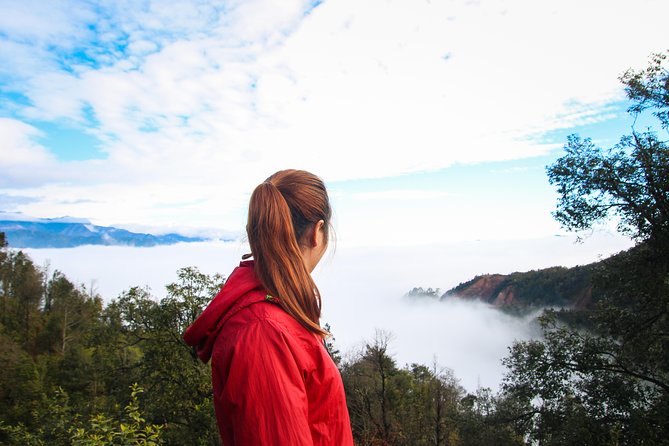
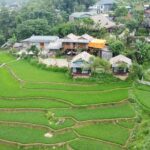
This is where the tour earns its reputation. From the viewpoint, you can see Fansipan, listed here as 3,143 m and the highest point in Indochina, plus views over Sapa town. You’ll also see the famous rice terrace fields in the Muong Hoa valley, along with Sapa’s biggest river and valley views.
If you’re a photography person, this is the moment to slow down. The climb isn’t long, but it can feel steep. When the sky is clear, the view is the kind that makes Sapa feel like more than a hill town.
Possible snag: the path is on a mountain trail. In wet weather, it can be slippery, so you want footwear with real grip.
Day 1 on the trail: Hang Da walks, animals, and lunch with locals
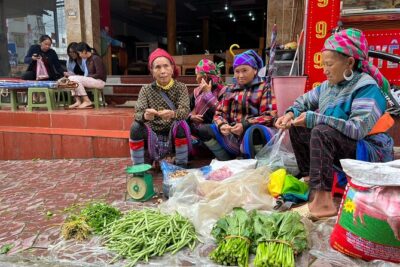
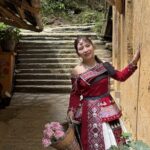
After the viewpoint, you’ll move mountainside down toward Hang Da, a village of the Black Hmong minority. This part is less about a hard workout and more about changing scenery as you descend into village territory.
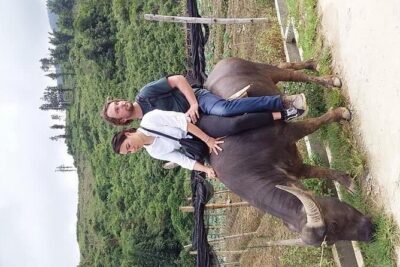
Along the way, you may spot farm animals such as buffalo, pigs, and other livestock. It’s a good change of pace after the wide-open view above. Then you’ll stop for lunch at a small restaurant run by a local family, which is one of those practical meals where you can taste what’s cooked for daily life rather than a tourist menu.
This lunch stop matters. In many Sapa trekking routes, food is either rushed or generic. Here, the tour is set up for a real break before you continue down to the next village.
For most people, the day feels like this: short uphill, wide views, downhill to village life, then steady walking again into the afternoon.
Hau Thao homestay: daily work, a warm welcome, and how village life shows up
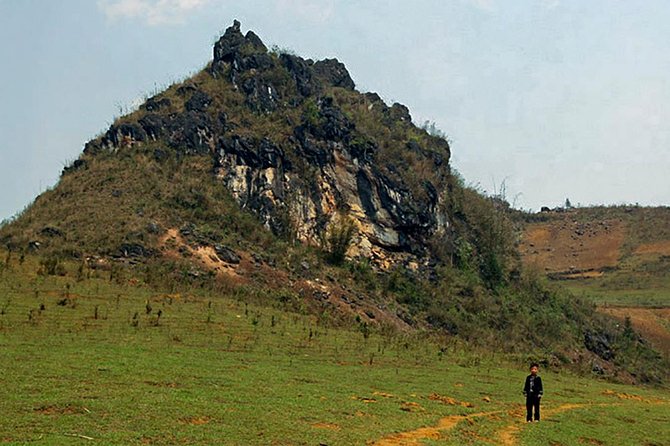
After lunch, you head down to Hau Thao, another Black Hmong village. The transfer is described as a short ride on a little road down, then you’ll spend time in the area where daily life is visible.
If timing works, you’ll see residents working in the fields, such as planting or harvesting rice. Then the key part: you’re welcomed at a homestay in Hau Thao.
This is where the tour becomes more than a hike with scenic stops. Homestay is where you experience everyday rhythm—how people manage their homes, share meals, and keep routines even with visitors around. From the way this tour is organized, it’s designed so you aren’t just passing through a doorway; you’re joining the household’s day.
One practical note for your comfort: extra drinks at the homestay aren’t included. You can also expect that homestay rooms are meant to be clean and comfortable, but the experience is still rural. Pack like you’re visiting a working community, not a hotel.
- Sapa Motorbike Tour With Local Guide 1 Day – Waterfalls, Villages★ 5.0 · 254 reviews
- Motorbike 1 Day Off The Beaten Track, Hidden Villages, rice field★ 5.0 · 203 reviews
- 1-day Authentik trek & Panorama valley views★ 5.0 · 189 reviews
Day 2: Su Pan trek for rice-field panoramas and traditional houses
Day 2 starts with breakfast at the homestay, then you begin a trek from the homestay toward Su Pan, described as a small village near the Black Hmong mountains.
This walk is shorter and more photo-friendly: about 1 hour to reach a viewpoint area where you can photograph panorama views of rice fields. You’ll also see locals living in small traditional houses, and the tour emphasizes that life here still connects closely with nature and local routines.
This day is ideal if you still want movement but prefer not to be exhausted. You’ll likely finish day 2 feeling like you got real variety: big views on day 1, village life at night, then calm walking on day 2.
Weather still affects comfort. Even if the trek is shorter, wet conditions can make paths slick. Bring shoes you can trust.
What you’ll eat and why it’s part of the experience
Meals are fully built into the tour: dinner and breakfast plus two lunches. That reduces decision fatigue and keeps you from spending your limited time in Sapa searching for food after a hike.
What the homestay dinner tends to feel like is important. The tour is organized around local family hospitality, so your meal will likely be based on what the household normally serves. In some cases, guides can also help arrange extra cultural moments when timing fits, such as a visit to a local wedding during the second day.
All of that adds context to the food. You’re eating with the day’s story still running in your head—rice terraces, village pathways, fieldwork—so dinner feels like it belongs to the trek rather than interrupting it.
If you have dietary needs, the tour data doesn’t specify options. Message the provider before you book so you know what’s realistic for your situation.
Guides and group size: why small matters here
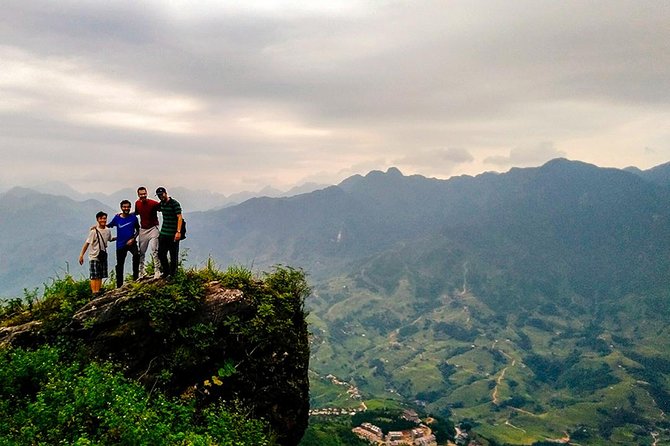
This tour caps at 15 travelers, and you’ll go with a local guide. In Sapa trekking, a good guide changes how much you notice: which paths are safest, how to read the terrain, and how to connect what you’re seeing to daily life.
From the names connected with this route, you may travel with guides such as May, Sua, Lee, Tong, Tung, Dheng, Sang, or Soso. Across those experiences, the consistent theme is practical help—like adjusting the trek when someone’s knee hurts, or guiding at a pace that keeps you comfortable on steeper sections.
Small groups also make homestay smoother. When the group is limited, households can usually manage attention, meals, and space without feeling overwhelmed.
Packing checklist that matches the actual terrain
The big thing to plan for is not just cold. It’s traction. The trek can be muddy or slippery in wet weather, even if the walking time is short. That’s why sturdy footwear is the most important item in your bag.
Bring:
- Shoes with grip for wet trails
- A rain layer for misty mountain weather
- Light layers you can adjust after the uphill section
- A daypack for snacks, water, and a dry layer
You’ll get one big bottle of water per person, but you’ll still want a small container for quick refills or personal comfort.
Optional but smart: trekking poles if you use them. They’re helpful on descents, especially if your knees get cranky on uneven steps.
Who should book this trek (and who should choose another option)
This is best for you if you want:
- A 2-day Sapa experience that includes real ethnic minority villages
- Scenic time for Fansipan viewpoints and Muong Hoa valley rice terraces
- An overnight homestay instead of a single-day bus-and-camera circuit
- A moderate activity level with short-to-medium walking segments
You might want to think twice or plan extra carefully if:
- You have knee or mobility limitations and can’t handle uneven mountain trails, especially in rain
- You want minimal hiking and maximum comfort—homestay is clean and welcoming, but it’s not a resort
If you do book and you have any physical constraints, tell your guide. The route is run with small groups, and guides on this route have a track record of adjusting pace and trek demands when needed.
Should you book this Sapa nature and homestay tour?
Book it if you’re hoping for Sapa that feels lived-in: rice terraces in the morning light, village pathways at human pace, and a homestay night that teaches you how people work and eat in the mountains.
Skip it if your priority is lounging. This trek involves uphill and downhills, and weather can make paths slick. If that sounds annoying, choose a gentler route.
For the right traveler, though, the combination is strong: Fansipan views, Muong Hoa terraces, two Black Hmong villages, and one night in a homestay—all packaged into one small-group 2-day plan with meals and key fees handled.
FAQ
Where is the meeting point and what time does the tour start?
The tour starts at 9:00 am at Sapa Church (P. Hàm Rồng, TT. Sa Pa, Sa Pa, Lào Cai 333100, Vietnam). Pickup is offered, and the guide may meet you at your hotel in Sapa or in front of Sapa’s main church.
What meals and accommodation are included?
You get dinner and breakfast, plus lunch (2) on the itinerary. Accommodation is homestay for one night in the villages.
How hard is the trekking and how much walking is there?
The tour asks for moderate physical fitness. Day 1 includes about 1 km uphill to reach the Hang Da viewpoint, plus additional walking down into the villages. Day 2 includes an additional trek of about 1 hour.
What are the main sights you’ll see?
You’ll visit Hang Da for mountain views including Fansipan and panoramas over Sapa town, plus views of the Muong Hoa valley rice terraces and the main river/valley. On day 1 and day 2, you’ll also see Black Hmong villages and traditional houses, including Su Pan on day 2.
Do I get a local guide and a small group size?
Yes. You travel with a local guide, and the tour has a maximum of 15 travelers.
Can I cancel for a full refund, especially if the weather is poor?
Yes. You can cancel for a full refund if you cancel at least 24 hours before the experience’s start time. If the experience is canceled due to poor weather, you’ll be offered a different date or a full refund.