

Reviewed · 7-DAY EXPERIENCES
2-week Vietnam Itinerary | Classic Sightseeing | 2026 Enchanting
Four regions, one well-paced plan. This 2-week Vietnam trip stitches together the big-name sights with active days like a Sapa trek and a Halong-Lan Ha cruise, so you’re not just sitting on buses all day. You’ll also get that “slow down” feeling in places like the Old Quarter and Hoi An, where the best part is walking, eating, and watching daily life unfold.
I especially like the range of experiences packed into each location: temple visits and museum time in Hanoi, UNESCO cave scenery in Trang An, mountain villages in Sapa, and then river life in the Mekong. I also like that the trip runs as a small group, with a max of 10, which usually means your guide can keep things organized and still give you breathing room.
One drawback to consider is the travel rhythm. You’ll have early starts and long road segments (like the jump from Hanoi to Ninh Binh, and Hanoi to Sapa), so it’s not a lazy vacation. If you’re the type who hates getting up before sunrise, plan for tired legs at least a few days.
In This Review
- Key highlights worth packing for
- A small-group classic loop: Hanoi to Saigon with texture
- Hanoi culture day: Ho Chi Minh Complex, Temple of Literature, and Old Quarter cyclo
- Ninh Binh by the clock: Bai Dinh, Trang An caves, and the Mua Peak climb
- Sapa: Fansipan cable car, village treks, and that “mountains-and-people” feeling
- Halong Bay meets Lan Ha: the La Pandora overnight cruise rhythm
- Marble Mountains, Cam Thanh Coconut Forest, and Hoi An’s walking pace
- Hue with the Hai Van pass and an Imperial City visit
- Ho Chi Minh City: Cu Chi Tunnels and the heavy lesson
- My Tho and the Mekong Delta: boat time, daily river work, and crossings
- Food and comfort: why the included meals matter here
- Guides, organization, and the kind of help you don’t plan for
- Price and value: what $1,699 covers (and why it can be fair)
- Who this tour fits best
- Should you book it?
- FAQ
- Is pickup included?
- Where does the trip start and end?
- How long is the tour?
- What’s the group size?
- What room type is included?
- Are entrance fees included?
- Are meals included?
- What kind of transport do you use between regions?
- What are the biggest walking or active days?
- What happens if something closes on certain days?
- What if the experience can’t run due to weather?
Key highlights worth packing for

- Sapa’s mountain views plus a practical trek plan, including rice-terrace walking and village stops
- Trang An UNESCO grotto scenery with cave passages that feel like a moving postcard
- La Pandora overnight cruise on Halong-Lan Ha, including sunset time and sunrise routines
- Hoi An on foot, paired with Marble Mountains and the Cam Thanh Coconut Forest area
- Guides with strong follow-through, with names like Tran, David, and Chochai coming up in positive feedback
- Meals that cover real local favorites, not just snack stops between attractions
A small-group classic loop: Hanoi to Saigon with texture
This is a classic Vietnam sweep, but it’s built like a sampler that still leaves room to notice details. You’re covering Hanoi, Ninh Binh, Sapa, Halong Bay / Lan Ha Bay, Da Nang and Hoi An, Hue, Ho Chi Minh City (Saigon), and the Mekong Delta around My Tho. That’s a lot on paper, yet the structure is clear: culture in the north, nature and mountains in the middle, and history and river life in the south.
The small group size (max 10) matters more than it sounds. With fewer people, it’s easier to keep schedules realistic—especially on days that include transfers, cave boats, and trekking.
And yes, the tour is designed to keep you moving, but it’s not a grind for the sake of it. The day-to-day mix includes museum time, walking time, and several “sit down” moments like boat rides, a cruise, and lunches that are more than a quick bite.
Worth a glance beside this Hanoi pick:




Hanoi culture day: Ho Chi Minh Complex, Temple of Literature, and Old Quarter cyclo

Hanoi starts with an easy landing: arrival at Noi Bai Airport, then pickup and transfer to your hotel in the city center. Check-in is available starting at 2 pm, so you’re not forced into a full day right away. Your first day stays open for exploring and shopping—use it to get your bearings around Hoan Kiem Lake.
The next morning is a well-chosen set of big-picture stops. You’ll see the Ho Chi Minh Complex, including the mausoleum area and his stilt-house residence and presidential palace. Important practical note: the mausoleum is closed on Mondays and Fridays, so if your dates land on those days, expect the visit flow to shift. From there, you move into deeper culture.
Then come two Hanoi anchors:
- The Temple of Literature and National University, founded in 1070 and tied to Confucian scholarship. You’ll also see the honored scholars, including 82 Vietnamese doctorates.
- The Vietnam Museum of Ethnology, focused on Vietnam’s 54 ethnic groups. It’s included, and if it falls on a Monday it can be replaced with the History Museum instead.
By late afternoon you get the Old Quarter feel: you’ll visit Ngoc Son Temple on a tiny island in Hoan Kiem Lake, then enjoy a 1-hour cyclo tour to round out the day. This isn’t just a ride—it’s a simple way to see the Old Quarter’s street rhythm without needing to map everything on day two.
My take on value: Hanoi can be overwhelming. This structure gives you the main cultural highlights with a guide, then leaves the evening for you to wander. That balance is ideal if it’s your first time in Vietnam.
Ninh Binh by the clock: Bai Dinh, Trang An caves, and the Mua Peak climb
The trip to Ninh Binh is one of those “you’ll be glad it’s scheduled” moments. You travel from Hanoi, but it includes a short break so the day doesn’t feel like pure transit.
Once you arrive, the first stop is Bái Đính Pagoda, described as the biggest in Southeast Asia and known for records like many stone arhats and a massive bronze bell plus large Buddha statues. Even if you’re not a hardcore architecture fan, this kind of scale hits fast.
Then you shift gears to UNESCO scenery at Tràng An Grottoes. Expect boat travel through a tunnel-cave system (and yes, it’s the kind of place that’s easy to watch and hard to stop thinking about later). The key is that you’re moving through the scenery instead of standing next to it.
After that comes Mua Cave / Dancing Cave, capped by a climb of nearly 500 steps to reach the top of Lying Dragon Mountain. The reward is a panoramic view over Tam Coc. If you’re doing this with any knee issues, take it slow and treat it as a steady climb, not a sprint.
What to watch for: this is a full day with multiple ticketed stops. Wear comfortable shoes and bring a layer for cooler spots in the caves and on the mountain top.
Sapa: Fansipan cable car, village treks, and that “mountains-and-people” feeling
Sapa is where the trip becomes more physical. You start with an early pickup in the Hanoi Old Quarter and take a big bus up to the mountain region, with rest stops along the way. It’s an efficient way to cover the distance, but still plan for early mornings.
Once you reach Sapa, you head into village life. Cat Cat village is a classic introduction: colorful traditional costumes, local lunch, and a trek that’s listed as about 3.5 km. It’s not only a photo stop—it’s a route that puts you near everyday village routines.
The next day takes you to Fansipan via cable car (the ride is listed at about 20 minutes). After that, you trek toward Ta Van Village, with walking through rice terraces and along Muong Hoa Stream. The itinerary notes a trek distance around 12 km, and that’s your reality check: this day is longer and better suited to people who enjoy steady walking and being outside for hours.
On the following day, you get another village trek, this time to Giang Ta Chai Village, including breakfast prepared by the family. You’ll walk through rice paddies and do a photo session, then head across the Giang Ta Chai Bridge before returning toward Sapa. The day is shorter than the longer trek, listed around a few hours, but it still gives you that hands-on mountain village feel.
If you’re wondering about comfort, this is where your “private room” accommodation helps. After treks, you’ll actually want a clean, quiet place to recover.
One detail from the tour overview: Sapa includes time with a view from a notable infinity pool. That’s not a standard sightseeing item—it’s downtime with a view, which is exactly what you want after walking days.
Halong Bay meets Lan Ha: the La Pandora overnight cruise rhythm
Halong is a bucket-list name. This version adds a smart twist by splitting time between Halong Bay and Lan Ha Bay, with sailing through limestone karst scenery around the Ong Cam area.
You’ll transfer to Tuan Chau marina and then board La Pandora. The timing is built around getting you on the water with enough daylight to enjoy the cruise while still having time for activities.
On the first cruise day, you sail into Lan Ha Bay and enjoy a quieter zone. That matters because the best parts of Halong for most people are the moments that don’t feel crowded. Then you anchor overnight, with included onboard activities like a spring roll cooking demonstration and a sunset party on the sundeck.
The next morning starts early: you can enjoy sunrise, with Tai Chi on deck and a light breakfast. You’ll also visit Dark & Bright Cave, which is one of those classic cave experiences where you trade city noise for rock passages and slow boat movement.
How to enjoy this day more: pack for cool early air on deck, even if the afternoons feel warm. And keep one pocket simple: water, light layer, and your camera or phone. You’ll use them.
- Hanoi Motorbike Tour: Food, Culture and Fun by Vintage Motorbike★ 5.0 · 6,699 reviews
- Hanoi: Guided Food Tour with Train Street Visit★ 4.9 · 6,239 reviews
- Hanoi Cooking Class: Culture, Local Market & Meaning CSR Impact★ 5.0 · 5,147 reviews
Marble Mountains, Cam Thanh Coconut Forest, and Hoi An’s walking pace
After Halong, the trip shifts from water and caves to coastal Vietnam. On a sightseeing day out of Da Nang, you visit Ngũ Hành Son (Marble Mountains) and Non Nước Village at the foot of the mountains.
Then you head to Cam Thanh’s Bay Mau Coconut Forest. The tour describes it as poetic with green water and an eco-system, and it’s located about 5 km from the southeast of Hoi An Old Town. In practice, this is a nice change from temple interiors: you get outdoors time and a different Vietnam mood—river/coast, boats, and nature edges.
The evening moves you into Hoi An, one of Vietnam’s best walking towns. You’ll visit the Old Town area, and you’ll have a guided introduction to what made it such an early trading center in the 16th century. Then you get the best part: Hoi An by foot, at your own tempo.
On the following day, there’s free time in Hoi An for your own leisure. This is valuable because it lets you repeat the streets you liked and skip the ones you didn’t. It also gives time to shop, relax, and eat without racing to a schedule.
Hue with the Hai Van pass and an Imperial City visit
Hue is a different kind of history than Hanoi. You travel from Da Nang up to Hue, including the Hai Van mountain pass. That pass is described as one of the world’s top ten most beautiful, and even if you don’t memorize rankings, the driving itself is part of the experience.
Once you arrive, you tour the Hue Imperial City, associated with the palaces of 13 Nguyễn kings. This is a day where the guide matters. You’re not just looking at walls—you’re learning the stories of the last dynasty of Vietnam and walking through the spaces where those eras played out.
If you’re trying to balance photos and understanding, this is your day. Don’t rush. Give yourself time inside the main compounds so it turns from sightseeing into comprehension.
Ho Chi Minh City: Cu Chi Tunnels and the heavy lesson
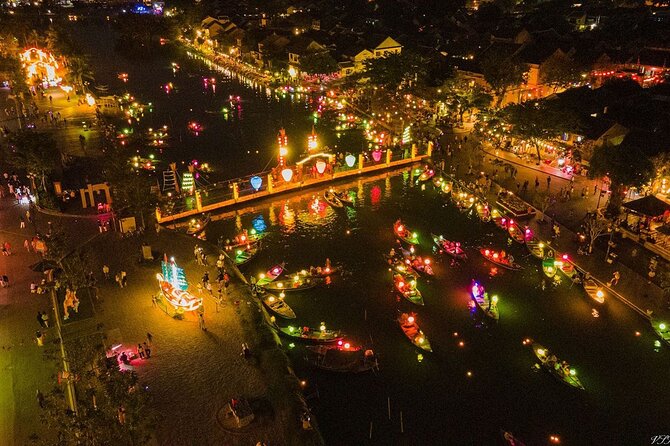
After Hue and your Hoi An free day, the schedule moves you by flight to Ho Chi Minh City. Hotel check-in happens on arrival, and then the afternoon is devoted to Cu Chi Tunnels.
This is a must-see if you want context for Vietnam’s modern history. The itinerary frames Cu Chi as an underground system of over 220 km of tunnels, and it’s included with admissions. Even if you’ve seen photos before, walking through a tunnel setting changes how you understand scale and survival.
Practical tip: wear shoes you can handle for uneven ground and museum-like surfaces. This isn’t a day for delicate footwear.
My Tho and the Mekong Delta: boat time, daily river work, and crossings
The Mekong Delta day out of Ho Chi Minh City starts with leaving the city early for My Tho, on the left side of the Mekong River. You’ll visit Vinh Trang pagoda and then switch into boat mode.
On the river, you go downstream along Dragon Island to see daily activities such as catching and raising fish on farms. You’ll also cross a large river listed at 3 km. That crossing is one of those moments that makes “river geography” feel real.
The Mekong is also where you should lean into the slow pace. You’re watching how people live with and around the water. This is less about ticking boxes and more about letting the river work and boats become the soundtrack of the day.
Food and comfort: why the included meals matter here
Food is one of Vietnam’s superpowers, and this tour builds meals into the structure instead of leaving everything to guesswork. Breakfast is included 13 times, lunch 10 times, and dinner 4 times.
That matters for two reasons:
- You don’t waste half your day figuring out what’s open and what’s safe.
- You’re more likely to eat local dishes because lunches and dinners aren’t just snacks between attractions.
The trip also makes room for different eating styles: temple-area lunch stops, local dishes during village time, and onboard cruise food activities. If you care about eating well without planning every meal, this is a strong setup.
And from the positive feedback tied to the company, good food keeps showing up as a highlight, along with the fact that guides help you place the right dish at the right moment.
Guides, organization, and the kind of help you don’t plan for
One of the most praised aspects of this tour is the human side. Names like Tran come up as someone who organizes and coordinates smoothly, and guides such as David and Chochai are cited for sharing history, answering questions, and going above and beyond.
You also get a sense that the company handles real-world problems—not just perfect schedules. Past feedback notes help when visa issues popped up late, and when flights were cancelled, the team worked on hotel and plan adjustments. That tells you something important: the operation tries to keep you on track even when travel stops behaving.
For you, that means less stress. And in a 14-day route with early starts and multiple transport days, less stress is worth real money.
Price and value: what $1,699 covers (and why it can be fair)
At $1,699 per person, you’re paying for more than sightseeing entry fees. The inclusions list covers:
- Private room accommodation
- Domestic flights (including the jump to Ho Chi Minh City)
- Air-conditioned vehicle and transfers
- A tour guide
- All entrance fees for included sights
- A long run of included meals (13 breakfasts, 10 lunches, 4 dinners)
When you price Vietnam day-by-day yourself, these costs add up fast. Transport, guide time, and entrance tickets are usually where DIY trips quietly blow up. Here, those pieces are bundled, and the itinerary is structured so you don’t spend your vacation tracking schedules.
That said, the value depends on what you prefer. If you want total freedom with zero early mornings, this might feel structured. If you want a classic route with guide support and mostly planned meals, it’s priced like a practical package.
Who this tour fits best
This fits best if you:
- Want a classic Vietnam route with big highlights in the north, center, and south
- Don’t mind a few longer travel days and early mornings
- Enjoy active days like trekking in Sapa and climbing up to Mua Peak
- Like the idea of having a guide for context and logistics, especially in places like the Imperial City and Cu Chi Tunnels
It may be less comfortable if you have limited mobility. There are step-based climbs (including nearly 500 steps), and several trekking segments are built into the route.
Should you book it?
I’d book this if you want your time in Vietnam to feel guided but not stiff—especially if you care about seeing many regions with less planning pressure. The small-group size, the cruise day design, and the mix of culture plus active nature days make it a strong option for first-timers and returning travelers who want a solid classic loop.
If you hate early starts, you can still make it work by treating the mornings as part of the adventure. But if you’re chasing a slow, beach-only rhythm, you’ll probably feel stretched by the route.
FAQ
Is pickup included?
Yes. The tour includes pickup for airport arrival in Hanoi, and it also lists hotel pickup for several sightseeing days.
Where does the trip start and end?
It starts in Hanoi, and it ends with free time in Ho Chi Minh City before your departure flight from Saigon.
How long is the tour?
It runs for 14 days.
What’s the group size?
The tour has a maximum of 10 travelers.
What room type is included?
Accommodation is listed as a private room.
Are entrance fees included?
Yes. All entrance fees for the included sightseeing destinations are listed as included.
Are meals included?
Yes. Breakfast is included 13 times, lunch 10 times, and dinner 4 times.
What kind of transport do you use between regions?
The tour includes an air-conditioned vehicle and lists a domestic flight when moving to Ho Chi Minh City.
What are the biggest walking or active days?
Sapa includes trekking in village areas, and Ninh Binh includes a climb up to Mua Cave with nearly 500 steps.
What happens if something closes on certain days?
The Ho Chi Minh mausoleum is closed on Mondays and Fridays, and the Vietnam Museum of Ethnology is closed on Mondays with an alternative listed as the History Museum.
What if the experience can’t run due to weather?
The cancellation policy states that if it’s cancelled due to poor weather, you’ll be offered a different date or a full refund.
More 7-Day Experiences in Hanoi



More Tour Reviews in Hanoi




Latest Hanoi write-ups from our team



7-Day Experiences, compared.
 ★ 5.05, 6, 7 day Vietnam Itinerary | Charming | 2026 Northern PackagesFrom $590120 reviews
 ★ 5.07 Days Unlimited DATA SIM CARD VietnamFrom $14111 reviews
 ★ 5.07-Day Vietnam Itinerary | Tranquil | Best 2026 North and SouthFrom $89952 reviews
 ★ 5.07 Days Vietnam Travel (Hanoi- Ninh Binh – Sapa – Ha Long)From $58635 reviews
 ★ 5.0Vietnam At Glance In 7 Days – From Hanoi to Ho Chi Minh CityFrom $79934 reviews
 ★ 4.57 Days Explore Vietnam TripFrom $1,68928 reviews
 ★ 5.07 Days South & Central Vietnam | Highlights and Top DestinationsFrom $85921 reviews
 ★ 5.0Vietnam 7 Day 30GB Tourist SIM RentalFrom $416 reviews
Browse the lists this tour appears in