Reviewed · HANOI
Vietnam Cambodia and Thailand Group
When three countries run on one clear plan, it feels easy. You get Hanoi’s culture hits, the jaw-dropping scale of Angkor, and a finish of Phuket and Koh Phi Phi downtime, all handled with Portuguese-speaking guides and air-conditioned transfers. I especially like the way the schedule mixes landmark temples with hands-on moments (like Hanoi’s flower crafting) and big-picture wow sights (like Halong Bay and Angkor Wat). One caution: this is a fast, multi-flight itinerary with long travel days, so if you hate packing and moving every couple of days, build in extra patience.
At $4,810 per person, it’s not a budget trip. But the value is in what it bundles: most breakfasts, several lunches, one dinner, entrance fees, domestic flights, cruises and boat tours, plus guided touring in Portuguese. In the feedback I’ve seen from real travelers, the standout theme is organization, with guides such as Alberto in Hanoi getting specific praise, and advance help from the team (including Camila) making planning feel steady instead of stressful.
In This Review
- The Big Picture: What This 18-Day Route Really Gives You
- Hanoi in One Busy Day: Literature, Mausoleum Views, and the Old Quarter by Triciclo
- Halong Bay Cruise: Limestone Islands, Sunrise Photos, and Tai Chi on Deck
- Hoi An After Dark: Lantern Cruise on the Hoai River and a Slow Walk Through the Old Town
- Siem Reap and Angkor: Big Temple Days Without Feeling Lost
- Beyond Angkor Wat: Monks, Banteay Srei, and Khmer Craft Support
- Bangkok Temples and Chinatown Gold: Wat Traimit, Wat Pho, and the Grand Palace Zone
- Maeklong Railway Market and Damnoen Saduak: Watching Trade Happen in Motion
- Chiang Rai’s White and Blue Temples: Art That Gets Under Your Skin
- Chiang Mai’s Doi Suthep and Lanna Core: Wat Phra Singh, Chedi Luang, and Suan Dok
- Phuket to Koh Phi Phi: Transfers First, Then Beach Recovery
- Koh Phi Phi Don Boat Tour: Monkey Beach, Viking Cave, Maya Bay, and a Sunset Rhythm
- Your Koh Phi Phi Free Day: Recharge, Walk, or Just Do Nothing
- Price and Logistics: Is $4,810 Good Value for What You Get?
- Who This Tour Fits Best
- Should You Book This Vietnam, Cambodia, and Thailand Tour?
- FAQ
- What time does the tour start in Hanoi?
- Where does the tour end?
- Are entrance fees included?
- What kind of tickets are provided?
- What meals are included?
- Does the tour use domestic flights?
- Are the tours guided and in what language?
- Is it limited to a small group?
- Is travel insurance included?
The Big Picture: What This 18-Day Route Really Gives You
This trip is designed for people who want a full Southeast Asia sampler without having to stitch together flights, transfers, and tickets on your own. You start in Hanoi, spend time on water in Halong Bay, slow down in Hoi An, then go all-in on Cambodia’s Angkor region. After that, you get Bangkok’s temples and market scenes, Chiang Rai’s contemporary temple art, Chiang Mai’s classic Lanna temples on a mountain, and finally the beach payoff in Phuket and Koh Phi Phi.
The small-group size matters. With a maximum of 20 travelers, you typically get better flow than huge bus tours, especially for guided walks through historic centers and temple complexes. That also means you’re less likely to feel like you’re disappearing behind a crowd when you stop for photos.
The other quiet strength is the language support. Guided tours are in Portuguese, which is a big deal in Vietnam, Cambodia, and Thailand where signage is often limited and ticket lines can be confusing.
Hanoi in One Busy Day: Literature, Mausoleum Views, and the Old Quarter by Triciclo
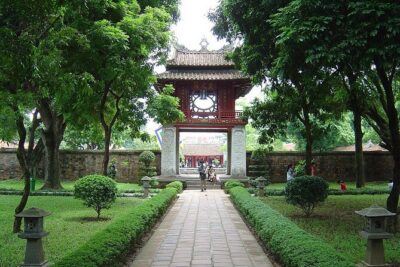
Hanoi starts with the Temple of Literature and National University, founded in 1070 and tied to Confucius. It’s a classic choice because it gives you more than pretty buildings—you get a sense of how education and status worked in early Vietnam, with the site acting as a symbolic centerpiece for the city.
From there, you move to the Ho Chi Minh Mausoleum area, viewed from Ba Dinh Square. Important note: the mausoleum visit here is described as outside viewing, not an interior entry. So set your expectations for a respectful, city-scale stop, not a long museum-style experience.
Next is the One Pillar Pagoda, built in 1049 on a single stone pillar, designed to resemble a lotus leaf. It’s small, but it’s powerful in a specific way: you see how Vietnamese temple design uses symbolism instead of size to communicate meaning.
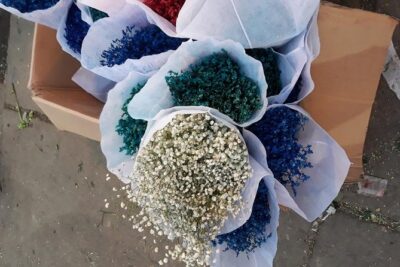
Then the afternoon adds something different: flower arranging and spiritual crown-making at a handmade florist. This isn’t a typical souvenir stop. You’re learning the traditional way flowers are used and arranged for spiritual purposes, and you practice how to recognize exotic flowers as part of the crown preparation.
To finish the day, you walk around Hoan Kiem Lake, with views toward Ngoc Son Temple and the iconic Red Bridge The Huc. After that, the Old Quarter ride by triciclo pousse (a cycling rickshaw) gives you a quick orientation of the 36 streets area, originally known for crafts and artisan workshops.
What I like for your first day: you’re not thrown into chaos. You get a logical arc: scholarship and heritage, national symbolism, temple tradition, a cultural craft experience, then classic city imagery by lake and street.
What to consider: this is an active day with multiple stops and transit between them. Comfortable shoes help, and if you need slower pacing, plan to take the evening seriously—no last-minute wandering that burns the next morning.
Not sure yet? See how this one sits next to a few Hanoi favourites.
Halong Bay Cruise: Limestone Islands, Sunrise Photos, and Tai Chi on Deck
Halong Bay is the kind of place where the photos look like they were edited. The name alone—dragon coming down from the sea—sets the tone for a landscape people explain with legend.
The cruise day is set up as a proper guided experience rather than a quick boat ride. You sail through emerald waters between imposing limestone formations. Lunch is included aboard, and you get specific islands pointed out by shape—like Turtle, Dog, and Head of Man—so you’re not just floating and hoping to recognize things.
There’s also an early option: at sunrise, some travelers can join a Tai Chi class on the terrace. Even if you skip it, the value is still there because the day is structured around cooler light for photos and calmer movement on the water.
On the return day, you’re back into classic Halong Bay rhythms: navigation among almost 2,000 limestone islands, then brunch and a return to land. If you’re the type who likes to take the day seriously, these timing choices give you two chances to enjoy the bay under different conditions.
Potential drawback: cruise time is water time. If you’re sensitive to boat motion, bring your patience (and consider motion-sickness basics from home). Also, mornings start early enough that you’ll want to sleep well the night before.
Hoi An After Dark: Lantern Cruise on the Hoai River and a Slow Walk Through the Old Town
Hoi An is where the trip eases its pace. Day 4 gets you to Hoi An after a flight from Hanoi via Da Nang, then the evening lantern experience begins on the Hoai River.
That river is important to the local story, and once night falls, lantern-lit streets create a different mood than daytime sightseeing. You even throw lanterns into the water during the evening ritual, which is one of those experiences that feels more cultural than theatrical—assuming you go in with a respectful attitude.
Day 5 is where you get the historic walking route. You start in the Ancient Town, built on a 17th- and 18th-century trading port legacy. The architecture and the relaxed atmosphere aren’t an accident; they’re part of why Hoi An became a global name.
Then you move through key heritage stops:
- Phuc Kien hall (Fukian Assembly Hall)
- The Ancient House of Merchants and overcast Japanese bridge context
- Casa Tan Ky, with traditional architecture and a museum element
After lunch, you get free time to make the day yours. The program mentions the beach, strolling the colorful central market, or shopping. That open slot is useful because Hoi An can feel slower by design—so you can either recharge or focus on personal interests.
Why this works in the itinerary: after the scale of Halong Bay and later the intensity of Angkor, Hoi An gives you time to breathe and walk at human speed.
Siem Reap and Angkor: Big Temple Days Without Feeling Lost

Cambodia’s Angkor region is the center of gravity here, and the tour tries to keep you oriented by sequencing the major groups of temples.
Day 7 starts with Angkor Thom, entering via the South Gate. You get statues tied to the movement of the ocean and a tour through core sites such as Bayon Temple’s 54 towers with 200 smiling faces of Avalokiteshvara. You also cover Phimeanakas, the terrace of the leprosy king, and the elephants plus royal chambers. This is a “read the city” day more than a “check boxes” day, because it’s structured around the capital’s layout.
Then you go to Ta Prohm, the temple where ruins are embraced by trees. This is one of those locations where the guide’s framing really matters—otherwise it can feel random. With guidance, you understand why those shapes exist and what makes Ta Prohm so recognizable.
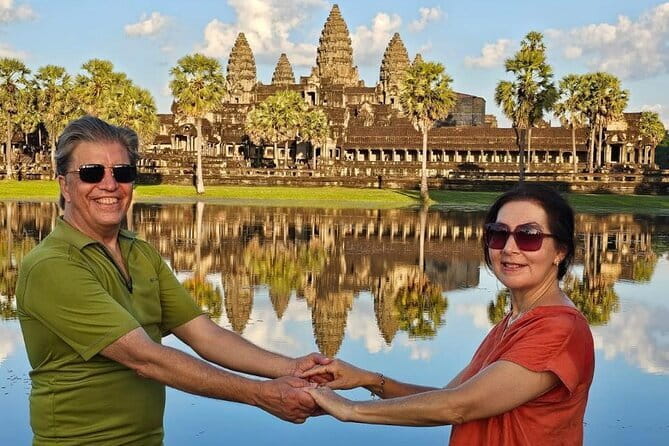
In the afternoon, you shift to Angkor Wat itself, UNESCO-listed and spread over about 81 hectares. The tour explains the Mount Meru symbolism: five towers, the five peaks idea, and the wall and moat design. You also get the Pre Rup sunset during late afternoon. That timing is practical because it’s when the stone color changes and crowds thin a bit.
What to consider: Angkor days are long on your feet. Even with transport, temples take time. Bring water, pace your photos, and don’t underestimate sun exposure.
Beyond Angkor Wat: Monks, Banteay Srei, and Khmer Craft Support

Angkor Wat is the headline, but the second temple day is where the tour adds soul and variety.
Day 8 begins with a Buddhist ceremony with monks at a pagoda. The program includes time to learn how Buddhism shapes Cambodian culture and closes with a prayer from monks to distribute luck and blessings. This isn’t presented as a performance; it’s described as a real ceremony component, which makes it feel grounding in a region dominated by monuments.
Then you move to Banteay Samre, a Hindu temple dedicated to Shiva, decorated with reliefs tied to themes from the Ramayana.
After lunch, you go to Banteay Srei, known as the City of Women and famous as a smaller-scale temple with rose sandstone and precise carvings. The tour notes it’s considered one of the Khmer art joys due to the detail. It’s also framed as an Angkorian-era style that feels different from the huge temple blocks.
On the way back, you visit D’Angkor Artisans, a center helping Cambodian youth keep traditional crafts alive. If you’re interested in how heritage continues beyond stone ruins, this stop gives a modern bridge.
Potential drawback: this day mixes different belief systems and art styles. If you want only one kind of site, you might prefer a more single-theme itinerary. But if you like variety, it prevents Angkor fatigue.
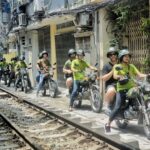
- Hanoi Motorbike Tour: Food, Culture and Fun by Vintage Motorbike★ 5.0 · 6,699 reviews
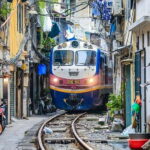
- Hanoi: Guided Food Tour with Train Street Visit★ 4.9 · 6,239 reviews
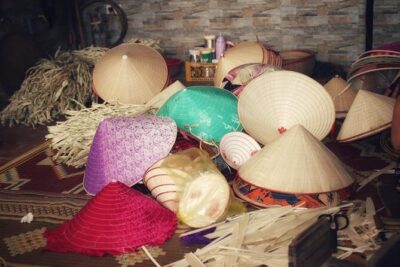
- Hanoi Cooking Class: Culture, Local Market & Meaning CSR Impact★ 5.0 · 5,147 reviews
Bangkok Temples and Chinatown Gold: Wat Traimit, Wat Pho, and the Grand Palace Zone
Bangkok is next, and the tour handles it in a tight temple loop.
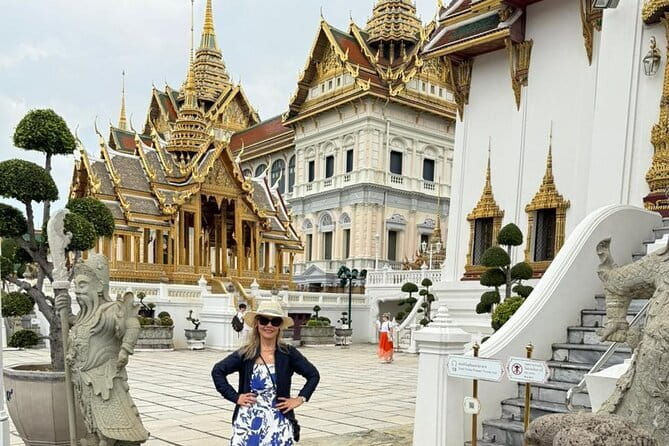
Day 10 begins with Wat Traimit (Temple of the Golden Buddha) in Chinatown, near Hualampong train station. The highlight is the massive gold Buddha statue: almost 5 meters tall and weighing about 5.5 tons. The program also ties this to the area’s atmosphere and mentions you’ll have panorama views of Chinatown due to the temple’s position.
Then you visit Wat Phra Chetuphon, also known as Wat Pho, famous for the reclining giant Buddha statue (about 15 meters high and 46 meters long) and for traditional Thai medicine and massage education origins.
After that, you step into the Grand Palace complex, built in 1782 and historically home of the Thai monarchy for nearly 150 years. Even if it’s no longer the king’s official residence, it’s still used for official and religious ceremonies.
Finally, you see Wat Phra Kaew, the Temple of the Emerald Buddha, known for the sacred jade image made from a single block.
A free afternoon follows. Bangkok can be intense, so the time buffer matters. You can rest, do light shopping, or just soak up street life at your own rhythm.
What I like: this day focuses on major sites with enough context that you understand why each place matters, instead of simply walking through photo stops.
Maeklong Railway Market and Damnoen Saduak: Watching Trade Happen in Motion

The Bangkok countryside-style day includes two market experiences with very different textures.
First is the Maeklong Railway Market. The key moment is when the train approaches and merchants retract their tents so the train can pass through the middle of the market. It’s dramatic in a practical way—you’re watching commerce adjust to infrastructure in real time.
Next is Damnoen Saduak Floating Market. You take a boat through canals to reach the market area and observe how fruit and vegetables are sold along the waterways. It’s a different kind of visual, and it’s useful to see how “market” can mean movement, not just stalls.
At the end, you return to the hotel, and you still get free afternoon time.
Consideration: these market days can mean early starts and lots of sun. Bring water and keep your camera ready, but don’t forget to look with your eyes too.
Chiang Rai’s White and Blue Temples: Art That Gets Under Your Skin

Chiang Rai is handled as a full-day outing (9 to 12 hours mentioned), which is a long stretch but works because it covers the must-sees in one run.
You start with the Karen Long Neck Village to meet the giraffe women of the tribe. The program emphasizes learning how they live and the history behind the tradition. This is a cultural meeting stop, so approach it with respect and avoid treating it like a photo contest.
Then comes Wat Rong Khun, the White Temple. It’s built by an artist whose success influenced and changed the lives of Thai and Chiang Rai artists. That background framing matters because the temple isn’t just an object—it’s part of a bigger creative story.
Next is Wat Rong Seur Ten, the Blue Temple, painted completely blue and connected as a student work from the White Temple creator. It’s described as one of the items on many tourists’ wish lists, and you’ll likely understand why once you see the contrast and scale.
Return time to Chiang Mai is listed as around 17:00–19:00.
What to consider: it’s a long day. If you like deep, slow museum-style experiences, you may feel the schedule moves briskly. If you want “see it, learn it, move on,” it’s a good fit.
Chiang Mai’s Doi Suthep and Lanna Core: Wat Phra Singh, Chedi Luang, and Suan Dok
In Chiang Mai, you get a mountain-temple day that mixes height, views, and classic Lanna architecture.
Wat Phra That Doi Suthep sits about 1,000 meters up on a forested mountain. It offers a spectacular view of the city and includes a wide variety of images and frescoes. After that main stop, the program includes two important temples:
- Wat Chedi Luang, built about 600 years ago around a partially ruined chedi in Lanna style
- Wat Phra Singh, Temple of the Lion Buddha, built in 1345 and a major example of Lanna architecture, plus a focus as an epicenter for Songkran festivities among Buddhist faithful
Then you also visit Wat Suan Dok, which houses remains of generations of Chiang Mai royal family.
This day is described as about 5 hours, and you return to the hotel after.
Why it’s a smart choice for this tour: it gives Chiang Mai more than just a market vibe. It roots you in architecture and in seasonal cultural context (like Songkran ties mentioned for Wat Phra Singh).
Phuket to Koh Phi Phi: Transfers First, Then Beach Recovery
Day 15 is a travel-and-reset day. You fly from Chiang Mai to Phuket, then you take a bus and ferry transfer from Phuket to Koh Phi Phi. The rest of the day is on the beach, which matters because Phi Phi is easiest to enjoy when you’re not arriving exhausted.
If you’re worried about overbooking yourself on beaches after a temple-heavy month, this structure helps.
Koh Phi Phi Don Boat Tour: Monkey Beach, Viking Cave, Maya Bay, and a Sunset Rhythm
Day 16 includes a longer boat tour by lunch with plenty of time at each stop. The key points listed are:
- Monkey Beach
- Viking Cave
- Pileh Lagoon
- Snorkeling
- Maya Bay
- Bamboo Island
- Nui Bay
- Wang Long
- Sunset
- An activity after sunset for planktons (described as diving in the program text, but practically it’s the nighttime water time focused on plankton viewing)
The program also explains why this day is long: it uses a larger boat and the route is designed to hit the worth-it points with enough time at each.
What I like here: after a series of temple days, you get a day where the main task is enjoying water, not decoding carvings.
What to consider: boat days can bring sun exposure fast. Also, snorkeling availability can depend on conditions, so keep flexibility.
Your Koh Phi Phi Free Day: Recharge, Walk, or Just Do Nothing
Day 17 is breakfast, then a full free day. This is the most important part of the whole trip if you ask me. You can relax, explore on your own, or keep the beach plan going without feeling guilty.
By then, you’ve covered three countries and multiple temple complexes. A day with no pressure helps the experience actually stick.
Price and Logistics: Is $4,810 Good Value for What You Get?
Let’s talk money like adults.
At $4,810 per person, you are paying for:
- Multi-country coverage (Vietnam, Cambodia, Thailand)
- Portuguese-guided touring across major sights
- Entrance fees included
- Most meals included (17 breakfasts, 6 lunches, plus a dinner)
- Air-conditioned transfers between segments
- Domestic flights (Vietnam to Da Nang for the Hoi An transfer, Siem Reap to Bangkok, Bangkok to Chiang Mai, and Chiang Mai to Phuket)
- Cruise and boat experiences (Halong Bay cruise plus Phi Phi boat tour components)
If you were to build a similar route yourself, the pain points would be tickets, pacing, and the language barrier. This package solves those with guides and pre-arranged movements. You’re also buying the peace of mind that the program is capped at 20 people and run with a structure that appears consistent across the trip.
Where the value is weaker is if you have very high flexibility needs or want a slower pace. The itinerary is full, and travel days are real days, not just “quick transfers.”
Who This Tour Fits Best
This works best for you if:
- You want iconic sights across Vietnam, Cambodia, and Thailand without building the plan from scratch.
- You appreciate Portuguese-guided sightseeing and clear organization.
- You like a mix of monuments plus culture moments like flower crafting and the monks’ ceremony.
It may not fit as well if:
- You get cranky with frequent moving and multiple domestic flights.
- You prefer deep, single-city stays over a fast multi-country route.
Should You Book This Vietnam, Cambodia, and Thailand Tour?
I’d book it if you want an organized, high-wattage route that still includes some human-scale cultural moments. The combination of major temples (Angkor and Bangkok) plus water days (Halong and Phi Phi) is a strong formula, and the included entrances and guided touring reduce the typical trip friction.
But book with eyes open. This is not a slow travel adventure. It’s a guided, full schedule with long days and real transfers, finishing with beach time when you’ve earned it.
If you want a trip that runs like a plan, not a puzzle, this is a solid match.
FAQ
What time does the tour start in Hanoi?
The meeting/start time is listed as 8:00 am at Noi Bai International Airport (Phú Minh, Soc Son, Hanoi).
Where does the tour end?
The tour ends at Phuket International Airport (222, Tambon Mai Khao, Amphoe Thalang, Chang Wat Phuket 83110, Thailand).
Are entrance fees included?
Yes. Entrance fees are included for the visits listed in the program.
What kind of tickets are provided?
The tour notes that you will receive a mobile ticket.
What meals are included?
Breakfast is included for 17 days, lunch is included for 6 days, and dinner is included. Meals outside those listed are not included.
Does the tour use domestic flights?
Yes. Flights are included within the itinerary, including segments such as Hanoi to Da Nang (for onward transfer to Hoi An), Siem Reap to Bangkok, Bangkok to Chiang Mai, and Chiang Mai to Phuket.
Are the tours guided and in what language?
Guided tours and visits are provided in Portuguese.
Is it limited to a small group?
Yes. The maximum group size is listed as 20 travelers.
Is travel insurance included?
No. Travel insurance is not included, and it’s recommended you arrange it before departure.