
Reviewed · HANOI VESPA & MOTORBIKE TOURS
Vespa Sidecar Sightseeing Tour in Hanoi
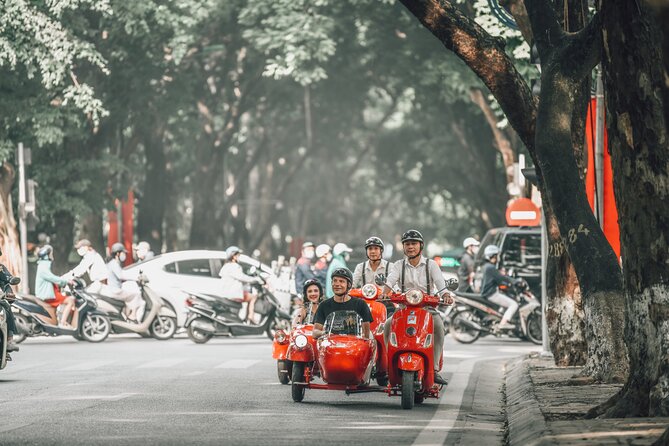
Four hours on a Hanoi Vespa changes your pace. I like how the Vespa sidecar lets you move through real traffic and still hit the big sights—Cherry, the guide, keeps the stories clear and the photo stops generous. The tour also feels like a fast lesson in how Hanoi works, not just a checklist. One drawback to plan for: you’re on a motorcycle-style ride for a good chunk of the time, so it’s less relaxing than a slow walking tour.
This is a private experience (just your group), and that matters in a city where time gets swallowed by crossings and motorbikes. You’ll get bottled water, and you’ll be able to hop off at key points for short views, pictures, and cultural context. The trade-off is that each stop is fairly brief, so come hungry for ideas, not for long museum-style wandering.
If you want to get your bearings fast and understand what you’re seeing—Opera House to Old Quarter to Hoàn Kiếm Lake—this is a smart way to do it, especially for your first days in town.
In This Review
- Key highlights you’ll actually feel
- Why a Vespa Sidecar is a smart fit for Hanoi
- Getting started: meet point, timing, and the private-group feel
- Opera House and the Presidential Palace pass-by
- Duờng Tau and the train-street stop (and what to expect)
- Imperial Citadel of Thang Long: North Gate views without the long inside visit
- Phu Tây Hồ and Chùa Trấn Quốc: Vietnamese worship culture, not just scenery
- Old Quarter: street-watching plus time for traditional snacks
- Hoàn Kiếm Lake: Turtle Tower, The Húc Bridge, and Ngọc Sơn stories
- Price and value: is $69 worth it?
- The real-world watch-outs (based on what can go wrong)
- Who this Hanoi Vespa tour is best for
- Should you book the Vespa Sidecar Sightseeing Tour in Hanoi?
- FAQ
- How long is the Vespa Sidecar Sightseeing Tour in Hanoi?
- Is pickup offered for this tour?
- Is this a private tour or shared group?
- What’s included in the tour price?
- Are lunch or coffee included?
- What happens if the weather is poor, or I need to cancel?
Key highlights you’ll actually feel
- Guiding with context: You’re not just looking at places; the guide connects them to what’s going on around them.
- A photo-friendly route: Frequent stops to pull over, take pictures, and ask quick questions.
- Temples plus everyday streets: Phu Tây Hồ and Chùa Trấn Quốc add cultural texture beyond the main tourist lanes.
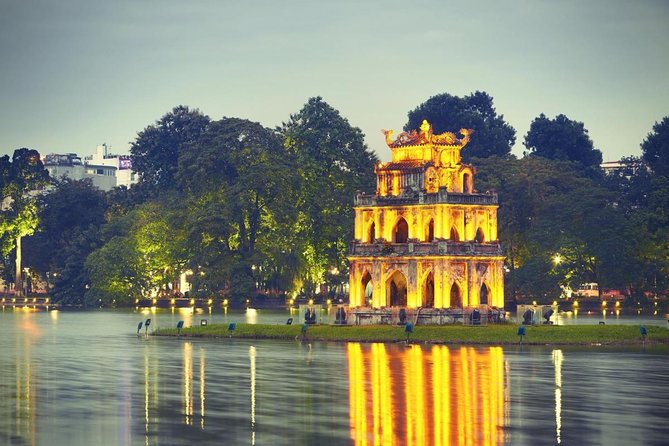
- Hoàn Kiếm Lake loop: Turtle Tower, The Húc Bridge, and Ngọc Sơn Temple stories without long transit gaps.
- Private group pacing: It’s yours to set the tempo within the 4-hour window.
Why a Vespa Sidecar is a smart fit for Hanoi
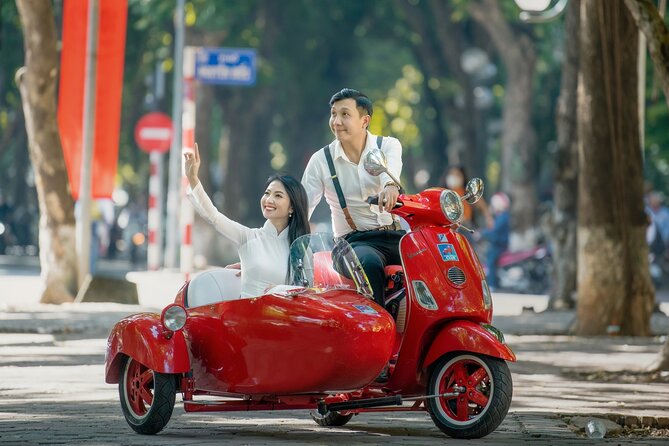
Hanoi can be overwhelming at first. The streets move fast, sidewalks can be crowded or interrupted, and the city is layered—French-era buildings, older temples, and daily street life all mixed together. A Vespa sidecar tour is one of the best ways to handle that first shock.
What I like most is that you’re not trapped doing everything on foot. You cover a lot of ground in a short time, and you still get moments on land to look closely, take photos, and listen. It’s a practical balance: movement enough to stay efficient, stops enough to make the ride worth it.
The other advantage is how the guide turns your route into a story. You’ll hear what’s behind landmarks you’d otherwise treat like postcards. And if you care about safety and comfort, the guide approach is built into the experience—your group stays together and follows instructions at stops.
More nights on the back of a Vespa


Getting started: meet point, timing, and the private-group feel
The tour meets at 3 P. Hàng Tre, Lý Thái Tổ, Hoàn Kiếm, Hà Nội. Plan to arrive early enough to handle a quick greeting—your group meets up for about 15 minutes before you begin.
Because it’s private, you’re not stuck with a mixed group pace. That matters for two reasons. First, Hanoi’s crossings and short turns can be chaotic; a tight group moves cleaner. Second, if your group has photo questions, you can usually slow down for them without holding up strangers.
You’ll also receive a mobile ticket, which helps on arrival. And yes, bottled water is included—small detail, big comfort in Vietnam, especially if you’re out in humid heat.
Opera House and the Presidential Palace pass-by
Your first stop is the Hanoi Opera House area, with a timing window of about 25 minutes and free admission listed for this stop. Before you get there, you pass by the Presidential Palace while your guide shares historical stories.
Here’s why this early segment works. The Opera House is one of those places you can recognize instantly, but it’s the context that makes it click: it helps you understand the French-influenced side of Hanoi, the way colonial-era architecture shaped certain streets, and how power and culture coexisted in different eras.
When you arrive at the Opera House, the short time slot is enough to get photos and take in the exterior feel. Don’t expect a long, slow architecture tour. Instead, treat it like a launchpad: you’re setting your visual vocabulary for the rest of the ride.
Practical tip: bring a camera you can access quickly. This is a “pull over, shoot, move” kind of moment.
Duờng Tau and the train-street stop (and what to expect)
Next comes Duờng Tau, a segment of about 45 minutes that starts with an outdoor market stop and then heads toward the famous train street. The tour notes that the train street has been closed by local government recently, but it also states the operator will still take you there.
So what should you expect in real life? You should expect a photo-focused look from the permitted areas, not a free-for-all to walk the tracks like old videos online. Since the rules can shift, the value here is not chasing a perfect scene—it’s letting your guide handle the approach and giving you a chance to see the area in context.
The market stop is a useful warm-up before you reach the train street area. It’s one of those Hanoi moments that reminds you the city isn’t a museum. People buy, chat, cook, and move through space that also gets attention from tourists.
Potential drawback to keep in mind: because closures and access can change, the exact experience at the train-street portion may feel different from what you expected online. Still, the combination of market + guided approach keeps it worthwhile.
Imperial Citadel of Thang Long: North Gate views without the long inside visit
You’ll reach the Imperial Citadel of Thang Long area next, stopping at the North Gate for about 20 minutes. The tour does not go inside. Instead, the guide gives you historical info and helps with pictures.
This is a smart choice for a sidecar tour. Inside visits can take time, and you’d lose momentum in a 4-hour route. By focusing on the North Gate, you still get the “you’re in an old capital” feeling without turning your day into a museum marathon.
What you gain from the guide here is the “why it mattered” layer. Even without entering, the location and the storytelling give you a clearer sense of the site’s importance in Vietnam’s dynastic past. You get to see enough to orient yourself later if you want to return on your own for deeper exploration.
If you hate rushing at historical sites, this part may feel short. But if you’re trying to understand the big picture quickly, it’s a good use of time.
Worth a glance beside this Hanoi pick:
- Vespa City Tour &Train Street Female With Ao Dai Riders 4,5 Hours★ 5.0 · 314 reviews
- Hanoi Vespa Tours: Food + Culture + Fun on Army Vespa★ 5.0 · 279 reviews
- Vespa Female Ao Dai riders Night Street Food + See Train Street★ 5.0 · 254 reviews
Phu Tây Hồ and Chùa Trấn Quốc: Vietnamese worship culture, not just scenery
Two of the most culturally grounded stops are the temples: Phu Tây Hồ and Chùa Trấn Quốc. Each is around 15 minutes, with free admission listed.
At both, your guide explains Vietnamese worship culture. And at each stop you can join some activities like local people or simply look around. That’s important because it keeps the visit from becoming only a sightseeing photo stop. You’re encouraged to observe the rituals and daily practices with guidance so you know what you’re looking at.
Here’s the practical value: temples can be confusing if you don’t understand what’s going on. The guide makes the atmosphere legible. Even in a short time, you’ll come away with a more respectful sense of what these places mean to local life.
Two considerations:
- The time windows are brief, so you won’t have hours to wander.
- Temple areas can involve crowds and lots of footsteps, so you’ll want to move carefully and follow the guide’s cues.
Old Quarter: street-watching plus time for traditional snacks

After the temples, you’ll move into Old Quarter time—about 1 hour. This part is about walking through famous streets, hearing historical culture explanations, and getting time to enjoy traditional snacks.
I like Old Quarter segments led this way because it’s not just “look at shops.” Your guide helps connect the street layout and neighborhood identity to what makes the area historically distinctive. Then you get breathing room to slow down, shop if you want, and try something you can’t easily replicate at home.
About snacks: the tour mentions enjoying traditional snacks, but it doesn’t list food as included. So treat it as time to buy and eat, not a guaranteed meal. The one thing the tour does provide is bottled water, so you’ll still want spending budget for whatever you choose to try.
If you’re shopping, come with small bills and a flexible plan. Old Quarter streets reward people who move with patience and curiosity.
Hoàn Kiếm Lake: Turtle Tower, The Húc Bridge, and Ngọc Sơn stories
The final major sightseeing loop is the Lake of the Restored Sword (Hoàn Kiếm Lake) area, lasting about 1 hour. You’ll take photos around the lake, see Turtle Tower and The Húc Bridge, and stop to hear stories tied to Ngọc Sơn Temple, Tháp Bút, and the hero monument.
This portion is a great closer because it’s visually satisfying and easy to understand. The lake is a social center, and you’ll feel the heart of central Hanoi without needing long travel breaks.
If you’re the type who likes photos but also wants the meaning behind them, this is where the tour pays off. You’re not just shooting iconic spots; the guide connects the landmarks to stories you’ll actually remember later.
The timing works too. After several stops, Hoàn Kiếm Lake provides a calmer pace—enough time to breathe, take photos, and absorb the atmosphere—before heading back to the meeting point and wrapping up.
Price and value: is $69 worth it?
At $69 for roughly 4 hours, this tour is positioned as a mid-range “see a lot with a guide” experience. The value comes from three places:
First, you’re paying for transport efficiency. Without sidecar transport, you’d spend more time crossing the city and coordinating routes. Here, the movement is handled, and you get frequent stops to justify the ride.
Second, you’re paying for narrative. The guide’s historical and cultural storytelling turns famous landmarks into a coherent route. That’s the difference between taking photos and actually learning how the city fits together.
Third, the tour includes bottled water, and it lists free admission for the listed stops. So your money is less likely to get chewed up by entry fees across multiple sites.
Where the value can slip for some people: if you’re looking for long stays at each place, you’ll want something slower. This is designed for coverage and context, not extended exploration. If your idea of a great day is 3-hour museum visits, this may feel like a fast hit.
But if you’re building a first-day or second-day orientation in Hanoi, it’s a strong deal—especially for a private group.
The real-world watch-outs (based on what can go wrong)
Everything here is set up for smooth touring, but I suggest you plan for two real-world issues.
1) Administrative mix-ups can happen. A missed booking is the one kind of failure you really don’t want, and it’s the kind that can ruin your whole day fast. The fix is simple: double-check your confirmation details and arrive at the meeting point on time, not late.
2) Some stops depend on access and conditions. The train street area is noted as having been closed recently by local government. You’ll still be taken to that area, but the exact access can change. Keep expectations flexible and focus on seeing the district and learning what’s going on around it.
Who this Hanoi Vespa tour is best for
This tour fits best when you want a guided “big sights” route with local context and photo stops. It’s especially good for:
- First-time visitors who need help understanding Hanoi fast
- Groups who want a private experience and flexible pacing
- People who don’t want to spend half the day negotiating transit and crossings
- Anyone who likes history and culture but also wants street-level reality
It may be less ideal if you hate being on the move or if your top priority is spending long, quiet time inside major sites.
Should you book the Vespa Sidecar Sightseeing Tour in Hanoi?
I’d book this if you want a practical orientation to central Hanoi with a guide who can explain what you’re seeing—Opera House to Imperial Citadel to temples to Hoàn Kiếm Lake—while you ride between places without losing your whole afternoon to transit.
I’d think twice if you need lots of time inside each attraction, or if you’re very sensitive to being on a motorcycle-style ride for hours. Also, treat the train-street stop as a “try to see the area with guidance” moment, not a guaranteed access scenario.
If you’re planning a first days in Hanoi and want to feel confident about where everything is, this tour is a solid way to start.
FAQ
How long is the Vespa Sidecar Sightseeing Tour in Hanoi?
It runs for approximately 4 hours.
Is pickup offered for this tour?
Yes, pickup is offered.
Is this a private tour or shared group?
This is a private tour/activity, meaning only your group participates.
What’s included in the tour price?
Bottled water is included. You’ll also receive a mobile ticket.
Are lunch or coffee included?
No. Lunch and coffee and/or tea are not included.
What happens if the weather is poor, or I need to cancel?
The experience requires good weather. If it’s canceled due to poor weather, you’ll be offered a different date or a full refund. You can cancel for a full refund up to 24 hours in advance of the experience start time.
More Tours in Hanoi
- Ninh Binh Full-Day Tour from Hanoi to Hoa Lu, Tam Coc & Mua Cave Via Boat & Bike
★ 5.0 · 4,384 reviews




More Tour Reviews in Hanoi


More of Hanoi on Two Wheels


Latest Hanoi write-ups from our team




Hanoi Vespa & Motorbike Tours, compared.
 ★ 5.0Hanoi Motorbike Tour: Food, Culture and Fun by Vintage MotorbikeFrom $556,699 reviews
 ★ 5.0Hanoi Motorbike Tours Led By Women: Hanoi By Night Foodie Motorbike ToursFrom $691,734 reviews
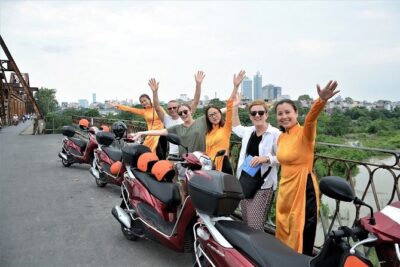 ★ 5.0Hanoi Motorbike Tours Led By Women: Hanoi City Insight Motorbike ToursFrom $59816 reviews
 ★ 5.0Hanoi Countryside Motorbike Tour: Red River Culture & Daily LifeFrom $55681 reviews
 ★ 4.9From Hanoi: 3-Day Motorbike Ha Giang Loop with Easy RiderFrom $227501 reviews
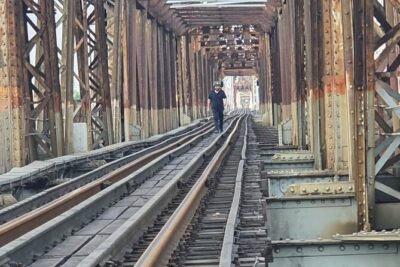 ★ 5.0Hanoi Motorbike Tour: Hanoi HIGHTLIGHTS & HIDDEN GEMSFrom $57405 reviews
 ★ 5.0Hanoi old quarter sightseeing & street food eating by MotorcycleFrom $55333 reviews
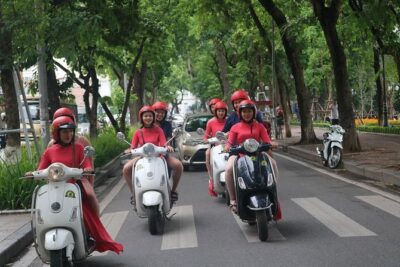 ★ 5.0Vespa City Tour &Train Street Female With Ao Dai Riders 4,5 HoursFrom $58314 reviews
Browse the lists this tour appears in