
Reviewed · HANOI STREET FOOD TOURS
The 10 Tastings of Hanoi With Locals: Private Street Food Tour
Street food gets serious when a local leads. This private Old Quarter walk mixes real neighborhood stops with 10 tastings tailored to your preferences. I especially like that it’s a private tour with one guide, so you can ask questions and tweak the pace as you go. I also like the practical food focus: you’re not just seeing sights, you’re eating your way through Hanoi’s most recognizable street classics.
One possible drawback: expect a steady walking pace for about three hours, and a couple of cultural stops don’t include entry tickets in the tour price.
In This Review
- Key points before you go
- Private Old Quarter street food: what you’re really buying
- Where the tour starts by the Hoan Kiếm water puppets
- Ba Da Temple and French-era details before your first bites
- Pho roll warm-up and pastry snacks on quieter lanes
- Bún chả and Hàng Điếu rice rolls: the classics that define Hanoi
- Pho on Hàng Vải and bánh mì on Bát Sứ like locals eat them
- Phố Lãn Ông traditional medicine street stop, with context
- Fruit dessert on Tố Tịch and egg coffee in a family café
- French-styled house and Ba Da Pagoda: cultural breaks that actually fit
- How to get the most from your guide and your 10 tastings
- Price, timing, and what to pack for a 3-hour walk
- Should you book this Hanoi street food tour
- FAQ
- FAQ
- How long is the 10 Tastings of Hanoi private street food tour?
- Is this tour private?
- What’s included in the price?
- Are entry tickets included for the cultural stops?
- Does the tour include pickup or drop-off?
- Can the tour accommodate dietary restrictions?
- What do I actually taste on this tour?
- Is cancellation free, and how late can I cancel?
Key points before you go
- 10 tastings, not just a sampler plate: you’ll try a sequence of dishes and drinks that add up to a proper meal.
- Old Quarter “in-between bites” culture: temples and French-era architecture show up between food stops, so the walk feels grounded, not random.
- Classic Hanoi flavors in order: pho roll, bún chả, rice rolls, pho, bánh mì, fruit dessert, and egg coffee are all built into the route.
- A guide who can adjust for what you like: the tour includes vegetarian alternatives and offers alternatives for dietary restrictions.
- You’ll learn what to ask for: from broth-style pho add-ons to how Hanoi-style bánh mì fits French colonial history.
- Simple start and end: you meet at 16 P. Lê Thái Tổ and finish back at the same meeting point.
Private Old Quarter street food: what you’re really buying
This tour is priced at $78.52 per person for about three hours, and the value isn’t just the food. You’re paying for two big things: a local host who can bring you to reliable places, and the time to eat ten different tastings without you having to figure out menus, ordering, and portion sizes on your own.
If you like street food but hate the guesswork, this is a smart format. Hanoi’s Old Quarter has plenty of options, but that can be the problem: you’ll see lines, sizzling pans, and signboards in Vietnamese, and it’s easy to miss what’s actually worth stopping for. With a guide, you get a plan that hits the major hits and also explains what you’re eating while you eat it.
It’s also private (just you and your local guide), which matters. In a group tour, you often lose time waiting, translating, or getting pulled along. Here, you can slow down for a question, ask what’s inside, or request a smaller portion if you’re already full. The result: more eating, less wandering.
Still hungry? More Hanoi street-food crawls


Where the tour starts by the Hoan Kiếm water puppets
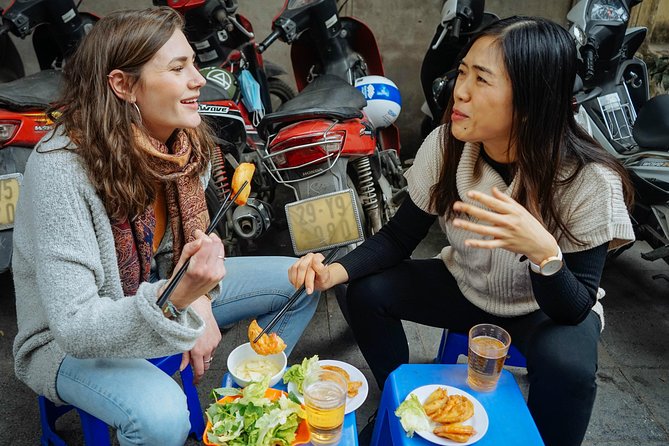
You start at 16 P. Lê Thái Tổ, in Hoàn Kiếm near the Old Quarter lanes. That location is useful because it’s central to the tourist core without putting you on a “one street only” route. You also end back at the same meeting point, which makes it easier to build the rest of your day around the tour.
Your first stop is the Thang Long Water Puppet Theatre area. It’s the kind of landmark Hanoi is known for, and the timing is tight—about 15 minutes—so you get the atmosphere without turning the tour into a museum visit. Admission isn’t included for this stop, so if you want to see the show itself, you’ll likely need to buy tickets separately.
Then you move onward on foot, which is where the Old Quarter shines. You’ll be walking through narrow lanes where food vendors, small storefronts, and family places all sit close together. If you’ve ever tried street food solo and felt like you were always asking for directions mid-meal, you’ll appreciate how smooth this route feels.
Ba Da Temple and French-era details before your first bites
After the water puppet theater stop, the route shifts to Chùa Ba Đá, one of the four sacred temples in Hanoi. This is a quick stop (around 15 minutes), and again admission isn’t included. The practical benefit here isn’t “spending time in a temple”—it’s context. Hanoi has spiritual sites tucked into daily life, and the tour gives you a moment to notice that mix before you start eating.
Next comes a break from pure food sightseeing: a look at Phố Chân Cầm at 8 P. Chân Cầm. This is where you’ll hear the story of a villa built with French architecture in 1930, and how locals use the space today. Even if architecture isn’t your thing, it helps you understand why Hanoi’s food scene feels layered. French influence shows up not only in buildings, but also in foods you’ll taste later, like bánh mì.
This “culture first, then food” rhythm is one reason the tour works. You’re not sprinting from dish to dish with no meaning. You’re stepping into the city, then eating your way deeper.
Pho roll warm-up and pastry snacks on quieter lanes
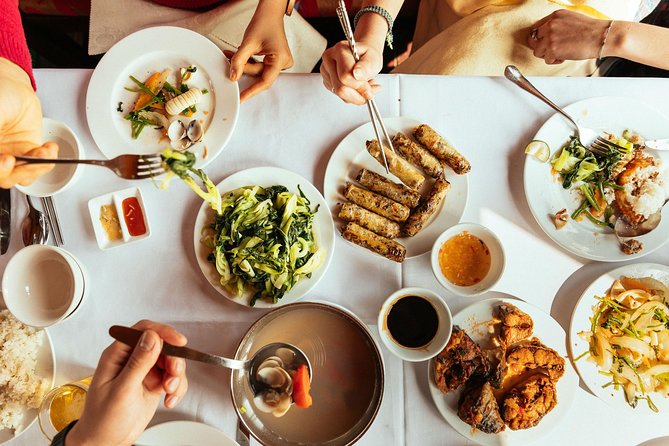
Your first real tasting segment starts on Phố Lý Quốc Sư with a pho roll. It’s a Hanoi-origin dish that’s become a local favorite, and the tour description frames it clearly: noodles, beef, and herbs wrapped together. Think of it as a warm-up bite that hits savory notes fast, before you move into heavier classics.
At this stop, you’ll also find a shrimp pastry option mentioned as part of the tasting sequence. The takeaway for you: don’t treat this as one random snack stop. The guide is building momentum—texture, herbs, warm savory flavors—so you’ll be ready for bún chả and rice rolls shortly after.
One small practical point: because the route is designed around tastings, you don’t have to “max out” with huge portions at each vendor. If you’re sensitive to spice or you’re not super hungry early, tell your guide right away. The tour is set up for flexible preferences, and that matters more here than ordering bigger because you feel rushed.
Bún chả and Hàng Điếu rice rolls: the classics that define Hanoi
On Phố Đường Thành, you’ll taste bún chả: grilled pork with noodles and fresh pickled vegetables, served with a dipping sauce. This is one of those Hanoi dishes that feels instantly familiar once you’ve tried it. The grilled pork gives you that smoky, caramelized edge; the pickles cut through; and the sauce ties everything together so each forkful feels balanced.
Then you head to Hàng Điếu, where the tasting turns into a very traditional street food format: steamed rice rolls stuffed with pork, mushrooms, or both. These are often served with fried shallots, which is exactly the kind of detail that turns a “just a roll” into a real flavor experience. You’re getting contrast—soft rice sheet, savory filling, and crunchy aromatic toppings.
A quick consideration: rice-roll street foods can be filling even in a small tasting. This tour stacks dishes that each have their own “main character,” so if you want to pace yourself, ask early whether the guide can guide you to lighter portions while still keeping the full variety. The goal is to enjoy the last stops too.
Worth a glance beside this Hanoi pick:
- Hanoi Jeep Tour: Food, Culture and Fun by Vietnam Army Jeep★ 5.0 · 15,222 reviews
- Hanoi Motorbike Tour: Food, Culture and Fun by Vintage Motorbike★ 5.0 · 6,699 reviews
- [HOT] Hanoi Old Quarter Walking Street Food – Small Group Tour★ 5.0 · 2,163 reviews
Pho on Hàng Vải and bánh mì on Bát Sứ like locals eat them
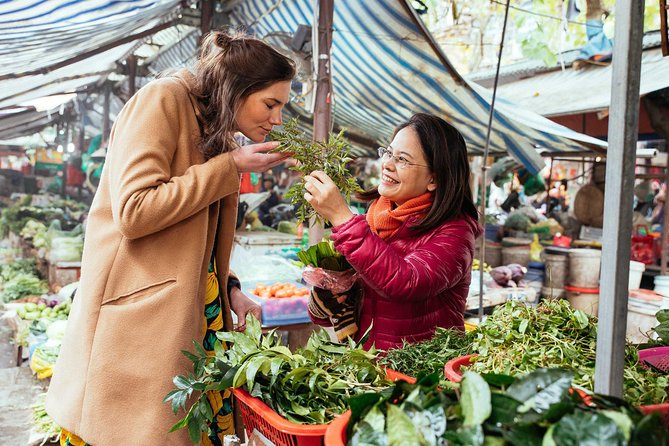
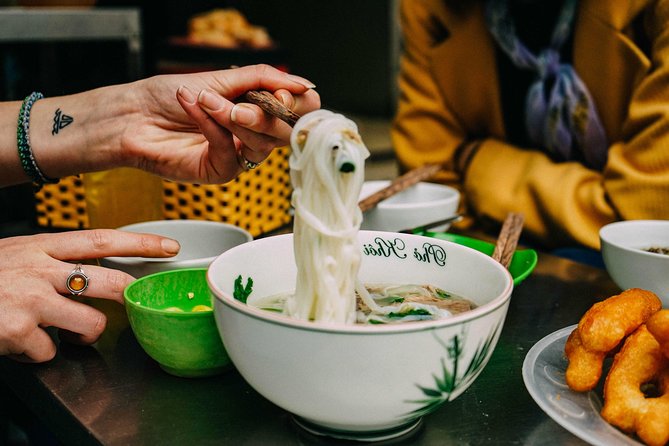
Pho is next on Phố Hàng Vải. The tour gives a clear picture of what you’ll see and taste: broth with beef or chicken, plus vinegar, spring onions, pepper, and lime juice. That mix is part of the Hanoi style—bright, tangy, and adjustable. What’s helpful for you is that you won’t just get the bowl; you’ll learn how the add-ons change the flavor.
Then it’s bánh mì time on Phố Bát Sứ. Here’s where the tour’s storytelling becomes practical: the baguette was introduced to Vietnam in the mid-19th century during the French Indochina era, and it became a staple by the early 20th century. That history matters because it explains why Vietnamese bánh mì doesn’t taste like French bread stuck in Vietnam. You’re tasting a fusion that locals embraced and adapted.
In a street setting, you’ll likely notice the bánh mì is built for quick eating and lots of flavor in a compact bite. If you’ve ever had bánh mì and wondered why some versions taste flat, this stop helps you get the “right” version by location and preparation, not by luck.
Phố Lãn Ông traditional medicine street stop, with context
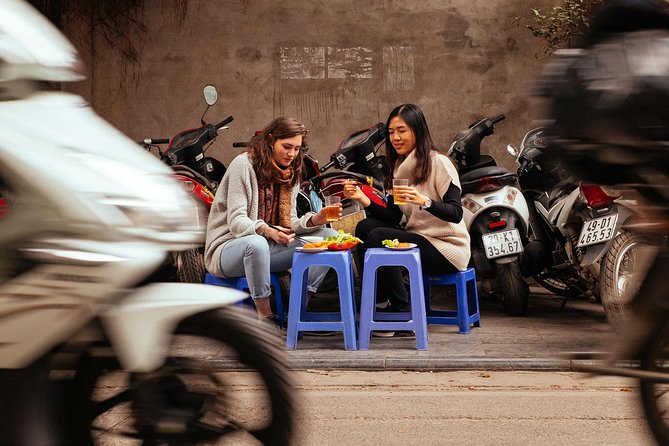
Phố Lãn Ông is where you slow down for a different kind of Hanoi lesson: traditional medicine. The street is known for its specialized industry and is named after a famous physician. The tour’s point isn’t to turn you into a medical expert—it’s to show you how commerce, tradition, and daily care have coexisted in the Old Quarter for a long time.
This stop also works as a palate reset. After savory dishes like pho and bánh mì, you get a brief shift away from food vendors, into a street that feels different visually and culturally. Even if you don’t purchase anything, you’ll likely come away noticing how signage, shop setups, and product displays reflect a local way of thinking.
If you’re curious, ask your guide what makes the street distinct. The tour includes explanations, and this is the kind of stop where a little context changes how you read the street.
Fruit dessert on Tố Tịch and egg coffee in a family café
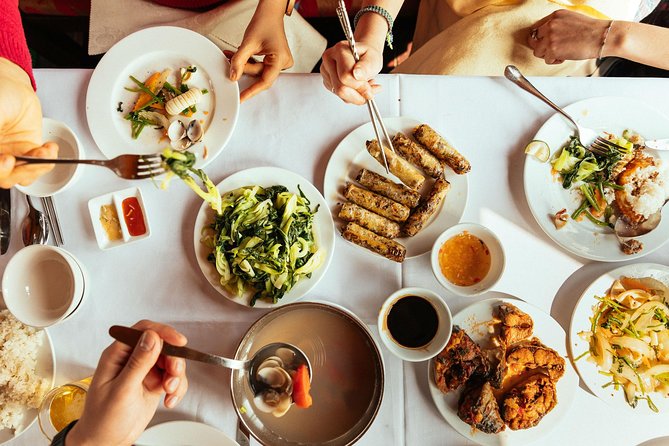
Next is Phố Tố Tịch for a sweet finish: fruit mixed with coconut milk, condensed milk, and crushed ice. This is a dessert that feels designed for Hanoi heat and humidity. Even if you’re not a dessert person, it’s worth trying because it’s not just sugar—it’s creamy, cool, and fruity.
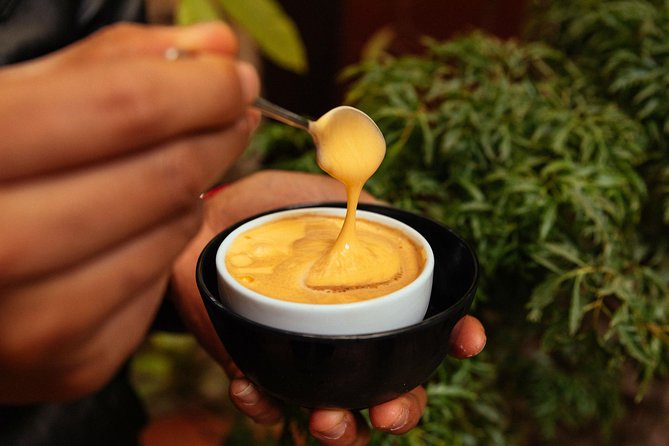
Then you’ll head to Phố Đinh Tiên Hoàng for coffee, including egg coffee. The tour mentions a family-run café and ties the dish to its origin story: egg coffee was invented around 1940 when a bartender whisked eggs into coffee. That detail matters because it gives the drink a “why,” not just a recipe.
Egg coffee is rich and slightly custardy, usually served warm. After fruit dessert, it can feel like a double sweet hit, but that’s also why you want a guide here: you can sip, compare, and adjust how much you take. If you’re trying to keep calories under control, tell your guide you’d like a smaller portion and to focus on one or two sips rather than finishing every drop.
French-styled house and Ba Da Pagoda: cultural breaks that actually fit
The route continues with another nod to French-era influence via a French-styled house stop (multiple styles used during colonization). This is another quick 15-minute window, but it gives you a sharper sense of how the Old Quarter isn’t only ancient temples and narrow shophouses. It’s also a layered city with periods of foreign influence baked into architecture and streetscapes.
Finally, you reach Ba Đá Pagoda, a Buddhist temple pagoda built in 1056 with a serene vibe. Admission is listed as free for this stop. This is a good closing moment because after eating and learning, you get a place to pause. It’s not a long pilgrimage—just a calm counterpoint to street noise and food smells.
If you like ending tours quietly, this works. If you’re hoping for nonstop eating until the last minute, you might wish there was one more food stop at the end. But as a whole, the pacing keeps you from feeling food fatigue.
How to get the most from your guide and your 10 tastings
Your biggest lever is what you tell your guide at the start. The tour explicitly offers tastings tailored to your preferences, and it includes vegetarian alternatives. If you have any dietary restrictions, flag them clearly before you start, not halfway through. One of the most common tour regrets is when people realize too late they should have asked for an alternative.
I also recommend you think in terms of tasting, not sampling. This tour is designed to serve you about ten food and drink tastings over roughly three hours. That’s a lot of variety, so don’t treat each stop like you need to “win” by ordering the biggest item. Instead, go for the variety the route offers.
A small tip for comfort: wear shoes that handle uneven pavement and get ready for a lot of curb-to-curb movement. Hanoi sidewalks can be narrow, and you’ll be weaving through traffic-adjacent streets. Bring water if you think you’ll need it, since the tour focuses on tastings rather than unlimited drinks.
Price, timing, and what to pack for a 3-hour walk
At $78.52 per person, you’re paying for a private guided experience plus ten tastings. That’s often where value shows up: you’re not just buying food, you’re buying the time saved and the “right places” factor. If you tried to replicate this yourself, you’d spend extra effort (and possibly extra money) just figuring out what to order and where to go.
The tour runs about three hours, and the timing of quick stops matters. Each tasting and highlight is short, usually around 15 minutes, so you’ll feel like you’re moving efficiently. This also means you don’t have time to sit down for long meals. Plan your day so you’re ready to walk and eat in small-to-medium bites.
You also shouldn’t expect pickup or drop-off. The meeting point is in Hoàn Kiếm, and the tour ends back there. If you’re relying on public transport, the route is described as near public transportation, which helps for pre- and post-tour movement.
On timing: the tour is commonly booked about 19 days in advance on average, so if you’re traveling in peak season or on a tight schedule, book early and don’t assume you can wait.
Should you book this Hanoi street food tour
If you want a guided way to eat your way through the Old Quarter without guessing, I’d book it. It’s a good match for first-timers who want recognizable Hanoi classics like bún chả, pho, bánh mì, fruit dessert, and egg coffee, and for repeat visitors who want the “how to find this” advantage.
Skip it if you dislike walking or if you want a relaxed sit-down meal with long breaks. This is structured, and the fun comes from motion plus tastings, not from hanging out at one restaurant for hours.
FAQ
FAQ
How long is the 10 Tastings of Hanoi private street food tour?
It’s approximately 3 hours.
Is this tour private?
Yes. It’s a private tour for only you and your local guide.
What’s included in the price?
You get the private local guide, 10 food and drinks tastings, and vegetarian alternatives.
Are entry tickets included for the cultural stops?
No. Admission is not included for Thang Long Water Puppet Theatre and Chùa Ba Đá, while other listed stops have admission free.
Does the tour include pickup or drop-off?
No pickup and drop-off is included. The tour starts at 16 P. Lê Thái Tổ and ends back at the meeting point.
Can the tour accommodate dietary restrictions?
Yes. Vegetarian alternatives are included, and alternatives are offered for those with dietary restrictions.
What do I actually taste on this tour?
You can expect 10 tastings that include dishes and drinks such as pho roll, bún chả, steamed rice rolls, pho, bánh mì, fruit dessert, and egg coffee.
Is cancellation free, and how late can I cancel?
Cancellation is free. You can cancel up to 24 hours in advance for a full refund, and within 24 hours the amount paid is not refunded.
More Tours in Hanoi
- Ninh Binh Full-Day Tour from Hanoi to Hoa Lu, Tam Coc & Mua Cave Via Boat & Bike
★ 5.0 · 4,384 reviews



More Tour Reviews in Hanoi


More Bowls and Backstreets in Hanoi

Latest Hanoi write-ups from our team
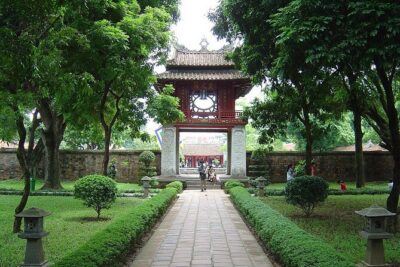



Hanoi Street Food Tours, compared.
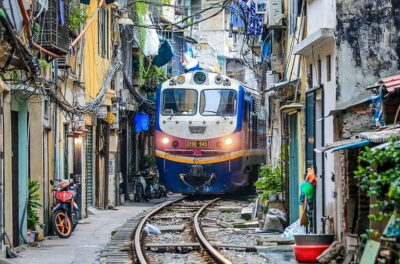 ★ 4.9Guided Food Tour with Train Street VisitFrom $196,239 reviews
 ★ 5.0Small Group Hanoi Street Food Tour with a Real FoodieFrom $284,682 reviews
 ★ 5.0Street Food Tour with Train Street & Hidden AlleywaysFrom $202,831 reviews
 ★ 4.9Guided Street Food Tour with Train Street ExperienceFrom $172,479 reviews
 ★ 5.0[HOT] Hanoi Old Quarter Walking Street Food – Small Group TourFrom $142,163 reviews
 ★ 5.0Hanoi Motorbike Tours Led By Women: Hanoi By Night Foodie Motorbike ToursFrom $691,734 reviews
 ★ 5.0Hanoi Street Food Tour with local delicaciesFrom $281,506 reviews
 ★ 5.0Hanoi Coffee Workshop: Taste Salt, Coconut and Egg CoffeeFrom $161,286 reviews
Browse the lists this tour appears in