
Reviewed · TOURS
Highlights of Vietnam, Cambodia and Laos Tour – 17 Days
Three countries in 17 days sounds wild. This Vietnam–Cambodia–Laos trip stitches together Hanoi’s Old Quarter, UNESCO coast and temples, and a real change of pace with an overnight Halong Bay boat. I especially like that so many basics are handled for you, including English-speaking tour guides and entrance fees.
I also like the way the trip balances big sights with places that feel lived-in, from lantern-lit Hoi An streets to Mekong boat time and Luang Prabang’s museum halls. One consideration: the stated meeting point is Luang Prabang International Airport (10:00 am), even though the route description starts in Hanoi—so confirm your exact start date and pickup location before you go.
In This Review
- Key things that make this tour worth your time
- First stop: Hanoi’s Old Quarter and Ho Chi Minh’s mausoleum
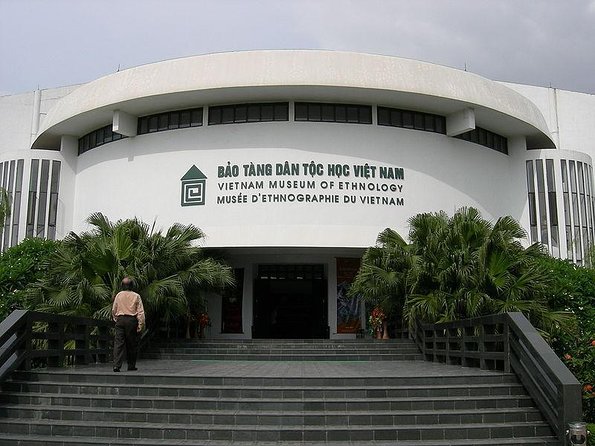
- Vietnam Museum of Ethnology: a calmer way to understand the country
- Halong Bay at night: limestone islands when the crowds thin
- Da Nang, then Hoi An: beach access plus an old-town evening
- My Son Sanctuary: Hindu temple ruins and the scars of war
- Hue and Saigon: the river court, then the Vietnam War story
- Mekong Delta by sampan: islands, fruit, music, and village walking
- Siem Reap: starting with the “slow way” of seeing Angkor
- Banteay Srei and the Landmine Museum: temple detail with real human weight
- Angkor Wat: the scale hits you once you understand it’s a temple city
- Luang Prabang: Royal Palace Museum and the French-Lao mix
- Pak Ou Caves: thousands of Buddha statues on the Mekong
- Price and what you actually get for $2,600
- Practical tips so the days feel good, not just busy
- Should you book this Vietnam–Cambodia–Laos tour?
- FAQ
- Where does the tour start and what time is listed?
- How long is the tour?
- What is the price per person?
- Are pickup and mobile tickets included?
- What meals are included?
- Are entrance fees included?
- Is the tour guide language English?
- How big is the group?
- Are flights included?
- Can I get a refund if I cancel?
Key things that make this tour worth your time
- Overnight Halong Bay cruise rather than a quick day trip
- Angkor Angkor Wat time in the right context, plus Banteay Srei and a landmine museum stop
- Mekong Delta boats and markets, including Cai Rang-style floating market cruising
- Daily structure with included meals and fees, so you spend less time negotiating and more time seeing
- Small-group size (max 15 people) for easier guide communication and logistics
- Real culture stops, from the Vietnam Museum of Ethnology to Luang Prabang’s Royal Palace Museum
First stop: Hanoi’s Old Quarter and Ho Chi Minh’s mausoleum
Hanoi has a way of grabbing you fast. On your first full day, you’ll walk the Old Quarter, the area famous for its traditional “streets and guilds” feel—think original storefront lanes and the sense that the city still runs on local habits, not just tourist circuits. It’s one of those places where you can learn the rhythm of the city simply by being out there on foot.
Then the trip pivots to modern Vietnam’s founding story at the Ho Chi Minh Mausoleum complex. It’s historically significant, but what matters for your experience is pacing: this isn’t a random photo stop. You’ll have time to understand why people visit, and to see how the country frames its independence story through this landmark.
Practical note: the mausoleum stop is listed as a short visit, so dress neatly and plan for security-style entry processes that can slow things down. It’s worth it, just don’t treat it like a free-form wander.
Not sure yet? See how this one sits next to a few Hanoi favourites.


Vietnam Museum of Ethnology: a calmer way to understand the country
On the same Hanoi stretch, you’ll also stop at the Vietnam Museum of Ethnology. What I like here is the location choice and the theme: it’s a chance to see Vietnam’s cultural diversity, and the museum setting gives you some breathing room compared with the busiest city sights.
If you’re the kind of person who enjoys learning how different communities live—language, clothing, tools, and traditions—this stop fits naturally into a multi-country trip. It also helps make later visits (especially war-era sites and temple regions) feel less like isolated attractions and more like parts of a shared Southeast Asian story.
Halong Bay at night: limestone islands when the crowds thin
Halong Bay is famous for a reason: the bay is dotted with about 1,600 limestone islands and islets, and the area was declared a UNESCO World Heritage Site in 1994. The dramatic scenery is the headline, but you’ll get more out of it by going at the right time of day—this trip includes a full Halong Bay day with the big payoff being that overnight boat time is part of the package.
You’re also not dealing with a mystery geography. The bay is near the Chinese border, and it’s about 170 km from Hanoi, which is why getting there by car/minibus/bus is straightforward. There’s even mention of an hour-long helicopter transfer for those who want to cut travel time, but that’s not the default vibe here.
What you should expect: this is a “take it slow” nature day. Plan on cameras, water, and decent sleep if you’re the type who travels well on moving boats.
Da Nang, then Hoi An: beach access plus an old-town evening
After Halong Bay, the route heads toward central Vietnam, with Da Nang acting as a connection point. The city’s value for you isn’t just its own sights—it’s that it puts you close to major coastline and heritage areas like My Khe Beach, Lang Co Beach, Hoi An, and My Son.
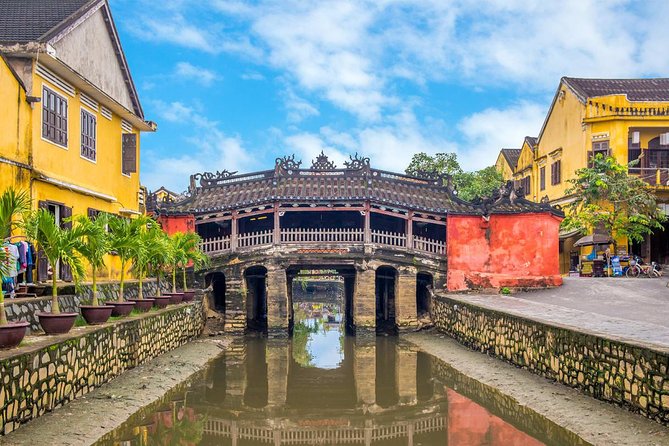
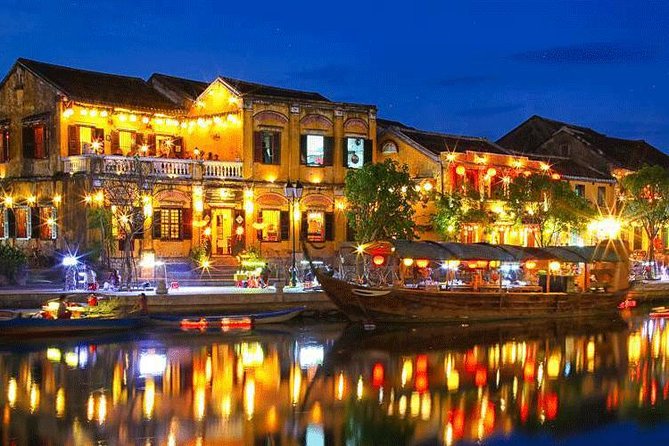
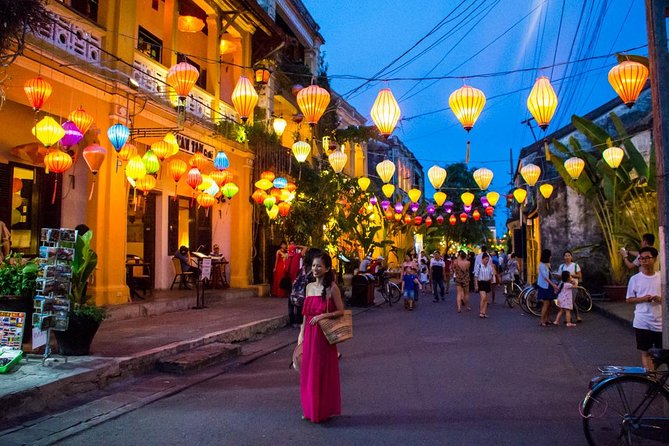
You’ll get a strong pairing around that: Hoi An Ancient Town is next, and the experience here is all about texture. Hoi An is described as a living museum with old architecture—Chinese temples, a Japanese-designed bridge, pagodas, wooden shop-houses, and older colonial-era buildings. Even if you’ve seen photos of Hoi An lantern streets before, the scale and density of historic streets feels different in person.
The best moment is night. The tour highlights the riverside area lit by lanterns—it’s the kind of atmosphere that’s hard to replicate elsewhere because it’s tied to how the town keeps moving after dark.
My Son Sanctuary: Hindu temple ruins and the scars of war

From Hoi An, you’ll travel to My Son Sanctuary, a site tied to the Champa kingdom. This place is fascinating because it’s not just pretty ruins—it’s a technical history lesson in brickwork. The complex is made up of over 70 structures, with the famous standout being the red brick and sandstone construction.
You’ll also learn why My Son looks the way it does today. After being destroyed by time and wars, it was rediscovered and renovated by the French in 1898, but more recent conflict damaged it heavily. The result is a site that can feel both awe-inspiring and heavy—because the landscape is literally marked by history.
If you’re sensitive to war-related context, take your time here. The payoff is that you’ll understand the region more fully than you would from temples alone.
- Hanoi Motorbike Tour: Food, Culture and Fun by Vintage Motorbike★ 5.0 · 6,699 reviews
- Hanoi: Guided Food Tour with Train Street Visit★ 4.9 · 6,239 reviews
- Hanoi Cooking Class: Culture, Local Market & Meaning CSR Impact★ 5.0 · 5,147 reviews
Hue and Saigon: the river court, then the Vietnam War story
Hue is next, and it’s a different kind of Vietnam. It’s tied to the Nguyễn Dynasty and built as a feudal capital along the Perfume River, with forested hills and a mix of pagodas and older buildings. The tour description points out mossy pagodas, art déco mansions, and lively markets, so you can expect a stop that blends scenic calm with human energy.
Hue is also highlighted for refined cuisine, though the itinerary lists it as a relatively short stop time. If food is your travel priority, you’ll probably want to treat Hue as a place to sample, even if your main meals are handled by the tour.
Then the route shifts to Saigon (Ho Chi Minh City) and the war lens becomes unavoidable. You’ll visit Cu Chi Tunnels, and this is one of the stops where the context matters. It’s framed as part of the history against French and American forces, and it’s listed as a high-value, worth-it outing from the city center.
This isn’t just about history dates. It’s about understanding how the landscape and daily survival strategies shaped people’s choices during the war.
Mekong Delta by sampan: islands, fruit, music, and village walking
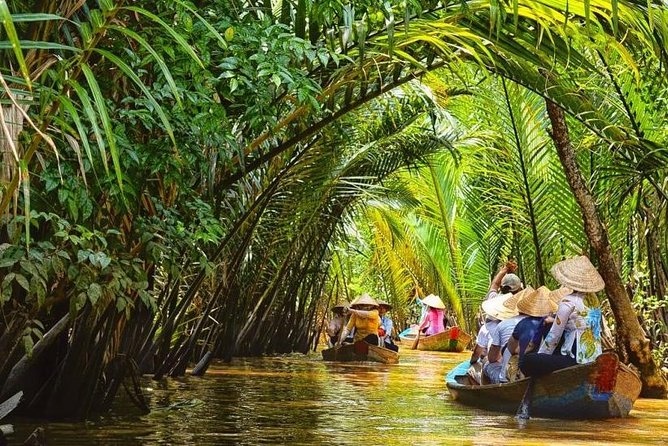
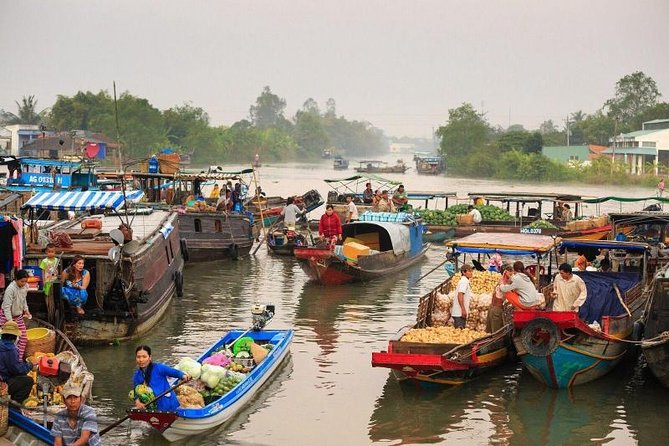
From the Vietnam War focus, the trip softens into waterways. In the Mekong Delta stretch, you’ll board a sampan to cruise around islands listed as Dragon, Unicorn, Phoenix, and Tortoise. The best part for me isn’t the boat ride by itself—it’s that the day includes stops on Unicorn Island, with walking in village paths, looking at orchards, and enjoying tropical fruits alongside Vietnamese folk music.
That combination is what turns “Mekong sightseeing” into a memory you can describe later. You don’t leave with only photos of water; you leave with sights that feel connected to everyday life.
Then you continue toward market time, with Cai Be Floating Market and boat cruising in tributaries of the Lower Mekong River (Bassac River). The tour specifically mentions a breakfast at the hotel followed by boat exploration, plus access to the Cai Rang Floating Market experience.
If you love watching commerce operate in its real setting—how people load, sell, negotiate, and navigate—this is the kind of day that pays off even if it rains. Just keep an eye on comfort and footwear.
Siem Reap: starting with the “slow way” of seeing Angkor
Cambodia arrives with Siem Reap, described as cheerful and welcoming, and that’s accurate to how this town works as a base. Here, your big anchor is Angkor’s surrounding world, and the trip gives you a helpful start: you’ll learn that Siem Reap sits amid Khmer Empire capital territory from the 9th to the 15th centuries. Even if Angkor is the headline, this context makes your temple visits feel grounded.
The stop is also positioned as a “go slowly” approach. Angkor Archaeological Park is about four miles north of the city center, and the complex is listed as 150 square miles, including Angkor Wat. It’s a useful lesson: you don’t treat temples like a checklist. You treat them like a place you could return to.
Banteay Srei and the Landmine Museum: temple detail with real human weight
Then comes Banteay Srei, one of the stops I’d recommend even if it wasn’t paired with anything else. It’s known as a small but beautiful temple and is largely built of pink sandstone, which matters because it allows for more detailed carvings and survival over time.
But the tour adds something crucial: a stop at a local village related to palm sugar production, plus the Landmine Museum dedicated by Mr. Aki Ra. The tour describes his path as a former child soldier in the Khmer Rouge, later trained by the United Nations to help detonate land-mines.
This is where the trip becomes more than scenery. It’s also where you’ll want to take a careful breath before rushing to the next photo moment. The museum gives a hard reminder of how long conflict can echo in everyday life.
Angkor Wat: the scale hits you once you understand it’s a temple city
Angkor Wat is the temple you probably imagined before you ever booked. This tour frames it well: it’s an enormous Buddhist temple complex that originally began as a Hindu temple in the first half of the 12th century, spanning more than 400 acres. It’s also described as the largest religious monument in the world, and its name translates to “temple city” in Khmer.
The scale is the story. If you only see it from one angle, it can look like just another giant ruin. But if you understand that it was built by Emperor Suryavarman II (1113 to 1150) as a state temple and political center, the design choices start to click.
Plan to spend time absorbing the architecture rather than sprinting. This is one of those sights where stopping matters.
Luang Prabang: Royal Palace Museum and the French-Lao mix
Next is Laos, with Luang Prabang as the base. The tour describes how Luang Prabang rose as the capital of Lan Xang from 1353 onwards, and how the city gets its name from the revered Pha Bang Buddha image. You’ll also learn how political weakening led to tribute to other kingdoms, and then the city accepted French protection after the 1887 sacking by the Chinese Haw.
What I liked here is that the trip doesn’t only do temples. It includes the Royal Palace Museum (also known as Haw Kham or Golden Hall). Built in 1904, it’s described as a blend of Lao traditional and French style, built for King Sisavang Vong. After the king’s death, the crown prince Savang Vatthana and family were the last occupants, and after the 1975 revolution, the palace became a national museum.
This stop works well after Angkor because it gives you a different kind of scale: not one huge temple complex, but a museum that helps you understand a kingdom and its symbols through artifacts.
Pak Ou Caves: thousands of Buddha statues on the Mekong
On the Mekong again, the tour heads to Pak Ou Caves. The caves are located on the Mekong River in the north of Luang Prabang, and the name refers to caves at the estuary of the Ou River.
The stop is built around two caves: Tam Ting (the cave of a thousand Buddha statues) and Tam Pum. The tour notes that research estimates about 4,000 statues across the two caves—around 1,500 in Tam Pum and about 2,500 in Tam Ting. Many statues are made from wood and painted in red or black.
If you want a spiritual scene that’s visual and repetitive—statues layered, niches packed, surfaces worn—this is the kind of stop that delivers without needing a long lecture.
Price and what you actually get for $2,600
At $2,600 per person for roughly 17 days, this tour lives or dies by value. Here’s what you’re buying beyond the big-name sights:
- English-speaking tour guides throughout
- 3-star hotels and cruise
- All entrance fees during the tour stops
- Meals included: breakfast is listed for 16 days and lunch for 10 days, plus dinner
Also included are practical touchpoints like pickup offered and a mobile ticket. The tour is listed as having a maximum group size of 15 people, which usually helps with coordination in multi-day routes like this.
What’s not included matters too: international flights to Cambodia and Laos and domestic flights in Vietnam aren’t part of the package. So you’ll likely spend extra on flights depending on your routing into Vietnam and then onward.
My take on value: this is strongest if you want a guided route that handles the friction—tickets, entry lines, fees, and the day-to-day schedule—so you can focus on the sights. If you love designing every detail yourself, you might feel the cost more. If you want to be carried, this price is easier to justify.
Practical tips so the days feel good, not just busy
This kind of route stacks big places one after another. A few habits help:
Wear comfortable walking shoes even on “short” days, because temples and old towns rack up steps fast. Keep a small day bag with water and sun protection, especially for open-air sites like Angkor-related stops and river days.
For photos, build in a habit of pausing at least once per stop. The “wow” at Angkor Wat and the patience needed for Banteay Srei and Pak Ou caves are better when you slow down instead of treating it like a sprint.
And for logistics: because the meeting point info points to Luang Prabang International Airport (10:00 am), double-check your confirmation message about where and when the first pickup happens for your particular departure.
Should you book this Vietnam–Cambodia–Laos tour?
I think this tour is a good fit if you want a guided, structured way to see three countries in one trip, with major hits like Halong Bay overnight and Angkor Wat, plus meaningful context at places tied to war memory and cultural diversity.
I’d skip it if you want a totally free-form schedule or if the flight layering feels stressful for your travel style, since international and Vietnam domestic flights aren’t included. Also confirm that the start location and date match what you expect, because the meeting point details list Luang Prabang rather than Hanoi.
If you like your travel with less guesswork and more time looking at real places, this is a solid booking candidate.
FAQ
Where does the tour start and what time is listed?
The meeting point is Luang Prabang International Airport, with a listed start time of 10:00 am.
How long is the tour?
It’s listed as approximately 17 days.
What is the price per person?
The price is listed as $2,600.00 per person.
Are pickup and mobile tickets included?
Pickup is offered, and the tour includes a mobile ticket.
What meals are included?
Breakfast is listed for 16 days and lunch for 10 days, plus dinner.
Are entrance fees included?
Yes, all entrance fees during the tour stops are included.
Is the tour guide language English?
Yes, the tour includes English-speaking tour guides.
How big is the group?
The tour lists a maximum of 15 travelers/people.
Are flights included?
International flights to Cambodia and Laos are not included, and domestic flights in Vietnam are also not included.
Can I get a refund if I cancel?
You can cancel up to 6 days in advance for a full refund.
More Tours in Hanoi
- Ninh Binh Full-Day Tour from Hanoi to Hoa Lu, Tam Coc & Mua Cave Via Boat & Bike
★ 5.0 · 4,384 reviews




More Tour Reviews in Hanoi
Latest Hanoi write-ups from our team


Tours, compared.
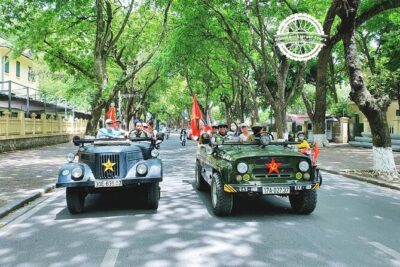 ★ 5.0Hanoi Jeep Tour: Food, Culture and Fun by Vietnam Army JeepFrom $5515,222 reviews
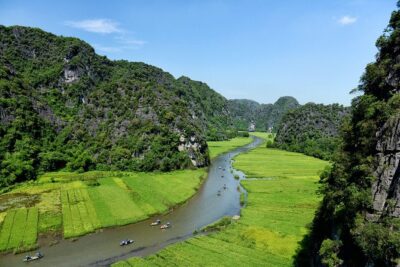 ★ 5.0Full-Day Ninh Binh Highlights Tour from HanoiFrom $797,761 reviews
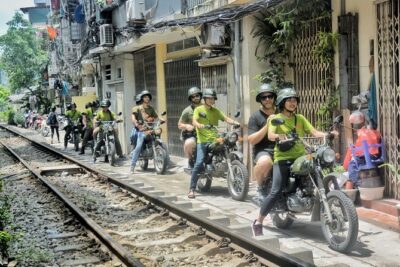 ★ 5.0Hanoi Motorbike Tour: Food, Culture and Fun by Vintage MotorbikeFrom $556,699 reviews
 ★ 4.9Guided Food Tour with Train Street VisitFrom $196,239 reviews
 ★ 5.0Small Group Hanoi Street Food Tour with a Real FoodieFrom $284,682 reviews
 ★ 5.0Ninh Binh Full-Day Tour from Hanoi to Hoa Lu, Tam Coc & Mua Cave Via Boat & BikeFrom $334,384 reviews
 ★ 4.7Ninh Binh, Bai Dinh/Hoa Lu, Trang An, & Mua Cave TourFrom $464,279 reviews
 ★ 5.0Ninh Binh HIGHTLIGHT & HIDDEN GEM Tour From Hanoi: Skip-The-LineFrom $894,212 reviews