

Reviewed · HANOI VESPA & MOTORBIKE TOURS
Highlights Hanoi Morning Scooter Tours
Hanoi feels like it was built for scooters, not cars. This Hanoi morning scooter tour (or the afternoon option) uses two wheels to help you slide past narrow streets and see the city’s everyday rhythm. You also get planned stops like the Opera House and the Red River area without having to stitch together transport and tickets on your own.
What I really like is the comfort of the setup: Honda Lead scooters, safety helmets, and pickup with quick guidance so you can focus on the ride. I also love that food is built into the day—local dishes at lunch plus coffee culture, including egg coffee.
One thing to consider: this tour depends on good weather and you’ll be on a scooter for long stretches, so if you’re not into traffic or you get motion-sick, you’ll want to think twice.
In This Review
- Key highlights worth your attention
- Why Hanoi Works Best on Two Wheels
- What You Get for $58: Scooter, Food, and Tickets Included
- Pickup Rhythm and Small-Group Limits
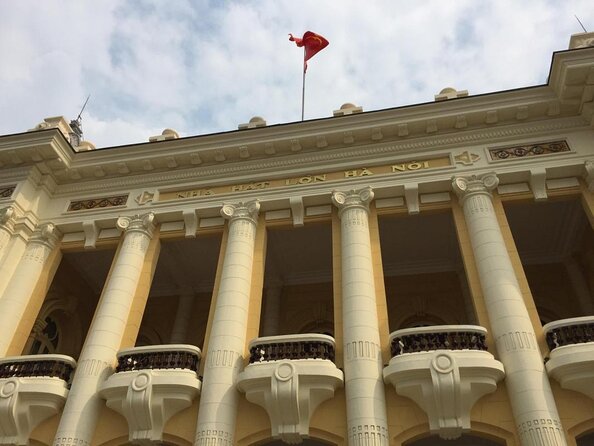
- Opera House, St Joseph’s Cathedral, and the Photo-Friendly Stops
- Long Bien Bridge and Train Street: Hanoi Seen Through Rails
- West Lake, Truc Bach, and Tran Quoc Pagoda: A Breather Between Sights
- Hoa Lo Prison and the B-52 Site: War Landmarks With Context
- Ho Chi Minh Mausoleum and Ho Chi Minh Square Pass-by
- The Food Plan: Pho Cuon, Bun Cha, Pho Hanoi, Desserts, and Egg Coffee
- Practical Tips to Enjoy the Scooter Ride
- Should You Book This Hanoi Morning or Afternoon Scooter Tour?
- FAQ
- How much does the Hanoi morning scooter tour cost?
- How long is the tour?
- Do you get hotel pickup?
- What scooter and safety gear are used?
- What sights are included during the ride?
- Are entry tickets included?
- Is lunch and coffee included?
- How big is the group?
- What happens if weather is poor?
Key highlights worth your attention
- Honda Lead scooters with helmets make the ride feel straightforward and safer
- Small groups (max 10 travelers) keep the pace realistic through tight streets
- Long Bien Bridge and Train Street let you spot trains cutting through everyday life
- West Lake + Truc Bach + Tran Quoc Pagoda gives you a calmer break from the Old Quarter
- Hoa Lo Prison and the B-52 site show major Vietnam War landmarks with context
- Food stops include pho cuon, bun cha, pho Hanoi, desserts, and egg coffee
Why Hanoi Works Best on Two Wheels
Hanoi’s center is tight. Streets are narrow, packed with bikes, motorbikes, pedestrians, and quick turns that don’t leave much room for slow, careful car travel. That’s exactly why this style of tour is smart: you’re riding with locals’ speed and attitude, not fighting the city from the wrong seat.
On a scooter, you also get more “street information” than you would from a bus or taxi. You can smell herbs sold on specific streets, see how daily shop fronts operate, and notice how people move between homes, stalls, and small temples. It’s not just scenery. It’s how Hanoi actually functions.
The route does a good job of mixing energy with pauses. You start in the city core, then you work your way through major landmarks, toward the lakes, and out to war-related sites and bridges. That mix matters because you don’t spend all your time in one kind of place—crowds, then quiet, then back to moving.
More nights on the back of a Vespa


What You Get for $58: Scooter, Food, and Tickets Included
At $58 per person for about 4.5 hours, the value comes from what’s included, not just the transportation. You get the scooter and helmet, plus a guide (speaking French or English), bottled water, snacks, and coffee and/or tea. Most importantly, you also get entry tickets included for the stops that charge.
That’s a big deal in Hanoi. If you try to do it “DIY,” the costs add up fast—taxis for short hops, separate admission lines, and food breaks you didn’t plan for. Here, lunch and coffee culture are part of the schedule.
Food is also practical, not “we’ll point you at somewhere nearby.” Lunch is structured around classic Hanoi dishes, including pho cuon, bun cha, bread, and pho Hanoi beef noodle soup. There’s also dessert time plus egg coffee. In one afternoon, you’re not just sight-seeing; you’re actually eating what locals eat.
The only true “watch-out” on value is what’s not included: alcoholic beverages and insurance. If you rely on travel insurance for medical coverage or scooter-related concerns, you’ll want to make sure your own policy covers you.
Pickup Rhythm and Small-Group Limits
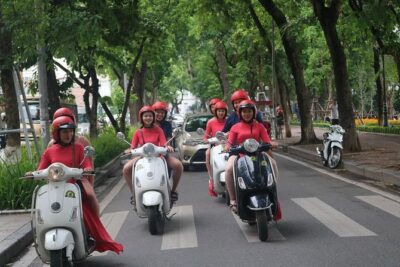
The tour is designed to start smoothly. In the morning, pickup is offered around 8:30, and you’re greeted by female drivers at your hotel. You’re given a helmet and guided on safety before you roll out, which matters when traffic looks chaotic to first-timers.
Group size stays small—up to 10 travelers. That keeps it easier for the guide to manage spacing and meeting points. It also helps with timing: you’re less likely to get stuck waiting for someone who’s slow to arrive, because the group is small by design.
If you’re doing this early in your visit to Hanoi, I’d use it to set your bearings. After the ride, you’ll know where the city’s key landmarks sit—Red River side, West Lake area, and the core sights around major institutions. That makes later wandering far less stressful.
Opera House, St Joseph’s Cathedral, and the Photo-Friendly Stops
One of the tour’s strengths is mixing “big landmark” energy with short, well-timed breaks. If you take the morning option, you meet at the Hanoi Opera House around 8:45–9:00. The guide gives an itinerary overview and a safety guide first, then you have time to get souvenir photos and move on.
In the afternoon option, you pass by St. Joseph’s Cathedral, a Roman Catholic neo-gothic church built starting in 1886 during French colonial rule. The time window there is short—about 15 minutes—but it’s enough to capture the exterior and understand why it’s such a recognizable landmark in Hanoi’s French-era zone.
These stops aren’t filler. They do two jobs:
1) They anchor the tour in major city history and architecture.
2) They give you a clean “reset moment” so you’re not riding continuously without breathing space.
If you’re the type who likes your photos without spending an hour hunting for the perfect angle, these brief stops are a plus.
Long Bien Bridge and Train Street: Hanoi Seen Through Rails
This is where the tour gets genuinely unique. The idea isn’t just to look at bridges and streets; it’s to see Hanoi through a working transportation lens.
Long Bien Bridge is visited (morning) around 9:00–9:45. The ride includes time on the ceramic road, then you arrive at a historic cantilever bridge across the Red River. The bridge was built in 1899–1902 by Daydé & Pillé of Paris and opened in 1903. During the war it was attacked many times, and it still exists today as a visible piece of war evidence.
What you’ll notice right away: trains still run across it to reach the station. It turns a bridge from a museum object into something alive. You’re watching rail infrastructure doing real work—right where people also live and travel.
Then you get Train Street, a narrow backstreet where the railway cuts through small, close-packed houses. Depending on the option, this appears either in the late morning (around 11:00–11:30) or mid-afternoon (about 15:15–15:50). This is a stop for people who like odd contrasts: daily life next to a rail line that passes through on schedule a few times per day.
Practical note: this is a photo stop, so bring patience for crowding. Also, protect your phone and bag because you’ll be close to traffic in a tight street.
Worth a glance beside this Hanoi pick:
- Vespa City Tour &Train Street Female With Ao Dai Riders 4,5 Hours★ 5.0 · 314 reviews
- Hanoi Vespa Tours: Food + Culture + Fun on Army Vespa★ 5.0 · 279 reviews
- Vespa Female Ao Dai riders Night Street Food + See Train Street★ 5.0 · 254 reviews
West Lake, Truc Bach, and Tran Quoc Pagoda: A Breather Between Sights
After the denser areas of the city, the route makes room for calm. One of the best mood shifts is the lakes loop—West Lake (Ho Tay Lake) and Truc Bach Lake. You get this segment in the morning (about 9:45–10:15) and again in the late afternoon in the other option (about 17:00–17:20).
This isn’t only about views. The lakes area gives you more space to breathe. The route rides along roads between the lakes where you’ll find more open air and tree cover compared to the Old Quarter streets.
Then you reach Tran Quoc Pagoda, on a small island near the southeastern shore of West Lake. It’s regarded as one of Hanoi’s most ancient pagodas, with history dating back more than 1,500 years. You also pass by the Truc Bach area, where a memorial to Senator McCain sits along the lake.
Here’s the trade-off: the visit time is limited, so if you want a slow, deep temple experience, this tour is more of a highlight-and-move-on approach. If your goal is to see a lot of Hanoi in one day without exhausting yourself, this pace is a good match.
Hoa Lo Prison and the B-52 Site: War Landmarks With Context
Two of the most serious stops in the whole schedule are Hoa Lo Prison and the Huu Tiep Lake / Downed B-52 site. They’re the kind of places you remember because they connect architecture and locations to real events.
In the afternoon option, Hoa Lo Prison runs about 45 minutes. You’re driving there after Long Bien Bridge. The site was used by French colonists in French Indochina for political prisoners, and it’s positioned as a major historical stop, so you’ll want to go in with a little mental space for heavier content.
Then there’s the B-52 site, at Huu Tiep Lake. In the morning option, it’s about 10:15–11:00. A B-52 plane was shot down there on December 27, 1972. You’ll learn about Vietnam War history and you’ll also get a chance to rest at a stall for a cup of tea while talking about Vietnamese culture and customs.
If you’re worried about this being too intense, it helps that the schedule includes a break with tea. Still, this is not a casual sightseeing stop. It’s a reminder of what these places meant, not just what they look like now.
Ho Chi Minh Mausoleum and Ho Chi Minh Square Pass-by
The route also includes time around the Ho Chi Minh area, though the tour handles it in a “see and move” way rather than a long, slow visit.
In the afternoon option, you stop near Ho Chi Minh Mausoleum with about 30 minutes and admission included. In the morning option, you pass by the square and mausoleum area as part of the ride sequence, then continue to other nearby sights.
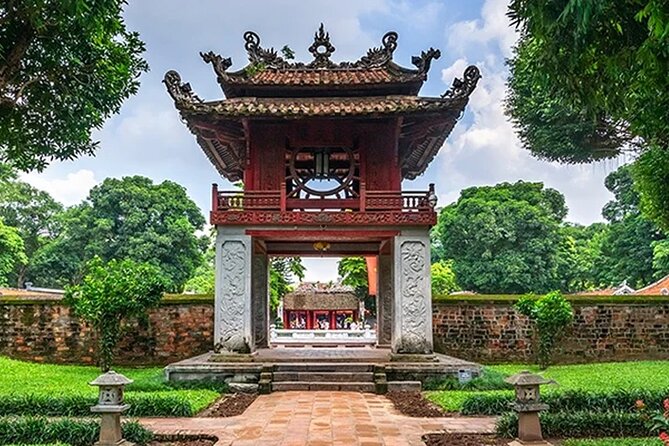
You’ll also ride past old French-style villas and view the area’s institutional spaces, plus Temple of Literature is mentioned as part of the pass-by viewing. Because these are scheduled as part of the day’s movement, you’re likely to come away with a clear sense of where the landmarks are and how they connect across central Hanoi.
This section is best for people who want context without turning the whole afternoon into queues and waiting. If you want deep, rule-heavy visits that require lots of time and exact entry procedures, this tour may not replace a dedicated visit.
The Food Plan: Pho Cuon, Bun Cha, Pho Hanoi, Desserts, and Egg Coffee
If you only remember one practical detail from this tour, make it the food timing. The tour doesn’t force you to guess where to eat or when to eat. Lunch and coffee culture are built in.
For lunch (morning option), you get a mix of Hanoi staples:
- Pho cuon (spring rolls made with rice paper)
- Bun cha (noodles with grilled pork)
- Bread
- Pho Hanoi (Hanoi beef noodle soup)
It’s a smart spread. You get both noodle soup and grilled flavor, plus a few different textures so you don’t feel like you’re eating the same thing all day.
Then there’s dessert and coffee time. Depending on the option, you’ll get sweet soup or fruits mixed with yogurt, then egg coffee. Egg coffee is a Hanoi classic made with egg yolks, sugar, condensed milk, and robusta coffee. Even if you’re not a coffee person, it’s often worth trying because it tastes different from most coffees you’ve had.
One tip: treat egg coffee as a dessert moment, not a caffeine fix. It’s heavy and sweet, so pace it with water and your ride rhythm.
Practical Tips to Enjoy the Scooter Ride
This kind of day works best when you prepare for the realities of scooters and city heat.
Bring a light rain layer even if the forecast looks okay. The experience requires good weather, and Hanoi traffic can get slick fast. If rain changes plans, the tour notes itinerary changes can happen based on traffic and weather.
Wear closed-toe shoes with grip. You don’t need hiking boots, but you do need something stable. Also, keep your bag compact. You’ll be close to the driver and guide, and you’ll want to handle your phone quickly for photo stops.
If you’re sensitive to motion or crowds, choose your comfort level wisely. The guide provides safety guidance, and you do wear a helmet, but you’re still riding through a lively city environment.
Finally, consider your insurance coverage. Insurance is not included in the tour package. That doesn’t mean it’s unsafe—it just means you should be sure your own plan covers your situation.
Should You Book This Hanoi Morning or Afternoon Scooter Tour?
You should book if you want:
- a short day that covers major Hanoi sights without complicated logistics
- a small-group experience with a safety-first scooter setup (helmets, guidance, clear meeting points)
- food stops that match Hanoi’s real favorites, not just tourist snacks
- photo opportunities like Long Bien Bridge trains and Train Street
You might skip it if:
- you strongly prefer slow, step-by-step walking tours with lots of time inside each site
- you’re worried about scooter riding in traffic, even with helmets and guidance
- you can’t handle war memorial sites in a single half-day
If you’re visiting Hanoi for the first time and you want one high-value orientation day, this is a strong choice.
FAQ
How much does the Hanoi morning scooter tour cost?
The tour price is $58.00 per person.
How long is the tour?
The duration is about 4 hours 30 minutes.
Do you get hotel pickup?
Yes, pickup is offered. In the morning, pickup is around 8.30 and you are greeted by drivers at your hotel.
What scooter and safety gear are used?
The tour uses Honda Lead scooters with a safety helmet provided.
What sights are included during the ride?
Stops include places such as the Hanoi Opera House, Long Bien Bridge, West Lake and Truc Bach Lake, Tran Quoc Pagoda, Train Street, Huu Tiep Lake and the downed B-52, Hoa Lo Prison (in the afternoon option), and passes by areas around Ho Chi Minh Mausoleum, Ho Chi Minh Square, and Temple of Literature.
Are entry tickets included?
Yes. All entry tickets are included for the relevant visits. Some stops also have admission ticket free.
Is lunch and coffee included?
Yes. The tour includes snacks, lunch, and coffee and/or tea, plus bottled water.
How big is the group?
The maximum group size is 10 travelers.
What happens if weather is poor?
The experience requires good weather. If it’s canceled due to poor weather, you’ll be offered a different date or a full refund.
More Tours in Hanoi
- Ninh Binh Full-Day Tour from Hanoi to Hoa Lu, Tam Coc & Mua Cave Via Boat & Bike
★ 5.0 · 4,384 reviews




More Tour Reviews in Hanoi


More of Hanoi on Two Wheels


Latest Hanoi write-ups from our team
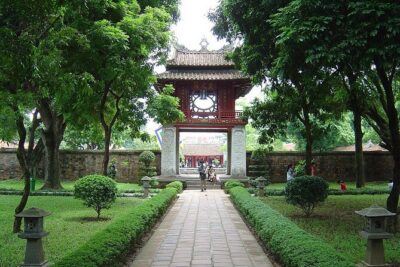





Hanoi Vespa & Motorbike Tours, compared.
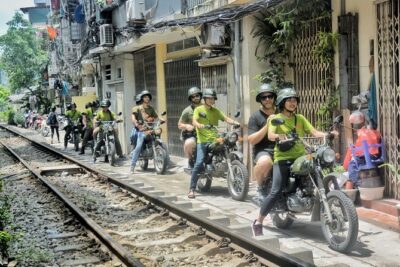 ★ 5.0Hanoi Motorbike Tour: Food, Culture and Fun by Vintage MotorbikeFrom $556,699 reviews
 ★ 5.0Hanoi Motorbike Tours Led By Women: Hanoi By Night Foodie Motorbike ToursFrom $691,734 reviews
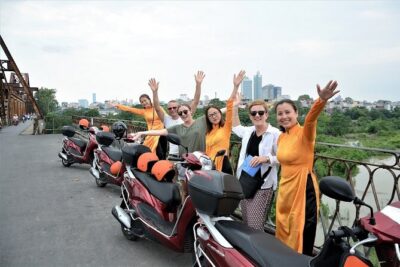 ★ 5.0Hanoi Motorbike Tours Led By Women: Hanoi City Insight Motorbike ToursFrom $59816 reviews
 ★ 5.0Hanoi Countryside Motorbike Tour: Red River Culture & Daily LifeFrom $55681 reviews
 ★ 4.9From Hanoi: 3-Day Motorbike Ha Giang Loop with Easy RiderFrom $227501 reviews
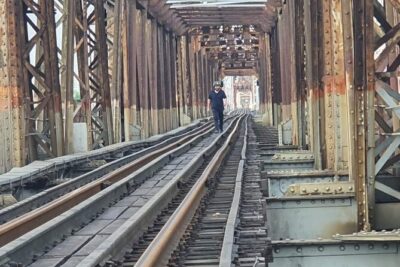 ★ 5.0Hanoi Motorbike Tour: Hanoi HIGHTLIGHTS & HIDDEN GEMSFrom $57405 reviews
 ★ 5.0Hanoi old quarter sightseeing & street food eating by MotorcycleFrom $55333 reviews
 ★ 5.0Vespa City Tour &Train Street Female With Ao Dai Riders 4,5 HoursFrom $58314 reviews
Browse the lists this tour appears in