
Reviewed · HANOI VESPA & MOTORBIKE TOURS
Hanoi Unique Motorbike Tour
Four hours on a motorbike is a fast way to read Hanoi. This half-day ride strings together Hanoi’s big contrasts: French colonial landmarks, century-old religious sites, and Vietnam’s political core, all without spending your whole day walking. I especially like the variety of stops and how guides (including Davidson and Bic) explain what you are seeing in plain, practical terms.
What I also like is the pacing. You get short, focused time at each place, plus the freedom to move through traffic quickly—so you can hit both the lake area and the far side of the Red River in one afternoon. One drawback to factor in: this is still a motorbike experience, so if you are sensitive to noise or traffic flow, you’ll need to be comfortable sitting behind your guide for several segments.
In This Review
- Key highlights worth your time
- Why this Hanoi motorbike route feels like the smart half-day
- Meeting in the Old Quarter: where the tour starts and how it feels to get going
- Stop 1: St. Joseph’s Cathedral (1883–1886) and Hanoi’s French-era face
- Stop 2: Hoàn Kiếm Lake Walking Street and the Ly Thái Tổ statue
- Stop 3: Hanoi Opera House and the colonial-and-entertainment vibe
- Stop 4: Long Biên Bridge (1899–1902) and a view with historical weight
- Stop 5: Trần Quốc Pagoda on the Pearl Island (Tây Hồ)
- Ba Đình district: Vietnam’s political center and the Flag Tower’s old role
- Cửa Bắc (Northern Gate) and why the city still keeps its scars
- Dong Xuân Market and Phùng Hưng Mural Street: Hanoi’s everyday side
- What you actually get for $59: value breakdown that makes sense
- Pace, group size, and the practical reality of riding
- Small photo and comfort tips that help a lot
- Should you book this Hanoi Unique Motorbike Tour?
- FAQ
- How long is the Hanoi Unique Motorbike Tour?
- What is the meeting point for the tour?
- Is pickup available?
- What is included in the price?
- Are admission tickets included for the stops?
- What is not included?
- How many people are in the group?
- What happens if weather or traffic affects the schedule?
Key highlights worth your time
- Helmet + behind-the-guide setup: you ride with a guide and you get a helmet, which makes the whole thing feel more organized than ad-hopping on your own.
- A tight circuit of major Hanoi zones: Hoan Kiem, the Opera House area, Long Bien, Tran Quoc, Ba Dinh, Cua Bac, and shopping stops.
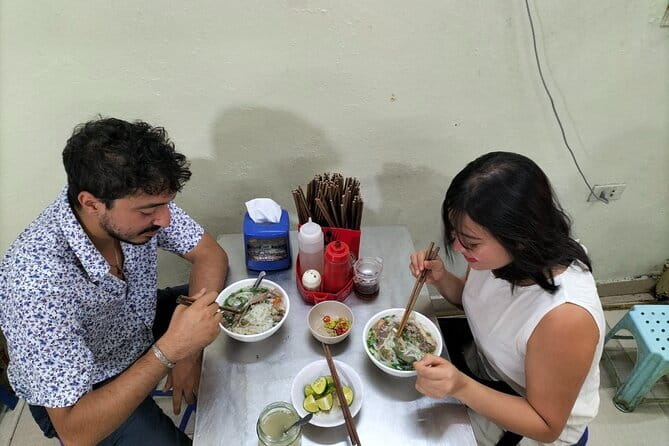
- Included meal, not just sightseeing: lunch or dinner is included, chosen by your guide.
- Guides who talk like humans: names I’ve seen attached to top experiences include Davidson and Bic, and the vibe is friendly and informative.
- Quick photo windows, not long museum marathons: admission is free at the listed stops, and time is allotted for views and photos.
Why this Hanoi motorbike route feels like the smart half-day
Hanoi can be a lot at first. Streets twist, the traffic has its own rhythm, and landmarks are scattered across different neighborhoods. This tour solves the problem by using a motorbike to connect the dots quickly, so you get a real sense of the city’s layout and how everyday life flows around the monuments.
You’ll also like that it’s not only “look at buildings.” The itinerary mixes religious places (St. Joseph’s Cathedral and Tran Quoc Pagoda), civic landmarks (Hoan Kiem Lake and Ba Dinh), and older trade streets (Dong Xuan Market and nearby mural art). That balance helps you understand why Hanoi looks the way it does—French-era structures beside much older temples and gates.
The group stays small—maximum 6 travelers—so it’s easier to stop, regroup, and move as a unit when traffic and crossings get complicated. The schedule is also flexible. Timings are an estimate, and the order can shift due to weather, traffic, or safety issues.
More nights on the back of a Vespa


Meeting in the Old Quarter: where the tour starts and how it feels to get going
The tour starts at 1 P. Hàng Gai, Hàng Trống, Hoàn Kiếm and ends back at the same meeting point. That’s useful if you’re staying somewhere in or near Hoàn Kiếm, because you aren’t stuck with a long commute before you even begin.
You’re told pickup is offered, and you’ll also receive a mobile ticket. Practically, that means you can focus on being ready on time without paperwork chaos. Then your guide leads you into the circuit—helmet on, water taken care of, and a plan that flows from one major area to the next.
If you like being oriented fast—this route helps. You’ll see where the lake sits in the city, how the Old Quarter connects to bigger roads, and how you move toward the political center and the river crossings.
Stop 1: St. Joseph’s Cathedral (1883–1886) and Hanoi’s French-era face
St. Joseph’s Cathedral is one of those landmarks that makes you pause because it looks like it belongs in Europe. The church was built in 1883–1886, and the design has a Notre-Dame-type feel that visitors often compare to Paris-style architecture. It’s a clear early clue about the French influence in Hanoi.
What’s special here is the mix of photo time and context. You can take authentic pictures, but your guide should also help you understand how Catholicism fits into Vietnam’s religious landscape.
The main practical drawback: photo time is brief (about 25 minutes), and the area can draw people who want the same shots. Come with a plan for 2–3 angles you want, not a 30-position photo checklist.
Stop 2: Hoàn Kiếm Lake Walking Street and the Ly Thái Tổ statue

Hoàn Kiếm Lake is Hanoi’s famous heart, and riding around it gives you a quick “city orientation” loop. This stop is about views + storytelling. Your guide shows key highlights, and you also get time to stop near the statue of King Ly Thái Tổ, credited with establishing Hanoi as a capital more than a millennium ago.
This is the kind of place where Hanoi’s layers show up fast. You see daily life around the lake, and you learn the historical reasoning behind why the city’s “center” developed where it did. Even if you’ve read about it before, a guided route helps you connect the dots in real space.
Timing is tight (about 25 minutes). If you want longer walks or extra photos, you might feel a bit rushed—so treat this as a get-your-bearings stop, not the whole Hoàn Kiếm experience.
Stop 3: Hanoi Opera House and the colonial-and-entertainment vibe
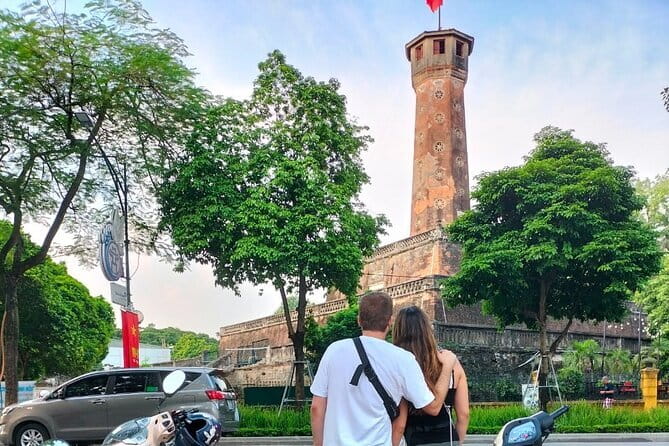
From Hoàn Kiếm, you’re staying close to the Hanoi Opera House—a French opera house symbol in the city. It’s near the lake, and it’s the kind of building you notice even when you’re not trying to. Think of it as a visual marker for Hanoi’s era of French cultural influence.
This segment is about quick appreciation. You get about 20 minutes, with nearby optional sight points mentioned in the route, like the Hanoi Stock exchange area and the Hanoi Sofitel Metropole, noted as the first five-star hotel built in 1901.
The drawback is simple: the stop isn’t long enough to do anything deep—no long exterior stroll, no sit-down café mission. If you like architecture but hate rush, you may want to do a second visit on your own later.
- Hanoi Jeep Tour: Food, Culture and Fun by Vietnam Army Jeep★ 5.0 · 15,222 reviews
- Full-Day Ninh Binh Highlights Tour from Hanoi★ 5.0 · 7,761 reviews
- Hanoi: Ha Long Bay Day Cruise – Swimming, Meal, Kayaking★ 4.7 · 7,415 reviews
Stop 4: Long Biên Bridge (1899–1902) and a view with historical weight

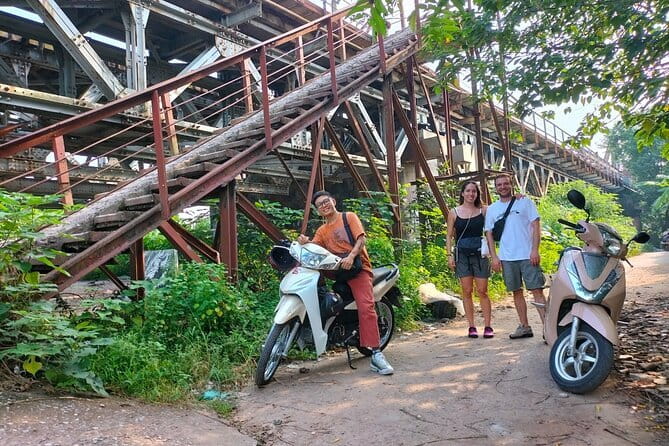
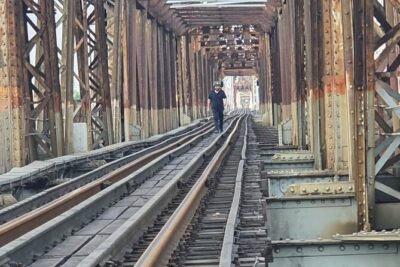
Long Biên Bridge is one of the big river-crossing symbols in Hanoi. The French built it between 1899 and 1902, and the tour frames it as more than a photo bridge. You’ll learn about the French control period before 1954 and the US bombing campaign over North Vietnam, which damaged bridges and infrastructure and affected people.
Then you get a practical treat: an awesome view, including mention of banana forest surroundings. That mix of history + real landscape makes this stop memorable, because you are not just reading about events—you are seeing the geography that shaped them.
Time is around 25 minutes, so you won’t linger. If you love detailed war-history narratives, you might wish for more time. But as a half-day arc, it lands the message without turning your afternoon into a lecture.
Stop 5: Trần Quốc Pagoda on the Pearl Island (Tây Hồ)

Next is Chùa Trần Quốc (Trần Quốc Pagoda), on the pearl island of Tây Hồ. This place is sacred Buddhist ground and is described as having a history of nearly 1500 years—considered the oldest in Thang Long (Hanoi). Under the Ly and Trần dynasties, it functioned as a Buddhist center of the citadel.
This is where the tour shifts tone. After colonial and political landmarks, you get a calmer, spiritual pause. It’s also scenic in a different way: not “war view” or “French façade,” but a temple setting on an island environment.
It’s about 30 minutes, which is long enough to step in, look around, and absorb the mood. The only consideration: if you’re visiting during midday peak heat, you might want to pace yourself and take water breaks (bottled water is included, thankfully).
Ba Đình district: Vietnam’s political center and the Flag Tower’s old role

The route then moves into Ba Đình district, described as the political center of Vietnam, in a large area of over 20 hectares with administrative buildings and ministries. You also get a look around the complex tied to the government and the Presidential Palace (where the head of state welcomes visiting heads of state), plus Ba Đình Square, where President Hồ Chí Minh read the declaration of independence on September 2, 1945.
After that, you reach Flag Tower of Hanoi (Cột Cờ Hà Nội). It’s a city symbol and part of the old citadel system, with height described as 33.4 m (41 m with the flag). The tower is said to have been built during the Nguyen dynasty (either 1805 or 1812) as an observation post. It also has a notable detail: unlike many other structures, it wasn’t destroyed during the French invasion (1896–1897) and was continuously used as a military post. Now it sits near the Vietnam Military History Museum.
These stops are powerful, but they can also feel intense, because you’re in the place where politics meets national identity. If you want a tour that feels more like streets and markets than monuments, this is the part that might feel heavier than expected.
Time is around 20 minutes at the flag tower segment, so think of it as a big-picture introduction rather than an hours-long deep dive into politics.
Cửa Bắc (Northern Gate) and why the city still keeps its scars
You’ll finish the historic circuit at Hanoi Old Citadel – Northern Gate (Cửa Bắc). This is described as the only remaining gate of Hanoi, located on Phan Đình Phùng Street, with a “tragic history” tied to battles to capture the gate from French colonialists.
Now it’s a tourist attraction and relic. In other words, you see a structure that survived, then you learn how it was used in conflict, then you see how people have turned it into a place to remember and learn.
This is about 20 minutes. It’s long enough to take photos and get the story, but not long enough to wander into other areas deeply. The tradeoff is that you’ll still get more stops afterward.
Dong Xuân Market and Phùng Hưng Mural Street: Hanoi’s everyday side
After the gates and monuments, you shift into the everyday flow of Hanoi with Đồng Xuân Market. It’s described as Hanoi’s largest covered market, built originally by the French administration in 1889 and renovated multiple times, with a major renovation after a fire in 1994.
You’ll learn how it works: the market has a wholesale side where you buy in big packs and a retail side for smaller purchases. The stalls cover everything from clothes and household goods to foodstuff—so even if you don’t plan to buy, it’s a good place to sense local shopping habits.
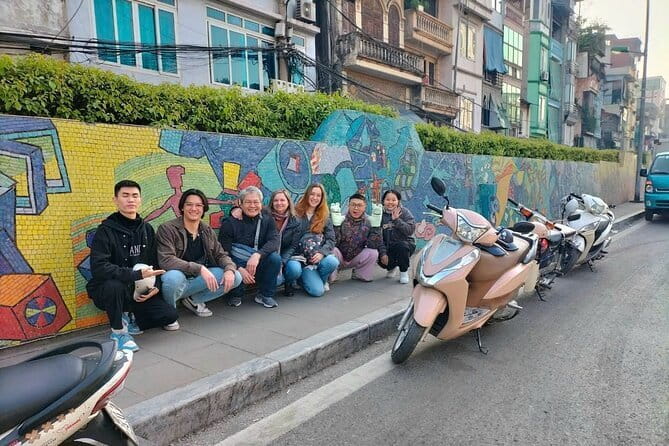
Then comes Phùng Hưng Mural Street, tied to the 25th anniversary of Vietnam-Korea diplomatic relations. The route highlights that it features over 20 murals made by artists from both countries, depicting Hanoi’s cultural features over the last century.
These two stops are about 20 minutes and 25 minutes respectively. The market is great if you want real street-level Hanoi energy. The mural street is great if you want a break from the noise and still get cultural meaning in a quick walk.
One caution: markets are crowded by nature. If you are tired or don’t like shopping crowds, keep your expectations simple—this is more about atmosphere and quick browsing than about finding the perfect souvenir deal.
What you actually get for $59: value breakdown that makes sense
At $59 per person for around 4 hours, the value mostly comes from what’s included and what you avoid doing yourself. You get bottled water (one bottle per guest), plus lunch or dinner, chosen by the guide. You also get a helmet and a professional guide. Admission is listed as free at each stop on the route.
So you’re paying for transportation through multiple city zones, a guide’s time, and at least one full meal. If you were to hire a taxi or try to self-drive a route of this many areas in half a day, you would likely spend more just on transport, and you’d lose the context that helps you understand what you’re looking at.
What’s not included is also straightforward: coffee and/or tea and anything personal like souvenirs. Plan for that small add-on budget so you don’t get surprised.
The biggest value point: you get a curated “map of Hanoi” in one afternoon, which is hard to recreate alone unless you already know exactly how the city’s neighborhoods connect.
Pace, group size, and the practical reality of riding
The tour is set up for small groups—maximum 6 travelers—and you sit behind one tour guide with a helmet. That setup makes it easier to keep everyone together and helps reduce the guesswork of where to go next.
Timing is approximate, and the operator explicitly notes the order and minutes can change due to weather, traffic, or safety hazards. That flexibility is a reality in Hanoi, and it’s better than pretending every schedule will go perfectly on time.
If it’s raining, your experience may shift while keeping the motorbike plan. One strong theme you can expect from this type of tour is adaptation: the route keeps moving even when conditions are annoying. If you are worried about comfort, dress for the weather and keep your expectations flexible.
Small photo and comfort tips that help a lot
Because many stops are brief, your best strategy is to think in short photo bursts: 2–3 angles, then move on. At cathedrals, that means a front façade view and a side angle; at lake areas, it means choosing one foreground subject and one wide shot.
For comfort: hold steady, keep your hands in a safe position, and treat the ride like a short “transport session” rather than a sightseeing leisurely stroll. You also get water, but you should still pace yourself—especially when you’re stepping out for pagodas and government-area viewpoints.
And when your guide gives context, listen for names and dates. You’ll remember 1883–1886 for the cathedral, 1899–1902 for Long Biên, and the September 2, 1945 independence moment tied to Ba Đình square. Those anchor points make the whole tour feel like one story, not nine separate stops.
Should you book this Hanoi Unique Motorbike Tour?
I’d book it if you want a fast, guided circuit that covers Hanoi’s major “must-see” zones in about four hours—especially if you like architecture, temple culture, and learning how colonial and political eras shaped what you see today. The included meal, bottled water, and guide time make the $59 feel less like a gamble and more like a smart half-day plan.
I would not book it if you strongly dislike riding in traffic or you need long, slow time at each site. The stops are short by design, and the schedule can adjust. This tour is best for people who like momentum, not people who want to linger.
FAQ
How long is the Hanoi Unique Motorbike Tour?
The tour lasts about 4 hours.
What is the meeting point for the tour?
The meeting point is 1 P. Hàng Gai, Hàng Trống, Hoàn Kiếm, Hà Nội, Vietnam, and the tour ends back at the same location.
Is pickup available?
Pickup is offered.
What is included in the price?
The tour includes bottled water (one bottle per guest), a traditional lunch or dinner chosen by the tour guide, helmet use, and a professional guide.
Are admission tickets included for the stops?
Admission tickets are listed as free at the stops in the itinerary.
What is not included?
Coffee and/or tea, and any personal drinks or souvenirs are not included.
How many people are in the group?
The tour has a maximum of 6 travelers.
What happens if weather or traffic affects the schedule?
The schedule is subject to change due to weather reasons, traffic conditions, or hazard situations, and the time at each place may be adjusted.
If you want, tell me where you’re staying in Hanoi and what kind of pace you like, and I’ll suggest whether this route matches your style.
More Tours in Hanoi
- Ninh Binh Full-Day Tour from Hanoi to Hoa Lu, Tam Coc & Mua Cave Via Boat & Bike
★ 5.0 · 4,384 reviews




More Tour Reviews in Hanoi


More of Hanoi on Two Wheels


Latest Hanoi write-ups from our team


Hanoi Vespa & Motorbike Tours, compared.
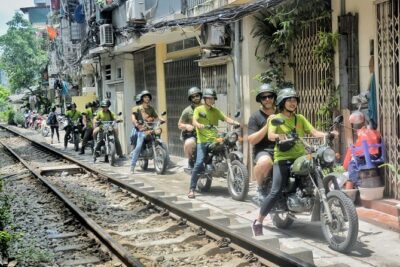 ★ 5.0Hanoi Motorbike Tour: Food, Culture and Fun by Vintage MotorbikeFrom $556,699 reviews
 ★ 5.0Hanoi Motorbike Tours Led By Women: Hanoi By Night Foodie Motorbike ToursFrom $691,734 reviews
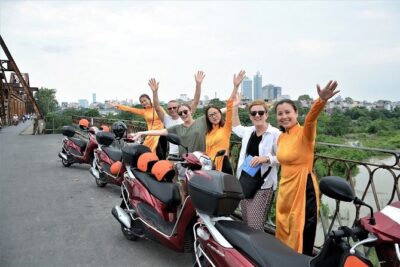 ★ 5.0Hanoi Motorbike Tours Led By Women: Hanoi City Insight Motorbike ToursFrom $59816 reviews
 ★ 5.0Hanoi Countryside Motorbike Tour: Red River Culture & Daily LifeFrom $55681 reviews
 ★ 4.9From Hanoi: 3-Day Motorbike Ha Giang Loop with Easy RiderFrom $227501 reviews
 ★ 5.0Hanoi Motorbike Tour: Hanoi HIGHTLIGHTS & HIDDEN GEMSFrom $57405 reviews
 ★ 5.0Hanoi old quarter sightseeing & street food eating by MotorcycleFrom $55333 reviews
 ★ 5.0Vespa City Tour &Train Street Female With Ao Dai Riders 4,5 HoursFrom $58314 reviews
Browse the lists this tour appears in