
Reviewed · HANOI STREET FOOD TOURS
Hanoi Train Street Food Walking Tour
Train tracks through homes is Hanoi’s strangest snack stop. This 3-hour walking tour turns the Old Quarter into a guided food loop, then ends at the train tracks with your egg coffee or beer. I like that you sample 6 to 8 different foods without wasting time guessing what to order, and I like that it mixes food with classic landmarks like Quan Chuong Gate and Long Bien Bridge.
Guides from Kim Tours Vietnam—often highlighted as Apple or Elena—keep the pace friendly and help you move through the tight lanes with confidence. One consideration: Train Street can be crowded and the train passes extremely close, so you’ll need to stick to the safety distance and follow your guide’s timing.
In This Review
- Key highlights to know before you go
- Hanoi Train Street Food: the core idea and why it works
- The Old Quarter food loop: 6 to 8 tastings in small lanes
- Starting at Kim Tours Vietnam: how the tour kicks off
- Old City Gate (Quan Chuong Gate): a quick heritage hit
- Dong Xuan Market: where food meets everyday shopping
- Long Bien Bridge: seeing Hanoi’s endurance in plain sight
- Phùng Hưng Mural Street: a photo stop with a purpose
- Dường Tau (Train Street): the drink moment on the tracks
- Price and logistics: is $38 good value?
- Who this tour suits best (and who might not love it)
- Should you book this Hanoi Train Street Food Walking Tour?
- FAQ
- How much does the Hanoi Train Street Food Walking Tour cost?
- How long is the tour?
- Where do I meet for the tour?
- What food and drinks are included?
- Is there a mobile ticket?
- How many people are in the group?
- What is the cancellation policy?
- Is the tour suitable for most travelers, and can service animals join?
Key highlights to know before you go

- 6 to 8 food stops in the Old Quarter: small vendors, some inside and some out, so you get real street flavors rather than one fixed restaurant.
- A real heritage mix, not just snacks: Quan Chuong Gate and Long Bien Bridge add context to the eating route.
- Train Street drink is part of the plan: you get special egg coffee or beer of Hanoi at the tracks.
- Short, focused landmark stops: each sight is given enough time to see it without turning your tour into a long march.
- Small groups (max 20): easier to hear your guide and keep things moving in narrow areas.
Hanoi Train Street Food: the core idea and why it works
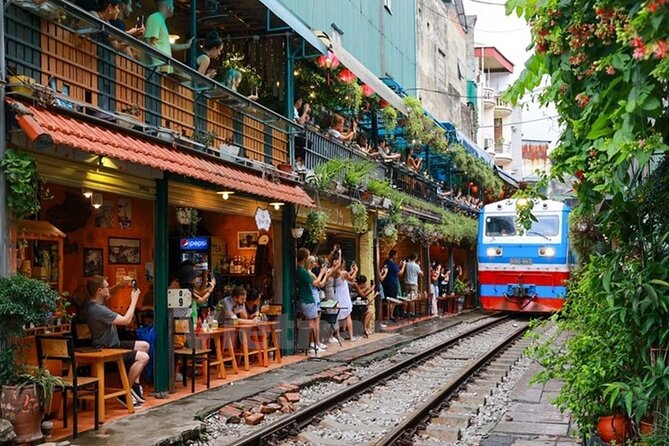
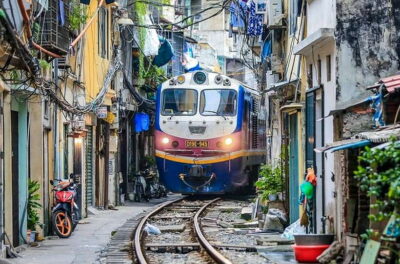
This tour is built around two of Hanoi’s most memorable experiences: eating your way through the Old Quarter, and witnessing Train Street up close—where the rail line runs through a residential lane and the train slides past people and storefronts.
That pairing matters. If you do Train Street on your own, you’ll likely spend time figuring out when to go, where to stand, and what to eat nearby. With a guide, you get a sequence that keeps you moving and tasting while you’re already in the right area. You also get a clear payoff at the end: an egg coffee or beer of Hanoi timed with your time at the tracks.
The route is not just about photos. It’s also about feeling how the neighborhood is laid out—narrow streets, pocket-sized vendors, and landmark points that anchor the walk.
More visits to the tracks at Train Street
The Old Quarter food loop: 6 to 8 tastings in small lanes
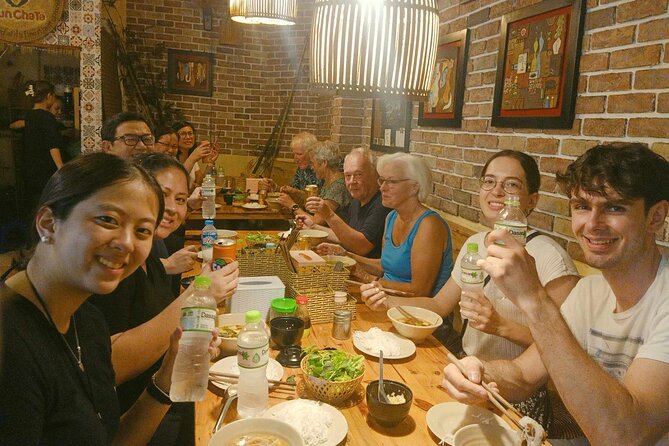
The main course of the tour happens in the Old Quarter, where you’ll walk through narrow streets and taste 6 to 8 different street foods from small vendors. Some places are set up outside, some are inside, and that mix is useful because you’ll see different styles of street commerce—quick grab-and-go stalls, and little shop fronts that sell the same local staples people eat every day.
This is where the tour tends to feel most valuable. Hanoi street food can be overwhelming when you’re deciding what to order, what looks safe, and what’s actually local. A guided tasting approach means you’re not stuck with one “I hope it’s good” choice. Instead, you get multiple bites and drinks, so you can compare textures and flavors across dishes.
Time-wise, this part is long enough to feel like a proper food experience (about 90 minutes), but short enough that you’re not dragging through your whole afternoon. The goal is variety without fatigue.
Practical tip: be ready for walking in close quarters. You’ll want a steady pace and a way to keep track of what you’re eating (napkin, small bag, whatever works for you). The lanes can be tight, and you’ll likely stop often enough that being nimble helps.
Starting at Kim Tours Vietnam: how the tour kicks off
The tour starts at Kim Tours Vietnam, address 78a Đ. Trần Nhật Duật, Đồng Xuân, Hoàn Kiếm, Hà Nội. You’ll meet your guide there and get a welcome happy water, then you’ll have a moment to get oriented—plus time to meet other people in the group.
The group size is capped at 20 travelers, which is a sweet spot for a walking food tour. Big groups can turn “snack stops” into long bottlenecks. Smaller groups tend to keep things flowing, especially in narrow streets.
It’s also run with a mobile ticket, so you’re not juggling paper vouchers while you’re trying to taste, look, and listen.
Old City Gate (Quan Chuong Gate): a quick heritage hit
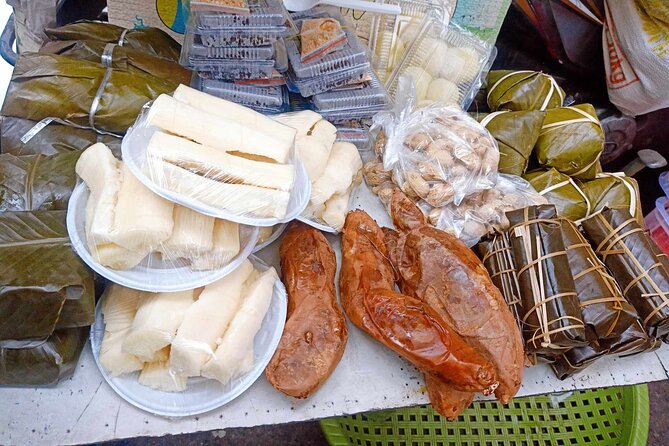
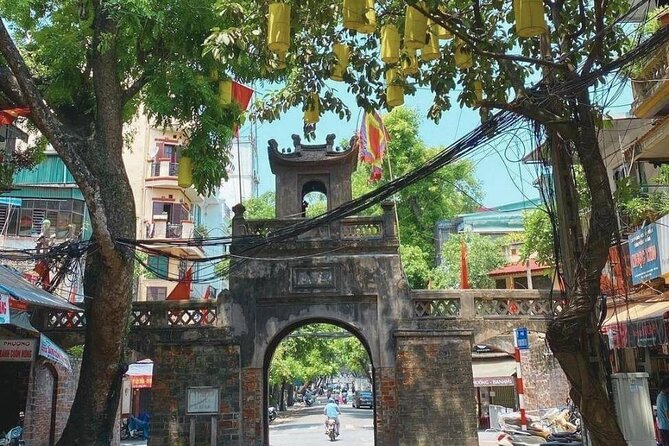
One of the best ways to understand Hanoi is to catch glimpses of how the city used to control movement. This tour does that with Quan Chuong Gate, the Old City Gate, located on O Quan Chuong Street near Hang Chieu Street.
You’ll get a chance to see how the gate was designed: it has three arched doorways and a guarding gazebo on top. It’s also described as having once been a thick wooden gate, with soldiers closing it at night and opening it early for trade and travel. Even in a short stop, that kind of detail gives meaning to the area you’re walking through.
This is a quick stop (about 10 minutes). Don’t expect a full museum-style explanation. Instead, use it as a “pause and place” moment—something that helps you connect later sights, especially when you’re walking through parts of the Old Quarter that still feel like a working neighborhood.
Dong Xuan Market: where food meets everyday shopping
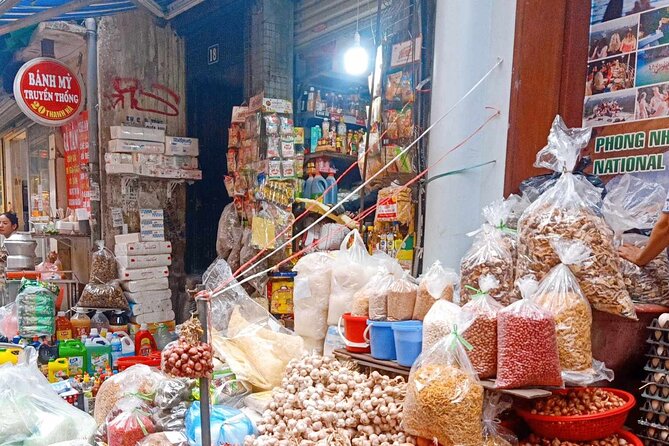
Next is Đồng Xuân Market, one of the large wholesale markets in Northern Vietnam. It’s the kind of place where you see how locals shop and how commerce stacks up in layers.
The market is described as spread across three floors, with different types of items by level, which makes it easier to browse without getting lost immediately. You can find foodstuffs like seafood, meat, and vegetables, and you can also find non-food items like home appliances and electrical equipment. There’s even a fountain in the central area for resting before you “sweep” the other floors.
This stop is brief (about 10 minutes), so think of it as a taste of the market’s vibe, not a full shopping expedition. If you’re the type who loves browsing, you’ll likely want extra time after the tour ends, but the quick visit gives you a feel for what Dong Xuan is: not a single-purpose tourist market, but a place where everyday needs are handled in big volumes.
Still hungry? More Hanoi street-food crawls
- Small Group Hanoi Street Food Tour with a Real Foodie★ 5.0 · 4,682 reviews
- [HOT] Hanoi Old Quarter Walking Street Food – Small Group Tour★ 5.0 · 2,163 reviews
- Hanoi Motorbike Tours Led By Women: Hanoi By Night Foodie Motorbike Tours★ 5.0 · 1,734 reviews
Long Bien Bridge: seeing Hanoi’s endurance in plain sight
After the market, you’ll head to Long Bien Bridge, which is about 2 km from Hoàn Kiếm Lake. It’s a practical landmark, but also a symbolic one, with a history of over 100 years.
The tour frames it as more than a crossing. The bridge is tied to Hanoi’s resilience in two resistance wars, first against French colonialists and later against American imperialism, and it’s described as witnessing the dramatic changes of the city into the new era.
This is a short stop (about 15 minutes). Here’s how to get the most out of it: don’t just look at the structure. Look at the setting. Bridges change how people move, and they also shape how neighborhoods connect. Even without a long lecture, the bridge helps you see Hanoi as a city that grew through movement, not isolation.
Phùng Hưng Mural Street: a photo stop with a purpose
Then comes Phùng Hưng Mural Street, a street in the Old Quarter that’s been revived with mural paintings showing Hanoi in the past.
It’s described as a favorite photo location and a cultural space, with the street opened to the public in early February. This stop is about 20 minutes, which makes sense: it’s enough time to walk the length, take pictures, and read the vibe without turning it into a chore.
If you care about visual history, murals can be a helpful shortcut. They’re not the same thing as older monuments, but they show what locals want visitors to notice—especially how the neighborhood remembers itself.
Dường Tau (Train Street): the drink moment on the tracks
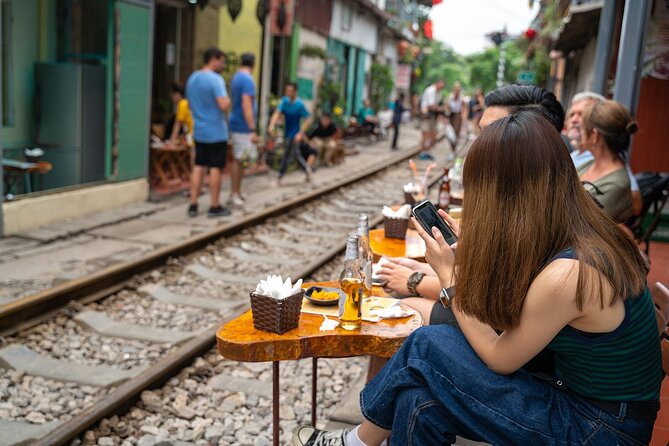
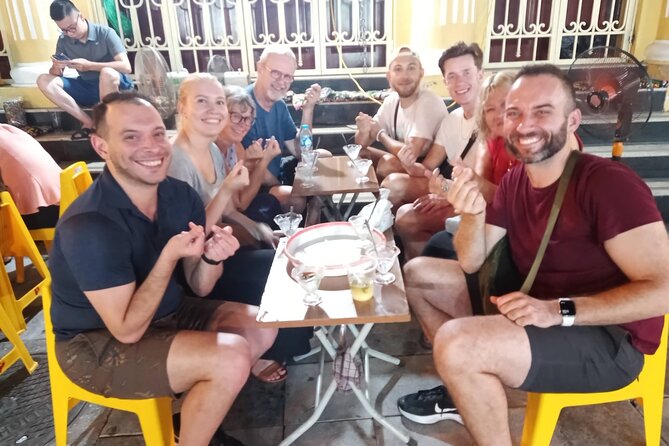
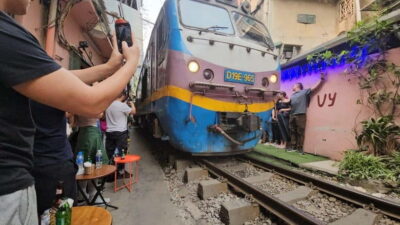
This is the part most people come for. Train Street (Dường Tau) is described as an unofficial attraction where trains pass close enough that people sip coffee or beer in open-air cafes nearby. You’ll also learn that authorities have been trying to shut it down for nearly a year, largely due to safety concerns over crowding and how close people gather around the tracks. Still, tourists keep coming.
That tension is why your behavior matters here. When you reach the tracks, follow your guide’s lead about where you should stand and when you should shift positions. The train passes very close, and this isn’t a place to “wander for the perfect spot.”
Your tour includes a special stop at Train Street with egg coffee or beer of Hanoi (about 25 minutes). This drink moment is more than a perk. It’s the payoff that turns the anxiety of watching a train so close into something you can enjoy—an actual ritual, not just a photo.
Practical tip: keep your phone secure and be ready for noise and movement. If you’re easily startled, expect that the train noise can be sudden. Stay calm, keep your distance, and trust the spacing your guide recommends.
Price and logistics: is $38 good value?
At $38 per person, this tour can feel like a bargain or a splurge depending on how you usually travel. Here’s why it leans toward good value.
First, it includes all street food and drinks, plus your egg coffee (or beer). Street food costs add up fast when you’re trying to sample multiple items on your own. Buying a single meal at one spot is easy; collecting 6 to 8 tastings, spread out across a route, is a different story.
Second, you’re saving time. Instead of researching what to eat, where to eat, and how to fit Train Street safely into your day, you get a planned loop that already handles the order.
Third, the group size cap (max 20) helps keep the experience from turning into a crowded scramble. Crowds make safety harder and listening harder. A smaller group is usually better for both.
If you’re on a tight schedule and want to see Train Street plus major nearby sights without building a self-made route, this price starts to look very reasonable.
Who this tour suits best (and who might not love it)
This is a great fit if you:
- Want a guided way to eat multiple dishes in the Old Quarter without overthinking menus.
- Like your sightseeing practical: quick heritage stops that make the neighborhood feel real.
- Are curious about Train Street but don’t want to manage logistics alone.
You might want to skip or reconsider if you:
- Don’t do well with crowd levels or noisy, close-up viewing.
- Prefer slow, sit-down meals where you control every detail.
- Want an in-depth history tour at each stop. This is more about efficient learning plus food than long lectures.
Should you book this Hanoi Train Street Food Walking Tour?
I’d book it if you want one easy plan that combines multiple street-food tastings, a few memorable heritage sights, and the Train Street drink moment—without the stress of piecing everything together yourself.
It’s also a solid choice if you care about guidance quality. The tour experience is frequently associated with standout guides like Apple and Elena, especially for clear English and friendly pacing. Even if you don’t speak much Vietnamese, you’ll have someone to steer you toward what to eat and how to move through the area.
If Train Street safety concerns make you nervous, you can still treat this as a “look, then listen” outing—stick with your guide, keep your distance, and focus on the food loop and landmarks as the main event.
FAQ
How much does the Hanoi Train Street Food Walking Tour cost?
The tour costs $38.00 per person.
How long is the tour?
It runs for about 3 hours.
Where do I meet for the tour?
Meet at Kim Tours Vietnam, 78a Đ. Trần Nhật Duật, Đồng Xuân, Hoàn Kiếm, Hà Nội, Vietnam.
What food and drinks are included?
All street food and drinks are included, along with egg coffee (or you’ll have the option of beer of Hanoi at Train Street).
Is there a mobile ticket?
Yes, the tour uses a mobile ticket.
How many people are in the group?
The tour has a maximum of 20 travelers.
What is the cancellation policy?
You can cancel for a full refund up to 24 hours in advance. If you cancel less than 24 hours before the start time, the amount paid is not refunded.
Is the tour suitable for most travelers, and can service animals join?
Most travelers can participate, and service animals are allowed.
More Tour Reviews in Hanoi



More Bowls and Backstreets in Hanoi



Back to Train Street

Latest Hanoi write-ups from our team



Hanoi Street Food Tours, compared.
 ★ 4.9Guided Food Tour with Train Street VisitFrom $196,239 reviews
 ★ 5.0Small Group Hanoi Street Food Tour with a Real FoodieFrom $284,682 reviews
 ★ 5.0Street Food Tour with Train Street & Hidden AlleywaysFrom $202,831 reviews
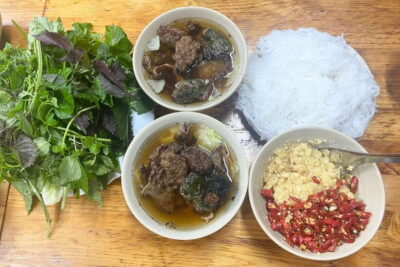 ★ 4.9Guided Street Food Tour with Train Street ExperienceFrom $172,479 reviews
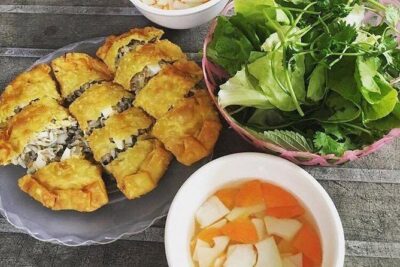 ★ 5.0[HOT] Hanoi Old Quarter Walking Street Food – Small Group TourFrom $142,163 reviews
 ★ 5.0Hanoi Motorbike Tours Led By Women: Hanoi By Night Foodie Motorbike ToursFrom $691,734 reviews
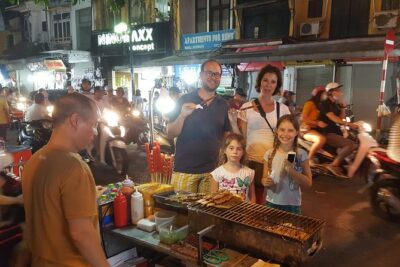 ★ 5.0Hanoi Street Food Tour with local delicaciesFrom $281,506 reviews
 ★ 5.0Hanoi Coffee Workshop: Taste Salt, Coconut and Egg CoffeeFrom $161,286 reviews
Browse the lists this tour appears in