
Reviewed · HANOI OLD QUARTER TOURS
Hanoi: Private Old Quarter Walking Tour with Train Street
A street with trains overhead sounds unreal. It’s even better when you walk Hanoi’s Old Quarter with a local guide who connects the dots between sights, streets, and everyday life. I love the private small-group feel and the chance to see landmarks like Long Biên Bridge and Train Street without fumbling around on your own. One drawback: you’ll be walking, so comfy shoes matter if your feet get grumpy fast.
This is a smart 3-hour plan for first-timers. You’ll cover the classics—like St. Joseph’s Cathedral—and the character streets that make Hanoi feel like Hanoi. Plus, the guide makes it practical, turning photo stops into real context for what you’re seeing.
You can also expect a good English-speaking guide who’s friendly and engaged, and you’ll likely find little alleys and street rhythms you wouldn’t notice from a map. Still, it’s a walking tour, so if you prefer lots of sitting and minimal steps, this may feel like too much motion.
In This Review
- Key things you’ll notice on this Hanoi Old Quarter + Train Street walk
- Old Quarter pickup and the right 3-hour walking rhythm
- St. Joseph’s Cathedral: Gothic Revival architecture with a local name
- Ta Hien Street (Beer Street) and the street-level Hanoi you can feel
- Long Biên Bridge: Hanoi’s Red River symbol and hard-earned survival
- Dong Xuân Market: a large covered market where locals shop with purpose
- Train Street: coffee and photos on tracks built over a century ago
- Why a private English-speaking guide changes everything
- Price and value: what $30 buys you in Hanoi time
- Practical tips: comfortable shoes and the cash habit
- Who should book this tour, and who should think twice
- Should you book this Hanoi Old Quarter + Train Street walking tour?
- FAQ
- How long is the Hanoi Old Quarter private walking tour?
- What is the price per person?
- Is hotel pickup included, and where does it work?
- What stops are included during the walk?
- What’s included in the tour price?
- What should I bring?
- Do you need to pay in advance, and can I cancel?
Key things you’ll notice on this Hanoi Old Quarter + Train Street walk
- Private group only, so the pace stays comfortable and questions get answered
- Long Biên Bridge gives you a big-picture view of Hanoi across the Red River
- Dong Xuân Market is the kind of place you understand faster with local guidance
- Train Street turns into a coffee-and-people-watching stop, not just a photo sprint
- St. Joseph’s Cathedral adds a distinct architectural stop in the Hoàn Kiếm area
- Hotel pickup in the Old Quarter area keeps the morning hassle low
Old Quarter pickup and the right 3-hour walking rhythm
The tour starts with hotel pickup if you’re staying in the Old Quarter area. It’s a simple setup: you wait in the lobby, and your guide comes to call your name. If you’re outside that area, you’ll shift to a meet-up point at 39b Đào Duy Từ Street in Hoàn Kiếm. That matters because it keeps the tour timing tight. No long taxi detours, no guesswork about where to gather.
Once you’re moving, the pacing is built for a relaxed walk: you’ll spend chunks of time at major landmarks and shorter windows for the quick-hit photo and orientation stops. You’re not trying to race from point to point. You’re getting bearings, then letting the route show you how the Old Quarter connects to the river and the market zone.
One of the biggest practical wins here is that the guide handles the flow. Even if you’re doing Hanoi for the first time, you’ll spend less time asking What is that? and more time asking Why is it there?
More wandering through the Old Quarter lanes




St. Joseph’s Cathedral: Gothic Revival architecture with a local name
St. Joseph’s Cathedral is on Nhà Chung Street in Hoàn Kiếm District, and it’s a late 19th-century Gothic Revival church that serves as the cathedral of the Roman Catholic Archdiocese of Hanoi. That’s useful context because it changes how you look at it. It’s not just a photo spot; it’s a landmark tied to a specific community and history.
The tour includes a short stop for you to view it and take photos. Because the stop is brief, it’s best to arrive ready: glance up at the style, look for details in the facade, then capture the angle you want before the walking part takes over.
Also, since it’s an active church, it’s worth keeping your tone respectful around the entrance and main areas. Think quiet, focused, and quick—then you’re back out into the street life that surrounds it.
Ta Hien Street (Beer Street) and the street-level Hanoi you can feel
One of the things I like about this route is that it doesn’t only highlight big buildings. You also get to see Ta H iên Street, known as Beer Street, where bars and restaurants line up and many people sit outside in tiny plastic chairs and tables.
This is where Hanoi stops looking like a checklist and starts looking like a living city. You’ll notice the contrast: Old Quarter lanes with small storefront rhythms, then a street scene that feels more social and casual, built around evening hangouts. Even if you’re not planning to sit down and have a beer, you’ll understand why people talk about this part of Hanoi’s nightlife culture.
If you’re the type who likes street photography, this is a good place to watch the patterns: how people move, how seating works, and how the street becomes a gathering space. Just keep it practical—stay aware of foot traffic and don’t block storefront entrances while you frame your shots.
Long Biên Bridge: Hanoi’s Red River symbol and hard-earned survival
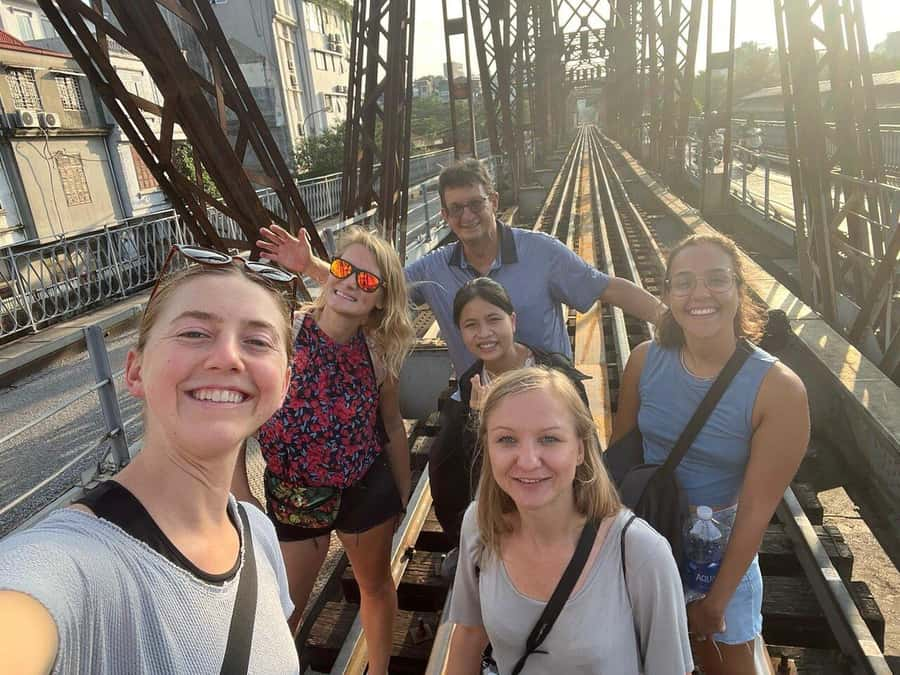
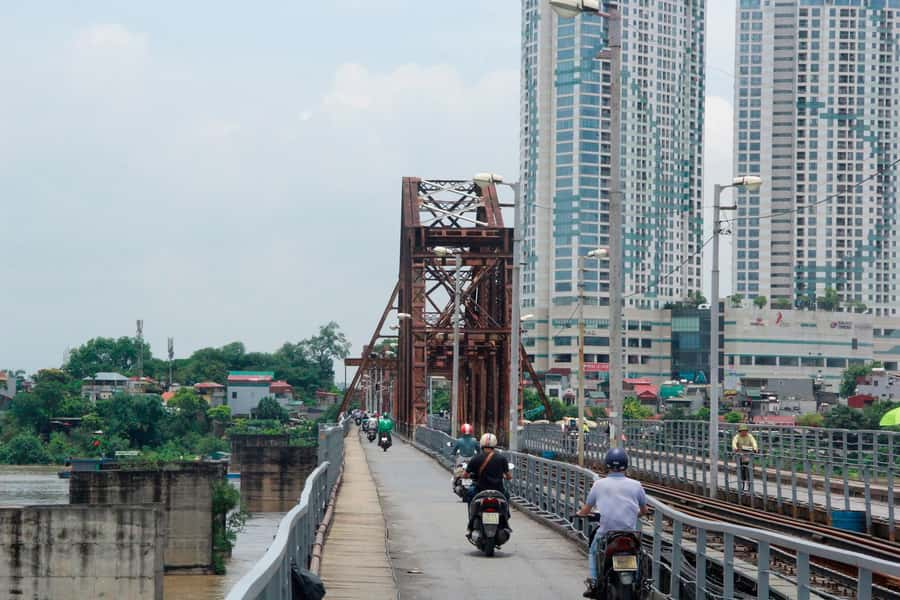
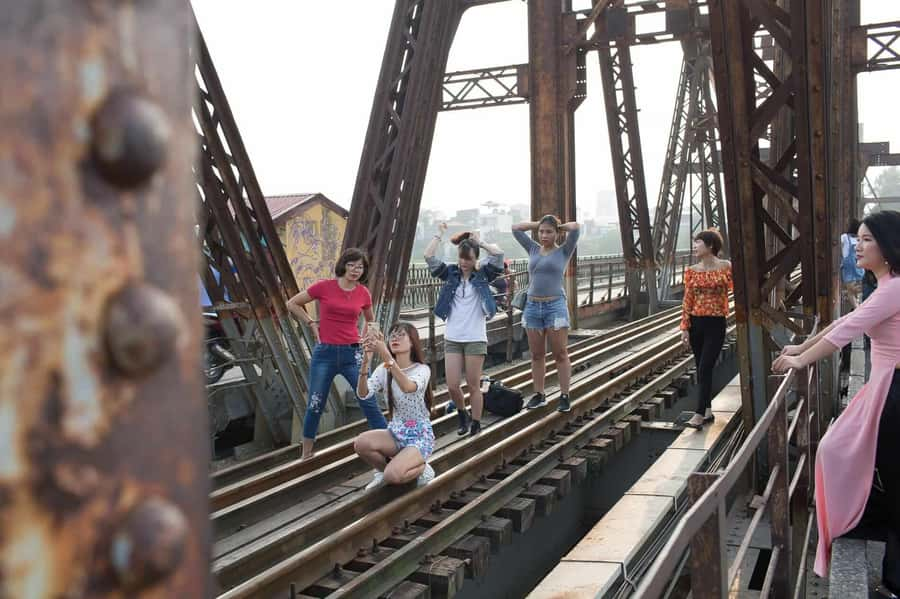
Long Biên Bridge is one of Hanoi’s most recognizable crossings. It’s a historic cantilever bridge across the Red River, connecting the Hoàn Kiếm and Long Biên districts. You’ll get time to visit and take photos, with a stop that’s long enough to get your pictures and still keep the pace moving.
What makes this bridge more than a landmark is the story behind it. It has experienced devastation, yet it’s still standing over the river as a symbol of Hanoi’s painful past. That context makes your photos more meaningful. Instead of just photographing metal and concrete, you’re photographing continuity—how the city carries history forward.
When you’re there, take a minute to look beyond the bridge itself. Notice how the bridge frames the river and the city edges. Even if you’re not a big photo person, the view helps you understand Hanoi’s geography in a way maps can’t.
Dong Xuân Market: a large covered market where locals shop with purpose
Dong X uân Market sits on the northern edge of the Old Quarter, about 2 kilometers from Hoàn Kiếm Lake. It’s described as Hanoi’s largest covered market, and that size is exactly why it’s so interesting. The market isn’t a small tourist bazaar. It’s a full working market where wholesale traders offer a wide mix of goods.
In your short visit, you’ll likely see a range that includes fresh produce, souvenirs, accessories, clothing, electronics and household appliances, and foodstuffs. That variety helps you understand the market’s role: it’s not just about buying trinkets. It’s where lots of everyday needs and business items come together under one roof.
A guide adds real value here because market layouts can feel confusing fast. With local guidance, you’ll learn how to navigate the flow without getting turned around. It also helps with what to pay attention to—what’s worth a look, what’s just background noise, and how market life connects to the surrounding neighborhoods.
Plan for the market being active. Even if you’re not shopping, you’ll want to observe how people move, compare, and talk. That’s the point: it’s everyday commerce, not staged entertainment.
More visits to the tracks at Train Street
- Hanoi: Guided Food Tour with Train Street Visit★ 4.9 · 6,239 reviews
- Hanoi: Street Food Tour with Train Street & Hidden Alleyways★ 5.0 · 2,831 reviews
- Hanoi: Guided Street Food Tour with Train Street Experience★ 4.9 · 2,479 reviews
Train Street: coffee and photos on tracks built over a century ago
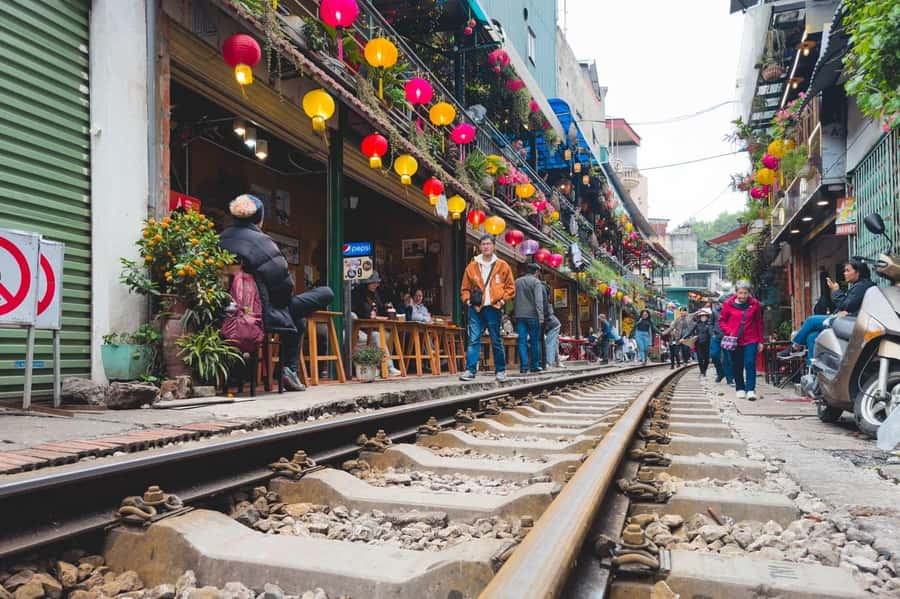
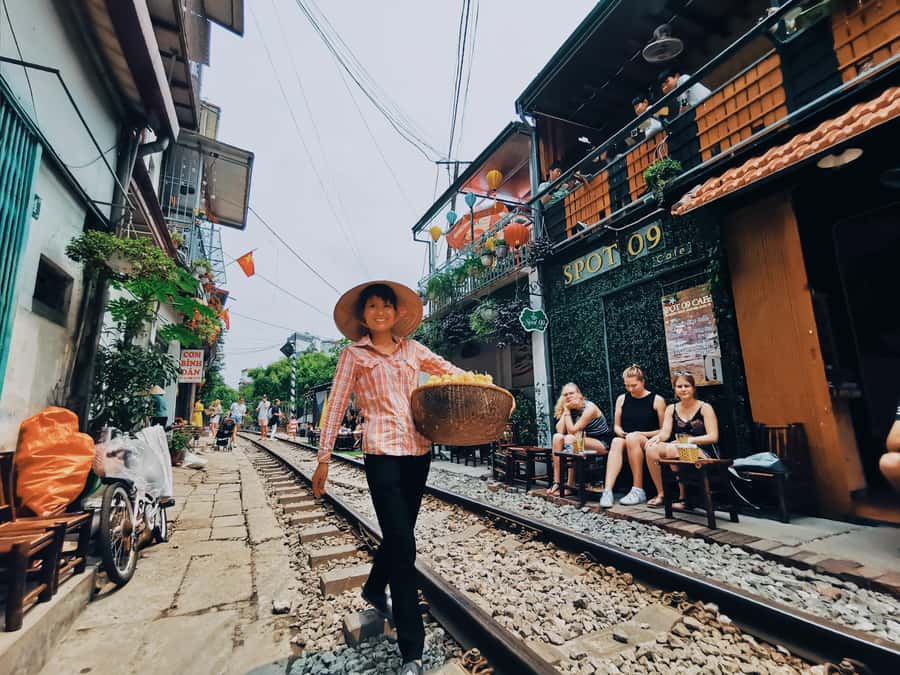
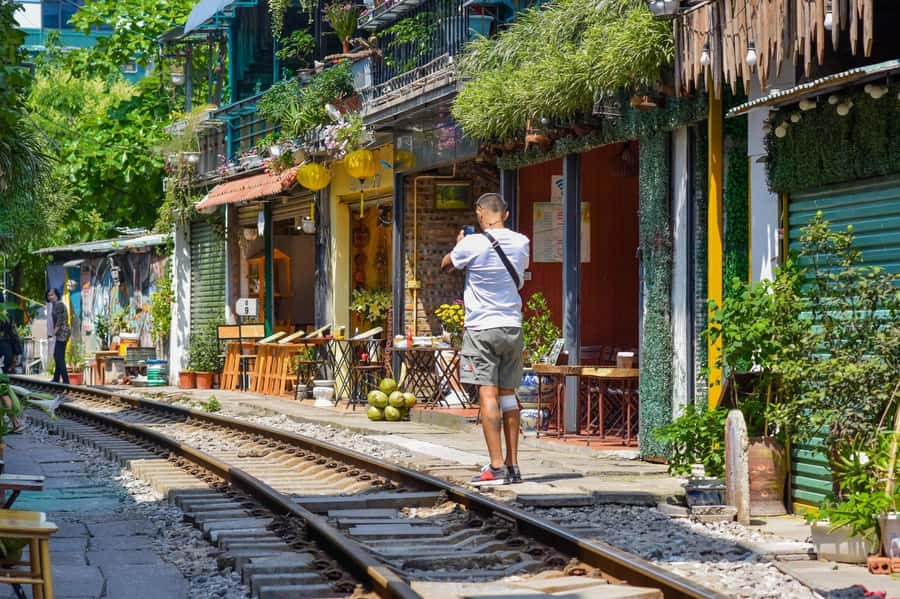
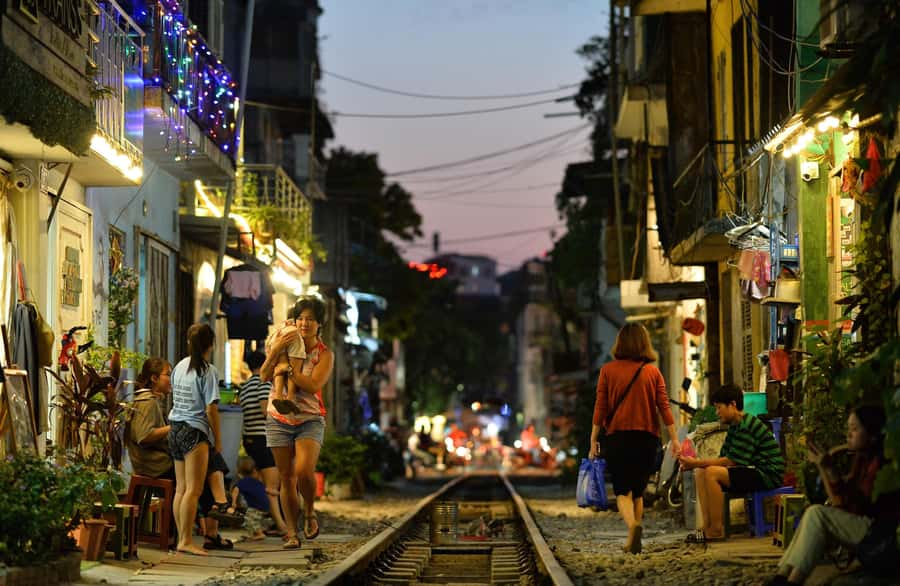
Train Street is the headliner. The tracks were built more than a hundred years ago, and in recent years the area has become famous with tourists for a reason: it’s visually unforgettable and it captures a slice of everyday life in a highly unusual setting.
Here’s what you should expect on this stop:
- You’ll see the train tracks in the heart of the city area.
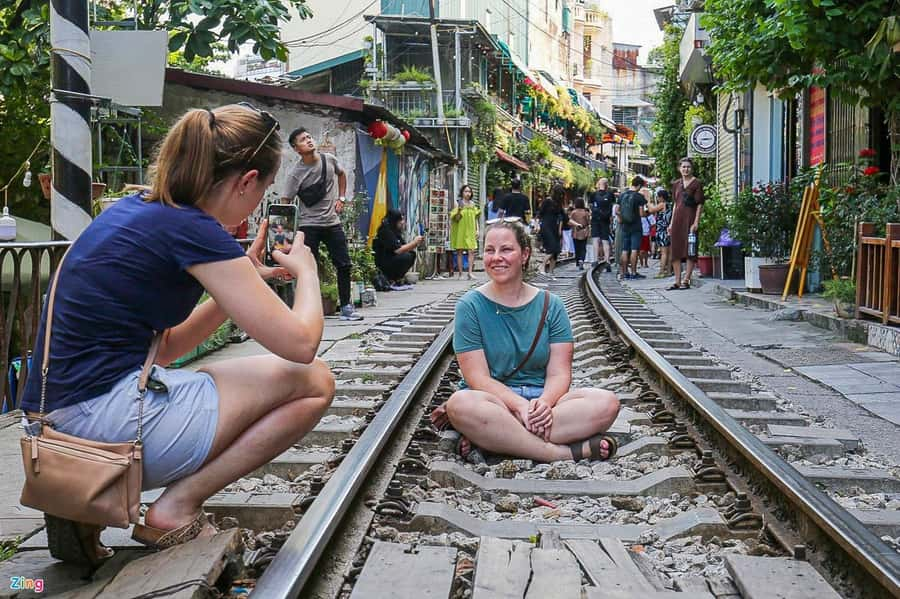
- You’ll have time to take photos.
- You’ll also get coffee or tea, which turns the moment into an actual break rather than a frantic sprint.
The description also notes that visitors come for more than train spotting. People grab coffee or tea and enjoy the atmosphere, so you get a mix of viewing and people-watching. That’s a big deal because it keeps the experience human. You’re not only standing near rails. You’re also experiencing the small-café rhythm that forms around the tracks.
Practical tip: don’t assume this is a typical café street where you can casually wander wherever you want. Even if you’re just taking pictures, keep an eye on movement around you and follow your guide’s cues. The whole area runs on tight space and frequent foot traffic.
Why a private English-speaking guide changes everything
A walking tour is only as good as the person guiding it. This one leans hard into the local side: you learn Hanoi’s history, culture, and food along the way. And because it’s a private group, the tour feels less like a lecture and more like a conversation that keeps moving.
From the experience described, the guide is friendly and involved, with excellent English. That matters more than you might think. In Hanoi, a lot of the meaning is in small details—street names, architecture, how neighborhoods connect, and what market life represents. When you can ask questions and understand the answers clearly, you end up seeing more than just famous photo angles.
You’ll also benefit from the way a guide helps you notice things you might miss:
- small alleys that give context to the Old Quarter
- the reason certain landmarks sit where they do
- the cultural layers around church, markets, and street life
And there’s a simple psychological win, too. When you know what you’re looking at, the city stops feeling like a blur of scooters and street signs.
Price and value: what $30 buys you in Hanoi time
At $30 per person for about 3 hours, this is positioned as a mid-range local experience—meaning you’re paying for convenience (pickup), expertise (English guide), and the guided sequencing between scattered highlights.
Here’s what’s included:
- Bottle of water
- Coffee or tea at Train Street
- An experienced English-speaking guide
- Hotel pickup in the Old Quarter area only
What’s not included:
- Beverages and personal expenses
For me, the value is strongest if you fall into one of these groups:
- You’re short on time and want a focused Old Quarter walkthrough.
- You like getting local context instead of doing attractions solo.
- You want Train Street but also want the surrounding city explained, not just filmed.
If you’re already an ultra-confident navigator and you plan to self-guide with free walking maps, you could do this cheaper. But the guide is what turns it into something you understand. And the coffee/tea stop isn’t a random add-on—it fits naturally into the Train Street pacing.
Practical tips: comfortable shoes and the cash habit
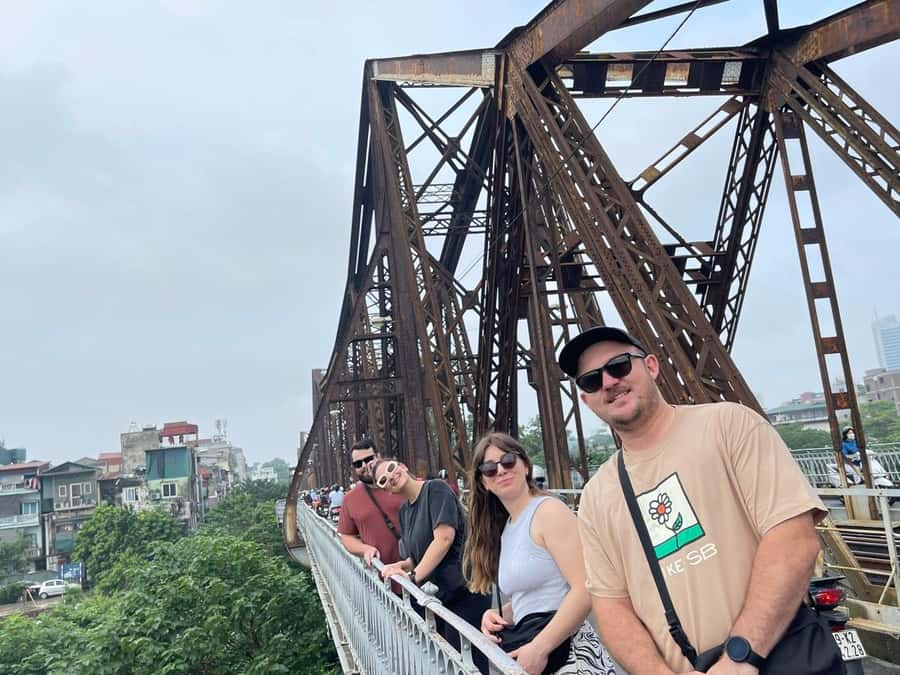
This tour is built around walking, so wear comfortable shoes. Even though each landmark stop is short (with a longer pause for places like Train Street and Long Biên Bridge), you’ll still rack up steps across dense streets.
Bring comfortable clothes because Hanoi weather can change quickly, and street temperatures can vary once you’re in open market or river views. Also bring cash. Markets and street areas often work best with cash, and you’ll be able to handle small purchases smoothly if you choose to.
Since coffee or tea is included at Train Street, you won’t need to budget for that specific drink during the tour. Still, having some extra cash for personal choices is smart.
If you’re someone who likes to take photos, keep your phone charged. You’ll have several stops where the best shots depend on waiting for the right angle and foot traffic moment.
Who should book this tour, and who should think twice
This is a great fit if you:
- Want a first-time friendly route through the Old Quarter, river area, and Train Street zone
- Like history and context, not just landmarks
- Enjoy markets and street culture, especially when someone explains what you’re seeing
- Prefer a private group pace over big-group crowds
You might think twice if you:
- Don’t like walking tours or get uncomfortable with city walking and tight streets
- Only care about Train Street and would rather spend more time elsewhere than moving between multiple stops
- Want a long sit-down experience with minimal street time
Should you book this Hanoi Old Quarter + Train Street walking tour?
If you’re in Hanoi for a short stay and want the highlights plus real local context, I’d book this. The best part is how it connects Hanoi’s different worlds in one walk: a historic bridge with weight, a major covered market with everyday commerce, a church stop with architectural identity, and Train Street where you pause for coffee instead of sprinting for photos.
The tour is also a smart choice because you’re not going it alone. Pickup in the Old Quarter area reduces friction, and the English-speaking guide turns the route into something you actually understand.
Go for it if you want a balanced mix of iconic spots and street-level city life, without spending your entire day figuring out where to go next.
FAQ
How long is the Hanoi Old Quarter private walking tour?
The tour duration is 3 hours.
What is the price per person?
The price is $30 per person.
Is hotel pickup included, and where does it work?
Pickup is included only for hotels/airbnbs in the Hanoi Old Quarter area. If you stay outside that area, you’ll need to go on your own to the meeting point at 39b Dao Duy Tư Street, Hoan Kiếm, Hanoi.
What stops are included during the walk?
You’ll visit St. Joseph’s Cathedral, Long Biên Bridge, Đồng Xuân Market (Dong Xuan Market), and Hanoi Train Street, plus you’ll explore the Old Quarter area.
What’s included in the tour price?
Included items are a bottle of water per person, coffee or tea at Train Street, an experienced English-speaking guide, and hotel pickup in the Old Quarter area.
What should I bring?
Bring comfortable shoes, comfortable clothes, and cash.
Do you need to pay in advance, and can I cancel?
You can reserve now and pay later. Free cancellation is available up to 24 hours in advance for a full refund.
More Tour Reviews in Hanoi






Back to Train Street

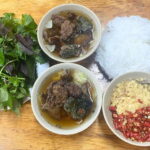



More of the Old Quarter


Latest Hanoi write-ups from our team



Hanoi Old Quarter Tours, compared.
 ★ 5.0[HOT] Hanoi Old Quarter Walking Street Food – Small Group TourFrom $142,163 reviews
 ★ 5.0Private transfer between Hanoi Airport (HAN) and Hanoi Old QuarterFrom $18850 reviews
 ★ 5.0Hanoi Food Tours in Hanoi Old Quarter (Small Group/Private)From $28657 reviews
 ★ 5.0Hanoi Old Quarter Private Walking Tour with Student GuideFrom $5590 reviews
 ★ 5.0Hanoi Old Quarter Walking Street Food TourFrom $27423 reviews
 ★ 5.0Hanoi old quarter sightseeing & street food eating by MotorcycleFrom $55333 reviews
 ★ 5.0Private Street Food Tour – Walking Hanoi Old QuarterFrom $33294 reviews
 ★ 5.0Bat trang Pottery Class in Hanoi Old Quarter/Handmade experienceFrom $38247 reviews
Browse the lists this tour appears in