Reviewed · HANOI
Hanoi Hidden Site: Immersive Spiritual & Cultural Experience
Hanoi’s sacred lanes are closer than you think. This 3-hour tour threads together White Horse Temple, small pagodas in back alleyways, and West Lake goddess worship—then adds a hands-on moment where you can join traditional offerings. I especially like that you’re not just watching from the sidewalk; you’re learning what people do and why they do it.
Two big wins for me are the motorbike-to-temple travel rhythm and the way the guide connects beliefs to everyday life. In one recent tour, guides named Joy, Liam, and Justin made the ride feel like part of the story, and Justin was singled out for clear explanations about religion and Hanoi history.
One consideration: it includes a food stop where shrimp is part of the dish, so if you have dietary limits, tell your guide ahead of time. In at least one case, the group adjusted with mango sticky rice when shrimp wasn’t an option.
In This Review
- Key highlights that make this Hanoi tour worth your time
- Getting out of the tourist lane, fast
- Bach Mã Temple: White Horse spirit inside the Old Quarter
- Hidden alley pagodas: small sanctuaries with big meaning
- West Lake pilgrimage at Phủ Tây Hồ (Mother Goddess shrine)
- Participating in dâng sớ and hóa vàng (with guidance)
- The feng shui and ancestor worship talk that connects to daily life
- West Lake food tasting in Tay Ho: Bánh Tôm Hồ Tây and swaps
- Motorbike or car ride: part transportation, part storytelling
- Back into the Old Quarter: a short finish that helps you connect dots
- Price and value: why $36 for 3 hours can be a good deal
- Who this tour suits best (and who might want a different one)
- Should you book Hanoi Hidden Site? My take
- FAQ
- What time does the tour start?
- Where does the pickup happen?
- How long is the experience?
- Do I travel by motorbike or car?
- Are there any guided stops besides temples?
- Is there an English tour guide?
- What food is included?
- Can I participate in the rituals?
- Can I cancel and get a refund?
Key highlights that make this Hanoi tour worth your time
- Bạch Mã Temple (White Horse Temple): an Old Quarter stop tied to legends and the defense of ancient Thang Long
- Hidden pagodas behind alleyways: smaller sites like Chùa Bà Đá and Đình Yên Thái in quiet corners of the city
- West Lake Mother Goddess shrine visit (Phủ Tây Hồ): a pilgrimage spot where worship has real local texture
- Traditional offerings with guidance: you can participate in acts like dâng sớ and hóa vàng
- Feng shui and ancestor worship talk: how beliefs shape house layout and ceremonial offerings
- Snack stop by West Lake: Bánh Tôm Hồ Tây, plus options if you can’t eat shrimp
Getting out of the tourist lane, fast
This is the kind of Hanoi tour that makes you feel like you moved one street over—but then suddenly you’re in a different world. You start in the Old Quarter area, with pickup around 9:00 or 13:30, and you’ll head out by motorbike or car depending on what you choose.
Right away, what you’re paying for becomes clearer than with a plain walking tour. It’s not only the temples. It’s the route—the ability to reach places that are tucked behind regular traffic and normal street life. That’s where the quiet spiritual mood shows up.
I also like the tour’s pace. At 3 hours, it’s short enough to stay focused, but long enough to actually do something besides take photos. You’ll get guided time at temple stops, a West Lake stretch, and a final Old Quarter walk to tie it together.
Not sure yet? See how this one sits next to a few Hanoi favourites.



Bach Mã Temple: White Horse spirit inside the Old Quarter
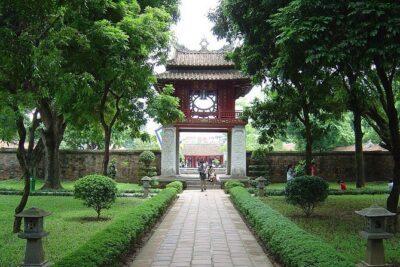
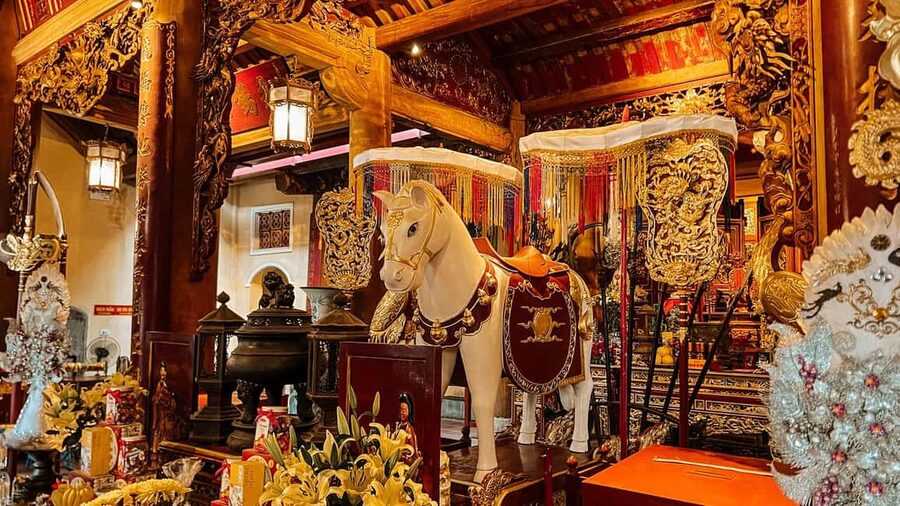
Your tour begins at Bạch Mã Temple (White Horse Temple), where you spend about 30 minutes with a guide. This isn’t presented as a big, showy “main attraction” kind of site. It’s older, more specific, and it sits right in the midst of Hanoi’s everyday noise.
What I find useful here is the way the guide frames the place: you’ll hear the legends of the White Horse spirit and why it’s linked to defending ancient Thang Long. When you understand that kind of local story, the temple stops feeling like a landmark and starts feeling like a living reference point for the neighborhood.
Practical tip: this is a temple environment, so dress and behavior matter. You’ll want to act respectfully from the moment you arrive, especially because later in the tour you’ll be discussing and participating in rituals.
Hidden alley pagodas: small sanctuaries with big meaning
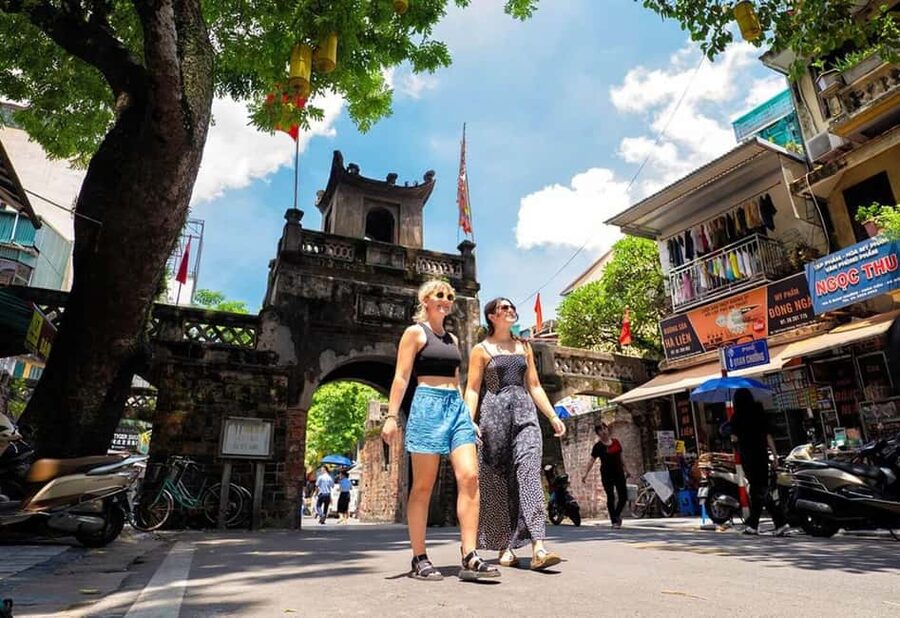
After the first temple, the tour shifts into Hanoi’s side streets—where the spiritual life can be harder to spot on your own. You’ll visit smaller sanctuaries such as Chùa Bà Đá or Đình Yên Thái, described as tucked behind alleyways.
This is where the experience gets genuinely different from a typical “temples of Hanoi” checklist. Smaller sites like these often don’t get the same crowds, which makes the atmosphere more grounded. You’ll learn about the religious life, architectural details, and how these places have remained resilient through time.
The value here is simple: your guide is putting names to things you’d otherwise walk past. When you see an entrance, a doorway, or an offering setup without guidance, it’s easy to treat it like scenery. With a guide, you can understand what you’re looking at—and how people use these spaces.
West Lake pilgrimage at Phủ Tây Hồ (Mother Goddess shrine)
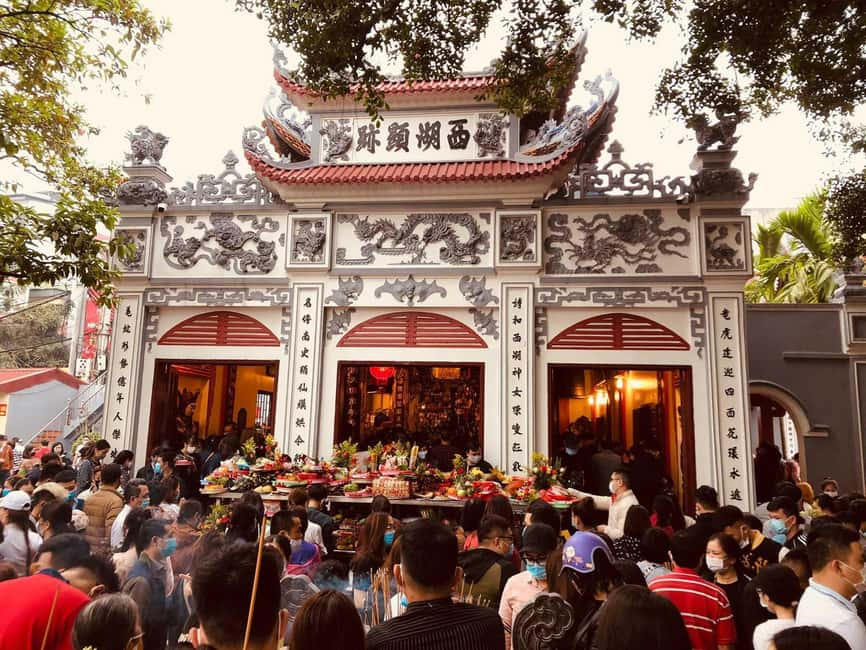
Next comes Phủ Tây Hồ (West Lake Mother Goddess Shrine), a lakeside pilgrimage site known for Mother Goddess worship. Your guided time here is part of a West Lake, Hanoi segment that runs about 1 hour.
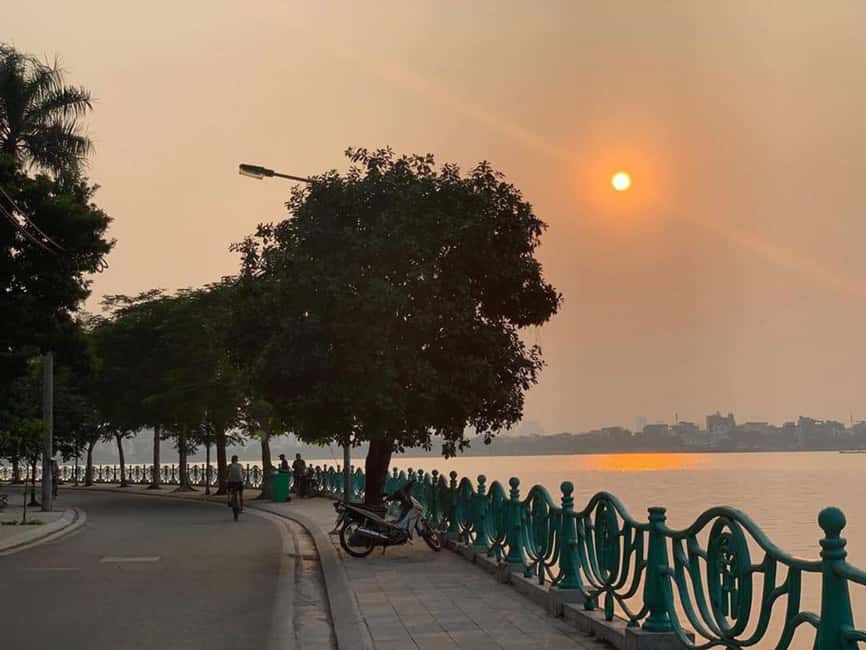
West Lake matters for two reasons. First, it changes the mood from tight alleyways to open water and slower sightlines. Second, the worship at Phủ Tây Hồ connects spiritual practice to place—people come for the shrine, but the lake setting is part of the atmosphere.
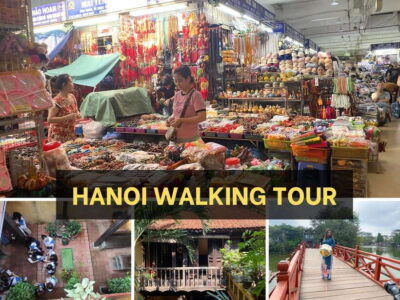
In the market area connected to this stop, the tour moves from “seeing worship” to “doing worship.” The guide will bring you to a local market to buy items for traditional offerings.
Participating in dâng sớ and hóa vàng (with guidance)
One of the most praised parts of this experience is that you don’t just watch rituals; you get instructions and can participate in traditional offerings. You’ll be guided respectfully through acts such as:
- dâng sớ: paper prayer submission
- hóa vàng: burning symbolic money as part of the ritual process
This isn’t a vague cultural explanation. It’s practical, step-by-step. That’s why it lands well even for people who don’t know much about Vietnamese religious practice. You’re given context so the ritual doesn’t feel random or theatrical.
A small reality check: these are religious actions, not souvenirs. If you’re uncomfortable with the idea of participating, you can still watch with respect and follow along with the guidance. The point is understanding the meaning, not forcing participation.
- Hanoi Motorbike Tour: Food, Culture and Fun by Vintage Motorbike★ 5.0 · 6,699 reviews
- Hanoi: Guided Food Tour with Train Street Visit★ 4.9 · 6,239 reviews
- Hanoi Cooking Class: Culture, Local Market & Meaning CSR Impact★ 5.0 · 5,147 reviews
The feng shui and ancestor worship talk that connects to daily life
Between the shrine and the rest of the tour, your guide shares a feng shui and ancestor worship explanation. This part matters because it turns temple visits into a bigger picture: how beliefs shape daily choices in Hanoi.
You’ll learn how older ideas affect things like house layout and ceremonial offerings, and how Hanoians blend multiple traditions—Buddhism, Confucianism, Taoism, and folk religion.
I like this section because it helps you stop thinking of religion as something sealed inside temples. In Hanoi, beliefs show up in how people set up altars, how they plan family practices, and how they approach luck, memory, and respect for ancestors. Even if you’re not practicing, you’ll walk away understanding why people behave the way they do.
West Lake food tasting in Tay Ho: Bánh Tôm Hồ Tây and swaps
A key part of this tour is the 45-minute food tasting in the Tay Ho area, timed after your West Lake worship segment. The signature snack mentioned is Bánh Tôm Hồ Tây (West Lake Shrimp Cake)—crispy and strongly tied to the local West Lake food identity.
Here’s the practical consideration: shrimp may be involved. One verified experience notes that the group eats shrimp there with the guides. If you don’t eat shrimp, you can’t assume the dish will be the same for you.
In that same real-world scenario, the guide team adjusted with mango sticky rice as an alternative. That suggests the hosts can accommodate at least some dietary needs, but the safest move is to tell your guide early so they can plan smoothly.
Even if you do eat shrimp, this snack stop is about more than taste. Sitting and eating while you review what you’ve learned—temples, market offerings, and belief practices—helps the day click into place.
Motorbike or car ride: part transportation, part storytelling
Several of the strongest reviews highlight the ride itself. If you choose the scooter/motorbike option, you’ll travel through traffic with a guide who explains what you’re seeing and why it matters.
This is one reason the tour can feel more personal than a standard “get on, get off, repeat” plan. Guides like Joy, Liam, and Justin were specifically praised for being kind and open, and for making even the travel between quieter religious areas feel interesting.
If you prefer comfort over speed, the car option is a smart backup. The tour isn’t described as a rough, all-day scramble. It’s structured, with clear stop times and guided explanations.
Back into the Old Quarter: a short finish that helps you connect dots
After West Lake and the Tay Ho food stop, you’ll return to Hanoi Old Quarter for about 30 minutes of guided time. This last walk is more than a drop-off. It’s a chance to reconnect what you learned—spiritual practice, daily belief, market life—to the neighborhood streets you’re staying in.
In many cities, temples feel like separate attractions. Here, they feel like part of the same urban rhythm as shops, alleys, and family routines. That’s the connection you want to leave with.
Then you’ll head back to your hotel or meeting point after the tour.
Price and value: why $36 for 3 hours can be a good deal
At $36 per person for 3 hours, this tour competes well with other Hanoi half-day activities. The reason isn’t just that it includes temples and snacks. It includes guided explanations in English and—most importantly—hands-on participation in offering practices.
You’re also paying for the logistics that make it easier to reach smaller pagodas and market stops. Without a guide, it’s harder to know which alley sanctuaries matter, what offerings are needed, and how to behave respectfully during rituals.
Group size can affect the feel, and the activity does offer private group available, which often means you can ask more questions and get clearer answers. If you’re traveling with family, a private format can be especially useful for pacing and dietary needs during the food stop.
Who this tour suits best (and who might want a different one)
This experience fits you if you want Hanoi beyond the postcard route. It’s a strong match if you’re interested in how religion shows up in daily life, and if you like learning through real actions, not just photos.
It’s also a good fit if you enjoy city travel by motorbike when the guide is professional and communicative. The ride is part of the experience, not filler.
You might choose something else if you want purely historical museum-style sightseeing, with no participation in rituals. This tour includes offering activities, paper prayers, and ritual burning processes, so it’s best for visitors comfortable with religious practice.
Should you book Hanoi Hidden Site? My take
If your goal is to understand Hanoi’s spiritual rhythm—and not just see temples—this is a very sensible booking. You’re getting multiple sacred stops (including Bạch Mã Temple and Phủ Tây Hồ), hidden pagodas behind alleyways, an explanation of belief systems, and a West Lake food tasting.
Book it if you like guided structure, respectful participation, and you don’t mind that part of the day includes market-based offerings. Skip or reconsider if you’d rather avoid any involvement with rituals or you have strict dietary requirements and want certainty beyond what’s stated.
FAQ
What time does the tour start?
The pickup times are 9:00 or 13:30.
Where does the pickup happen?
Pickup is in the Old Quarter area. If your hotel is outside the Old Quarter, you’ll need to go to the office/meeting point to start the tour.
How long is the experience?
The total duration is 3 hours.
Do I travel by motorbike or car?
You can choose motorbike or car, depending on the option available for your tour.
Are there any guided stops besides temples?
Yes. You’ll also have guided time around West Lake and later a guided walk in the Hanoi Old Quarter.
Is there an English tour guide?
Yes, the tour includes a live English speaking guide.
What food is included?
There is a food tasting with Bánh Tôm Hồ Tây (West Lake Shrimp Cake). If you don’t eat shrimp, you might be offered an alternative, such as mango sticky rice, based on a past experience.
Can I participate in the rituals?
You’ll be guided respectfully to participate in traditional offerings like dâng sớ and hóa vàng, and you’ll visit a local market to buy items to prepare offerings.
Can I cancel and get a refund?
Yes. You can cancel up to 24 hours in advance for a full refund.