
Reviewed · FULL-DAY
Ha Noi – Full-day mindfulness meditation retreat
A Hanoi pagoda can change your pace fast. This full-day mindfulness retreat in Dong Bac is built around guided meditation, Buddhist philosophy, and temple rituals that help you slow down and pay attention in a practical way. It is structured like a real day of practice, not a quick demo.
What I like most is the mix of hands-on sessions (walking meditation, mindful breathing, and qigong-style movement) plus actual context for what you are doing. Another big win is the English guidance with time to ask questions, including monk-style guidance, so you are not just sitting there wondering what everything means.
One consideration: the day is mostly at a pagoda outside downtown, so plan for that commute and be ready for temple rules. Dress expectations are strict enough that you will want to pack long pants, not shorts.
In This Review
- Key things to know before you go
- A Hanoi Pagoda Day at Dong Bac: what the retreat is really like
- The 8:00 arrival: meeting the pagoda and learning temple manners
- Morning rituals 8:45–11:00: sutras, chanting, and the purpose behind each practice
- Mindful talking, Arhats, and compassion rituals: 10:15–11:00
- The grateful meal (11:00–12:00): mindfulness you can actually use
- The break and the afternoon shift: 14:00 meditation session
- 15:00–16:45: learning Buddhist doctrines after you’ve already sat
- Getting inner peace with every step: how the itinerary trains your attention
- Vegetarian food, soft drinks, and what is included with the price
- Price and logistics: is $90 good value for an 8-hour retreat?
- What to bring and what rules to follow inside the pagoda
- Who this retreat is best for
- Should you book this Hanoi mindfulness meditation retreat?
- FAQ
- How long is the Hanoi mindfulness meditation retreat?
- Where does the retreat start and end?
- Is transportation included?
- What is the group size?
- What should I wear and what is not allowed?
- What’s included in the price?
Key things to know before you go
- You start with pagoda etiquette so meeting monks and nuns feels respectful and easy, not awkward.
- Your morning blends sutras, ritual, and meditation so the practice has a reason, not just a routine.
- Mindfulness is practiced in motion with walking meditation plus mindful breathing and qigong-style energy movements.
- Loving-kindness becomes an action through rituals like releasing beings, framed as compassion practice.
- You get Buddhist doctrines after the sitting—learning comes later, so it builds on your experience.
- It is a very small group day, making it easier to get personal guidance and ask questions.
A Hanoi Pagoda Day at Dong Bac: what the retreat is really like
This retreat is designed to train attention step by step. You are not just learning meditation theory; you are moving through a full sequence of temple-life moments—greeting, ritual, chanting, sitting, walking, eating, and then more structured study.
You’ll get a “whole-body” feel to mindfulness. The day connects mental focus with physical awareness: breathing, posture, slow movement, and careful walking. It also connects practice with values like compassion and gratitude, so the calm you build in meditation has a place to land in daily life.
And because it is guided in English and run as a small group, it tends to feel more like a guided workshop than a lecture you endure. In reviews, guides named Hieu, Hung, and Hieng were singled out for making history and culture understandable while still keeping the day grounded in practice.
Worth a glance beside this Hanoi pick:
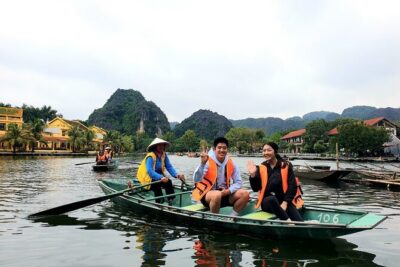
- Ninh Binh Full-Day Tour from Hanoi to Hoa Lu, Tam Coc & Mua Cave Via Boat & Bike
★ 5.0 · 4,384 reviews


The 8:00 arrival: meeting the pagoda and learning temple manners
The day starts at a pagoda in an alley in Thanh Xuan District, Hanoi. Since you will be walking in temple space, shoes and movement matter, and the retreat begins by making that smooth.
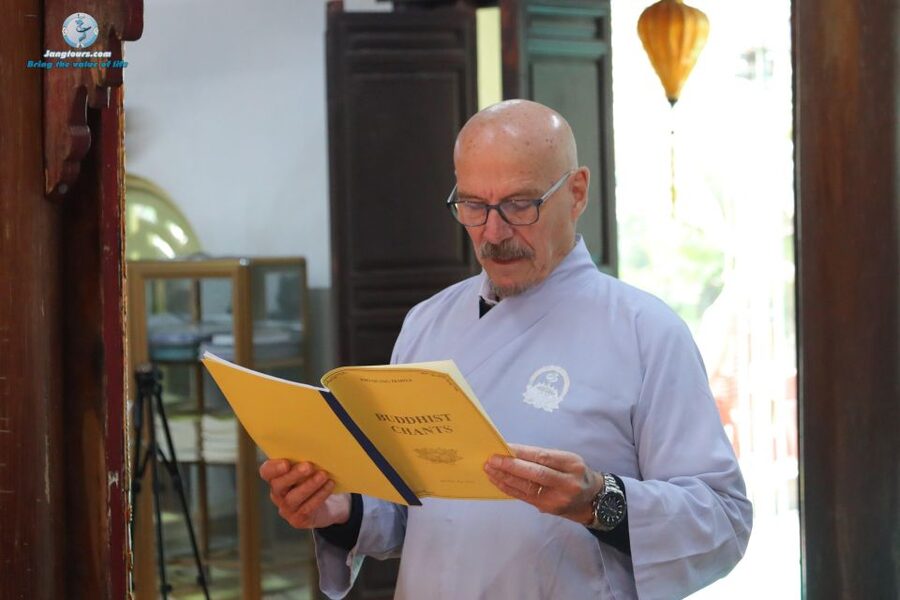
From 08:00 to 08:45, you get greetings and regulations while staying in the pagoda. You will learn the right way to greet monks and nuns when you meet them. This is more important than it sounds. When you understand the basic etiquette, you stop worrying about doing the wrong thing, and you can actually be present.
A practical note: the pagoda is about 10 kilometers from downtown. You can reach it by Grab bike or taxi, so I recommend building extra time into your schedule. If you’re even slightly late, you’ll miss the warm-up of rules and getting oriented.
Morning rituals 8:45–11:00: sutras, chanting, and the purpose behind each practice
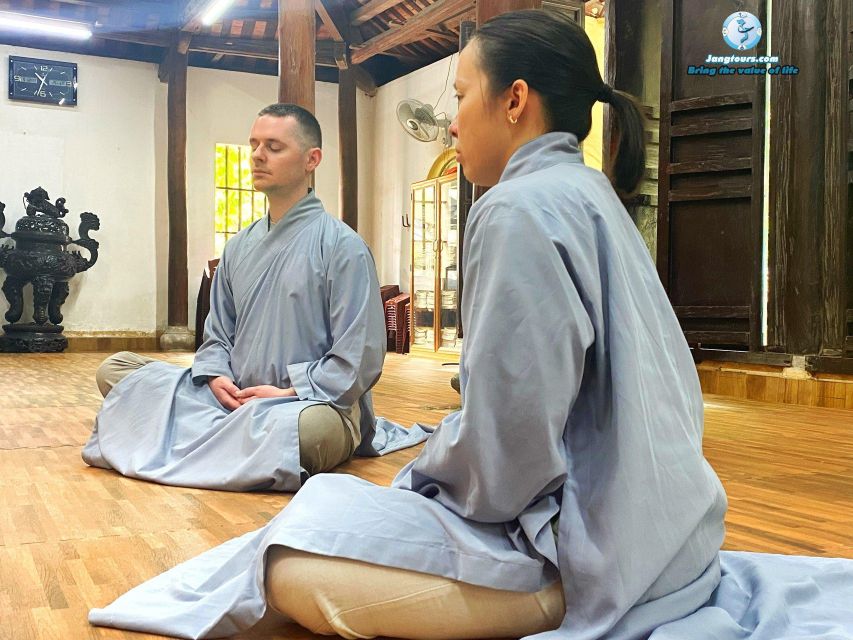
From 08:45 to 09:10, you move into Buddhist rituals and sutra teachings. Sutras are described as the Buddha’s teachings, and the idea is to bring them into daily life so your practice supports both living and personal cultivation.
This section is where you start to see the retreat’s logic: meditation isn’t treated like a standalone skill. It is paired with a worldview—karma, compassion, gratitude—so the calm you chase has a moral and philosophical backbone.
After that, you get into meditation practice. There’s a sequence that includes:
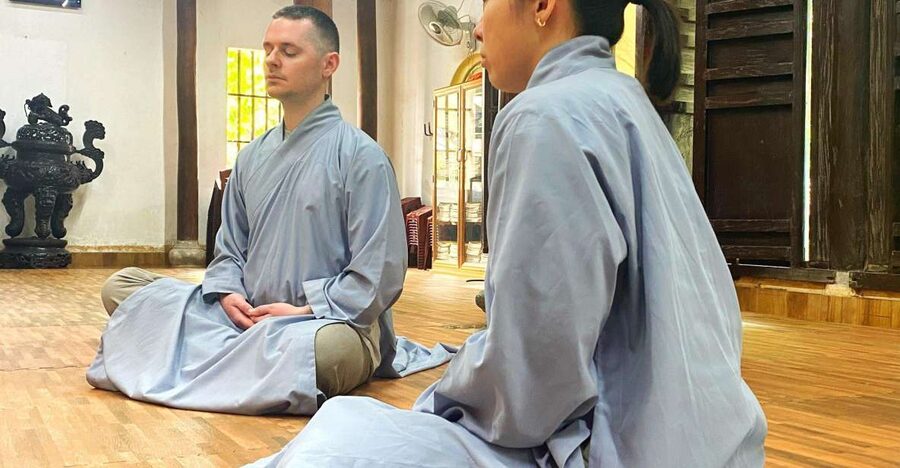
- Walking meditation (09:15–09:30): mindfulness in every breath and step, including how you stay steady when experiences feel challenging.
- Mindful breathing with inner energy movements and mindful attention. This is where the retreat connects meditation to a qigong-style approach—slow, deliberate body awareness meant to support both body and mind.
- The art of touching peace (09:35–09:45): the retreat frames meditation as a practice of happiness, where peace of mind matters more than outside pleasures.
- Meditation for soul purification (09:50–10:10): the language here is direct—meditation is presented as moving away from self and ignorance, leading toward insight.
If you’ve tried meditation before and felt stuck on the why, this morning structure may help. You are guided through what to do and given a way to interpret it, without making it feel like you need to already be Buddhist to participate.
Mindful talking, Arhats, and compassion rituals: 10:15–11:00
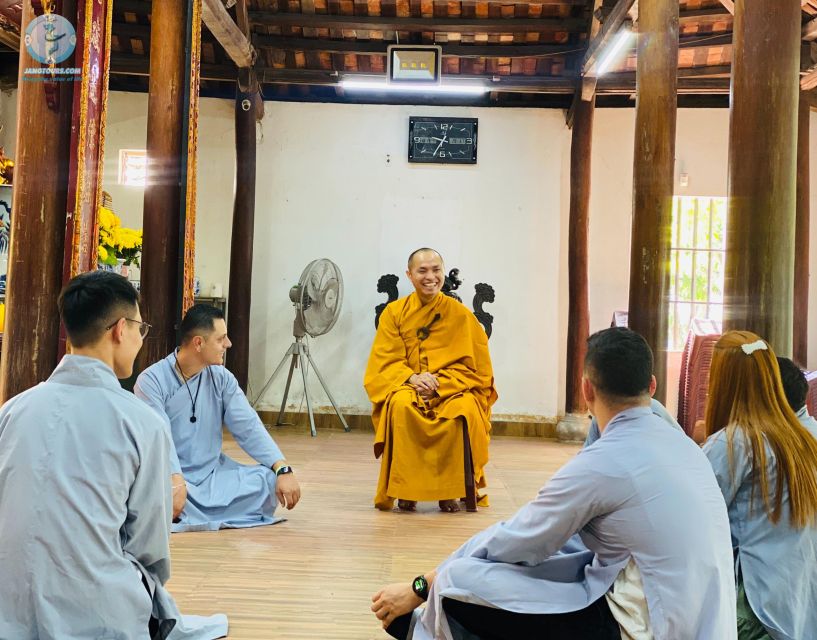
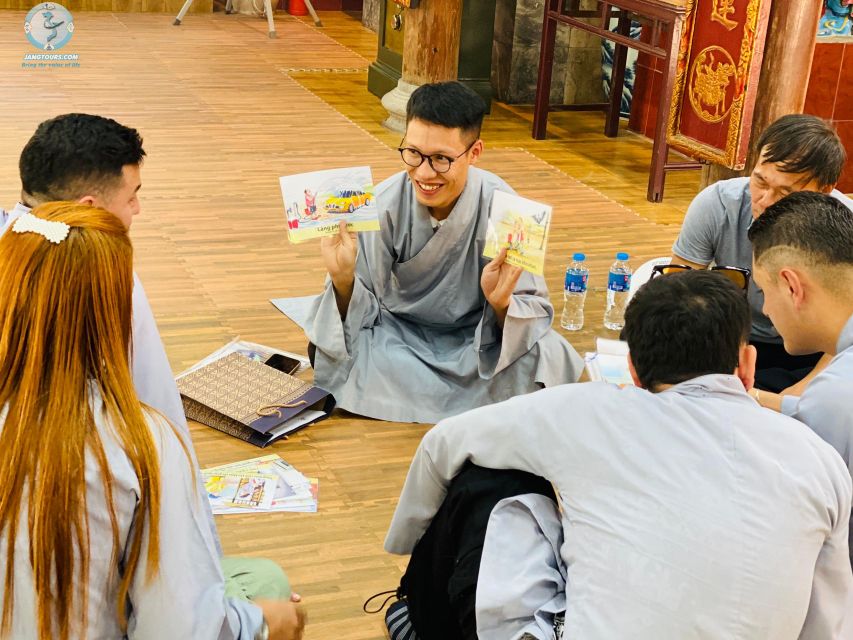
From 10:15 to 10:30, you get mindful talking about the karma law through photos. It’s a smart teaching style. Photos keep it concrete, and talking in a mindful way supports the same attention you practice when sitting.
Then the retreat shifts into temple-style ritual learning:
- The secret favor (10:35–10:45): a ritual of asking for the Arhat, with the idea that worship of Arhats helps plant seeds for enlightenment in a next life.
- Compassionate practicing (10:50–11:00): releasing beings as compassion and good deeds, linked to a longer life.
Two things to keep in mind here as a non-expert.
First, these moments are not optional add-ons; they are part of how the retreat builds loving-kindness. If you’re open to ritual, you’ll likely feel the day connecting emotionally, not just intellectually.
Second, rituals can feel unfamiliar if you come from a secular background. The retreat is set up with instruction and guidance, so you’re not left alone in the unfamiliar. And because the highlights include monk guidance for spiritual practice questions, you can usually get clarification when something doesn’t land.
The grateful meal (11:00–12:00): mindfulness you can actually use
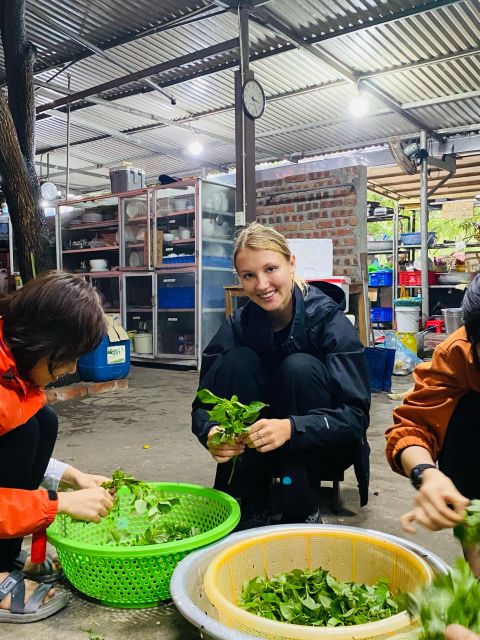
At 11:00 to 12:00, you have a grateful meal, and the focus is very specific: gratitude before and after eating, and awareness of what you consume to avoid wasting it.
You also get vegetarian lunch here, plus soft drinks. Water is provided throughout (mineral water is included).
What makes this valuable is the timing. You’ve already done sitting and movement practice. Now the retreat asks you to apply it to a normal human need: eating. That is how mindfulness stops being a one-hour hobby and starts becoming a way of living.
If you worry that “mindful eating” turns into awkward silence or a lecture, this retreat keeps it tied to actions: gratitude, attention, and not wasting food.
- Hanoi Motorbike Tour: Food, Culture and Fun by Vintage Motorbike★ 5.0 · 6,699 reviews
- Hanoi: Guided Food Tour with Train Street Visit★ 4.9 · 6,239 reviews
- Hanoi Cooking Class: Culture, Local Market & Meaning CSR Impact★ 5.0 · 5,147 reviews
The break and the afternoon shift: 14:00 meditation session
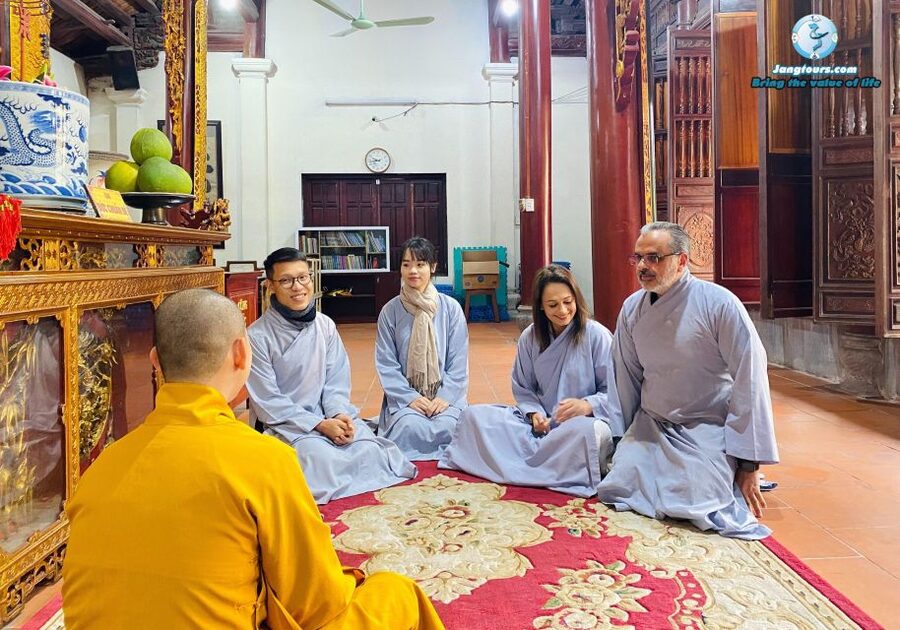
After the morning, there’s a gap before 14:00. The schedule jumps back in with another meditation session, and that structure matters.
That pause gives your brain time to absorb what you practiced. By the afternoon, you’re more likely to notice how your mind reacts after ritual, study moments, and eating—then you practice meditation again with a clearer sense of what to refine.
15:00–16:45: learning Buddhist doctrines after you’ve already sat
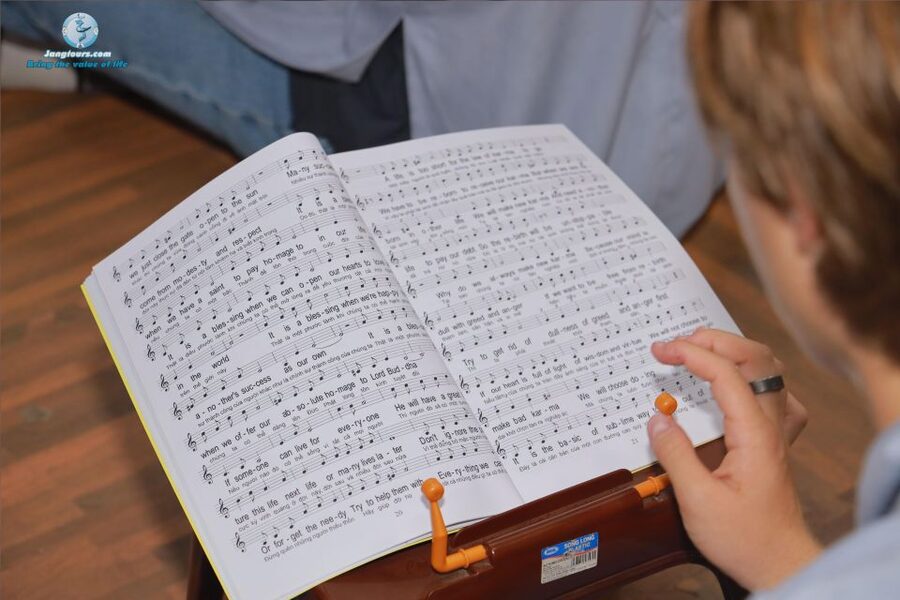
From 15:00 to 16:45, you learn Buddhist doctrines. This is a smart order: you experience the practices first, then you study the ideas that explain why they exist.
The topics connect to the morning teachings about happiness, karma, compassion, and the logic behind ritual. By this point, you can ask better questions because you are comparing concepts to sensations you already had during walking meditation, mindful breathing, and the afternoon sitting.
If you like explanations that don’t talk down to you, this part tends to work well. In reviews, guides like Hung and Hieng were appreciated for speaking about Buddhist core values, the history of the Buddha, karmic practices, and also participating alongside guests with chanting and meditation. That kind of guidance can make doctrines feel less abstract and more usable.
Getting inner peace with every step: how the itinerary trains your attention
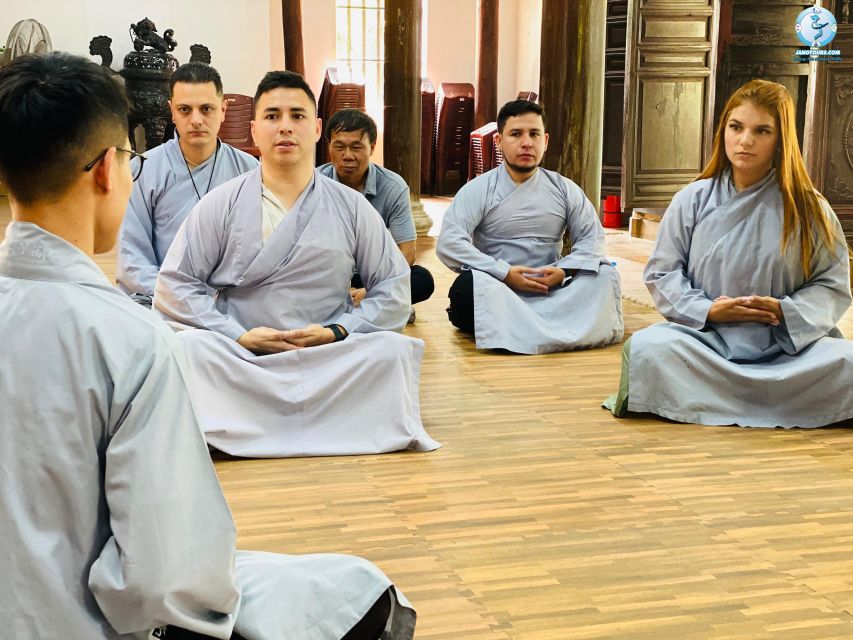
The retreat highlights inner peace with every step, and that’s not just a poetic line. The itinerary repeats mindfulness in different forms:
- Attention while moving (walking meditation)
- Attention while breathing and coordinating mind-body energy (mindful breathing and qigong-style movement)
- Attention while listening and speaking mindfully (sutras and mindful talking)
- Attention while performing and understanding ritual (sutras, Arhat favor, compassionate releasing practice)
- Attention while eating (grateful meal)
- Attention again in silence (14:00 meditation session)
So even if you struggle to “empty your mind,” you are still practicing something real: noticing what is happening, and returning to the present with support.
Vegetarian food, soft drinks, and what is included with the price
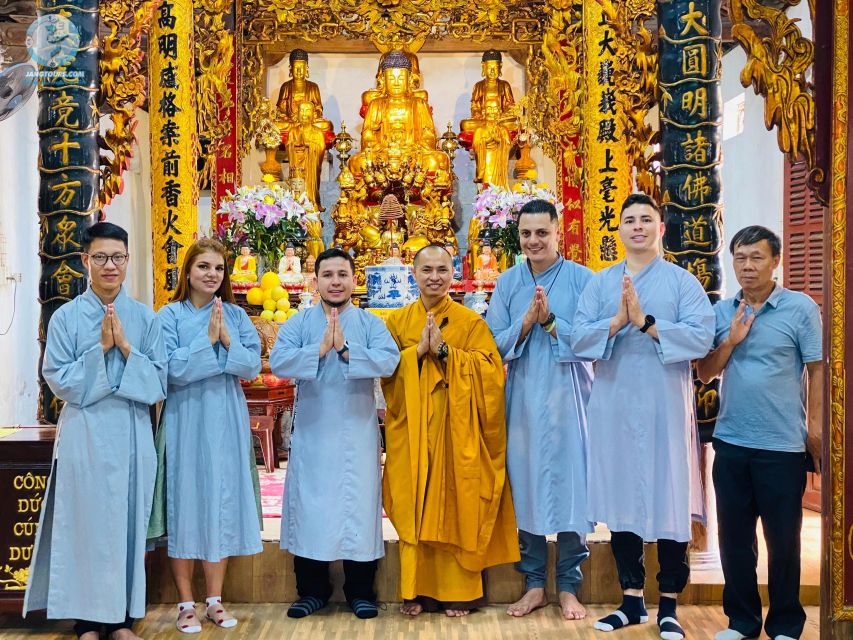
The retreat includes:
- A local guide on the spot
- Entrance fees
- Spiritual rituals
- Vegetarian lunch and dinner with soft drinks
- Mineral water
Dinner is included too, so you are not scrambling for food after the afternoon session. That matters because a long mindfulness day can feel mentally tiring. Eating included keeps the rhythm stable.
In practical terms, you also save money on two meals and entrance costs that could add up if you did a similar temple visit plus classes on your own. The value comes from the structure: one guided day where you can follow the flow without planning every step.
Price and logistics: is $90 good value for an 8-hour retreat?
At $90 per person for roughly 8 hours, this is fairly good value when you consider what you get in one package. You are buying:
- English instruction
- A guided meditation and ritual sequence
- Temple access (entrance fees)
- Vegetarian lunch and dinner with drinks
- Water provided
- A small-group setting
The one thing not included is transportation. That’s the main cost you’ll still pay yourself—getting to the pagoda and back.
If you already planned to visit temples and needed a guided, structured meditation day, this price can feel efficient. If you only want a quick 60–90 minute class, then it’s expensive for what you might get. But if you want a full arc—from etiquette and chanting into real meditation practice—this is priced like a full-day workshop, not a token experience.
What to bring and what rules to follow inside the pagoda
This retreat has clear rules, and they are about respect and comfort.
Bring:
- Long pants
Not allowed:
- Shorts
- Short skirts
- Alcohol and drugs
That might seem strict, but it keeps the day consistent. You will be sitting, walking, and moving carefully. Long pants also help you stay comfortable if the temple grounds or floor areas are cooler.
Because the day starts in a pagoda alley in Thanh Xuan, I also suggest wearing shoes that are easy to adjust for temple flow, and having a light layer if the air feels different between outdoor walkways and indoor meditation spaces.
Who this retreat is best for
This fits best if you want a guided introduction to Buddhist meditation and practice, with enough context that you can understand what you’re doing and why.
It also works for people who already meditate alone. The retreat is valuable when you want to compare your personal mindfulness habits with Buddhist practice methods—especially the blend of walking meditation, mindful breathing, and qigong-style movements.
If you prefer totally secular mindfulness with zero rituals, you might find some parts challenging. But the day includes guidance and monk support for questions, so your questions can be part of the process rather than a barrier.
Should you book this Hanoi mindfulness meditation retreat?
I’d book it if you want a full-day practice in a real pagoda setting, taught in English, and you like the idea of learning ethics and compassion as part of meditation—not just technique.
I’d think twice if you dislike structured religious rituals or you cannot meet basic dress rules like long pants. And since transportation isn’t included and the pagoda is 10 km from downtown, plan your timing so the day doesn’t start in stress.
If you can go in with open curiosity—ready to walk, sit, breathe, chant, and eat mindfully—this retreat is the kind of day that leaves your mind calmer and your routines slightly better afterward.
FAQ
How long is the Hanoi mindfulness meditation retreat?
It lasts about 8 hours.
Where does the retreat start and end?
The meeting point is a pagoda in an alley in Thanh Xuan District, Hanoi. The retreat ends back at the same meeting point.
Is transportation included?
No. Transportation to and from the pagoda is not included. The pagoda is about 10 km from downtown, and Grab bike or taxi are options.
What is the group size?
It is a small group limited to 1 participant.
What should I wear and what is not allowed?
Bring long pants. Shorts and short skirts are not allowed, and alcohol and drugs are not allowed.
What’s included in the price?
The price includes the local guide, entrance fees, spiritual rituals, vegetarian lunch and dinner with soft drinks, and mineral water.
More Full-Day in Hanoi
- Ninh Binh Full-Day Tour from Hanoi to Hoa Lu, Tam Coc & Mua Cave Via Boat & Bike
★ 5.0 · 4,384 reviews


More Tour Reviews in Hanoi





Latest Hanoi write-ups from our team



Full-Day, compared.
 ★ 5.0Full-Day Ninh Binh Highlights Tour from HanoiFrom $797,761 reviews
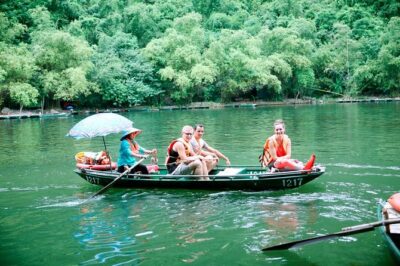 ★ 5.0Ninh Binh Full-Day Tour from Hanoi to Hoa Lu, Tam Coc & Mua Cave Via Boat & BikeFrom $334,384 reviews
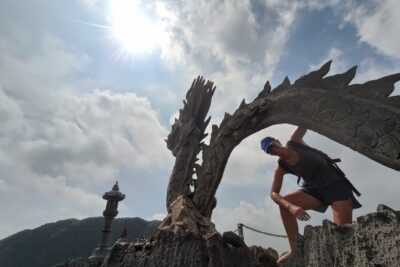 ★ 5.0Ninh Binh Full-Day Small Group of 9 Guided Tour from HanoiFrom $851,422 reviews
 ★ 5.0Lan Ha Bay full-day tour from Hanoi, Hai Phong – Serenity CruisesFrom $48958 reviews
 ★ 5.0Halong Bay Full Day with Kayaking, Hiking viewpoint, Cave – Deluxe To LuxuryFrom $38884 reviews
 ★ 5.0Halong Bay Full Day With Cave, Kayaking And Swimming – Highway TransferFrom $39743 reviews
 ★ 4.9From Hanoi: Full-Day Ninh Binh Highlights Small Group TourFrom $89614 reviews
 ★ 5.0Highlight Ninh Binh Full Day Tour Tam Coc Boat, Mua Cave, Hoa LuFrom $41517 reviews