
Reviewed · PERFUME PAGODA TOURS
From Ha Noi: Perfume Pagoda – A Pagoda In Deep In A Cave
Perfume Pagoda is where prayers and scenery travel together. This is one of northern Vietnam’s best-known sacred spots, reached by a boat ride through rice fields with towering mountains all around. Two things I really like: the calm, scenic way you get to the temples, and the mix of pagodas plus a cave visit that changes the feel of the trip fast.
Expect lots of time outdoors, then a hike to a temple area inside Huong Tich Cave. One consideration: parts of the cost are not included (like tickets and cable car options), and there can be small extra payments for transport near the river entrance.
In This Review
- Key Highlights Worth Marking On Your Map
- Why Perfume Pagoda Feels Different From Other Hanoi Excursions
- The Hanoi-to-Dong Bac Ride: Comfort First, Scenery Second
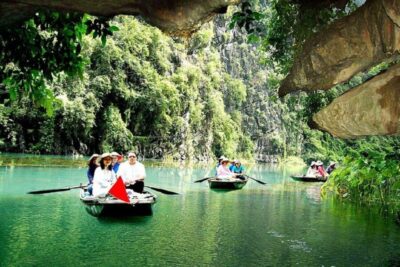
- The Boat Ride Through Rice Fields: The Moment You’ll Remember
- Trinh Temple in the Hills: A Short Stop With a Clear Story
- Thien Tru Pagoda and Lunch: Where the Pilgrimage Pace Resets
- Your Choice Up the Mountain: Cable Car, One-Way, or Trekking
- Huong Tich Cave Temple: The Atmosphere Shift That Makes It Worth It
- Price and Logistics: What Your $46 Covers, and What Might Cost Extra
- Who This Trip Suits Best (And Who Should Think Twice)
- A Smooth Way to Enjoy the Day Without Rushing
- Should You Book This Perfume Pagoda Day Trip?
- FAQ
- How long is the Perfume Pagoda trip?
- Is lunch included?
- Do I need to pay for the cable car?
- Is the boat ride included?
- What’s included in the price besides temples and transport?
- Is a private group available?
Key Highlights Worth Marking On Your Map
- 1-hour boat ride on the stream between rice fields and massive mountains
- Thien Tru Pagoda, linked to King Le Thanh Tong
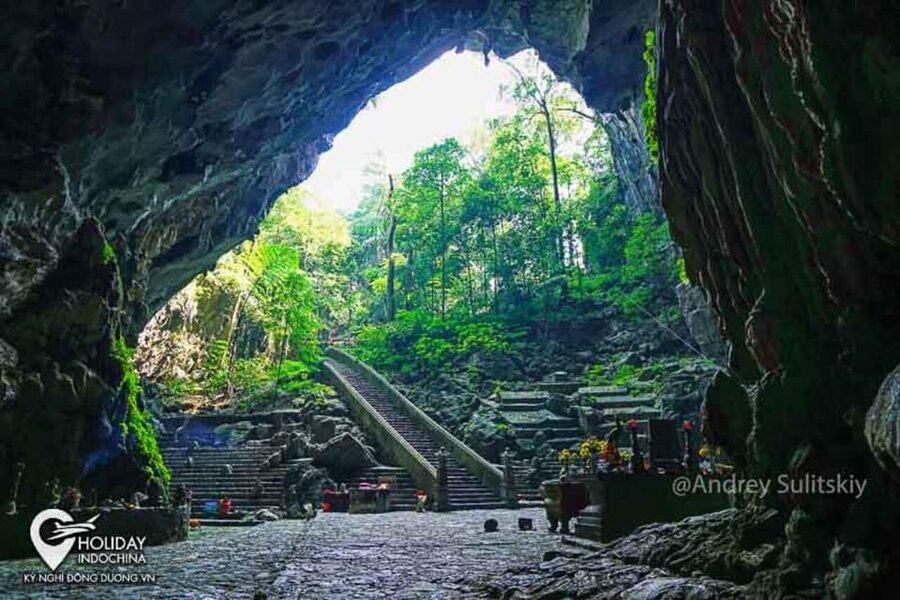
- Huong Tich Cave temple, reached after walking up from the cave area
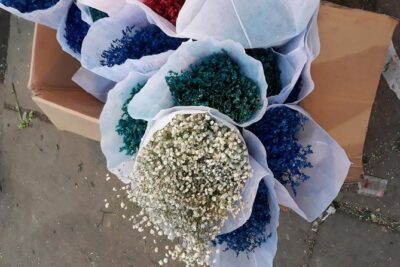
- Colorful flower views around the Yen stream
- Trinh Temple in the mountains, honoring a mandarin who helped fight the enemy
- Flexible ascent options: cable car, one-way cable car plus walking, or trekking up
Why Perfume Pagoda Feels Different From Other Hanoi Excursions
Perfume Pagoda is sacred in a way you can feel the moment you start moving through the route. People come here to pray for peace, and the whole day has that pilgrimage rhythm: travel first, then worship, then more travel through natural corridors of mountains and caves.
What makes it more interesting than a standard viewpoint trip is how the route is built around the terrain. You don’t just arrive at a building and call it a day. You go through rice fields, temples in the hills, and finally into a cave to reach a temple tucked deep in the rock. That sequence matters because it changes your perspective—Buddhism here isn’t abstract. It’s part of how the landscape is used for worship.
Also, it’s a rare chance to see northern Vietnam’s countryside in a slow, cinematic way. The mountains frame everything, and the route is designed around water travel and walking rather than quick photo stops.
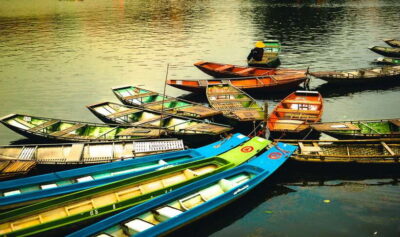
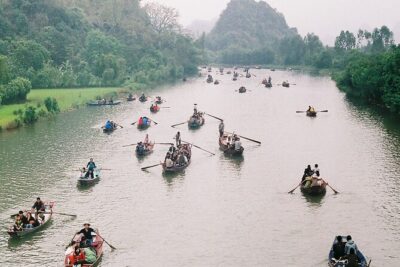
More pilgrim boats to the Perfume Pagoda


The Hanoi-to-Dong Bac Ride: Comfort First, Scenery Second
This trip starts with pickup in central Hanoi—often arranged right in front of your hotel—then you head out by AC car toward Dong Bac. I like the comfort factor here. Day trips can be long and bumpy, and having air-conditioning helps you stay fresh for the outdoor portions.
On the way, the scenery shifts in a satisfying way: you move from an older-city feel into open countryside with green rice fields, larger mountain forms, and rustic houses. The route gives you a sense of place before you even reach the pagoda area, so you’re not just dropping into a landmark. You’re gradually being moved into the kind of landscape where these religious sites make sense.
If you want to take photos, this is also when your camera (or phone) has the best chance to catch wide views—once you’re on the boat, the best moments are mostly framed by water and cliffs.
The Boat Ride Through Rice Fields: The Moment You’ll Remember
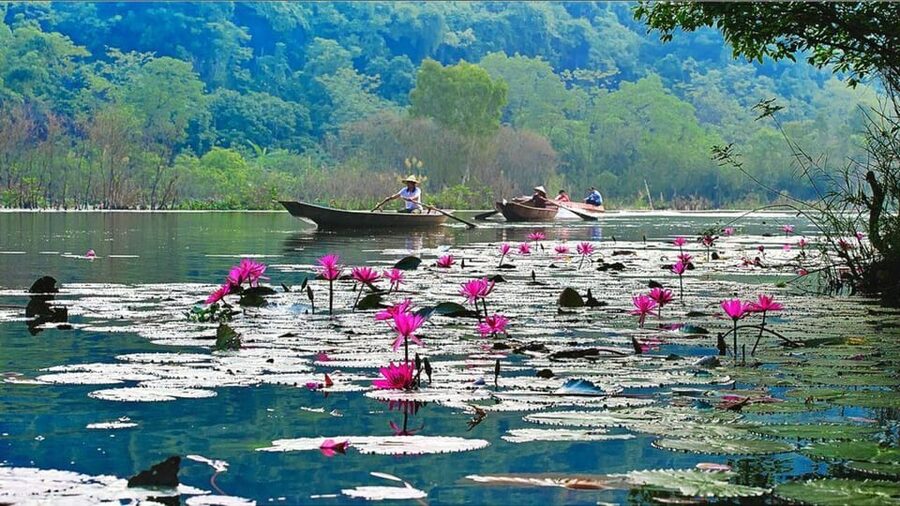
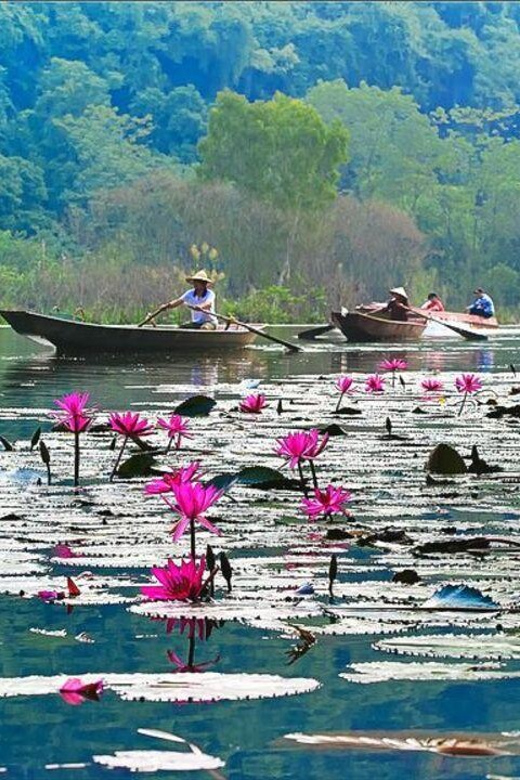
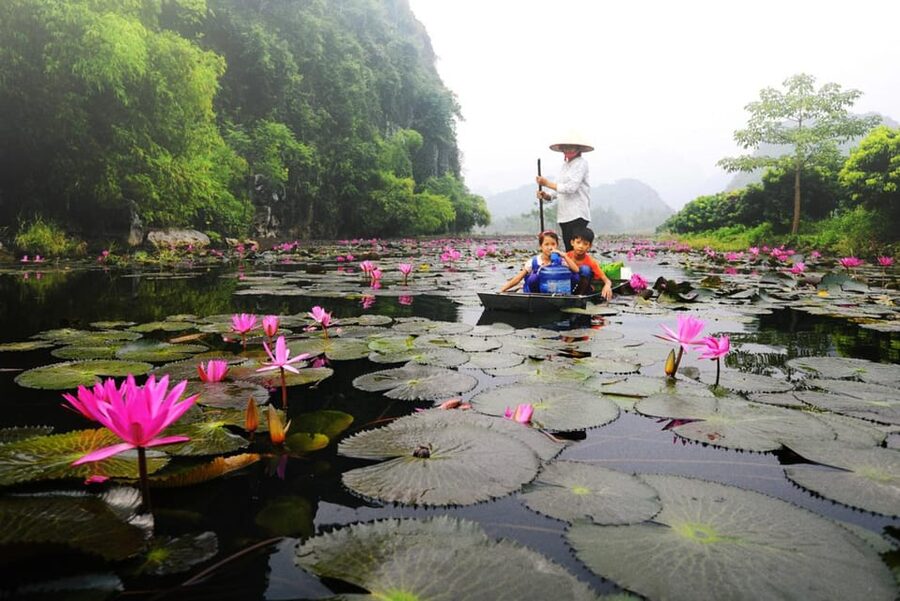
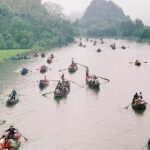
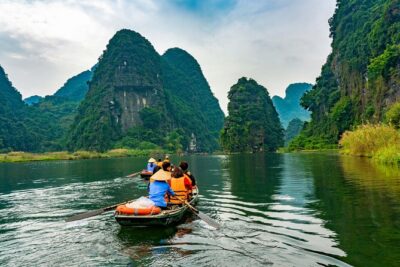
The core experience is the boat ride on the stream for about 1 hour. You’ll see a stream running between rice fields with massive mountains rising close by. This isn’t just transportation—it’s the scenic highlight that sets the tone for the whole day.
While you ride, you can watch lotus flowers and bright red rice flowers falling into the water. The mountains also look dramatic as silhouettes across the water. That combination—flowers drifting, water moving, big rock walls in the distance—creates a poetic scene that’s hard to recreate anywhere else.
I also like that the boat portion spreads the experience out. Instead of rushing between stops, you get time to look, breathe, and let the environment sink in. If you care about photos, this is one of the easiest parts of the day to shoot because the scenery is always framed for you: water in front, mountains beyond, rice fields on the sides.
Trinh Temple in the Hills: A Short Stop With a Clear Story
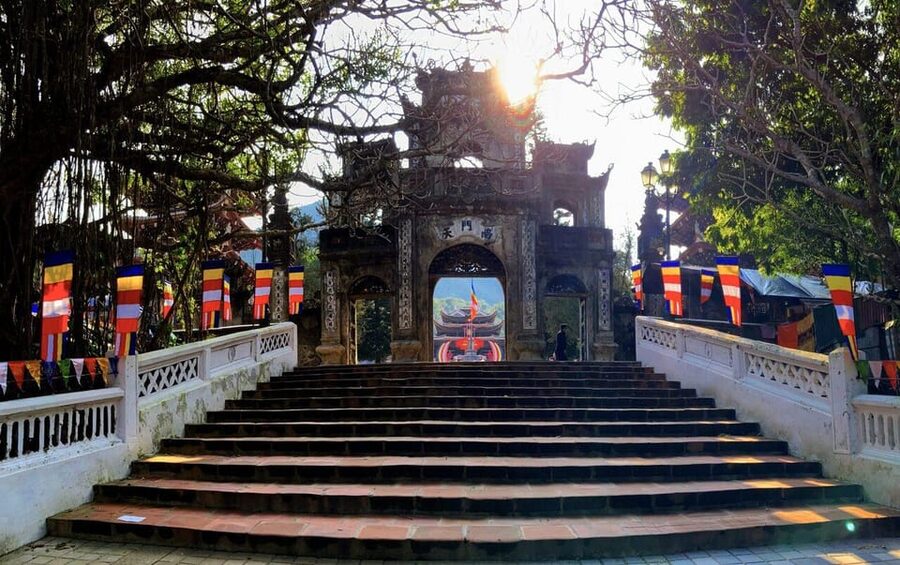
Before you settle into the main pagoda sequence, you pass a stop at Trinh Temple. It’s located in the mountains and worships a mandarin who contributed to fighting the enemy.
Why this matters: it adds human history and motivation to the day. The trip isn’t only about nature and Buddhist architecture. It also connects religion to the idea of people being remembered for service and protection, which helps the temple stops feel grounded instead of purely scenic.
The practical takeaway is simple. Even if your legs are saving energy for the later walking, this stop gives you a mental pause and a reason to pay attention. Look for what’s being honored and why, not just the fact that it’s another pagoda building.
Thien Tru Pagoda and Lunch: Where the Pilgrimage Pace Resets
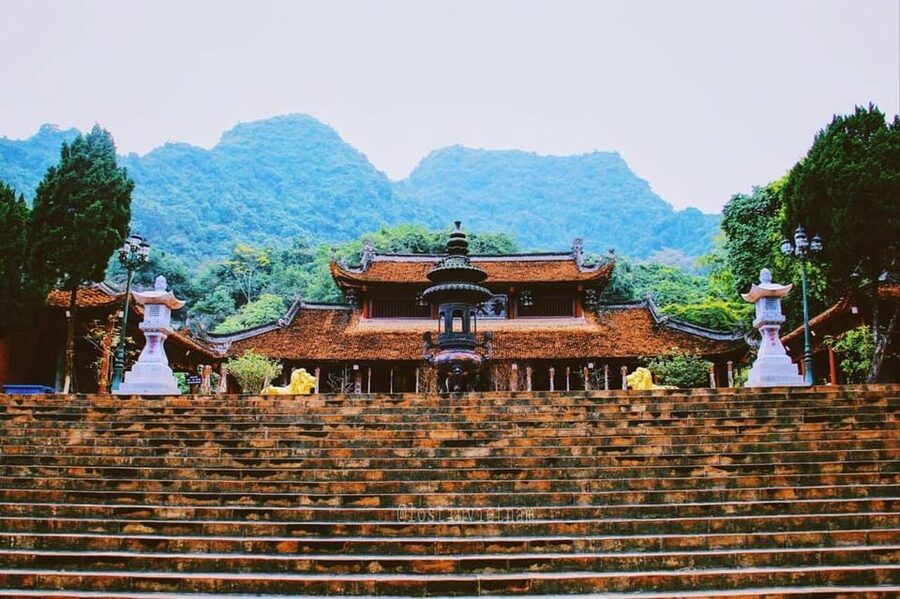
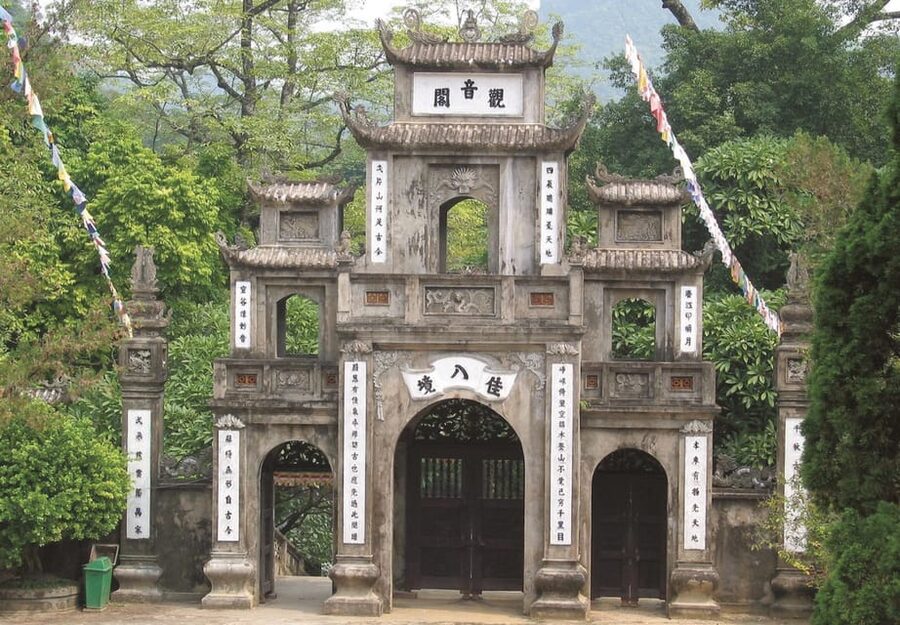
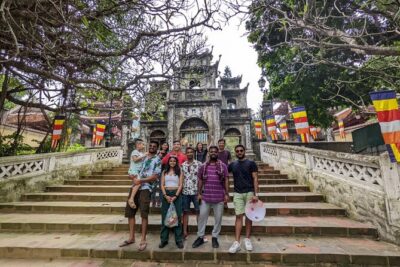
Next up is Thien Tru Pagoda. A key detail here is that it was visited by King Le Thanh Tong. That historical link gives the pagoda more weight, especially if you’re interested in why certain sacred sites became important centers for worship.
Then you’ll have lunch. Lunch is included, and I like that it’s timed after major temple viewing and before the mountain ascent. It keeps you from running out of energy at the most demanding part of the day.
A good strategy is to treat lunch as your buffer. You’ll likely want your energy for the climb options later. Eat steadily, drink some water, and don’t plan to do anything strenuous right after you finish unless your chosen option is easy for you.
- Hanoi Motorbike Tour: Food, Culture and Fun by Vintage Motorbike★ 5.0 · 6,699 reviews
- Hanoi: Guided Food Tour with Train Street Visit★ 4.9 · 6,239 reviews
- Hanoi Cooking Class: Culture, Local Market & Meaning CSR Impact★ 5.0 · 5,147 reviews
Your Choice Up the Mountain: Cable Car, One-Way, or Trekking
Once you reach the lunch area and the next phase begins, you’ll have three options for going up:
- Cable car to the top for the scenery from above
- Cable car one way, then walk down
- Trek up and go down by trekking
I like this flexibility because it lets you match the day to your energy level. If you’re traveling with older family members or you just don’t want to do a bigger hike, the cable car options can reduce fatigue while still getting you to the sacred cave area.
On the other hand, if you enjoy walking for its own sake—taking in the mountains and religious atmosphere on foot—the trekking option can feel more connected. You’re moving through the same terrain that pilgrims have used for generations, not only riding over it.
One more point: choose based on how you’ll feel after the boat ride. The boat is relaxing, but you’ll still have accumulated time standing, sitting, and photographing. If you want the cave experience to feel calm instead of rushed, pick the option that leaves you with enough breath for the cave walk.
Huong Tich Cave Temple: The Atmosphere Shift That Makes It Worth It
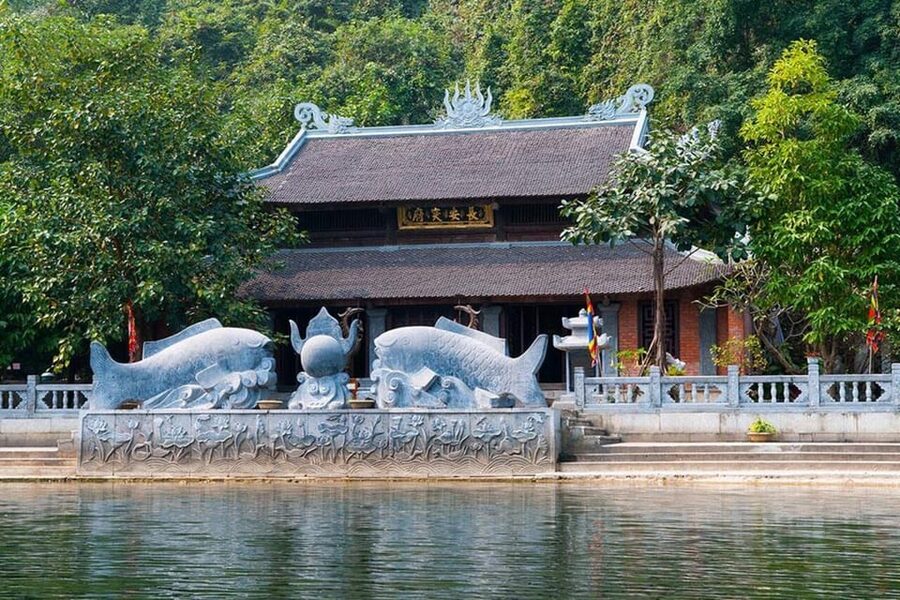
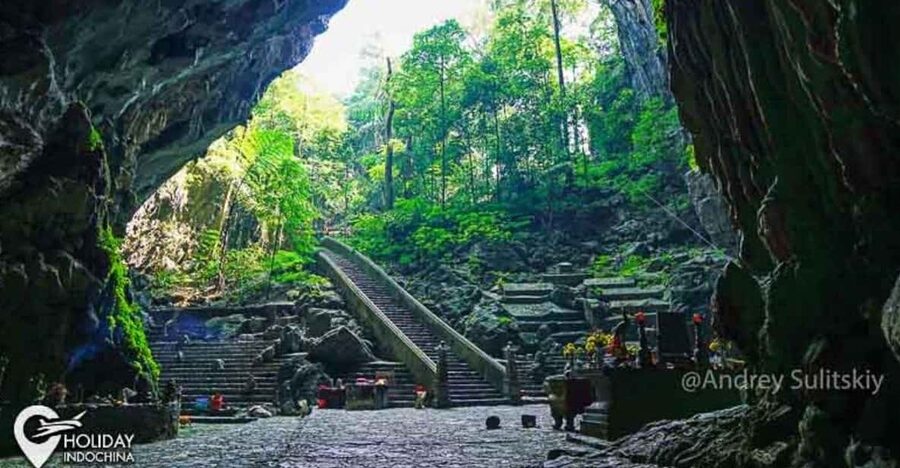
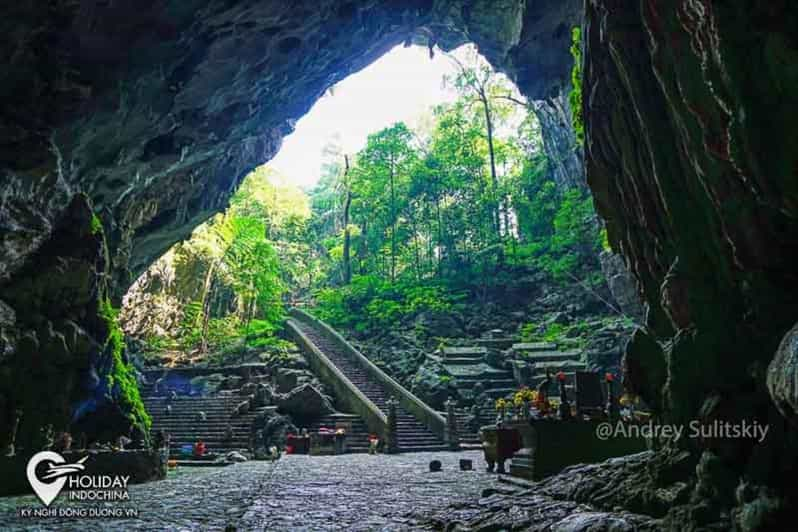
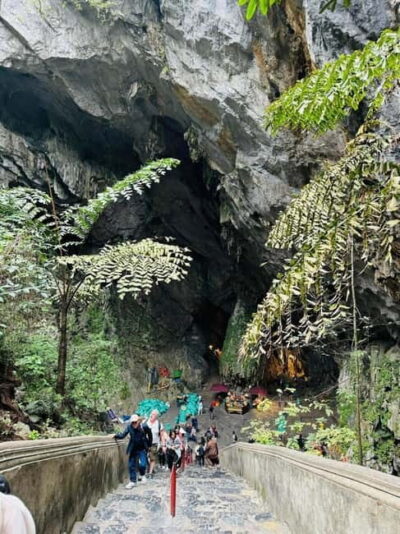
At the top, you visit a sacred temple deep in Huong Tich Cave. This is where the experience changes from open scenery to rock-made quiet. You’ll notice a shift in atmosphere after entering the cave, and that contrast is part of the point.
The cave itself has been shaped by nature, with rocks of many different shapes. When you first step into it, it feels like the mountain becomes its own environment—one built for reflection rather than panorama viewing.
Then there’s the walking component. The route includes a short but somewhat strenuous hike up toward the top area connected to the cave visit. If you’re deciding between cable car and trekking, consider this carefully. You don’t want the hike to steal the best part of your day: that moment when you enter the cave temple and the outside world fades.
Practical advice: wear shoes you trust for uneven ground. Plan to move slowly and take breaks if you need them. The cave experience is about being present, not speed.
Price and Logistics: What Your $46 Covers, and What Might Cost Extra
The listed price is $46 per person for a one-day outing. For that, you generally get a lot of real travel value: AC car transfer, pickup/dropoff in central Hanoi, lunch, a guide, boat trips, and bottled water on the car.
But this is where you need to stay sharp: cable car, electrict car, and ticket costs are not included. Also, some transport can be paid separately on the day for movement between a bus parking area and the entrance near the river’s bottom. It may not be a huge amount, but it can feel unexpected if you assume everything is bundled.
So here’s my practical take on value. The price makes sense if you treat it as covering the main transportation and guided temple route—especially the boat ride and lunch. It can feel less satisfying if you expected every ticket and every shuttle link to be fully included from the start.
To avoid surprises, budget a little extra for whatever tickets or short-distance transport you’ll need during the river and cable car segments. If you’re the type who hates last-minute costs, ask your operator what the extra payments typically cover before you go.
Who This Trip Suits Best (And Who Should Think Twice)
Perfume Pagoda is a strong fit if you want a day trip that mixes religion with real countryside scenery. You’ll enjoy it most if you like:
- walking between temple spaces after a boat ride
- cave visits that feel different from normal sightseeing
- historical connections like Thien Tru Pagoda and King Le Thanh Tong
It’s also a good option if you like getting photos during travel time. The boat ride provides some of the easiest scenery framing of the day.
You might think twice if you dislike any walking at all or if you want a fully frictionless experience with no add-on payments. The trip includes a hike component to reach the cave area, and it may include extra transport costs near the river entrance.
If language matters for you, the tour offers English, plus other languages. English is included, and additional languages may involve a surcharge.
A Smooth Way to Enjoy the Day Without Rushing
This is one of those trips where pacing is everything. Here’s how I’d plan your mindset:
- Think of the day in chapters: boat → hills/temples → lunch → ascent → cave.
- Treat lunch as energy storage, not just a break.
- Choose the mountain option that leaves you steady for the cave walk.
- Keep water handy and use the bottled water provided for the ride.
One more note: guides can vary in how easy they are to follow in different languages. If your English is strong, you’ll likely do fine. If you’re not fluent, bring patience—clear photos, listening for repeated key points, and asking simple questions can help a lot.
Should You Book This Perfume Pagoda Day Trip?
If you want one day outside Hanoi that feels both spiritual and scenic, I’d book it. The 1-hour boat ride through rice fields with mountain silhouettes is the kind of experience you’ll remember long after you’ve left the cave temple. Add Thien Tru Pagoda, the cave visit at Huong Tich, and a clear mix of worship spaces and nature, and you’ve got a full, meaningful day.
Skip it if you need everything to be strictly bundled into one price with zero surprises, or if you’re avoiding any hike at all. Also, if you’re very sensitive to language precision, consider booking with the language option you feel most comfortable with.
Overall: this is a great choice for travelers who enjoy real movement through the countryside, not just ticking off a pagoda from the road.
FAQ
How long is the Perfume Pagoda trip?
It runs for one day. Starting times depend on availability.
Is lunch included?
Yes. Lunch is included in the tour.
Do I need to pay for the cable car?
Cable car tickets are not included, so you’ll pay separately if you choose that option.
Is the boat ride included?
Yes. Boat trips are included.
What’s included in the price besides temples and transport?
You’ll have pickup and drop-off in central Hanoi, an AC car transfer, an English-speaking guide (other languages may cost extra), boat trips, lunch, and bottled water on the car.
Is a private group available?
Yes. Private group options are available.
More Tour Reviews in Hanoi

More Trips to the Perfume Pagoda
Latest Hanoi write-ups from our team
Perfume Pagoda Tours, compared.
 ★ 4.1Full-Day Perfume Pagoda Private or Small-Group TourFrom $67174 reviews
 ★ 4.7From Hanoi: Full-Day Perfume Pagoda Group Tour with LunchFrom $48141 reviews
 ★ 5.0Full Day Tour to Perfume Pagoda with Traditional Boat RideFrom $39101 reviews
 ★ 4.4Perfume Pagoda – Yen Stream Boat Ride, Lunch & CaveFrom $4985 reviews
 ★ 4.5Perfume Pagoda Full-Day Guided Tour from Hanoi – All InclusiveFrom $4957 reviews
 ★ 4.9Perfume Pagoda Day Tour with Boat Ride & Cave VisitFrom $4620 reviews
 ★ 3.5Perfume Pagoda Day Tour from HanoiFrom $6220 reviews
 ★ 4.2From Ha Noi: Perfume Pagoda & Quang Phu Cau Incense VillageFrom $12614 reviews
Browse the lists this tour appears in