Reviewed · HANOI
9 Days Northern Vietnam from the Mountain to the Bay
Mountain to bay, in one tight circuit.
What makes this trip worth your attention is the mix of real people, real places—Sapa village life on foot, then a proper Ha Long Bay cruise—without losing the cultural stops in Hanoi. I especially like having an experienced English-speaking guide during tours and transfers, which keeps the days from feeling like random sightseeing. I also like that the schedule is built around included sights (not just scenery), so you’re not paying twice for basics. One possible drawback: you’ll spend long hours on the road, plus the night train concept to Sapa can be rough if you’re a light sleeper.
You also get a lot packaged in for the price: private transportation, entrance fees, and a cruise with meals included, so you can focus on the experience instead of micromanaging logistics. Since it’s run by Asia King Travel with a mobile ticket, it’s meant to feel organized end to end, which shows in the flow.
In This Review
- Key highlights if you want the fast read
- Hanoi starts the trip: landing, sleeping, and getting oriented
- Ba Dinh Square and the classic Hanoi triad
- Sapa by night train: terraces, valleys, and village names you’ll remember
- O Quy Ho road day: scenery stops that also set up your Sapa context
- Cat Cat and the Hoang Lien National Park feel-good trek
- Ha Long Bay doesn’t start with the bay: the road to Ha Long City matters
- Sunrise on the water, then straight to Ninh Binh
- Tam Coc, Hoa Lu, and Mua Cave: the 500-step payoff
- How value works here: what’s included, what you’ll still handle
- Who this trip fits best (and who should think twice)
- Should you book it?
- FAQ
- What cities and areas does the trip cover?
- Where does the tour start and end?
- What’s included in the price?
- Is the Ha Long Bay cruise included, and for how long?
- Is there walking or climbing on this tour?
- When does the tour begin?
Key highlights if you want the fast read
- English-speaking guide for tours and transfers keeps explanations clear and the timing sane
- 2 days/1 night in Ha Long Bay gives you more than a quick boat ride
- Sapa village walks connect you to daily life in areas tied to Black Hmong, Dao, and Red Dao communities
- Multiple scenery styles: rice terraces, mountain valleys, karst bay islands, and Ninh Binh karst countryside
- A full day pairing of history and views in Ninh Binh with Hoa Lu temples and the Mua Cave climb
Hanoi starts the trip: landing, sleeping, and getting oriented
On day 1, the trip begins the practical way: you arrive at Noi Bai airport and get a transfer to your Hanoi hotel for an overnight stay. This is smart. It helps you shake off jet lag before jumping into big walking days.
Hanoi is a good first base for this itinerary because it’s both historic and easy to navigate when you have a guide. You’re not just cataloging monuments—you’re building context for what Vietnam has been, and what it became. You’ll be grateful for that once you move from city history into mountain and bay scenery.
Not sure yet? See how this one sits next to a few Hanoi favourites.


Ba Dinh Square and the classic Hanoi triad

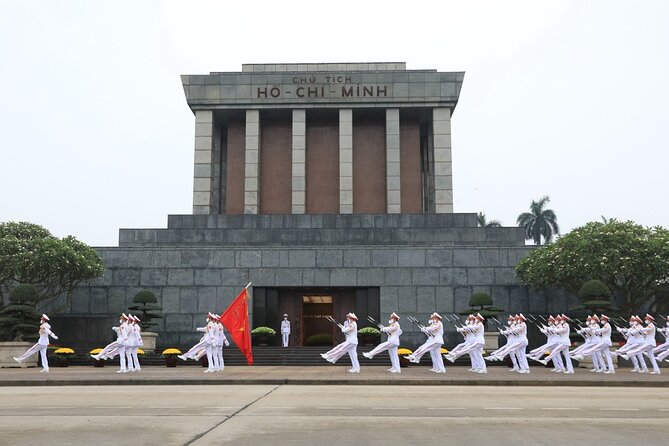
Day 2 is a strong “big ideas” day in Hanoi, and it’s set up well: you start at Ba Dinh Square with the Ho Chi Minh Mausoleum, then move through three key stops that tell different sides of Vietnam’s story.
At the Ho Chi Minh Mausoleum, you’re centered in the national space tied to modern Vietnam’s founding narrative. Even if you don’t get lost in details, it’s a powerful place to start your understanding. It’s also the kind of stop that works well with a guide, because context matters more than any single photo.
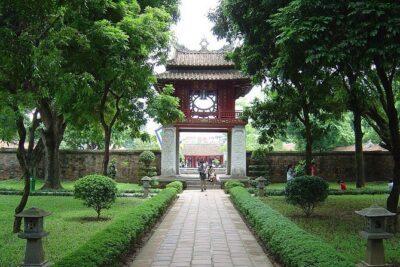
Next up is the Temple of Literature and National University area. This is not only about seeing old buildings. It’s about recognizing the role education and Confucian traditions played in shaping elite learning. I like this stop because it slows the day down. You’re not just looking upward at grand sites; you’re thinking about long-term influence.
Then comes the Vietnam Museum of Ethnology. This is where the “northern Vietnam” theme starts to make more sense. The museum covers Vietnam’s 54 ethnic groups through indoor and outdoor displays, including traditional house styles represented through the exhibits. It’s a helpful bridge to Sapa, where the people and traditions you’ll see are not random side quests. They’re part of the same national story you just started in Hanoi.
Sapa by night train: terraces, valleys, and village names you’ll remember
The trip’s momentum shifts after Hanoi and into Sapa country. The overview includes a night train to Sapa, which is a classic Vietnam move: you trade some comfort for time gained. If you’re choosing this trip, you’re probably okay with that trade. Just don’t expect a hotel-level sleep.
Once in the Sapa region, you’ll spend time around terraced rice country and ethnic minority villages. This isn’t only about views. It’s about patterns of daily life—wet rice cultivation on terraces, cardamom and farming in some areas, and the continued cultural traditions tied to groups like the Black Hmong and Dao.
One of the first day’s scenes is Muong Hoa Valley. You’ll drive toward it, then descend into the valley on foot. If you’re visiting between May and October, it’s noted as a time window for terraced rice, so the timing can matter for how visually dramatic the terraces feel.
Then you move to Ta Van, associated with Black Hmong life in the Sapa area. One reason I like including stops like Ta Van is that it turns “ethnic villages” from a generic label into something more specific—language, heritage, and a continuing way of life are referenced right there in the experience. You’re not just walking through a viewpoint.
O Quy Ho road day: scenery stops that also set up your Sapa context
Day 4 continues the sense of travel through terrain, not just travel between towns. You’ll take a short drive north along National Road 4C toward O Quy Ho, with several stops along the way to admire the scenery of Fansipan, Sin Chai Valley, and flower and vegetable farms.
This is the kind of day you’ll appreciate if you like gradual change. Instead of a sudden jump, you’re watching how the region’s landforms and farming shape daily life. Even if you’re not a “car view” person, these road-stop breaks keep you from feeling like you’re trapped in transit.
Then you arrive in the Sapa area with a stop connected to Ban Khoang and the Red Dao community. The notes emphasize traditions in addition to farming, including wet rice cultivation on terraced fields and cardamom farming. That combination matters. Agriculture is the backbone, and the culture lives alongside it.
Cat Cat and the Hoang Lien National Park feel-good trek
Day 5 is a more active day, and it’s planned around a real walk. You’ll be picked up in Sapa around 9:00 AM, then set off on a downhill trek to Cat Cat Village. I like this timing because morning light helps. Also, it reduces the chance you’re walking in the hottest part of the day.
The Cat Cat section includes a route that goes past a waterfall area and a hydroelectric station, then continues via a dirt trail through terraced rice fields. The notes also mention this area is part of Hoang Lien National Park and still covered by rainforest. That matters for how the walk feels: you’re not just crossing open fields. You’re moving through a more varied natural environment.
After resting, you continue to Y Linh Ho Village, home to the Black Hmong. Then your vehicle meets you at the main road to drive back to Sapa. This pickup structure is important if you don’t want the day to turn into an all-day slog. You get walking time, but you also get a clean off-ramp.
- Hanoi Motorbike Tour: Food, Culture and Fun by Vintage Motorbike★ 5.0 · 6,699 reviews
- Hanoi: Guided Food Tour with Train Street Visit★ 4.9 · 6,239 reviews
- Hanoi Cooking Class: Culture, Local Market & Meaning CSR Impact★ 5.0 · 5,147 reviews
Ha Long Bay doesn’t start with the bay: the road to Ha Long City matters

Day 6 shifts you from mountains to water, but the transition isn’t skipped. After breakfast at your hotel, you’ll drive about three hours through the Red River Delta farmlands to Ha Long City.
This drive is valuable because it gives you a different visual language. The delta landscape supports Vietnam’s agricultural life on a larger scale than the terrace valleys. It’s a reminder that the trip isn’t just about postcards—it’s about how land supports livelihoods.
Then you move to the Ha Long Bay cruise portion. The notes flag Ha Long Bay as a UNESCO World Heritage site recognized in 1994, with about 1,600 limestone islands. I like that the cruise is included as 2 days/1 night on board a shared boat with a double/twin cabin. That gives you time to watch the bay change across the day, rather than rushing everything in one afternoon.
Sunrise on the water, then straight to Ninh Binh
Day 7 is one of those days where logistics make the experience better. You wake up to the bay and have time for an early morning swim, plus the chance to watch sunrise over the sea. Breakfast follows on board.
This is the part that’s hardest to fake. Ha Long Bay at sunrise isn’t just scenery; it’s atmosphere. Even if you’re not the swimming type, the morning timing is worth it because the lighting is different and the crowds (if any) are naturally less of a factor early.
After the cruise morning, you return to the main harbor before transferring to Ninh Binh. The drive is about three hours, and once you arrive, you check into your hotel and get time on your own for the evening.
This “free time buffer” is smart after a boat day. Ninh Binh can be busy, and you’ll enjoy having a little space to reset.
Tam Coc, Hoa Lu, and Mua Cave: the 500-step payoff
Day 8 is Ninh Binh in three parts: water, history, and a big view reward.
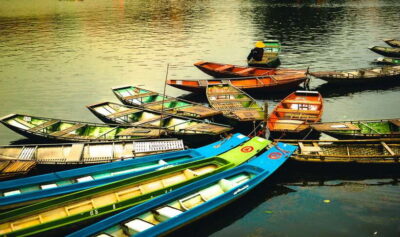
First is Tam Coc, starting with a boat trip through limestone karsts rising from lush green rice fields. The experience is often compared to Guilin in China, and even if that comparison feels oversimplified, it gives you an idea of the karst shapes and the way they frame water and fields.
Next comes Hoa Lu Ancient Capital, tied to a 10th-century royal palace area with the Dinh and Le temples noted for intricate wooden carvings. This is a great pairing with Tam Coc because it balances the softness of the boat scenery with something more structured and historical. It also keeps your day from being only “look at scenery.”
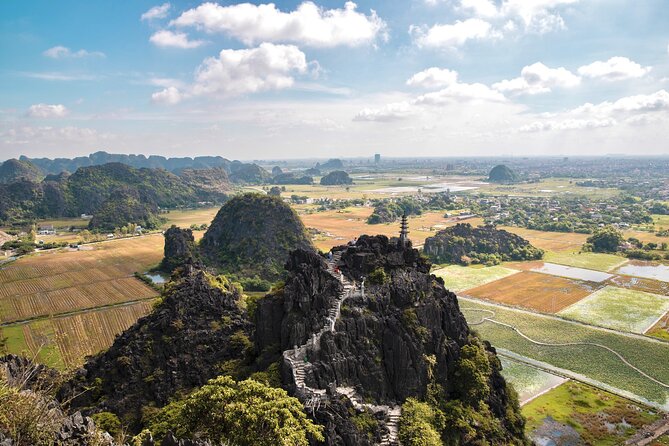
Then the day ends with Mua Cave and the famous climb: 500 stone steps to the peak. This is the one part of the itinerary where your body will file paperwork. If your knees get grumpy, go slow and pause when you need to. The view from the top is the point, but you should treat the ascent as the main event, not a warm-up.
How value works here: what’s included, what you’ll still handle
This tour is priced at $1,376 per person for roughly 9 days across Hanoi, Sapa, Ha Long Bay, and Ninh Binh. The value question is not just the sticker price—it’s what you’re not arranging.
Included items you can feel in your wallet:
- A 2 days/1 night Ha Long Bay cruise (with your cabin on board a shared boat)
- Entrance fees for the visits listed
- An experienced English-speaking guide across tours and transfers
- Private transportation throughout (so you’re not mixing with strangers at every leg)
- Breakfast (8) and lunch (3), plus a dinner included
Not included:
- Other meals beyond what’s stated
- Visa (handled per your requirements)
- Early check-in or late check-out
If you’re someone who hates budgeting tiny extras (taxis, attraction tickets, random meals), this package structure is a win. If you love controlling meal choices daily, you’ll still have some freedom because not every meal is included.
The other value piece is the pacing design. You get a full Hanoi history day, a structured Sapa sequence with multiple village stops, then a cruise that takes up real time instead of being an add-on. That matters for a trip that spans “mountain to bay” geography.
Who this trip fits best (and who should think twice)
This itinerary fits best if you want a guided route with minimal decision fatigue. The mix of history sites in Hanoi, village visits around Sapa, a real multi-day bay cruise, and Ninh Binh sights makes it ideal for couples and families who want variety without running their own daily transport plan.
It may be less ideal if you:
- Hate long travel days and long sitting stretches
- Strongly prefer to sleep comfortably through night travel (the overview mentions a night train to Sapa)
- Don’t want any steps at all (Mua Cave includes 500 stone steps)
Should you book it?
I’d book this tour if you want a well-paced Northern Vietnam sampler where logistics are handled and your time is spent on the places that match the theme: terraces and villages, UNESCO bay islands, and karst countryside with history.
It’s also a good choice if you value the human side of travel—having an English-speaking guide and experienced drivers during transfers is the difference between seeing a place and understanding what you’re looking at. If you’re comfortable with a few physically active moments (especially the Sapa walking segments and the Mua Cave climb), this is one of the more sensible ways to link these regions in a single trip.
FAQ
What cities and areas does the trip cover?
It covers Hanoi, the Sapa region (including multiple village stops), Ha Long Bay, and Ninh Binh (Tam Coc, Hoa Lu Ancient Capital, and Mua Cave).
Where does the tour start and end?
The tour starts at Noi Bai International Airport and ends back at the same meeting point for departure.
What’s included in the price?
The price includes dinner, private transportation, a 2 days/1 night Ha Long Bay cruise (double/twin cabin on a shared boat), an experienced English-speaking guide during tours and transfers, entrance fees for listed visits, 8 breakfasts, and 3 lunches.
Is the Ha Long Bay cruise included, and for how long?
Yes. You get 2 days and 1 night on board a cruise in Ha Long Bay, plus breakfast is included on board during the morning on day 7.
Is there walking or climbing on this tour?
Yes. There are village walks in the Sapa area and a climb of 500 stone steps at Mua Cave in Ninh Binh.
When does the tour begin?
The start time listed is 2:00 pm at Noi Bai International Airport.