Reviewed · HANOI
20-Day Package Through Southeast Asia
Two days, three countries, one smooth plan. This 20-day route packs Ha Long Bay cruising with Angkor Wat touring, plus clear handoffs between cities. I love that entrance fees, permits, and key guided stops are included, and you get a real local-food and temple mix. One thing to watch: visa planning can be a pain if you’re not proactive, and past confusion has been reported.
The other big win is how much the schedule is built around time-tested highlights instead of random stops. You’ll also get support from named coordinators like Loan, Quynh, and Hanh, who have been praised for communication and care. Still, your pace won’t be slow, so bring patience and comfy shoes.
In This Review
- Key Things That Make This 20-Day Route Work
- Value Check: What Your $4,866 Really Covers
- Days 1–2 in Hanoi: Lakes, Historic Schools, and Water Puppets
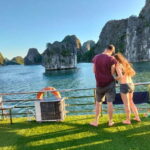
- Ha Long Bay Cruise Days 3–4: Sun Deck Moments and a Real Overnight
- Da Nang and Hoi An Days 4–5: Japanese Bridge Photos and Bamboo Basket Boats
- Ba Na Hills and Linh Ung Pagoda Day 6: Cable Cars, Golden Bridge, and Mountain Air
- Angkor Thom, Angkor Wat, and Phnom Bakheng: Your Days 7–8 in Siem Reap
- Day 7: Angkor Thom first, then Angkor Wat, then sunset
- Day 8: Banteay Samre, Banteay Srei, and Tonle Sap
- Bangkok Days 9–11: Grand Palace, Wat Arun, and Market Theater
- Ayutthaya Day 12: Kermit Tuk-Tuk Ruins With a Fast, Fun Pace
- Chiang Rai and Chiang Mai Days 13–15: Blue Temple, White Temple, and Doi Suthep Steps
- Elephant Day at Kanta Elephant Sanctuary (Pon Elephant Thailand) Day 16
- Phuket Days 17–20: Controlled Transfers and Three Full Free Days
- Who This Trip Fits Best (and Who Might Want Something Else)
- Should You Book Viet Prestige Travel’s 20-Day Hanoi–Angkor–Phuket Package?
- FAQ
- How long is the tour?
- Where does the trip start and end?
- What’s included in the price?
- Are flights included between cities?
- Are visa fees included?
- Are admission tickets included for major sites?
- What meals are included besides breakfast?
- What key experiences are included on the Ha Long Bay portion?
- What kind of free time do you get in Thailand?
- Is this a private group experience?
Key Things That Make This 20-Day Route Work
- Ha Long Bay cruise activities like Tai Chi on the sun deck, fruit carving, and even a squid-fishing option (if you feel brave).
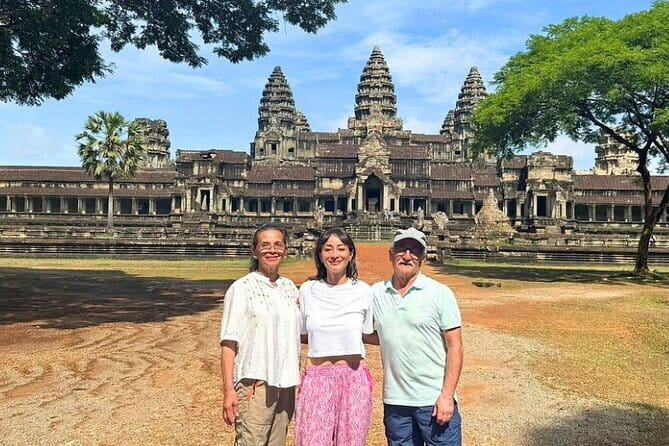
- Angkor touring that’s staged well: Angkor Thom, Angkor Wat, then a sunset climb at Phnom Bakheng.
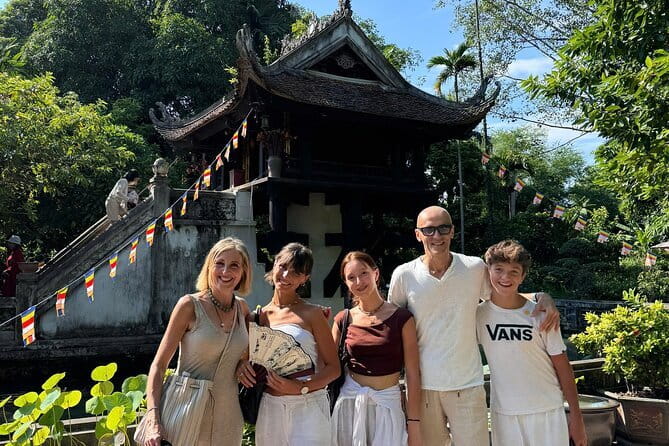
- Hanoi day built for variety: Hoan Kiem Lake, Temple of Literature, Ethnology Museum, plus the Ho Chi Minh complex.
- Thailand temples with color: Wat Rong Suea Ten (blue) and Wat Rong Khun (white).
- Real countryside flavor: Cam Thanh bamboo basket boats and Tonle Sap boat time at Kampong Phluk.
- A guided safety net: air-conditioned vehicle, private transportation, and bottled water daily.
Value Check: What Your $4,866 Really Covers
At $4,866 per person for about 20 days, this tour isn’t “cheap,” but it does spend money where it matters: guided sightseeing, key entrances, and internal logistics once you’re in-country. You’re paying for a plan that stitches together multiple regions—Vietnam, Cambodia, and Thailand—without forcing you to build everything from scratch.
Here’s what you can count on being included:
- Entrance fees and permissions for sightseeing stops
- Larger transport support (air-conditioned vehicle and private transportation)
- Bottled mineral water (2 bottles per day)
- Lunch plus breakfast for 19 days and 2 dinners
- A personalized service from the operator
- A mobile ticket and group discounts
What you should budget separately:
- International and domestic flights (the itinerary mentions flights between cities, but the tickets themselves aren’t listed as included)
- Visa fees for Vietnam, Cambodia, and Thailand
- Meals not specifically listed as included, plus tips and personal expenses
- Travel insurance
So the value math looks like this: if you’d otherwise pay for guides, entrance fees, and constant figuring-out, you’re buying convenience and reduced stress. If you already have flights and you want full freedom to roam, you may find you’re paying for structure you don’t need.
Not sure yet? See how this one sits next to a few Hanoi favourites.
Days 1–2 in Hanoi: Lakes, Historic Schools, and Water Puppets
Hanoi is your gentle kickoff, with a mix of classic sights and cultural texture. On Day 1, you land at Noi Bai Airport, meet your guide, and go straight to your hotel for check-in. The rest is at your pace, which matters after a travel day.
Day 2 is packed but very Hanoi: it layers lakes, scholarship, ethnic culture, national history, and old-quarter evenings.
- You start with an exterior look at the Opera House, then walk around Hoan Kiem Lake and Ngoc Son Temple. This area is a great orientation point. You’ll get your bearings fast.
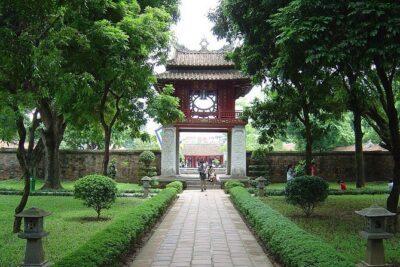
- The Temple of Literature (built in 1070) is more than a pretty courtyard. It connects Vietnam’s academic tradition to a real place you can walk through.
- The Vietnam Museum of Ethnology is one of the most useful stops on the whole trip because it gives context for what you’ll keep seeing in Vietnam’s culture.
- Then the national-history part: Ho Chi Minh Mausoleum and the One Pillar Pagoda area.
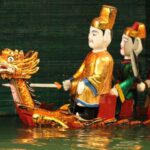
- You end the day with West Lake and Truc Bach Lake (also called White Silk), Tran Quoc Pagoda (listed as over 1,400 years old), and a water puppet show.
- Finally, you’ll ride a cyclo (xich lo) through the Old Quarter around Hoan Kiem Lake.
The Hanoi design here is smart: you’re not only seeing sights; you’re also getting multiple “types” of Hanoi—spiritual, educational, political, and street-level.
Ha Long Bay Cruise Days 3–4: Sun Deck Moments and a Real Overnight
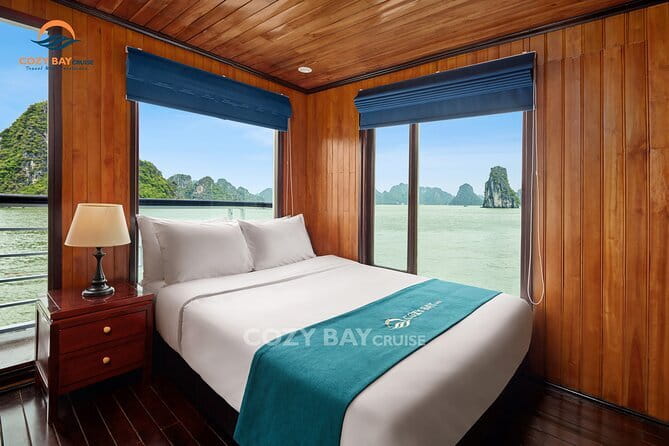
On Day 3, you transfer to Ha Long Bay by shared shuttle (provided by the cruise), board your ship, and get a welcome drink. Then the day shifts into “slow travel” mode: lunch onboard while the boat heads toward the southwest and toward Lan Ha Bay.
Included cruise highlights across Day 3:
- Onboard activities on schedule, including a fruit carving demonstration
- A Master Chef-style competition (more fun than it sounds)
- Sunset time from the deck while the boat anchors for the night
- Dinner onboard, plus the option of squid fishing with the crew
Day 4 is where I like the cruise format even more. It doesn’t just throw you off the boat. You start with Tai Chi on the sun deck, plus complimentary tea and coffee. Then you eat a light breakfast onboard and sail back, disembark, and return to Hanoi.
One practical note: the itinerary gives you a clear “cruise rhythm” but you still should pack for changing weather. In a bay, temps can shift, and deck time is time you’ll actually feel.
Da Nang and Hoi An Days 4–5: Japanese Bridge Photos and Bamboo Basket Boats
After returning to Hanoi on Day 4, you get free time and then transfer to the airport for your flight to Da Nang. The itinerary then places you in a hotel in Hoi An for check-in and leisure time.
Day 5 focuses on how Hoi An works as a real town, not just a postcard.
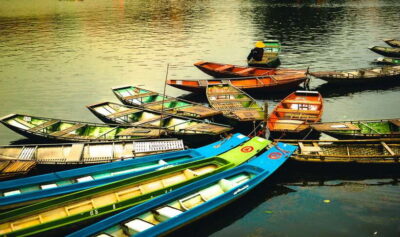
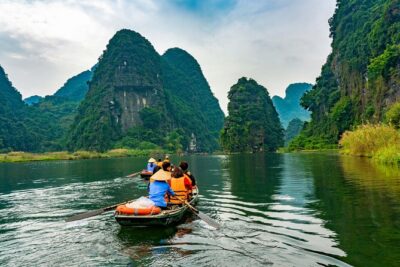
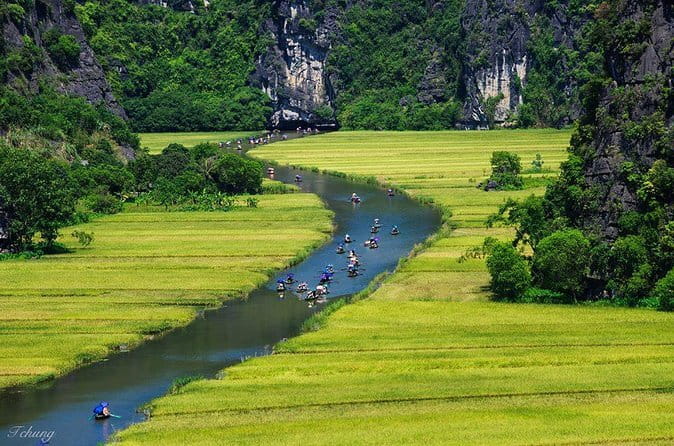
- You go to Cam Thanh, a fishing village. The headline here is the bamboo basket boat experience—hands-on fishing and paddling time.
- In the afternoon, you walk the town and stop at the Japanese Bridge, originally built in 1590 by Japanese merchants.
- You’ll also visit historic architecture like the Phuc Kien Assembly Hall and a traditional Phung Hung House.
- You get time in town for galleries and the option to shop for tailor-made clothing (if that’s your thing).
Hoi An is a place where “free time” is part of the experience, because you’ll want to wander at your own speed. The tour gives you that without leaving you stranded.
Ba Na Hills and Linh Ung Pagoda Day 6: Cable Cars, Golden Bridge, and Mountain Air
Day 6 starts with Sun World Ba Na Hills. You ride a cable car for big panoramic views, the kind where you immediately understand why people stop talking and start taking photos.
Then comes the main fame machine: the Golden Bridge area, plus other points along the route like French villas and a suspension bridge. The itinerary also calls out Nui Chua and a mountain peak height of 1,487 meters, which helps you understand how high you’ll be.
In the afternoon, you go to Vong Nguyet Village for:
- a wine cellar
- Linh Ung Pagoda
- the Sakyamuni Buddha monument
After that, you fly on to Siem Reap and get hotel check-in and downtime.
This day is very “wow-factor,” but it also means crowds can be part of the deal. If you dislike lines, plan to arrive rested and go with the flow.
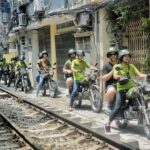
- Hanoi Motorbike Tour: Food, Culture and Fun by Vintage Motorbike★ 5.0 · 6,699 reviews
- Hanoi: Guided Food Tour with Train Street Visit★ 4.9 · 6,239 reviews
- Hanoi Cooking Class: Culture, Local Market & Meaning CSR Impact★ 5.0 · 5,147 reviews
Angkor Thom, Angkor Wat, and Phnom Bakheng: Your Days 7–8 in Siem Reap
Siem Reap is built around temples, but this itinerary avoids the common mistake of cramming everything into one day. Instead, it spreads the big hits across Day 7 and Day 8.
Day 7: Angkor Thom first, then Angkor Wat, then sunset
You start at Angkor Thom, including:
- South Gate
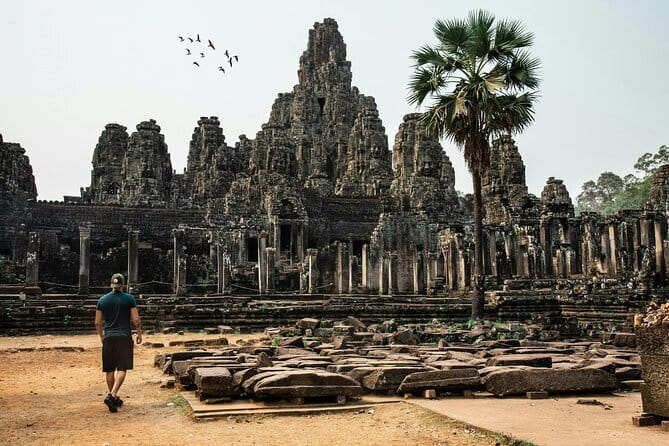
- Bayon Temple with its distinctive towers and faces
- Phimeanakas
- Royal Enclosure
- Elephant Terrace
- Leper King Terrace
In the afternoon, you visit Angkor Wat—the flagship complex on the plain, described as a 12th-century masterpiece with five towers.
The day ends with the sunset climb at Phnom Bakheng, followed by dinner with a traditional Khmer dance performance at a local restaurant.
Day 8: Banteay Samre, Banteay Srei, and Tonle Sap
Day 8 is temple craftsmanship plus life on the water.
- You visit Banteay Samre in the morning.
- Then you go to Banteay Srei, known for pink sandstone and intricate carvings (often called a precious gem of Khmer art in common tour language).
- You stop at Preah Dak Village for a short look at daily life and handcrafted products.
Then you shift to the watery world with Tonle Sap Lake:
- a boat trip and a visit to Kampong Phluk, where schools and houses float and adapt to water levels through the year.
If you want one memory from Angkor days, it’s the contrast: huge stone civilizations in the morning, then real community life on the water later.
Bangkok Days 9–11: Grand Palace, Wat Arun, and Market Theater

Day 9 sends you from Siem Reap to Bangkok. After arrival, you check in at 2:00 PM and have the rest of the day at leisure.
Day 10 is palace-and-temple power:
- Grand Palace (founded 1782) and the surrounding royal halls
- Wat Phra Kaew and the Temple of the Emerald Buddha
- A river ferry across the Chao Phraya River to Wat Arun (Temple of Dawn)
- Wat Pho for the Reclining Buddha
- Wat Traimit (the itinerary lists this stop by name)
Day 11 is “Thailand in motion” through markets and canals:
- Damnoen Saduak Floating Market (private excursion southwest of Bangkok, known for canals, coconut plantations, and orchards)
- Mae Klong Railway Market (Hoop Rom Market) with vendors using long bamboo poles to exchange money and goods from small boats
This is a good balance: big historic sites on one day, then local food-and-market atmosphere on the next.
Ayutthaya Day 12: Kermit Tuk-Tuk Ruins With a Fast, Fun Pace
On Day 12, you go to Ayutthaya and start with the Bang Pa-In Summer Palace (built in the 17th century). The itinerary notes that it was abandoned after the Burmese invasion of 1767.
Then you explore the Ayutthaya Historical Park by a Kermit tuk-tuk, visiting major temple ruins such as:
- Wat Phra Sri Sanphet
- Wat Phra Mahathat
- Wat Mongkhon Bophit
- Wat Ratchaburana
- and other listed temples within the park
This is one of those days where having a vehicle and a guide pays off. Ruins are spread out, and navigation can eat your energy.
Chiang Rai and Chiang Mai Days 13–15: Blue Temple, White Temple, and Doi Suthep Steps
Day 13 starts with travel to Chiang Rai, plus a stop at:
- Longneck Karen Village (Karen women are described as being known for distinctive long-neck brass coils)
- the Golden Triangle, where Thailand, Myanmar, and Laos meet near the Mekong River, described as a former hub of opium trade
Day 14 focuses on art-driven temple architecture:
- A walk through a local market (fresh vegetables and fruits are mentioned)
- Wat Rong Suea Ten (Blue Temple)
- Wat Rong Khun (White Temple), designed by artist Chalermchai Kositpipat
- Then you fly onward to Chiang Mai and check in
Day 15 is Chiang Mai at walking speed:
- Old City walking tour with stops around city walls, moat, and gates
- Wat Phra Singh
- Wat Phra That Doi Suthep, reached by ascending a 290-step staircase, flanked by two giant naga serpents
- Warorot Market (Kad Luang) with street food and local goods
- a cyclo ride through surrounding areas
These days are excellent if you like temples that feel different from one another. Blue and white temples also let you see how modern design can still feel spiritual.
Elephant Day at Kanta Elephant Sanctuary (Pon Elephant Thailand) Day 16
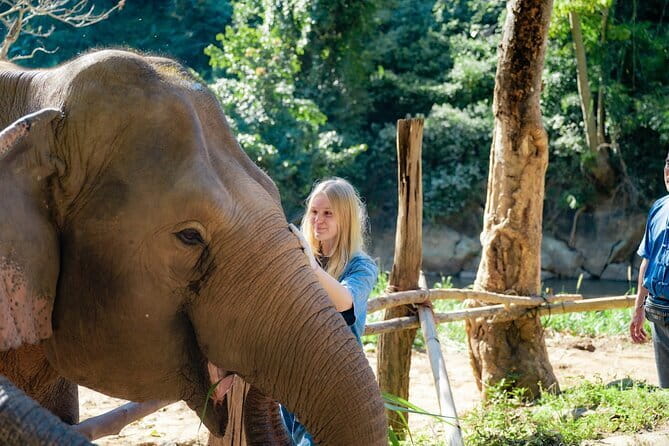
Day 16 is a major ethical and experience day, and it’s important to read the description carefully. You go to Kanta Elephant Sanctuary (listed under Pon Elephant Thailand) and you:
- meet, feed, and interact with elephants in a natural habitat
- have lunch (included)
- learn about elephant care and well-being
- prepare elephant food and continue the listed activities
I like that the day is spelled out around care and well-being. You’re not just “watching.” You’re participating with guidance.
That said, it’s still an animal day. Dress for heat and plan to get dirty, because sanctuary days often involve hands-on moments.
Phuket Days 17–20: Controlled Transfers and Three Full Free Days
After breakfast on Day 17, you fly to Phuket, get transferred to your hotel, and check in. Days 18 and 19 are full free days to explore Phuket at your own pace or relax on beaches.
Day 20 is lighter again: breakfast, then free time until your scheduled transfer to the airport.
This is the part of the trip where you stop “earning your sights” and start enjoying them. You’ll have time to do beach days your way—quiet mornings, slow lunches, and maybe a sunset if you’re still motivated.
Who This Trip Fits Best (and Who Might Want Something Else)
This package fits you if:
- You want a structured cross-country itinerary with guides and transport handled
- You like a mix of temples, culture, and scenery—but you also want those stops supported by entrance tickets
- You care about smooth transitions between regions, not just destination checklists
You might want a different style if:
- You’re traveling with strict flight timing and don’t want to coordinate your own domestic flight tickets
- You dislike fast-moving schedules. There are many major stops, and even with free time built in, the route is still active.
If you want the easiest path through three countries without doing it all alone, this tour’s format is a strong match.
Should You Book Viet Prestige Travel’s 20-Day Hanoi–Angkor–Phuket Package?
I’d book it if your priority is: big highlights, guided context, included entrances, and less logistics stress. The $4,866 price makes sense when you count how many paid sites are included and how much transport and planning is bundled in.
Before you say yes, do two things:
- Sort visas early. Visa fees aren’t included, and there’s been at least one reported case of visa trouble caused by missing information.
- Lock in your flight plan. Flights are not included in the listed package, even though the itinerary clearly relies on flying between cities.
If you’re good with that, you’ll likely appreciate the strong coverage from Hanoi’s cultural sites to Angkor’s temple highlights, then through Thailand’s modern-and-traditional temple variety to a calmer Phuket finish.
FAQ
How long is the tour?
It’s an approximately 20-day package across Vietnam, Cambodia, and Thailand.
Where does the trip start and end?
It starts at Rex Hanoi Hotel in Hanoi and ends at Beyond Kata in Phuket.
What’s included in the price?
The package includes lunch, air-conditioned vehicle and private transportation, entrance fees and permissions for sightseeing, mineral water (2 bottles per day), breakfast for 19 days, and dinner for 2 days, plus personalized service.
Are flights included between cities?
No. International and domestic flight tickets are not included, even though the itinerary includes transfers to airports for flights.
Are visa fees included?
No. Visa fees for Vietnam, Cambodia, and Thailand are not included.
Are admission tickets included for major sites?
Yes. Entrance fees and permissions for sightseeing visits are included throughout the itinerary.
What meals are included besides breakfast?
Lunch is included, and dinner is included for 2 days. Meals not specified in the itinerary are not included.
What key experiences are included on the Ha Long Bay portion?
The cruise includes onboard activities such as Tai Chi, fruit carving, a competition-style activity, sunset time, a set-menu dinner, and an optional squid-fishing session.
What kind of free time do you get in Thailand?
You get free time on multiple days, including leisure time in Bangkok after check-in and full free days in Phuket (Days 18 and 19, plus Day 20 until departure).
Is this a private group experience?
Yes. It’s described as a private tour/activity, and only your group participates.