Reviewed · HANOI
12-Day Vietnam Highlights Travel from Hanoi
Vietnam in 12 days, laid out with common sense. This trip pairs big-ticket sights like Halong Bay and Hoi An with enough guided time to make the history actually stick, not just blur by. You also get private transportation and an English-speaking guide, so transfers feel managed instead of stressful.
I especially like the way it builds from Hanoi’s modern-and-heritage mix (Mausoleum Complex, Temple of Literature, Ethnology Museum, water puppet) into that early wow-factor of Halong Bay. I also like the balance of structured stops and breathing room, like free time in the Old Quarter after the puppet show and a morning cooking-class start in Hoi An.
One thing to consider: the route is packed, with a domestic flight midway and early starts on certain days. If you hate moving hotels and schedules, this may feel like a lot.
In This Review
- Key Things That Make This Tour Work
- Day 1 in Hanoi: Airport Meet-Up and a Gentle Landing
- Hanoi Day 2: Mausoleum Complex, Temple of Literature, Ethnology, Water Puppet
- Ho Chi Minh Mausoleum Complex
- Temple of Literature & National University
- Vietnam Museum of Ethnology
- Thang Long Water Puppet Show and Old Quarter time
- Halong Bay Days 3–4: More Than a Drive-By
- Day 3: Drive, check-in, and afternoon cave plus sea activities
- Day 4: Early Tai Chi, local fruit or wine, and a land visit
- Fly to Hue: Dragon Boat to Thien Mu and Royal-Era Highlights
- Perfume River by private dragon boat to Thien Mu Pagoda
- Hue Imperial City (The Citadel)
- Tomb of Tu Duc
- Dong Ba Market
- Da Nang Coast + My Son Sanctuary + Hoi An Check-In
- Drive to Da Nang and Lang Co Beach stop
- My Son Sanctuary and Champa dance
- Arrive in Hoi An
- Hoi An Day 7: Market, Herb Garden, Cooking Class, then Ancient Town
- Cooking class with a foodie guide
- Hoi An Ancient Town walking tour
- Day 8: Beach Morning in Da Nang and a Flight to Ho Chi Minh City
- Ho Chi Minh City Day 9: Cu Chi Tunnels, War Remnants Museum, Independence Palace
- Cu Chi Tunnels: imagining life under pressure
- War Remnants Museum
- Independence Palace (Reunification Palace)
- Mekong Delta Days 10–11: Ben Tre, My Tho, Can Tho, and Cai Rang
- Ben Tre and Ham Luong River boat time
- My Tho stilt houses, boat building workshops, island lunch
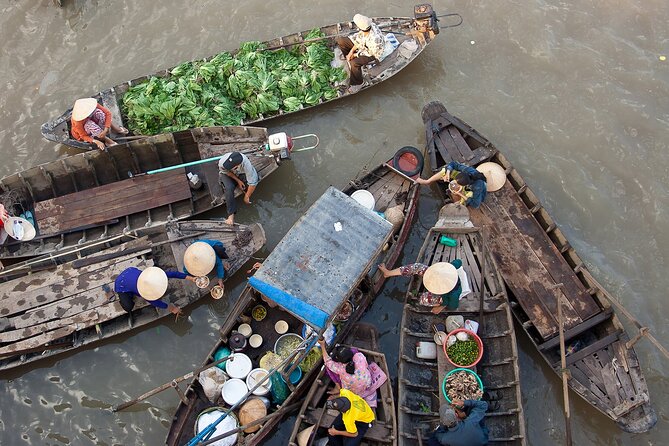
- Cai Rang Floating Market at the busiest time
- Price and Value: What You’re Paying For
- Should You Book This 12-Day Vietnam Highlights Tour?
- FAQ
- Where does the tour start?
- How long is the trip?
- Is this a private tour?
- Are domestic flights included?
- Are meals included?
- Are entrance fees included?
- Is pickup offered?
- Is the Vietnam visa included in the price?
Key Things That Make This Tour Work
- Private guide + private driver keeps timing tight across cities
- Halong Bay overnight cruise gives you more than a same-day photo stop
- Hue Imperial City and Tu Duc lets you slow down in royal-era Vietnam
- Hoi An cooking class + Ancient Town walk covers both food and architecture
- Mekong Delta boats in Ben Tre and Cai Rang show water-life beyond postcards
Day 1 in Hanoi: Airport Meet-Up and a Gentle Landing
Day 1 starts simply: you land at Noi Bai International Airport, and your guide and driver meet you for a transfer to a well-selected hotel. After that, the rest of the day is free. That matters more than it sounds. You’ll likely arrive with travel fatigue, jet lag, or both, and having that unplanned time is your chance to get your bearings fast.
Hanoi’s neighborhoods can feel like a maze at first. Free time lets you do small wins: pick up a SIM card if needed, grab a cold drink, and wander near the Old Quarter to see how streets change by time of day. You’re not forced into a “big agenda” on arrival, which is a nice quality-of-life detail.
Not sure yet? See how this one sits next to a few Hanoi favourites.

Hanoi Day 2: Mausoleum Complex, Temple of Literature, Ethnology, Water Puppet
This is a strong introduction day because it covers three different angles of Vietnam in one loop.
Ho Chi Minh Mausoleum Complex
You’ll visit the Ho Chi Minh Complex, including the Mausoleum, stilt houses, Presidential Palace, and One Pillar Pagoda. The tour frames him as a symbol of independence from French colonial rule and his lifelong devotion to liberation. Even if you’re not a deep-history person, this is one of those places where symbolism becomes visible: the layout, the rituals, the public spaces.
Timing-wise, it’s built as a long block (about 3 hours), so you’re not rushed through it. Admission is included.
Temple of Literature & National University
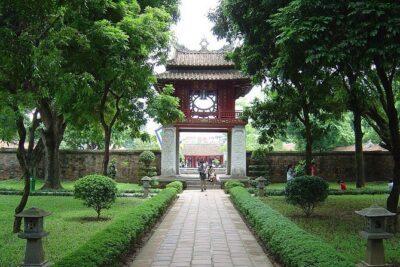
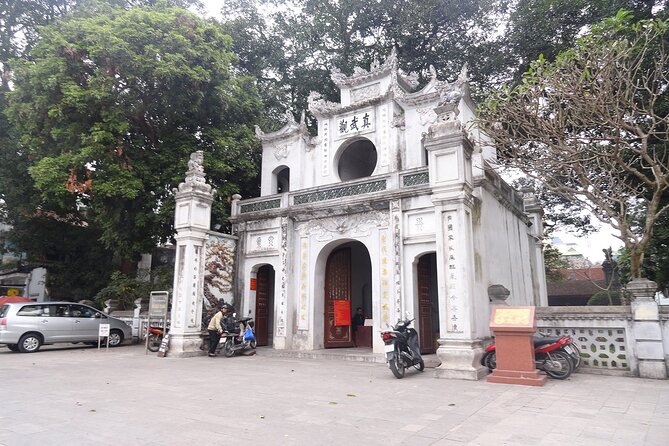
Next comes the Temple of Literature, Vietnam’s first national university. It’s where you’ll see how learning, scholarship, and state identity were linked. The guide’s role is useful here because it’s easy to walk past details without understanding why they mattered.
Vietnam Museum of Ethnology
Then the Vietnam Museum of Ethnology gives you a broader cultural map. You’ll spend about an hour learning about history, culture, and Vietnam’s many peoples. This stop is especially valuable if you want context for the regions you’ll visit later—because Vietnam isn’t just one story.
- Hanoi Motorbike Tour: Food, Culture and Fun by Vintage Motorbike★ 5.0 · 6,699 reviews
- Hanoi: Guided Food Tour with Train Street Visit★ 4.9 · 6,239 reviews
- Hanoi Cooking Class: Culture, Local Market & Meaning CSR Impact★ 5.0 · 5,147 reviews
Thang Long Water Puppet Show and Old Quarter time
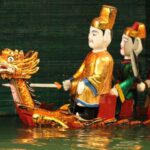
The day ends with a local special: the Thang Long water puppet show. The show is followed by admission-included time to relax in the Old Quarter for nightlife and atmosphere. This is the right kind of ending. After museums and formal sites, you get to loosen up and watch street life from a few blocks away.
Halong Bay Days 3–4: More Than a Drive-By
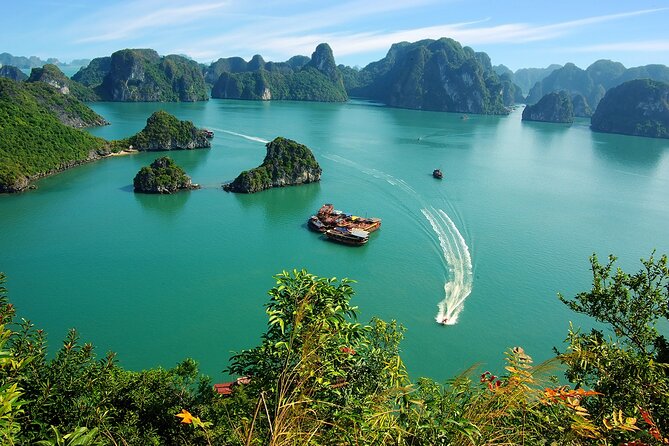
Halong Bay is the star of northern Vietnam, and this itinerary treats it like a real destination instead of a quick photo stop.
Day 3: Drive, check-in, and afternoon cave plus sea activities
After breakfast, you drive about 150 km through northern Vietnam to Halong Bay, recognized as a World Cultural Heritage Site since 1994. On arrival, cruise staff handle check-in. Lunch is enjoyed while you’re sailing, which is exactly how you want the first half of the day to feel: you’re moving, eating, and settling into “vacation mode.”
In the afternoon, you visit caves and join fun activities such as kayaking and swimming (the schedule also mentions diving, but the practical point for you is that there are active options). Then you sleep overnight on the cruise.
That overnight is the difference-maker. You’re there long enough that the bay doesn’t feel like a timed stop for other people’s cameras.
Day 4: Early Tai Chi, local fruit or wine, and a land visit
Wake up early with Tai Chi on the sundeck if you want it. Then you get morning tea or coffee. The schedule is built so you can choose: join the practice, or just take in the sea time.
After that, you disembark for a land tour for a few hours, including a warm stop with hospitable locals and a visit that includes homemade fruit or wine. You return for brunch and then transfer to the airport to fly onward to Hue.
One consideration: the switch from cruise to flight to next city happens on Day 4. It’s still manageable, but pack light and keep essentials easy to reach.
Fly to Hue: Dragon Boat to Thien Mu and Royal-Era Highlights
Day 5 and the start of Hue slow things down in a good way.
Perfume River by private dragon boat to Thien Mu Pagoda
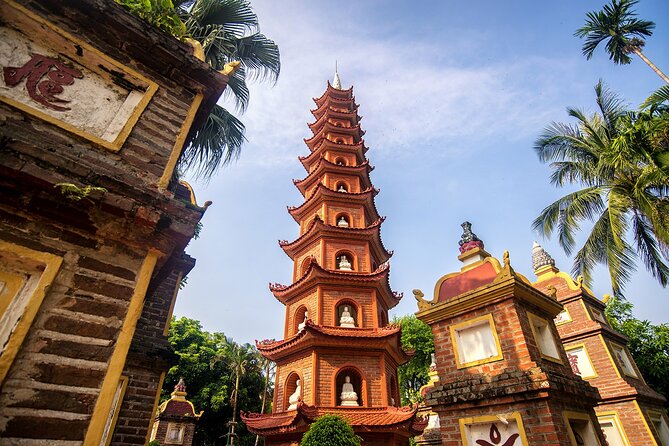
You’ll ride a private dragon boat along the Perfume River to visit Thien Mu Pagoda, linked to a revered figure called Thien Mu (described as a holy mother of local people). It’s a gentle intro to Hue’s spiritual side. You’ll spend about 2 hours, with admission included.
Hue Imperial City (The Citadel)
Then it’s onward to Hue Imperial City, often called the Forbidden City of Hue. You get about 2 hours here. This stop is important because it gives you the “why” behind the architecture: Hue was a former capital of the last dynasty, so the city’s layout is political, ceremonial, and designed to project power.
Tomb of Tu Duc
In the afternoon, you visit the Tomb of Tu Duc. The tour highlights the harmonious relationship between humans and nature, which you’ll feel when you see how the grounds are designed rather than treated like just another monument.
Dong Ba Market
Finally, you end at Dong Ba Market, described as Hue’s largest traditional trading market. You’ll learn about local trading and how people do business. This kind of market time adds realism. It’s not just sightseeing; it’s how the city runs.
Da Nang Coast + My Son Sanctuary + Hoi An Check-In
Day 6 is a “coast then culture then chill” sequence.
Drive to Da Nang and Lang Co Beach stop
After breakfast, you drive to Da Nang and pass the coastline with scenery breaks, plus a stop at Lang Co Beach. The schedule points out the white narrow curved beach shape that shows up in Vietnamese brochures. Even if you only have a short stop, it’s one of those views that makes the geography feel real.
My Son Sanctuary and Champa dance
In the afternoon you visit My Son Sanctuary, described as a world-class tangible cultural heritage and the heart of the ancient Champa kingdom. The Champa kingdom is framed as ruling central and southern Vietnam for about 14 centuries. You’ll also enjoy a Champa dance show, which helps translate the culture beyond stone ruins.
Arrive in Hoi An
Then you drive to Hoi An and check into your hotel. That’s a good placement because Hoi An is at its best when you’re not arriving frazzled—your feet need to recover.
Hoi An Day 7: Market, Herb Garden, Cooking Class, then Ancient Town
Day 7 is built for people who like food and architecture, not just photos.
Cooking class with a foodie guide
You start with a cooking class tour in Hoi An. A foodie guide accompanies you to the main market. That matters because it’s not just a kitchen session—it’s shopping for ingredients and learning what’s used and why.
You also visit an Herb Garden first. The tour schedule notes that the herbs provide charming smells and are used as lunch seasonings. Even if you don’t remember every ingredient name, you’ll remember the sensory context.
Hoi An Ancient Town walking tour
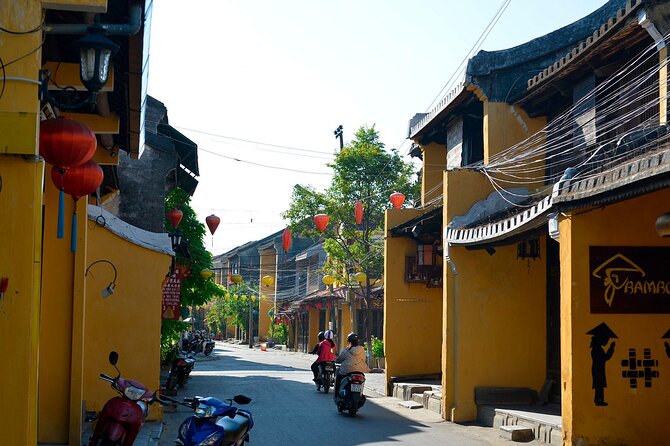
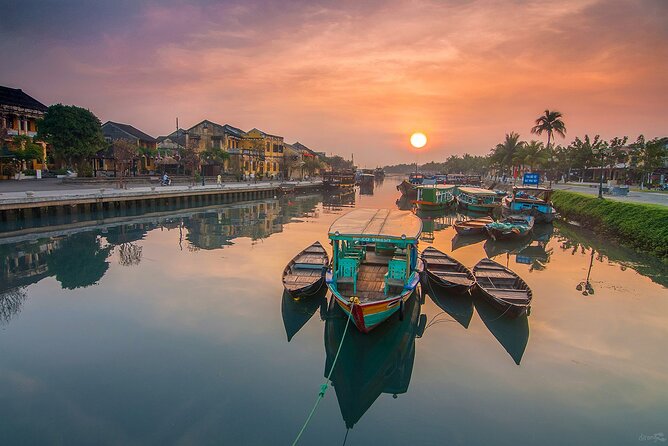
In the afternoon you do a walking tour of Hoi An Ancient Town. You’ll admire architecture influenced by Chinese, Japanese, and Vietnamese styles. The real value here is time on foot. Walking lets you notice the transitions between streets and building shapes instead of treating the town like a single landmark.
Day 8: Beach Morning in Da Nang and a Flight to Ho Chi Minh City
Day 8 is lighter early: you wake naturally and have breakfast, then you get free time in the morning to walk by the beach. After you check out, you head to Da Nang Airport for a flight to Ho Chi Minh City (about 1 hour 30 minutes, per the schedule).
You’re then met by a local guide and transferred to your hotel. This day works as a reset between the quieter central Vietnam stretch and the fast pace of the south.
Ho Chi Minh City Day 9: Cu Chi Tunnels, War Remnants Museum, Independence Palace
This day is a mix of underground survival, documented aftermath, and official history.
Cu Chi Tunnels: imagining life under pressure
You go to Cu Chi Tunnels, about 32 km away. The tour is described as a way to experience special life during the Vietnam War. You’ll see kitchens, living quarters, and meeting rooms within the tunnels, and you’re prompted to imagine daytime underground life and nighttime relaxation.
It’s heavy material, but it’s also one of the most memorable ways to understand how war changes daily routine.
War Remnants Museum
Back in the city, you visit the War Remnants Museum. The tour frames it as a chance to see objects left by wars and feel the cruelty of war. It’s an admission-included stop and it’s built as about 1 hour, which is long enough to take in the main themes without turning it into numbness.
Independence Palace (Reunification Palace)
Finally, you visit the Reunification Palace, the former Presidential Palace, and nearby attractions. This helps shift the mood from battlefield memory to the political endgame and the physical place where decisions were made.
Mekong Delta Days 10–11: Ben Tre, My Tho, Can Tho, and Cai Rang
The Mekong Delta is where the trip changes from history to routine, scenery, and local life.
Ben Tre and Ham Luong River boat time
On Day 10 you go to Ben Tre in the Mekong Delta region. The schedule flags coconut candy, then you get on a boat to cruise along the Ham Luong River for idyllic scenery. Afterward, you land at a village to explore rural life via a farmer’s house visit.
This part is practical: it shows you how food and farming connect to daily income. And the boat time makes the day feel like vacation again.
My Tho stilt houses, boat building workshops, island lunch
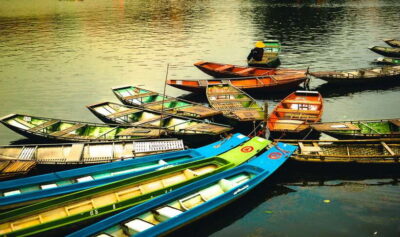
Then you go to My Tho, switching to another boat experience on the Mekong River. You’ll visit traditional stilt houses and boat building workshops, plus lunch served on an island. After that, you drive to Can Tho to check into your hotel.
Cai Rang Floating Market at the busiest time
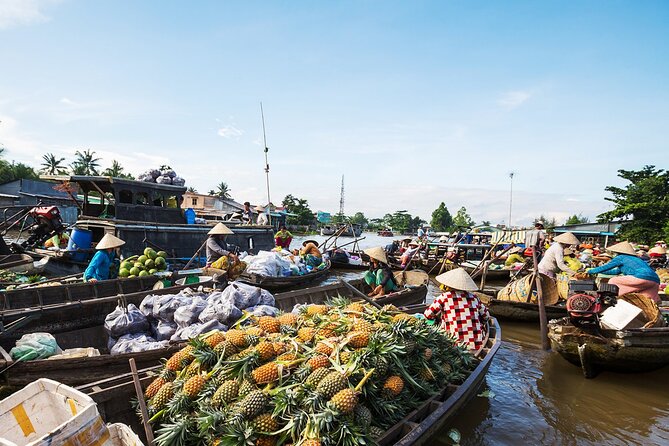
Day 11 is early—because Cai Rang Floating Market is best when it’s active. You’ll take a boat along the river to the market, then you drive back to Ho Chi Minh City. You also get chances to taste fresh local fruit and snacks.
This is one of the most “you are here” moments on the tour. The market isn’t just a view; it’s a working system with plenty of comings and goings.
Price and Value: What You’re Paying For
$3,019 per person is not a small number. The value comes from how much is bundled, and how much private travel you’re getting.
From the included list, you have:
- Hotels in twin-sharing rooms
- Domestic airfare: Hanoi to Hue, and Da Nang to Ho Chi Minh City
- English-speaking guides through the itinerary
- Private driver plus air-conditioned vehicles
- Entrance fees as indicated
- Meals: breakfast (10), lunch (5), dinner
This pricing makes sense if you value time and comfort. Private transportation and scheduled guides reduce guesswork, especially across multiple cities and when flights are involved. You’re also not paying extra for many entry tickets and key guided stops.
If you’re the type who likes DIY pacing, you might find cheaper options. But you’d be trading away the built-in structure that helps this route work smoothly.
Should You Book This 12-Day Vietnam Highlights Tour?
I’d recommend it if you want a classic, well-paced sweep of Vietnam’s major regions—Hanoi to Halong Bay to Hue to Hoi An to Ho Chi Minh City and the Mekong Delta—while keeping logistics handled. The standout strength is the combination of private guiding and the fact that big sites get real time (especially Halong Bay with an overnight cruise).
I’d skip it, or at least think twice, if you dislike moving often or you want a totally flexible trip with no fixed order of cities. Also note that the itinerary includes a domestic flight and early starts on some days, so it’s not designed for sleep-ins.
One practical head-up: this experience is listed as non-refundable and not changeable once you book, so confirm your dates before you commit. And tips for the guide and driver aren’t included, so plan a budget for that.
If your goal is a smooth, memorable highlights route with solid support from an English-speaking team, this is a strong fit.
FAQ
Where does the tour start?
The tour starts at Noi Bai International Airport in Hanoi (Phú Minh, Soc Son, Hanoi, Vietnam), with a start time of 9:00 am.
How long is the trip?
The duration is listed as approximately 12 days.
Is this a private tour?
Yes. It’s described as a private tour/activity, and only your group will participate.
Are domestic flights included?
Yes. The tour includes domestic airfare of Hanoi to Hue, and Da Nang to Ho Chi Minh City.
Are meals included?
Yes. The included meals are breakfast (10), lunch (5), and dinner.
Are entrance fees included?
Entrance fees are included as indicated in the itinerary.
Is pickup offered?
Yes, pickup is offered, and on Day 1 the guide and driver meet you at the airport.
Is the Vietnam visa included in the price?
No. Vietnam visa fees are not included.