
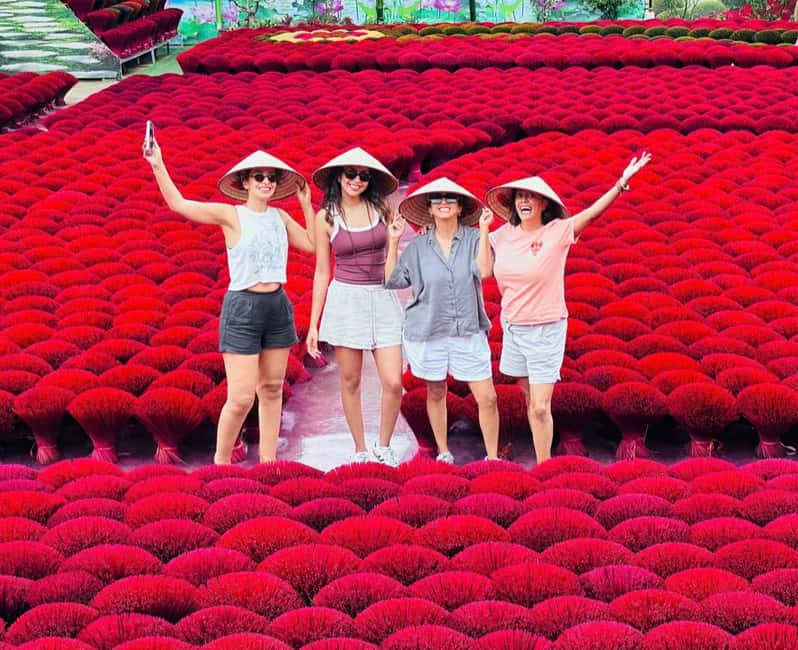
Reviewed · INCENSE VILLAGE TOURS
Hanoi: Thang Nghiem Pagoda Or Incense Village & Hat Village
A calm pagoda and village workshops in one day makes Hanoi feel bigger. I love how Thắng Nghiêm Pagoda slows your pace with incense-scented gardens and Buddhist statues, then switches gears to real craftsmanship in Chuong Village and Quang Phu Cau. One thing to consider: this is a working, incense-and-religion kind of day, so the smell and the worship setting may feel intense if you prefer only sightseeing.
I also like the mix of guided history and practical making time. You’re not just watching from the sidelines—you paint your own conical hat and get to make incense sticks. If you’re short on time and want big-city landmarks only, this trip may feel more cultural and quieter than you expect.
Key takeaway: expect a respectful temple visit plus two craft stops you can actually participate in.
In This Review
- Quick highlights that matter
- Entering Thắng Nghiêm Pagoda: where Hanoi quiets down fast
- Timing tip
- Inside the pagoda: Avalokitesvara, 100 yellow Buddhas, and the Tam Bảo House
- Learn the why, not just the what
- The path from temple to craft: Chuong Village and your Non La souvenir
- The best part: painting your own conical hat
- Quang Phu Cau incense village: watching sticks get color and character
- Make incense sticks yourself (and keep some)
- How the train street stop fits in (optional use of your time)
- Price and logistics: why $14 can feel like a lot (in the good way)
- A consideration on timing
- What you’ll actually do, step by step (and what to watch for)
- 1) Thắng Nghiêm Pagoda: guided visit + temple garden walking
- 2) Chuong Village: conical hat process + painting
- 3) Quang Phu Cau: incense village walk + workshop
- Who should book this Hanoi day trip
- Should you book Thắng Nghiêm Pagoda and the incense/hat villages?
- FAQ
- How long is the tour?
- What does it cost?
- Where does pickup and drop-off happen?
- What will I see at Thắng Nghiêm Pagoda?
- What happens at Chuong Village?
- What happens at the incense craft village?
- Is the Train Street stop required?
- What languages are available for the guide?
- Is this tour respectful of its religious setting?
Quick highlights that matter
- Thắng Nghiêm Pagoda: yellow Buddhas, Avalokitesvara, and the Tam Bảo House
- 100 yellow Buddhas: each tied to Buddha Shakyamuni, arranged in two rows
- Chuong conical hats (Non La): watch makers and paint your own souvenir
- Quang Phu Cau incense craft: see incense production on a family scale and handle colored sticks
- Small-group feel: private or small groups, with punctual pickups from Hanoi’s Old Quarter
Entering Thắng Nghiêm Pagoda: where Hanoi quiets down fast

Thắng Nhiêm Pagoda is the kind of stop that changes your mood. It sits about 15km from Hanoi city center in Khúc Thủy Village (Thanh Oai District), so you get that quick shift from street energy to temple calm. Even before you go deep into any hall, the garden setting and the steady rhythm of worship create a different atmosphere.
What I like most is that the experience isn’t only architectural. It’s also lived-in spirituality: you’re in a place of worship and reflection for followers of the Tantric sect of Buddhism. The guide helps you understand why that matters—so you don’t just see statues, you get the reason they’re arranged the way they are.
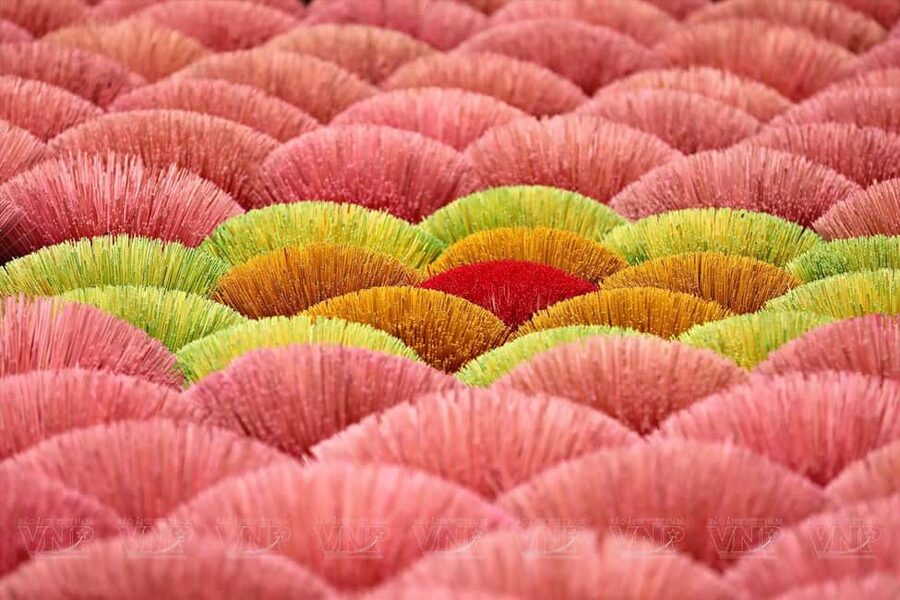
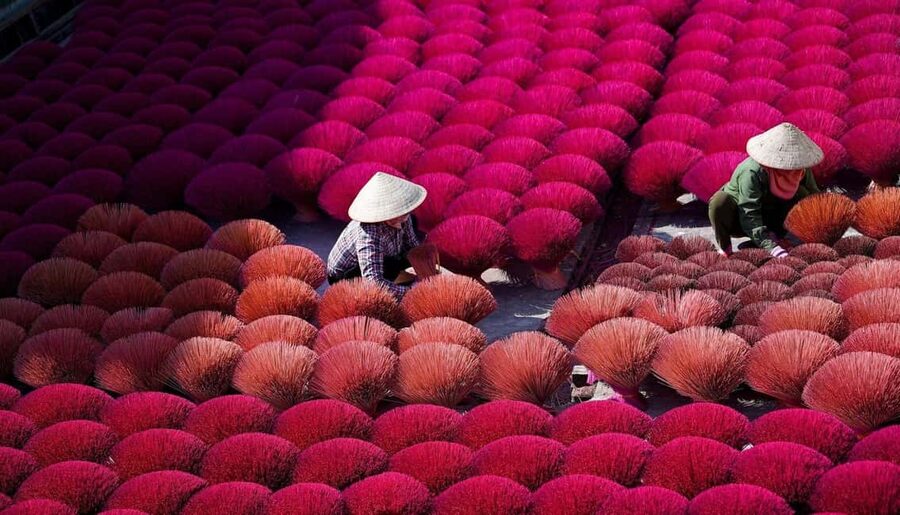
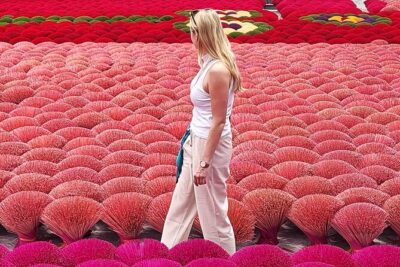
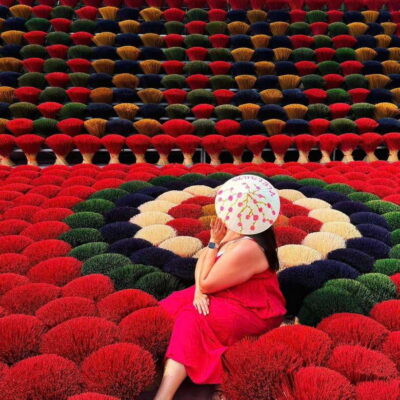
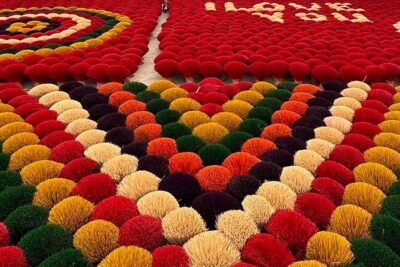
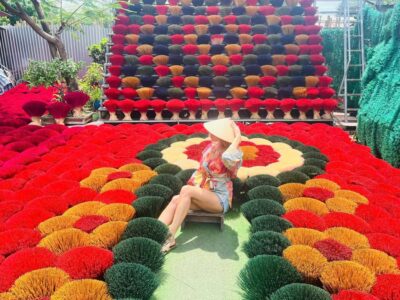
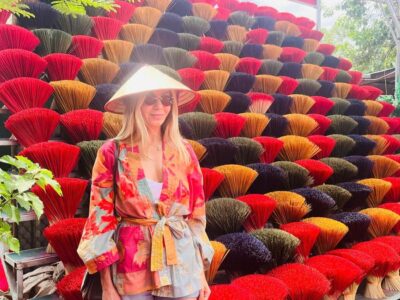
More colour at the incense village



Timing tip
This stop runs about 75 minutes, which is long enough to take photos, listen, and walk without feeling rushed. Wear comfortable shoes; you’ll be moving through temple grounds.
Inside the pagoda: Avalokitesvara, 100 yellow Buddhas, and the Tam Bảo House
The pagoda’s look is eye-catching in a traditional way—yellow, brown, and red colors show up across the design. Then your attention gets pulled to the spiritual details.
You’ll see a statue of Bodhisattva Avalokitesvara, described as having a peaceful aura. Next, there are two rows of 100 yellow Buddhas, each representing Buddha Shakyamuni. Seeing that many figures in an organized layout does something simple but effective: it makes the space feel intentional, not random.
Then comes the Tam Bảo House, an important worship area in Vietnamese temples. The key idea is that it houses Buddha statues representing different philosophies within the religion. That helps you understand Vietnamese temple design as more than decoration. It’s a map of beliefs—one that worshippers can move through when they pray and burn incense.
Learn the why, not just the what
The guide also shares historical context. Thắng Nghiêm Pagoda is connected to the Lý dynasty era, with origins traced to Emperor Lý Thái Tổ in 1010. It’s also known as a worship site associated with famous monks and generals from the Lý and Trần dynasties. You don’t need to memorize names, but knowing the temple’s age and significance makes your photos feel more meaningful than snapshots.
If incense and chanting are going on during your visit, lean into it. The temple grounds can create a dream-like state with the fragrance of incense, ringing bells, and chanting. Just remember it’s a working place of worship—keep your voice down and move respectfully.
The path from temple to craft: Chuong Village and your Non La souvenir
After the calm of the pagoda, Chuong Village feels like a breath of fresh air. Chuong is known for conical hat making for over 300 years, and the hats—called Non La—are one of Vietnam’s most recognizable cultural symbols.
You’ll meet your guide and connect with a local artisan’s house, where you can observe the making process. This is one of those experiences that sticks because it’s practical. You see how the hat becomes a finished object, not just how it looks in a souvenir shop.
- Hanoi Jeep Tour: Food, Culture and Fun by Vietnam Army Jeep★ 5.0 · 15,222 reviews
- Full-Day Ninh Binh Highlights Tour from Hanoi★ 5.0 · 7,761 reviews
- Hanoi: Ha Long Bay Day Cruise – Swimming, Meal, Kayaking★ 4.7 · 7,415 reviews
The best part: painting your own conical hat
You get a free conical hat specifically for painting in the hat village, and you take it home as a personalized souvenir. That matters for value. At $14 per person, the day would still make sense with the visits alone—but adding a hands-on item you keep is what turns it into a real “I did this” memory.
What to do with your hat
When you’re painting, don’t overthink it. The goal is color and personal touch, not perfection. You’ll likely pick up a guide’s tips on what looks good, but even simple designs work because they’re tied to the process and the place.
Quang Phu Cau incense village: watching sticks get color and character
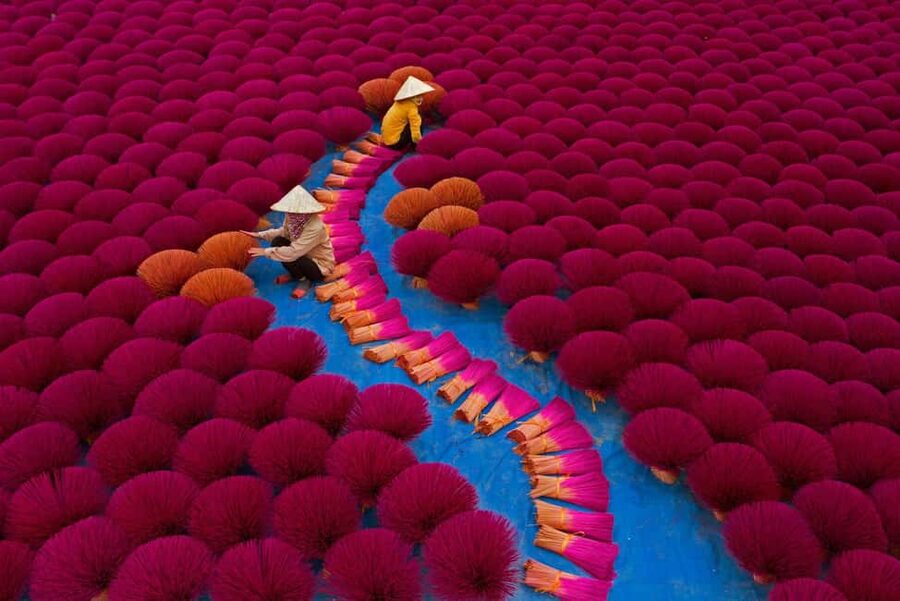
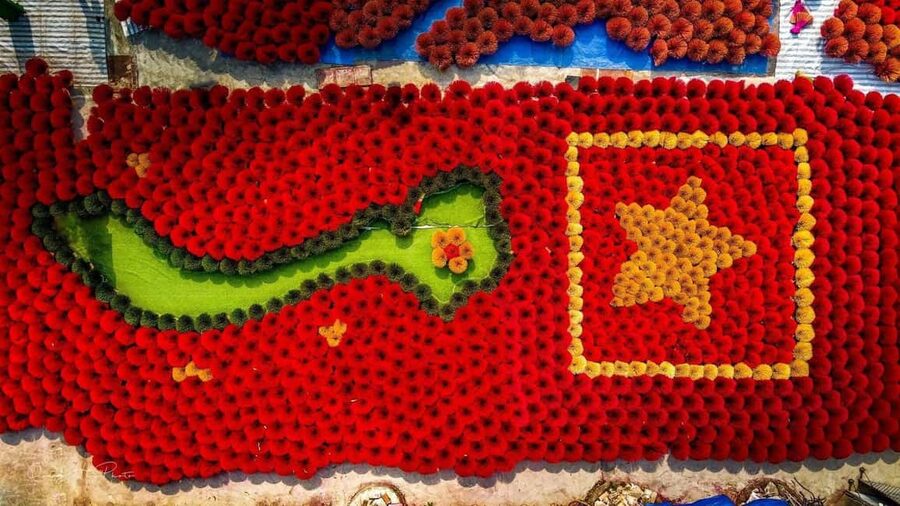
Then you shift into incense country with Quang Phu Cau Village. This area has been producing incense for more than 100 years, and the production style is described as artisanal and family-scale. That’s important because it keeps the experience human. You see people working with patience and care rather than mass-production speed.
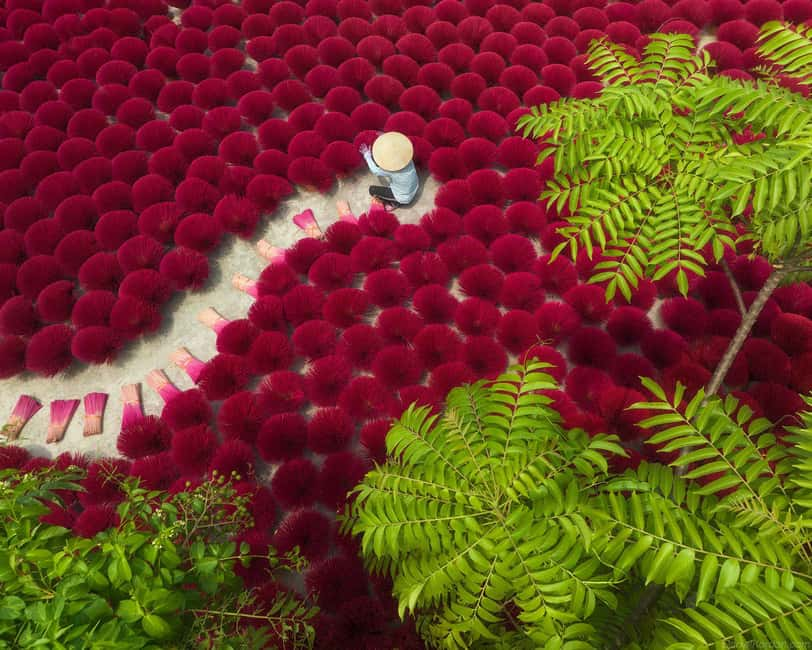
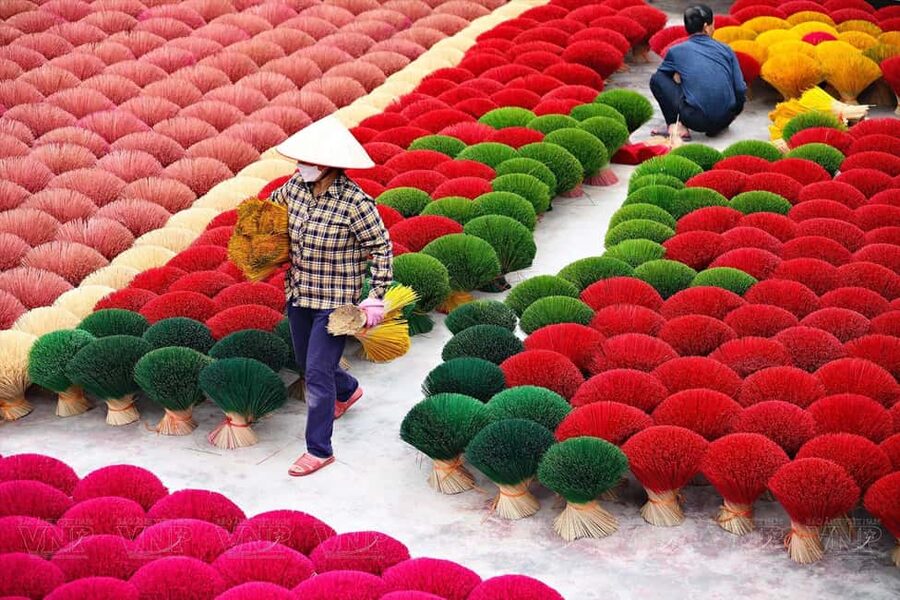
You’ll take a walk to the center of the village and see how locals make incense. A highlight here is meeting a family that specializes in dyeing incense sticks. You’ll see the incense bundles and the colorful sticks that come from that dyeing step.
Make incense sticks yourself (and keep some)
This part gives you participation, not just viewing. You’ll make incense sticks during the workshop, and there are some free incense sticks after you made them yourself. That’s another value win because it turns “watching” into “doing.”
One small caution: incense can be strong. If you’re sensitive to smells, keep that in mind and plan to take short breaks outside the most fragrant areas.
How the train street stop fits in (optional use of your time)
Some versions of the tour include a drop-off at Hanoi Train Street. If you don’t want to get dropped off there, you can wait on the bus.
I like this flexibility because Train Street is one of those places where timing and preference matter. If it’s not your thing, you don’t lose the rest of the day. If it is your thing, you at least have a convenient place to end your route and decide what you want to do next.
The main point: don’t treat it as the center of the day. The pagoda and craft villages are the core experience here.
Price and logistics: why $14 can feel like a lot (in the good way)
At about $14 per person for a 6-hour day, this tour can feel like a bargain—especially because it includes more than just a driver and a checklist.
Here’s why the value holds up:
- Entrance fees are included
- You get a professional local guide
- Bottled water is included
- You receive a free hat for painting plus take-home craft time
- You also get incense-making time and some sticks afterward
For many Hanoi day tours, you pay extra for guides and entry tickets. Here, the price stays straightforward, and the hands-on pieces do a lot of the heavy lifting for satisfaction.
A consideration on timing
The trip is about 6 hours, and there are morning and afternoon start options depending on the group format. If you’re the type who likes to keep your evening open, pick the start time that leaves you room to decompress after the craft workshops.
What you’ll actually do, step by step (and what to watch for)
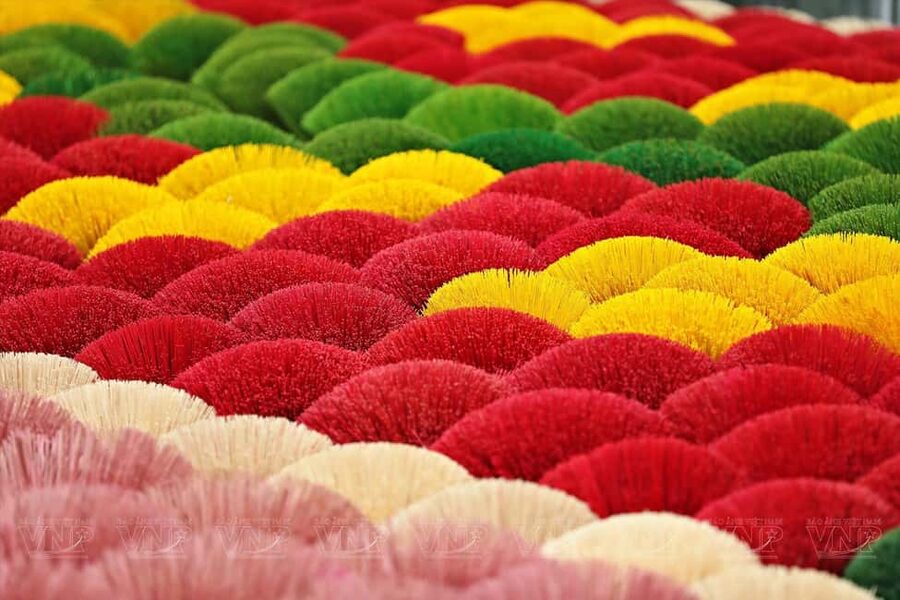
Even though the day is organized and guided, you still feel the flow of three distinct worlds: worship, craft, and neighborhood life.
1) Thắng Nghiêm Pagoda: guided visit + temple garden walking
You’ll have a photo stop, then a guided tour lasting about 75 minutes. You’ll explore the temple grounds, see Buddha statues, visit Tam Bảo House, and spend time in a larger hall used for teaching Buddhist scriptures and holding major ceremonies.
After that, you can wander in the temple garden area where incense scent, bells, and chanting can shape the mood.
Watch for: this part is a place of worship. Keep your movements calm. If there are ceremonies happening, you’ll get more out of the experience by staying quiet and letting the moment happen.
2) Chuong Village: conical hat process + painting
You’ll stop for photos, then have guided time to observe conical hat making. You’ll also get your hat to paint and take home.
Watch for: go with light confidence. Your hat doesn’t need to be perfect; the value is in making it.
3) Quang Phu Cau: incense village walk + workshop
You’ll walk to the village center, watch how incense is made on a family level, and meet a family specializing in dyeing incense sticks. Then you’ll make incense sticks yourself and receive some sticks afterward.
Watch for: if you’re sensitive to smells, plan to spend a bit of time outdoors or downwind when you can.
Who should book this Hanoi day trip
This works especially well if you want cultural Hanoi beyond museums and old streets. It’s a good pick for:
- First-time visitors who want a grounded view of Vietnamese religious life and village crafts
- Travelers who like hands-on souvenirs more than standard photo stops
- People who enjoy learning through a guide and then seeing how it shows up in daily work
It might not be the best match if:
- You mainly want major city sights and quick walks
- You strongly dislike incense environments or prefer only secular activities
- You’re expecting big, dramatic ruins or long museum-style time blocks
Should you book Thắng Nghiêm Pagoda and the incense/hat villages?
I’d book it if you want a day that mixes quiet reflection with real craft work and a couple of take-home keepsakes. The price is low enough that you’re not stuck paying just for transportation, and the included hat-painting and incense-making push it from “nice tour” into “useful experience.”
If you prefer temples but also want something lively to do afterward, this one’s balanced. You get the peace of Thắng Nghiêm, then you shift into the practical beauty of Non La hats and the color-making side of incense. For many people, that combination is exactly what a short Hanoi trip needs.
FAQ
How long is the tour?
It’s listed as about 6 hours for a full day experience.
What does it cost?
The price is listed at $14 per person.
Where does pickup and drop-off happen?
Pickup and drop-off are described for hotels in Hanoi’s Old Quarter area, with Hoàn Kiếm as one of the pickup options.
What will I see at Thắng Nghiêm Pagoda?
You’ll visit the pagoda, explore the temple grounds, view Buddha statues, visit the Tam Bảo House, and see a large hall used for ceremonies and teaching Buddhist scriptures.
What happens at Chuong Village?
You’ll observe conical hat making and visit Chuong Village. You also get a free conical hat to paint there and take home as a personalized souvenir.
What happens at the incense craft village?
You’ll explore Quang Phu Cau, see how incense is made on a family scale, meet a family specializing in dyeing incense sticks, and make incense sticks yourself. Some free incense sticks are included after you make them.
Is the Train Street stop required?
In the group option, the itinerary includes a drop-off at Hanoi Train Street, but the information says you can choose not to get dropped off there and instead wait on the bus.
What languages are available for the guide?
English, Vietnamese, Chinese, French, Italian, Japanese, Korean, Spanish, Indonesian, Thai, Russian, Portuguese.
Is this tour respectful of its religious setting?
Yes. The pagoda is a place of worship and reflection, so you should maintain a respectful demeanor during your visit.
More Tour Reviews in Hanoi






More of the Incense Village


Latest Hanoi write-ups from our team



Incense Village Tours, compared.
 ★ 5.0Incense Village, Hat Making & Lacquer Artisan Small Group HanoiFrom $171,266 reviews
 ★ 5.0Incense Village, Conical Hat, Lacquer Art, SMALL GROUP From HanoiFrom $11,170 reviews
 ★ 4.6Incense Village, Hat, and Lacquer Artisanal TourFrom $151,005 reviews
 ★ 5.0Incense Village Small Group of 9 Tour From Hanoi to Ninh BinhFrom $85626 reviews
 ★ 4.6Incense Village, Hat, Lacquer Tour & City HighlightsFrom $16604 reviews
 ★ 4.6Incense Village, Hat, Lacquer, & City Highlights TourFrom $19470 reviews
 ★ 5.0Instagram Incense Quang Phu Cau Village Tour with Train StreetFrom $50323 reviews
 ★ 5.0INCENSE Villages & Ha Noi City Full Day guided Tour with LunchFrom $45304 reviews
Browse the lists this tour appears in