
Reviewed · INCENSE VILLAGE TOURS
Hanoi: Rattan & Shoe Village or Incense Village, Hat Village
Craft villages can feel like tourist wallpaper. This one moves fast and gives you real, practical skills—hat painting and incense making included. I like how the day connects everyday Vietnamese crafts to the people who earn a living from them. One possible drawback: you’ll be on your feet a lot, and the groups are time-focused.
Two things I particularly enjoy: I get to see hands-on production, not just shopfronts—like conical hats being painted and incense being made from scratch. I also love the way the tour explains the work behind the objects, including the scale of production and the money behind the craft, so your souvenirs actually mean something.
The main consideration is choice of route. If you book the group half-day, you’ll likely cover conical hat plus incense and then a weaving village; if you pick the private option, you trade some variety for the shoe-and-rattan focused workshops.
In This Review
- Key points to know before you go
- Why Hanoi craft villages feel different from typical tours
- Group half-day vs private tour: which one fits your style
- Chuong conical hat village: paint your own souvenir (and learn the process)
- Quang Phu Cau incense village: family making, plus a bigger factory view
- Phu Tuc weaving village and the Guot plant: from dried fibers to everyday objects
- Private tour workshop day: sandals, modernization, and the village economy
- Timing, pickup, and how the day stays manageable
- Price and value: is $14 reasonable for a craft day?
- Who should book (and who might not love it)
- Before you go: a few small choices that matter
- Should you book the Hanoi craft village tour?
- FAQ
- FAQ
- How long is the Hanoi craft village experience?
- What are the main crafts included in the group half-day option?
- What do I get to take home in the hat and incense parts?
- Do I get a guided tour during all stops?
- Is the tour only for sandals and shoes, or are there other crafts too?
- What times does the half-day group tour run?
- Do I need to buy tickets separately?
Key points to know before you go
- Conical hat painting: you get a hat to decorate on-site, then take it home
- Incense village, two levels: family-scale making and a nearby factory tour
- Hands-on incense: you make incense sticks yourself and receive some to take along
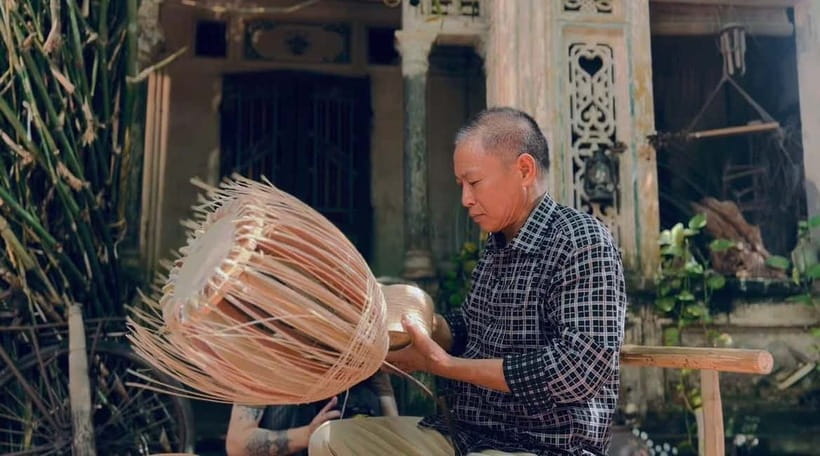
- Guot weaving at Phu Tuc: see how the dark red/brown plant becomes usable baskets and home items
- Private option adds craft industry detail: sandal production, modern machines, and village-scale employment
- Pickup from the Old Quarter: it’s built for convenience, so you don’t waste time finding the right villages
Why Hanoi craft villages feel different from typical tours

In Hanoi, it’s easy to get stuck in the “look and leave” rhythm—photos, a quick wander, then back into traffic. This experience is built around watching production up close, and that changes how you see everything you buy.
You start with crafts that Vietnam is famous for: the Chuong conical hat, traditional incense, and the weaving work tied to the Guot plant. Then you get the behind-the-scenes part: who does the work, how the materials become products, and how the craft affects jobs in the surrounding villages. It’s still fun, but it’s not just a souvenir run.
And yes, you’ll likely end up with a hat that looks handmade—because it is. That’s the point.
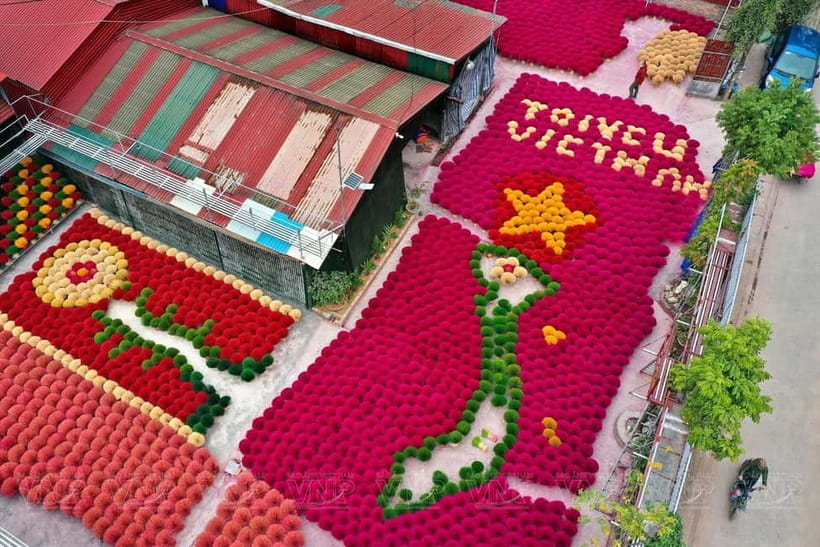
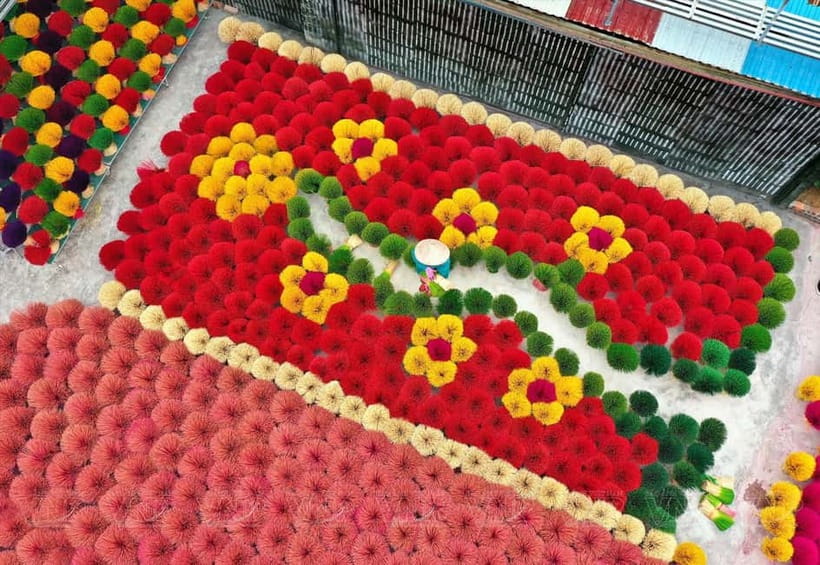
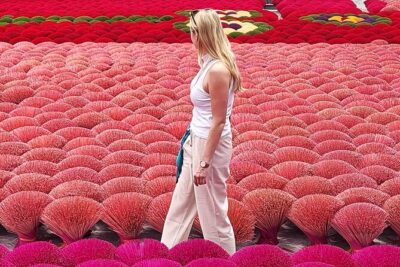
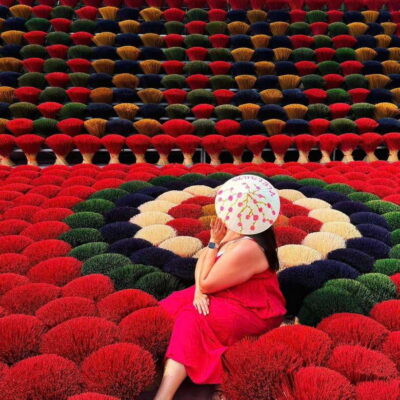
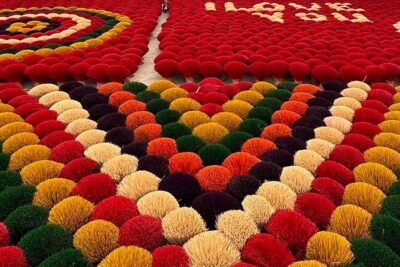
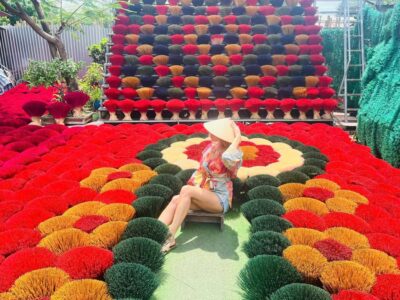
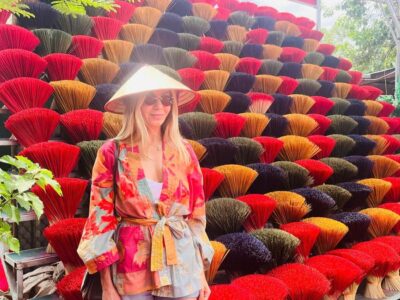
More colour at the incense village



Group half-day vs private tour: which one fits your style
You have three practical ways to book:
Group half-day (about 6 hours)
This is the best fit if you want a guided sampler of the craft world without arranging anything yourself. Morning runs roughly 7:45–13:30, and the afternoon runs roughly 11:45–17:30. You’ll cover conical hat making, incense village, and Phu Tuc.
Private tour (shoe workshop + rattan/bamboo angle)
Pick this if you love production details and want a stronger focus on Vietnamese craft industry and workshop life. You’ll visit a family workshop specializing in sandals, hear how modernization changed steps in production, and then continue to the Phu Tuc weaving side.
Local guide for incense only (short option)
If you already have your own transport and just want incense, there’s an option that visits only Quang Phu Cau Incense Village with your own car transfer and entrance fees handled separately.
If you can only do one day and you’re curious about several crafts, go group half-day. If you want the most “workshop” time and industry numbers, go private.
Chuong conical hat village: paint your own souvenir (and learn the process)

Chuong is the iconic conical hat area, known for this craft for over 300 years. On the tour, you start with a guided look at how the hats are made, then you get something better than a museum explanation: you decorate a hat yourself.
Here’s what that typically looks like:
- You observe the making process at the village
- You get a free conical hat meant for painting
- You apply your own design (the guide will help you get started), then you take it home
This part is valuable because it’s tactile. Instead of just watching, you’re translating the craft into your own small project. It also makes a great souvenir because it’s personal—no matter how your paint job turns out.
Practical tip: plan to bring a little patience and a steady hand. Hat painting isn’t hard, but it is detailed enough that rushed strokes can turn into wobbly lines. In other words, it’s a fun kind of effort.
Quang Phu Cau incense village: family making, plus a bigger factory view
After Chuong, you head to Quang Phu Cau Incense Village, a place that has been producing incense for more than 100 years. This stop works because it shows incense at two different scales.
First, you walk through the village center to see how locals make incense on a family, artisanal scale. Then you move to a nearby production site to see the “next level,” where incense is made from scratch with more formal process steps and more workers.
What you’ll likely do here:
- Guided visit and photo stops in the village area
- Observation of incense making by local families
- A factory tour to understand larger-scale production
- Hands-on time where you make incense sticks yourself
- Time to pick up souvenirs made where the incense is produced
The hands-on part matters. You don’t just smell incense; you learn how work turns into a product. And the tour includes some free incense sticks after you make them, which means you can bring home the memory without hunting for extra items immediately.
Also, this is one of the more “human” stops in the day. The tour shares insight into the lives of manual workers, and that context makes incense feel less like a generic aroma and more like labor.
Phu Tuc weaving village and the Guot plant: from dried fibers to everyday objects
Phu Tuc is where the tour shifts from hats and scent to material craft. You’ll visit this village to observe Guot, bamboo, and rattan weaving, including guided explanation of how products evolve over time.
A few specific, useful details you’ll hear:
- The weaving tradition in this area traces back to the 17th century
- The Guot plant has a natural dark red or brown color
- The plant is dried under the sun
- Material is classified by size and color before weaving
- The woven items can include baskets, robes, tables, chairs, photo frames, flower vases, and even animal figurines
This stop is worth it even if you don’t plan to buy much. It helps you understand why certain products look the way they do. When you know the fiber color and how the material is sorted, you stop seeing the final item as random craft “aesthetic” and start seeing it as a process.
If you’re shopping, it’s also a chance to spot quality differences in weaving and finish. You can ask about materials and the craft steps you just watched—your questions make you a smarter buyer.
- Hanoi Jeep Tour: Food, Culture and Fun by Vietnam Army Jeep★ 5.0 · 15,222 reviews
- Full-Day Ninh Binh Highlights Tour from Hanoi★ 5.0 · 7,761 reviews
- Hanoi: Ha Long Bay Day Cruise – Swimming, Meal, Kayaking★ 4.7 · 7,415 reviews
Private tour workshop day: sandals, modernization, and the village economy
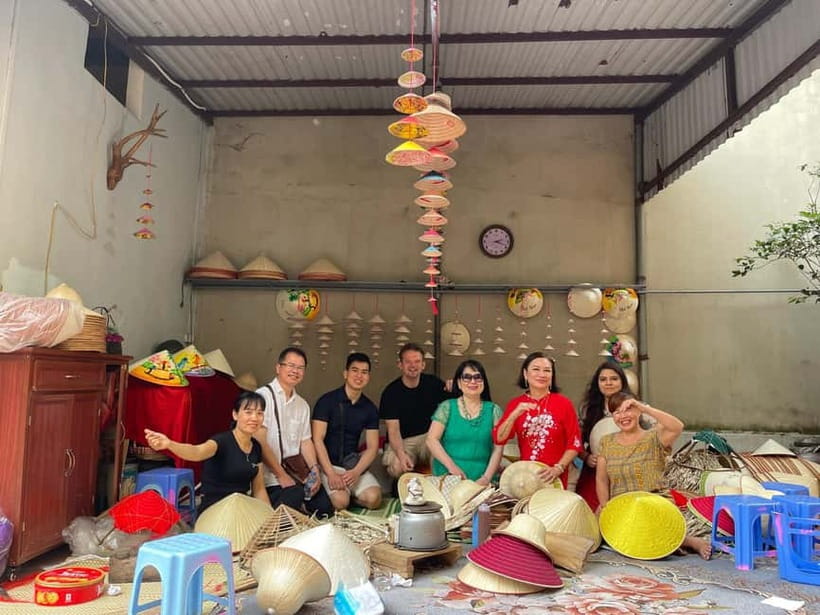
If you choose the private tour, you’ll spend more time at the Phu Yen leather and footwear craft village experience, including a workshop specializing in sandals.
One of the strongest parts of this option is the concrete scale:
- The workshop is run by the Nguyen Thi Nhan family
- The workshop has 25 official employees
- Production runs around 1,700–1,800 pairs of sandals per day
- The tour points out how production methods have changed, with modern machines replacing many manual phases
What I like here is that you get both sides: heritage and change. The tour also shares that craft development isn’t just one village with one workshop. Across the commune, three out of four villages work toward craft production. Roughly 300 households make leather and footwear, while 35 households supply materials for the whole commune. The craft supports more than 2,000 employees.
And then there’s the historical continuity. The craft is described as existing since the French colonial period, and the tour shares a story of craft transfer across generations. That matters because it explains why the skills still exist locally instead of being lost.
After that workshop time, you continue to Phu Tuc for the Guot weaving experience, so you still get the plant-fiber craft side on the same day.
Timing, pickup, and how the day stays manageable

This is structured like a true half-day tour. If you’re starting from the Hanoi Old Quarter area, expect a hotel pickup and drop-off. The group tour schedules are:
- Morning: about 7:45 to 13:30
- Afternoon: about 11:45 to 17:30
The tour includes bottled water, plus all entrance fees. There’s also a skip-the-ticket-line advantage, which saves time at sites that can get slow.
One more thing: the experience provider is set up for multiple languages, including English, Vietnamese, Chinese, French, German, Italian, Spanish. If language is a worry, this kind of coverage makes the craft steps easier to follow. I also like that the pace is guided. Craft villages can be confusing on your own—paths, workshops, and local phrasing. With a guide, you get the “what am I looking at” answer fast.
Price and value: is $14 reasonable for a craft day?

At $14 per person, this tour is priced like a bargain, especially because it includes:
- Workshop visits (including a sandal production workshop in the private option)
- Conical hat for painting, plus incense making time
- Entrance fees and a professional local guide
- Bottled water
- A guided stop in Phu Tuc for the weaving process
What makes the value stronger than a typical “see and buy” tour is the hands-on component:
- You paint a hat and keep it
- You make incense sticks and get some to take away
You’re paying less for a guided education + souvenirs, not just transport and entry. And the tour’s economic context—like income figures—means your buying decisions aren’t totally random. The tour notes that average income in workshops is around 7–10 million dong per month (about 300–450 USD).
If you’re traveling with someone who enjoys crafts but doesn’t want a slow day, this is a solid way to get meaning and momentum.
Who should book (and who might not love it)
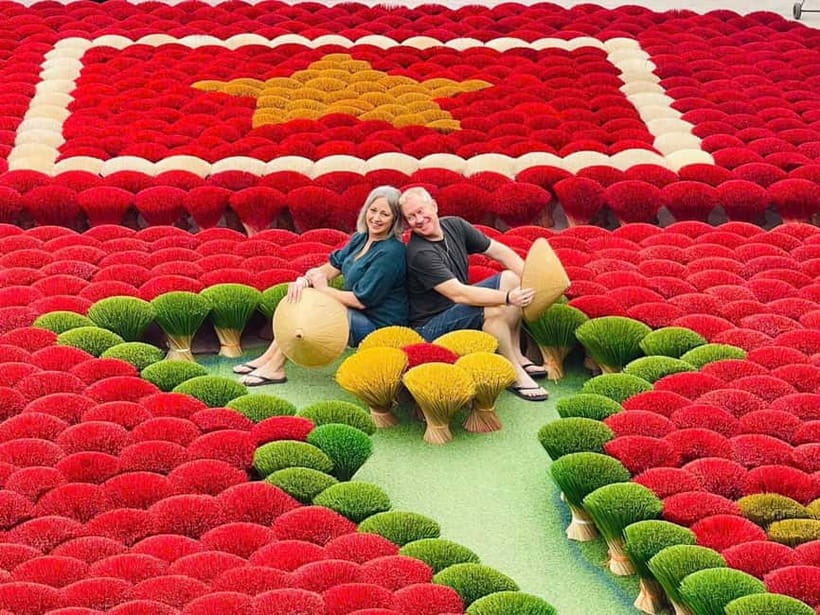
I think this tour is a great match if you:
- Want authentic craft process, not only markets
- Like hands-on souvenirs, especially the hat painting and incense making
- Prefer a guided explanation of how Vietnamese crafts connect to jobs and local industry
- Want a convenient Old Quarter pickup and return
You might reconsider if you:
- Hate workshop settings or anything that feels like structured “hands-on training”
- Want a super relaxed day with lots of free time for roaming
- Have mobility concerns, since village walking is part of the plan (the tour is listed as wheelchair accessible, but village routes can still be uneven)
Before you go: a few small choices that matter
You’ll get the most out of the day if you decide your focus:
- Choose group half-day if you want conical hat + incense + weaving as a balanced sampler.
- Choose private if you want stronger detail on footwear/sandal production and the local production economy.
- Choose incense-only if you already have your own transport and want a shorter hit.
If you’re shopping, keep an eye on what you watched. You’ll recognize the Guot sorting by color and size, and you’ll know why incense differs from simple stick bundles. That’s when souvenirs stop feeling like random purchases and start feeling like evidence that you were there for the work.
Should you book the Hanoi craft village tour?
Yes—if you want a craft day that actually teaches you something. This tour is built around practical viewing of production, plus the best kind of souvenir: the one you make yourself.
I’d book it if:
- you’re in Hanoi for a limited time and want a high value use of a half day
- you care about understanding how crafts support real jobs
- you want a guided route that gets you into working spaces, not just storefronts
Skip it if you only want scenery, long breaks, and free wandering with no structure. This is a guided craft tour. The day has a plan.
FAQ
FAQ
How long is the Hanoi craft village experience?
The duration is listed as about 6 hours for the standard tour.
What are the main crafts included in the group half-day option?
The group half-day option includes visits focused on the conical hat-making in Chuong, incense crafting in Quang Phu Cau Incense Village, and weaving at Phu Tuc.
What do I get to take home in the hat and incense parts?
You receive a free conical hat to paint in the hat village and take it home. After you make incense sticks yourself, you also get some free incense sticks.
Do I get a guided tour during all stops?
Yes. The activity includes a professional local tour guide and guided visits at the craft villages.
Is the tour only for sandals and shoes, or are there other crafts too?
There’s a private option that includes a sandal production workshop and footwear-related craft context, and the tour also includes the Phu Tuc weaving visit. The group option focuses on conical hats, incense, and Phu Tuc.
What times does the half-day group tour run?
The morning session is listed as about 7:45–13:30, and the afternoon session is listed as about 11:45–17:30.
Do I need to buy tickets separately?
Entrance fees are included, and the tour is listed as offering skip-the-ticket-line.
More Tour Reviews in Hanoi






More of the Incense Village


Latest Hanoi write-ups from our team



Incense Village Tours, compared.
 ★ 5.0Incense Village, Hat Making & Lacquer Artisan Small Group HanoiFrom $171,266 reviews
 ★ 5.0Incense Village, Conical Hat, Lacquer Art, SMALL GROUP From HanoiFrom $11,170 reviews
 ★ 4.6Incense Village, Hat, and Lacquer Artisanal TourFrom $151,005 reviews
 ★ 5.0Incense Village Small Group of 9 Tour From Hanoi to Ninh BinhFrom $85626 reviews
 ★ 4.6Incense Village, Hat, Lacquer Tour & City HighlightsFrom $16604 reviews
 ★ 4.6Incense Village, Hat, Lacquer, & City Highlights TourFrom $19470 reviews
 ★ 5.0Instagram Incense Quang Phu Cau Village Tour with Train StreetFrom $50323 reviews
 ★ 5.0INCENSE Villages & Ha Noi City Full Day guided Tour with LunchFrom $45304 reviews
Browse the lists this tour appears in