
Reviewed · CITY TOURS
Hanoi: Private Half-day City Highlights and Hidden Gems Tour
Hanoi can feel like a lot on day one, but this private half-day keeps you moving with purpose. I especially liked the air-conditioned comfort of the car and the fact that you get a tight plan that still leaves room for questions and small adjustments. You’ll also hit some of Hanoi’s most talked-about scenes, including Train Street, without having to figure out routes on your own.
The best part is that the tour mixes Vietnam’s big moments with everyday city life: preserved history at Ho Chi Minh’s final resting place, then markets, churches, lake views, and old-town streets. One thing to plan for: Ho Chi Minh Mausoleum has a strict dress code, so bring clothes that match the knee-length shorts rule.
In This Review
- Key highlights worth centering your time
- Private pickup + an air-conditioned start that actually feels like a start
- Ho Chi Minh Mausoleum at Ba Dinh Square: the dress code and the glass case
- Temple of Literature: Confucius education made in Vietnamese style
- Dong Xuan Market and St Joseph’s Cathedral: trade and faith in one route
- Hanoi Train Street: the real tracks that turn a street into a show
- Hoan Kiem Lake and the Opera House area: the symbolic center and the French-era shape
- How the tour feels as a private experience (and why your guide matters)
- Price and value: what $67 buys you in a half-day
- Should you book this Hanoi private half-day tour?
- FAQ
- FAQ
- How long is this Hanoi tour?
- Is it a private tour or shared?
- Where does the tour start?
- What are the main stops on the tour?
- Is an entry ticket included?
- What’s included in the price besides the guide?
- Are meals included?
- What should I wear for the Ho Chi Minh Mausoleum?
- What languages are available for the guide?
- Do I need to pay immediately, and what about cancellation?
Key highlights worth centering your time

- Hotel pickup in Hanoi’s Old Quarter saves you the first-friction minutes
- Ho Chi Minh Mausoleum at Ba Dinh Square gives you context for one of Vietnam’s defining figures
- Temple of Literature shows how Confucian education shaped Vietnamese tradition
- Dong Xuan Market is a hands-on stop for fabrics, crafts, and street food energy
- Hanoi Train Street is the main spectacle: old tracks cutting through the old town
- Guides can adjust on the fly—Lucas, Duy, and Duc are mentioned for flexibility and smooth pacing
Private pickup + an air-conditioned start that actually feels like a start
This is built for comfort and speed. You begin with hotel pickup and head out by private car, which matters in Hanoi when the streets can be hectic and walking between sights can eat up your half-day fast. The ride stays air-conditioned, so you’re not turning into a sweaty museum exhibit before you even get going.
I like that the tour is designed for a real half-day. You’re not left guessing what matters most, and you’re not stuck waiting around too long either. It’s the kind of plan that helps you get your bearings fast while still seeing places you’d otherwise need multiple trips for.
If you’re traveling solo or as a couple and want your own space, the private setup helps a lot. It’s limited to your group, so you’re not stuck sharing a guide’s attention with a crowd.
Worth a glance beside this Hanoi pick:




Ho Chi Minh Mausoleum at Ba Dinh Square: the dress code and the glass case
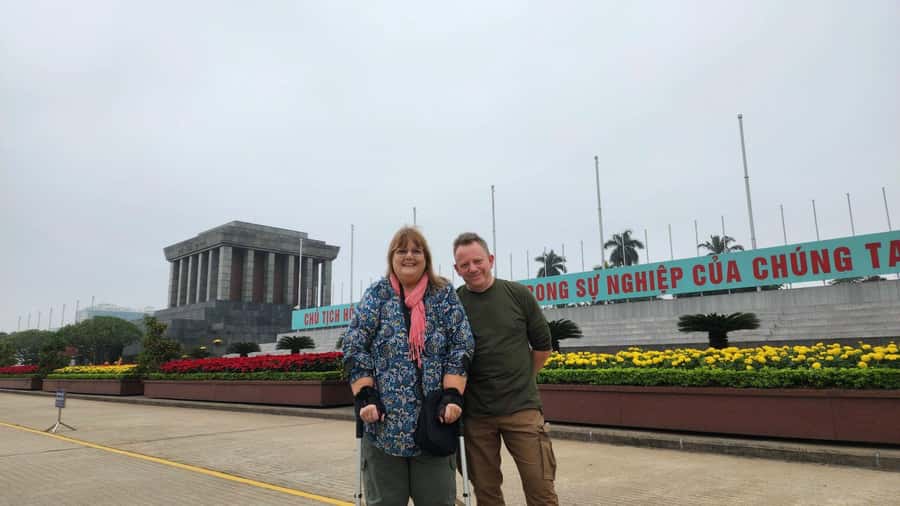
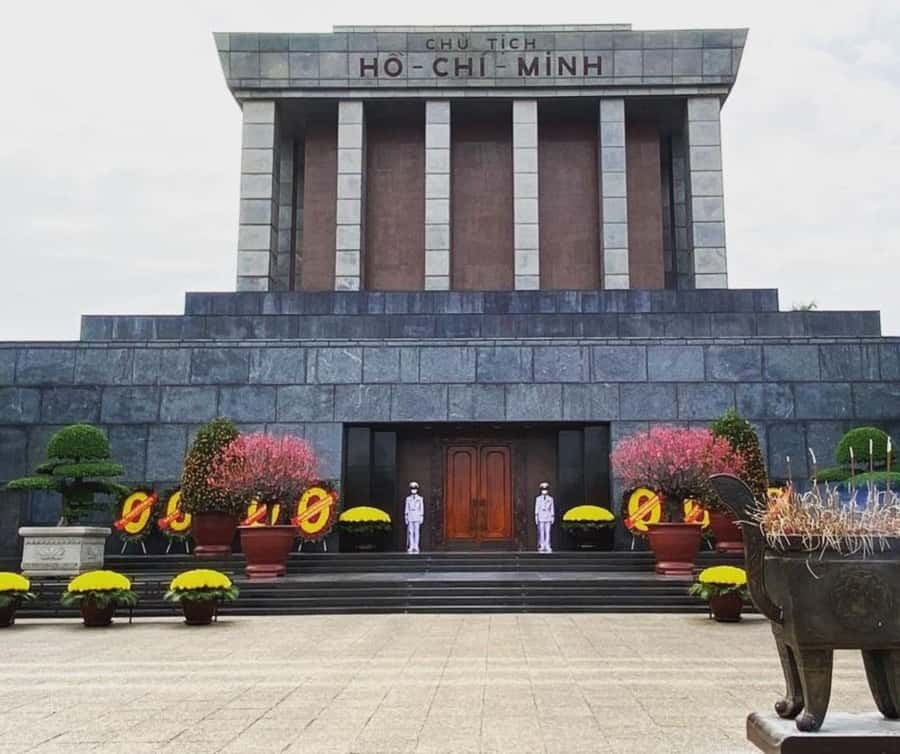
Ba Dinh Square is a big, heavy place in Vietnam’s story. You’ll visit the Ho Chi Minh Mausoleum, which is also the final resting place of Ho Chi Minh, known to many as Uncle Ho. The tour notes that you’ll see his body preserved in a glass case, and it also includes the detail that this is presented against his wishes.
Here’s the practical part: you need to dress modestly. Shorts must be knee-length for the Mausoleum visit. If you forget, you can lose time at the gate, and that’s not a fun way to start a half-day.
One more thing I appreciate: your guide can adapt if the Mausoleum is closed on your day. In one shared experience, Lucas amended the plan when the Mausoleum couldn’t be visited as scheduled. That flexibility is a quiet value—because in real travel, opening hours aren’t always predictable.
Temple of Literature: Confucius education made in Vietnamese style
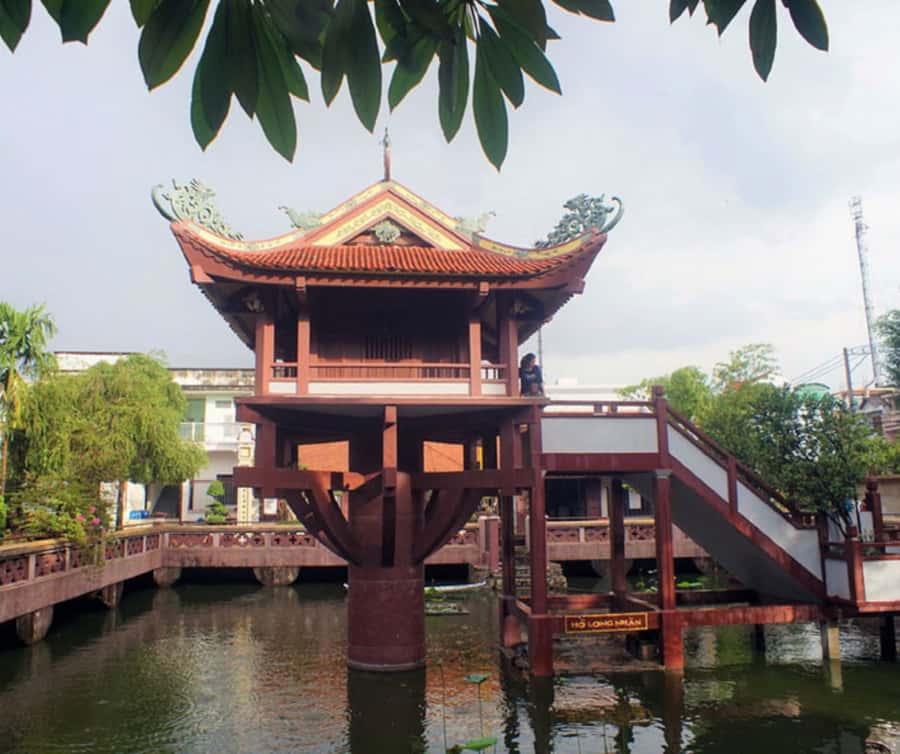
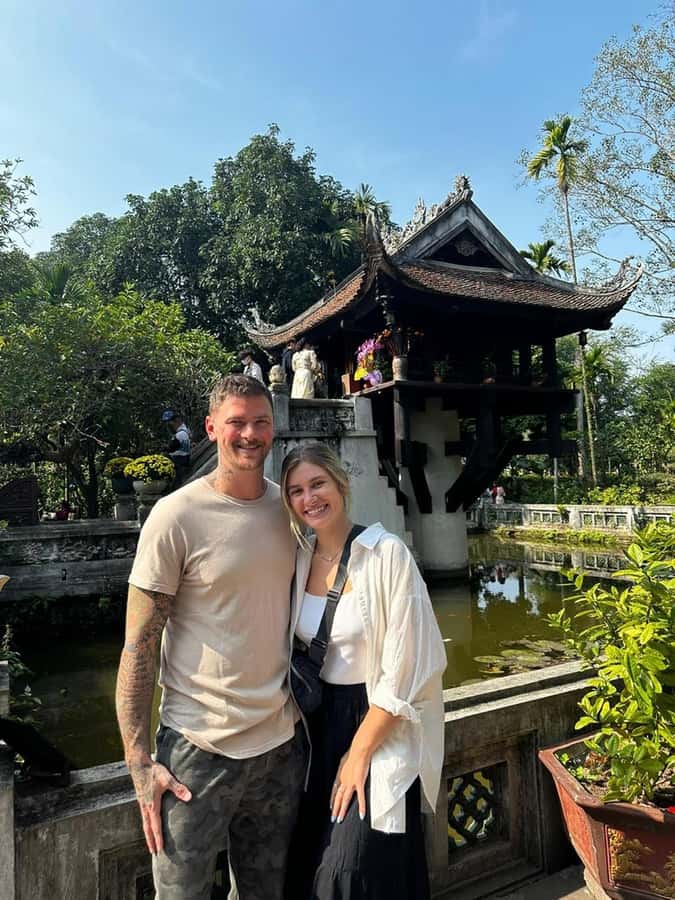
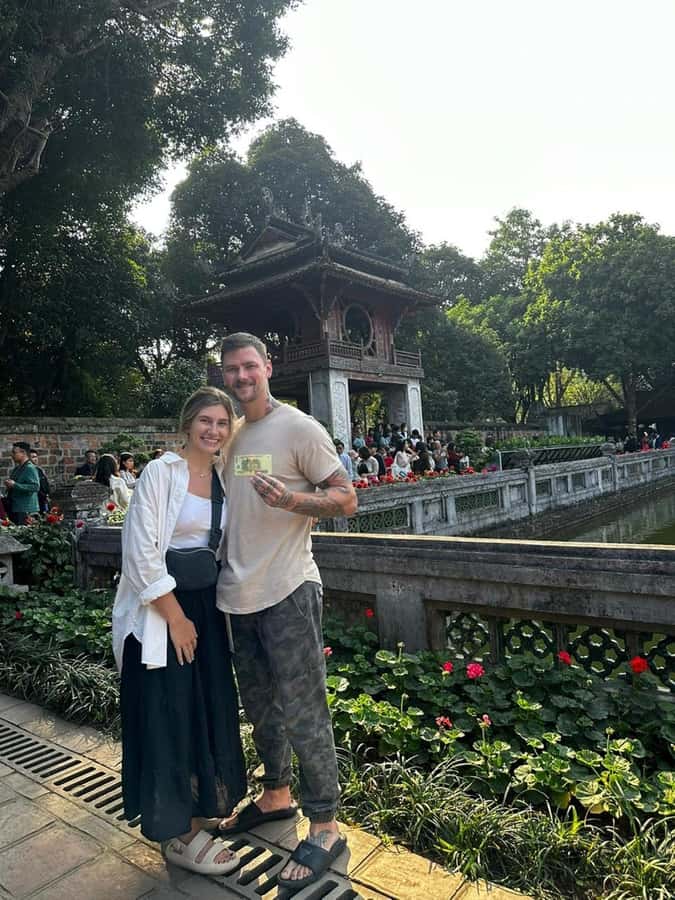
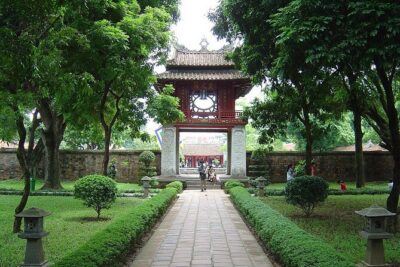
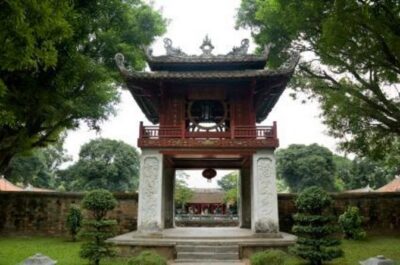
After the solemnity of Ba Dinh, the day shifts into one of Hanoi’s most photogenic cultural stops: the Temple of Literature. It’s often described as a top Hanoi attraction, and for good reason. The complex began as a university in 1070 dedicated to Confucius, scholars, and sages.
What I like is how the guide frames what you’re seeing. It’s not just a set of old buildings; you learn that this site was built for education and learning—then preserved remarkably well over time. The result is a place where you can actually slow down and notice traditional-style Vietnamese architecture instead of just snapping photos and moving on.
Potential drawback: you’ll want comfortable shoes. Floors and pathways inside heritage sites can add up, especially when you’re packing multiple stops into a half-day. If you’re sensitive to walking, wear supportive footwear and pace yourself for short breaks.
Dong Xuan Market and St Joseph’s Cathedral: trade and faith in one route
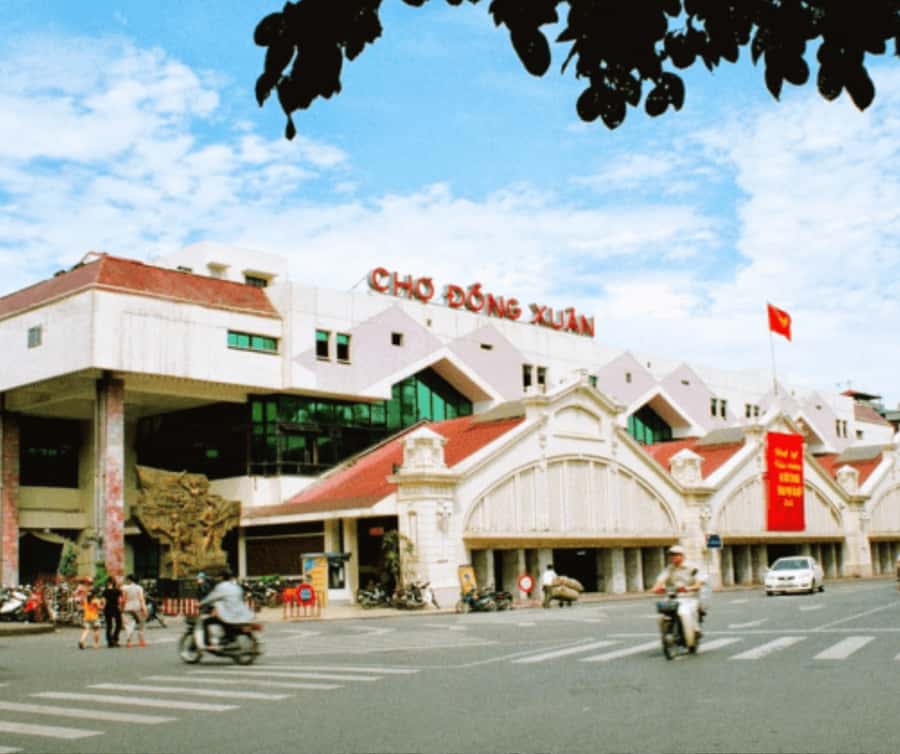
From the Mausoleum area, the tour moves into the city’s everyday rhythm. The stop at Dong Xuan Market is one of the most important “real life” experiences in the mix. It’s described as Hanoi’s largest wholesale market, with roots dating back to 1889, so it’s not a new, tourist-built set.
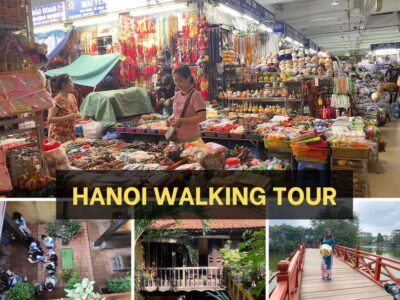
You’ll wander through areas where you can spot fabric, clothing, local handicrafts, souvenirs, and plenty of street-food energy. The value here is context. A market can look chaotic if you’re just passing through. With a guide, you get a sense of what types of goods matter and why the place has endured for so long.
Then you head to St. Joseph’s Cathedral on Nha Chung Street. This is a Roman Catholic cathedral built around 120 years ago with a neo-gothic style. Seeing it right after a major market gives you a nice contrast: one stop shows commerce and daily supply, the other shows imported religious architecture and how Hanoi absorbed different influences over time.
If you’re expecting silence and scenic calm, don’t. Market streets and cathedral areas can be active. The benefit is that you’re seeing Hanoi as it functions, not just as it poses.
Hanoi Train Street: the real tracks that turn a street into a show
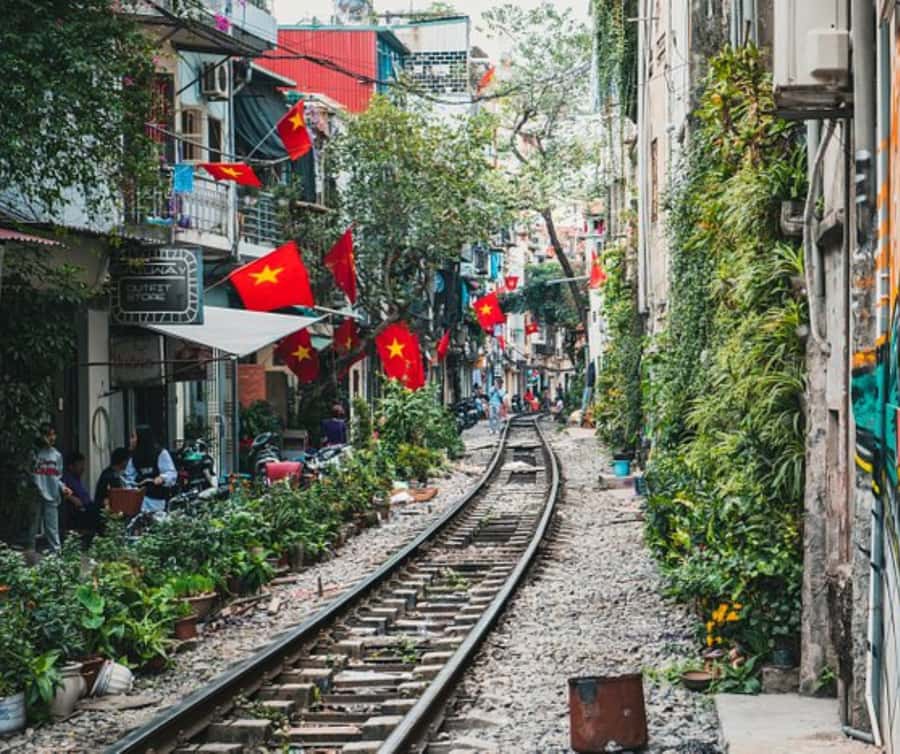
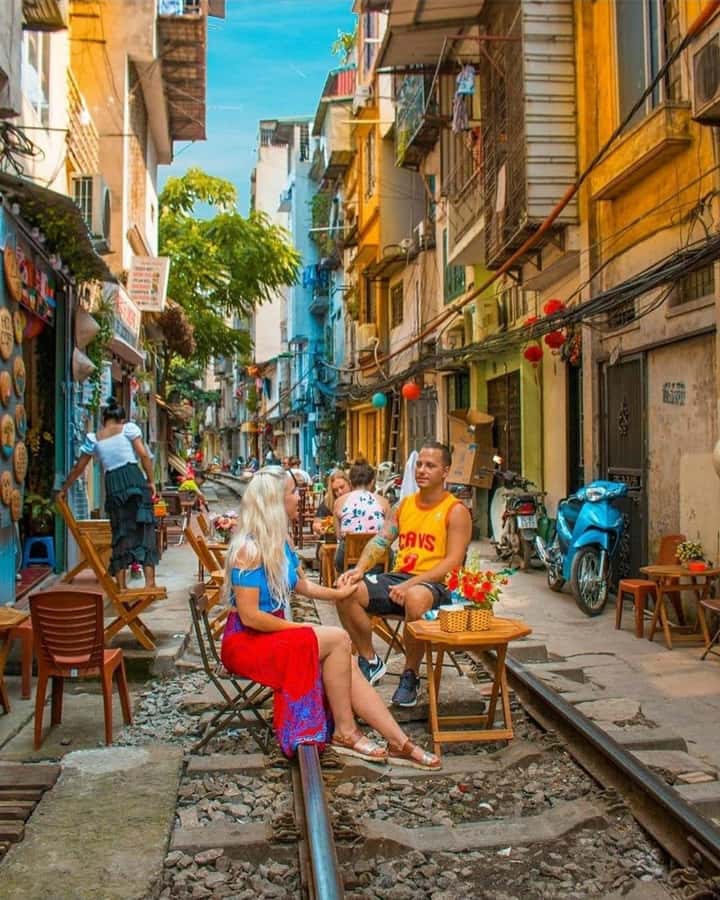
If there’s one stop that tends to be the emotional high point, it’s Hanoi Train Street. This tour is built to include the moment when you see old train tracks running through the heart of the old town. That’s the concept, and it’s exactly why people talk about the place.
The practical payoff of going with a guide is timing and positioning. Several guide stories mention making sure the train passing is actually witnessed as part of the experience. Lucas and Tony are specifically highlighted for planning the route so this was not missed.
A quick consideration: because the train is real, it’s also unpredictable in the way real things are. You’ll likely need to be patient and pay attention. If you’re the type who hates waiting, bring that patience. The street itself is part of the attraction, too—you’re standing in the middle of old-town life with a working railway cutting through.
More private, just-your-group bookings
- Doris Cruise 5 star cruise 2 days visiting Halong Bay Lan Ha Bay private balcony★ 5.0 · 2,338 reviews
- Private Walking Tour of Hanoi City★ 5.0 · 1,251 reviews
- Nội Bài International Airport Private Transfer★ 4.6 · 1,130 reviews
Hoan Kiem Lake and the Opera House area: the symbolic center and the French-era shape
No Hanoi highlights list feels complete without Hoan Kiem Lake, also called the Lake of the Restored Sword. The tour positions it as the heart of Hanoi—geographically and symbolically. This is where the city’s identity becomes visible in one glance: locals moving around the water, visitors taking in the view, and the sense that Hanoi’s “center” means more than just a map dot.
From there, you’ll move toward the Hanoi Opera House, erected by the French colonial administration between the 1901s and 1911s. The point isn’t just architecture. It’s how Hanoi shows layered influence: Vietnamese traditions, then a colonial-era imprint that still shapes the city’s look.
Along the way, the tour includes passing through Old Quarter streets such as Ta Hien Corner. You don’t linger there for long, but it helps connect the big sights to the neighborhoods you’ll likely walk through later on your own.
How the tour feels as a private experience (and why your guide matters)
This is a private tour limited to your group, and it shows in the way the itinerary can flex. Guides are repeatedly praised for adapting to preferences and adding what you want within the time you have.
In different experiences, Duy is noted for friendliness and adjusting the route to match what the group wanted. Duc is mentioned for customizing the day and for making sure the train passing was included. Harry added extra stops so the group could see everything they cared about. And Tuong gets called out for being efficient and for sharing cultural context in a way that felt organized rather than rushed.
That flexibility is useful for real travelers, not just “nice to have.” If you care more about cultural context than photo stops, your guide can steer you. If the schedule at one major site changes, you don’t lose the whole morning—you usually shift the order or adjust the plan.
Also worth noting: guides cover Vietnamese history and cultural notes as you move. Even when English varies slightly, the experiences you’ll see here focus on clarity and helpful communication. So you’re not just riding around; you’re getting explanations along the way.
Price and value: what $67 buys you in a half-day
At $67 per person, this tour is priced like a “smart first-day investment.” You’re paying for three things that are hard to replicate cheaply on your own: private transportation, an English-speaking guide, and entry tickets (plus a bottle of water).
If you tried to stitch it together yourself, you’d still need transport time, ticket costs, and someone to interpret what you’re looking at—especially for places like the Temple of Literature and the Mausoleum, where context helps a lot. Here, that context is part of the package.
What’s not included matters too. Meals and drinks are on you, and there can be a holiday surcharge if applicable. Plan for at least a snack break so you don’t end up hungry at the worst possible moment.
My take: if you want the “best-of Hanoi highlights” compressed into a half-day and you care about doing it with less hassle, this price feels fair. If you already know exactly where you want to go and don’t need guide interpretation, you could do some of it independently—but you’d trade away the convenience and the explanations.
Should you book this Hanoi private half-day tour?
Book it if:
- You want a first-day plan that covers major sites plus everyday life
- You’d rather not fight logistics in the Old Quarter before you’ve learned the rhythms
- You care about context for Ho Chi Minh’s story and Confucian learning at the Temple of Literature
- You strongly want to see Train Street as part of your schedule, not as a maybe
Skip it or reconsider if:
- You dislike following a fixed time window, even in a private format
- You don’t want to manage the Mausoleum dress code (knee-length shorts)
- You prefer slower, more open-ended wandering with fewer structured stops
If you’re trying to see a lot without burning your energy—or your first day keeps getting eaten by transport and decision-making—this tour is a practical way to make your time count in Hanoi.
FAQ
FAQ
How long is this Hanoi tour?
It’s a half-day private city highlights and hidden-gems-style tour.
Is it a private tour or shared?
It’s private. Only your group participates.
Where does the tour start?
It includes hotel pickup in Hanoi’s Old Quarter, followed by a private car route through the city.
What are the main stops on the tour?
The tour includes Ho Chi Minh Mausoleum at Ba Dinh Square, Temple of Literature, Dong Xuan Market, St. Joseph’s Cathedral, Hanoi Train Street, Hoan Kiem Lake, and the Hanoi Opera House area, plus additional Old Quarter passing points.
Is an entry ticket included?
Yes. Entry tickets are included.
What’s included in the price besides the guide?
Air-conditioned transportation, an English-speaking tour guide, entry tickets, and a bottle of water are included.
Are meals included?
No. Meals or drinks are not included.
What should I wear for the Ho Chi Minh Mausoleum?
Dress modestly. Shorts must be knee-length.
What languages are available for the guide?
English is included. Other languages are available, but other languages will incur additional charges.
Do I need to pay immediately, and what about cancellation?
It offers reserve and pay later. Cancellation is allowed up to 24 hours in advance for a full refund.
More City Tours in Hanoi


More Tours in Hanoi
- Ninh Binh Full-Day Tour from Hanoi to Hoa Lu, Tam Coc & Mua Cave Via Boat & Bike
★ 5.0 · 4,384 reviews






More Tour Reviews in Hanoi


Latest Hanoi write-ups from our team



City Tours, compared.
 ★ 5.0Private Walking Tour of Hanoi CityFrom $51,251 reviews
 ★ 5.0Hanoi City Tour Highlight, Train Street Combine visit CountrysideFrom $59925 reviews
 ★ 5.0Hanoi Motorbike Tours Led By Women: Hanoi City Insight Motorbike ToursFrom $59816 reviews
 ★ 5.0Hanoi Jeep City Highlight, Backstreet, Train Street, CountrysideFrom $55666 reviews
 ★ 5.0Private Ha Long bay day trip(From Hanoi city or Halong harbour)From $159657 reviews
 ★ 4.0City Sightseeing Hop-On Hop-Off Bus TourFrom $19611 reviews
 ★ 4.6Incense Village, Hat, Lacquer Tour & City HighlightsFrom $16604 reviews
 ★ 4.6Incense Village, Hat, Lacquer, & City Highlights TourFrom $19470 reviews
Browse the lists this tour appears in