
Reviewed · INCENSE VILLAGE TOURS
Hanoi: Long Dress Village or Incense Village, Hat Village
Craft villages outside Hanoi beat most big tours.
I love how hands-on this trip is, from painting a conical hat to making your own incense sticks, and you get a real sense of the work behind the finished product. The second thing I like is the way the guide puts crafts in context, including the symbolism of the áo dài and the steps artisans follow in their workshops with help from guides like Huy. One drawback to plan for: this is a day of driving plus walking, so if you want zero steps and minimal time on the road, you might find it tiring.
On the half-day version, you’ll swap between different craft worlds—conical hats and incense—with a photo-focused finish that can include Hanoi Train Street for a quick look. If you choose the private option, you can focus more deeply on áo dài at Trạch Xá Village and then pair it with incense at Quang Phu Cau. Either way, the best part is seeing how everyday materials turn into identity, not just souvenirs you throw in a bag.
In This Review
- Key highlights I think you should circle first
- Why these craft villages beat a museum day
- Hanoi pickup and the 6-hour reality check
- Chuong conical hat village: paint a souvenir with real history
- Quang Phu Cau incense village: from hand dyeing to factory production
- Trạch Xá áo dài village: symbolism and sewing precision you can actually picture
- Adding Train Street: a quick photo detour, not the whole point
- Making, taking, and remembering: what’s included and why it matters
- Price and logistics: where the $14 really goes
- Who should book this craft tour (and who might not)
- Final call: should you book?
- FAQ
- How long is the tour?
- Is this a half-day or full-day experience?
- What villages are included on the half-day group tour?
- What villages are included on the private tour?
- Can I make something and take it home?
- Where are the pickup and drop-off locations?
- How far are the villages from central Hanoi?
- What language options do guides offer?
- What’s not included in the price?
Key highlights I think you should circle first
- Paint a conical hat and take it home as a personalized souvenir
- Make incense and leave with some free sticks from your own work
- See incense production in layers, from family-scale making to a nearby factory
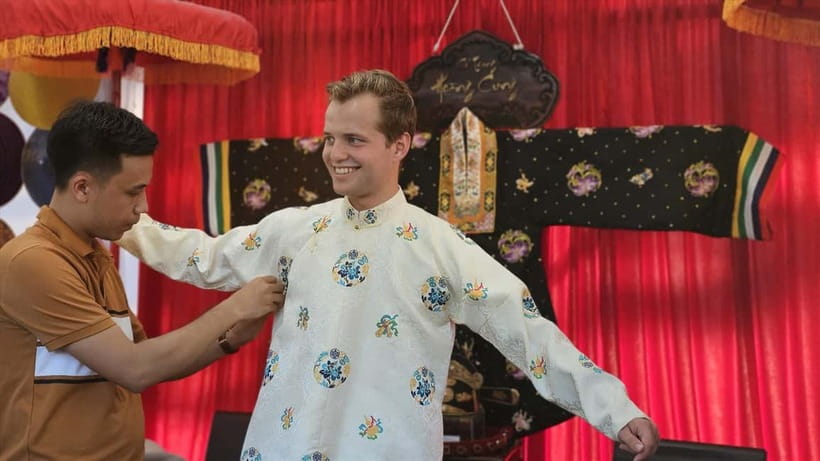
- Learn áo dài symbolism: four panels for family roles plus the wearer’s inner panel
- Watch precise áo dài sewing, with small, even, concealed thread lines
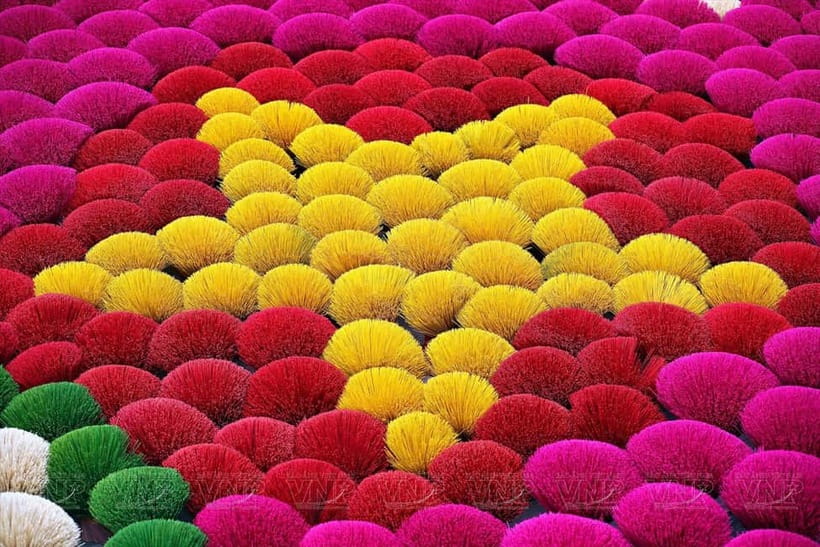
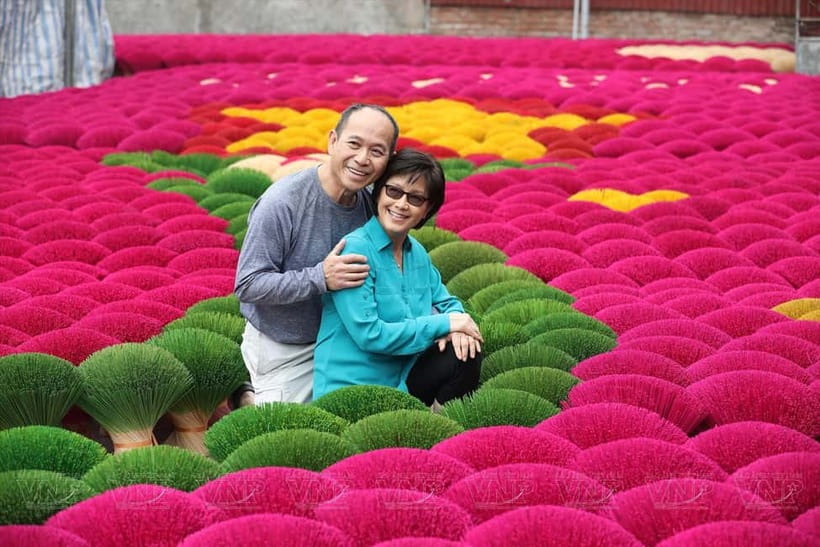
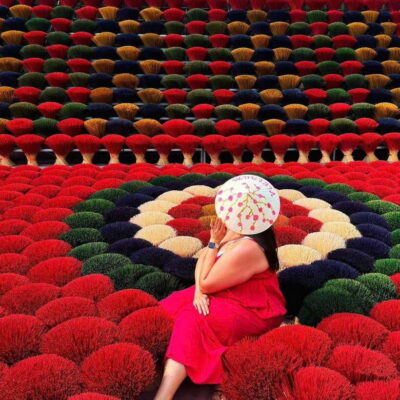
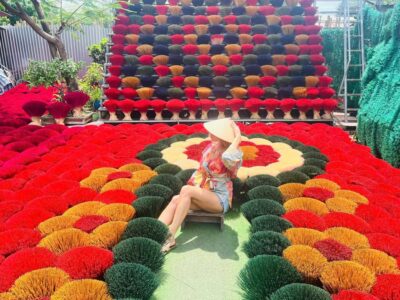
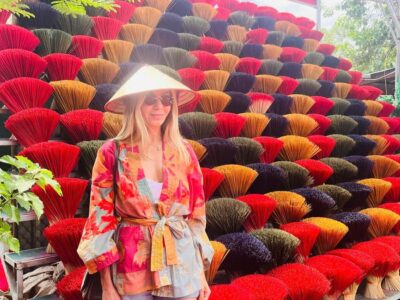
- Photo-friendly villages, especially Quang Phu Cau for vivid incense bundles
Why these craft villages beat a museum day
A good craft tour doesn’t just show objects. It shows process, patience, and the small decisions that make something look simple but isn’t. That’s what makes these villages a satisfying change of pace from Hanoi’s traffic and temples.
I especially like how the day connects craft to identity. A conical hat isn’t just a hat; the shape is part of Vietnam’s daily history. Incense isn’t just a smell; it’s tied to family work routines and local know-how. And the áo dài story turns clothing into symbolism you can actually understand in a few minutes.
You’re also set up for good photos without feeling like you’re sprinting from spot to spot. The villages are designed around work and making, so you get natural scenes instead of staged ones.
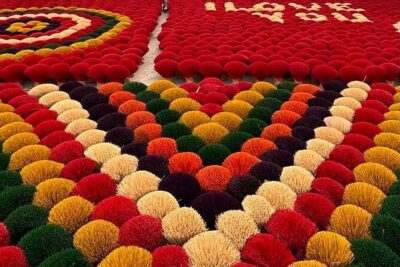
More colour at the incense village




Hanoi pickup and the 6-hour reality check
This tour runs about 6 hours, in either a half-day group format or a private format. Morning group tours typically run 7:45 to 13:30, while afternoons run 11:45 to 17:30. You’ll be picked up from your hotel in the Hanoi Old Quarter area, which saves you from figuring out transport for yourself.
Plan for travel time. The villages are outside central Hanoi: Trạch Xá is about 60 km away, and Quang Phu Cau is about 35 km away. Even with quick roads, you’ll feel the commute, and you’ll get walking breaks at each stop.
The tour is built around guided visits with entrance fees covered and a professional local tour guide. If you’re someone who enjoys asking questions, the guide’s multiple language options help—Chinese, English, French, German, Italian, Spanish, Vietnamese, Russian, Portuguese, Thai, Indonesian, Korean.
Chuong conical hat village: paint a souvenir with real history

If you pick the half-day group version, Chuong conical hat crafting is the first major village stop. Chuong has been known for conical hat making for over 300 years, which is long enough to mean the village isn’t just doing a craft lesson for tourists.
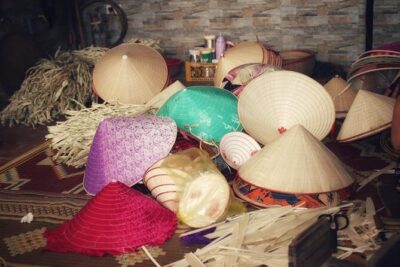
You’ll observe how hats are made and then do the fun part: you get one free conical hat to paint, then you bring it home. That’s a smart inclusion because it doesn’t stop at watching. You leave with something you made yourself, so the souvenir feels personal instead of generic.
Practical tip: bring clothes you don’t mind getting slightly messy. Painting is part of the experience, and the goal is to decorate a hat, not keep everything pristine.
Quang Phu Cau incense village: from hand dyeing to factory production

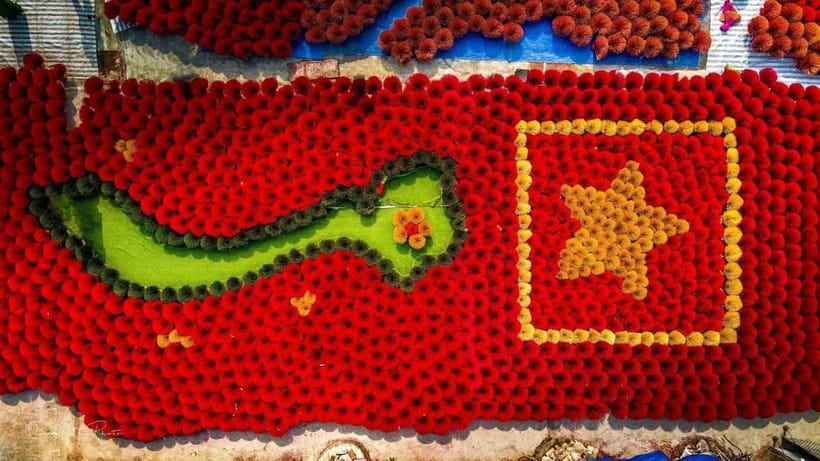
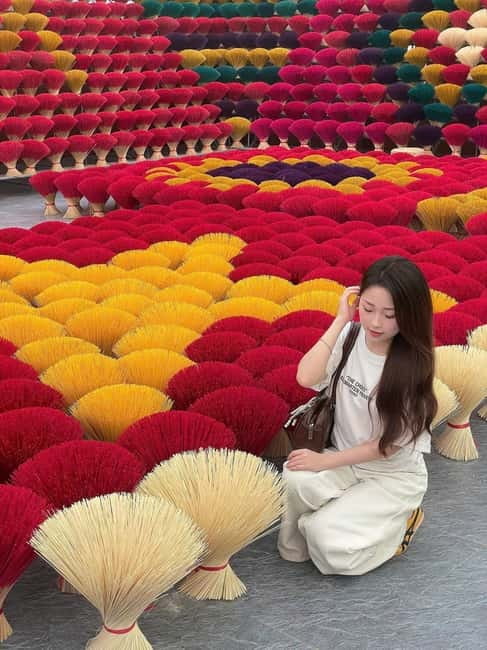
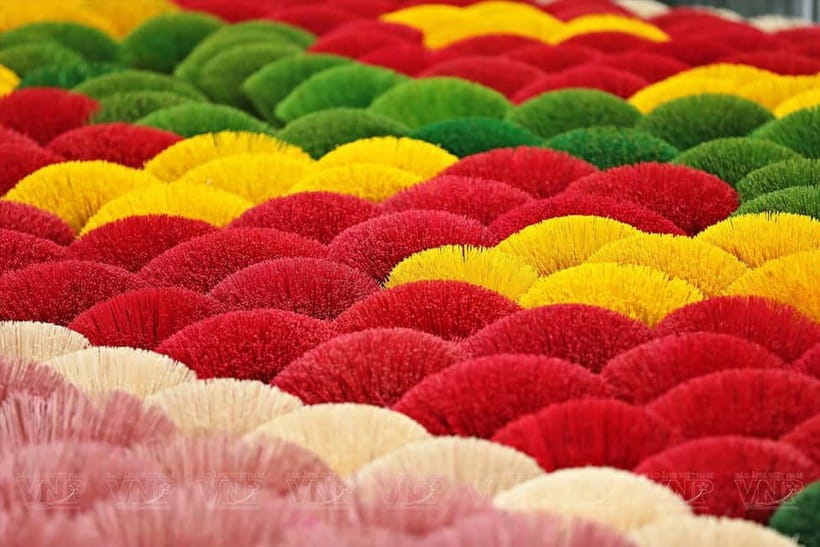
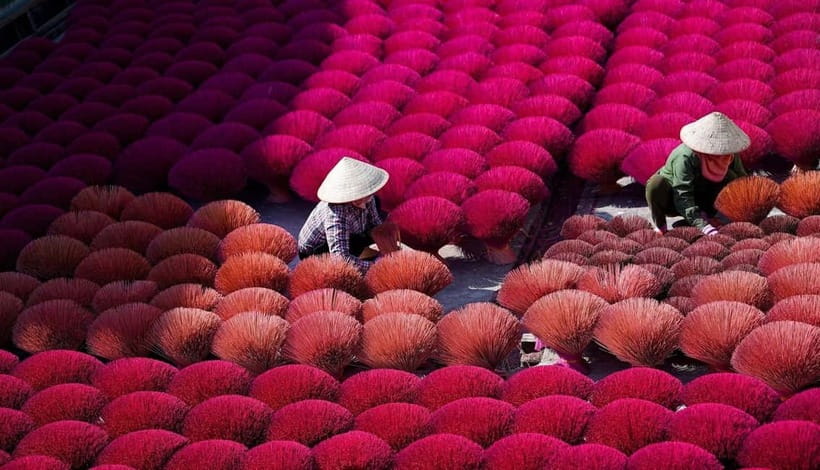
Quang Phu Cau is the incense stop, and it’s a strong one for anyone who likes visuals. Incense sticks show up everywhere here—bundles, colors, and stacks—so it’s naturally photogenic.
The village has produced incense for more than 100 years, and the tour focuses on how it’s made on a family scale. You’ll take a walk through the center of the village and see locals creating incense with hands-on steps, including meeting a family who specializes in dyeing incense sticks. Watching that color process is one of the easiest ways to understand why this craft isn’t fast.
Then the tour moves to another level: a nearby factory. You’ll see production with a more industrial setup and learn how incense is made from scratch, while also hearing about the lives of manual workers. That pairing—family workshop first, then factory—helps you connect the dots between tradition and volume.
Photo tip: if you like night-market-style shots, incense villages give you lots of texture in daylight. Keep your camera steady during the dye and bundle scenes for the best results.
Trạch Xá áo dài village: symbolism and sewing precision you can actually picture
If you go for the private tour, Trạch Xá Village becomes the main event. It’s about 60 km from central Hanoi, and the focus is the áo dài—Vietnam’s iconic long dress.
What makes this stop stand out is the explanation you get while you watch the work. You’ll meet skilled artisans who dedicate their lives to sewing and you’ll hear about the dress’s symbolism. The áo dài has four panels representing family roles—father, mother, father-in-law, mother-in-law—and an inner panel representing the wearer.
You’ll also learn the mechanics of the craft. Artisans sew each layer with careful alignment and techniques aimed at small, even, concealed thread lines. In modern times, that level of precision can be harder to keep consistent, so the tour’s emphasis on how artisans adapt adds a practical, real-world angle.
A specific workshop highlight is Đỗ Minh Tám’s workshop. Seeing a named artisan workshop makes the story feel grounded, not abstract. And because this is about sewing accuracy, it’s also visually satisfying—your brain starts to appreciate why the finished áo dài looks so effortless.
- Hanoi Jeep Tour: Food, Culture and Fun by Vietnam Army Jeep★ 5.0 · 15,222 reviews
- Full-Day Ninh Binh Highlights Tour from Hanoi★ 5.0 · 7,761 reviews
- Hanoi: Ha Long Bay Day Cruise – Swimming, Meal, Kayaking★ 4.7 · 7,415 reviews
Adding Train Street: a quick photo detour, not the whole point
The half-day version can include a drop-off at Hanoi Train Street as the first drop-off point. It’s listed as optional for the experience style—think of it as a chance to stand in an iconic spot, not the centerpiece of the craft day.
If you don’t want to get dropped off there, you’ll simply wait on the bus. That keeps the day moving and prevents you from losing time if you’d rather spend the energy on workshop scenes and hands-on activities.
Photo tip: if you choose the Train Street stop, keep your time tight. You’ll already have plenty of good craft photos, and the best souvenirs here come from the activities, not from quick skyline shots.
Making, taking, and remembering: what’s included and why it matters
This is where the tour earns its value. The price is listed as about $14 per person, and it’s not just sightseeing. You’re paying for guided access, workshop time, and multiple take-home items.
You get:
- All entrance fees
- Skip the ticket line
- Bottled water
- A professional local guide
- One free conical hat for painting
- Some free incense sticks after you make incense yourself
Those inclusions matter because souvenirs can add up fast on your own. Here, at least some key items are already built into the experience. You’re also not left guessing where to buy the best incense or which workshop is the right one—your guide helps you stay in the right flow.
On the people side, the tour notes a number of group options, including private or small groups. In the small-group setting, you tend to get more back-and-forth time, which can help if you want answers to craft questions as you go.
Price and logistics: where the $14 really goes
At first glance, $14 sounds straightforward. The real question is what you get per hour and per stop, and this tour packs in multiple craft themes. You’re doing both craft instruction and craft participation, plus guided visits to villages outside central Hanoi.
The villages are spread out enough that a DIY plan could be confusing and time-consuming. Pickup from the Old Quarter area helps, and the tour’s timing keeps you from spending your whole day arranging transport.
Also, it includes entrance fees and a guide. In Vietnam, those details can quietly make or break value. Paying for a guide who can explain symbolism—like the áo dài panel meanings—turns your photos into actual understanding.
One consideration: you’ll want to budget for personal expenses and optional tipping. That part isn’t included, and it’s normal.
Who should book this craft tour (and who might not)
I think this tour fits best if you:
- Like cultural context, not just seeing photos
- Want hands-on crafts you can take home
- Enjoy asking questions while watching artisans work
- Care about small-group time if you choose the private or small-group option
It might be less ideal if you:
- Hate walking or want to minimize steps between stops
- Prefer one single theme day instead of switching crafts (hat, incense, or áo dài)
- Are sensitive to long drives, given the 35–60 km distances
If you’re the type who loves learning what goes into a process—coloring incense sticks, aligning sewing lines, painting a hat—this is a satisfying day.
Final call: should you book?
If you want one day that balances photos, hands-on making, and real craft context, I’d book it. The hat-painting and incense-making pieces give you tangible take-home memories, and the áo dài symbolism explanation (especially with Đỗ Minh Tám’s workshop) gives depth beyond souvenirs.
Choose the private option if áo dài is your top priority. Choose the half-day group option if you want the mix of conical hats plus incense and don’t mind the quick rhythm of multiple stops.
FAQ
How long is the tour?
The experience lasts about 6 hours.
Is this a half-day or full-day experience?
It’s offered as a half-day group tour (around 6 hours) and also as a private tour option.
What villages are included on the half-day group tour?
The half-day group tour includes conical hat crafting in Chuong, incense crafting in Quang Phu Cau, and an optional stop/drop-off at Hanoi Train Street.
What villages are included on the private tour?
The private tour focuses on Trạch Xá Village (áo dài) and then includes Quang Phu Cau Incense Village.
Can I make something and take it home?
Yes. You can paint a conical hat and take it home, and you’ll also make incense sticks with some free incense sticks provided after.
Where are the pickup and drop-off locations?
Pickup is from your hotel in the Hanoi Old Quarter area. Drop-off is listed back in the Hanoi Hoàn Kiếm area, with an option to include Hanoi Train Street as a drop-off point on the half-day format.
How far are the villages from central Hanoi?
Trạch Xá Village is about 60 km from central Hanoi, and Quang Phu Cau is about 35 km away.
What language options do guides offer?
Guides are available in many languages including English, Vietnamese, and also Chinese, French, German, Italian, Spanish, Russian, Portuguese, Thai, Indonesian, Korean.
What’s not included in the price?
Personal expenses and optional tipping aren’t included. There may also be a Lunar New Year surcharge of 250,000 VND per person from 16/02/2026 to 19/02/2026.
More Tour Reviews in Hanoi






More of the Incense Village


Latest Hanoi write-ups from our team




Incense Village Tours, compared.
 ★ 5.0Incense Village, Hat Making & Lacquer Artisan Small Group HanoiFrom $171,266 reviews
 ★ 5.0Incense Village, Conical Hat, Lacquer Art, SMALL GROUP From HanoiFrom $11,170 reviews
 ★ 4.6Incense Village, Hat, and Lacquer Artisanal TourFrom $151,005 reviews
 ★ 5.0Incense Village Small Group of 9 Tour From Hanoi to Ninh BinhFrom $85626 reviews
 ★ 4.6Incense Village, Hat, Lacquer Tour & City HighlightsFrom $16604 reviews
 ★ 4.6Incense Village, Hat, Lacquer, & City Highlights TourFrom $19470 reviews
 ★ 5.0Instagram Incense Quang Phu Cau Village Tour with Train StreetFrom $50323 reviews
 ★ 5.0INCENSE Villages & Ha Noi City Full Day guided Tour with LunchFrom $45304 reviews
Browse the lists this tour appears in