
Reviewed · INCENSE VILLAGE TOURS
Hanoi: Jewelry Craft Village or Incense Village, Hat Village
Silver threads and incense smoke in one morning. This craft-focused Hanoi outing takes you from Old Quarter pickup to working villages where you can watch traditional methods in real time, then (optionally) end near Train Street. If you like hands-on culture that does not feel like a museum, this one hits the mark—especially when you compare silver jewelry to incense-making side by side.
What I like most is the way Dinh Cong explains the work behind the shine. You get to watch artisans use four core methods—smoothing, combining, sculpturing, and pulling—including pulling hot melted silver into threads as thin as hair.
The other big win is that you leave with something you made yourself. You get a free conical hat to paint in the Chuong village experience, plus some free incense sticks after you make incense. The main consideration: the half-day group version does not include lunch, so plan snacks or eat before you go.
In This Review
- Key things to know before you go
- Two Hanoi craft village styles: group half-day or incense-only guide
- Dinh Cong Jewelry Craft Village: where silver work is a family craft
- Inside the silversmith workshop: smoothing, sculpturing, and hair-thin threads
- Chuong conical hat village: paint-your-own and take it home
- Quang Phu Cau incense village: from family dyeing to factory production
- Train Street drop-off: how to use the free time wisely
- Price and timing: why $14 can make sense here
- What it feels like with a good guide (and why it matters)
- Who should book this, and who should skip
- Should you book the Hanoi craft village tour?
- FAQ
- How long is the half-day group tour?
- Which villages are included on the half-day group tour?
- Is lunch included on this tour?
- Do I get to make anything during the tour?
- Where does the tour start and end?
- Is Dinh Cong Jewelry Craft Village included in every option?
- Can I visit only the incense village?
- What languages are the guides available in?
- Is there an extra fee during Lunar New Year?
Key things to know before you go
- Dinh Cong silversmithing techniques: You’ll see the full set of core methods, from polishing to fine carving.
- Conical hat you paint and take home: A free hat is included, with time built in to decorate it.
- Quang Phu Cau incense at two scales: Family-scale stick-making plus a nearby factory view.
- Optional Train Street drop-off: You can choose to use the time there or return directly.
- Old Quarter pickup and water included: Makes the day easier to manage without fuss.
Two Hanoi craft village styles: group half-day or incense-only guide

This experience comes in a few formats, so it helps to pick based on how packed you want your day.
The most time-friendly option is the half-day group tour that usually runs about 6 hours. It combines Chuong Conical Hat Crafting Village and Quang Phu Cau Incense Village, with a possible Train Street drop-off at the end. Morning starts are listed around 7:45–13:30, and afternoon starts around 11:45–17:30. Either way, you should expect a guided rhythm: pickup, village craft time, and a return to central Hanoi.
If you want just incense, there’s also a 1-hour local guide option for the incense village only. This one is designed for people who already have a car; you handle car transfer and entrance fees yourself.
There’s also a private option focused on Dinh Cong Jewelry Craft Village. That’s centered on Hanoi’s well-known silversmithing tradition, including observation of techniques and time at the craftsman’s workshop.
If you’re staying near Hoàn Kiếm Lake, note that Dinh Cong is about 7km away from there, which is why pickup/drop-off matters.
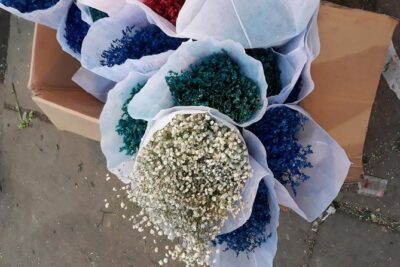
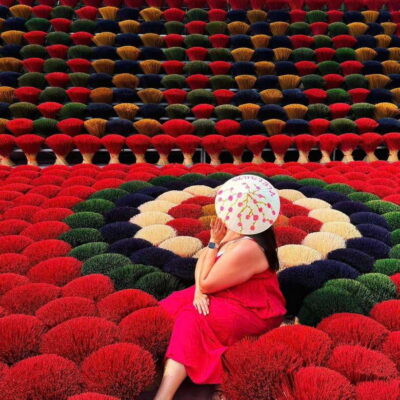
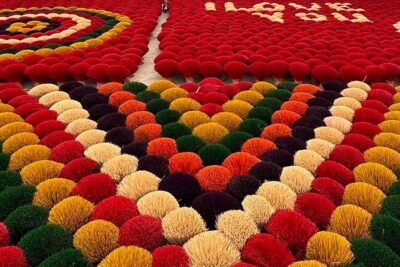
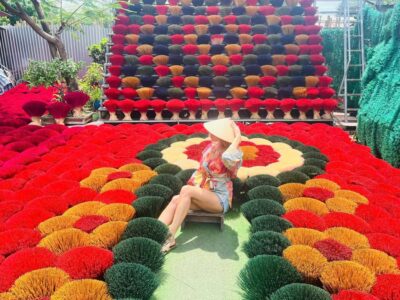
More colour at the incense village




Dinh Cong Jewelry Craft Village: where silver work is a family craft
Dinh Cong is one of those places where the product is only half the story. The bigger value is seeing how the craft gets taught and repeated, with skill passed down and refined over generations.
You visit the craft village by the To Lich river bank in Thanh Trì district. The tradition is often tied to a legend of the Trần family, who supposedly learned silver and gold jewelry making and carried that knowledge into the community. Whether you treat the legend as history or folklore, the effect on the visit is real: the work is presented as a lineage, not a one-off souvenir sale.
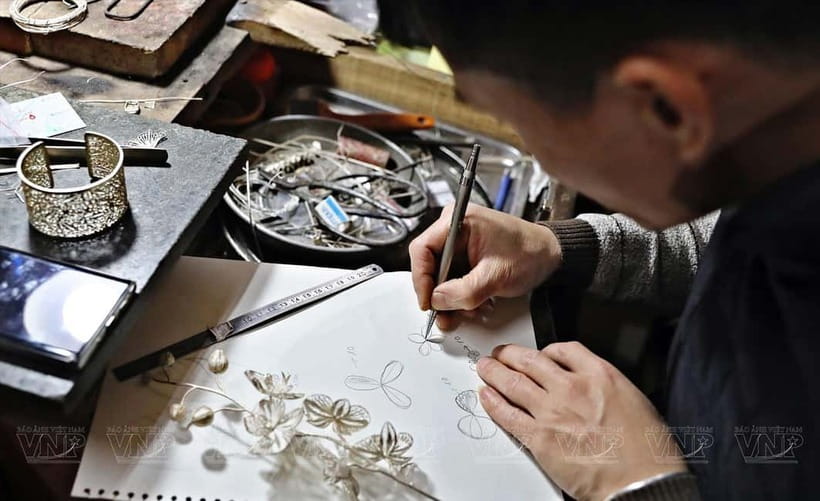
In the Dinh Cong experience, you don’t just walk through stalls. You’ll get structured observation—plus time at a famous craftsman’s workshop. The workshop is associated with Quách Văn Hiếu, and the tradition continues through his son, Quách Phan Tuan Anh. Seeing a workshop like this helps you understand why the jewelry looks the way it does: it is made in steps that match how metal behaves, and how patterns are built.
One practical note: Dinh Cong’s focus is silver and gold jewelry craft sculpturing. If you’re hoping for a quick shopping stop, you may still buy—but the center of the experience is watching artisans work.
Inside the silversmith workshop: smoothing, sculpturing, and hair-thin threads
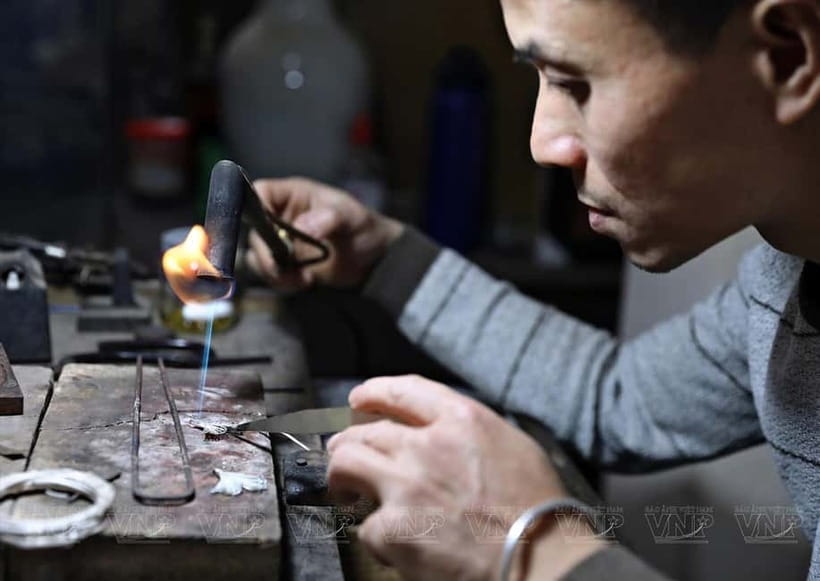
The best part of the Dinh Cong segment is the way the guide frames what you’re looking at. They point you toward the “four basic techniques,” which turns a visual experience into something you can actually follow.
Here’s the sequence you’ll hear about and see linked together:
- Smoothing (getting surfaces and forms even)
- Combining (joining pieces into a bigger design)
- Sculpturing (shaping details with intent)
- Pulling (the dramatic step where hot melted silver is pulled into threads)
That last technique is the one that makes people pause. You’re told the threads can be as small as strands of hair, and even if you don’t fully measure that in your head, you’ll understand the precision challenge right away. This is where the workshop goes from pretty objects to serious craft—because the design depends on what you can control in a molten, fast-changing material.
You’ll also see how artisans polish products, join details harmoniously, and carve fine patterns. It’s not just decoration. It’s how the structure holds together and how the jewelry catches light.
If you care about value, this is the reason the experience feels worth it even though it’s short. You’re not only paying for an attraction—you’re paying to understand what you’re buying later.
Chuong conical hat village: paint-your-own and take it home

Chuong is known for the iconic conical hat, with a craft reputation reaching over 300 years. That long timeline matters less as a trivia fact and more as a practical indicator: the process is established, repeated, and taught in a way you can see in a single visit.
On the group half-day tour, you start with pickup in Hanoi’s Old Quarter, then head to Chuong. The emphasis is on watching how the hats are made and then doing one memorable step yourself: decorating a hat by painting it.
A free hat is included, and you take it home as a personalized souvenir. This is one of those inclusions that’s genuinely useful because it gives you a physical item tied to your time in the village, instead of only buying something made elsewhere.
If you’re thinking about photos, you’ll get them—but the smarter move is to watch how the materials get turned into a wearable hat first. The painting part is fun, but understanding the making part is what gives the day meaning.
Quang Phu Cau incense village: from family dyeing to factory production
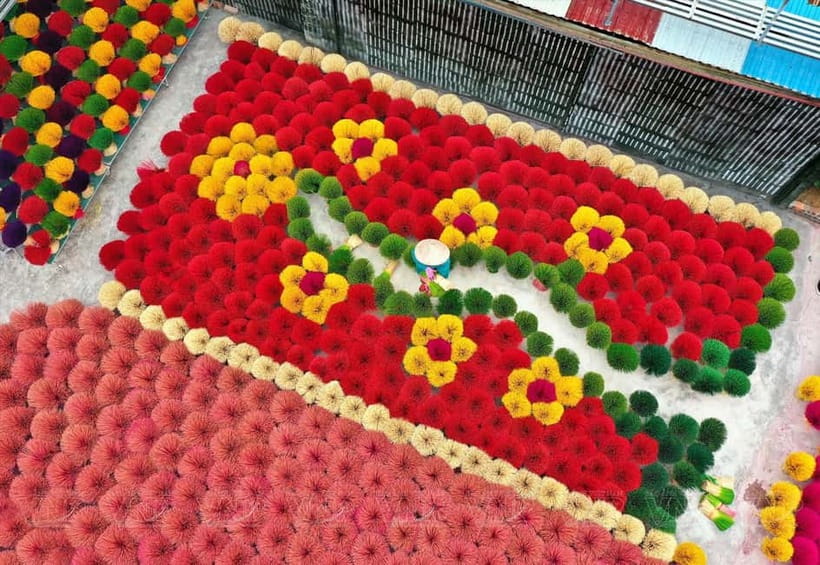
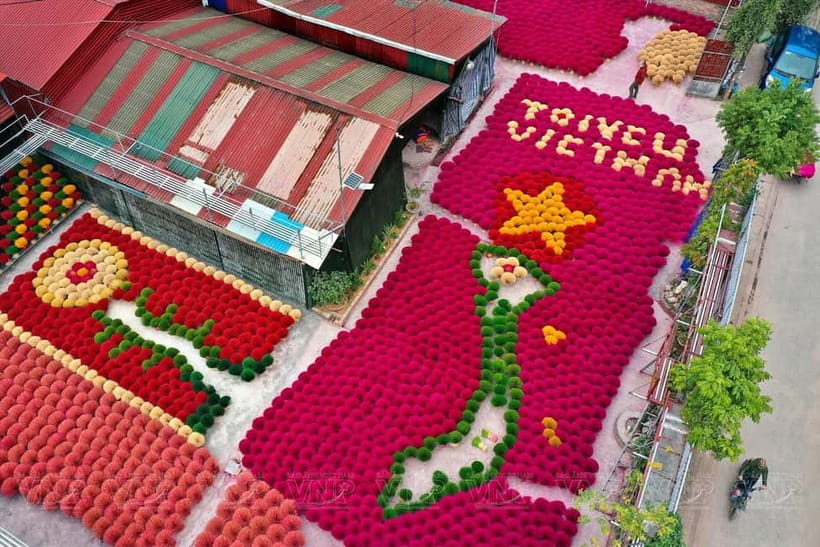
Quang Phu Cau is described as the heart of Vietnam’s incense tradition, and it’s tied to more than 100 years of incense production. The tour approach here is very deliberate: you see the craft at the family scale, then you see it again at a more advanced factory level.
First, you walk through the village center to see how locals make incense sticks on a manual, home-scale basis. Then you meet a family that specializes in dyeing incense sticks, so you can see how those colorful bundles come together before they look like finished products.
After that, you get the next step of the chain: a nearby factory visit. This part helps you connect the dots between craft and production—how incense is made from scratch, and what working life looks like for manual workers.
You also get hands-on time. The included experience notes some free incense sticks after you make incense sticks yourself. Even if you don’t become an incense artisan by the end, that small activity makes the whole village more understandable.
At the end of the incense part, you have incense souvenirs from the place they’re produced—which is what you want if you’re trying to avoid the usual souvenir-store loop.
- Hanoi Jeep Tour: Food, Culture and Fun by Vietnam Army Jeep★ 5.0 · 15,222 reviews
- Full-Day Ninh Binh Highlights Tour from Hanoi★ 5.0 · 7,761 reviews
- Hanoi: Ha Long Bay Day Cruise – Swimming, Meal, Kayaking★ 4.7 · 7,415 reviews
Train Street drop-off: how to use the free time wisely
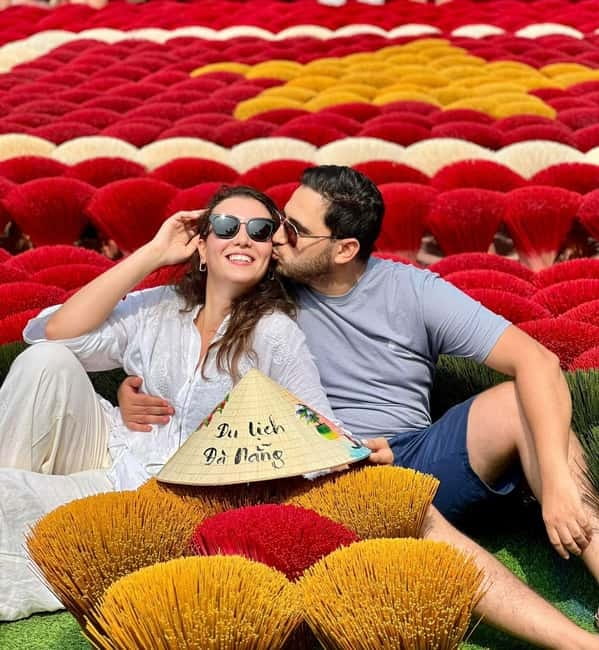
The half-day group itinerary may include a drop-off at Hanoi Train Street. If you don’t want that drop-off, you can wait on the bus and be driven back to central Hanoi instead.
If you do end near Train Street, use your time in a practical way:
- Go early inside your window so you’re not fighting crowds.
- Prioritize your photos, then move on—Train Street is short, and the craft villages are the real reason to book.
- If you want out fast, you can take a taxi/Grab back to your hotel from there.
This is a helpful feature if you like stacking experiences without adding extra travel planning. Just don’t let Train Street steal all your energy—your best moments are the working crafts.
Price and timing: why $14 can make sense here
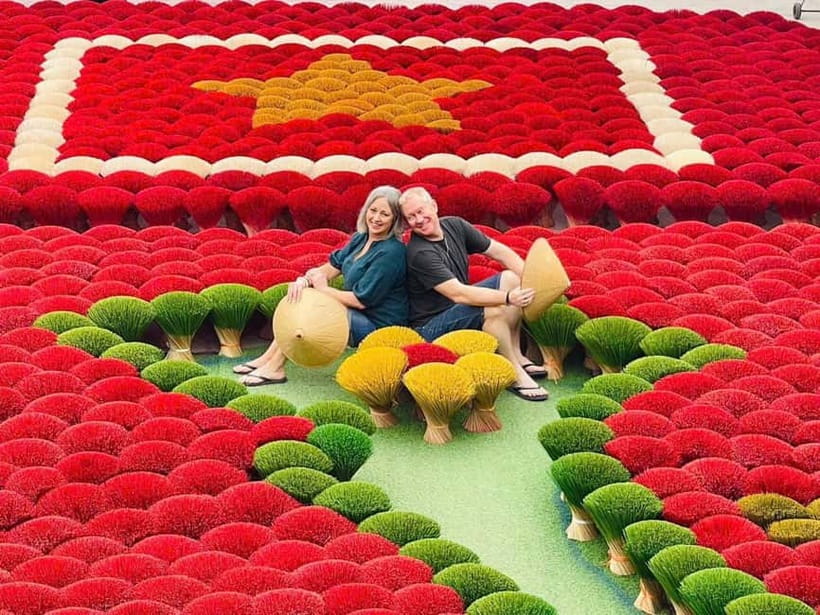
The listed price is $14 per person, with durations ranging from 4 hours to 1 day, depending on the option you choose. That price point is more plausible when you consider what’s included for the main format: multiple guided stops, entrance fees, hands-on activities, bottled water, and hotel pickup/drop-off in the Old Quarter area.
Here’s what you’re paying for in a tangible way:
- Observation at Dinh Cong with technique explanations and a craftsman workshop visit (for the jewelry-focused option)
- Hands-on painting a conical hat and taking it home (included in the experience)
- Incense village access with both family-scale making and a factory tour, plus making incense yourself
- A professional local guide and entrance fees
- Hotel pickup and drop-off in the Old Quarter area
The one clear downside on timing is lunch. The half-day group tour notes lunch is not included, so eat beforehand or bring snacks. For the Dinh Cong-focused schedule, lunch is shown as part of the day flow, and at least one reviewer specifically called the lunch very good—just double-check which option you’re buying.
If you’re visiting around Lunar New Year, there’s a surcharge of 250,000 VND per person for the dates 16/02/2026–19/02/2026.
Overall, this is good value if you want your sightseeing to include real process, not just product displays.
What it feels like with a good guide (and why it matters)
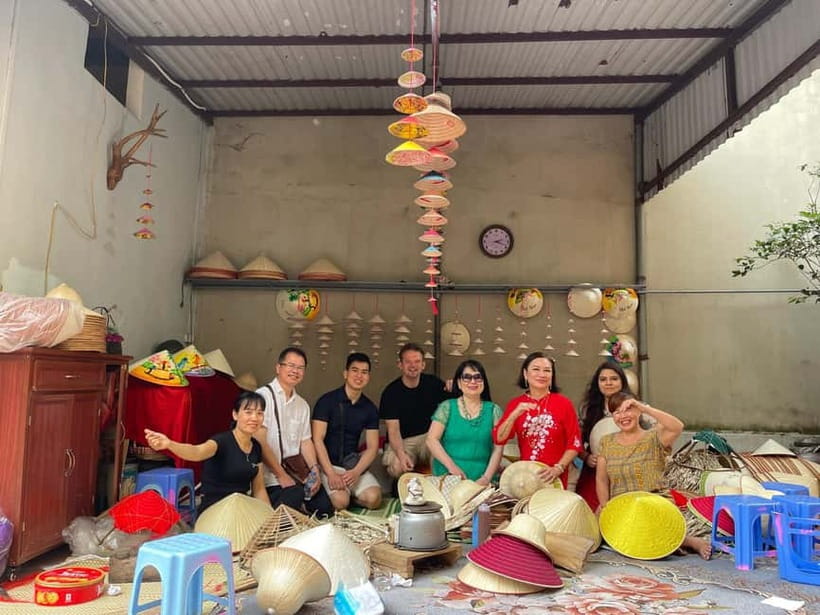
A craft village tour lives or dies on explanation. The guide is the translator between what your eyes see and what the work actually means.
The tour includes a professional local guide with many language options: Chinese, English, French, German, Italian, Korean, Portuguese, Russian, Spanish, Vietnamese, Indonesian, and Thai. That’s helpful because craft terminology isn’t always intuitive.
One review mentioned a guide named Huy, described as humorous and kind, which is the kind of tone that makes demonstrations easier to follow. Even without naming a specific person, you’ll likely feel the difference between a guide who talks at you and one who points you to the steps you should watch.
Who should book this, and who should skip

This experience is a strong match if you:
- Want hands-on culture that ends with a real souvenir (hat and incense)
- Like craft demonstrations where you can see process, not just final items
- Enjoy comparing trades—silversmithing versus incense making—within one day plan
It may be less ideal if you:
- Only want a low-effort shopping trip (this is process-focused)
- Hate structured schedules and time limits
- Are depending on the half-day group option for lunch (it’s not included)
If you’re traveling with kids, the painting activity and incense-making step can be a nice attention grab—though you’ll still be walking and watching demonstrations throughout.
Should you book the Hanoi craft village tour?
Book it if you want Hanoi beyond Old Quarter streets—specifically, if you want to understand how Vietnamese crafts are made and why they’re respected. The Dinh Cong silversmithing part gives you a rare look at precision work using recognizable techniques, and the incense village adds the contrast of family production plus factory scale.
Skip or choose a different option if you’re mainly chasing shopping or you won’t manage the no-lunch situation on the half-day group format. If that’s you, eat before pickup, keep snacks handy, and focus your camera time on the demonstrations—not just the stalls.
If you like your souvenirs with a story attached, this is one of the better ways to do it in Hanoi.
FAQ
How long is the half-day group tour?
The half-day group tour is listed as about 6 hours. Morning runs roughly 7:45 to 13:30, and the afternoon runs roughly 11:45 to 17:30.
Which villages are included on the half-day group tour?
The half-day group tour visits Chuong Conical Hat Crafting Village and Quang Phu Cau Incense Village. Train Street may be used for drop-off at the end.
Is lunch included on this tour?
The half-day group tour states that it does not include lunch. You should eat beforehand or bring snacks.
Do I get to make anything during the tour?
Yes. You can paint a free conical hat in the hat village, and you also make incense sticks in the incense village experience. Some free incense sticks are included after you make them.
Where does the tour start and end?
Pickup is from Hanoi’s Old Quarter area. Drop-off options include Hoàn Kiếm or a drop-off at Train Street, with instructions to wait on the bus if you do not want that stop.
Is Dinh Cong Jewelry Craft Village included in every option?
No. The Dinh Cong Jewelry Craft Village visit is part of the separate private tour option. The half-day group tour format focuses on the conical hat and incense villages.
Can I visit only the incense village?
Yes. There is a 1-hour option with a local guide for the incense village only. You cover car transfer and entrance fees yourself if you already have a car.
What languages are the guides available in?
The guide languages listed include Chinese, English, French, German, Italian, Korean, Portuguese, Russian, Spanish, Vietnamese, Indonesian, and Thai.
Is there an extra fee during Lunar New Year?
Yes. There is a surcharge of 250,000 VND per person for the Lunar New Year dates 16/02/2026 to 19/02/2026.
More Tour Reviews in Hanoi






More of the Incense Village


Latest Hanoi write-ups from our team

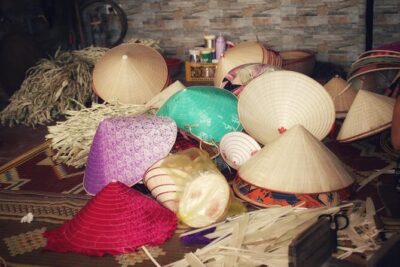



Incense Village Tours, compared.
 ★ 5.0Incense Village, Hat Making & Lacquer Artisan Small Group HanoiFrom $171,266 reviews
 ★ 5.0Incense Village, Conical Hat, Lacquer Art, SMALL GROUP From HanoiFrom $11,170 reviews
 ★ 4.6Incense Village, Hat, and Lacquer Artisanal TourFrom $151,005 reviews
 ★ 5.0Incense Village Small Group of 9 Tour From Hanoi to Ninh BinhFrom $85626 reviews
 ★ 4.6Incense Village, Hat, Lacquer Tour & City HighlightsFrom $16604 reviews
 ★ 4.6Incense Village, Hat, Lacquer, & City Highlights TourFrom $19470 reviews
 ★ 5.0Instagram Incense Quang Phu Cau Village Tour with Train StreetFrom $50323 reviews
 ★ 5.0INCENSE Villages & Ha Noi City Full Day guided Tour with LunchFrom $45304 reviews
Browse the lists this tour appears in