

Reviewed · INCENSE VILLAGE TOURS
Hanoi: Drum Village or Incense Village & Hat (“SMALL GROUP”)
Drums, incense, and hats in one neat route. I really like the hands-on drum craft (jackfruit wood and buffalo leather) and the chance to paint a conical hat you take home. One possible drawback: you’re visiting active craft areas, so expect the day to run on workshop schedules and some spots can feel busy.
The payoff here is depth, not just photos. You’ll get a clear look at how crafts are made, why they matter in Vietnamese culture, and how artisans actually test and finish their work. If you’re lucky with your guide, names like O Han and Henry have shown up for excellent, patient explanations and good pacing.
You also need to pick the right version. If you care most about music and materials, go for the drum-making focus. If you want variety in one afternoon/morning block, the hat + incense combo (with a quick Train Street pass) is a solid choice.
In This Review
- Key highlights worth your time
- Two craft tours in one: drums versus hat and incense
- Option A: Drum-making village focus (private, 6 hours)
- Option B: Hat + incense craft combo (small-group, ~6 hours)
- Doi Tam Drum-making Village: jackfruit wood, buffalo leather, and testing the sound
- The long tradition behind the craft
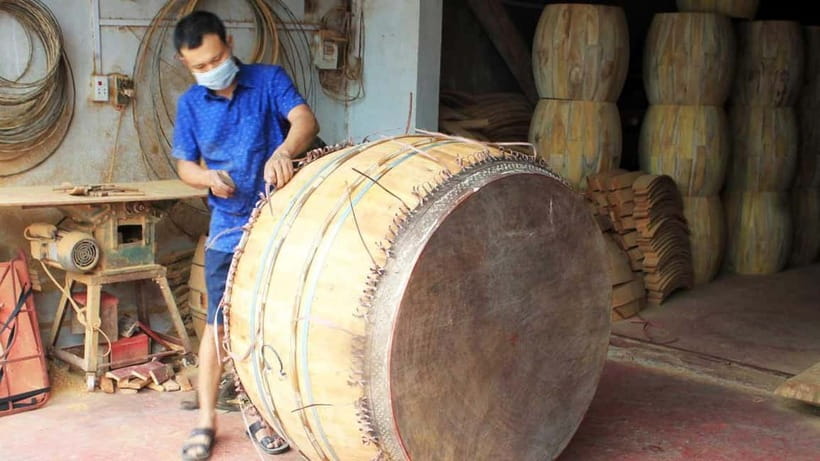
- Watching drums become real: the process, step by step
- What you’ll get out of it
- Chuong Conical Hat Village: paint a souvenir hat and learn the 300-year craft
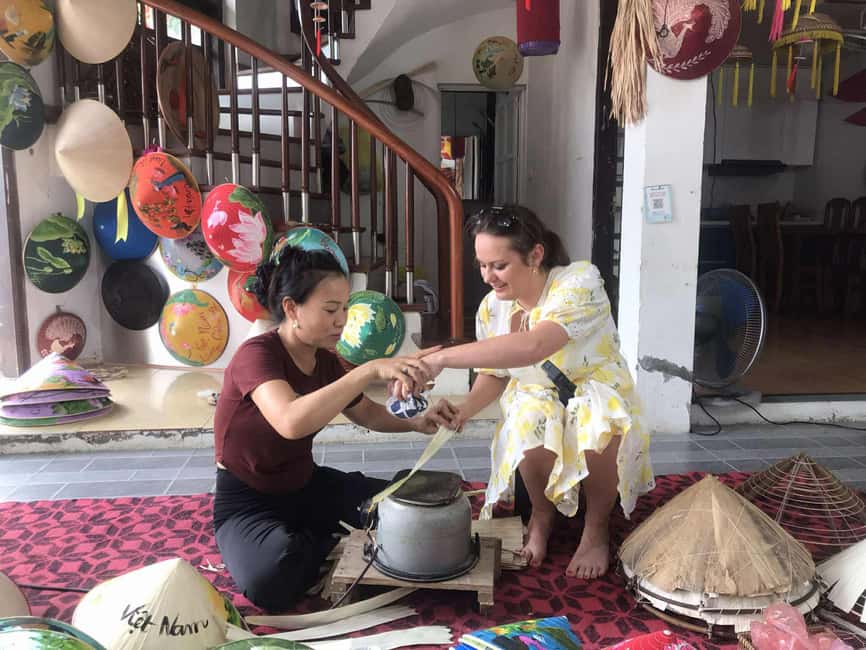
- Expect a guided look at how hats are made
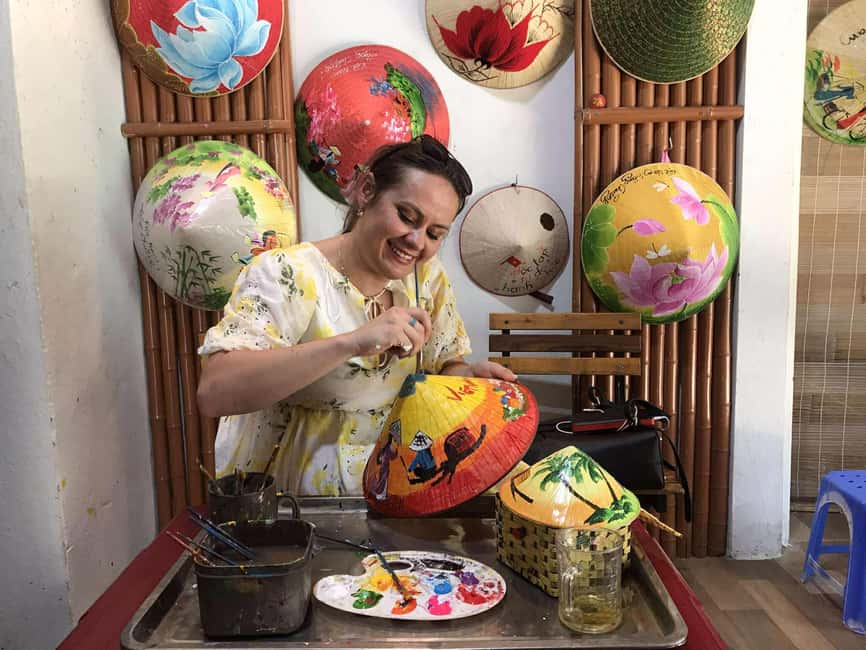
- The fun part: paint your own hat
- Time on the ground
- Quang Phu Cau Incense Village: from colorful bundles to factory-scale production
- Village-scale making: family production and dyeing
- Factory visit: incense made from scratch
- Souvenirs included (and actually useful)
- Time and pacing
- Hanoi Train Street: a quick pass for one of the city’s most photographed spots
- Group size, guide energy, and why small-group matters here
- Price and what you actually get for about $14
- Practical tips so the day feels smooth (not chaotic)
- Who should book this Hanoi craft tour
- Should you book this Hanoi craft village tour?
- FAQ
- What does the small-group tour include?
- How long is the tour?
- Is there a drum-making option?
- How much time do you spend at each craft stop?
- Do I get souvenirs to take home?
- Is there a Lunar New Year surcharge?
Key highlights worth your time

- Doi Tam drums: learn the full drum process, from jackfruit timber to the drumhead
- A legend with dates: drum-making stories tied to early Vietnamese history
- Chuong conical hats: paint your own souvenir hat during the village stop
- Quang Phu Cau incense: see incense making on a family scale, then at a nearby factory
- Small-group feel: enough time for questions instead of a rushed conveyor belt
- Train Street pass-by: short stop for a quick photo window, optional in spirit
Two craft tours in one: drums versus hat and incense
This is a small-group Hanoi craft experience that comes in two main flavors.
More colour at the incense village




Option A: Drum-making village focus (private, 6 hours)
If you choose the private drum-making version, the day centers on Doi Tam Village, known for high-quality drums in Vietnam. You’ll watch the full craft process and (in this option) enjoy an authentic Vietnamese home-cooked meal.
Option B: Hat + incense craft combo (small-group, ~6 hours)
If you choose the half-day style group tour, you’ll hit:
- Chuong Conical Hat Crafting Village
- Quang Phu Cau Incense Village (plus a nearby factory visit)
- A brief pass by Hanoi Train Street (only 2 minutes)
Both versions include hotel pickup/drop-off in the Hanoi Old Quarter area and a professional local guide (English plus several other languages). The best choice depends on your mood: do you want one craft in depth (drums) or three crafts with variety (hat + incense)?
Doi Tam Drum-making Village: jackfruit wood, buffalo leather, and testing the sound
Doi Tam Village is the reason this tour exists for music lovers. The craft is built around materials you’ll hear described again and again: jackfruit timber for the drum barrel and buffalo leather for the drumhead.
Here’s what the visit looks like in practical terms:
The long tradition behind the craft
Doi Tam drum-making is tied to very old origins. The information you’ll hear includes:
- Drum-making history dating back to 925 AD
- A legend about Nguyen Duc Nang, described as a founder who crafted a giant drum for a royal visit in 987 (King Le Dai Hanh)
- Drums used for royal festivals and ceremonies
Even if you’re not a “history” traveler, those details matter because they explain why the craft isn’t just decorative. In many traditional cultures, drums are functional tools for ceremonies and community life, not souvenirs.
- Hanoi Jeep Tour: Food, Culture and Fun by Vietnam Army Jeep★ 5.0 · 15,222 reviews
- Full-Day Ninh Binh Highlights Tour from Hanoi★ 5.0 · 7,761 reviews
- Hanoi: Ha Long Bay Day Cruise – Swimming, Meal, Kayaking★ 4.7 · 7,415 reviews
Watching drums become real: the process, step by step
You’ll observe the typical workflow for making barrel-shaped drums:
- Choosing the jackfruit timber
- Cutting and shaping planks
- Curving the wood into a drum barrel
- Tanning buffalo leather
- Stretching and preparing the drumhead
- Attaching the drumhead to the barrel
- Final sound testing and finishing
That last stage is the part I’d pay attention to. A well-made drum is about more than appearance—it’s about sound. The craftsmen test the drum and add decorative patterns, and you’ll see how much precision goes into getting the tone right.
What you’ll get out of it
This stop is ideal if you like:
- How-to craftsmanship
- Traditional materials and their specific uses
- A guided walk-through that explains what you’re seeing, not just where to stand for photos
If you’re expecting a modern showroom, you might feel the difference right away. This is a working village craft setting, with real production steps—so it’s more “watch and understand” than “browse and buy.”
Chuong Conical Hat Village: paint a souvenir hat and learn the 300-year craft

Chuong is the conical hat part of the tour, and the experience is designed to be very active for the time you’re there.
Expect a guided look at how hats are made
The hat village is described as being known for conical hat-making for over 300 years. During the stop, you’ll:
- Enjoy a photo moment
- Take a guided visit where you can observe the making process
- Get time for a souvenir activity
The fun part: paint your own hat
One standout inclusion is a free conical hat for painting in the hat village, with you taking it home as a personalized souvenir.
Practical note: even if you’re not a serious artist, this is the kind of activity that’s easier than it sounds. You’re not trying to recreate a masterpiece. You’re adding your own design style to a Vietnam icon you now understand better.
Time on the ground
The stop is listed at 100 minutes, so you’ll have room to watch the process, ask questions, and do the painting without feeling like someone keeps tapping their watch at you.
Quang Phu Cau Incense Village: from colorful bundles to factory-scale production

If drums connect you to sound, incense connects you to smell and daily life. Quang Phu Cau is described as producing incense for more than 100 years, and this tour splits the incense experience into two levels.
Village-scale making: family production and dyeing
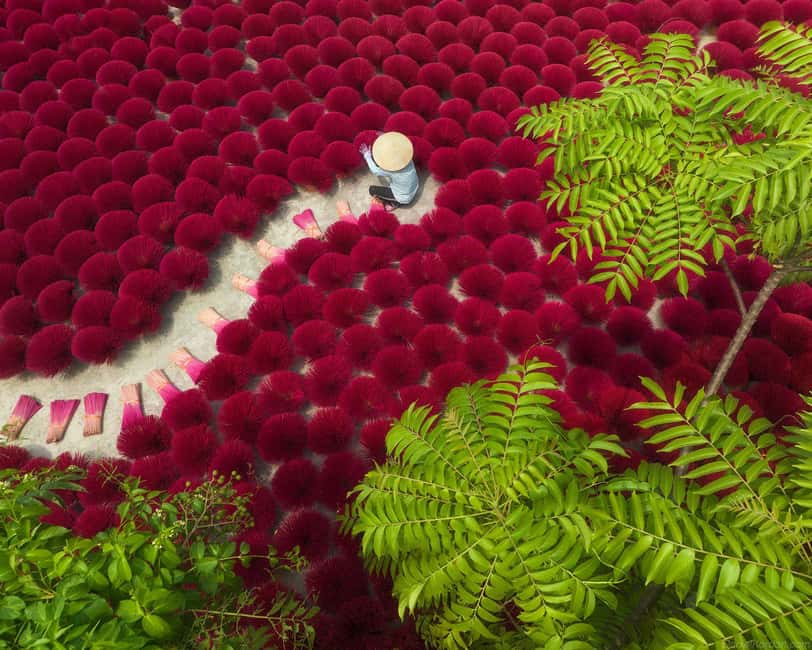
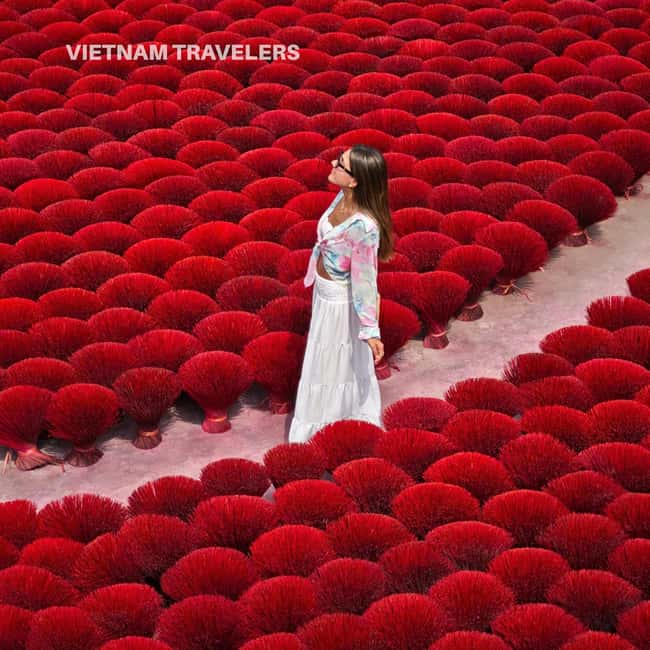
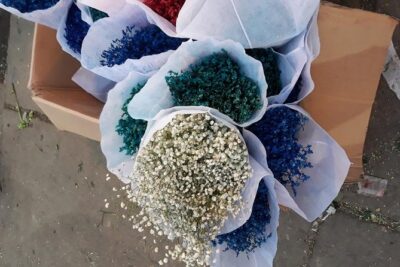
You’ll start with a walk at the center of the village, where locals make incense on a hands-on, family-scale level. You’ll also meet a family who specializes in dyeing incense sticks, and you’ll see the colorful bundles of incense.
This is one of the best places on the tour for “I didn’t realize it worked like that” moments. Incense production has multiple steps, and when you see the dyed sticks, the process looks less mysterious and more like practical labor.
Factory visit: incense made from scratch
After the village stop, you visit a nearby factory to see a higher level of production. This includes watching how incense is made from scratch and learning more about the manual work involved.
Souvenirs included (and actually useful)
There’s an inclusion for incense lovers: you get some free incense sticks after you make incense sticks yourself, plus additional incense souvenirs from the production place before returning to Hanoi.
This is a nice value add because incense is lightweight to bring home, and it’s something you can use immediately, not just store as a trophy.
Time and pacing
The incense portion is listed at 118 minutes, which usually gives enough time for photos, explanation, and the DIY step without it turning into a rushed grab-and-go.
Hanoi Train Street: a quick pass for one of the city’s most photographed spots
The itinerary includes a pass by Hanoi Train Street. The timing here is clear: 2 minutes.
So treat this as a quick reference point, not a full exploration. You’ll likely only have time to catch the vibe and grab a photo if your group pauses at the right moment.
If you want more time there, you’d probably plan a separate stop. In this tour, it’s more about checking the iconic spot off while you’re already in the area.
Group size, guide energy, and why small-group matters here
This is labeled as a small group experience. That matters more than it sounds, especially in craft villages where people naturally want to ask:
- What material is this part?
- How long does it take?
- Why is this step necessary?
The experience is guided by a professional local guide, and multiple languages are available. Based on what’s been shared about guide experiences, the guides tend to be patient and willing to explain important details at a comfortable pace—something that makes the day feel less like a forced itinerary and more like a conversation with context.
I also like that the tour isn’t trying to turn every stop into a shopping errand. The tone is more about observing and participating—especially with the hat painting and the incense making.
Price and what you actually get for about $14
At $14 per person for a roughly 6-hour craft day, the value comes from what’s included, not just the sightseeing.
Here’s what you can count on as part of the experience:
- Visits to the craft villages (drum, hat, incense depending on option)
- Observation of drum-making process (for the drum option)
- Interaction with local craftsmen (for hands-on learning)
- One free conical hat to paint and take home (hat village inclusion)
- Some free incense sticks after you make incense sticks yourself (incense inclusion)
- Bottled water
- All entrance fees
- Hotel pickup and drop-off in Hanoi Old Quarter area
- A professional local guide
So you’re paying for time, guidance, and included activities—hat painting and incense making are especially good “you can’t do this later in your hotel room” value.
One more value point: the itinerary includes a factory visit for incense. That’s often where craft tours either stop short or rush. Here, you get a small step into how production scales up.
Practical tips so the day feels smooth (not chaotic)
A few simple habits make craft-day touring way easier:
- Wear comfortable shoes and light layers. You’ll likely be moving between village areas and workshop spaces.
- Bring a phone or camera you can handle in changing light. Crafts are often explained with visual details, so low-quality photos make you wish you’d tried harder.
- Be ready for a bit of hands-on time. Hat painting and incense making mean you’ll want to keep your hands and sleeves manageable.
- If you’re sensitive to smells, incense can be strong. You’ll be around active incense work, so consider that before you commit.
And if you’re choosing between options:
- Choose the drum-making private option if you love materials and sound and want a deeper craft focus.
- Choose the hat + incense combo if you want variety in one day and you like DIY-style souvenirs.
Who should book this Hanoi craft tour
This tour fits best if you:
- Like cultural crafts with real production steps
- Prefer a guided explanation while you watch
- Enjoy making at least one small souvenir (hat painting and incense are the big ones here)
- Want something more meaningful than the typical history-and-temple checklist
It’s also a good fit for families, since the activities are visual and participatory. For solo travelers, the guided structure helps you make sense of what you’re seeing quickly.
If you only want quiet sightseeing and minimal interaction, you might find the workshop pace a little active. But if you like people and process, this one clicks.
Should you book this Hanoi craft village tour?
I’d book it if you want a crafts-focused day that gives you both watching skill and making something small. The included conical hat painting and the incense-making step alone help justify the price, and the drum-making option is especially compelling if you care about materials and craftsmanship.
I’d skip or reconsider if you:
- Only want one craft type and hate switching gears during the day
- Need long sightseeing time at Train Street (this tour gives just a pass)
- Are very sensitive to smells from incense production
If you fall somewhere in the middle—curious, practical, and open to hands-on craft—this is a strong use of your Hanoi time.
FAQ
What does the small-group tour include?
Depending on the option you choose, you’ll visit craft villages for drums, conical hats, and incense. It includes bottled water, all entrance fees, a professional local guide, and hotel pickup and drop-off in Hanoi’s Old Quarter area. You also get a free conical hat for painting (in the hat village) and some free incense sticks after making incense sticks yourself (in the incense village).
How long is the tour?
The duration is listed as 6 hours. For the hat and incense group tour, the schedule is morning 7:45–13:30 or afternoon 11:45–17:30.
Is there a drum-making option?
Yes. There is a private tour option focused on drum-making in Doi Tam Village. The private option also mentions lunch.
How much time do you spend at each craft stop?
In the hat and incense group itinerary, Chuong Conical Hat Village is about 100 minutes and Quang Phu Cau Incense Village is about 118 minutes. Hanoi Train Street is a pass-by of about 2 minutes.
Do I get souvenirs to take home?
Yes. In Chuong, you get a free conical hat to paint and take home. In the incense village, you get some incense sticks after making incense sticks yourself, and you also bring back incense souvenirs from the production area.
Is there a Lunar New Year surcharge?
Yes. There’s a surcharge of 250,000 VND per person from 16/02/2026 to 19/02/2026.
More Tour Reviews in Hanoi






More of the Incense Village


Latest Hanoi write-ups from our team





Incense Village Tours, compared.
 ★ 5.0Incense Village, Hat Making & Lacquer Artisan Small Group HanoiFrom $171,266 reviews
 ★ 5.0Incense Village, Conical Hat, Lacquer Art, SMALL GROUP From HanoiFrom $11,170 reviews
 ★ 4.6Incense Village, Hat, and Lacquer Artisanal TourFrom $151,005 reviews
 ★ 5.0Incense Village Small Group of 9 Tour From Hanoi to Ninh BinhFrom $85626 reviews
 ★ 4.6Incense Village, Hat, Lacquer Tour & City HighlightsFrom $16604 reviews
 ★ 4.6Incense Village, Hat, Lacquer, & City Highlights TourFrom $19470 reviews
 ★ 5.0Instagram Incense Quang Phu Cau Village Tour with Train StreetFrom $50323 reviews
 ★ 5.0INCENSE Villages & Ha Noi City Full Day guided Tour with LunchFrom $45304 reviews
Browse the lists this tour appears in